Skip to content

Archive for

A Chat with Ryan Robertson & Peter Hodgins of Two Chips Theatre’s “Copy”

Interview by Ryan Quinn

We sat down with Ryan Robertson and Peter Hodgins of Two Chips Theatre Group to discuss their current production of Copy.

RQ: Tell me a bit about the show!

RR: Sure! It’s a workplace show, a comedy/drama. It has a few themes. Firstly, it’s about people who are frustrated about their job, who are not achieving what they want to achieve. The tension between men and women, and between generations of people. So, it’s a comedy, but with a lot of darkness in it as well. We see these characters superficially at the beginning, and then they reveal a bit more about themselves and open up.

RQ: So, you wrote this piece, you’re directing it, and you’re performing in it as well.

RR: Yes. By default, essentially. When you’re a new theatre company in Toronto, it is difficult. I wanted to start from scratch because, as a writer, if you want to put a play up you normally have to go about it certain ways and work with different companies; and you end up with so many oars in the water that your play can be something totally different than what you started with. I also really wanted to have the final say on my cast and whatnot, I mean, for example, Peter is absolutely perfect for his role, and everyone else is fantastic as well. I find that better than the collegiate approach where you have a lot of people involved. These guys are as much a part of it as I am, but I never feel compromised.

PH: (laughs) Yeah, there’s not much in the way of food at rehearsal.

RR: I mean, we got a lot out of it. We do find that there are no egos at this level in the game, when you’re starting at the bottom and working with people who are like-minded.

PH: It’s been a lot of fun, and it’s going to be more fun as time goes on.

RR: Yeah, we have plans to keep going with some of this same core group and with the same kind of mentality. We really want to go back to the idea of the independent repertory company. We don’t do it for money, though I know a lot of people don’t, but we really want to do our own plays, I find that really interesting.

RQ: Do you feel like new original Canadian work is something the independent scene needs more of?

PH: For sure, I mean, Shakespeare is great. Don’t get me wrong. But, I see casting notices for it all the time and I can’t help but think “Who’s going to see that? They must have already seen it three or four times”. Part of it is that there’s no royalties. These plays are all free, and so young companies don’t have to pay a writer. So, it’s good to find new original stuff, which, for the most part, you have to write and create and perform yourself.

RR: When you come forward with something original, some people want to come forward and try to change it, to say “this isn’t right, that isn’t right, etc.”. Okay, we have to put up a few bucks ourselves, but if people really want to support new plays, they have to go to them. I hear a lot of people complaining about the same shows being done over and over, but then they don’t go out and see original plays.

PH: Yeah, we really need this stuff. And I’ve spoken to Ryan about making this into a film because we’ll all be ready for it, and we all love it.

RR: The thing about original plays is, as well, that because you are the creator, it’s a journey. I saw it on the page, I’ve seen the characters brought to life. There’s no need to put a “new spin” on a character because they’re completely new. What’s also important to me is that everything should be natural. We didn’t want to fall into the trap of being a wee bit pretentious. It’s a workplace play, so it has to be kind of earthy. I don’t mean to use the word pretentious, that has a negative connotation, but I mean that as well as depicting higher class things, it should reflect ordinary life. Even in the plays about ordinary people, there’s probably a bit too much wordiness at times. This is a much more down-to-earth workplace show.

RQ: That’s something else I wanted to touch on. This show deals with the minimum wage. So, because of that, it’s inherently political, as well as being comedy. Is that true?

RR: When I spoke to other writers when I was younger, they’d say “never preach”. You find a way to explain big issues with humour or in a way that doesn’t condescend. I’ve tried to do that with all the characters. Characters are more interesting that way, I think, when they don’t have these grand speeches planned.

PH: As long as it’s real. If you accurately portray a segment of society, it’s going to be political.

RQ: What do you want people to be discussing on the way home? What do you hope it leaves an audience with?

RR: I would hope people would get from it that in a way we’re all divided by our employers, and we’re all slaves to our mortgages and our dreams, but we’re fragmenting as a society. If we all got together and understood each others’ pain, we could do a lot better. We are divided, and we do worry about ourselves too much, and that hurts society. After the show, we’d like to talk to the audience, see what they got out of it, right?

PH: Yeah. I agree.

RR: But I do agree that when we attack these things, we have to do it with humour, with a little seriousness thrown in.

RQ: I think it was Shaw that said “If you want to tell people the truth, you’d better make them laugh or they’ll kill you”.

RR: Exactly. That’s perfect.

RQ: And Peter, as a veteran performer, how did this project come about for you?

PH: I believe I found it on Mandy, actually. So I sent in my application and I erroneously asked if I could read the whole script. I guess that was a bad thing to do. So I didn’t hear anything for a while.

RR: So I went back to Peter after a couple cast changes, I wanted Peter from the start, and I sent him the script, and I guess he liked it. I tried to write something where everyone’s involved and has something to do, and consequently everyone in it seems to really enjoy doing it, so I hope that translates to the audience.

RQ: What’s exciting about this show for you, Peter?

PH: Well, this is my first time on a live stage, actually. I’ve done mostly acting in film and directing film, so that’s what’s exciting for me. Mail Room John is a very misunderstood guy, and I feel like that myself pretty often.

RQ: So both of you must have had an interesting time with approaching the work on day one. Peter, with it being your first time doing live theatre; and, Ryan with putting up your own work. How did you approach that?

RR: Well, I try to be a benign dictator. Every member of the cast has ideas and I wanted to avoid ego as much as possible. So, it’s been a real collaboration. We’ve had a lot of fun and I think that’s going to show through when we do it. It’s worked out exactly the way I wanted it to.

RQ: Going forward, what are your hopes for this company?

RR: Well, if people show up to this one, there will be more shows. I think it’ll be good because we don’t plan to stick to a certain group of actors, and everyone feels like a part of it. PH: Now that we have a great location, we can just keep doing it.

RR: It’s important that people come out because we ain’t made of money. We back it as much as we can, but we’re not a professional comedy. We’re just tailoring it to entertainment, not money.

RQ: Well, that’s become the new standard, hasn’t it? Independent companies doing professional-level work?

RR: Right, and you need to get dedication out of people because they are giving their time, so it has to count.

PH: I think it’s guaranteed we won’t make any money.

RR: If we break even, we’ll keep doing shows.


Copy

Written by Ryan Robinson, presented by Two Chips Theatre Group
Directed by Ryan Robinson
Featuring Alene Degian, Brian Stapf, Madryn McCabe, Peter Hodgins and Ryan Robinson
poster1.51123805_std
Where: Sterling Studio Theatre, 163 Sterling Road, Toronto, Ontario, M6P 0A1
When: March 18-22 8pm, doors open at 7:30pm
Tickets: Advance tickets $15+service fee, At-the-door tickets $15 cash only
Concessions available, cash only
For more information:
www.sterlingstudiotheatre.com
www.twochipstheatre.com

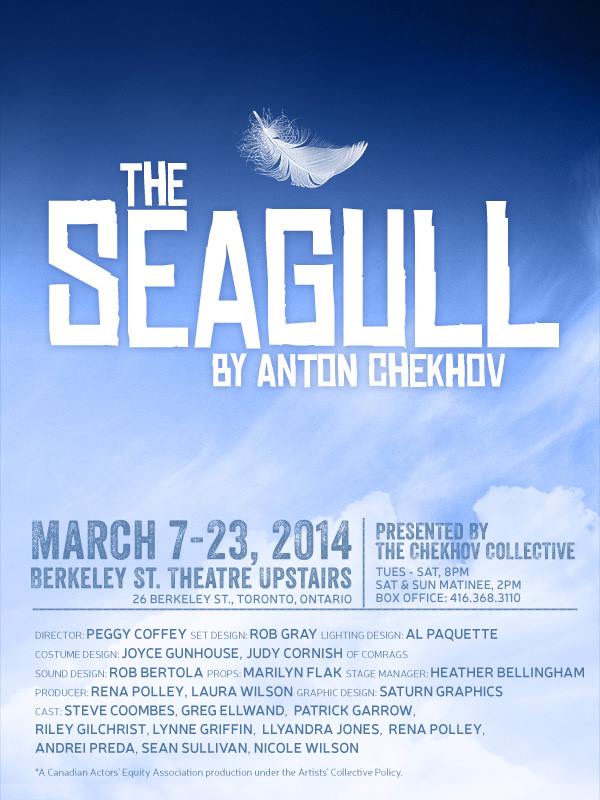
A Few Words with Rena Polley on The Chekhov Collective’s “The Seagull”

Interview by Madryn McCabe

We sat down with Rena Polley, producer and actor of The Chekhov Collective’s The Seagull, to discuss the Michael Chekhov technique, theatre in Toronto and what makes The Seagull so special.

MM: The production part of The Seagull is incredible. 

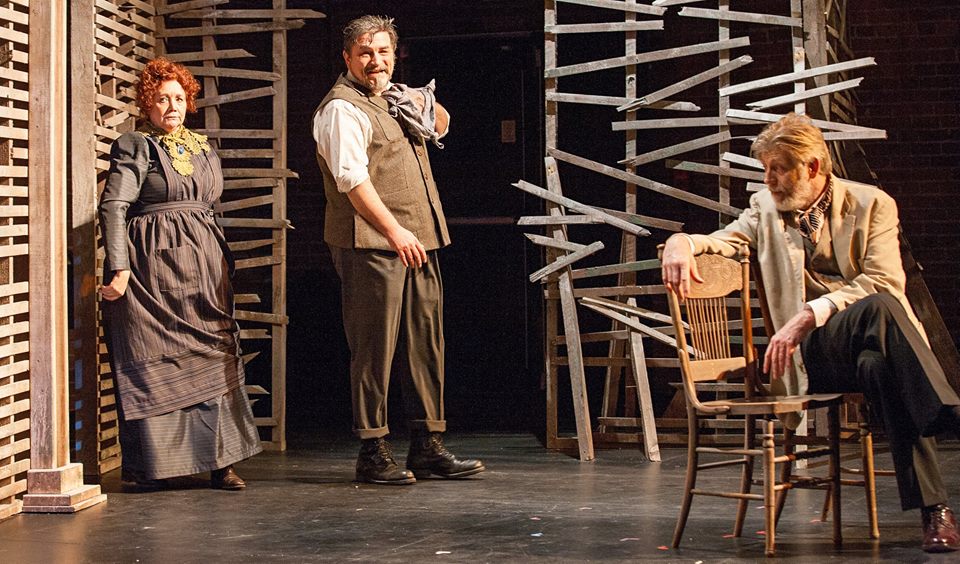
RP: The support team was made up of brilliant people, they’re all award winning, but they had never done theatre before. I got them involved because they’re friends of mine. Rob Gray has won Genies and Geminis. He literally finished filming two weeks ago, came home, pulled in every favour to get the set built, even painted it himself (and it’s been years since he’s done that) and he leaves tomorrow to go to Bucharest for six months, so he very kindly did all this. And it was a learning curve for him. The first time he built the set, it was flat. And Peggy [the director] said, “oh no, it has to be like a W, and this way” so they all learned something because it’s different in film. So, he built this beautiful set. He had it go from something very formal, until it moves across the stage and eventually it disintegrates. Kind of like the play. And the music! Rob [Bertola, Music and Sound Design] is an Emmy and multi award winning sound designer for film, he just finished David Cronenberg’s film, and he’d never really done theatre before either. He came up with the song that’s the theme song. It’s based on an old Russian theme song, but it was rerecorded in the 60’s by The Seekers, and it became this huge popular hit. It’s called “The Carnival is Over”. So he did the reverse; it starts deconstructed and then moves the opposite, so that by the curtain call, the song is sung with full song and lyrics. And Oh Susanna did the music. So it starts deconstructed and ends up full, and the set does the opposite, it starts full and ends up deconstructed as you go across. The lighting designer is Blue Rodeo’s lighting designer. He’d never done theatre before. He finished the Blue Rodeo tour Monday night and was in the theatre Tuesday morning. He’d only seen a run through once. But he’s so brilliant! And Comrags were friends of mine too.

1966802_549145408532794_1292794745_n

MM: Your costumes are works of art!

RP: Comrags had an army of people building all this! Judy [Cornish, Comrags] said, “do you mind if I do the costumes?” I said, “Of course!” and then Joyce [Gunhouse] her partner in the company got involved, and then Joyce’s sister Judy and sewers and interns, and when we all saw the level of the costumes we thought “Uh oh. We’d better up our game!” Everybody felt that. Everybody came with an extraordinary level of work. And it made us up our game as well. And then Peggy came so prepared. She dreamt two ideas. And that was 1) The play within the play. Using the frame, using this kind of deconstructed way of telling a story. Peggy and I did teacher training in New York and our flight got canceled. So we ended up sin Manhattan for two days, and we went to the Museum of Modern Art. There was a show on all these artists that used deconstruction, and we kept seeing references to the frame. Peggy said, “that’s what I want to do at the beginning”. We tried it at a weekend workshop, and she knew it was going to work. We brought in Ellie Hyman from New York, who is a Chekhov person, but also a Viewpoints person, so she did this stuff with us, and we transferred the actors over from Ellie to Peggy. It’s hard as a director to come in to an ensemble that has been working together for a year. She only had three weeks to shape this play. It’s a big play, an epic play. The final image that she came with is when Konstantin rips the papers. Everybody always has him throw the pieces in the air, and she had him stuff them into his clothes, so that he leaves nothing behind. He takes all his writings with him. And it’s such a beautiful, poetic image. So she came with these two very strong ideas that bookend the piece. And she kept hearing rhythms. She could tell when vocally we’d drop the beat and then come up again. She’d say, “Push it. Keep driving it. There’s a pause coming, and you have to earn it.” And you can see these quiet moments in the production. She could really hear the rhythm of the piece, and wanted to honour that. She used Viewpoints from Ellie. She didn’t call it blocking, she called it composition. There are ten actors. There’s a lot to do!

1743632_549145551866113_346019769_n

MM: When you said it was an epic play it really made me think of the number of actors in the play. The nature of the way theatre in Toronto gets produced these days means that ten actors are unheard of. 

RP: Ten big personality characters, and ten big personality actors, that I had empowered, for better or for worse, so everybody had an opinion. Peggy had to really set up a very strong structure for the rehearsal process. We had done all of this Chekhov work and it was all sort of loose and game playing and improv and playing with text, but not making choices about text because that’s directorial. Creating the world of the characters and then when we got to the rehearsal space, it was very traditional. I thought we could continue this process more, but I realized Peggy was right. There’s a three week rehearsal process, there’s a story to tell, and you have to get through each act. We got through each act quite quickly in a big sweep because of the work we had done, and then Peggy went in a worked smaller sections. There was more of a traditional work space. We looked at beats, we looked at text, and objectives. But she would bring in Chekhov vocabulary of “what’s the Atmosphere of this act?” We could get to it quickly because we had been training in that philosophy.

1932373_545819228865412_909286969_n

MM: How did this group of people all come together?

RP: I keep saying that we all worked for a year together, but we really didn’t. Every two or three months we did a three day intensive workshop. So that allowed us to do a lot of stuff, but then let things simmer during that time. And people have lives and shows and lots of stuff going on. So we maybe met three or four times for three or four days each time. In the last month we met every Monday. I knew I wanted to look at this play, and I wanted to see how far I could take the Michael Chekhov technique. Having studied it, I thought, “Okay, I’ve got to put my money where my mouth is”. What this process allowed us to do was to keep expanding and asking questions, instead of contracting and making choices quickly. That was the gift of this process. And even if you look at the program, Peggy talks about how it starts in expansion and ends in contraction. We can use the words of Chekhov. It’s been a really extraordinary process. The question I posed to myself at the beginning was “how far can I take this?” and what I learned is that you can use it all the way through to the end, but you’d better bring along other things as well. There’s a reason the Stanislavski technique is still surviving. It needs to be expanded, and other things looked at, but the ideas of beats, objectives, text analysis is really important, and you need to combine it with the Chekhov work. At some point in the process, you’ve got to throw out the head and let the body speak because it has a bigger vocabulary, but then bring the head back in.

MM: What I found really interesting is that they play is over 150 years old, but it’s still so relevant. 

RP: Every time someone reads this play, they say to me, “It reminds me of Facebook” or we had an athlete in the audience, and she said that Trigoren’s speech about loving the writing process but hating it when it’s published is how every athlete feels when they train. So it speaks to everyone. What we’ve discovered about this play is that there’s no bottom. We could explore this for five more years. For a nanosecond, I thought about modernizing it, but I thought, no, let’s make the audience do a bit of the work. Let them make the leap, put the dots together. Because it’s all there. It’s a story about desire, art, the heart, human nature, relationships, and family. All these things are universal. They’re timeless. We agreed it was best to tell this story simply, and through the heart. Let the play speak for itself. We tried not to add things or colour it.

1907954_549145718532763_1607372493_n

MM: I see the program that you have adapted the play.

RP: I knew I wanted to cut the play, so I looked at about seven different translations. I wanted to make the language accessible, but not too modern. Some of the formality of the language is from the play, but I didn’t want it to be archaic either. I wanted to keep the names simple so that we’re not calling each other by three different names. I trimmed.

MM: There’s also a very strong feeling of the ensemble.

RP: We did that over time, but I also think the Chekhov work can speed that up in a rehearsal. I really want to put this process into the rehearsal process. I’d like to offer myself to directors and say “give me an hour of your day, every day, and I can really help you move this process along. I can help the ensemble, I can help the atmosphere, I can help actors drop into characters”. But rehearsals are short, directors don’t know what it is. I’ve offered a few times and heard no. I understand that, but I think the Chekhov technique can make that happen faster. We had the luxury of time, and I had them do all kinds of things. In the first intensive weekend, I had them read the play and write down images of the play. I collected them, we played with them. We came up with themes, we came up with the set design, I had them come up with one line describing the play, because I wanted them to think about more than their character. I wanted them to take ownership of the play. Sometimes as actors, we just highlight our lines and look at our part in reference to the play. It’s safer. We want to protect ourselves. So I wanted to blow that away, and give responsibility for the play to the actors. We did build the ensemble over time, but I think it could have happened much faster if all we had was the three week rehearsal process. I really want to encourage people to look to the Michael Chekhov technique because I think there’s something in it that every actor, director, designer can use.

10007014_546792548768080_176468322_n

For more information about the Michael Chekhov Technique, visit michaelchekhovcanada.com

For tickets to The Seagull, visit thechekhovcollective.com

“Start, Stop, Continue” for 2014: A Conversation Starter for the Theatre Arts Community of Toronto

Our feature initiative “Start, Stop, Continue for 2014: A Conversation Starter for the Theatre Arts Community” is back featuring the following voices: D. Jeremy Smith of Driftwood Theatre, Tina Rasmussen of World Stage, Holger Schott Syme of dispositio.net, Claire Armstrong of Red One Theatre Collective, Nina Kaye of Unspoken Theatre and Drew O’Hara & Jade Douris of Everybody to the Theatre Company. Read more in our features!

A Note from Editor in Chief – Hallie Seline:

2013 was an exciting year and 2014 has started with no shortage of encouraging moments for the Toronto theatre/arts community. We saw small venues develop and prosper across the city with national recognition from the Globe and Mail, and we saw the community come together showing support and strength in numbers, whether it was to stand behind Buddies in Bad Times Theatredemanding more questions when their Rhubarb Festival was suddenly denied funding, or by getting down and dirty to help get indie venue The Storefront Theatre back on its feet after amajor flood. Amongst these exciting moments, there is no shortage of challenges we are also knocking up against. Be it funding, debating the relevance of theatre on CBC Radio, or the concern that with the growing number of independent theatre companies that we may be spreading ourselves too thin, thus generating the every person for themselves attitude, we believe that there is a lot of discussion to be had about where we stand as a theatre arts community and where we should hope to go next.

I feel like this is an exciting pivotal time in the Toronto theatre arts scene and after having received immense feedback from our first instalment, my hope is to continue to develop this dialogue with another group of theatre artists (from different theatrical backgrounds, emerging to more established etc.) about their thoughts on the state of theatre in Canada, specifically Toronto, right now.

This is a discussion starter in which our participants identify what they think the Toronto theatre scene should Start, Stop and Continue to help theatre in Toronto prosper. This is just the beginning of the conversation. Help us to make this conversation grow to involve as many diverse voices across our community as possible and hopefully this will help us all move forward in 2014 in a supportive and productive way.


Hallie Seline
Co-founder & Editor in Chief

A Few Words with Eric Regimbald on “Blackbird” by Adam Rapp

Interview by: Ryan Quinn

We sat down with Eric Regimbald of Pinchback Productions to discuss their upcoming production of Blackbird by Adam Rapp and his thoughts about the Toronto theatre scene and about the healthy opportunity for growth when taking the plunge with a bold, strong play choice.

RQ: Can you tell me a little bit about Blackbird?

ER: It’s a play by Adam Rapp, a two-hander. It takes place in the dead of winter, at Christmas Eve on Canal Street. It follows two “losers”. He’s a Gulf War vet, she’s an ex-stripper, and he’s trying to wean her off heroin. It’s a really dirty world that has cast them aside. What’s their place in society? But they realize more-so now than ever that they’ve found each other and they need each other to survive. I should mention that when I bring up this play, a lot of people think of the David Harrower play of the same name, which is also a two-hander that’s quite dark.

RQ: What draws you to this play?

ER: Well, I’ve always wanted to do a two-hander. Especially after doing my touring job as a children’s performer, which is fun but not very character-satisfying. I just wanted to sink my teeth into something visceral. Something real and exciting. So, my producing parter and acting partner Alona Metzer and I read a few plays, including One Night Stand by Carol Bolt, which would have been a really fun character to play, but this one is a little further out of my range and a little scarier. I also feel like a lot of people who put up theatre, especially Shakespeare, don’t seem to look into the last time a show was put up. The same shows seem to be done by different people all the time. So, we wanted to do one that hasn’t been done in around ten years, and this fit the bill. We wouldn’t put this up if it was done last year. Even if you might have something different to say with it, I couldn’t bring myself to do it.

RQ: How did this come about?

ER: I met Alona doing class simulations at Ryerson. I heard that she’s a producer and I’m always looking for new people to work with. We started by trying to write something, but I found that that wasn’t what I was really into, so we ended up deciding on doing a published play instead.

RQ: Do you think this show has importance now in Toronto? Do these characters resonate somehow culturally?

ER: The love story is the key thing we’re really trying to flesh out. Anyone can relate to a love story, and I think that’s relevant. I mean, it’s also relevant in that I hope it’s still snowing out in March. People can really feel that isolation, that cold. It would be different if we did this show in the summer, it would resonate a lot differently. It’s such a dark, winter show.

DSC_7021

(L to R) Alona Metzer and Eric Regimbald

RQ: You have these really ugly, grimy characters, and this really beautiful love story. What’s your approach for getting to the heart of the show when the surface is so dirty?

ER: Adam Rapp’s language really juxtaposes all this swearing and talk of heroin with this really clear dialogue that they need each other. There’s a reason you come into the story at this point in the lives of these characters. So, the struggle is clearly there, and the need, and you just tell the love story around that. It’s exactly what you were saying, it’s that they can’t live without each other, and why not. They don’t want to be in their situation. If they were up on stage doing heroin and swearing and loving it, the story would be totally lost. He’s struggling to recover, and she just broke up with a violent, shady dealer, so they’re really trying to salvage a life together. It’s about finding the humanity.

RQ: What are your goals this year as an artist?

ER: I wanted to get a play done early in the year. I put up a play last year in Fringe, but I wanted to get one up early, especially since I’m on the road a lot. It’s that time to do something and not sit around. I’m hoping to work on some other projects later in the year. It feels good to put something up this early in the year, then there’s the hunger for “what’s next”, you know?

RQ: I want to go back on something for a second. Why do you think so many plays are done so often in this city, and do you believe there’s a shortage of original work while young companies tend to do British and American classic work?

ER: A lot of people seem to be afraid to buy rights to shows. They’ll go to Shakespeare right away because it’s free and the problem is that sometimes they don’t have anything to say, or they don’t have the training to bring them to the level that other local companies are doing the work at. What I’m passionate about is contemporary theatre, and a lot of the modern work I see falls toward doing theatre exercises on stage. It doesn’t make sense. I’m disappointed, and don’t get me wrong, I see amazing modern shows that use movement work as well; but a lot of the stuff I see just doesn’t live up to what it could be. It is an accomplishment to put up a show, but that shouldn’t be enough for you. I mean, obviously we’re doing this show partly for ourselves as well, but it can’t be just about that.

RQ: Do you feel that the theatre community is afraid to critique itself?

ER: I think so. I think people are really polite, and we’re not helping each other. I would love to have someone come up to me after this show and tell me why they didn’t like it. It’s better than hearing nothing. We’re trying to be strong in our voice, and we’re prepared for some people to have negative reactions to it.

Blackbird

Presented by Pinchback Productions
When: March 14th to 23rd
Where: Hub14 theatre.
Tickets: Available at the door or at http://blackbird.brownpapertickets.com.

The Memo: A Satire of Bureaucracy

Interview by Madryn McCabe

I interviewed Tyler Seguin, director, and Helen Juvonen, producer and actor, of Thought for Food’s “The Memo” to talk about the show and their intriguing Kickstarter campaign.

MM: Why don’t you tell me a little bit about The Memo?

HJ: The Memo is a play by Vaclav Havel and we are presenting the Canadian premiere of a translation by Paul Wilson, who is also Canadian. I call it a satire of bureaucracy. What do you call it?

TS: A workplace comedy.

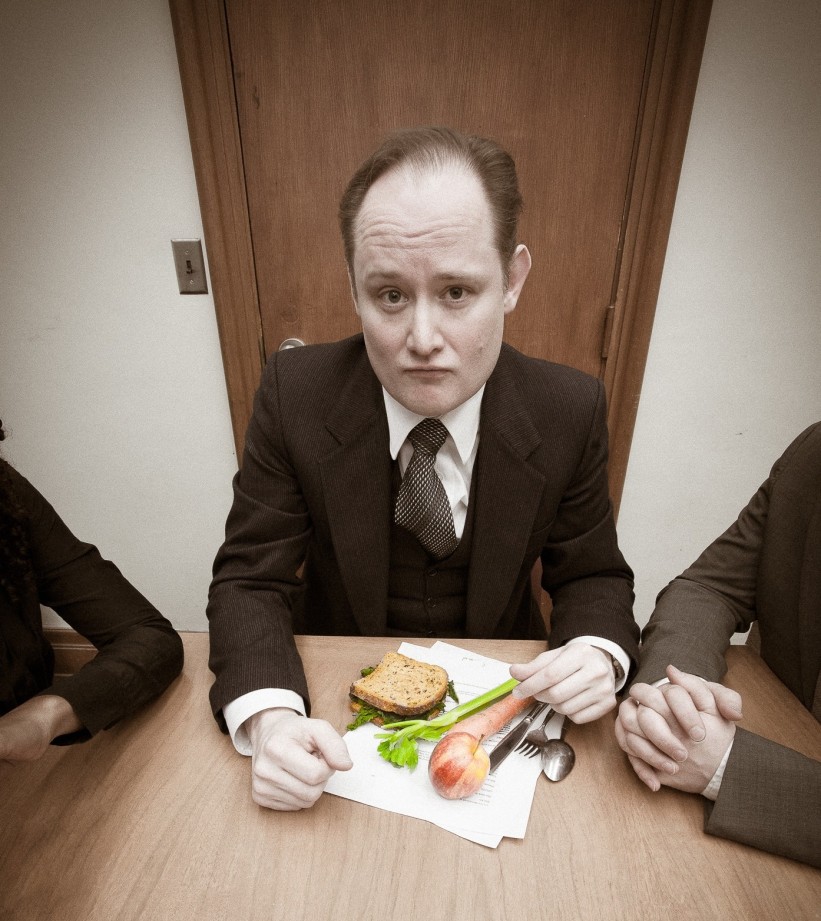
HJ: A workplace comedy! Plot wise, it’s in this nameless organization, which is probably a government agency of some kind, but we never actually find out what they do or what their function is. The main character, Andrew Gross, receives this memo, written in Ptydepe, which is an artificial language that has been introduced into the organization to streamline office communication and he spends the rest of the show trying to get it translated because he doesn’t understand it.

MM: And that’s the irony of the situation and he can’t read the memo and it’s supposed to streamline communication. 

TS: Exactly! And very few people in the organization know the language, and those who do know it are under mounds of red tape, so that they can’t actually do any translations for anyone.

MM: What was it about this play that made you want to produce it?

HJ: I produced a previous translation in 1999. Then, when CanStage was doing Rock and Roll, Paul Wilson was consulting on it.

TS: Rock and Roll was partially about a Czech rock band called The Plastic People of the Universe. Paul Wilson was the lead singer and guitarist for this rock band for a number of years during the 70s. Because he’s Canadian, he was deported for being seditious. This rock band became sort of a focal movement, and focal point of the dissident movement of the anti-Communist uprising. And that’s how he met Havel.

HJ: So Paul Wilson was a consultant on the production at CanStage, and in his bio, it said that he was currently working on a translation of this play. And went “Gasp! I have to do this play! I have to get my hands on this play!” And Tyler tracked down an email and said that we’d like to do the translation and he put us in touch with Havel’s literary agent in the Czech Republic and we got a copy of the new translation.

MemoStillsEditsII-3 web

MM: Do you know if this play has been produced anywhere? I know you said it was the Canadian premiere.

TS: It’s been done once before that we know of, that Paul knows of, and that was as part of a Havel festival in New York.

MM: That’s an exciting thing, that you are one of the first to produce this play. Do you feel like there’s any responsibility to that?

(They pause.)

TS: Yes.

(They laugh.)

HJ: It’s a little nerve wracking. This is the first time we’ve worked on a published play where we’re actually in contact with the translator. I feel like we owe him something. We owe him a good production at the end of the day.

TS: We’ve been in touch with Paul quite a lot. He’s been very supportive. We’ve talked to him about issues in the play, and ways we want to approach it and things like that, and he’s been great, he’s been really on board. But it does put a bit of pressure on us to do justice.

MM: So you’ve been getting some extra insight from the translator then?

HJ: It’s really interesting because he was friends with Havel. So we feel like we have an inside track.

TS: There was one thing we really had to talk to him about. We were like, “Well, we really want to make this little change…”

HJ: Ha! Little change!

TS: And he said, “Hmm. Well, I think Havel would approve!”

HJ: And that was the stamp of approval we needed. And the other reason that we wanted to do this play was a place we were working for… I don’t think we should say where. (She laughs)

TS: Shall we say a branch of the Ontario government?

HJ: Yes, a branch of the Ontario government. And we were going through some rather grotesque bureaucratic nightmares with them and at that time I told Tyler he should read the previous translation. “You’ll love this, this will totally make sense” and he read it and was like, “This is what’s going on in my life right now!” so when we had the opportunity to work on this new translation, we now have an inside track on what it’s trying to say because we’ve gone through something emotionally similar. There’s an emotional resonance in this play that we actually lived through ourselves. And we wanted to do this play several years ago now. As we were trying to get the script and figure out if we had the money to do it, Havel passed away. He passed away in 2011. And all the rights were put on hold. They froze his estate. So we couldn’t perform the play. And it was about a year ago that the agent called and said “You can do it now!”

MM: That’s ironic that just as you’re getting ready to do this play, you end up with bureaucratic red tape in your way.

HJ: Exactly! It’s thematic at least. And now we’ve got the time and we were able to pay the up front costs.

MM: How long ago was the play first written?

HJ: It was first performed in 1965.

MM: Do you think something that isn’t modern or a new play still has a resonance for an audience today?

HJ: It’s kind of creepy that the play was written about Communist Czechoslovakia and it’s like it could have been written today. Part of that is the translation, because Paul is Canadian. But the language doesn’t feel old, and he uses Canadian idioms as well, so it feels modern.

TS: It feels very “of the now”, but what’s fascinating is that the themes of the play, the characters, and bureaucracy hasn’t changed in at least fifty years, probably longer. So, when I read it, I recognized the characters, I’ve worked with these people, and I’ve had to go through these weird situations. Corporate culture is corporate culture. And apparently it’s always been like that. There are arbitrary rules and people who adapt to strange social norms without really thinking about it. Trying to do anything you can to appear busy without actually doing any work is such a running theme in this show, and is very much a theme of the place where I was working at the time. It definitely says something to a modern audience.

HJ: Any time I explain the show to someone, they go “Oh I get that”. I talk about this new language that’s supposed to make things more efficient, and they go “Oh yeah I get that!” I talk to people that were at their place of business when things moved over into computers, and it sounds like the exact same thing. “This is supposed to make your life more efficient” but it ends up causing more problems.

TS: Even the idea of a new language. Havel was in a lot of ways pointing at the Communist party’s corporation of language into propaganda at the time. But you see it today, you see it in corporate culture all the time. I can’t say the word “innovation” anymore without irony to it.

MM: My favourite one is “connectitude”.

TS: And does that mean anything?

MM: It does not!

TS: Exactly! Corporate speak and jargon.

HJ: We’re also seeing it in our government right now with the Fair Elections Act. Is it really about fair elections? And that twist of language.

TS: Or any time a Conservative minister gets up and says, “I’d like to provide some clarity” and you know they’re going to talk about something else. Words don’t mean what they mean anymore. They just use them as noise to confuse everyone and obfuscate and that’s very much in the play. They literally bring in a whole new language that they say is supposed to be more efficient but actually just confuses everyone and causes total chaos.

MemoStillsEditsII-13 web

MM: Why don’t you tell me about your Kickstarter project? 

HJ: We call it the “Give Us an Hour of Your Time” campaign because we’re asking people to donate the equivalent of one hour of their wages. That actually came about as an idea related to a Pay What You Can Performance. People are always confused about how much to pay for PWYC. “I don’t know how much to give you. Is $10 okay?” And now there are signs that state a recommended donation, and I thought, well what is a fair amount to pay? I suppose an hour of my time. I’m going to see a show for an hour or two, so an hour of my time for an hour of entertainment. And then I started joking that it would be great if a CEO came to the show and gave us an hour of his time, because then he’d pay for the whole show. We thought it was an appropriate theme because it’s set in a workplace, so a great thematic tie-in.

TS: Also Havel was a very political author, and there’s a lot of talk right now about the income gap and wage equality and the whole minimum wage debate that went on and is still going on. And we thought, we’re doing a show about workers that is inherently political at a time when that is a resonant thing, so we might as well make a statement with it, in a way that I think Havel would have liked.

MM: I thought your reward levels on your Kickstarter campaign were interesting.

TS: As part of the “Give Us an Hour of Your Time”, we looked at what an hour of different people’s time is worth using some Stats Canada and other publicly available information.

HJ: We had to do some massaging a little bit because there’s no clear hourly wage for say, a lawyer, but it’s all pretty accurate. We started at $10, which is as close to our minimum wage as Kickstarter would let us get (they don’t like decimal points), and then the next step up is average Canadian, who apparently makes $23/hr and then senator at $65, and the 1% threshold, which is shockingly low. Yes, $92/hr is still impressive…

MemoStillsEditsII-10b web

MM: But to think that the people who run our country are making less than $100/hr. makes you think.

HJ: And maybe that’s just in Canada. We don’t have a super wide disparity of wealth and non-wealth.

TS: I think it’s amazing just how big the swath of the 1% is in Canada. ‘Because you do have people who are making like, 30 billion dollars a year, some really obscene figures like that, but you could be one of the top income earners in Canada with less than $100/hr.

HJ: And we have Prime Minister, who makes $154/hr. All these are averaged on a 40 hour work week and a 52 week year, but I know that people work more or less than that.

TS: There’s average lawyer, $301/hr and average CEO who apparently makes $631/hr and the top CEO is something like $7200/hr.

HJ: An hour! AN HOUR! So if just one of those top earner CEOs were to give us an hour of their time, they would give us our Kickstarter goal twice over.

TS: When we were setting our target, we thought, well what do we need to put the show up? And we decided it was about $3500. And when we saw that the top CEO was $7281, we thought, close enough; we’ll just make it half of that, so 30 minutes of a CEOs time will pay for our goal.

HJ: We’re doing this show as an Equity collective, which means that no one is getting paid up front. People only get paid if we cover our expenses and make a profit. And with all the actors and the people behind the scenes, there are 17 people involved. We haven’t done it yet, but I really want to sit down and find out how many hours work hours have gone into this show, so that people can see how much people have already donated of their time to make the show happen. It’s going to be astronomical because we’re looking at over 100 rehearsal hours, multiple people per rehearsal, and then all the time that’s already been put into it. So it’s not unreasonable to ask for an hour of your time considering everything that goes into it.

TS: People seem to be overwhelmed by all the different things that are going on. There are some great projects and ideas on Kickstarter and Indiegogo and GoFundMe and people don’t know what to donate to or don’t know what an appropriate amount is. So we’ve tried to make it simple and maybe fun. If you make $14/hr, then $14 is an appropriate donation.

HJ: It’s funny to see how literally some people are taking it. Some odd dollar amounts are being given to us, and I love it! I love that somebody actually figured out how much they made and decided to contribute. And someone was like, “Well, I’m not a senator, but I like the title, so I’m going to donate at that level”. People are having fun with it, and that’s great.

TS: This is an exciting opportunity to bring to a Toronto stage an author who is so rarely done and in a fresh new translation by a Canadian, so we’re really enthusiastic about the production and hope that people can donate.

The Memo

Written by Václav Havel, translated by Paul Wilson, presented by Thought for Food Productions

The Memo3
When: April 23rd-May 10th
Where: Unit 102 Theatre
Ticketshttp://www.brownpapertickets.com/event/580252
Websitehttp://thought4food.ca/
Facebook Pagehttps://www.facebook.com/pages/Thought-For-Food/18927149356?ref=hl
Kickstarter Campaign Reference (Unfortunately the Kickstarter Campaign has is past its end date but fortunately they exceeded their goal in a 24 hour challenge! BUT… Of course you can still contribute to Thought for Food Productions by BUYING YOUR TICKETS to The Memo IN ADVANCE!)

https://www.kickstarter.com/projects/1434319692/the-memo-give-us-an-hour-of-your-time-campaign