Skip to content

Posts from the ‘Uncategorized’ Category

In Conversation with Jenna Harris – Playwright & Performer of “Mine” at the NSTF

Interview by Hallie Seline

It’s January. It’s cold. But if there is one thing to make this bleary month bearable, it is the excitement for The Next Stage Theatre Festival, a curated festival from The Toronto Fringe which provides past participants the opportunity to take their work “to the next level”. It is a great chance for artists to dig deeper into their projects and for audiences to see a variety of indie work and be introduced to new artists in between trips to the heated beer tent where you can connect with friends old and new and discuss the work over a local brew.

I had the pleasure of chatting with Jenna Harris, playwright/performer of Mine playing in the Factory Theatre Studio Space. We discussed the benefits of wearing many hats in the theatre world, playing with form and poetry, where she looks for inspiration, and the need to produce more work featuring the lesbian voice and authentic female sexuality. 

HS: Tell us a bit about yourself.

JH: I am an actor, writer/creator, arts educator and dancer (although formerly!), and the Founder and Artistic Director of Discord and Din Theatre. I am also a member of the [elephants] collective, a devised theatre collective. Originally from Kingston, Ontario, I went to acting school at The American Academy of Dramatic Arts (NY) before moving to Toronto.

HS: You wear a lot of hats in the theatre world. Can you speak about the benefits of this and what you’ve learned because of your experience?

JH: Absolutely! I am currently the Interim General Manager of Studio 180 Theatre, and was once the Assistant Box Office Manager at Buddies in Bad Times Theatre. These two jobs, have been invaluable in teaching me the skills required, as well as the confidence, to self-produce.

Producing was not something that was taught to us or even spoken about when I went to acting school, so I never thought that would be something I would end up doing. But after moving to Toronto and seeing what a vibrant indie theatre scene existed here, and that it was possible to self-produce if you have the knowledge and skills to do so, I really wanted to learn as much as I could to create opportunities for myself and to get my work out there.

HS: Talk to us about Mine and why you wanted to put this story out in the world? 

JH: Mine is the story of the relationship between Bea and Abigail who meet when Bea is an undergrad and Abigail is her T.A. It is a story of joy, laughter, desire, miscommunication, sex, sadness, vulnerability, anger, lust, humour, growth, fear and love.

There are sort of three components to the story that, when I first started writing it, I wanted to tackle. The first one was that I was interested in musing on relationships: why they work, why they don’t, what it feels like to be in them…love, conflicts, power dynamics… And with this, the second one was, more specifically, that I wanted the relationship to be a lesbian one; not about being in a lesbian relationship, but simply about one. It’s a mystery to me why lesbian voices are not as numerous on Toronto stages as I feel they should be, given the strong lesbian presence in the theatre community and in the city as a whole. Lastly, I was interested in writing a play that paid homage in some small way to female sexuality – something that I also feel is lacking in theatre in an authentic and relatable way.

Michelle Polak and Jenna Harris in Mine

Michelle Polak and Jenna Harris in Mine

HS: Can you speak about your use of poetry in Mine and a bit about the play’s structure?  

JH: The role of poetry in this play is interesting, for me at least, because it wasn’t anything that I had planned to do. I didn’t start out by saying, “I would like to feature poetry in this piece”. It more just happened.

I am very interested in language and how we use language, particularly patterns of speech – the poetic rhythms of natural and not-so-natural speech. So this is where I first started. But then I guess I moved on to questions such as: What makes poetry/a poem? What is it about certain words or the way in which they are strung together that makes us feel things versus times when we don’t? And what does it mean when we can say things in a structured format like poetry or playwriting for that matter that we can’t in real life?

And so it was these questions as a playwright, coupled with the fact that Mine isn’t linear that I was interested to see how the theme of poetry, as well as poetry itself, could tie this play together and help to extenuate the journey of this relationship.

HS: Why do you think festivals like the NSTF are important for the Toronto arts community and Toronto as a whole?

JH: I think that festivals like NSTF provide an opportunity for artists to put their work out there in an extremely supportive environment where, not only is there the opportunity to continue to gain skills in self-producing, but also, because of the support of the Toronto Fringe, you are able to really focus attention on the art being created. This is a huge luxury.

Furthermore, NSTF creates a physical space, a hub, for artists to be able to come together and meet one another, and share and get excited about what is being created in our city, whether that’s a NSTF show or something else. Having this space and opportunity to interact with one another, and in solidarity brave the freezing winter to do so really bonds us as a community.

In terms of Toronto as a whole, I think NSTF is a chance to see work that might not be seen otherwise, or if it is, may go under the radar. Also, with the festival setting, I think people are more likely to come to one show and then maybe stay for another, see something they might not see otherwise, again exposing them to new work and artists.
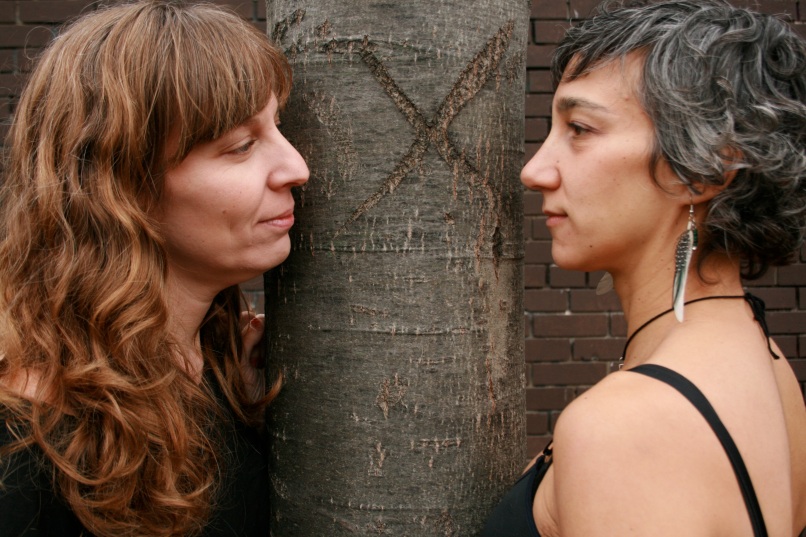
Jenna Harris and Michelle Polak from Mine.

Jenna Harris and Michelle Polak from Mine.

HS: Where do you look for inspiration? 

JH: Hmmm… I think content inspiration for me usually comes from things that I find fascinating in the world or that I have questions about. I am particularly interested in the personal and the interpersonal; what makes us tick as people, as well as the ways in which we as people interact with each other and the world around us.

As for aesthetic and writing style/structure, inspiration for this has come from constantly reading plays from all over the world, but also going out and seeing theatre and other types of performance. I love being inspired by the work of others, whether that inspires me to try something new in my writing, or pushes me to risk more.

HS: What is your favourite part about the NSTF tent? 

JH: My favourite part of the NSTF tent is the atmosphere. There is so much energy and excitement in one place, you can’t help but be swept up by it. Even on our opening when it was -30, people were in the tent chatting with one another and getting revved-up to see shows. As a theatre artist, this is essentially heaven!

HS: If you could have your audience listen to a song or playlist before seeing the show, what would it be? 

JH: Oooo…good question! Well, a song that our Director Clinton Walker had us listen to was Pentatonix’s Run to You. Although I would maybe say listen to it after the show as opposed to prior to. I would say listen to something before that you love and that makes you want to get up and dance because who doesn’t love to dance?

**No cheating… listen to this after you see the show:

HS: Describe Mine in 5-10 words.

JH: Mine is about what it means to love someone.

HS: What’s another NSTF show that you are most excited about?

JH: Okay, so I’m going to be that person who answers this way: I’m excited to see all of them!

I am, actually. I’m looking forward to seeing what the other companies have been working on the past few months as we’ve been working on Mine, how diverse the shows are, and the passion with which these companies are putting their works out there.

Mine

by Jenna Harris, presented by Discord and Din Theatre as part of the Toronto Fringe’s Next Stage Theatre Festival
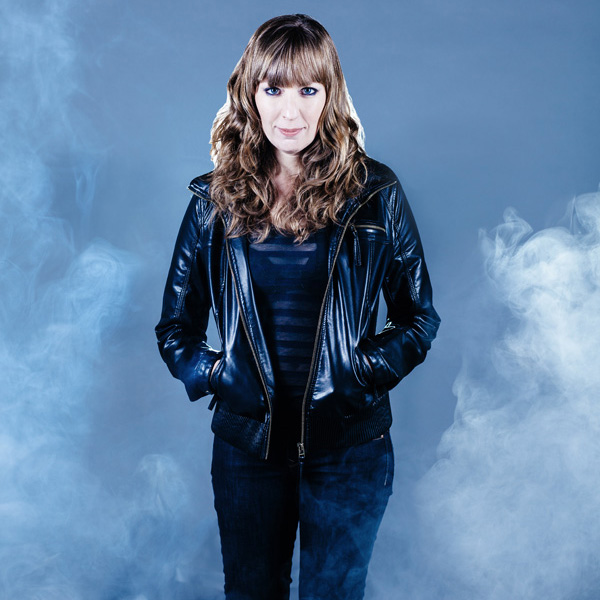
Mine

A bar, two strangers and a Fuzzy Navel. Mine is a rhapsodic odyssey of love, loss, laughter and the lives of two women as they build a relationship together. Composed within a haunting and sensual rhythm, this is a play that speaks to our desire and desperation to be understood, valued and loved. Our human need to belong.

Tickets: $15 – Buy here.

Connect: Discord and Din Theatre @DiscordandDin

Where: Factory Theatre Studio (125 Bathurst St.)

Length: 60 mins

Playwright Jenna Harris
Director Clinton Walker
Featuring Jenna Harris, Michelle Polak
Sound Designer Lyon Smith
Lighting Designer Adrien Whan
Dramaturge Clinton Walker
Producer Emma Mackenzie Hillier
Stage Manager Christopher Douglas

When:

Wed Jan 7 – 6:30pm
Thu Jan 8 – 9:00pm
Sat Jan 10 – 8:45pm
Sun Jan 11 – 5:00pm
Mon Jan 12 – 7:15pm – followed by a Talkback at The Hoxton
Wed Jan 14 – 8:30pm
Fri Jan 16 – 4:45pm
Sat Jan 17 – 2:45pm
Sun Jan 18 – 4:00pm


Artist Profile: Something Wicked This Way Comes… Q&A with the Macbeths – Amelia Sargisson & David Ross

Interview by Bailey Green

I interviewed actors Amelia Sargisson and David Ross who play the Macbeths in Shakespeare Bash’d upcoming production of the Scottish play. We discuss working with Bash’d, focusing on storytelling and taking on the title roles. 

About the actors:

Amelia was born and raised in Montreal, she moved to Toronto to attend Ryerson Theatre School under the direction Perry Schniederman. Post graduation she decided to stay in Toronto to pursue her career. Her love of the city was a “slow burn” and she finds the city’s openness to new, and international, ideas and methodologies inspirational.

David is originally from New Hamburg, a menonnite town, and didn’t start out as an actor. He actually left a career as an engineer to attend the University of Windsor’s Acting program. Both actors share a healthy list of theatre credits to their name with companies across the province and the country.

Bash’d does Macbeth, how will it be different from other productions?

AMELIA: There isn’t a concept per-se. Bash’d built their reputation on a bare bones approach to the text which highlights the characters with their relationships and scenes above all. The action isn’t transposed, it’s just letting the words do the storytelling.

DAVID: I get questions from people all the time, what’s your concept? Are you doing Elizabethan? But our goal is just to be clear with the storytelling. For example, we fight with Bowie knives and there are garments that distinguish people as military or non-military, but there’s no time period. The story telling is clear and our main focus.

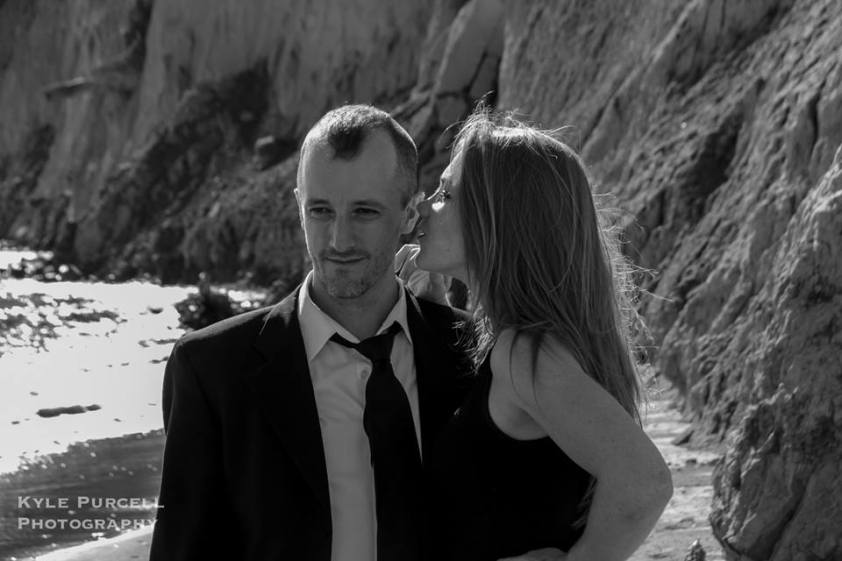
Julia Nish-Lapidus, Maggie Blake and Hallie Seline. Photo by Kyle Purcell

Julia Nish-Lapidus, Maggie Blake and Hallie Seline. Photo by Kyle Purcell

On the challenges of these well-known roles: 

AMELIA: Director James Wallis has insisted several times in rehearsal that there is no “Lady Macbeth,” there is only you. In some ways I agree with him, I only have myself to bring to the part. I can only trust that the words and language of this character will be the gateway into her soul, heart and thoughts. Her ambition is fierce in a way that is kind of frightening. I would call myself fierce, but I would never consider murder to achieve my objective, thankfully, so trying to make that leap is where I have to fill in the blanks.

DAVID: The expectations of people are astounding and if I think that for a second I get a little panicked. People love this show. When people say they can’t wait, the outside part of me smiles and the inside says what the bleep. I am what I am. I draw on my life experience; I’ve had a scrap at a hockey game but I’ve never dissected humans on the battlefield and been lauded and given medals for it. I’m an urban dweller that grew up in the country. Growing up, I knew men that were honourable and noble, warriors and athletes. It’s been wonderful getting him [Macbeth] to walk when I wanted him to run. I lost a lot of sleep, but even that gave me insight into the show.

On building the marriage of the Macbeths:

DAVID: When I first found out about Amelia’s casting I was thrilled. But then I laughed a lot because the woman playing the love of my life is actually the wife of my mortal enemy onstage (Macduff, played by Kyle Purcell) and they got married during the rehearsal process! Amelia is amazing, as attested I think by how busy she’s been in the theatre world. It’s such a terrifying relationship, and she plays a character that convinces me that one of the worst sins in the world is a-okay. It’s exciting for me to be convinced by her and it’s tough to put up obstacles. The relationship, for me, is the crux of the play. When it starts to fall apart, the plays goes to hell.

AMELIA: James [Wallis] identified that we have good chemistry onstage and we didn’t have to work for that. The privilege of working with Dave is that he’s game to try it every way, preposterous or silly or wrong and in doing that we’ve discovered textures and layers in all forms. There’s only so much you can learn by talking about it [which we did] but sometimes you just have to get in the muck of it. It’s important for me to have esteem and love and admiration for this man, for his courage and nobleness. I have found that easy to access because he is all of those things, lovable with a true heart. 

David Ross and Amelia Sargisson - Photo by Kyle Purcell

David Ross and Amelia Sargisson – Photo by Kyle Purcell

On working with Bash’d:

Amelia met Artistic Director James Wallis at Ryerson, and Amelia and David met when they were cast as the Capulets in Wallis’ staged reading of Romeo and Juliet, which was Bash’d first theatrical endeavor.

AMELIA: Beyond the first two staged readings, this is only the second full production I’ve done with Bash’d but it’s the first time James has directed me. It’s a privilege for me to work with him. His ability to illuminate the text is unmatched. The company is less practiced in doing tragedies, focusing on lighter content in the Fringe Festival. But last year they did R & J, and [Macbeth] is one of Shakespeare’s more mature tragedies. The company is continuing to grow and taking on more ambitious projects.

DAVID: Many things are different and the same. The same is James’ knowledge of Shakespeare. Before the show he has mined every source for context, meaning, double meaning, triple meaning, historical basis and he’s done that for every word of the play. What is different is I have never been a part of the rehearsal process this much. It’s my first crack at a title character. James and I have discussed things over drinks, through text and email, in moments passing each other in the hall. I have to say the process of building my character hasn’t been much different, but the journey is just a bit longer.

AMELIA: And the result will surely be different. 

Why theatre?

AMELIA: I believe in the power of a well-told story to affect people in different ways […] and to inspire them to make changes in their own lives. I love and appreciate the opportunity theatre creates for communion, to be in a room of sentient beings with a shared life and away from the solipsism of our glowing screens. The power of live theatre is very unique.


macbethcover

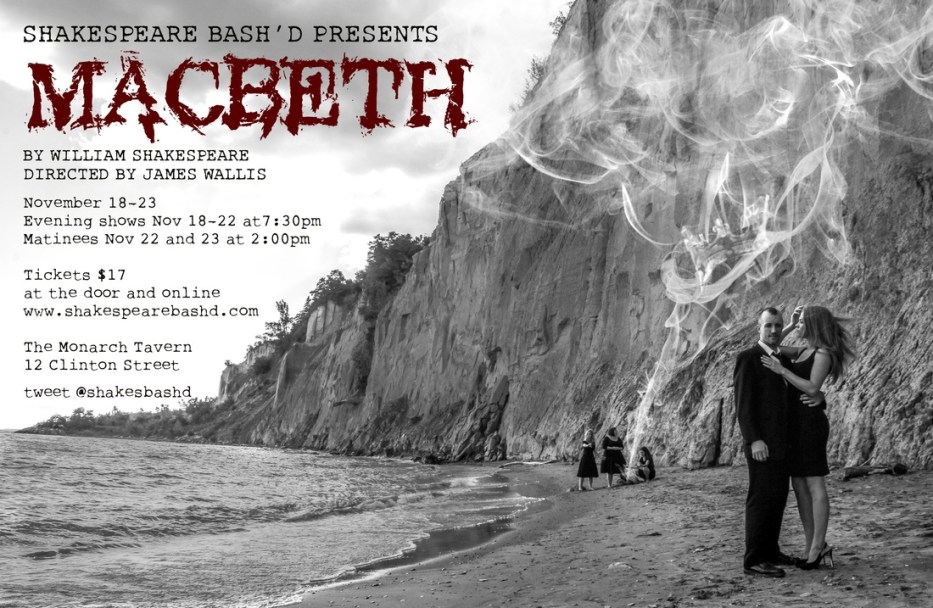
One week only, Macbeth runs at the Monarch Tavern (12 Clinton Street, just south of College) until Sunday November 23rd.

Tickets: $17 http://www.shakespearebashd.com/tickets.html

Follow Bash’d: @ShakesBASHd
Follow In the Greenroom writer Bailey Green: @_BaileyGreen
Follow In the Greenroom: @intheGreenRoom_

Tarragon Theatre’s Playwrights Unit: Playwright Profile – Evan Webber

by Bailey Green

I connected with Evan Webber to ask him a few questions about working with the current Tarragon Playwrights Unit. The upcoming Play Reading Week runs from Tuesday November 18th to Saturday November 29th in the Near Studio in the Tarragon Theatre. Each reading is at 8pm. Other Jesus, the play Webber workshopped in the Unit, will be read on Friday November 21st.

BG: Tell me a bit about yourself, where you’re from and where you live now.

EW: I’m from Ottawa, or at least I mostly grew up there. I came to Toronto when I was still young enough to do some growing up here too. But I was old enough that I only have one layer of association on things. No nostalgia.

BG: When did you start writing? Did it begin with plays or have you experimented with different forms?

EW: I always wrote things as a sort of game with myself, from when I was very young. I couldn’t read or write until I was pretty old so I listened to things and got my mom to help me write things down.

Later, writing plays became a way of expanding that game to include other people, so I started doing that when I was in high school. It gave some form to the socializing, helped me to understand the dynamics of people, so I guess I liked that. I always felt drawn more to other forms of writing, but I liked the way that reading and writing plays always implied or assumed some other collective action to come, one set in motion by the text. Most of the writing I’ve done in the last five or ten years has been with other people, collaborative writing of one kind or another.

BG: Tell me about the play you’ve written with the Unit this year.

EW: I’d had this very schematic idea to make a pageant play about the life of Jesus for non-performers, a kind of allegory about virtuosity for presumably non-virtuosic people. It’s about the life of a teacher in ancient Judea who starts performing miracles and how that changes him and his friends, and about how he takes on that identity as a miracle-performer. I guess it’s about leadership in cultural projects. 

14563

BG: What was the experience of working with the Playwrights Unit like?

EW: It’s nice to realize that everyone has a different idea about what makes something good. Like I don’t think anyone agrees. That’s really cool. That’s evident all the time.

BG: How has the Unit helped with the creation process of this play?

EW: I wanted to produce something out of the constraints of the theatre and the Playwrights Unit. There was no other good reason for me to be there or for me to take part. I don’t mean to say that you’re only supposed to do one thing in the Playwrights Unit, I just mean that there are a number of assumptions that a conventional theatre company like Tarragon holds, it’s in the walls and the floor, it affects everyone there. So I thought, maybe I can exaggerate these particular institutional assumptions into a kind of system and make something out of that. So the play is all about the Unit from that perspective. Every part of the play reflects the conditions of the Unit.

BG: What has been the most challenging aspect of this play? What themes does it deal with?

EW: Sticking with the approach. The play sketches some people who grapple with their fundamental interchangeability. So I didn’t want to write something I recognized as my own: I wanted the language of the play and its structure to come to terms with interchangeability too, to be just barely acceptable or competent. It was a challenge to stay committed to that, to not make it more clever or polished, to stick to my constraints, even when they seem to deflate the drama.

BG: What advice has helped you the most in your creative career?

EW: I don’t know. I had a dream once where I went to a Japanese restaurant with an artist I really respect and this artist told me, “Okay Evan, you’re an okay writer, you work hard and you’re thoughtful but you don’t have any vision for feelings, and without that your work is meaningless, you’re in the wrong business…”

But that was just a dream.


Some Favourites:

Playwright(s): Heiner Müller’s and Gertrude Stein’s plays always surprise me. Richard Maxwell

Author(s): Lately, I keep going back to Kathy Acker and Roberto Bolaño

Time to write: Whenever

Coffee shop: Oh, huh

Website or Blog: Facebook or maybe Bomb magazine


More information on the Tarragon Playwrights Unit and the playwrights involved can be found on their website


Past In the Greenroom Playwrights Profiles:

Playwright Alexandria Haber: https://inthegreenroom.ca/2014/09/16/tarragon-playwright-profile-alexandria-haber/

Dramaturg Andrea Romaldi: https://inthegreenroom.ca/2014/06/19/tarragon-theatres-playwright-unit-an-introduction-with-dramaturg-andrea-romaldi/


Follow our writer Bailey on Twitter: @_BaileyGreen

ARTIST PROFILE: The afteROCK Plays: In Conversation with Sébastien Heins and Catherine Hernandez of Brotherhood and Femme Playlist.

Interview by Bailey Green

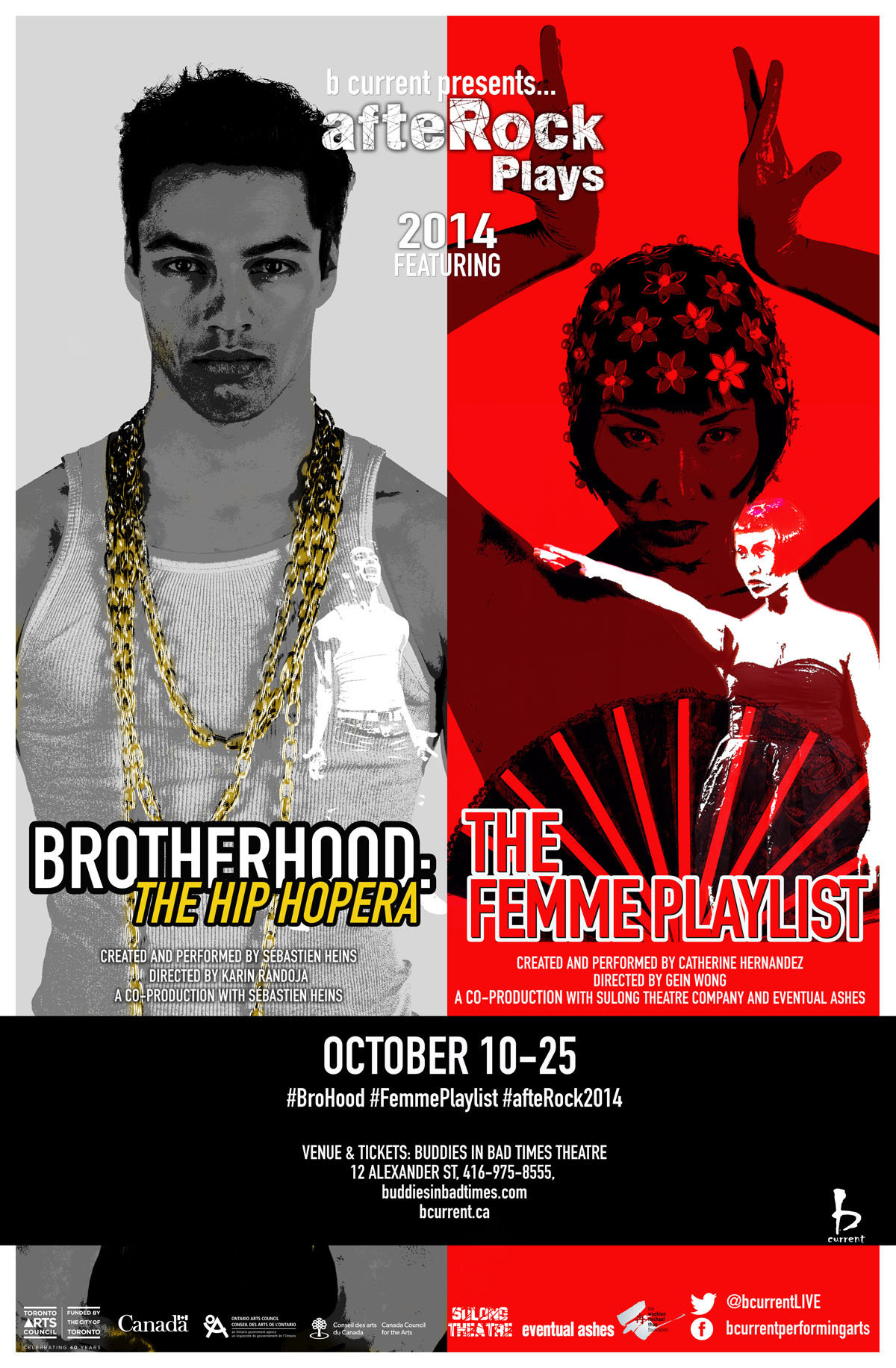
I interviewed Sébastien Heins and Catherine Hernandez about their solo shows, Brotherhood and Femme Playlist, playing at Buddies in Bad Times presented by b current as part of their afteROCK Plays series. They were both such a joy to interview. Their passion, gratitude and openness radiated as they spoke about their work. Catherine’s interjections with the children she cares for in her home daycare peppered our chat, “I’m feel like I’m the queer filipino version of Louis CK, children are very funny creatures and I approach my care of them with honour and humour.” And Sébastien had me laughing with his enthusiasm and bashfulness when discussing the title, and the creation, of his piece’s opening song, “Threesome with my bro.” #BroHood and #FemmePlaylist captivated me with each performance’s tremendous energy and detail. I had the pleasure of witnessing their creations and hope that many of you will too.

On the origins of the piece:

SÉBASTIEN: Brotherhood the hip hopera started as a fifteen minute solo show when I was a student at NTS. We were tasked with creating a show that was spurred on by a burning question. My burning question was “what if I had had a brother?” As an only child, this question held a lot of ammunition for me. So the piece is about these two brothers, Cash Money and Money Pussy. They have this crazy night where they rap at and with each other, sing r&b songs, and the night culminates into an epic climax where one of the brothers is killed in a car accident.

CATHERINE: The idea began when I did an interview for Ron Jones’ radio show in Harlem. He asked for was a playlist of your life. So I did that interview and it was a three hour long conversation. I was laughing and crying along to the soundtrack of my life. My friend Kim Katrin Milan began to host a retreat, often at my house, called Brave New Girls Retreats, for queer femmes of colour. We talk, meditate, do yoga and practice self-care. It was around then that I realized that my narrative was experienced by so many, but heard by none. Originally it [Femme Playlist] was a fifteen minute excerpt at Amplify Femme at VideoFag and then it snowballed from there to became a 45 minute piece that I did at a decolonizing conference and it went on from there.

483461_523027841048635_613575341_n

On the path to the afteROCK Plays series:

CATHERINE: In 2013 I called b current just before the rock.paper.sistahz festival. It was past the submission date, but I called anyway. I needed a night to perform the show in it’s entirety to test out the flow. I wanted to get a sense of the narrative and transitions. And b current said yes. It was a hit [with the audience] and there was a standing O. That was my first draft so [it was good to know] it connected. It moved on to Rhubarb, which is usually only shorter pieces, but Brendan Healy wanted it to stay intact and be full length. I was so, so honoured and I knew it [the piece] had legs (which is actually my burlesque name.) Then when I was selected for afteROCK, Gein Wong came on board as my director which was great. I feel very blessed.

SÉBASTIEN: [At National Theatre School] People liked it [Brotherhood], the dance and physicality, theatre and storytelling, they dug it. So I challenged myself to create a 60 minute version. I took Brotherhood to the largest solo festival in the world in NYC, United Solo, and I won Best Emerging Artist, but I knew I wasn’t done. Then b current gave me this opportunity to be in their afteROCK play series. They give me [and Catherine] everything a professional production would get. We built a light wall, like Kanye or Jay-z would have. My director Karin Randoja—one of the founders of Primus Theatre—she directed and dramaturged it into a new show. It’s more mature and braver than it was before, and I’m very proud of it.

On the experience for the audience: 

SÉBASTIEN: We have local up and coming hip hop acts opening the show, a couple nights we have ten year old breakdancers outside. It should feel like the fiction has already started, so it’s like you’re at a Cash Money/Money Pussy show when it starts. The piece deals with fame, facades, masculinity, the way men have to front and show themselves off which doesn’t always coincide with how they feel. There’s the bond of brothers and how it’s broken by the stress and the game. It is a hip hop opera, so you’ll recognize the medium as you watch it. There’s large emotions and big, arcing, epic story-line.

CATHERINE: Femme Playlist is a one woman show that tells the realities of being a queer woman of colour, a single mom and a femme. Queer theatre a lot of the time is grown in very subversive spaces, the tradition of the queer salon is in someone’s basement or small theatre hovel. So being in a much larger space with lighting and sound, it’s magic.

Photo Credit: Jacklyn Atlas

Photo Credit: Jacklyn Atlas

On being part of a team:

SÉBASTIEN: I have to shout out my sound designer Micky Rodriguez. He’s a beat maker and rapper, and he has been amazing. The music in the show before served a purpose but now the tracks are all bumped up, which is a game changer. We have this opening, I laugh every time I have to say it outside the show, but it’s called “Threesome with my Bro” which is like Cash Money and Money Pussy’s greatest single. I originally did the instrumental and I knew it was so not up to par, but Micky really put his energy into it and gave it a trap beat. We have another song where it’s raining and the droplets become a beat for the song, with like an usher “U got it Bad” feel, so the sound helps create the next moment in the story musically

CATHERINE: Gein Wong is so special with her vision when it comes to lighting and sound. I love having a team. The team is a chosen family. Our production manager Suzie Balogh was one of my students when I taught at Factory Theatre. She was a kid in highschool studying my play Singkil and now I look over and she’s at the board. It means a lot to see a story like this in the mainspace, that this story is being heard and that their [femme] lives are important.

On the challenges faced with this piece:

SÉBASTIEN: Not being the producer actually. This piece is my baby, so when you hire outside people you just have to trust them to do their job and not think about it. I took that freefall in letting go and it’s a huge step to go in and just be a performer. It can also be hard to re-vamp and re-envision a work, before it was more crowd pleasing. The second act starts in the 70s and 80s, and it’s still funny but it does get dark and scary. I never would have had such an intimate look at these characters had we not done that. They’re men who inspire and challenge me as characters in a way they have never done before. All I can do is bare myself and show my work and hope people get something out of it.

CATHERINE: I’m a brown woman which means that the traditions that I heed to are multidisciplinary, but to me that’s storytelling. It can be hard for people to understand that sometimes. People are getting there, but this piece will help people understand my jive. Written down it doesn’t always translate, you need to see it visually. I hope it helps bring about a greater understanding of multidisciplinary.

On the greatest joy experienced with this piece: 

SÉBASTIEN: [Through this process] there was many times in rehearsal where I felt I’m part of a team. And as a solo performer I think that’s rare. It can be really lonely, and it’s all on you. The audience is just staring at you. I feel so supposed by my team, they’re like my rock. Like 300 Spartans behind me.

CATHERINE: The day of opening night I found out on Twitter that Jennifer Laude, a trans Filipina, was found dead in a motel room. She was murdered by a U.S. marine. This news is tragic because it’s so widespread. I knew I needed to dedicate my performance to her for opening night, if there’s any femme I could give this to…and I felt her all day. Every queer that hugged me yesterday [opening night], we have a narrative of loss and judgement and danger and to know that I have the privilege to be the person on stage to speak on behalf of all of us. [When I’m onstage I have] queer in my ears, between my fingers, in my hair and all around me. What I love about being queer is we can laugh and cry about our triumphs and tragedies.

afteRock EFLYER

Brotherhood: The Hip Hopera

10712910_10202376879777096_18159579963476806_n

Created/Performed by Sébastien Heins

Directed by Karin Randoja

a co-production with Sébastien Heins

This live virtuosic hip hop show tells the story of superstar sibling duo CashMoney & MoneyPussy, chronicling their climb to success, breaking apart, and epic reunion.

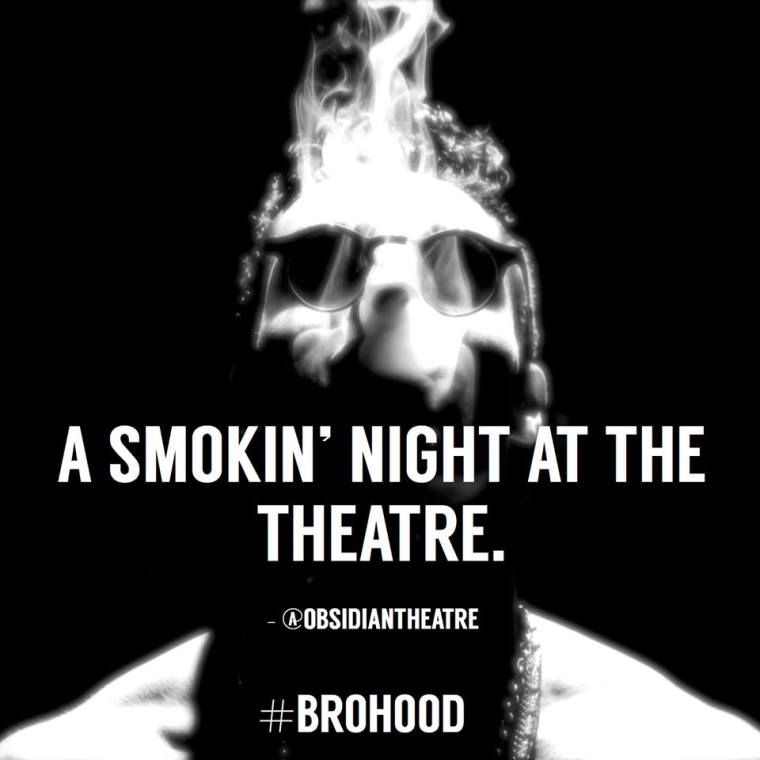
#BroHood trailer: 

fb event: https://www.facebook.com/events/687971971283848/declines/

Tag photobooth selfies with @CashMoneyRaps on twitter & instagram

The Femme Playlist

IMG_8654

Created/Performed by Catherine Hernandez

Directed by Gein Wong

a co-production with Sulong Theatre Company and Eventual Ashes

From masturbation to motherhood, body shame to burlesque, Catherine Hernandez uncovers the realities of living as a queer woman of colour set to the music of her life.

#FemmePlaylist trailer: 

fb event: https://www.facebook.com/events/1458812434386125/

Mature sexual content and coarse language in both shows – recommended for ages 16 and older.

Showtimes:

Both shows play every day (except Monday, October 20) until Ocotber 25. Schedule below.

Additional performance of Brotherhood: The Hip Hopera on Wednesday, October 22nd at 1pm, $10 (purchase by phone or in person, available online soon).

Regular updates via social media

@bcurrentLIVE on twitter

#afteRock2014 #bcurrent

www.facebook.com/bcurrentperformingarts

Tickets & Venue:

Buddies in Bad Times Theatre, 12 Alexander Street | Toronto | M4Y 1B4

Box Office: 416-975-8555

http://buddiesinbadtimes.com/2014-15/afterock-plays/

$15-$50

Student/Senior/Arts Worker/Underemployed discounts available

Rush tickets ($15) available the day of, in person only at noon.

Pay-what-you-can to this Sunday’s performances

2-for-1 tickets for femmes to The Femme Playlist on Friday, October 17, and Tuesday-Thursday October 21-23.

Get 50% off second ticket to Brotherhood: The Hip Hopera when you bring your sibling.

afteRock-Schedule

What afteRock is:

A play series that takes select plays from past b current rock.paper.sistahz theatre+ Festivals to the next level as workshop and full productions co-produced by b current and the show’s artists.

This edition of the series is presented by b current as part of the Buddies in Bad Times Theatre’s 2014-2015 – both shows were hand-picked by Artistic Director Jajube Mandiela from the 12th rock.paper.sistahz Festival.

An Interview on Theatre Archturus’ – Weïrd – An immersive original take on the witches of Macbeth

Interview by Madryn McCabe

I sat down with director Philip Psutka and actors Lindsay Bellaire, Lindsay Sippen Eitzen and Polly Phokeev to chat about their show, Weïrd, an immersive original take on the witches of Macbeth.

MM: Tell me a little bit about Weïrd.

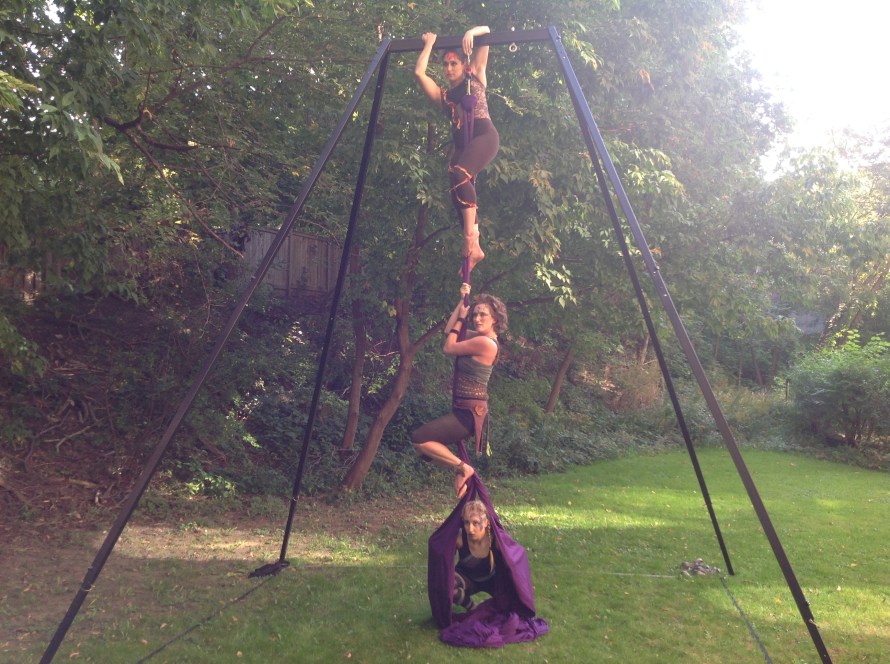
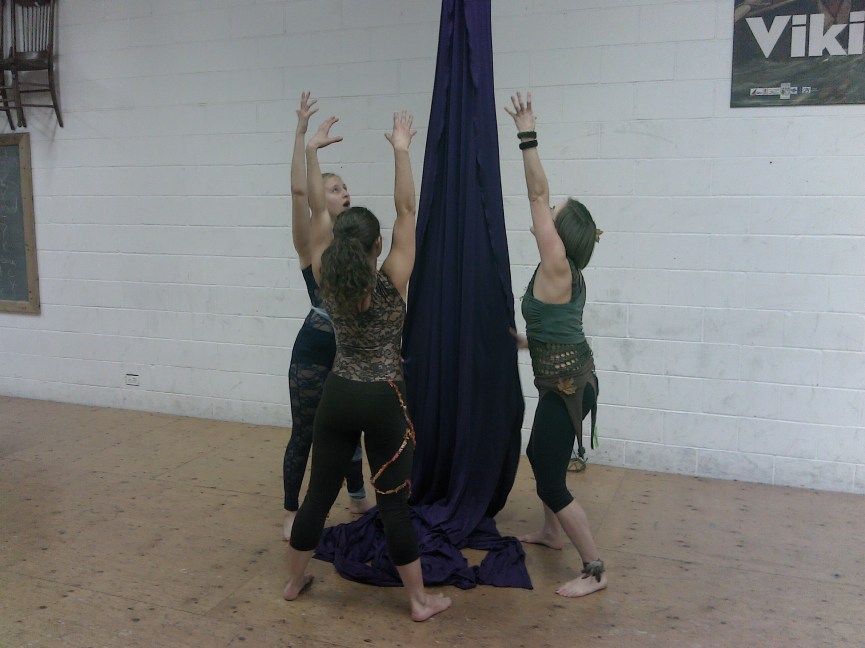
Philip: Weïrd focuses on the witches of Macbeth and tells the story of Macbeth from the witches perspective. Essentially, what mistakes they make in picking Macbeth in the first place, and then what they have to do to go about fixing that. We use aerial silks whenever the witches are doing a charm or whenever they’re using any sort of force of nature or anything like that.

MM: Is aerial silks a medium that Theatre Arcturus often works in?

Philip: Yes. Basically any sort of rigorous element that we work with, silks or any sort of aerial apparatus are a huge part of it. And the big thing with us is, we’re not so much a movement or physical theatre company where we want to use silks or another discipline to, for instance, take a break from the story and focus on a character, focus on a moment or a character’s internal journey and express that through the silks. What we want to do is incorporate the physical discipline into the scenes, continuing the story, while dialogue is going on, having interactions between characters. So it’s less of taking a moment in time and looking at, for instance, an internal journey, rather it’s actually physically incorporating the silks as the main set of the piece into what the characters are trying to achieve in the moment, with each other. So overall, it’s really continuing the storytelling.

Lindsay B: We try to keep it fluid and try to avoid making it disjointed or making it seem contrived. We’re really trying to mesh them together in a seamless way.

Weu00EFrd Totem

MM: So you interact with the silks in the way actors interact with the furniture onstage or with props onstage?

Linsday B: Yeah. Or sometimes with a character. Because [the silks] do move, and you have to be able to react to those kinds of things. Something that I discovered through the process was realizing how much it was going to be like having another person there. Usually the set is stagnant. You pick up a prop and put it down, and it stays there. Whereas with this, the slightest breeze will move the silks, and your own movement will have a ripple effect through it, and that changes the way you have to react to it, constantly.

Polly: And it’s really interesting inheriting the silks. Let’s say Lindsay’s done a charm, and then the next person who approaches the silks has to deal with the way they’re all twisted up and the directions in which they’ve gone. When we were rehearsing in isolation, it was a non issue. The silks would be straight down but then it’s interesting to go into that again. 

MM: I know that Lindsay B has trained in silks. Have the rest of you trained as well?

Lindsay SE: Nope, just with this process! (laughs) 

MM: So how did you get mixed up in this crazy business?

Lindsay SE: I don’t know! (laughs) I’m friends with Lindsay and Phil and they asked me to be a part of the project. Partially, I think, because they know that I am passionate about creating things and taking a very physical approach to theatre, which I think is really cool and really important. I thought the silks were a brilliant idea. I said, “That sounds amazing! It’s going to be so cool!” And I knew it was going to be hard, but I didn’t really just HOW difficult it was going to be. I’m like, “I didn’t know I owned those muscles!” Whenever you see someone performing aerial silks or circus arts or anything like that, they just make it look so easy. We realize that they’re working, but I don’t think people realize just HOW hard it is, even to just get off the ground.

Polly: You have had more time than I have to start learning how to do the silks, and I’m ecstatic when I can even get an inch off the ground, so I’m so impressed with what Lindsay B can do. The way I got involved in the project is stage combat. I know Dan Levinson from Rapier Wit, where I did my Intermediate with them last June, and he knows Phil, who did his Advanced with them, so that’s our connection.

Philip: That fits right in with our company. It’s not just circus arts or aerial silks, but it is really rigorous physical discipline. So we’ve got an aerial performer in the show [Lindsay B], we’ve got someone with a lot of experience with dance [Lindsay SE] and then we’ve got someone who has a lot of experience training with stage combat [Polly]. We’ve got three separate physical disciplines that we’ve been able to incorporate into the same piece, and it’s been amazing how well the three of them have actually flowed together, how seamlessly they’ve worked together as part of the whole piece. I feel like the reason why it has worked so well that way is that whenever we are focusing on a moment where one of those disciplines or one of those physical aspects is really coming out, we keep going back to the text. We go back to “how is this actually forwarding the story? How are we staying in the scene? How is this not stepping out and being its own thing?” So as a result, we’ve worked the scenes and we look at them afterwards, and there’s this moment of realizing “Oh, right, you did some aerial in there, you did some dance, and there was even some stage combat in there” and we realized we couldn’t actually tell where one started and one began. At least not consciously, because all we see is the full scene and what’s progressing with the story.

Lindsay B: It’s interesting how much ground work in dance and movement [Lindsay SE] has been working on while I’m thinking vertically, and having Polly always being on us about text. Which has been very helpful to always be pulling it back to “Why are we doing that?” text-wise and character-wise. We have a fight scene in there, and it’s my first fight scene. It’s been really interesting for me because I’m learning things too.

Lindsay SE: I just wanted to comment briefly because you touched on the text and I wanted to say how cool it is that we’re using all text from Macbeth. It’s the witches’ scenes, and we’ve pulled a little bit of text from other scenes that fits into the story that we’re telling. It’s all from the story, it’s all from Macbeth.

IMG_20141011_143944

MM: So there’s no original text?

Philip: No original. Basically, we have the witches scenes from the actual play. We’ve even changed those up a little bit. Sometimes there are lines from other parts of the play added in, but we also have the moments with the witches where we DON’T see them in Macbeth. It’s ‘what is happening in between those scenes?’ and those scenes in our piece are what’s formed out of text from other scenes in the play itself that other characters say. Sometimes it’s been an entire page almost of Shakespearean text that another character says literally the way it is, that could transfer to the witches’ story perfectly, and we have moments where we have four lines, and each of those lines have words from different parts of the play to form the line. Some of them are very quick jumps from one part of the text to the other, but it all works seamlessly so it is the story of the witches, whether we’re used to seeing them in Macbeth, or whether it’s some place or time that we’re seeing in between that’s completely new.

MM: So how did you come up with this concept? I’ve not heard of anything like this happening before. There are physical-based theatre companies, but none that seem to be so text focused.

Philip: Amazing! That’s great to hear. We originally thought of the idea for this show because we were talking about the possibility of working with a pop-up theatre company who was looking for some stuff, and the only information we could get from them about what they might want from us is ‘some aerial, maybe some other physical stuff, maybe some classical text, you know, everything, whatever’. So we were like, ‘okay, we need to figure out something that works that will play to our strengths, the aerial, Shakespeare, classical text, and we can develop a piece that will work outside or inside, where we can set up the rig literally in any space, and have either part of the show work if it’s a ten minute version that they want, or a full length show’ so we started working with the idea of the witches because that made the most sense in terms of things that we could think of off the top of our heads that was Shakespeare that would be easy to incorporate in terms of silks in a very believable way that they audience could buy into. So we just started working on it on our own, and then we thought ‘fuck it, let’s do it on our own!’ Which is great, because when we have other opportunities, like if we wanted to do it at events, it’s a very easy piece to adapt sections to that. 

MM: For something that seems so complex, you guys are talking about it as though it’s very easy and fluid.

Lindsay SE: Well, sure there are challenges of course, but I don’t think there was anything that was super hard to pull in and have to work really hard to make something work in terms of the storytelling. I feel like the storytelling isn’t a stretch.

Polly: Like with anything, you compartmentalize and then you work bits and it comes together, layer by layer. Like a cake.

Philip: And everyone has endured the weather with us.

Lindsay SE: We’ve been lucky, I think, to work outside for a lot of the rehearsals. It’s been really neat to have the challenges in terms of weather and wind and rain. I think it all added to the process, because in the play, the witches scenes take place outside, so it’s just added a lot to what we’ve been able to do.

Lindsay B: And we’ve been playing to people in their apartments. It’s been a very communal experience. We’ve met so many people in our building because of it. We even drew out another aerialist! There’s another aerialist who lives in the building which I found out because I had my rig up and she was so interested. We’ve been working with our feet in the dirt. We’ve got such a great cast. Sometimes it’s wet. Sometimes it’s muddy. I wish I could provide a better space and it’s like, ‘sorry guys, please slog through this with us, we have no budget’ but it’s been a cool experience and we’ve found amazing people with really good attitudes.

MM: How would you sum up Weïrd?

Linsday B: Sisterhood.

Polly: Collaboration.

Philip: Immersive.

Lindsay SE: Storytelling.

Weïrd

Presented by Theatre Arcturus

Weu00EFrd Poster Final Small

Deal: Bring your Weïrd ticket to Mill Street Brew Pub or Beer Hall before or after the performance on the day of the performance to receive 15% off food!

When: Shows Oct 17 8pm, Oct 18 2pm, 8pm, and Oct 19 2pm, 8pm.

Where: Playing at the Ernest Balmer Studio in the Distillery Historic District

CAST
Witch 1………………………….Lindsay Bellaire
Witch 2……………………Lindsay Sippel Eitzen
Witch 3…………………………….Polly Phokeev
ARTISTIC TEAM
Director……………………………Phillip Psutka
Stage Manager……………Alexandra Brennan
Choreographer…………………Lindsay Bellaire
Fight Director……………………..Phillip Psutka

Tickets:  http://www.theatrearcturus.ca/en/shows/runs-october-17–19-tickets-now-available