Skip to content

Posts from the ‘Uncategorized’ Category

Theatre Caravel presents Sea Change – An Event to Gather the Community and Celebrate Work in Development Over the Baked Goods Table

Interview by: Hallie Seline

I sat down with Eric Double and Julia Nish-Lapidus of Theatre Caravel to discuss their upcoming 15th edition of Sea Change: a night of new performance going on this Saturday October 12th. We talked about community in the arts, the draw of baked goods and audience participation and the importance of providing a relaxed venue for artists to present and develop their work and for audiences to witness and interact with the work in development of local artist.

HS: Let’s begin with you telling me a little bit about Sea Change.

ED: Sure! Well Sea Change, a night of new performance is the event that we, Theatre Caravel, run as part of our company initiatives. It’s a quarterly event where we invite artists of all different types, be it visual artist, musicians, poets, playwrights, mask performers, clowns etcetera, we’ve had it all, and we invite them to show fifteen minutes of new work that they are working on in front of a pretty diverse audience, to sort of inspire the artists to continue working on their pieces and giving the audience a chance to see work in development in a very supportive, creativity conducive environment.

JNL: It’s also about the meeting of all of the different artistic mediums. The whole idea behind Sea Change was that we didn’t want to be a theatre company just for theatre people. We love music and visual art and all of these different mediums, so we thought why don’t we invite these amazing people we know who are doing other artistic things to come be part of our theatre company through this event with the hope that connections would be made between the musician and the spoken word artist and so on. We’ve actually had a lot of Sea Change performers meet at the event and hook up to do shows together afterwards, inspired to mix their two mediums. That was one of the ideas behind the event – to say it’s not about the theatre community only, it can be about the artistic community as a whole.

HS: So would you say that was your main inspiration – to create this sort of artistic event in the city which people can feel part of?

ED: Well, yeah! It actually stemmed from this idea that was inspired by Julia’s parents, who had been going to these events called House Concerts. We thought it was a really novel idea that local musicians like the Wainwrights would put on these tiny concerts for maybe maximum fifty people in someone’s house, in a relatively laid-back performance.

JNL: They were my parents’ neighbours who were doing these concerts for maybe thirty-five to fifty people. They would get really great musicians and put on a show in their house. They would do it maybe six times a year and it would completely sell out! It started off with just their friends but then their friends would tell people and so on and by the time my parents moved in next door, they had to buy their whole year’s subscription to these House Concerts in advance because it would sell out like crazy. People just loved being there. They would serve food and it had a super relaxed vibe while providing this amazing musical experience.
So originally Sea Change was supposed to take place in one of our houses… that was the plan! (They both laugh). Then we just realized that we didn’t have houses that could fit all of the performers and more than fifty people at once.

ED: The idea was to incorporate the laid back spirit of these events, because up until that point, I don’t think I had ever been to anything that wasn’t just theatre focused and was really that relaxed, basically. I think we were kind of hungry to explore our inspirations behind our own artistic practice, and hopefully do that for other people too.

Nicole Ratjen as Princess Penelope

Nicole Ratjen as Princess Penelope

JNL: And supplying free food was a big part of it for us. As much as that seems like an afterthought of ‘Oh yeah, there are free baked goods’, for us that was also a big part of creating the community feel at Sea Change of really bringing everyone together on multiple levels. Though we couldn’t do it in a home, our focus was still on making it feel ‘home-y’.

HS: Of course! Well, people connect and come together over food, art, music…

JNL: Exactly! Well I bake, my mom bakes, and this woman who was best friends with my grandmother, who is pretty much like a grandmother figure to me, she bakes too! It’s like family baking for everyone at Sea Change, which I think makes it a little more special. And people always enjoy being able to go over and talk to the little old lady who baked those brownies that they love.

ED: Yeah, I baked once…

HS: Oh? And how did that go?

ED: Really good, actually! It was from a box. It was our birthday cake but still, I baked it. It’s as far as my baking contributions have gone though so far.

HS: So how long have you been doing this event? Was it 2009 when you had your first Sea Change?

ED: We launched in May of 2009 and the one coming up on October 12th will be our fifteenth!

HS: Wow! How have you seen Sea Change develop over these four years?

ED: Well, I mean you get better at running an event after you’ve done it for a couple of years, so that’s kind of nice. We’ve gone from having three-hour meetings about it to planning it over text messages sometimes… (they both laugh). It’s kind of nice that it’s taken on a life of its own. I think how we’ve seen it develop is that, as Julia was mentioning the community aspect of it, we’ve not only seen performers come back to be part of our audience but performers have come back, and we often invite them to come back when they have a different medium they want to work in. One notable example is our friend Shawn (Jurek), who’s going to be performing at this next one. He originally started as this backing musician for one of our other artists who came to perform…

JNL: He did that twice.

ED: Yeah! And then he said, “You know, I also do photography. Can I put up some photos at the next one?” And we were like “Of course!” And now he’s going to be performing his own music! He, like many of us including Julia and myself, are a little more multidisciplinary, as I think you kind of are in the theatre community just naturally. If you’re producing your own work you’re going to be doing more than just acting or producing. Many of these artists do this, as well. We’ve seen more and more artists come back in different ways and collaborate with one another as well. So yeah, I guess it’s really grown into this community of collaborative artists and invested audience members over the past four years.
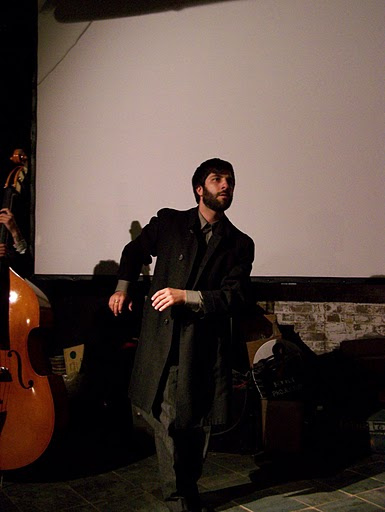
Adam Paolozza performing The Double

Adam Paolozza performing The Double

JNL: We have a lot of regulars who we just know will show up every time who have been there from the beginning and it’s been interesting to see new people come on and in turn become regulars as well. Most of our performers tend to, if they are new to us, after performing once, chances are we’ll see them at another one as at least an audience member. Because of this, our audience has grown even through just having new performers. I mean each performer usually brings their own audience and we’ve seen through this that people come back again and again because it’s just a great experience. It’s just very cool to see that audience base develop in such a contagious way.

Most of our audience are not, actually, theatre people too! They vary in age… really a whole gamut of ages. We get people who are, for the most part, interested in the arts in general. They go to theatre and to concerts and then they find Sea Change and think this is something where they can kind of see it all and feel like they are even a part of it. I’ve had a lot of people who are not in the arts say that this makes them feel like they are a part of the community versus going somewhere else where they are just sitting in the audience and feeling more like a separate spectator. It’s developed that way in which the community is building, not just with performers, but everyone in that room becomes a part of the event.

HS: To what level is Sea Change participatory or is it just by the nature of how it is, the audience feels part of the event?

JNL: We’ll we encourage audience involvement and it also just sort of happened that our performers started getting the audience involved in their work. We have a lot of musicians who do call and response stuff with the audience and people always come to us timidly saying, you know “I was thinking of doing this thing and it would involve having the audience do something with me?” and we’re always like, “Yes!” This is the type of audience that feeds off of that type of thing. They are going to get involved and we love it! We had a performance once of a play reading and she needed people to throw ping pong balls as pellets of ice getting thrown at the actors throughout their scene, and the audience loved it to the point where people would hold on to balls and throw them at performers later on during the night because they thought it would be fun. We’ve had times where a musician needs to re-tune during the set and one time someone started telling a joke and when they still weren’t done tuning one of the audience members stood up and shared one of their jokes and now it’s a thing that sometimes happens throughout the event. It’s an opportunity where the audience gets to participate and talk to the performers and everyone gets to share a little something. It’s great watching aspects like that develop.

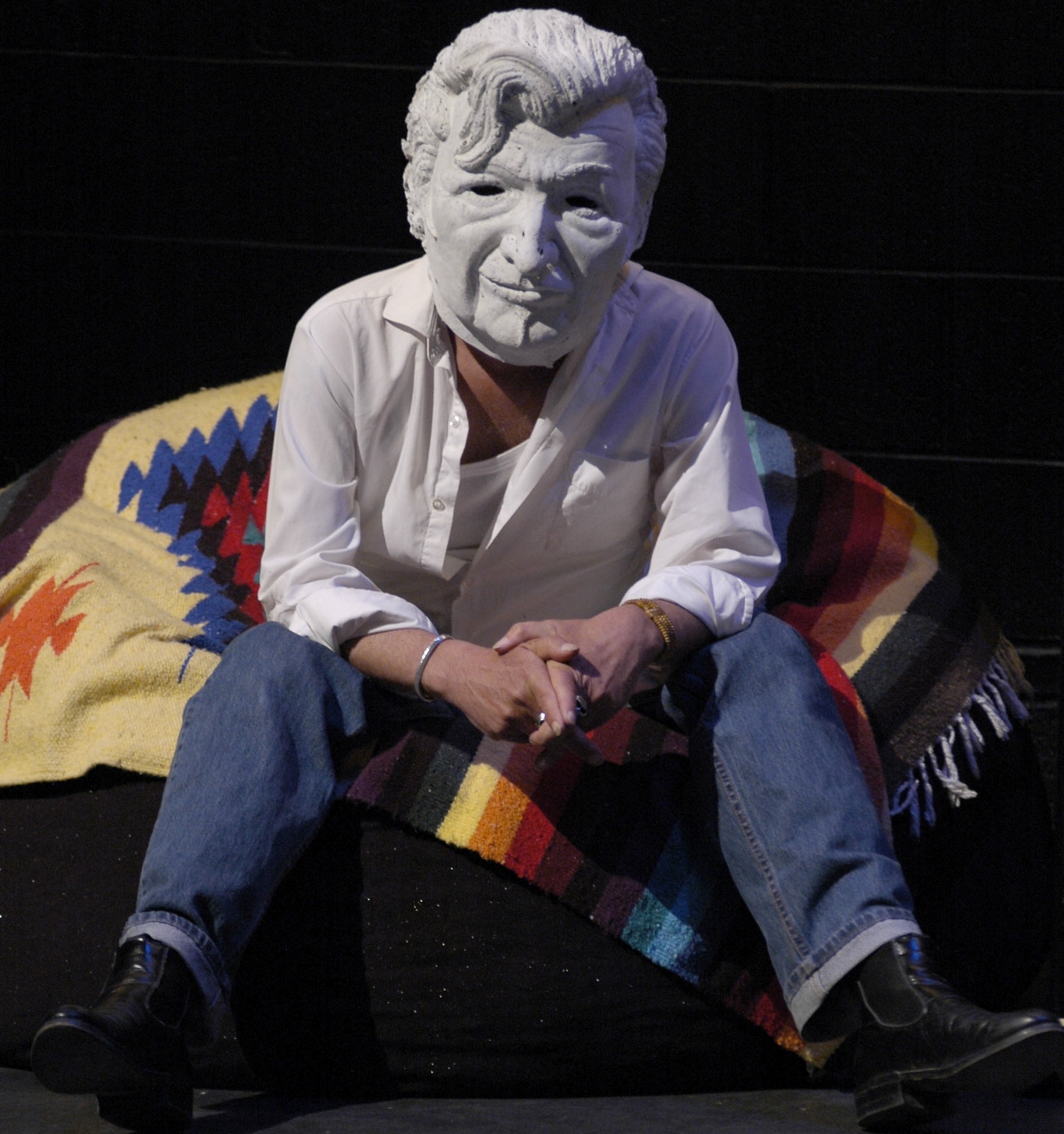
Rob Faust of Faustwork Mask Theatre

Rob Faust of Faustwork Mask Theatre

ED: I think that’s also partly because of the venue that we do it in, which is called CineCycle (behind 129 Spadina Ave.). It’s a bike shop that is converted at night into some sort of performance venue, often times for film screenings. If you go there during the day you would never believe it’s actually a venue. It’s a bike shop and there’s just bike stuff everywhere, but then Martin, the guy who runs it carts all of the stuff out and transforms it into a performance space by night. I think when people come into the venue for the first time they are a little taken aback at how personal it feels. It’s not like a traditional venue. It has a lot of character to it, so immediately when you’re sitting there and you’re watching a performance piece going on in an unusual setting, it kind of breaks down a barrier. The audience is kind of on top of the performers in a way that there really is very little fourth wall. This allows those barriers to break down, causing the event to be a little more immersive.

JNL: Going off that, my mom is selling the tickets at the front, so she’s the first one who’s going to greet you as she’s sitting there, proud and excited about the event. It’s very cute. We’re also walking around saying hi to everyone, the performers don’t hide backstage, they have seats in the audience and watch the rest of the show until they get up and do their thing. And there is always a crowd of people hanging around the baked goods table just chatting and meeting new people. The energy is meant to be very warm and welcoming. We’ve put a lot of emphasis on that.

We’ve also kept it at a seven-dollar price point if you book in advance and ten dollars at the door for the past four years, with no intention of making it higher and I think that goes into the idea of community. We’re not trying to make money off of this event. We cover the costs to have the event because having it and providing that space for everyone is the most important part of it all. We don’t want it to be the kind of thing that anyone has to think twice to come to. We hope that seven dollars makes the event accessible enough and the goal is to make the whole thing as easy to be a part of for anyone and everyone.

ED: Yeah, I’ve had lots of friends say that we could make it more expensive, partly as a compliment because they thought that the value was worth it and the product was worth it, which was nice to hear but again, as Julia was saying, it goes into our mandate of how we run Theatre Caravel as a company. It holds the same sort of ideals that we like to run our show with. One: they’re about community, Two: they’re also about new work and taking risks, Three: they’re about kind of expanding your horizons, I guess you could say, in the collaboration with artists, working in a multi-disciplinary format, etcetera. So the seven dollar thing kind of plays into that as well,

JNL: It’s just fun having people come up to me and try to pay for the baked goods and I tell them not to, that it’s all part of it. For seven dollars, it’s all of the performances, the whole evening and all of the food there. Half the time the night ends with me sending someone home with a whole cake or batch of left over cookies.

HS: Putting on an event like this for four years, you clearly have seen some merit in providing this kind of event for the Toronto arts community. Why do you think events like this, where you say the venue feels a little more personal and people feel a part of both the event and its development, are so important to provide for the arts community?

ED: That’s a great question and I mean I’ve seen other events crop up around the same time that we started doing this, like Crapshoot with Theatre Passe Muraille, which I think is pretty notable for providing an event for many artists who are starting their pieces, and I think that these events have this sort of laid-back atmosphere which I think has a lot to do with their success. In terms of why that’s important to the theatre scene, I think it’s partly because in our generation of theatre creators there’s a lot of us, basically, who want to have a voice and there aren’t enough avenues for us to get it out there in, maybe, the traditional sense. These kind of low-key events give an opportunity for artists just to try something out. It’s an opportunity to fail and succeed on their own dime, sort of thing.
I think Sea Change has been successful, partly, because the artists feel comfortable just putting themselves out there. That’s why it’s so endearing, that’s why the audience gets on board so easily, because these artists are doing it for the love of doing it, not because there’s any type of pressure on them to either get a job or to meet a certain expectation. People just want to see the performers do really interesting work and take risks. I think that this format is popular because people, audience members and artists alike, want to feel like they are part of a community that supports them.
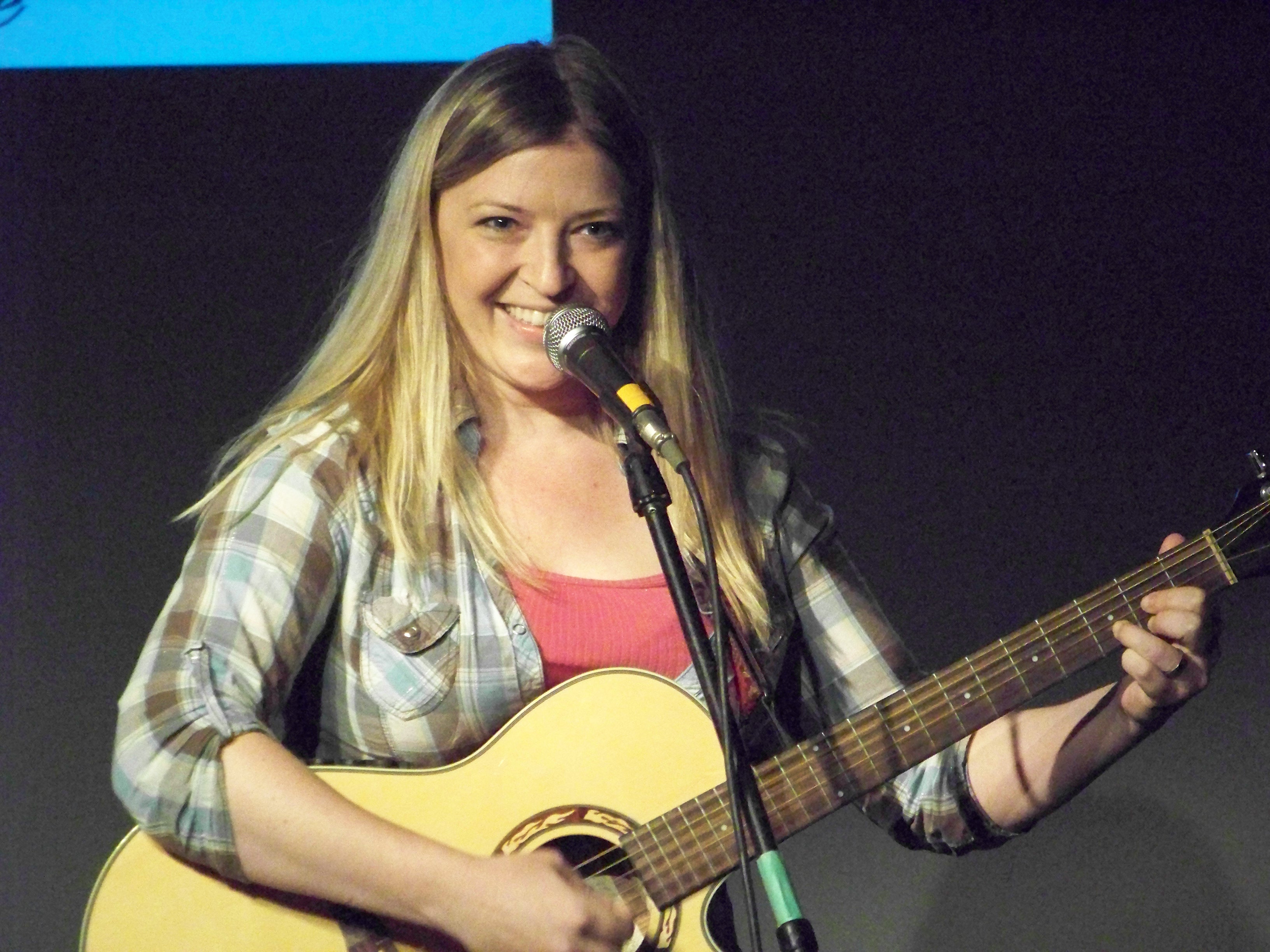
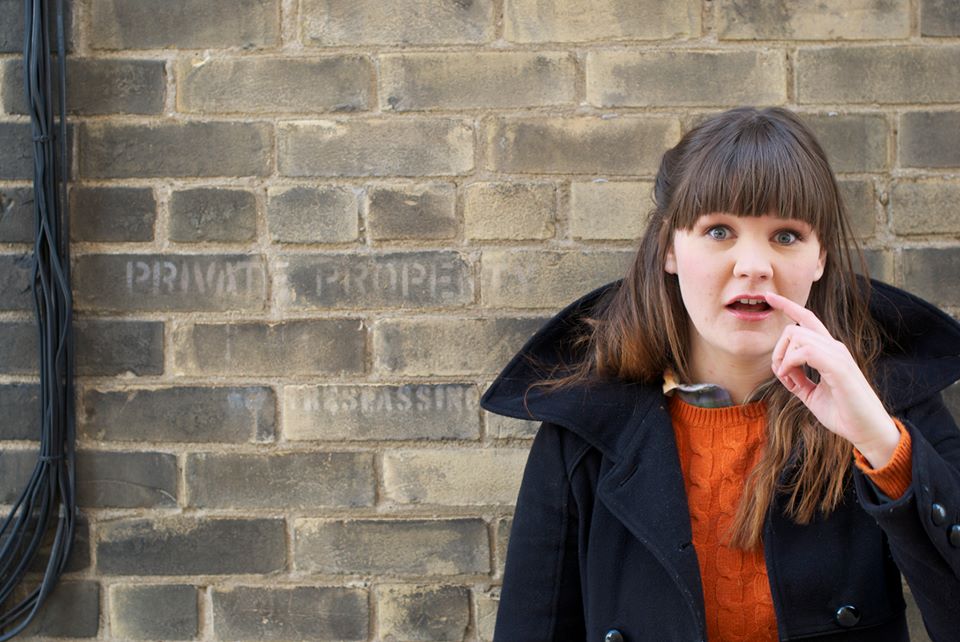
Chelsea Manders performs her brand of Music Comedy

Chelsea Manders performs her brand of Music Comedy

JNL: And I think it’s important from the audience perspective too in that it kind of makes the whole arts world more accessible to everyone. It lets everyone be a part of a special little event where new theatrical work is being created and it’s an opportunity to invite anyone and everyone to come and be a part of its creation. Haley McGee (Toronto-based playwright/performer – Oh My Irma) has workshopped sections from a couple of her plays at Sea Change. I’ve had a lot of people say to me, “I saw it at another place and it was so great because I had seen it in earlier stages here at Sea Change before. I remember being a part of it and talking to her about the piece and answering questions she had about it while she was still writing”. I think that kind of accessibility to new local work is important to the audience and their investment in the arts community and it’s important to the artist to be able to show their work at these stages to an audience that they don’t completely personally know. It’s a real integration of audience and performer, I think, which is really crucial to developing continued support and attendance of the arts outside of events like these in the city.

HS: What do you hope for the future of Sea Change?

ED: Well, that’s a great question and one we’ve been talking about a lot now that we’ve done four years of Sea Change successfully. We’ve talked about a few different things… I mean ideally having something like a residence program would be really nice to have – Sea Change, not necessarily on a larger scale, but maybe over a longer term. We’ve been looking into potential grants for artists and maybe even multidisciplinary collaboration between artists, which seems to be happening a lot more these days, to create more of a long-term opportunity and have Sea Change be a place where they can show what they’ve been working on.
I’ve also thought about doing a young company of sorts, starting from the ground up, having them either just be there or workshop some stuff. So yeah, there are a couple ideas on the table right now for the future of Sea Change.

JNL: We’ve talked about wanting to do kind of a larger scale festival sort of event, either running a longer period over an entire day or the course of a whole weekend, bringing in a lot of both past performers and new performers. I feel like that might be an anniversary celebration sometime. Our anniversaries keep sneaking up on us so we keep missing it, but it’d be great to do just a really big Sea ChangeSea Change on steroids! We also want t-shirts! We have buttons and magnets so I feel like t-shirts are the next step up.

Dennis Hayes Reads Poetry

Dennis Hayes Reads Poetry

ED: Yeah, we’ve had over a hundred twenty performers now so there’s a pretty good well to draw from to welcome a lot of people back. We’ve had quite a few returning performers throughout these years and they seem to really love returning. I mean one of our performers is coming back from Zurich, moving back two days before Sea Change, and she already has her tickets! It’d be great to get all of these people back in a room together to sort of celebrate this community, which has sprung up around it, thankfully. I mean we were never sure if it would catch on and people seem to really love it! I think it may have something to do with the baked goods… (laughs). It’s all about the brownies!

HS: It’s always about the brownies. Tell me a bit about what you have planned for your upcoming Sea Change.

ED: Well our Sea Change coming up is jam-packed, as always! We have a playwright named Claire Acott, who has done a Toronto Fringe show in the past and is currently working on a new show, so she’ll be doing a part of that. We also have another Fringe veteran, Laura Anne Harris, who instead of doing a one-person show, she’s going to be trying out a four hander for the first time. Again, one of our greatest joys is watching artists try out new things. We have Shawn Jurek who is our musician. He’ll be doing a lovely acoustic set. Then we also have a new sort of music/theatre piece with Andrew Gaboury, who’s a playwright and has also done stuff with us in the past, and a couple of his fellow artists (Kira Hall and Rob Schuyler) who are making a new music/theatre play. Not a musical, per say, but the mix of music and theatre into a new piece. Then we have one of our, I like to call them, our Sea Change stars, like our greatest hits, an artist coming back named Teodoro Dragonieri and he’ll be showing some of his world-class visual art. I’m not kidding… it is incredible work! It belongs in a museum… or somebody’s house if you want to buy it, you can at Sea Change! So we are really lucky to have his work, and the work of the rest of these artists, which will make for another jam-packed night.

JNL: I was also thinking of looking up new cookie recipes… I’m thinking chocolate but I’m still undecided.

HS: I was going to ask, what’s new on the baking front but I guess they’ll just have to go to find out!

ED: Exactly! Well, thanks so much and we look forward to seeing you all around the baked goods table on Saturday.

Theatre Caravel presents Sea Change: a night of new performance.

What: 15th edition of Sea Change: a night of new performance. Brilliant new performers, and a couple favourite past performers, all trying out some incredible new work you won’t see anywhere else. Come to see new work, stay to chat with the artists, and then stay later to finish off the complimentary baked goods!

Featuring:

Claire Acott – Playwright
Andrew Gaboury, Kira Hall and Rob Schuyler
- New Music Theatre
Laura Anne Harris
- Playwright
Shawn Jurek
- Musician
Teodoro Dragonieri
- Visual Art

When: Saturday October 12th, 2013

Doors – 7:30pm, Show – 8pm

Where: CineCycle (behind 129 Spadina Avenue)

Tickets: Admission is ONLY $7 but seating is limited and spaces fill up quickly, so RESERVE YOUR TICKETS NOW by e-mailing info@theatrecaravel.com. For more info check out the Sea Change page on Theare Caravel’s website: www.theatrecaravel.com

A Chat with Heather Braaten – Director of Next to Normal at the LOT in Support of CAMH

Interview by Ryan Quinn

RQ: So, I’m here with Heather Braaten, who is directing Next To Normal, running from Thursday August 29th to Sunday September 29th at The Lower Ossington Theatre. Would you like to tell me a bit about the show?

HB: Sure, it’s a completely sung-through rock musical that addresses mental health issues and the families struggling with them. It’s a Pulitzer Prize-winning and Tony Award-winning piece. It’s not your typical musical at all. Small cast, very intimate. This is my first time working with the Lower Ossington Theatre, and it’s really interesting, what they’re doing. We’ve got a team of super-talented, professional, upcoming artists that are so fantastic and so ready to explode onto the scene. For me, as a director, I get to see all the amazing work that’s happening in this space at the LOT, and it’s an incredible opportunity for everyone involved. I mean, these huge shows, only a select few will get to do them on a Broadway scale, you don’t often see them happening on an independent level.

RQ: I mean, the logistics of putting up a show like this must be intense.

HB: Exactly! I mean, the rights for the show alone are expensive. I’ve been directing independent theatre for ten to fifteen years now, and I don’t normally get to tackle material like this.

RQ: You mentioned earlier how this was a Pulitzer Prize-winning show that’s won Tony Awards as well. What do you think makes it such a remarkable show?

HB: Well, I think that musicals just don’t approach material like this. Generally, a topic like mental illness isn’t addressed on such a massive scale. I mean, we see films, television shows, and of course books about mental illness, but theatre has a different way of reaching people. The live experience is so different than any other artistic medium. I think one of the reasons this show is so successful is that people are blown away by the honesty of it. This is family life. This is real. I think that’s the main thing about it. It’s very honest and very poignant. It really doesn’t let you off the hook, in terms of material. It doesn’t have a classic Broadway happy ending. It doesn’t resolve everything for everyone. I feel like people took notice because it’s not afraid to tackle this issue, which everyone in some way has been touched by. Before directing this piece, I had never seen it as a production, I had read it and heard it, but I had never seen it in performance. That’s why it’s been amazing to work on, because as it comes together, I start to get hit harder and harder with what it’s trying to do and how honestly it’s doing it. And we’re not going to cut it, we’re going to put the whole thing onstage for a large audience to see and have an experience together. I guess that’s what I’m trying to get at, when people go to see a show, they have a collective experience, and with this piece, that means having a massive dialogue about mental illness all at once.

RQ: So, this show requires a lot of vulnerability. It’s an emotionally, physically, and mentally violent show. How do you approach something like that as a director?

HB: I have done material like this before, but not that often. I relate it to another piece I did about the Dionne quintuplets and their struggle. It’s all about struggle, and understanding the specifics of it. In both cases, of having your family rocked by a bipolar, delusional mother who is trying to live in a separate world. So it’s interesting to approach it for a second time. I think the most important thing is creating a safe place for the actors to work in, and to indulge and experiment with where that lives in their own minds and bodies. They need to be able to experience it, then work back from there. We can’t literally have people breaking down onstage, it has to be a controlled scenario. But it has been really interesting to see these actors experience extreme emotion for what it really is, then pull it back from there to tell the story. I mean, they have a huge vocal task in this piece. You can’t perform this piece without having full control over your instrument, but at the same time, it has to be fully emotionally connected to the material. As a director, how do you make that happen? I’ve learned that early in the process, you allow it to happen in a way where it’s just let go, then you bring it back to the storytelling and the technique. This cast has been amazing to see connect to the material and to each other. It’s one of those pieces that gets more meaningful every time you see or listen to it, and I think that’s why it’s kind of developed a following. Every time you listen to it, it hits you somewhere deeper. There are a lot of layers to it.

RQ: And the LOT is working with the Centre for Addiction and Mental Heath on this piece, correct?

HB: Yes, part of the proceeds are going to CAMH, and they’re helping us get the word out that we’re doing the piece.

RQ: That’s fantastic. Thanks so much for your time, and break a leg on your run!

HB: Thanks!

Next to Normal

At the LOT in support of CAMH

Pulitzer-Prize winning rock musical, with book and lyrics by Brian Yorkey and music by Tom Kitt, explores how one suburban household copes with crisis and mental illness.

Where: Lower Ossington Theatre, 100A Ossington Avenue

When: August 29th – September 29th, 2013

Ticketshttp://tickets.ticketwise.ca/event/3772016

For more information, check out the Lower Ossington Website: http://lowerossingtontheatre.com/

Read out more about the Centre for Addiction and Mental Health (CAMH) on their website: http://www.camh.ca/en/hospital/Pages/home.aspx

In Search of Truth (Whatever That May Be) with Craig Hall, Director of Faith Healer

Interview by Bailey Green

Acclaimed director Craig Hall called me from Alberta to talk about his experience directing Faith Healer at the Shaw Festival this season. Written by Irish playwright Brian Friel, Faith Healer is the story of a man, his love, his manager and his gift (to skim the surface). The text is elusive, complex and haunting. I spoke with Craig about direct address, rehearsal process and personal truth.

“Friel sent us a letter at the very beginning. It was waiting for me in my mailbox: written with an old manual typewriter with little cross outs in pen. You could only get in touch with him by fax. I fax-ed him saying I had a lot of questions. He faxed me back and said I don’t have any answers,” Craig laughs as we begin our conversation.

Craig got involved with the Shaw Festival a few summers ago. He was festival attendee for a few years before the offer to direct came at the right time as he was considering transitioning out a job. It was a great opportunity to take the summer to take stock and “really see where my career was going”. I asked Craig how similar or different Faith Healer was to his prior body of work, “Oddly it was kind of right of my alley. For some reason I have done a lot of solo shows with a lot of direct address”. He had worked on Greg MacArthur pieces which involve hindsight and memory as dramatic devices. “Stylistically, there’s a kinship. Direct address storytelling with this show is where the events have transpired but they are still living in the immediacy of it” he adds, “But once we got into the density of it none of us were prepared for how complex the piece ended up being.”

Shaw_FAITH_WebGallery_7

The structure of the show is deceptively simple: four sections, three characters, direct address and pure storytelling. It was the simplicity of one actor and an audience that drew Craig in to the piece. That and the complicated overlapping narrative structure. And though Craig had recently taken over a theatre company in Calgary, the fantastic writing helped make his decision.

With such an intense script, I inquired about the rehearsal process.

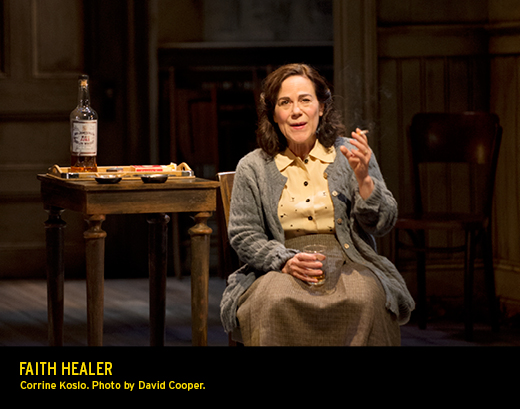
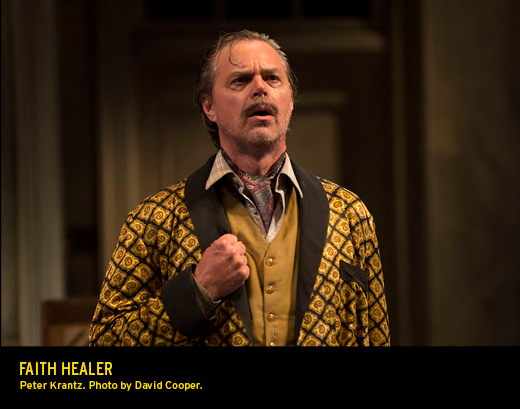
“It was pretty straightforward. And yet there’s no interactions between the actors [on stage] yet they have lived twenty years together. I had a lot of ideas in my mind about a complex rehearsal process but the actual structure of the rehearsal process didn’t work with that. We went through [the script] and scheduled in such a way that we touched on them [Jim Mezon, Corrine Koslo and Peter Krantz] all individually and kept them at the same pace. We let them have their own individual process but we wanted them to be moving through the piece at a similar speed.

Over the course of a month and a half, I would bring them every seven days into the room together to run through the whole piece so they could hear each other’s stories. You never wanted them to forget that their truth wasn’t the truth of the others. They embraced it and railed against it based on what their experience was. They wanted to love each other and be together [as a cast] but still it [the show] was so individual.

We went in there thinking it was a simple thing and were floored by how complex it really was. It was so complete unto itself. Every time we tried to add something it felt wrong. We became very happy with that fact.”

Shaw_FAITH_WebGallery_2

There are many challenges in a monologue play and we discussed the fine line between directorial and playwright decisions for staging. The play often had been produced on a mostly bare stage with perhaps the addition of a curtain at the back. Craig wanted to “put the story in a place that was charged with their history. Some people liked it, some didn’t. Jim [Mezon] said I get it, it’s a bare bones version of where they spent their lives while the other two [Corrine and Peter] were more literal. [The set] is a place for remembering.” He praised lighting designer Bonnie Beecher’s talents. She crafted a beautiful sequence at the top of the play of sunlight traveling from morning to night, spilling in the windows and marking the passage of time. She drew inspiration from Edward Hopper’s painting.

In his director notes, Craig spoke about truth. I asked if him and the cast had a found a solid truth beneath the tangled stories of this play or if they found everyone’s truth to be valid for themselves. He spoke to the latter:

“I think that’s where we landed. We rigorously went down this road. There were times when we thought this guy [Frank] was full of shit. These characters have their own individual truth. That and there is no way to play a lie like that on stage. If any one of these characters is consciously lying what does that mean? It would undercut the power of what they were talking about. There were so many things we didn’t reconcile ourselves with but let it go. Each of the characters is telling the truth as they see it. I think people are doing that constantly. There are people who know they are pulling the wool over someone else’s eyes. And some people keep telling the same lie until it becomes a sort of truth. If we play him [Frank] as a liar, the audience writes him off, but if you play it truthfully you leave it up to the audience.”

And how was it working at the Shaw Festival? “It was an exciting experience to me to work with this amazing talent and have the time and resources that we don’t normally have in the theatre world.”

Faith Healer puts the audience in limbo as we experience three characters’ individual re-experiencing of the traumatic and marvelous experiences from their shared past. And as their stories collide and contrast we debate and wonder what is true and false. But in life, as in the theatre, “we recreate history to benefit ourselves. If you can’t deal with something you paint it a different way in your mind so it is more palatable.”

Shaw_FAITH_WebGallery_9

Faith Healer

by Brian Friel
Directed by Craig Hall
Where: The Shaw Festival, Royal George Theatre
When: June 13th-October 6th
For more information and tickets, check out the Shaw Festival Website.

Our Favourite SummerWorks 2013 Picks

It’s that time again! We’ve made a list, we’ve checked it twice. Check out Our Favourite SummerWorks 2013 Picks, in no particular order, to see what performances we’ve particularly dug so far, and think you should catch before it’s too late.

Is there a performance that you think we’ve missed? Let us know via Facebook or Twitter and we’ll be sure to check it out! Enjoy the last weekend of SummerWorks, Friends!

Delicacy

DELICACY_Tennille-Read-Andy-Trithardt-Kelly-McCormack-and-Kaleb-Alexander-left-clockwise.-Credit-ZAIDEN

Company: Theatre Brouhaha

Written & Directed by: Kat Sandler

Where: Lower Ossington Theatre

When: August 16th 12:00pm & August 17th 5:00pm

Delicacy is a sharp, honest and sexy comedy from Theatre Brouhaha that examines the breakdown of a steamy situation and the emotional mayhem that ensues as relationship landmines explode.

It’s fun, saucy, sexy and hilarious: everything you secretly want from a night at the theatre. The acting is suberb and we think it may be Kat Sandler’s best piece to date. A very fun night at the theatre, which left us questioning what we all really want from our romantic relationships.

Murderers Confess at Christmastime

Murderers-Color-Website

Company: Outside the March

Written by: Jason Chinn

Directed by: Simon Bloom

Where: Lower Ossington Theatre

When: August 16th 2:30pm & August 17th 12:00pm

From the company that brought us Terminus last year and Mr. Marmalade the year before, this is a searing and comedic production exploring the truly dire limits people are pushed to during the most joyous and stressful time of the year. Featuring amazing performances and beautifully adept direction. This production is rated 18+ for a reason. It’ll shake you.

Enough Rope

Enough-Rope-Photo1

Company: Enough Rope Collective

Author & Director: Collaboratively created and directed by the company.

Where: Lower Ossington Studio Theatre

When: August 16th 7:30pm & August 17th 10:00pm

We saw an earlier incarnation of this piece and loved it. A fantastic interactive piece – the actors get right in your face in this exploration of the artist and his/her struggle. Based on classic Kafka characters, it’s unlike anything most of us have ever seen before.

7 Important Things

7_importantLanthier_0197-copy

Company: STO Union and Canada’s National Arts Centre in Association with WAC (Wakefield Art Collective)

Author: Nadia Ross in collaboration with George Acheson

Where: Theatre Passe Muraille Mainspace

When: August 16th 1:30pm & August 17th 9:00pm

This deeply personal show asks big questions about identity and the effectiveness of counterculture. This is a great mix of mediums used to tell a beautiful life story that hums with resonance to our current social landscape.

Sara Hennessey

S_Hennessey

Who: Sara Hennessey, Petra Glynt, and Jon McCurley

What: Performance Bar Series, Comedy

Where: Lower Ossington Theatre Cabaret Space

When: August 17th – Doors @ 8pm, Show @ 9pm

This stand-up show at the performance bar promises to be gleeful, exciting, and absolutely engaging. This frenetic performance will only be happening once at the performance bar, don’t miss it.

girls! girls! girls!

DSC_4661 cyan cropped

Company: Present Danger Productions

Author: Greg MacArthur

Directed by: Donna Marie Baratta & Jessica Carmichael

Where: Scotiabank Studio Theatre

When: August 17th 9:30pm

This bold, poetic performance will haunt you. What a dynamite first production for Present Danger Productions, which easily has them live up to their name. girls! girls! girls! is still lingering with us.

Family Story

WEBSITE-PREFERENCE_Family-Story-Kaleb-Alexander-Cara-Gee-1.-Puppets-Allie-Marshall.-Photographer-James-Di-Donato.-UNCROPPED

Company: Birdtown and Swanville

Author & Director: Aurora Stewart de Pena

Where: Gallery 1313

When: August 16th  7:30pm, August 17th 9:30pm & August 18th 2:30pm

Family Story is an exuberant, high energy trip through time as a young woman explores her family history. It’s full of strange and endearing characters, and the cast is filled with high energy commitment the entire time. It definitely puts the “fun” in “dysfunctional”.

Schützen

Schutzen_web_clean

Company: Original co-production by the Berliner Festspiele / Foreign Affairs, Tanztage Berlin and Sophiensaele in Berlin

Choreographer & Performer: Cecilie Ullerup Schmidt

Where: Scotiabank Studio Theatre

When: August 16th 7pm & August 17th 2pm

From Danish performance artist Cecilie Ullerup Schmidt comes Schützen. Schützen (a word whose double meaning is inherent in its entymology) is an exploration of the body as a weapon. In collaboration with sound designer Matthias Meppelink and the Berlin Festspiele, Cecillie takes the audience through her own research on the physical body of the modern day warrior from the drone pilots in Nevada to her own target practice in the Berlin shooting hall. Schützen is unique and hypnotizing. This international production lives up to its hype. Just go see it already.

The Life of Jude

PG-THE-LIFE-OF-JUDE_-WEBSITE-POSTER-PREFERENCE

Company: Falling Hammer

Author: Alex Poch Goldin

Composer: Jesse LaVercombe

Director: David Ferry

Where: Theatre Passe Muraille Mainspace

When: August 16th 6:30pm & August 18th 1:30pm

We haven’t seen a show like The Life of Jude in a long time. It’s a huge ensemble piece (21 cast members) that spans over decades encompassing song, simple but ever changing sets and video media. Very well directed, and some unexpected full frontal male nudity, so hey, go see it just for that.

This Wide Night

webreadywidenight-e1369856102911

Company: Wide Night Collective

Author: Chloe Moss

Director: Kelli Fox

Where: Factory Theatre Mainspace

When: August 17th 5:30pm

Actress Maggie Blake and Canadian renowned playwright/actress Kristen Thomson explore a riveting relationship between two women post prison. They were able to bring forth a sense of realism to the stage, allowing the audience to see a true slice of life. It was real, raw and such honest work, exploring a genuine human connection between two people. This play makes you question whether or not these women were truly free when released from the confines of the jail or from their unstable friendship.

A SummerWorks Chat with Simon Bloom, Director of “Murderers Confess at Christmastime”

Interview by: Ryan Quinn

We sat down with Simon Bloom to discuss SummerWorks premiers, storytelling, developing new work and the exploration of intimacy and vulnerability in his latest directorial project with Outside the March, Murderers Confess at Christmastime.

RQ: I’m here with Simon Bloom, director of Murderers Confess at Christmastime, premiering at SummerWorks this year.

SB: Yeah, it’s the world premiere. It was workshopped before at the Citadel Theatre in Edmonton. The playwright, Jason Chinn, is from Alberta, so it has undergone a workshop there, but this is the first full-scale production of the show.

RQ: Do you want to tell me a little bit about it?

SB: Absolutely! Muderers Confess at Christmastime is three interwoven stories that all take place twelve days before Christmas, and they all deal with murder in some capacity. The play is really about people who are fundamentally unhappy with their lives who live in a fantasy, or illusion. But, by the very act of trying to live in that fantasy, both the fantasy and the reality kind of collapse in and upon themselves. I think the reason Jason chose to set the play around Christmas is that it’s such a time that we perceive as being happy, but it really tends to make a lot of people feel melancholy and sad. It’s kind of like Valentine’s Day in that way. For some people, Valentine’s Day is great. For others, it reminds them of how lonely they are. I would say that all the characters in this play are fundamentally lonely, and reaching out to find some sort of a connection.

RQ: So, you’re premiering at SummerWorks. You premiered Terminus at SummerWorks, as well as Mr. Marmalade. What is it about SummerWorks that’s attractive to a company like Outside the March?

SB: I think one of the most impressive things about the SummerWorks festival is that it kind of promotes a sort of communication between early-career artists, mid-career artists, and professional artists. It presents you with the opportunity to approach more professional artists about collaborating on a project. For example, when we did Mr. Marmalade, we asked David Storch if he was willing to do it and he said yes. Also, we’ve had the chance to work with Tony Nappo and Harry Judge, some more established local actors. I just think that this festival offers you a really strong opportunity to showcase work. Those are the two reasons why I think SummerWorks is so valuable. And, just the kinds of audiences that come out to these shows, they’re smart audiences, really critical in a good way. It’s a really exciting festival, and really well-run.

RQ: Do you find that those approaches have changed since you went in with Mr. Marmalade, that you now have people approaching you?

SB: I think that since Mitchell and I started the company as fledgling artists coming out of our undergraduate degrees and we started Outside the March, it really felt like we were on the outside looking in. We really wanted to connect with people. And, because of the success of Marmalade and Terminus, it’s really opened up opportunities for us to work with artists who have said “we really enjoyed some of your previous work”, where we could say “if there’s a place for you in our next show, we’d love to have you”. That’s been really exciting because sometimes an actor will inspire an idea for a project. So, if someone approaches us and is interested in collaborating with us, that may inspire a whole new project for the company. But, at the same time, I think it has always been important for Mitchell and I to keep a core group of people that we work with, like Amy Keating, for example. We really want to continue to foster the growth of our ensemble artists. That’s really important for us, as well.

RQ: What’s exciting to you about this show?

SB: I think one of the things that’s exciting about this show and the trajectory the company is on right now is that Mitchell and I have become very interested in developing new work. After a long period of time of doing established work, we’re starting to branch out. For example, the project we’re doing after Murderers is a new play called Vitals, which Mitchell is directing, and it was written by Rosamund Small, a Toronto-based playwright. So, that’s very exciting for us. The whole process of dramaturging and workshopping a script is very different than working on something that’s already established. It’s opened our eyes to a whole new range of new work we can develop.

RQ: Within the festival atmosphere, there’s an energy that kind of fosters that mutual growth, right?

SB: Absolutely. I think the way Outside the March dovetails with SummerWorks is that idea of ensemble. In SummerWorks, it’s the ensemble of the festival itself, and in Outside the March, it’s the ensemble of artists we want to foster. For example, Jason, who was in Mr. Marmalade, is the playwright for this one. It’s exciting to bring artists back and let them put on different hats.

RQ: So next is Vitals, any other plans?

SB: Well, we’re also touring Terminus, and we’ve been working on The Spoke, which is a live storytelling event that we do at Videofag. We get people to come in and tell stories. We just had a fundraiser for Muderers that was at a Spoke gala event. It’s amazing how intimate it is, it really cuts to the core of what we do as artists, which is tell stories. When they’re deep, personal stories that people are sharing with an audience, it feels like a really genuine shared experience.

RQ: It seems like the theme that keeps coming up is ‘intimacy’, and how to share that isolation that comes with a lack of intimacy.

SB: Oh absolutely. I think in Murderers, there’s definitely a strong sense of people who are desperately searching for intimacy, but feel trapped in their loneliness. I think what makes Jason so unique as a playwright to me is that he has a very bleak but honest and genuine sense of the loneliness in the world. It’s quite raw. It surprises me when I read his work because it reminds me that we don’t see that onstage very often. There’s a sort of authenticity to his writing and a kind of unflinching rigour to represent characters that we so rarely see onstage. It makes watching his plays unbelievably unique, and it makes the voices of his characters also unbelievably unique. It’s safe to say that I’ve never read a play like this in my entire life. For me, it’s been such an amazing, eye-opening experience, to work on something that’s so unabashed. I don’t know how many different kinds of warnings we have on the show, but it’s very raw.

RQ: It seems like we’re in love with taking big shows and putting them in intimate settings, but to take an intimate show and present it in an intimate setting, that can be a tougher pill to swallow.

SB: Definitely. I think that it’s scary in the same way that being intimate with someone is scary. It requires such an extreme amount of vulnerability. I think it gets to the centre of what’s so tough about the actor’s plight. Their vulnerability is what makes them fantastic, but it’s also what can catch them up a little bit because it’s really hard to expose yourself like that to other people. I think that’s what a lot of the characters in this play are doing, both literally and metaphorically. They’re exposing themselves to other people and I think there are consequences to that decision, and not always good ones, unfortunately. I think that, in a way, this play defies narrative structure because it doesn’t fit into the mold of the happy resolution.

RQ: “I was afraid to speak my mind, then I spoke my mind, and now I’m a hero for it.”

SB: Exactly, yeah. If there’s anything that makes the characters in this play heroic, it’s that they’re honest. There’s a kind of “flaws and all” mentality to them. There’s something really beautiful in that, in the kind of loneliness and exposure of someone who’s trying desperately to get something and not being able to get it. I’m speaking vaguely because I don’t want to give away anything that happens in the show. But, I think there’s something really exciting but terrifying about that notion. I think one of the key, key, key things in this project has been the vulnerability that’s been required from everyone involved. The actors, designers, director, just a total exposure.

RQ: How do you approach work that requires that extreme vulnerability?

SB: Professionally. I think the danger you run with a show like this is to take it home with you. While you can always let your personal experiences help support the work you’re doing in the room, you have to be careful to not let that sort of stuff affect you. Without going into specifics, there was an experience that one of our actors had in real life that was very similar to something that happens onstage, and it happened while we were rehearsing the play. The play takes place in three bedrooms, and we were rehearsing one day in her house because we didn’t have a space, and it was this odd “art imitating life” moment. There’s this liminal space between what an actors is doing onstage, and what is happening in their life, and it’s precarious, and it’s the responsibility of the director to make sure the actor always feels safe. I mean, another thing we did for this project, because it’s three different groups for three different scenes, we rehearsed each group individually before coming together as a team. I think it was important for them to reach a comfort level with their partners before we got everybody involved together. It was amazing to watch them all work together for the last time before we dove into performances, it was amazing to see how much they really became an ensemble. That’s such a beautiful moment for me, as a director. Someone once told me that the role of a director is to sit one row further back every day until they’re not in the theatre anymore, and watching them today, I could see them take ownership of the show and come together as an ensemble. I feel like Mary Poppins, like my job is done and I can slide up the bannister and go home.

RQ: You look like a proud father right now!

SB: Yeah! Well, I think the asks on this show are big, but I think everyone went there. That’s all you can really ask. I’m unbelievably proud of them. So, I’m very excited, and very interested to see what the audience’s response is to this show. It will be polarizing. We made one of our venue techs throw up! Well, just a little bit.

RQ: Haha, well, thanks very much, and break legs for your run!

SB: Thanks very much!

murderersplash

Murderers Confess at Christmastime

A co-production from Outside the March and The Serial Collective
** 18 & Over **

When: August 8th-17th, 2013

Wednesday August 14th @ 5pm

Friday August 16th @ 2:30pm

Saturday August 17th @ 12pm

Where: Lower Ossington Theatre (100A Ossington Ave)

Ticketshttp://tickets.ticketwise.ca/event/3767739

For more information on the show & on Outside the March’s upcoming projects, check out their website: http://www.outsidethemarch.ca/