Skip to content

Artist Profile: Ellen Denny, Actor in LIFE AFTER

Interview by Hallie Seline

It is a pleasure to feature actor Ellen Denny who is currently starring in Britta Johnson’s new musical Life After. We spoke with her to find out a bit more about her as an artist, about her experience working on Life After, the emotional power in musicals, and a new play of her own about her great-great-aunt Harriet Brooks, one of Canada’s first female physicists. Be sure to catch Ellen on stage now in Life After at Canadian Stage until October 22nd. She’s incredible!

HS: Hi Ellen! Let’s start with getting to know you a bit more as an artist. Tell me about yourself. 

ED: Hello! I grew up in London, Ontario, trained in Halifax at Dalhousie University (BA Music & Theatre), then did some more acting training through the Citadel/Banff Program. I have been based in Toronto for about five years now, but much of that time I have spent away on contracts. I’ve started collecting provinces – this November I’m headed to Quebec, which will be my seventh! As much as the nomadic lifestyle can be tricky, I do enjoy getting to know different communities across this vast land. I perform in both musicals and plays, and have recently started writing, myself. My first full-length play is about the gender barriers faced by my great-great-aunt Harriet Brooks, one of Canada’s first female physicists.
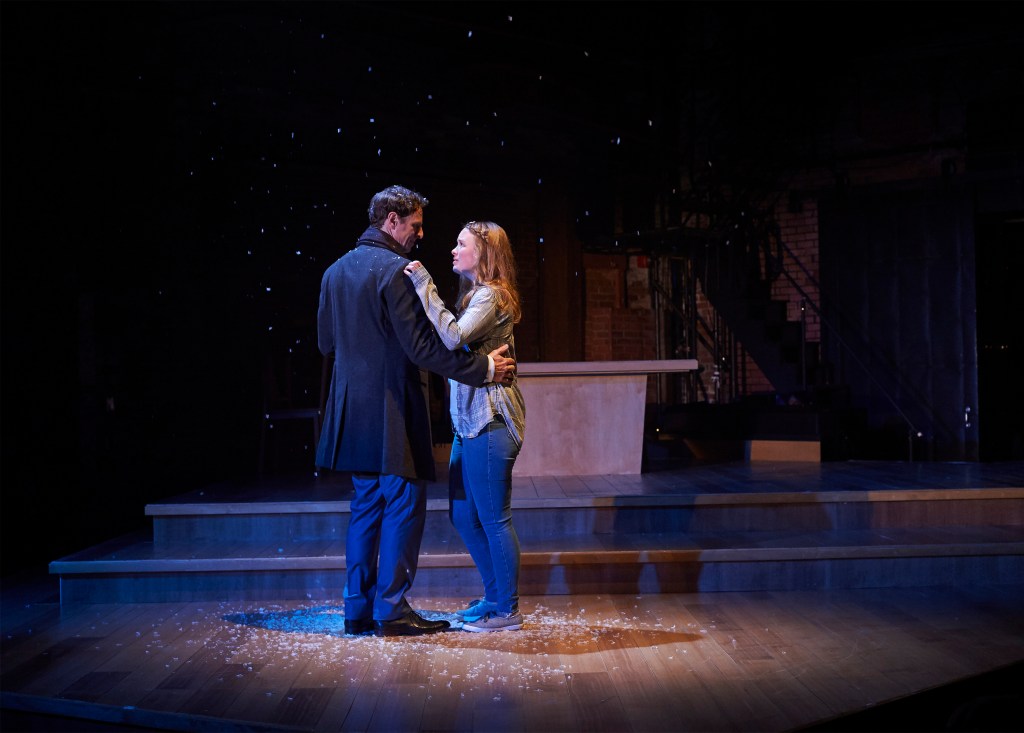
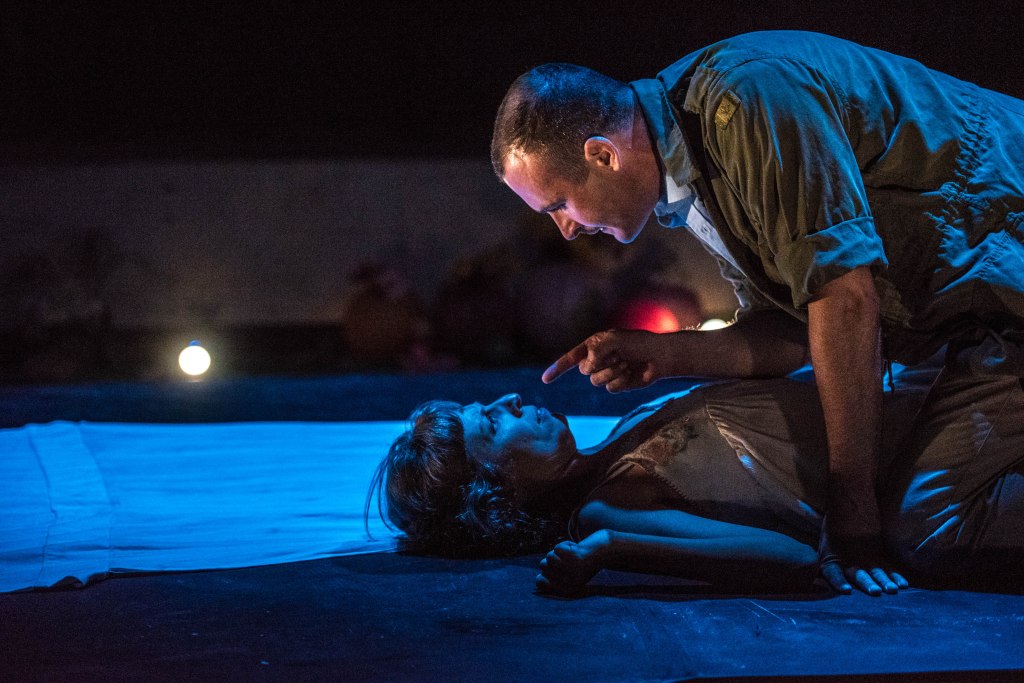
Dan Chameroy & Ellen Denny. Photo by Michael Cooper.

HS: Amazing! Can’t wait to hear more about that in the future. What has it been like working on Life After?

ED: It is such a unique experience to work on a show that is in development, because everyday changes are being made, and the writer is right there in the room with you, and everyone is working as a team to make sure the story is being told in the clearest and strongest way possible. We had the luxury of four weeks in the rehearsal room with this piece – which runs 75 minutes – so there was opportunity to really delve in to each moment. Even though I am so excited to share Life After with an audience, I am in some ways grieving the end of rehearsals, because in this case the process was truly fulfilling.

HS: What has been the most rewarding aspect of working on Life After?

ED: Hands down, the most rewarding aspect is doing a piece by a young female writer. In this case, the incomparable Britta Johnson. A lot of the time I am telling stories written by dead white men, and so it means the world to me to interpret the work of a woman my age. There is a palpable difference in the way the character of Alice is written, because Britta understands what it is to be a young woman, and to be dealing with enormous loss in the midst of the messiness of growing up.

HS: What is your favourite aspect or moment in the show?

ED: Oof – that’s insanely hard! But one aspect of the show that I adore is our ensemble of three women (affectionately dubbed ‘The Furies’), which is a new addition since the Fringe production. Their function throughout the story is very creative and provides me with some much-needed giggles along the way.

HS: What draws you to Musical Theatre?

ED: There’s something inescapable about the emotional power of music. Something that our writer Britta Johnson harnesses expertly. It’s not just about the sung melodies, but also the instruments of the orchestration (shout out to our awesome orchestrator Lynne Shankel) that bring so many colours and feelings, things that cannot be expressed with words. For me, there’s also a sense of nostalgia in many musicals that I grew up listening to – Anne of Green Gables, Gilbert & Sullivan, all of Rodgers & Hammerstein – they bring me back to my childhood. What’s exciting about contemporary musical theatre is it’s really pushing the boundaries of the form, and I’m intrigued to see how the genre will continue to develop.

(from L to R) Ellen Denny, Trish Lindström, Tracy Michailidis, Rielle Braid, Kelsey Verzotti, Barbara Fulton, Neema Bickersteth, Anika Johnson, Dan Chameroy. Photo by Michael Cooper.

HS: Where do you look for inspiration?

ED: I try to see as much theatre as I can, but also other art forms: dance, opera, music, visual art. I find the work of other artists incredibly inspiring. But inspiration is everywhere. I look around the subway car and am fascinated by all the characters and stories around me.

HS: What is the best piece of advice you’ve ever gotten?

ED: “It’s only a play.” Extremely helpful when the going gets tough! Along with that, the importance of having a life. This industry is so consuming that it can be hard to take time off to recharge or travel, but if an artist never goes out and experiences life, how can they interpret it onstage?

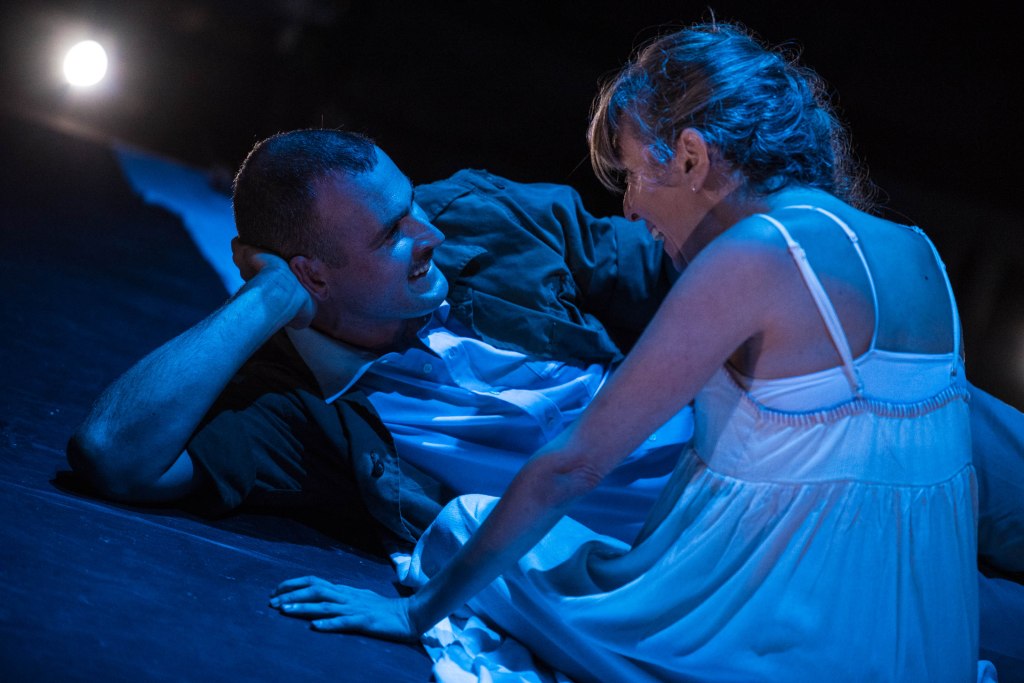
Ellen Denny & Tracy Michailidis. Photo by Michael Cooper.

HS: Where is your favourite place in Toronto and why?

ED: I love Cabbagetown… I’m a sucker for those heritage homes.

HS: What are you listening to/reading/watching these days?

ED: Recently binged the first season of Riverdale – a great reprieve to the intensity of rehearsals. And I’m reading Barbara Cook’s memoir. She just passed away and is forever one of my soprano inspirations.

HS: If you could take anyone out for a drink (alive or dead) who would it be and what would you want to talk about?

ED: It would be my great-great-aunt Harriet! She died in the 1930s. She didn’t leave behind a diary or anything, so sometimes in trying to write about her life I am left with BIG questions. It would be my dream to talk with her about why she made the decisions she did. And what it was really like to be a woman in science a hundred years ago. And to thank her for being a badass trail blazer.

Photo of Ellen Denny by Michael Cooper

HS: What other theatre show(s) are you most looking forward to seeing this year?

ED: I have yet to see Come From Away, so I’m excited to see it return with an all-Canadian cast. Also my friend Audrey Dwyer has her play Calpurnia at Nightwood Theatre this season. And I’d love to check out The Humans at Canadian Stage.

HS: Describe Life After in 5-10 words.

ED: The messiness of grief and the beauty of music intersect.

Life After

Who:
BOOK + MUSIC + LYRICS BY Britta Johnson
A CANADIAN STAGE, THE MUSICAL STAGE COMPANY & YONGE STREET THEATRICALS PRODUCTION
DIRECTED BY Robert McQueen
MUSIC DIRECTION BY Reza Jacobs
CHOREOGRAPHY Linda Garneau
ORCHESTRATIONS, ARRANGEMENTS & MUSIC SUPERVISION Lynne Shankel
DRAMATURG Anika Johnson
SET DESIGN Brandon Kleiman
LIGHTING DESIGN Kimberly Purtell
COSTUME DESIGN Ming Wong
SOUND DESIGN Peter McBoyle

CAST Neema Bickersteth, Rielle Braid, Dan Chameroy, Ellen Denny, Barbara Fulton, Anika Johnson, Trish Lindström, Tracy Michailidis, Kelsey Verzotti

What:
Sixteen-year old Alice is left to navigate life after her father, a superstar self-help guru, dies in a car accident. We plunge into Alice’s overactive inner world as she tries to decipher the events that led to that fateful day. An expanded and reworked production of the hit 2016 Toronto Fringe musical, Life After is a funny and frank story of love, loss and vivid imagination from one of the most exciting new voices in Canadian musical theatre.

Where:
Canadian Stage
Berkeley Street Theatre
25 Berkeley Street
Toronto

When:
On stage until October 22nd

Tickets:
canadianstage.com

Connect: 
t – @ellen_denny

“Exploring THE FISH EYES TRILOGY, Reflecting on High School & Anita’s Current Inspiration” In Conversation with Anita Majumdar, Playwright and Performer

Interview by Bailey Green 

We spoke with Anita Majumdar about opening Factory Theatre’s 2017-2018 season with her play The Fish Eyes Trilogy. Majumdar is a multi-talented artist with a vibrant career in theatre, film and television and an extensive background in classical Indian dance. The Fish Eyes Trilogy follows three young girls through high school. Their intertwined stories reveal themes of bullying, consent, friendship and feminism. 

Bailey Green: These plays began in 2004, can you tell me about what initially drove you to create the piece?

Anita Majumdar: I was in NTS at the time in my third year and for almost three years we would have these board reviews as part of our acting conservatory. Every single time I sat down they’d say “You’re a good actor, but you’re a great dancer.” So I keep thinking how do I blend the joy I find in Indian dance in my work as an actor. I was so tired of hearing that comment! We had a solo show coming up as part of our curriculum, and I wanted to show my teachers that I could do that with acting and dancing together. I just wanted to nail this comment. When I performed that solo show for the school, I was encouraged to take the show to Toronto, so I contacted Franco Boni (who was the AD of SummerWorks at that time) and I did a really basic version, which was part of a double bill called Tell Tale with Dian Marie Bridge, Karim Morgan and Djennie Laguerre.

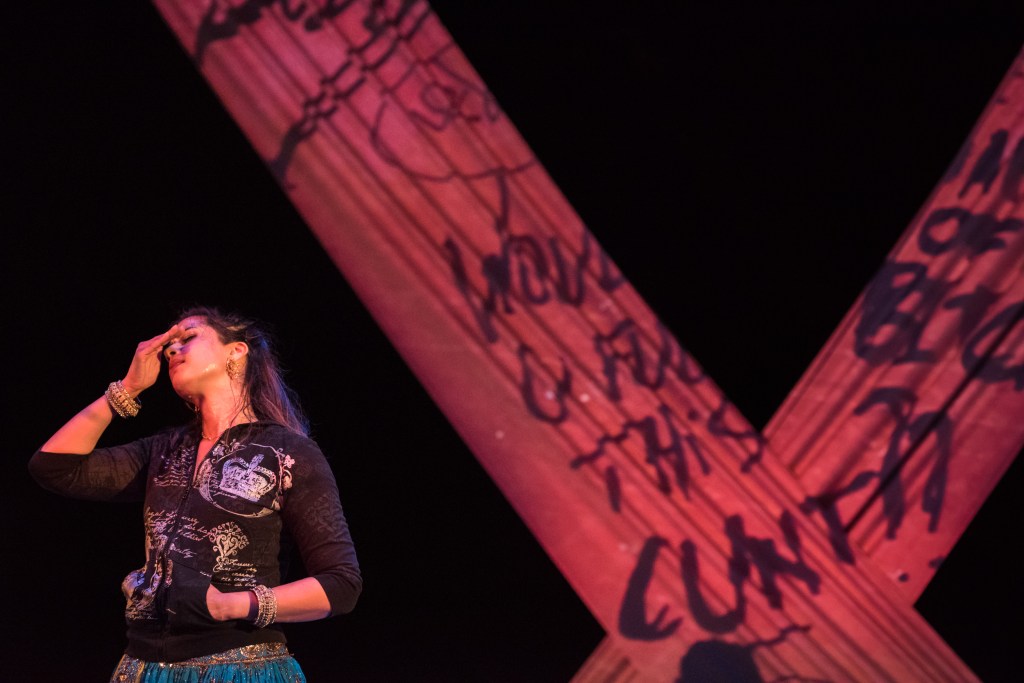
Photo Credit: Dahlia Katz

BG: In the spring you adapted a large portion of the show for high school audiences. Can you tell me about that experience? 

AM: What was really interesting about that version with Young People’s Theatre [where it was just] the first two stories, is that no one asked us to censor the show. There was no ask to adapt or take out the swear words. The only criteria was we had to cut it down for time. So I don’t think we understood the impact or the power of the show until we were in front of kids and teen audiences, and that was really powerful. They are really honest and they will let you know what they are thinking. I was expecting rowdy audiences but I actually experienced very little of that, which I was very shocked by. The questions during the talk backs were so smart and adult, conversations about feminism and what makes feminism and what makes two women in these stories do what they do. Why can’t they be friends? The response and the engagement really threw me. 

Photo Credit: Dahlia Katz

BG: What did you learn from your young audience?

AM: I think really acknowledging the need for this conversation and the complexity. Whose fault is it? What is consent? Young people aren’t the only ones having these conversations and wanting answers. We live in a time, particularly in the last year and a half with what is happening in the US, where we are confronting why locker room talk is not acceptable anymore. Who does it hurt and why is the gender that it hurts [treated as] less important? It became very clear now that we’re adding the third story back, the focus on how each woman/protagonist endures a double standard and rails against that and challenges it in her own way. Each of them are doing the best they can and their circumstances are extreme within the context of their own lives. I remember being in high school and realizing men and women aren’t treated the same and railing against that, asking those questions, “Well, why is it this way?

Photo Credit: Dahlia Katz

BG: How have these plays caused you to reflect on your own experience in high school?

AM: These parts are a reclamation of that time because there were very few people of colour in my high school. I have a lot of regret for not having enough courage due to circumstances and self-protection. I wish I had spoken up then but I know why I didn’t. A lot of doing these plays feels like doing the things I wish I had done or said or brought up in high school with those raging hormones running through me. Thinking that everyone was looking at me all the time, when you’re a brand new person, it feels like it’s happening to you for the first time in human history. And everyone thinks ‘I’m weird’ but then multiply that by 500 and you have a high school. When that stopped and into my twenties and beyond, I realized no one was looking at me and that was in my head. Reflection is part of the human experience. You can’t see it when you’re in it. 

Photo Credit: Dahlia Katz

BG: What feedback has been invaluable to your process?

AM: Our core team is amazing. Brian Quirt has been my director and dramaturge for years and, on this version for the trilogy, we’re just able to get more specific and really look at the through line of each story. Now that the plays are together again, the women are together, and we’re really looking at how each woman picks up the baton from the other. They seem like very different stories but finding the thematic links of movement and dance, the coin of phrase, and how does that add to the overall story. That has asked me to break out of old habits and that has been difficult. This is part of my long-term memory, and now I have to re-record a new way. It keeps me really active and on my toes, and when you get to the third story, I really have to keep my mental alertness in check. It takes a new level of concerted effort. 

Photo Credit: Dahlia Katz

BG: What advice do you have for emerging artists and women of colour?

AM: I actually just sat on a writing jury and I was really floored by the young writers and what they choose to write about. It is really really encouraging to me that many young people are angry and are not happy with the world we live in. The rights we took for granted, the right to choose, women’s rights in general are being called into question again. And no one is taking it lying down and no one is normalizing it. Young people want to write about it and they have something to say and so I would encourage them to keep having something to say. Don’t accept what the media tells us and what Trump tells us is normal.

Photo Credit: Dahlia Katz

BG: Who is inspiring you right now?

AM: I’m quite inspired by Rihanna right now!

BG: Fenty!

AM: Fenty! I went to Sephora and it just floored me every single time, there are these throngs of women of colour huddled around the Fenty kiosk. A makeup line is saying that we’re thinking about you. We’re not excluding anyone, we’re being inclusive and keeping it at a price point at the middle of the range. It is incredible seeing these women of different shades and backgrounds wanting to try on the makeup. And there are larger societal ramifications and how that makes young women and older women and men, all of us feel included in a beauty practice.

And I’m very inspired by the NFL, which I never thought I would say in my life.

BG: So I have to ask, your twitter bio says you’re a Shoppers Drug Mart Expert Extraordinaire? How does one become a Shoppers Drug Mart Expert Extraordinaire?

AM: So it involves spending a lot of time in Shoppers, which I have done. My addiction started when I was doing a season at Stratford. And I don’t drink much, it’s just not my thing, so Shoppers was the only place open until midnight. I didn’t know anybody and I’m sort of an introvert so I would walk the aisles. And I made a friend, Asha, who would be my maid of honour, she would just join me and we’d walk the aisles and then she would drive me home. I came back to Toronto loving Shoppers. The Optimum personalized coupons… they get you every time!

The Fish Eyes Trilogy

Who:
Written by Anita Majumdar
Directed by Brian Quirt
A Nightswimming Theatre production presented by Factory

What:
With razor sharp writing, a Dora Award-winning performance, and spellbinding dance, Anita Majumdar’s wildly successful The Fish Eyes Trilogy is a unique portrait of the intertwining lives of three teenage girls at one BC high school. Presented together in a single three-act play; The Fish Eyes Trilogy innovatively tackles coming of age, cultural heritage, empowerment, and consent with humour and elegance.

Where:
Factory Theatre Mainspace
125 Bathurst Street.
Toronto

When:
September 28 – October 15

Tickets:
factorytheatre.ca

Connect:
t: @AnitaMajumdar

“Collaboration, Mentorship and Intertwining Art & Activism” In Conversation with Melissa-Jane Shaw, director of LELA & CO.

Interview by Hallie Seline

It was a complete honour and pleasure to chat with my ever-inspiring friend and mentor Melissa-Jane Shaw about her latest project directing Lela & Co. We spoke about collaboration, intertwining art and activism, and the necessity and power of mentorship in this community, both as a woman and an artist. Lela & Co. is on stage now at the Theatre Centre until October 8th.

HS: Tell me a little bit about the show and what it has been like directing this piece.

MJS: Lela & Co. gives space for a woman to tell her story of being sex trafficked by her husband, during a time of war. Beginning with memories of her childhood, Lela dives headfirst into her haunting and harrowing story with bravery, tenacity and even humour. I hope it will be a satisfying 100-minute theatrical experience, as well as a moving and motivating piece of activist art. Directing Lela & Co. has been both rewarding and hard. It’s a tricky piece and requires careful handling. It has really tested my directorial chops. While I don’t want to let the audience off the hook with the play’s challenging content, I also want to avoid gratuitous voyeurism. I hope I’ve kept that balance.

Photo Credit: Dahlia Katz

HS: What has it been like collaborating with Discord and Din Theatre?

MJS: Well, just as Seventh Stage is really MJ Shaw, Discord and Din is really Jenna Harris, and collaborating with Jenna has been wonderful. As a co-producer, she’s incredibly hard-working, professional and level-headed. As an artist, she’s very smart and conscientious, open to taking risks and is always thinking beyond the rehearsal walls. It’s been a great collaboration, especially considering we didn’t even know each other before we started working on this show together.

Photo Credit: Dahlia Katz

HS: Can you speak to me more about the local charitable organizations that you have aligned the show with and about the link you are making between art and activism?

MJS: Our hope is that Lela & Co. leaves the audience with a sense of “so what can I do?” We would like to capitalize on that feeling by having a local related charity present after each show for a talk-back and provide the opportunity to get involved and/or donate. We are partnering with freethem.ca, onechild.ca, ConvenantHouseToronto.ca and WhiteRibbon.ca. We are also having several school groups in for educational workshops and talk-backs. Our larger mission is to get the subject-matter of Lela & Co. beyond the walls of the theatre.

Photo Credit: Dahlia Katz

HS: That’s incredible to hear! What’s next for yourself and for Seventh Stage Productions?

MJS: Seventh Stage will continue to develop its musical production Wendy, Darling, which is a contemporary feminist look at Wendy’s (of Peter Pan) life once they grow up. I will move onto a couple of choreography gigs and launch my dance fitness program FITPOP, a class designed to bring out everyone’s inner dancer. On a personal front, my husband and I will continue the next steps of our fertility journey. Hopefully this time next year I’ll either have a big belly or a babe in arms.

HS: What shows are you most looking forward to seeing this season?

MJS: Oh jeez… well, I’m excited to see my friend Rosa Laborde’s show Marine Life at The Tarragon. Looking forward to Nightwood’s Asking for It, which is a very compelling subject-matter to me. I’ll also see Musical Stage Company’s Life After. Otherwise, I’m a pretty terrible theatre-going planner.

Photo Credit: Dahlia Katz

HS: What is the best piece of advice you have ever gotten/What is your current mantra that you’re living by?

MJS: Stop bullying the universe! If something is too hard or you are putting more in than you’re getting out, then it’s time to let go. I have a tendency to muscle through things and work harder than I need to. This is my approach at working ‘smarter’ and letting the right things come to me, rather than me always reaching out.

HS: I would love to hear you speak a bit about Mentorship. You have been such an amazing mentor to myself and to some of my colleagues, as well. Did you have a mentor who made an impact on your life and why do you think mentorship is important in this community?

MJS: Thank you. I have been blessed to have several incredible young women come into my life. The mentorship really is mutual: the mentor gets mentored as well. Debra Goldblatt (founder of rock-it promo) was an amazing mentor and still continues to be an excellent resource. Derrick Chua (you all know him!) has been a long-standing theatre mentor and supporter of mine. Larissa Mair (casting director) provided me professional opportunities and support that gave me a leg up. My goal is to empower women via whatever opportunities and guidance I can provide. We are stronger working together to gain our rightful half of the pie.

HS: 100%! Thank you. Where do you look for inspiration?

MJS: I am inspired by great theatre, film and TV. I’m a news junkie, which also gets me riled up and can be a good source to fuel my fire. While I’m creating work, however, I find these sources can also stimulate my critical mind, which is not always helpful. Ideas seem to flourish best for me though music, yoga, art, reading and nature. These things still my restless mind and give me space to create.

HS: I love that balance. What is your favourite place in the city and why?

MJS: Parkdale. The mix of hipsters and refugees and fancy families and Tibetan monks, encompasses the diversity that is the life source of Toronto. There are also tons of good hang-out spots and it’s close to the lake.

HS: Please describe the show in 5-10 words.

MJS: Harrowing reveal of one woman’s escape from sex-slavery

Lela & Co

Who:
Written by Cordelia Lynn
Produced by Discord and Din Theatre in association with Seventh Stage Productions
Director: Melissa-Jane Shaw
Performed by: Jenna Harris & Graham Cuthbertson
Scenographer: Claire Hill
Lighting Designer: Jazz Kamal
Sound Designer: Verne Good
Associate Producer and Educational Coordinator: Brittany Kay

What:
First produced in 2015 at the Royal Court Theatre in London, Lela & Co. is a timely and gut-wrenching play about women’s worth in a capitalist world.

Based on a true story, Lela & Co. gives space for a woman to be able to tell her story of being brought into sex trafficking by her husband during a time of war. Starting off as a seemingly innocuous telling by Lela of her childhood, Lela & Co. dives headfirst into this while also exploring “truth” in storytelling, who gets to tell whose story, and the resiliency of the human spirit.

Where:
The Theatre Centre BMO Incubator
1115 Queen Street West

When:
September 21st-October 8th, 2017

Tickets:
$15-$30, PWYC Sundays (additional high school student and group pricing)
http://theatrecentre.org or by calling 416.538.0988

Connect:
seventhstageproductions.com
discordanddintheatre.com
t: @MJShawB @DiscordandDin @seventh_stage #LelaCoTO

“Annie Baker, Creating Theatre for Right Now & Reading People’s Minds” In Conversation with Mitchell Cushman, Director of THE ALIENS

Interview by Megan Robinson

The space at The Coal Mine Theatre has undergone yet another transformation for their upcoming production of The Aliens. Directed by Mitchell Cushman, who is well-known for his creative use of space, the black box theatre is unrecognizable as a Vermont alleyway.

“It takes place outside, which felt like a real fundamental challenge at first,” Cushman let me know from our seats in the audience, where we sat taking in the details of the set, which received some exciting final touches the day before.

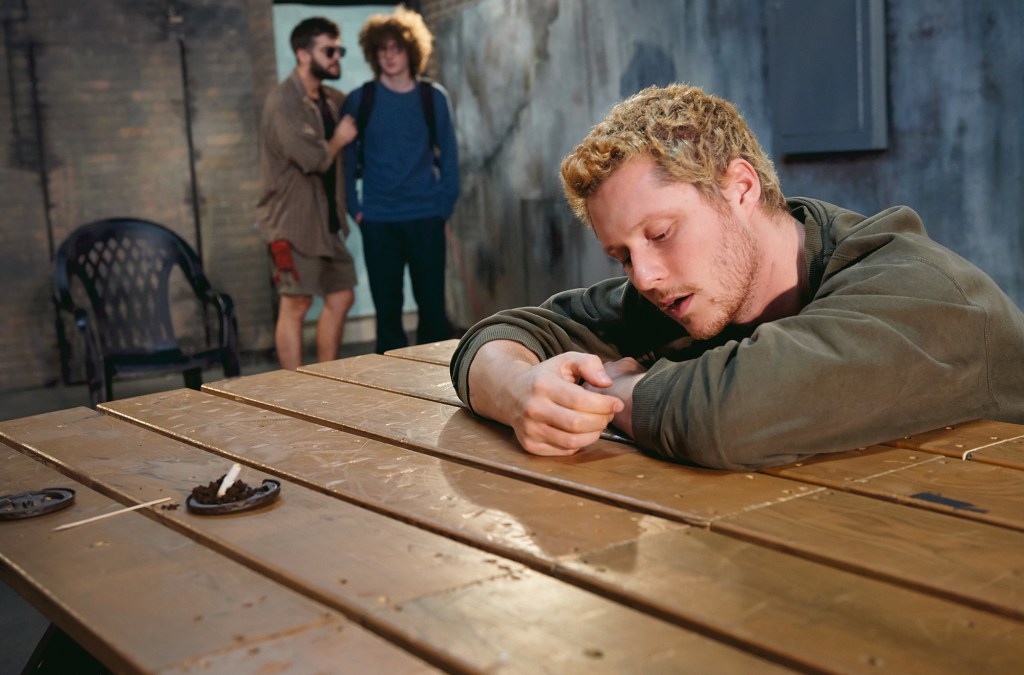
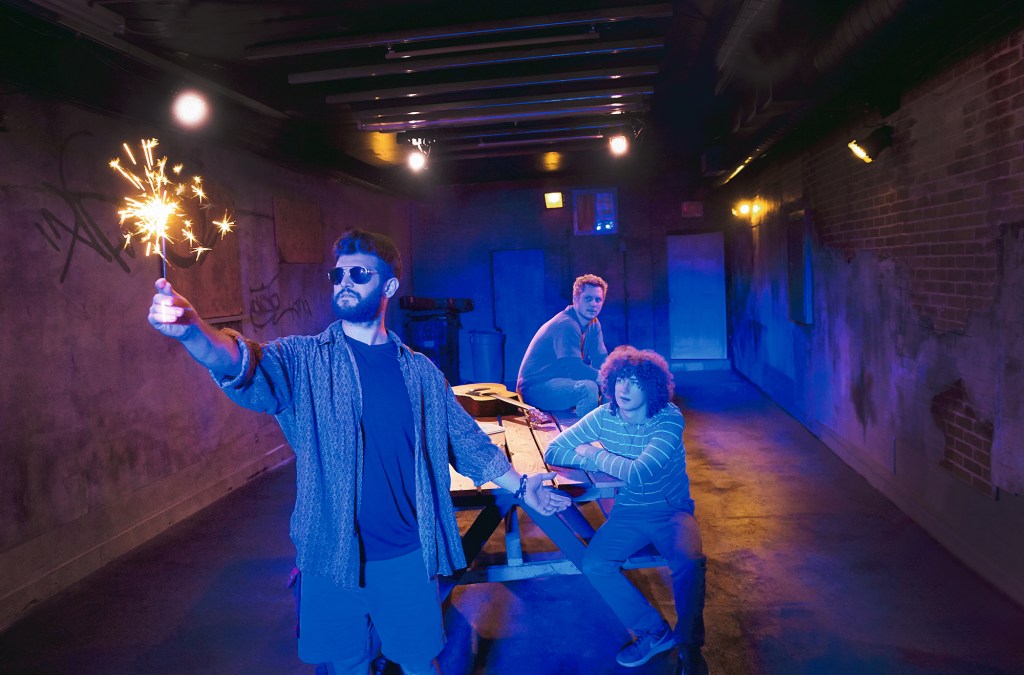
Around us, the theatre’s walls were plastered with exposed brick, a handmade picnic table took center stage, and a graffitied image of half of Bernie Sanders’ face was spray painted just above our heads. With a single row of chairs lining the two walls, the length of the playing space called to mind a runway at a fashion show.

“I think it serves the naturalism of what Annie Baker is writing because the audience are really flies on the wall as opposed to feeling like they are being played to in any way.”

For the next thirty minutes, I talk to director Mitchell Cushman about Annie Baker, creating relevant theatre, and reading people’s minds.

MR: You just worked on Treasure Island at Stratford – has this been a breath of fresh air?

MC: They’re both very different. I had a great time with Treasure Island, but they couldn’t be more different. Treasure Island is a huge proscenium, thousand-seat theatre and large budget show, largely for kids.

Annie Baker writes in this kind of hyper-naturalism where everything is sort of sacrificed for the pursuit of trying to get something real on stage. That means it rejects a lot of what we expect about conventional drama. Working on this show makes me realize how much artifice goes into most theatre. Because we expect it. We expect things to be curated into something that is easily recognizable as dramatic whereas there is drama and construction to Annie Baker’s writing but in a way that is so invisible.

MR: What did you think of the play the first time you read it?

MC: I read it like 3 or 4 years ago. Honestly, I don’t know if I knew what to make of it when I first read it. I thought parts of it were interesting. But I’ve had this experience reading a couple of her other plays. They feel very thin. You get to the end, and you’re like – where was the play?

Then I had the chance to see some of her plays. I saw The Flick, and I saw a production of John with The Company Theatre. Both of those were really impactful experiences for me as an audience member, and it was after I saw John that Ted (Dykstra) wrote to me about The Aliens. When I did go back to read it with an understanding of the wavelength that she calibrated on, I found much more in it. Also, I’m now at the exact age of two of the three characters that are at the center of the play, and I think that has had an impact as well.

Photo Credit: Tim Leyes

MR: Which character do you think you most relate to? 

MC: (laughs) Probably the guy that is not my age. There are three characters KJ and Jasper and Evan.

KJ and Jasper are 30-31, they haven’t really left their hometown, and they spend their time kind of vegging around and reading poetry or sort of writing music. One of them wants to be a novelist, but they have not really done anything. But even though they haven’t done anything, they’ve had real deep life experiences, and a lot of that is based on living on the margins of society and loss and complicated family life and problems with drugs.

Evan works in the cafe… beyond that “wall”. He’s a seventeen-year-old kid working a summer job and he’s got a comfortable home life but feels at 17 that he hasn’t had a lot of experiences and maybe couldn’t be an artist, a writer, a tortured soul, or musician because he doesn’t have what he perceives to be their pain and suffering. I’m more like him. I think I said that on the first day of rehearsal. I worked in a cafe, I come from a comfortable middle-class background, and I haven’t ever felt fundamentally alone in the way I think the other characters feel in the show.

MR: So you’ve never felt like an alien?

MC: Well I don’t know that… I wouldn’t say I’ve never felt like an alien. But I’ve never really felt that society wasn’t built for me which is the way that KJ and Jasper feel, and maybe Evan feels that in a different way.

MR: Why this show right now? 

MC: The play was written in 2010, and one of the decisions we had to make was, do we set it then or now? The characters have cell phones in the show, and there are lots of stage directions of them flipping them open and closed, and that felt like by doing that we’d immediately be playing something that felt like a period piece. But the phenomenon of disenfranchisement that she writes about is only more pronounced now than it was seven years ago.

The play is set in Vermont, and I was trying to think what do I know about Vermont or what does Vermont mean to me? And you can see right here, we are sitting under a big graffiti thing of half of Bernie Sanders’ face.

Bernie Sanders is a Senator from Vermont who played such a large role in the last American presidential election and epitomizes this part of America. Vermont is very liberal and left-wing in a lot of ways, but it’s also the whitest state… I think it’s like 95 % white. Very little diversity and, among other things, the play looks at what happens when you have a very homogeneous population of people and how do their thoughts develop and how do thoughts about othering occur, and all those things feel very relevant. In its own way, the play has a lot to say about the opioid crisis and things that have only become, you know, more pronounced and tragic.

In some ways, I think she was writing something prophetic. The world around us has grown into the play

Photo Credit: Tim Leyes

MR: I did wonder why the cast was three white males…

MC: That’s interesting. As we were casting it we were trying to be conscious of that. I definitely believe theatre should be a place for diverse voices. And we like to create the most eclectic, artistic ensembles as possible. I think this play is specifically about the fact that all three of them are white. So to have cast it more racially diverse would have been to silence the themes of the play. This play was written about specific people in a specific place, and I think in doing it, it’s engaging in the conversation about the need for diversity in our communities. If you just, like, photoshop in diversity into a community where it doesn’t exist I think you’re wallpapering over some of the profound things at the center of her writing. We’ve got quite a diverse artistic team working on the show. It’s not represented in the cast of characters but I think for this piece it was the right choice.

MR: Your big thing is innovative staging, immersive theatre. I read an interview where you said it’s important to do something different because there is so much theatre going on. How do you come up with these new ideas?

MC: I think it can be kind of a trap, despite what I said in other interviews, to think about doing things that are different for the sake of being different. Almost every project I’ve worked on, the script is first and out of the script you try to find a way to tell that story. I think if instead you begin with a desire to do something different then you’re doing something to a play instead of figuring out the best way to tell a story. So I found in my practice, especially running Outside the March, but the other work I’ve done, there’s a broader canvas of ways to tell a story in a live theatre experience than the traditional framework necessarily allows for. So I try to start from a place of zero preconceptions of what the experience will be. So when I think about how to tell a story, I’m not thinking of people sitting in a proscenium space watching. I’m not picturing the experience akin to watching a movie.

MR: This show explores the idea that we can’t ever really know another person and what they are thinking. If you had the opportunity to read another person’s mind would you take it? 

MC: A specific person or telepathy in general?

MR: Let’s go with for a day, you can read everyone’s mind.

MC: I would take it because I’d be very curious but I would go somewhere where I was surrounded by nobody I knew. Because then you’d be able to answer that sort of eternal mystery of what are people thinking and what are they thinking about me as I interact with them, but you wouldn’t fundamentally destroy all of your relationships.

MR: You think it would destroy your relationships if you really knew a person?

MC: Ya.

MR: So you think it’s good that we don’t actually know the truth? Are filters important? 

MC: I think relationships are about striving to get to know someone so if you had the answer manual at the beginning then you would actually feel less close to those people. It’s about the experience of trying to break through those barriers even though, eternally, you’ll never get to the bottom of it.

MR: But isn’t that a sad pursuit? 

MC: I don’t think so. I think that’s what forges history and connection with people. It’s certainly frustrating and disarming and difficult at times, but I think that breathes the need for human connection. If we all knew what everyone thought all the time we’d be robbed of conversation. And art! Theatre comes out of that same impulse of trying to strive to get to know people and things about existence that you can’t just read in someone’s brain, so I think it’s good there are those filters. But I think we should still strive to listen better.

Photo Credit: Tim Leyes

MR: Do you think this is a hopeful story? 

MC: I wouldn’t say that it is entirely hopeful, but within the construction of it, there is something quite life-affirming.

MR: If you could talk to the characters in the show and give them advice what would you say?

MC: Don’t kick the audience.

MR: Is that advice for the actors?

MC: (He laughs) Life advice?

MR: Yes. You’re very ambitious and it seems these characters are lacking that.

MC: Well, I would say that they should try to breathe and take the pressure off themselves. Because I think it’s the pressure to accomplish great things that is kind of stunting them from accomplishing much of anything.

MR: Too scared?

MC: Too scared or because, to me, one of the big themes of the show is they idolize these great writers, but genius is a hard thing to emulate so instead they just emulate their destructive tendencies. I think that hero-worship can be dangerous in that capacity because I think the things that are easiest to copy are not the things connected with hard work and perseverance… they are more the trappings of it.

The Aliens

Who:
Written by Annie Baker
Directed by Mitchell Cushman
Starring Maxwell Haynes, Will Greenblatt and Noah Reid
Set and Costume design by Anahita Dehbonehie
Lighting design by Nick Blais
Sound Design by Sam Sholdice
Production Manager Charissa Wilcox
Produced by Diana Bentley and Sehar Bhojani

What:
Coal Mine Theatre launches the 17/18 season with Pulitzer Prize Award-winning playwright Annie Bakers THE ALIENS. Sharing the Obie Award for Best New American Play in 2010 with another Baker script, Circle Mirror Transformation, THE ALIENS, a finalist for the Susan Smith Blackburn Prize, premiered Off-Broadway in April 2009 and the West End in September of the same year.

Jasper (Noah Reid) and KJ (William Greenblatt) are two misfit souls who have made the out-back of a Vermont coffee shop their private sanctuary and refuge from the real world. Here they can indulge in their dreams and delusions of being a brilliant writer and a divine healer. Seventeen-year-old Evan (Maxwell Haynes) is eking out his summer working at the café and is irresistibly drawn to their world of magic mushrooms, philosophical musings and rock bands that never-were. THE ALIENS is both a cruel and compassionate examination of a lost generation and modern-day America.

Where:
Coal Mine Theatre
1454 Danforth Avenue, Toronto ON M4J 1N4

When:
Wednesday, September 20 – Sunday, October 8 at 2pm
Tuesday to Saturday 7:30pm (Mondays Dark)
Matinees are Sunday at 2pm.
No intermission. No latecomers.

Tickets:
Regular price $42.50 (plus HST)
Rush tickets $25 (cash only, at the door, 30 minutes before performance starts, subject to availability. No phone reservations).
coalminetheatre.com

Connect:
t: @coalminetheatre
f: /coalminetheatre

“Community, Hedonism & a Reminder of Why We Do What We Do” In Conversation with Courtney Ch’ng Lancaster, Director of GRAY

Interview by Bailey Green

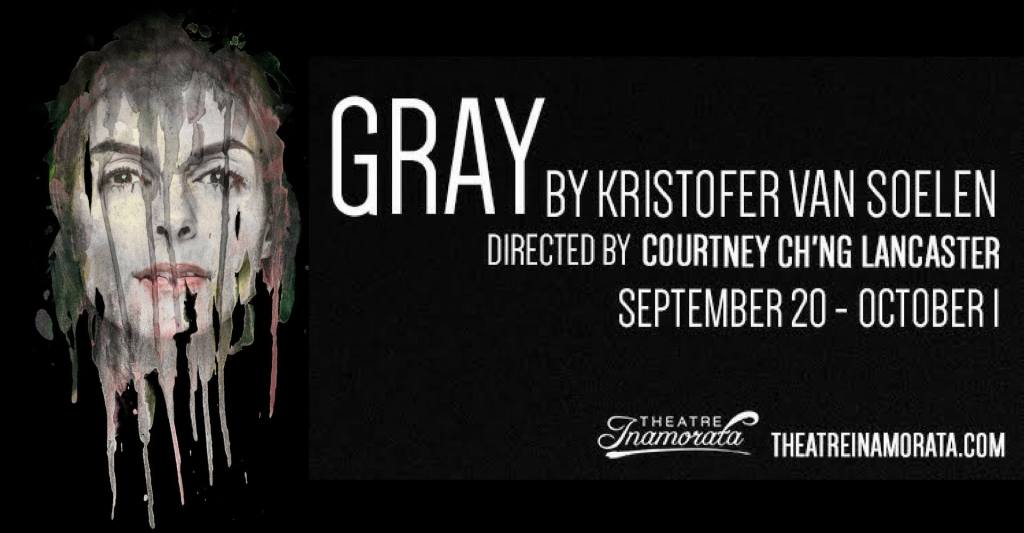
It was a pleasure to sit down with director Courtney Ch’ng Lancaster to chat about Theatre Inamorata’s upcoming production of Gray. Gray, set in modern-day Toronto, was inspired by Oscar Wilde’s The Picture of Dorian Gray. Playwright Kristofer Van Soelen re-imagines Dorian’s world, altering the genders and relationships of the characters. The cast and crew are predominantly female-identified. Gray begins when Jane sculpts Dorian and creates a work of pure beauty. But when a gallery owner named Opal introduces Dorian to the hedonism and chaos of the arts world, everything changes. As time passes, the sculpture incurs the damage that Dorian inflicts on herself and others. Gray explores art, beauty, sexuality and female identity.

Bailey Green: When were you brought on board with Gray?

Courtney Chng Lancaster: Well, I helped Theatre Inamorata looking at a different script more than a year ago and spent a little bit of time with them to see if that was a project they wanted to move forward with. Though that specific project didn’t end up working out, when they were ready to produce Gray, Michelle Langille called and asked if I wanted to direct and I said yes. 

BG: What were your initial reactions reading the script?

CCL: I thought it was fantastic and very brave. It’s a really wild adaptation. Set in the present day, the fundamental themes remain the same but a lot has been changed. Kris has really taken a wide open approach and it was really brave and made me completely terrified when I read it. [The play has] a large amount of people and spans a lot of years, so it made me nervous.

BG: Were you part of the development process, as well, and is the script still growing in rehearsal?

CCL: Kris is such a wonderfully open playwright. There was a process before I came on board, with a number of drafts before. I came into a reading six months ago and suggested some changes and a new draft came from the input from everyone in the room. And then [we had] a two-day workshop at the beginning of the summer. We’re still tweaking things as we go, seeing where we need more information and where can we trim back. Kris is wonderful. 

BG: What was your relationship to Dorian Gray (if any) before this project?

CCL: Very little. I barely remembered it, actually. I’d read it in high school. It’s quite fun, and so gothic. It’s a very dark verging on melodramatic story, which is quite pleasurable to play with on stage!

BG: How do you think a modern setting in Toronto enhances some of the themes of the play?

CCL: I think we can all relate in the theatre world to the wonderful strength of our community. In the original, the big temptation and the ultimate downfall comes from hedonism that overwhelms Dorian and becomes his drug. Kris has translated that into the dangers of getting pulled into the hedonistic part of the art world. [In the play] Dorian is not an artist but spends all her time going to these parties and is part of the scene. It explores how great the community can be, but also when does it become detrimental to the work? When is it all too much?

BG: Would you say that themes of addiction and alcoholism come up as well?

CCL: It goes hand-in-hand. Graham Isador recently wrote an article in Vice about addiction and how artists are so prone to that. When we were rehearsing and starting to link scenes together, we realized how much they drink in every scene. We need so many wine glasses in this show. A drink is a lure, an avoidance, a temptation, a polite offering. So I would say [addiction] is an unspoken theme, for sure. It’s not overt, but the audience can assume there are drugs. They’re the last ones at the party and as my grandma used to say, nothing good happens after 2am. [They have] that fixation on being at the centre of things and never taking time for yourself, always being out and socializing.

BG: And how social media really enhances the performative nature of living like that, because there’s the drive to show it to everyone else.

CCL: I’m glad you mentioned social media, because now we’re performing online how we’re out, keeping up appearances. At one point during the play Dorian celebrates having broken a threshold of followers. And it becomes the work, she has to display her hedonism, as well, lest she lose interest.

Rehearsal Photo of Tennille Read and Mamito Kukwikila taken by producer/performer Michelle Langille.

BG: What has been the most challenging aspect of working on this show?

CCL: Purely practically, I have never directed something with this number of people before. It’s a lot of bodies, and it’s been a wonderful challenge. I’m learning a lot about blocking and the physical positioning of people on stage. And how to tell what is a massive complex gothic story on an indie theatre budget with really compelling storytelling without slashing props. We don’t want to distract but it is a big tale to be telling with a minimal aesthetic onstage 

BG: What has brought you the most joy?

CCL: When it works. We’ve just finished the 3rd week of rehearsal now, and they are all wonderful team players. You have your exciting discoveries of the first two weeks, then the shiny-ness starts to wear, and then you think “Do I really know what is happening?”, “Do I really know what I’m doing here?”, the mud and the mire… it’s a hard slog, but it has been a great journey figuring out when it works.

BG: What has Gray made you reflect on in your own life?

CCL: Remembering what is important, reminding yourself why you’re doing it. I forget that on a regular basis. What you’re actually interested in as an artist. It can be very easy to be distracted by accolades and excitements, press and parties, and then to feel empty when that stuff isn’t coming anymore. So to remember why you’re an artist and what it’s about.

Rapid Fire Question Round: 

Favourite coffee shop: We’re rehearsing near Dupont and Ossignton, so right now I would say Contra Cafe, they make a really great latte. 

Current neighbourhood: We moved from the west side to Riverdale, and it’s been lovely.

What are you reading: This is so embarrassing but gardening books – Let it Rot! It’s about compost.

What are you listening to: Jason Isbell, despite how SOME people don’t appreciate him, aka my husband.

Next show on your calendar: Soulpepper’s Waiting for Godot and then Picture This. Oh and Michael Ross Albert’s Miss at the Assembly Theatre space, I’m a big Michael Ross Albert fan.

Gray

Who:
Company: Theatre Inamorata
Written by Kristofer Van Soelen
Directed by: Courtney Ch’ng Lancaster
CAST: Tennille Read, Michelle Langille, Ximena Huizi, Mamito Kukwikila, Edward Charette and introducing Sydney Violet-Bristow
Set and Costume Design: Lindsay Woods
Lighting Design: Steph Raposo
Sound Design: Andy Trithardt
Stage Manager: Hannah MacMillan
Producer: Michelle Langille
Associate Producer: Emma Westray

What:
“The only way to get rid of temptation is to yield to it.”

When Jane meets and sculpts Dorian, a naive and exquisitely beautiful woman, it is perfection – until Dorian is swept into the hedonistic and morally ambiguous world of contemporary art. As Dorian becomes more and more self-involved and destructive, the sculpture begins to absorb her acts of cruelty, while Dorian’s youth and beauty are intact. An examination of beauty, aging and self-indulgence, Gray contrasts the themes of the classic novel with our modern world. Featuring a predominantly female-identified cast and creative team, Gray takes a hard look at female identity and the implications of our society’s obsession with beauty.

Where:
The Commons | 587a College Street, Toronto, ON

When:
Wed. Sept. 20 – 8pm (PREVIEW)
Thurs. Sept 21 – 8pm (OPENING)
**Fri. Sept. 22 – NO SHOW**
Sat. Sept. 23 – 8pm
Sun. Sept. 24 – 2pm & 8pm
– – – – – – – – – – – – – – – – – – –
Wed. Sept. 27 – 8pm
Thurs. Sept 28 – 8pm
Fri. Sept. 29 – 8pm
Sat. Sept. 30 – 8pm
Sun. Oct. 1 – 2pm & 8pm

Tickets:
$25 General | $20 Seniors/Students/Arts-Worker | $15 Preview
theatreinamorata.com

Connect:
Courtney Ch’ng Lancaster: @courtneyvl
#Gray17
t: @TheaInamorata
i: @TheatreInamorata