Skip to content

A Chat with Carly Chamberlain, Director of 10 CREATIVE WAYS TO DISPOSE OF YOUR CREMAINS at the 2017 Fringe

Interview by Bailey Green

We spoke with Carly Chamberlain, artistic producer of Neoteny Theatre and director of upcoming Fringe show 10 Creative Ways to Dispose of your Cremains written by Rose Napoli. Jakob Ehman and Rose Napoli star in this two hander about millennials, emotional baggage and bed bugs.

This interview has been edited for length and clarity.

BG: Tell me about working with Rose Napoli. How did you two meet?

CC: We both went to University of Windsor in the acting program, we were one class apart and she was like an honorary member of our class. So I’ve known her for 15 years, and we were friendly but never close. When we started working together at Canadian Stage, we reconnected and really hit it off. I went away to school and during that time she had been writing and we stayed connected. When she approached me this Fall about 10 Creative Ways, it felt like the right project. We’ve known each other for a long time, so to take our relationship a new level, so to speak, has been really exciting.

BG: What drew you into the script?

CC: It’s really different from what I had worked on recently. On the surface it seems quite contemporary, colloquial and casual. The first scene is at a party, it’s about millennials, and on the surface it seems like snappy little play. But there’s a lot of anxiety and deeper issues going on under the surface. It’s a play about people who are so desperate to connect, but their baggage gets in the way and I felt like that was a familiar experience and familiar to people I know. When I read it, I felt I knew these characters. Instant connection.

BG: So where do we find these characters at the start of the play?

CC: Two people meet at a party, and they end up not really getting along, but they stumble back upon each other while they are dealing with shit in their own lives. The play takes place over 24 hours, and then an epilogue. So [we see] two seemingly mis-matched people that may have the potential for a real connection, whether that is friendship or romance. It’s not really a love story in a traditional way. It’s a Toronto story. It’s about two people trying to maybe grow up and how to do that amongst the shit of bed bugs and trying to pay rent and trying to find some meaning in what they’re doing in their lives.

R-L: Rose Napoli, Jakob Ehman

BG: So Rose also acts in 10 Creative Ways, how have you both navigated that change in roles from playwright to actor? Or is it a more fluid process?

CC: It’s a new experience and I have never directed someone in their own work. So I went in with an open mind and to see what the needs would be. The play had some workshops so we both felt confident that the script was in a good place; there were things we’d change but there wouldn’t be massive re-writes in rehearsal. It’s a fluid relationship when I’m in rehearsal with Jakob and Rose. It’s important to me when working on new work not to look to the writer in the room to answer all of our questions, you still need to investigate just the way you would with Shakespeare or Chekhov. I like plays that leave those rough edges, and now that we’re deeper in, we just jump back and forth pretty fluidly. Jakob and Rose have worked together so they have that dynamic as well and it’s a pretty open room as far as the dialogue around changing the text when it’s needed.

BG: What has been the greatest joy working on this piece?

CC: I like when I’m working with really good people and am surprised by what they come up with. They have free rein in that way. I’m working with a design team who I’ve worked with before and are people I really trust. It has been a special experience, the contributions of the whole team and a lot of my work has been in response to what everyone else is giving, I am shaping the awesome ideas of all the people in the room. Anna [Treusch] who designed the set, came to me and said ‘I can see exactly what this set is,’ and that’s not the way she usually works, usually it’s a longer, organic process. So that was so unexpected to me. And Daniel [Bennett] for sound composition, he had a really clear idea right away. So I love getting to be surprised and inspired.

BG: It seems like we’re grappling with this ‘millennial question’ in art and theatre right now, and it can be really nebulous. Could you distill 10 Creative Ways into a couple short phrases?

CC: It’s about learning how to communicate when you’re more comfortable using emojis and it’s about making a choice to let go and accept that your baggage is in the room

BG: And lastly, what are you excited to see at fringe?

CC: The Diddlin Bibbles, they are so funny and shocking and strange and I always really love so I am looking forward to seeing a full set. I’m looking forward to Lemons Lemons Lemons Lemons Lemons cause I love The Howland Company stuff but also, similarly to our piece, it has a title everyone remembers but yet still doesn’t quite know what it’s about, so I like that there’s a bit of mystery around it. And Nourishment, it’s got a couple of young creators that are doing some really interesting work, strong young women, and I’m excited about it.

10 Creative Ways to Dispose of Your Cremains

Photo Credit: Kyle Purcell

Who:
Written by Rose Napoli
Directed by Carly Chamberlain
Starring: Jakob Ehman & Rose Napoli
Producer: Nicole Myers-MitchellSet & Costume Design by Anna Treusch
Sound & Lighting Design by Daniel Bennett
Stage Management by Lucy McPhee
Production Management by David Costello
Photography & Graphic Design by Kyle Purcell

What:
Boy meets girl. Boy has broken vaporizer. Girl has bed bugs. “Ten Creative Ways to Dispose of your Cremains” is not just the longest title ever, it’s a millennial love letter to the misfits of the Peter Pan Generation.

From the writer of “Oregano”at the Storefront Theatre and the director of “Plucked” at Summerworks, comes a new old story about living on the outside. Starring Jakob Ehman and Rose Napoli.

Where:
Theatre Passe Muraille Backspace
16 Ryerson Ave.

When:
6th July – 9:30pm
8th July – 3:15pm
9th July – 8:00pm
10th July – 5:45pm
11th July – 10:15pm
13th July – 1:00pm
14th July – 8:45pm
16th July – 2:15pm

Tickets:
fringetoronto.com

Connect: 
Carly Chamberlain: @CarlyCha
Rose Napoli: @RoseNapoli1
Theatre Rhea: @TheatreRhea
Neoteny Theatre: /NeotenyTheatre
neotenytheatre.com

#CremainsTO

A Chat with Storyteller Jillian Welsh on NO PLACE in the 2017 Toronto Fringe

Interview by Brittany Kay

Jillian Welsh is very, very funny… just TRY not to laugh at her answers! She’s no stranger to the storytelling community with appearances on the RISK podcast and CBC’s Love Me. Her new show NO PLACE explores her relationship to her family and trying to find her place. 

Brittany Kay: Tell me a little bit about your show.

Jillian Welsh: In my real life I always thought that I would sing at my grandmother’s funeral, but holy drama Batman — things got complicated. This show takes place the hour before her funeral in a church and explores all of the secrets that made it so damn complicated.

BK: Why is a show like NO PLACE perfect for the Fringe? Why your show, over the 159 other shows?

JW: Oh man, don’t choose me over things. I mean come see this show, please come see it, but I advise the Derrick Chua method; see as many things as you possibly can. There are so many incredible artists this year.

BK: What are the fears and excitements around doing a solo show?

JW: What if I have to pee? What if I can’t hold it?

BK: Why the title NO PLACE?

JW: I buried that answer deep in the play, come solve the mystery, yeah? #nancydrewyou (…into coming to my show).

BK: How did you come to storytelling?

JW: I was working in a bar and Graham Isador kept trying to talk to me while I was busy moving around some rubber chickens. I told him to shut up and hold my cock, then he asked me to tell a story onstage.

BK: What draws you to storytelling as a performer? What makes you keep coming back to this medium?

JW: I keep trying to live a normal life, but fail miserably.

BK: What do you want audiences walking away with?

JW: Their coats, umbrellas and water bottles. I hate cleaning up after people.

BK: Are there other shows you are planning to see in the Fringe?

JW: ALL THE THINGS!

But for sure:

Dear Uncle Wish because I love Samantha Chaulk’s brain, Life Records 2: Side B because Rhiannon Archer is just so damn hilarious and She Grew Funny because the director (Chris Earle) is life partners with my director (Shari Hollett) and they gave me free sandwiches.

BK: You’ve been in the Fringe before. What are your favourite parts about the festival?

JW: The tent, marijuana and consensual sex.

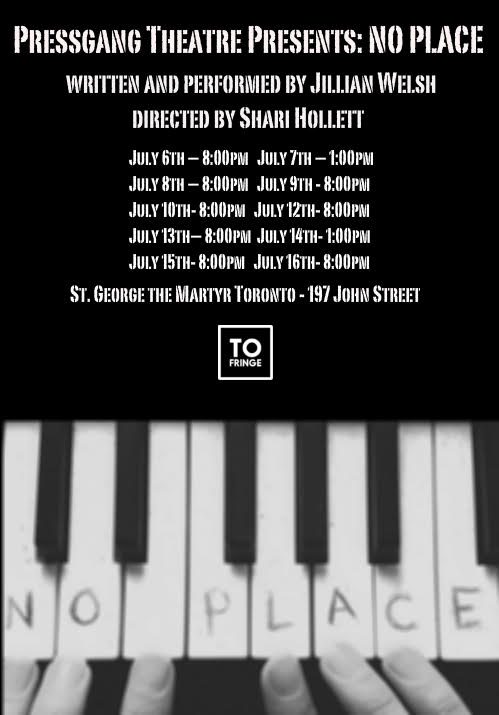
No Place

Who:
Written and Performed by Jillian Welsh
Directed by Shari Hollett
Stage manager: Ada Adler
Produced by Pressgang Theatre as a part of the Toronto Fringe Festival

What:
Josephine knows she should sing at her grandmothers funeral. Or at least say something, anything at all. But somehow between Manhattan and rural Ontario all the music got lost and now all the right things to say can only turn out wrong.

Where:
St. George the Marytr (The Music Gallery)
197 John Street (beside the OCAD building/behind the AGO)

When:
July 6th – 8:00pm
July 7th – 1:00pm
July 8th – 8:00pm
July 9th –   8:00pm
July 10th– 8:00pm
July 12th– 8:00pm
July 13th– 8:00pm
July 14th– 1:00pm
July 15th– 8:00pm
July 16th– 8:00pm

Tickets:
fringetoronto.com

In Conversation with Janelle Hanna on Bad Baby, Big Risks & the Camaraderie of The Fringe

Interview by Brittany Kay

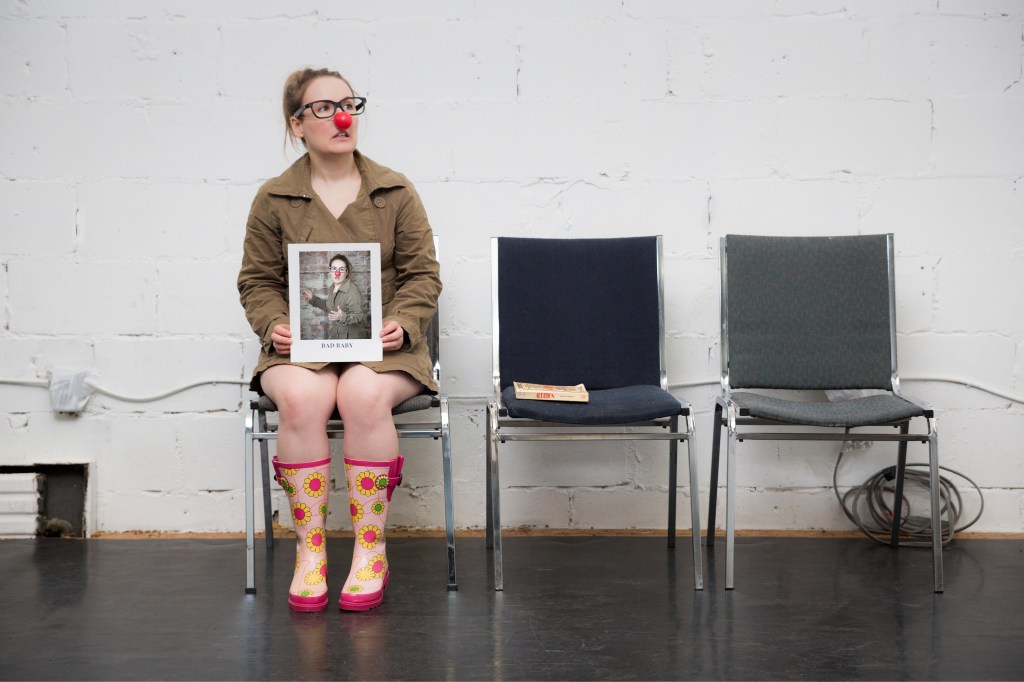
Janelle Hanna is bringing the only clown to wear rubber boots at the Toronto Fringe Festival this year and Bad Baby was born to fill that role! Presenting her first solo show, Janelle is a Fringe veteran appearing in past shows such as Eternal Friendship with a Spotless Smile and Virginia Aldridge, BSc. Janelle Hanna’s Bad Baby appears in Rules Control the Fun, a hilarious new Canadian play about love, relationships, vulnerability, and shame at the 2017 Toronto Fringe Festival.

Brittany Kay: Who is Bad Baby?

Janelle Hanna: Bad Baby is a very talented and attractive actor. You’ve probably seen her around the city at auditions. She goes to a lot of auditions. A lot. She might not be in Toronto for very much longer though. She’s probably going to go to L.A. so when she comes back to Toronto she can say, “Yeah…just got back from L.A.”

BK: Where did she come from? How was she first discovered and created?

JH: Bad Baby has been with me for about 10 years, coming into my life initially in clown and mask class during my 3rd year of the Theatre and Drama Studies program at UTM. She started as a very mischievous kid who loved feeding her dog treats but has since grown up and developed some sweet dance moves, wicked acting chops, and masterful balloon arch skills. And while Bad Baby has popped up around the city a few times, her last appearance in a full show was during my MFA in Acting at York University when I presented my thesis research on vulnerability. She was 1 of 3 featured characters I presented in a 15-minute solo piece. I’m experimenting with a similar concept for Rules Control the Fun but Bad Baby gets top billing this time.

BK: Tell me a little bit about your show and why Bad Baby “knows all the rules”?

JH: Bad Baby knows all the rules because she’s seen a lot of solo shows. A lot. AND a lot of Fringe shows. A lot, a lot. And she knows all the things you’re supposed to have in a great show, and she’s going to do all those things like dance, sing, special skills, flirt, kissing, balloons, and nudity… maybe.

BK: Why is a show like Bad Baby perfect for the Fringe? 

JH: In my experience, the shows that work best in a Fringe environment are those with a lot of laughs, and a lot of heart. This show is big on both of those things but audiences will discover this show delves deeper into issues I’m passionate about exploring as a writer and performer: vulnerability, shame, love and connection. I’m taking some big risks with this show, and I think that’s what Fringe is (or should be) all about – taking a huge leap and seeing if you land, or totally wipe out. Let’s hope for the former.

BK: This is your first solo show. What are the fears/excitements around that?

JH: Well it’s the first solo show I’ve written, and yes there are many fears that come along with that (Will the show resonate with people? Will I piss everyone off? Am I doing it all wrong? How do I use square brackets? How do I even type square brackets?) Even to be called a “writer” is still a bit odd if I’m being honest because I really feel like a performer first and foremost. But it’s also really exciting because as an artist I tend to infuse a lot of myself into the work I create (which I’m sure isn’t a unique or particularly mind-blowing statement as I’m sure to a certain extent this is what all artists do), and as the writer I’ve had the opportunity to craft exactly what I need to say, something you don’t always get to do when you’re playing with someone else’s words. When it comes to performing solo many people have told me how terrified they are of it. I’ve never really feared performing solo though. Perhaps it suits my… somewhat… at times… controlling personality? NEXT QUESTION!

BK: Tell me about the balloon arch? Will we see it in the tent?

JH: *BREAKING NEWS* The balloon arch WILL make an appearance at the tent. We can guarantee that. Bad Baby can even show you how to make an arch. It’s pretty simple! Fishing line, weights, helium, balloons BUT the tricky part is attaching it to the line – that takes years to perfect. And by years I mean minutes.

BK: If Bad Baby was here, what else would she want us to know about?

JH: She would want you to know about a petition she has started to bring back Melrose Place to Netflix. You can go to www.bringbackmptonetflix.com to sign it. She would also want you to know that if you come to her show, there is a surprise. But she’s not going to tell you what it is. Because it’s a surprise.

BK: What do you want audiences walking away with?

JH: I hope I can make someone’s day a little better. Either because Bad Baby gave them some good belly laughs, or because she flirted with them and made them smile, or because maybe they’re feeling a bit weighed down by the world like a certain writer/performer/producer girl I know, and after seeing the show they feel a little less so.

BK: Are there other shows you are planning to see in the Fringe?

JH: SO MANY. Fitting them all in is going to be a challenge but I’m going to try to pull a Derrick Chua and do a few marathon days of fringing. All of the shows we’re teaming up with for #FringeFriends are definitely on my list. I also want to support other one-woman solo shows, or shows with bad-ass women at the helm like #FringeFemmeTO so awesomely highlighted a few weeks ago. I also want to support International artists and make sure they know how welcome they are to the festival and to the 6ix. So in closing, I’m planning on seeing all 159 other shows.

BK: What are your favourite parts about the festival?

JH: I love the camaraderie. I love all the artists coming together in one place. I love being on the subway and the initial fear of a stranger standing over me – but then realizing it’s because they just wanted to say how much they loved the show I was in. I love seeing old friends, meeting new ones and all the attractive people at the tent. All of them. I love the feeling 15 seconds before the show begins, you know, the nervous gas part.

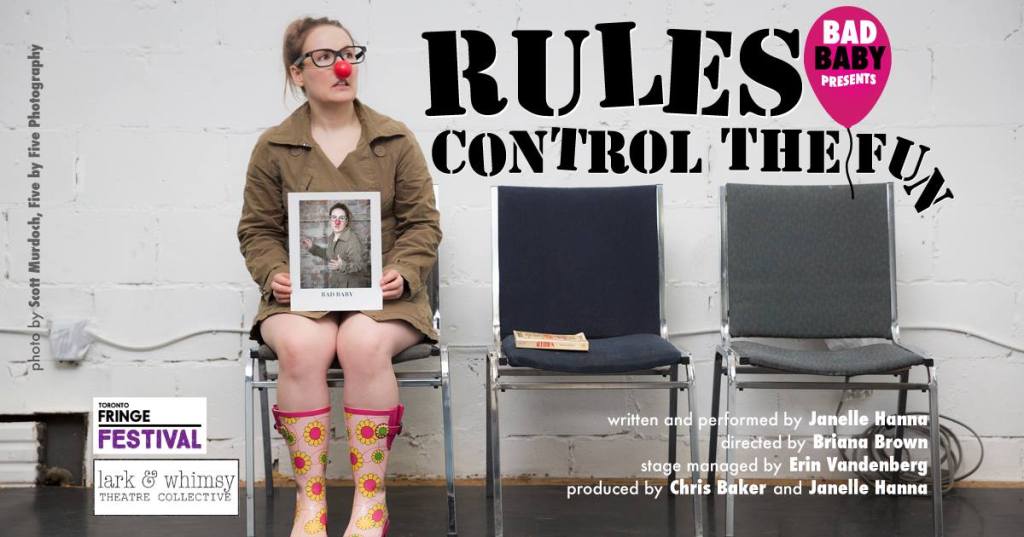
Bad Baby Presents: Rules Control the Fun

Who:
Written and performed by Janelle Hanna
Directed by Briana Brown.
Production Team: Gabriel Cropley (Lighting Design), Erin Vandenberg (Stage Manager) and is produced by Chris Baker and Janelle Hanna.

What:
Bad Baby is a very talented and attractive actor. She wanted to be an actor so she could sleep in and kiss boys. This is her first Fringe show. She’s seen a lot of Fringe shows though. A lot. And she knows all the rules. All of them. With a total of 13 Toronto Fringe tent romances under their collective belts, the teams that brought you Almost, Again (Best of Fringe) and Eternal Friendship with a Spotless Smile (Patron’s Pick) are back with an all new Fringe adventure. Come see Bad Baby’s first Fringe festival hit!

Where: The Annex Theatre, 736 Bathurst Street

When:
Friday July 7th – 1:15pm
Saturday July 8th – 9:15pm
Monday July 10th – 4:30pm
Wednesday July 12th – 7:30pm
Thursday July 13th – 12:00pm
Friday July 14th – 11:00pm
Sunday July 16th – 4:00pm

Tickets:
Tickets are available to purchase in person at the festival box office for $12 ($10 plus $2 fee). At-the-door tickets will be sold at the show’s venue starting one hour prior to show time for cash sales only, limit of 4 per person, subject to availability. Visit fringetoronto.com for more information on tickets and festival passes.

Connect with Lark & Whimsy:
Twitter: @Lark_and_Whimsy; #BabysFirstFringe
Facebook: larkandwhimsytheatre


Call for Submissions: How Fiercely Fringe Are You?

We’re compiling the most epic Toronto Fringe preview and we want to hear from all of you boss Fringe babes why you are the most #FiercelyFringe and why Toronto NEEDS to see your show.


Find out more about how to submit here! 

Artist Profile: Vanessa Smythe, storyteller / actor / spoken-word-performer-of-many-colours, on her new show “Lip Sync Sleepover”

Interview by Brittany Kay

Vanessa Smythe is one incredibly unique performer. She combines poetry, music, spoken word and storytelling into a memorable and mesmerizing experience. I feel very grateful to have sat down with her to discuss her new show, Lip Sync Sleepover, which opens tonight at Streetcar Crownest.

“It can be scary being vulnerable with parts of your life that you’re still sorting out.” – Vanessa Smythe

Brittany Kay: Tell me a little bit about your show.

Vanessa Smythe: I think the show is ultimately inspired by my fascination with childhood, wonder and the kind of magic you see in the world when you’re a kid and how it gets harder and harder to see that magic as you get older. It’s the search between those two places of childhood magic and the realities of being an adult.

BK: Why the title, Lip Sync Sleepover?

VS: The title was a strong impulse I had. I didn’t really fully understand why that was what it was called. Growing up I loved to do lip syncs. They represented ultimate happiness and joy for me. Sleepovers were what I (and maybe not on a conscious level) associated with true love and intimacy and companionship. It spoils the show to talk too much about that. It’s kind of a clue about what we go after as young people and how that changes as we get older.

BK: How did you get into storytelling, spoken word and poetry?

VS: Let’s see… I’ve always considered myself a storyteller since I was a kid. I remember a professional storyteller came to my classroom when I was in grade one and she told a ghost story and I was like, “Oh My God. That is just the most powerful thing,” and so I wanted to do that. When I was little I was always making up routines and filming them with my dad’s video camera. I was just drawn to different ways of creative expression, which sort of evolved into what I’m doing now. I was really into poetry for a while and this show has some poetry in it but colloquial storytelling is a lot of the show, which is new for me.

BK: What is your process when creating these shows?

VS: I’ll typically make up stuff out loud and record myself and then listen to it later, or make a video. I’m very private initially. I usually don’t share any of my stuff with anyone else until very late in the process. I’ll rent a venue like Free Times Café and I’ll have a mini show and test out new pieces in front of an audience. There’s not a lot of attention paid to structure at the beginning. It’s mostly just following impulses and then seeing if any of these pieces might belong together.

BK: Then how do you structure it down to be a coherent piece?

VS: I have struggled with that in the past, which is why I’m really excited to be collaborating with Mitchell Cushman on this. He’s developing and directing the piece.

BK: What’s it been like working with Mitchell?

VS: Mitchell was the first person to sort of give me a chance, I think, as a solo performer. Crow’s Theatre did this site-specific one person show festival a couple of years ago where we took over parts of Leslieville. Mitchell put me in. I was kind of a wild card, like nobody knew who I was, and I don’t know if anyone still knows who I am.

(Laughter)

Mitchell felt like he saw something unique about what I was doing and what inspires me to do what I do. Right away, I have trusted him as somebody who seems to really understand how I work and how I can be pushed further. We’re exploring movement as a device in this show, which I’ve always wanted to do but never have known how. He is offering some of his own really good instincts about how some of these pieces can bridge together to become something that belong together. He has such a great balance. His fingers aren’t all over the piece, but at the same time he’s able to dare me to try different things, which is very hard to find, so I’m grateful.

BK: What inspires you to do what you do? Why storytelling?

VS: I love stories so much. I think stories are sacred and magical and I think that they remind us of who we are and who we are to each other. I remember doing a residency at Banff for their spoken word program and the mentors were really amazing. It was the first time I worked with d’bi.young anitafrika and she led this series of workshops where she talked about the role of the storyteller in the village. Your responsibility as a storyteller can be to protect what is sacred and nurture a place for it. On a deep level I really believe that. I try to remember that as all of the details and variables can kind of distract you; you care about if people come or if it’s good, but I try to as much as I can to go to that initial impulse. I feel that if I have any chance of making something genuine or honest that’s where it has to come from.

BK: Are there any fears or excitements about presenting your own stories and work?

VS: Yes, there are certainly things that scare me. Almost everything in my shows is inspired from true things that have happened to me. It can be scary being vulnerable with parts of your life that you’re still sorting out. I think you have to be really clear with yourself about what your intentions are because if you want some kind of validation or even laughter or acknowledgment from your listeners, you have to be very careful why you want that and what you actually might be seeking. I try to be as a clear as I can about what draws me to each piece and who it’s for because if you can connect to why you’re doing it, then no matter if it’s received or not, you can sort of still be a bit protected by your knowledge of whatever that impulse was. It keeps you a bit supported because otherwise I feel like it can be slippery.

BK: Excitements?

VS: I like feeling like I can have a one-on-one conversation with the audience. I try to really be present and breathe in the room and meet the energy of whoever is there. Which is exciting and thrilling and kind of unpredictable.

BK: You also have a background as an actor and as a performer you sit somewhere in the middle of storyteller and actor. I find that incredibly unique. How did you get there and what kinds of things helped and guided you into this work?

VS: I know it’s kind of a hodge-podge. Sometimes you can feel a bit lonely because I’m not sure where I fit necessarily but I think that there’s also something cool about that, as well.

The most formative things in my training? I have a big dance background, so I’ve always been interested in physical language and live performance from a theatrical standpoint. I did my undergrad in philosophy, which really got me passionate about writing and writing poetry. I think ever since my undergrad, I’ve kind of had a very specific impulse about what draws me to storytelling and why I might try to do it and commit a life to it. Then it’s just fun to get inspired. A lot of my influences are musicians. I don’t try to pay attention to where I belong because you can kind of get a little bit stuck in your own notions of yourself. I just try to un-obstruct myself as much as I can. I try not to worry too much about the categories.

BK: Most of the time, you’re working and creating alone. Is there something that motivates you to create?

VS: I find usually, whether I realize it or not, whatever I’m making is probably what I need to hear. If I listen in the right way (and not to everything you make, sometimes it can be a lot of garbage too) if you’re lucky you can maybe kind of understand something about what you’re going through or something that teaches you where you are in this moment. That can be really nice. Even though it’s lonely, it’s kind of a way to be more okay with wherever you’re at, which makes you feel less alone I think… in the best of times… sometimes.

(Laughter)

BK: How is your storytelling different from when you are portraying a character in a play?

VS: It gets hard. My favourite acting coach will have you do an exercise when you’re rehearsing a scene with him of making you do the scene in your own words. I like that because I feel like it stimulates both my writer brain and my actor brain. I can access the material in a way that I don’t have to work so hard to access when it’s my own stuff. I get used to starting with an understanding of the person I’m portraying. That’s something that helps me bridge that difference. I do think there is an exciting thrill of portraying somebody that’s not you. There is maybe more permission you give yourself to go further with certain choices, so I try even in my solo show to dare myself in the same way as if I had a disguise on. You talk to a lot of actors who will describe that feeling of freedom when they put on another mask, they can say and do anything.

BK: What do you want audiences walking away with?

VS: I hope people feel more connected to the things that they care about. I hope they feel more connected to the people they care about in their lives. I hope that they have a bit of fondness when they imagine the child-like version of themselves because that’s sort of what we’re championing in this new piece.

Rapid Fire Questions

Favourite Food? Greasy Breakfast.

What music are you listening to? Modest Mouse’s new album.

Favourite place in Toronto? I love the waterfront. I love to find streets that I have never walked down before. Anywhere when it’s warm out.

Favourite musical? The Phantom of the Opera. Once.

Favourite play? The Encounter by Simon McBurney

Favourite book? I like Miriam Toews.

Favourite movie? Lots.

Best advice you’ve ever gotten? My mom telling me to “make your bed every morning.” And my other advice, just to be kind.

Lip Sync Sleepover

Who:
Created & Performed by Vanessa Smythe
Developed & Directed by Mitchell Cushman, With Support from Crow’s Theatre

What:
What day of childhood do you wish you could live again? What would you tell your 7-year old self, if you could write and send her a letter? In this new solo show, and in her “spellbinding combination of storytelling, stand-up comedy, poetry and song – all at the same time”, Vanessa Smythe takes us back to childhood in this poignant, funny, deeply personal celebration of the people we dreamed we’d be – and the memories that remind us of who we truly are. A celebration of life’s tricky disappointments – and its enduring, understated joy.

Where:
Streetcar Crowsnest (Scotiabank Community Studio)
345 Carlaw Ave (Dundas and Carlaw)

When:
Two Nights Only: Thursday May 25 8:30pm & Friday May 26 8:30pm

Tickets:
$20 crowstheatre.com

Connect:
t: @vsmythe