Skip to content

In Conversation with Mani Eustis – Director of “False Start” at the 2016 Toronto Fringe

Interview by Madryn McCabe

I had the chance to talk to director Mani Eustis about False Start, the show she has directed for Green Box Theatre Company, which opens this week as part of the 2016 Toronto Fringe Festival.

MMC: Why don’t you tell me a little bit about the show?

ME: False Start is a story about relationships, how they evolve over time and how we overcome hardships, or at least try to work through the obstacles life throws at us. The show follows one couple at two very pivotal points in their lives. Zoey and Jake meet in high school, and the play alternates between scenes of their awkward teenage beginnings and their present married life.

MMC: This show deals with the sensitive subject of miscarriage and how it can affect a marriage, but seems to come from a place of humour. How do you, as a director, balance the humour with the drama? 

ME: I don’t know if I would say that the show comes from a place of humour, but there are definitely funny bits because life is funny, right? Even in really dark times, life can still have delightful moments. I think that it’s important not to overwhelm an audience with SAD BAD HORRIBLE DARKNESS. In my opinion, that can be very de-sensitizing. But to answer your question, as a director, I haven’t really had to balance the humour because the script and actors do a really good job of that! I am just there to make sure that jokes read timing-wise and that they come from a place of love. Most of the humour in this show comes from a place of love. I think that’s why it works with the serious subject matter.

View More: http://kristinasmith.pass.us/falsestart

MMC: I see that you directed the original workshop production of this show at last year’s New Voices Festival at Ryerson University. How has the show evolved since its first presentation? What new and familiar things can a returning audience expect?

ME: Well, both the cast and the script have changed a bit. With new actors come new perspectives on the characters and interpretations of the text. We are also focusing a lot more on the production elements this time around. The first workshop of the play was a lot more naturalistic, and quite minimal in its production elements. This time I really wanted to use lighting and sound to portray the movement through time that is so integral to the play. For example, one of the major ways we are doing this is through projections.

For this production, I am more focused on the storytelling, and doing so in a compelling and creative way. I think returning audiences will be happy to see that the show still has the same heart, but it has been refined and polished.

View More: http://kristinasmith.pass.us/falsestart

MMC: The show has four actors playing the same couple as the younger and current versions of themselves. Did the actors get to work together to create specific character traits, or did you want a decidedly marked difference between the two portrayals?

ME: We actually really lucked out with casting in that the actors look very similar, and have similar mannerisms. So it hasn’t been a huge part of the process. Overall I think the similarities between the characters shine through in the writing and the actors’ performances without any sort of forced physicality. One thing that I think helps is the fact that the actors are on stage with one another for a lot of the show (even if they are not part of the “action” of the moment). They are constantly watching one another or at least being in the presence of their younger or older self. I think that adds a unifying quality between the younger and older couples that has happened naturally.

MMC: Is there anything you want your audience to know about you or the play before they see the show?

ME: Nope, I think going into shows knowing as little as possible is the way to go!  I truly believe that the most important thing going into a play is having no expectations, an open mind and an empty bladder.

False Start

Presented by the Green Box Theatre Company as part of the 2016 Toronto Fringe Festival

View More: http://kristinasmith.pass.us/falsestart

Who:
Playwright: Nicole Hrgetic
Company: Green Box Theatre Company
Director: Mani Eustis
Cast: Andrea Brown, Andrew Knowlton, Elizabeth Adams, Dylan Evans.
Creative team:
Christine Luksts – Stage Manager
David Beisel- Lighting Designer
Sophie Moynan- Set Desginer/Props Manager

What:
What happens when a misunderstood, football-obsessed teenage boy meets an intelligent, caring teenage girl? It’s textbook stuff: they fall in love, they get married, and they resent each other. Zoey and Jake have been together since high school. In the aftermath of a traumatic event, Zoey struggles to have a baby while dealing with the one she married.

Where:
St. Vladimir Theatre

When:
JUNE 30th – JULY 9th
June 30th: 10:00pm
July 2nd: 7:30pm
July 3rd: 12:00pm
July 4th: 1:00pm
July 6th: 4:30pm
July 8th: 11:00pm
July 9th: 7:00pm

Tickets:
Online: bit.ly/false-start-tickets
By Phone: 416-966-1062

Connect:
@FalseStartTO

Keeping Up With Kat – Artist Profile: Kat Sandler on her Dora Award Nominated “Mustard” & Upcoming Fringe Show “Bright Lights” (and pretty much #killingit in the Toronto Theatre scene)

Interview by Brittany Kay

What a true honor it was to sit down for a coffee with fast-paced, keeps-you-on-the-edge-of-your-seat, sassy and fierce Kat Sandler. We spoke about her 7 Dora nominations for Mustard, her upcoming Toronto Fringe show Bright Lights, and the inspiration you can find from your everyday.

Brittany Kay: I had the best time seeing Mustard.

Kat Sandler: Thanks dude. Yeah, it was the loveliest process. We really felt like a family.

BK: And you could definitely see that on stage.

KS: Thank you.

BK: What has been your journey getting to where you are now?

KS: Total journey? From the beginning? I started as an 8-year-old organizing my cousins into plays at the cottage and like a little tyrant, I would force the girls to be boys and vice versa and all of my family to kiss each other. It went really well. They got really good reviews from my extended family, who were probably drunk, let’s be honest.

BK: Amazing.

KS: Then I went to a super academic high school, UTS, where they didn’t really have a drama program. We did get to do the Sears Drama Festival… Man, the people at that school were fucking smart. They kind of ruined me for regular people. The world mathlete winner was in that class. They’ve gone on to be crazy politicians. Our final grade 12 projects were like, make a rocket or a robot that will cure cancer and I was like, “I’d like to write, direct, produce, and star in a play.” Everyone was like, “A play? Why?” We rented out what was once called the Pour Alex, which is now Poutineville. It was a dilapidated old tiny theatre that we were way overcharged for probably because we went in and were like,“We have this money from our parents, maybe can we have this?” And they were like, “Yes, that will be $2000 a week,” and we were like, “Yes, that’s totally fair. Here’s our money.” We rented it for three days and it sold out and I was like, “Yes, now I’m a theatre wizard and I will go to Queens, I guess, and be a star.”

I thought I really wanted to act. I always wrote. I wrote fiction and short stories. I think I wrote one movie in grade 6 and one play that we did as a reading and I thought I was hot shit. (laughs)

When I went to Queens, I mostly acted and directed. The cool thing about Queens is that you kind of make your own program. It’s not a conservatory program so you can pick and choose the classes that you think will build you as an artist in the way that you want, if you want to be an artist. Then I had my own shitty company there, called 9 Lives, which I thought was so clever because my name is Kat. No one will ever come up with a better company name than 9 lives. (laughs) That was another one where they were like you have to do a directing scene for your final project and I was like, “Cool, can we just rent a theatre and I’ll do a full-on production of The Goat, or who is Sylvia? And then I graduated and I was like, “Fuck that, I’m going to be an actor. I think I want to be really famous and be an actor.” And then, basically, I didn’t do that great of a job at that. I worked a lot with Theatre Gargantua who I think are really amazing, which is crazy because I had no business doing physical theatre at all. I can move and I can sing so I think I just duped them for 4 years.

BK: How did Theatre Brouhaha come to be?

KS: In that after school time period, my really close friend Tom McGee (we were valedictorians together at Queens), and I spent a lot of time going to theatre. We thought it was great but it wasn’t really geared at our generation and yet at the same time, people keep saying, “Oh your generation doesn’t see enough theatre and that’s why it’s dying.” Why would we see it if you don’t market it to us and talk about subjects that don’t excite us as young people? This is when I was 22/23 and the weird thing about our generation is that we remember pre and post Internet, so there was all of this technology and pop culture that just wasn’t talked about as much.

We also live in this golden age of television content. There’s so much constant access to incredible stories, wonderful characters, beautiful story arcs, fast-paced high-stake plots. It’s an embarrassment of riches of art that we get to see for free or for 9.99 a month. It’s kind of ridiculous to expect people to come and see something live when you don’t have to. You have to give them the incentive to do that. And this is how Theatre Brouhaha came to be.

And what is Brouhaha? What is that? It’s kind of like a hot fun mess. It’s a commotion. It’s something that makes you sit up and take notice. I remember one reviewer that was like, “Theatre Brouhaha pretends to have the same mandate that every new theatre company does which is challenging the audience and creating something new,” but we really thought we were, which, of course, we weren’t. We weren’t re-inventing the wheel. I don’t want to go see a play, I want to have an experience. I want to go to an event. I want to go to a party. We always used to say that if we could make something appeal to my sister’s douchey ex-boyfriend, then that would probably be great because that guy does not want to go to theatre. I think that’s where Brouhaha started. The very first show we ever did was LOVESEXMONEY – those are things that we, as people, think about and it’s also a bang-on title. It was about this girl who was selling her virginity online. We rented out the Factory Theatre. I remember a tech being there and asking us, “What are you hoping to do here?” and we said, “We’d like to break even.” He just laughed, like a full on belly laugh at us for, like, a long time. We had a really smart producer, Taylor Graham, who sold it through Groupon around Valentines Day and we sold out.

20120102_nextstage3

Gwen Cumyn and Scott Clarkson in LOVESEXMONEY

We just kept trying to create theatre by putting audiences first. If I come up with an idea for a show and I can’t sell it to you in a sentence, just like the way you would with a TV log line then how can I expect people to come? Tell me what it’s about and why I shouldn’t go home and watch Breaking Bad because I know that shit is going to be amazing. What’s the hook? And once there’s the hook, what’s the image? What’s the situation? I guess since 2012, we’ve done 10 shows, and because we never really have any money, we don’t really have a responsibility to anyone but our audiences, and ourselves, which is hard and also awesome. It means we get to do exactly what we want and the only confines are how much time we have for rehearsal and everyone’s schedules.

BK: So how would you categorize what you do?

KS: I’m a playwright and director mainly and slowly moving to television. I’m making some TV moves maybe? Is that the cool way to say it? People keep saying why don’t you do TV? But you can’t just like do it. You have to know what you want there and go at it smart. For a while, I didn’t know what my voice was and now I know what it is and I know what I want to talk about and how I want to do it and what my style is. I think that’s what TV wants. They want original voices. You can go and be in a room and mimic someone’s style but to have your own is a bigger deal… I hope.

BK: What kind of stories do you want to tell?

KS: I mean, the same stories. I’m fascinated by people. I’m so inspired by actors. I have a list on my phone of just shit that I hear people say. Now people tell me too. They’re like, “I overheard this thing that I thought maybe you could use in a play.” Great, give it to me. I want it. For me, usually, I start with a situation. What’s something that is inherently interesting?

BK: Where else do you find inspiration for your work?

KS: TV. Film. Everywhere. The Internet. You can’t make up the shit that happens in real life. No writer could write Trump. Now they will, but you can’t make that guy up, it’s too good. The shit that he says is unreal. It’s such beautiful dialogue. And it’s real. It’s crazy. It’s totally nuts. It’s taking a moment in real life and then jotting it down and maybe using it for something later.

BK: What’s your process for writing? How do you keep motivated?

KS: If I don’t have a deadline, I won’t do it. I write to produce, usually. I don’t have pet projects that have been sitting in my life for 10 years. There’s a couple we can’t afford to do because there’s too many people. I’ll want to do a thing at a certain time, and then I’ll come up with the thing. The thing will be based around who’s available and what I’ve seen in the news.

I also never know the ending when I begin writing. It’s only when I get there. I almost don’t like knowing. I find that if I know, then the audience knows. If I know what happens, then I’m going to telegraph what happens. If I don’t, then I’m writing to get to what happens. It’s like when you can’t put down a good book because you’re like, “What the fuck happens in here?” My process is all over the place. It’s a brouhaha. And there’s usually whiskey involved.

BK: That’s the way to do it.

KS: The first script is always garbage. It’s just a diarrhea throwaway script and slap an ending on it and sometimes I don’t even write one. I just write ‘insert end’. Then I’ll read it with people and that’s where the process starts for me. The audience is so important to me. The first people who read it are the first audience you get and I think that actors are horribly underused. Everyone has an actor friend that wants to read a new script. Actors read more plays than everyone. They’re great at focusing on a character so that I can say, “Does it make sense when your character says that?” When I’m thinking about six characters, they are only thinking about one. I like more opinions and feedback. You can’t be precious and have hurt feelings, which, of course, we all do anyway. I think ultimately more brains are better as long as there is one brain at the end that says, “No, no, no, yes to that.”

Bright Lights in this year’s Fringe is about an alien abduction support group. I like writing and directing together because, for me, I’m never done working on the script. I don’t usually write a lot of stage directions because I know I’ll just figure it out. It’s such a collaborative process in the room with the actors, which is why casting is 98% of my job. Who do I want to be locked with in a room? Our group for the Fringe is the most punch-upy room I’ve ever been in. Everyone’s a writer. Everyone is funny. We talk about jokes, like where is the second beat of the joke? You definitely can’t overwork comedy but comedy is work. Which is so crazy. Comedy is way harder than drama. I also think there’s comedy in everything. It’s when we chose to let it out.

9611193_orig

Photo by John Gundy. L-R: Peter Carlone, Heather Marie Annis, Colin Munch, Amy Lee, Chris Wilson

BK: Do you ever have a dramaturge?

KS: Tom McGee is my long lifetime dramaturge. He asks me important questions. Stories have to be a conversation. I know some people can do it in a vacuum and I can’t. I’m a social writer.

BK: So you’re nominated for 7 awards at the Doras for your play Mustard that just premiered at the Tarragon. Congrats lady! Very exciting! Talk to me about the creation of Mustard.

KS: Yeah, it’s fucking crazy. It’s nuts. I’m happy for everyone. I think I wanted to write a play about an imaginary friend for a long time because I had one. I was really fascinated by the idea of where they went when they go away. My father created this character for me as a child and one day, when I was hurt, I cried out for that character instead of him. My dad sent that friend away and I never saw him for a long time because my dad was jealous of his own creation. Where do they go when we don’t need them anymore?

When I was in the Tarragon unit, they wanted something that fit their mandate. I thought this play would fit because it’s about family and belonging and addiction. I thought it would work and I wrote it and they picked it.

BK: How do you feel about the Dora nominations?

KS: I feel great. I think it’s interesting that people have been saying that this is my first professional production. Okay… but when you start charging people money for your stuff, that’s kind of when you are a professional. I think that independent and professional theatre doesn’t need to be so far a part in terms of the way people look at them. I think that creating that animosity between the two worlds is kind of unnecessary. In truth, out of the twelve plays that I’ve written, Mustard is only the third that has been eligible for the Doras. Either we were too rushed to get our shit together to invite Dora jurors or couldn’t afford to pay the fee to apply to TAPA. A lot of people don’t know that you pay to have those people come. You pay for your TAPA membership, which is totally valid. It’s funny because last year at the Doras they made a joke about how their independent jurors had to see one billion plays and only half were written by Kat Sandler, and I was like and none of them were eligible.

It’s really nice to get a nod. What’s amazing about these Doras, is that so many people in the indie community are nominated, which is really awesome and all for incredibly deserving work. So yeah, of course it feels nice to get to go as a nominee and not as a presenter.

BK: What are you going to wear?

KS: I’m coming straight from rehearsal. If it’s going to be this hot, I will probably wear a whisper of a dress so that I’m not gross and sweaty. So glamorous. I’ll wear the smallest amount that I can decently get away with.

BK: Flawless. Talk to me about your team involved with Mustard.

KS: Anand Rajaram and Sarah Dodd are both nominated in their category for best actor and actress. We were so lucky with the cast. They were so incredible. Ashlie (Corcoran) (nominated for direction) gave me a lot of control and choice in the casting. It was really easy to work with her and she was super flexible and so creative and totally brilliant. I thought that way about the cast too. You throw in our two clowns (Tony Nappo and Julian Richings) and Paolo (Santalucia) bearing his bum all over the place, it just all worked magically. Michael Gianfrancesco is nominated for both set and costume design. The set was so beautiful. I couldn’t handle it. In truth, in my entire Toronto career, no one’s ever put that much money into a set, because I wouldn’t put that money into a set. For Mustard to be cool and imaginary, the house had to be so real. He did such an incredible job and it was just tacky enough.

mustard-2.jpg.size.custom.crop.1086x760

Anand Rajaram and Sarah Dodd in MUSTARD at the Tarragon Theatre

BK: What are you most looking forward to at the Doras?

KS: I think it’s the feeling of the community being there. You know so many people and for all its bitchiness at times, the Toronto theatre community really loves itself and each other. We really are truly supportive when someone does something good or when they’re trying to do something good. What’s also nice is you get to see everyone dressed up and not in rehearsal clothes. It’s nice to not be in booty shorts and a disgusting t-shirt with Cheetos dust falling all over the place. Everyone is drinking and happy to be there.

BK: Tell me more about your fringe show Bright Lights opening this week.

KS: Bright Lights is about an alien abduction support group that accuses their leader of being an alien. As we’ve been working on it I’ve realized it’s kind of a comment on the absurdity of law and justice and how we view it as a society. My whole family consists of lawyers and judges out west. When we fight as a family, the arguments are so ridiculous. You can’t come into that house and not get torn apart. I think that a lot of that worked its way in and because we have such hilarious, funny people it’s really coming off the page. I wanted to work with this crew of people since I started doing Fringe. I saw Morro and Jasp and was like, “Holy shit. They’re so funny.” Peter and Chris are amazing with their sketch and improv and Colin and I are buddies from way back.

It’s totally ridiculous but always about something and always with heart.

We all love Fringe so much. We feel comfortable there. It’s given us so much. My career started at Fringe with Help Yourself. It’s like the Doras. The fringe tent is Theatre Christmas!

BK: Any advice for emerging artists?

KS: Just do it. Always. Just fucking do it. You won’t know if you’re any good at it or what to do until you do it. That was our whole thing with Theatre Brouhaha. We’re just going to do plays until someone takes notice or we just shouldn’t do them anymore. Also, listen and ask for help. The worst thing that could happen is someone can say no.

Rapid Fire Question Round:

Favourite movie: Princess Bride

Favourite book: Invitation to the Game by Monica Hughes

Favourite food: Charcuterie

Favourite play: I don’t know if I can choose.

Favourite musical: My cool answer would be Book of Mormon but the little kid that ran around in her living room would say: Les Miserables.

Favourite place in Toronto: All of Toronto, Toronto is my jam. Maybe not the dark gross alleys, but the ones with graffiti are good. I like Cabbagetown.

Favourite place that you write: I write in the Dark Horse in the east end, but I’ll write anywhere that has coffee or where there are people.

Advice that you live by: Make opportunities don’t take opportunities.

Bright Lights

13450989_10153754293478063_4541379426678751704_n

Who:
Written By: Kat Sandler
Company: Theatre Brouhaha
Director: Kat Sandler
Cast: Amy Lee, Heather Marie Annis, Chris Wilson, Peter Carlone, and Colin Munch.
Dramaturg: Tom McGee

What: From Kat Sandler, Theatre Brouhaha, and the creative minds behind the Fringe smash hits Punch Up, Morro and Jasp, Peter n’ Chris, and Shakey-Shake & Friends comes a new dark comedy about survival, trust, and an alien abduction support group thrown into chaos by the suggestion that someone in their midst may not be as human as they seem.

Where: Tarragon Theatre Mainspace

When:
buy tickets  June 29th at 10:30 PM
buy tickets  July 1st at 8:45 PM
buy tickets  July 3rd at 3:30 PM
buy tickets  July 5th at 6:30 PM
buy tickets  July 6th at 12:00 PM
buy tickets  July 8th at 6:00 PM
buy tickets  July 9th at 11:30 PM


Connect:
Website: TheatreBrouhaha.com
Twitter: @TheatreBrouhaha

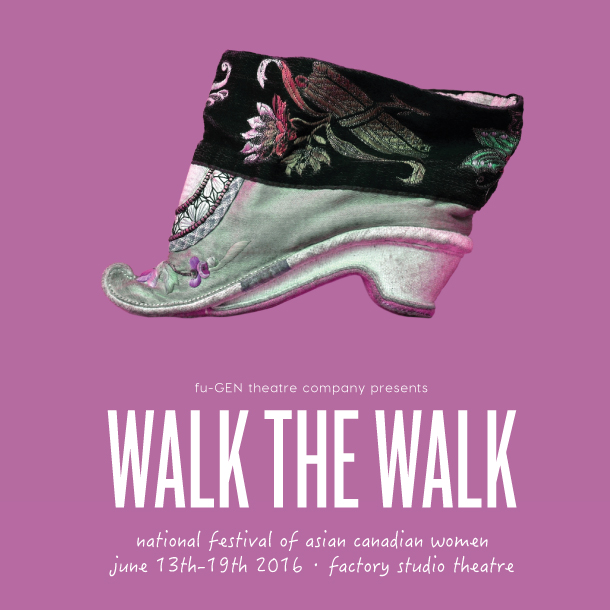
In Conversation with David Yee about “Walk the Walk”, fu-Gen’s National Festival of Asian Canadian Women

by Bailey Green

During a fu-GEN theatre planning meeting in 2010, former general manager Carin Lowerison remarked on the lack of plays produced by the company that were written by Asian women. It was an off the cuff comment but the weight behind the statement hit home. “I really wanted to do something,” says fu-GEN artistic director David Yee. “Stats were coming out about the percentages of women directors and writers across the country, and reality is a fraction of those [directors and writers] are women of colour. Theatres were called out and they would say that they believe in women and women of colour, but they just don’t know any, or everyone’s busy, or we don’t have access. And then the initiatives by theatre companies weren’t about engaging with communities or putting a focus on the work.”

Walk the Walk is a national festival presented by fu-GEN theatre and six partner theatres from across the country. The format for the festival was inspired by a conference the company had mounted in 2010 called GENesis. The conference had staged readings, panels and paper presentations from academics in the field of Asian Canadian theatre. It was fu-GEN’s first foray into something large scale and was a week geared towards meshing art and academia. But with Walk the Walk the focus will be on new work by Asian Canadian women from across the country.

“The plan with Walk the Walk was to partner with organizations who had historically not done very well supporting women of colour, even if that was now taking an upswing,” Yee says of the new festival. “We sent out our offer to a lot of theatres. Some of them just didn’t respond, some responded that they didn’t have the time or the money, but some of them really engaged with us. Manitoba Theatre Centre really engaged with us and worked to find a candidate, and to make up the money they were missing from their budget. We found six theatre companies who would go the distance and were invested in changing the landscape.” Yee mentions 2B theatre and Theatre New Brunswick who searched tirelessly to find a candidate. fu-GEN held on for a month before they had to move on. At a national panel at GENesis in 2010, there was an empty chair to represent Atlantic Canada.

The goal of Walk the Walk is to connect artists with theatre companies that may not have had the opportunity to engage with their work. Walk the Walk seeks to create routes of access for women of colour. Mel Hague is facilitating the KXIII this year and the playwright unit is comprised of four emerging Asian Canadian women. “We’re partnering them with the more established creators in the main event for mentorship opportunities and celebrating the work that is out there,” say Yee, “ and it’s exceptional work.”

The week includes four new play readings, a panel, a cabaret and the annual Potluck Festival.

The festival opens with the funny and touching Burning Mom. Written by Mieko Ouchi from Edmonton, Burning Mom tells the true story of the author’s mother and her decision to go to Burning Man after the death of her husband. Tuesday night presents Chinoiserie by Marjorie Chan, “Marjorie engages with history in such an intersting way,” says Yee. “She deals with epic, complex human emotions and roots them in these sort of grand mysteries.” Wednesday night is a panel on the link between nostalgia and colonization, and the friction between them. The panel is facilitated by cognitive psychologist, neurologist and artist Dr Shanti Ganesh from the Netherlands.

Thursday night is Da Jia by Sophie Gee from Montreal. Da Jia is an Asian Canadian meditation on Arthur Miller’s All My Sons and is a multilingual play told in English, Mandarin and Cantonese (with surtitles.) And Friday night is Chinese Vaginies, a performance installation presented by Natalie Gan (one third of Vancouver group Hong Kong Exile). Yee doesn’t reveal the content of the piece, but shares that it is an interactive one on one, that somehow Drake’s involved and that the performance is an investigation of food, labour, racism, violence and the human body. The weekend closes the festival with a cabaret and the Potluck Festival and KXIII.

“It’s stunning, exciting work,” Yee says. “These communities have been under-served for so long and the strength of the theatre community has always been determined by its women. All of the mentors I have had in building fu-GEN were women and women of colour. So when I compare it to my personal history, I find it so strange that that isn’t the work that is celebrated or lauded nationally. They have been the ones driving artistic innovation to a greater degree than anyone.”

Walk-the-Walk-1b-revised-2

When: June 13th – 29th

Where: Factory Studio Theatre, 125 Bathurst Street

Tickets: fu-gen.org

For the full festival schedule and more information, visit: fu-gen.org

In Conversation with Will King on Eugene Ionesco’s “Rhinoceros”

Interview by Ryan Quinn

Ryan Quinn: So, you are directing Eugene Ionesco’s Rhinoceros for Seven Siblings Theatre Company. It’s an adaptation by Derek Prowse. Is it a new adaptation?

Will King: No. So what we’re trying to do is find as many contemporary hooks into the play as possible. A lot of that has been in the staging of it, making it very minimalist instead of its traditional setting. We were rather looking for locations we might find ourselves in in Toronto. The first quarter takes place in a beer garden, something you might see as a semi-interior in one of the breweries in the city. It has a local and very communal feel. So, for a show like Rhinoceros about the spread of populism and sensationalism, it has to start in a very public location. We thought it would be nice if people felt very comfortable and immersed in the setting. It feels very similar to the actual location the performers are in.

From there, it gets more private and the characters get more distant from the audience. So we see it go from public, to a semi-private office, to two different houses, one of which is a terrarium.

RQ: Why this show, right now?

WK: I think we are in an era that deals with sensationalism possibly more strongly than ever on an individual level. We know that this play was written in response to fascism and Naziism in the Second World War, but now we live in an age of facebook, and buzzfeed, a sense of self-propaganda. It’s important that we look at ourselves, and our own sense of what otherness is, and how we deal with constant sensationalism and populism.

I think there are many reasons the last Canadian election went the way it did, but one of the biggest pulls for Trudeau and the liberals was that he was the one with traditionally Canadian values. He was the everyman that we thought shared our same moral compass. So there’s definitely a sense of how politics and new ideas are sold, for better or worse.

But it’s important to me that this play doesn’t become just about the politics. I think it would be easy to slap on something about the Trump campaign and make it about that. I mean, I think people will still make connections to that extraordinary and horrifying bout of sensationalism happening in the States. But I didn’t want that to be what it was about. It’s about intersection in any kind of area, in belief, race, gender, sexuality, politics. Whatever that otherness is for the audience, it’s that otherness for the characters in the play.

RQ: This show deals with the allure of mob mentality…

WK: For sure! We’re trying to play with that theme in our physicality a lot.

RQ: So how do we reconcile that idea with the current idea that the “outsider” is more morally genuine than everyone else? Trudeau, Trump, and Sanders are all sold as outsiders. Not to say that their politics are in any way similar, but that seems to be the campaign that works.

WK: I think in this play we can eventually sympathize with the outsider, while at the same time we see them as (literally in this case, since it’s a rhinoceros) tools of chaos and destruction. I mean, for the people who join the rhinoceros, suddenly their way of living is beautiful and wonderful. I want the audience to question, you know, “why not join the rhinoceros?”. You get to roll around in the grass and be comfortable. We totally understand why it’s so easy for people to want to join them, and I think that happens politically, as well.

RQ: Tell me a bit about the rehearsal process.

WK: This was done as a ten-day intensive. That was inherently challenging and difficult. We go through a lot of work with the Michael Chekhov technique, getting on our feet and finding centers, archetypes, character bodies. We’re trying to break through the text analysis in a physical way, so we’re not banging our heads against the wall. It’s helped us find a really visceral and accessible clarity. Our next step is going to be to really focus on creating an atmosphere in a set that’s constantly being created and destroyed by the actors. We’re using chalkboard paint and different color schemes for individual worlds to really highlight that this is a world that’s constantly changing and shifting.

We also have ten challenges that were assigned to the actors, things like creating a physical rhinoceros from two or more people, or an immediate breaking into tears, things that we’ve used as tools to tell the story. I’m there to make sure the story is clear and everything fits together, but those goalposts, as it were, are there to help the actors work toward a kind of structure on their own as well.

RQ: What can you tell me about Seven Siblings and your mandate?

WK: The company was founded by Madryn McCabe, Erika Downie, and myself. The three of us started the company through the teaching certification program at the Michael Chekhov consortium in Ohio. As a company, we like to do work that sits in the realm of fantastical realism, things that are larger than life. I’d say it’s playful and visceral, and grand, but also very true to life. There’s a lot of work that can still be truthful while really going to strange and conceptual places. For us, the most important thing is joy, that’s the focus even in times of exhaustion and duress. We find that frees performers up to stop worrying about a final performance, to focus instead on the playfulness and discovery.

We want people to be able to look outside themselves and see their lives through metaphor for a while. To take something very personal from an idea that’s absurd or strange. I think we’re lucky that we can do that in the theatre.

We’ve also been trying to extend that sense of play to our promotional campaign as well, doing street-level things that lend themselves to word-of-mouth promotion.

RQ: What do you want people to talk about on the way home from this show?

WK: I hope it elicits a conversation about positive political discourse. Often when we see someone with different political views from our own, we dismiss them, but it’s valuable to have an honest debate about their views. I think that would benefit our society.

I mean, I hope they have fun, too! Without all the allegory, if you saw this show as a farce, it’s very entertaining! There’s something important at the heart of it, but something really fun and alive on the surface.

RQ: Congratulations on the show!

WK: Thanks, Ryan!


Seven Siblings Theatre presents:

Rhinoceros

Smoke Rhinoceros

A play by Eugene Ionesco
Adapted by Derek Prouse
Directed by Will King
Featuring Veronica Baron, Jim Armstrong, John Lovett, Andrew Gaunce, Erika Downie, Liz Bragg, Margaret Hild, Amrit Kaur, Mardi O’Conner
Assistant Directed by: Erika Downie
Produced by: Madryn McCabe
Production Manager: Kate McArthur
Stage Manager: Jocelyn Levadoux
Lighting Design: Parker Nowlan
Front of House: Gwendolyn Hodgson

Run Time: 90 minutes

When: June 2-5, 8pm, doors open at 7:30

Where: The Rhino Bar & Grille (1249 Queen St W).Our performance venue is on the 2nd floor.

Tickets: Artsworkers $15, General $19, At the door $20 cash http://www.sevensiblingstheatre.ca/rhinoceros/

Connect:

Twitter: @SevenSiblingsCo

Facebook: sevensiblingstheatreco

Instagram: @sevensiblingstheatre

Performed with Permission by Samuel French Inc.

Artist Profile: Jordi Mand – Playwright of CAUGHT, on stage now at TPM

Interview by Brittany Kay

I had the utmost pleasure of talking with the incredible Jordi Mand, playwright of CAUGHT, which opened this week at Theatre Passe Muraille in their Backspace. We spoke about creating your own work, the inner struggles you face when graduating university, and the differences between doing the job and getting the job.

Brittany Kay: Tell me a little bit about your new play? 

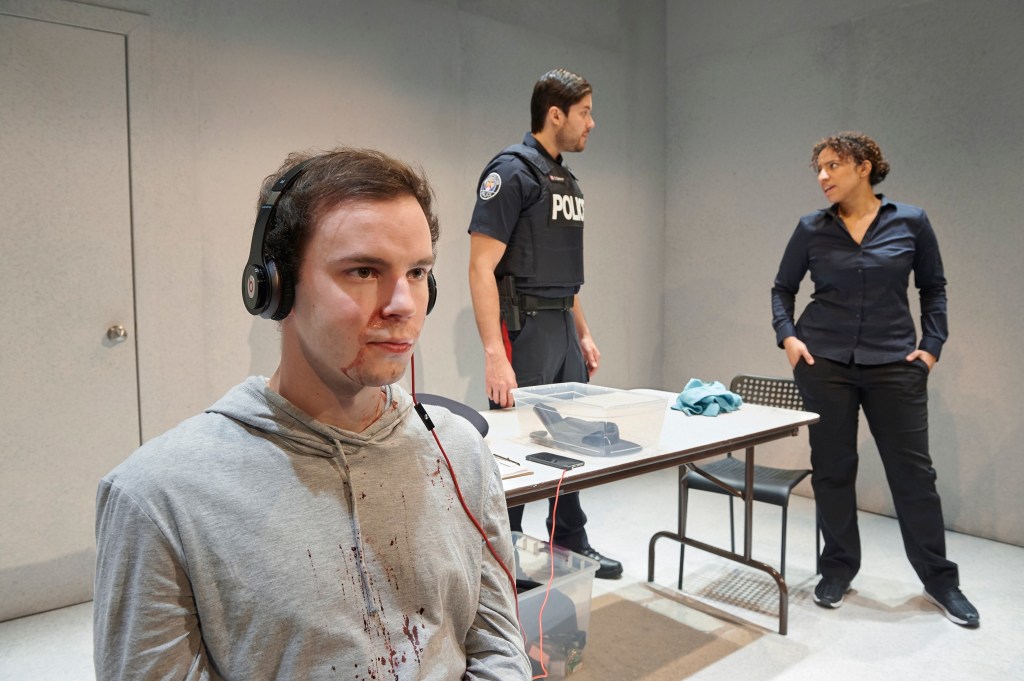
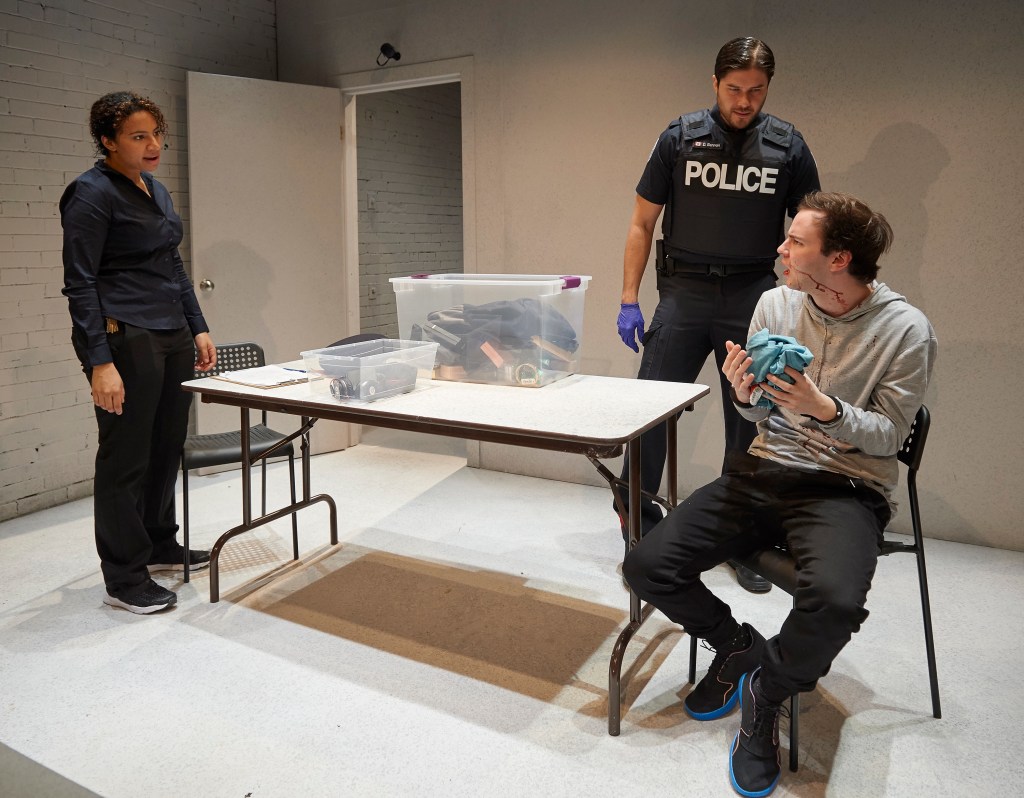
Jordi Mand: Caught takes place in the security holding room of a major department store in Toronto. It focuses on a female security guard and a teenage guy who she has caught shoplifting and how the situation unfolds between them. A police officer arrives to process him and the tables are sort of turned on this security guard. She thinks she has caught this shoplifter but everything starts to go awry for her. That’s focusing more on the events of the actual play, but the piece, itself, has changed a lot over time. To me, it’s really about justice and interpersonal justice – justice between people and their steep inner personal justices that they feel. I’ve spent a lot of time thinking about how some people in this world for lesser reasons seem to be able to get away with things and other people can’t. How does that come to be? What are the ingredients of our lives that bring us to that place? What is our moral code that allows us to actually break the rules or make the rules? That was a really big launching point for the show.

Photo of Jakob Ehman, Meegwun Fairbrother, Sabryn Rock by Michael Cooper.

Photo of Jakob Ehman, Meegwun Fairbrother, Sabryn Rock by Michael Cooper.

BK: There was a lot of development that went into this play. How did it come to be?

JM: It’s actually had a bit of a long life. So in 2009/2010 I was part of Nightwood Theatre’s Write from the Hip Unit, which is their emerging writer’s unit for emerging female playwrights. Write from the Hip has changed considerably in terms of its format, but at that time the objective was to write a 15-minute piece and so I wrote the first 15 minutes of Caught. Andy McKim at Theatre Passe Muraille asked me if I wanted to present something or hear something read at their Buzz festival. I hadn’t touched the piece in about a year and then decided I wanted to hear it again. I had been a resident artist at TPM for a number of years and both Andy and I knew we wanted to work on a project together. We were circling around different ideas and at the same time we both came back to that piece and the themes of justice and injustice, entitlement and consequences that are found in the play. We both agreed that there was a longer life for this piece than just a few minutes and started exploring it. I had been working with Andy dramaturgically and further developing it. There was a workshop of a earlier full draft in September and now we’re sharing it with the city.

BK: Why TPM? 

JM: When I graduated theatre school, I had been working for Obsidian Theatre in an administrative capacity. I was their Director of Development and Obsidian had done a co-production with Roseneath Theatre and TPM and it was just as Andy was moving into the theatre as Artistic Director. I first got to know him then and the philosophy of TPM, which I just sort of fell in love with. I just found their attitude towards storytelling and their artists and emerging artists really real and wonderful. They had put a call out around that time for Elephants in the Room, which was their emerging artist program, and they were looking for people to help launch that. So I approached them and said it was something I was really interested in doing. I became one of the four co-founders of Elephants in the Room. We also started Crapshoot, which still happens and so I’ve had a long relationship with TPM. I think a lot of artists, especially in this season who are sharing stories and are part of TPM, have similar connections with the TPM. The company has been an integral part of their journeys as they have been moving forward in this crazy theatre world. Then I became a resident artist with TPM and Andy and I really wanted to tell a story together and I wanted to tell a story with that company and Caught just seemed like the right fit.

BK: What a lovely journey.

JM: Yeah! Sort of a natural evolution over many, many years.

BK: Why the title Caught?

JM: The action is certainly a big part of it. I love how it has to do with how we find ourselves caught, either by our own doing, people catching us, us being caught by our own habits and our own hang-ups that we can’t get past, us being caught within society’s rules and regulations of what we can and cannot do – how that sometimes can work in our favor and sometimes it can work against us. We’ve really been spending a lot of time in rehearsals talking about how we can get these characters caught as much as possible. It’s also part of the ride for the audience and part of the fun of it – how can we get into as much trouble as possible?

Photo of Sabryn Rock, Jakob Ehman and Meegwun Fairbrother by Michael Cooper.

Photo of Sabryn Rock, Jakob Ehman and Meegwun Fairbrother by Michael Cooper.

BK: Tell me about your team?

JM: I’ve known Sabryn Rock (who plays Trisha) for a decade now. We went to the National Theatre School together. She’s amazing. I’m really spoiled, it’s a really incredible team. Jacob Ehman is playing our kid, James.

BK: I saw him in Sophia Fabiilli’s play “The Philanderess” in the Toronto Fringe and just thought “Who are you? You’re amazing!”

JM: I am really thrilled for him that he is getting the attention that I think he really deserves. He’s such a talented actor and he gives so much. I love watching him work on this piece because James is a confusing character, Jakob is such a spontaneous actor. It’s wonderful watching him process the play, moment by moment. I know what the character is going to do next but I don’t know what Jakob is going to do next. It’s really an actor’s play. The joy and pleasure of this world is really the moment-by-moment, tiny details that each character either brings to the other and the journey that the actors take their characters on. An actor named Meegwun Fairbrother plays our police officer and he’s a real presence in the room. As soon as the character walks in, everything changes. I feel that way with who Meegwun is as a person as well, so that’s just really amazing that those two line up. Sarah Garton Stanley who is the Associate Artistic Director of English Theatre at Canada’s National Arts Centre is our director. She is so focused in her storytelling. Each moment is so fresh and calculated. She has a really great brain and heart for this world. Our design team is fabulous. It feels like the right ingredients in the room for our world.

BK: Tell me about the design concept?

JM: It’s one room, one location, almost like a holding deck. There’s only a table and chairs. It’s very neutral. It has very little personality and it’s almost as if there’s the forth wall and part of it has just been cut out so you can see through it. Not like a two-way mirror… someone has just taken a knife and removed a chunk of it. So the audience will feel like a fly on the wall, like they shouldn’t be there or they’re intruding. It should feel a little bit like a scene of car accident on the street, where people are driving by and they can’t turn their eyes away from it. Hopefully we can do the same thing for our audiences. Fingers crossed!

Photo of Sabryn Rock and Jakob Ehman by Michael Cooper.

Photo of Sabryn Rock and Jakob Ehman by Michael Cooper.

BK: I’m going to put a hold on the play and ask about you. Tell me a little bit about your journey to where you are now.

JM: I’ve been involved in theatre for a long time. I was one of those theatre kids, where babysitters loved me because I would coordinate plays for parents to watch and they would sit upstairs and do nothing. I had been involved in productions as an actor as a kid for a very long time. I grew up in Richmond Hill and I was part of CharActors Theatre Troupe, where they had just auditioned to be one of the choirs in Joseph and the Amazing Technicolor Dreamcoat. They asked me if I wanted to be a part of it and that was a big thing for me as it was my first professional show. I missed school for a year. It really changed a lot for me. There was never a moment where I said, “I don’t want to do this.” At that point I thought I still wanted to act and so I went to Unionville High School, which is a performing arts school. Then I went to York for their theatre program for a year.

I’m not a particularly impulsive person, but there are these few markers in my life where I’m like, “I’m going to make this decision!” and I have no basis for it or even an understanding if it’s going to work out. York is great because it’s a generalized theatre program where in your second year you specialize. This might have just been the really bad student in me because school and I have had a bit of a complicated relationship, but I just remember hearing this voice being like “you need to be in a more of a conservatory program”. Someone I went to high school with who I considered to be the best actor was at the National Theatre School and I just remember saying, “I have to go there.” I started looking at all of the artists that really inspired me and a lot of them had graduated from NTS.

BK: So you left York before specializing?

JM: Yes. I auditioned for the acting program at NTS and got in. I went there really thinking I was going to focus on classical theatre, with my ultimate intention of acting at Stratford or Shaw. I was very focused on that being my trajectory. What I didn’t anticipate was that when I was there I would find this unexpected joy in creating my own work. The curriculum in our second year was focused more on creating your own work and largely for yourself. I ended up finding that work really enjoyable and craving it more, which was a big surprise for me because I thought I had really defined for myself what I thought I was going to do.

I graduated and moved to Toronto and started auditioning. I had applied to SummerWorks the year after I had graduated with this solo show that I had written in school. It was about my family and me. I used my own name. It was a very personal story. I applied and they said that they were interested in my voice but they were not offering me a slot in the festival. They had offered me a spot in the Under-25 Reading Series instead, which provided the opportunity to develop my piece with a mentor, followed by a live reading. They partnered me with Hannah Moscovitch.

BK: Wow! What an amazing person to be paired up with.

JM: Right?!

BK: Could you ask for a better mentor?

JM: No. It was crazy. That was sort of one of two path-changing moments, I think. Even when I was at school and we were graduating, I was still conflicted about whether I wanted to be an actor. My parents are pretty academic and they are huge supporters and lovers of the arts but they are not artists. I don’t come from an artist family. I really felt that after going to a conservatory, where you don’t get a degree and you don’t get a diploma, the idea of me saying that I don’t know if I want to act anymore, felt like such a slap in the face for them and that I was letting myself down. It sounds so silly saying it out loud, but I actually felt so ashamed that I wasn’t sure if I wanted to keep acting. So in meeting Hannah, who had gone to NTS and who had been in the acting program, who had really started very seriously on her trajectory as a writer at that point, was the first person I could actually talk to about writer things. She was the first dramaturge I had in my life. She was the first mentor I ever had. Sometimes when you find the right person at the right time it just makes all the difference. She answered every question that I had. We worked really closely together. There was something about it that, as I was working on that piece, and as I was working with her, something just started to feel right.

BK: So that was it for your actor days?

JM: I just wasn’t always prepared to do the work as an actor that I should have been. I liked the idea of getting the part but once I got the part I was like, “well I guess I gotta do this now.” Actors have to have such a commitment and dedication to the process. I just don’t think I have that as an actor. Whereas, as a writer, I can see the difference in my process now, in that case. Meeting Hannah and working with her was a huge game-changer for me.

BK: So what happened with Summerworks and your play?

JM: I ran into Michael Rubenfeld on the street and he said, “Just to let you know, we’re going to hire an actor to read your piece for you.” I was confused because the play was about my family and me. I was writing it for me. I was supposed to be in it.

His response was, “That’s fine and you can pick it up and take it wherever you go afterwards, but I think it would be really helpful for you to just hear it.”

BK: How did that change things for you as a writer?

JM: As I started writing, knowing that in mind, I decided to change the character’s name from my name because I thought it was bit silly for somebody else to say it. Then I stared changing other details and this solo show went from being one actor on stage to there be being three actors on stage, with multiple characters. What seemed like such an inconvenience at the time, turned out to be one of the biggest gifts. I was really only writing for as well as I could act as opposed to telling a story fully. If I started writing in territory that really scared me as actor, then I would stop writing it, because it was just for me. Somebody else having to do that work meant that I could go anywhere. It never occurred to me to write for other people. So the combination of working with Hannah, somebody who was really at the rising point of her process as a writer, and this large shift writing for other people made everything click. That was the key moment I unlocked everything. From there, I’ve been writing pretty seriously ever since.

Photo of Sabryn Rock, Meegwun Fairbrother and Jakob Ehman by Michael Cooper.

Photo of Sabryn Rock, Meegwun Fairbrother and Jakob Ehman by Michael Cooper.

BK: Where do you find inspiration for your work?

JM: My life. There is a lot of me in every world that I touch. People may see it and not know anything about that. I’m really inspired by my family. I’m very inspired by the world that we are living in, this city and beyond. What is it that is defining and challenging and turning our world right now? I’m really worried about the state of our world right now. There’s just chaos in so many areas of our lives. I don’t know where it’s going to go, but in the last 10 years even, things have changed so much. Our connections to each other have changed so much. I find inspiration in how troubling I find that. So that’s a large part of Caught, too. Who are we as people today? Who are we raising? Who is this next generation? Do we have any accountability to each other anymore? Do we mean anything to each other?

I have a lot of those questions. I find inspiration in fear, in anger and in not knowing. For me and for a lot of writers these plays sort of become our venues to try to work out a problem or a query.

Photo of Meegwun Fairbrother and Jakob Ehman by Michael Cooper.

Photo of Meegwun Fairbrother and Jakob Ehman by Michael Cooper.

BK: Is there a way you stay motivated to write? What are ways you keep the motivation alive and dedicate yourself to the work?

JM: The last two years I’ve found it really helpful to work on multiple projects. That’s the way it’s sort of panned out. If I feel like inspiration is resting a little bit, I find myself cheating on my plays with other plays that I’m working on. It’s not that I’m not working, I’m just working on something else. So that helps.

Thinking about an audience, I find, is the thing that always keeps it going for me. Continuing to come back to what’s at the heart of it. What is it that I’m trying to say? What is that I want audiences taking away? Writing is such a solitary process. You spend so much time here in your head. I mean, you have your team which is amazing, but then you’re in a rehearsal hall and it’s still pretty contained. Thinking about the people who are going to be receiving it; who you may never have any contact with, you never know how they are going to experience it and you can only hope that it’s the way that you intend. Thinking about them, that magical audience, is the biggest thing for me.

BK: What do you want audiences walking away with?

JM: Right now, today, I would really like audiences to walk away and think about how they are treating other people and how they are treating themselves in relation to other people in this crazy world.

Photo of Meegwun Fairbrother and Jakob Ehman by Michael Cooper.

Photo of Meegwun Fairbrother and Jakob Ehman by Michael Cooper.

Rapid Fire Question Round:

Favourite Book: Today, I will chose The Unbearable Lightness of Being by Milan Kundera.

Favourite Play: Shape of Girl by Joan MacLeod

Favourite place in Toronto: My bed.

Favourite Food: Berries.

Favourite Movie: Toy Story.

Last play you saw: The Public Servant.

Best advice you’ve ever gotten or words to live by: Do the work. Focus on the work.

Advice for emerging artists: Do what works for you. The amount of work you get might mean you might not be able to sustain yourself in any capacity. I’ve talked to a lot of artists recently and they’ve expressed a shame or trepidation about having part-time jobs or full-time jobs to support themselves. They think they have failed or they’re dishonouring their craft in some capacity, but I don’t think there’s one way to make something happen for yourself. I think everyone’s life and reality is different. You have to shape your life in a way that you can do the work and do it with a full heart and not have to feel guilty for making excuses for yourself. Don’t ask yourself, why you’re not doing it like this person or that person. You have do it the way you do it. I wish someone told me that early on. It would have saved me a lot of sleepless nights. It’s so hard. It’s hard for everyone, even the people it doesn’t seem hard for. Look for mentors and make connections. Treat those connections like gold. Find people that help you do what you want to do. 

CAUGHT

A Theatre Passe Muraille Production. On stage now until April 24th.

Who:
Written by Jordi Mand
Directed by Sarah Garton Stanley
Dramaturgy by Andy McKim
Starring Jakob Ehman, Meegwun Fairbrother & Sabryn Rock
Production Design by John Thompson
Sound Design by Debashis Sinha
Assistant Director: Donna Michelle St. Bernard

Where: Theatre Passe Muraille Backspace, 16 Ryerson Ave. Toronto.

When: March 31 – April 24, 2016

Tickets: Pay-What-You-Can Saturday & Sunday 2pm Matinees, $17 Under-30, $20 Artsworkers, $28 Senior, $33 General Admission

passemuraille.ca/caught

Connect with us

Connect with us!

Spread the word: #CaughtTO

Theatre Passe Muraille – @beyondwallsTPM

In the Greenroom –  @intheGreenRoom_

Brittany Kay – @brittanylkay