Skip to content

Women in Theatre, The Canadian Canon & Finding Humour in Dark Subject Matter – In Conversation with Tyler Seguin, director of The Trial of Judith K

Interview by Madryn McCabe

I had a chance to talk to Tyler Seguin, director of The Trial of Judith K., presented by Thought for Food about humour in dark subject matter, women in theatre and the Canadian canon.

MM: Tell me about the Trial of Judith K.

TS: It’s a modern, Canadian take on Franz Kafka’s The Trial, set in 1980s Vancouver, with a female protagonist. It’s fast, funny, sexy, dark and violent.

MM: What made you want to direct this show? What drew you to it?

TS: The first thing that drew me to The Trial of Judith K. is the way it mixes comedy and darkness. As a person, I’m interested in big ideas and strong political statements, but as an artist I’m not really interested in didactic storytelling. Judith K. deals with some serious issues like legal disenfranchisement, the security state, oppressive cultural norms and the objectification/exploitation of women, but it does so with humour, which makes it all the more powerful. Laughter opens people up and disarms them, allowing the “Important Statement” to slip into their minds unnoticed.

We’re all breathing more freely with a new PM in the House, but we chose this play during peak Harper years. And despite the “sunny ways” of Trudeau, Bill C-51 is still on the books, and every single time I open the paper there’s another example of a Kafkaesque justice system at work in Canada, not to mention the rest of the world.

I’m also looking for opportunities for strong visuals with elements of movement and physical theatre. As far as I’m concerned, theatre isn’t a realistic art form and I am frustrated by plays that pretend to be a verbatim representation of the real world. The Trial of Judith K. revels in its theatricality.
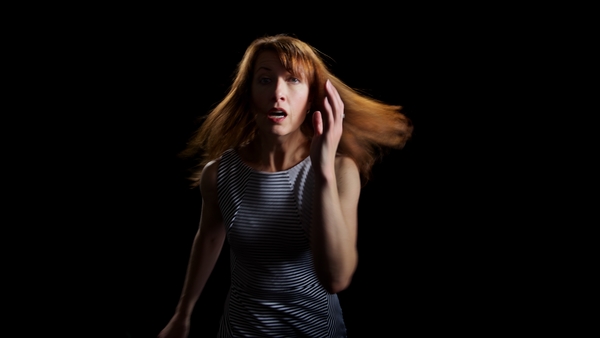
Stephanie Belding. Photo by John Gundy

Stephanie Belding. Photo by John Gundy

After The Memo, it was important to us that the next project be a play with a stronger female voice. The Trial of Judith K. is written by a woman, with a female lead and more women than men in the cast. It’s also an older Canadian script, which appealed to us. The Trial of Judith K. was nominated for major prizes including the Governor General’s Award and the Dora for Best New Play, but it hasn’t been revisited professionally since 1989. It feels like we’re a community obsessed with creating new work, but are we really developing a Canadian canon if a script is only performed once?

MM: What do you feel is the role of theatre companies when it comes to representing the Canadian canon, even if that company’s mandate isn’t specifically to develop or showcase Canadian playwrights?

TS: There’s room for all kinds of theatre and nobody should feel beholden to anyone else’s idea of what theatre “should be.” But it seems that companies are either “new work” or “classics” and when they say “classics” it’s British, or American classics. People are now starting to explore the European canon, but very rarely do we see previously-produced Canadian plays. We were so happy to see Factory produce a whole season of previous hits, and Passe Muraille is starting a celebration series this year. But generally TPM and Factory produce seasons of entirely new work. Great! We need to develop new work, but that’s 8-10 plays that will probably only be seen once and then forgotten. And that’s just two local theatres – how many more new plays are being produced across the country? And what does that do to playwrights? If you’re not constantly producing something new, you’re yesterday’s news. And they’re being expected to put in years and years of development for a show that’ll run for possibly 5 weeks. That’s no way to create a history. Part of the problem is with our funding models. The major granting bodies are very interested in supporting the development and presentation of new work and we were actually told that since we were choosing to do an older play that we needed to make a stronger case for why we wanted to produce it.

MM: There are themes in Judith K that are similar to your last production, The Memo. Both discuss the absurdity of bureaucracy, and the down-the-rabbit-hole way of navigating it. Is Judith K a deliberate follow up to The Memo?

TS: Yes and no. Yes, there are a lot of similarities to The Memo – both stories essentially deal with one person’s fight against “The System” – but we weren’t deliberately looking for a thematic follow-up to The Memo. We wanted to find a play that would meet certain parameters: female protagonist, more women than men, Canadian, and ideally something that would let us get back in touch with the Czech community who were so incredibly supportive of The Memo. We read several plays and eventually we started looking at Kafka. There are several stage adaptations of The Trial but when we discovered Sally’s play, not only were we able to check off all the boxes, but we were excited by the material itself.

MM: The Trial of Judith K is based on Franz Kafka’s The Trial, making the protagonist a woman and setting it in the 1980s. What do you think that brings to the story?

TS: There’s an added layer of the patriarchal nature of “The System” and its inherent misogyny. In the world of Judith K. anyone can get caught up in the system, but when a woman is the accused, her body becomes part of the negotiation. The men who offer to help her, want something physical/sexual in return. It’s uncomfortable and unsettling and disturbing.

Stephanie Belding, Scott McCulloch. Photo by John Gundy

Stephanie Belding, Scott McCulloch. Photo by John Gundy

MM: I hear the design elements are very important to the show as well. Can you tell me about that?

TS: Since the show takes place in several locations, we needed a set that was flexible enough to create multiple looks using the same few pieces. We are also somewhat limited by being in the TPM Backspace – the stage is tiny. However, it has a lot of height, which we’ve also taken into consideration with our set. We wanted to evoke a sense of claustrophobia – that everything towers over Judith. We were also looking at ways of incorporating the 80s (when the play was written) and the 20s (when the novel was originally published). Expressionism blossomed in the 20s and neo-expressionism popped up in the 80s so there’s actually a lot of similarities – geometric shapes, large shoulders, the use of light & shadow are all elements we’re integrating into the design. Many music videos from the 80s owe a lot to German expressionist films. Once we started looking for the connections, they were incredibly obvious.

As well, our sound designer is playing with songs that straddle both eras while also highlighting the distinctions, such as contrasting the synth-sounds of the 80s with scratchy phonograph recordings from the 20s.

MM: Why do you think The Trial of Judith K was written as a comedy instead of a moral-imbuing drama?

TS: The source material is actually quite comedic. Kafka is funny. He’s taken on this aura of “serious writer” but his work is full of humour. We found this with The Memo as well – it’s something about the Czech psyche, they’re able to take awful, depressing situations and find the humour in them. We spoke to Sally Clark and apparently the original commission for Judith K. was a serious drama about a hostage situation and that it was the original director, Morris Panych, who suggested it should be a comedy.

MM: How do you manage the comedy with such dark and, sometimes disturbing, subject matter?

TS: We’re definitely walking a tightrope with this show. Terrible things happen throughout – assault, torture, murder, and execution are all in the story and we don’t want anyone to think that we’re taking it lightly. People should be disturbed. Our ideal tempo is “Funny – Funny – Funny – Disturbing – Funny – Funny – Funny – Is that funny? – Why did I laugh at that?” Laughing at disturbing material doesn’t mean we’re making fun of it. Humour is a powerful tool and a coping mechanism. If we can laugh at something it ceases to have power over us. So while the show has a sheen that is heightened comedy – the characters are based in Commedia, and the style is almost farcical – we are actually using this stylization to comment on some pretty horrible situations.

MM: Is there anything that you want our readers to know about the show?

TS: It feels like we’ve been talking a lot about the show’s big ideas and issues and while those are important, we want your readers to know that The Trial of Judith K. is just as funny as it is smart. Sally Clark says the overriding principle of staging this play should be “louder! faster!” The show feels a little like a sitcom run amok – the situations are wacky, the characters are outlandish and the jokes pile up on top of each other. The material can also edge into the grotesque, and the nihilism runs deep, but first and foremost it’s a comedy. Until it isn’t.

The Trial of Judith K.

Presented by Thought for Food Theatre
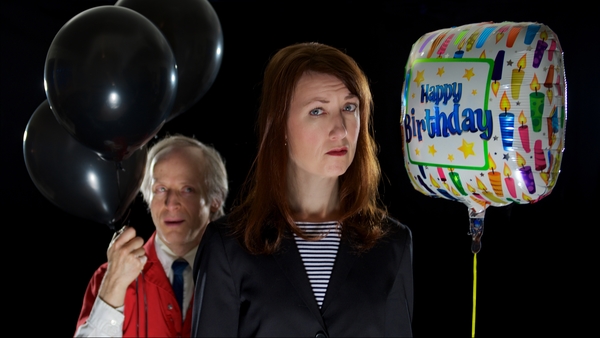
Scott McCulloch, Stephanie Belding. Photo by John Gundy

Scott McCulloch, Stephanie Belding. Photo by John Gundy

Who:
Directer: Tyler Seguin
Assistant Director: Tamara Vuckovic
Fight Director: Siobhan Richardson
Set Design: David Poholko
Costume Design: Miranda VanLogerenberg
Lighting Design: Jareth Li
Sound Design: Alex Eddington

Starring:
Stephanie Belding
Toni Ellwand
Patrick Howarth
Andrew Knowlton
Helen Juvonen
Scott McCulloch
Cara Pantalone

What: A sexy, funny, and thought-provoking adaptation of Franz Kafka’s The Trial returning to Toronto stages. 

Where: Theatre Passe Muraille Backspace (16 Ryerson Ave.)

When: January 28-February 14, 2016

Tickets: www.artsboxoffice.ca

Connect:

thought4food.ca

@thought4food
@TylerJSeguin

@intheGreenRoom_
@FuriousMAD

In Conversation with Severn Thompson, playwright and performer of ELLE, on stage now at TPM


by Bailey Green

When Severn Thompson read the novel Elle four years ago she had no idea that this story would capture her imagination for years to come. The Governor General’s Award-winning novel written by Douglas Glover is based on the true story of Marguerite de Roberval. Marguerite, along with her lover and nurse, were marooned by her uncle the Sieur de Roberval on the Isle of Demons in the Gulf of the St. Lawrence. Thompson spent the last three years adapting and workshopping Elle before bringing it to Theatre Passe Muraille. “It struck me as so refreshing to find a female voice from a time I had heard very little about, in the very early days of the explorers in the mid 1500’s,” says Thompson. “I felt very close to her [the character]. The story crossed 500 years very easily for me. It brought the past to the present.”

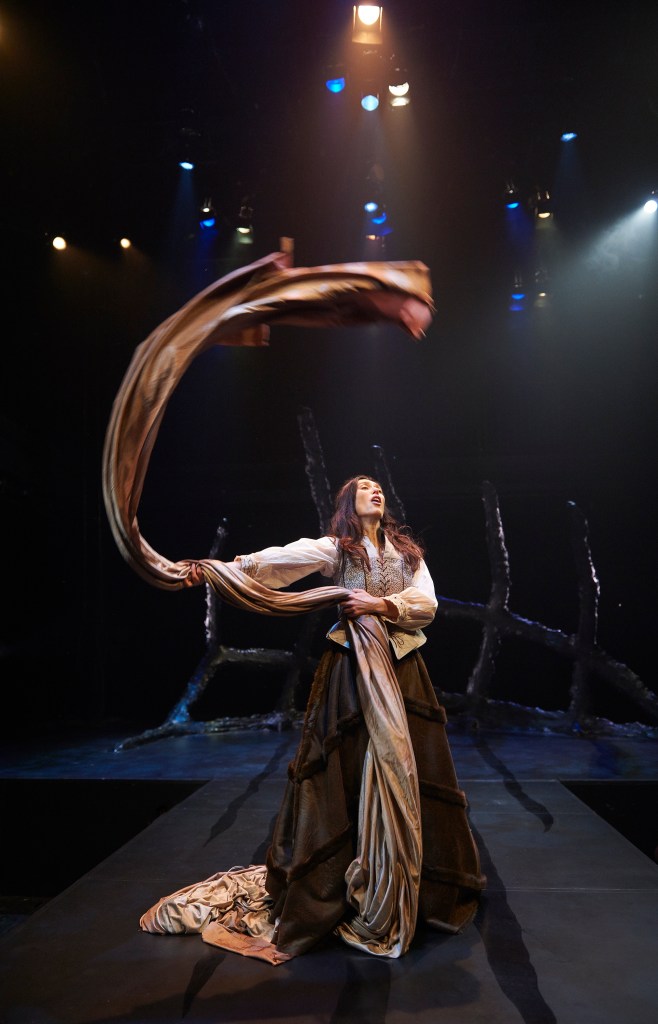
Severn Thompson in ELLE at TPM. Photo Credit: Michael Cooper

Severn Thompson in ELLE at TPM. Photo Credit: Michael Cooper

Adapting a 200 page book into a 24 page script is no easy feat, and Thompson had to set deadlines to make the hard choices. From the beginning, Thompson knew that she wanted simple props and set, and that the staging would be essential in creating the world of the play. “You want to still make it as rich an experience as you can,” Thompson says, “and assume that the audience coming in may not have the same background with the story that you have.”

As the project grew, so did the team involved. Thompson participated in the Banff Playwrights Colony where she worked with dramaturg and Program Director Brian Quirt and then Andy McKim, Artistic Director and dramaturg of Theatre Passe Muraille, who “has been guiding me through from an early stage. He [McKim] brings a lot of experience to the work, so that has been so useful” says Thompson. Two and a half years ago, director Christine Brubaker joined the project and became Thompson’s main partner in developing Elle. “We see things in a very similar way, so it’s been great to have eyes from the outside. She’s been really invaluable in pointing to aspects that need more and areas that need less. It’s been a great discovery, seeing how the audience relates to the play.”

Severn Thompson in ELLE at TPM. Photo Credit: Michael Cooper

Severn Thompson in ELLE at TPM. Photo Credit: Michael Cooper

Author Douglas Glover has connected with Thompson throughout the development process, but Thompson notes that he has been very supportive from a distance, recognizing the differences in form between a play and a novel. Glover has seen drafts throughout the process and a short workshop performance at the Lab Cab Festival, but TPM is his first experience of the fully realized production. When asked about the greatest joy Thompson has experienced working on Elle she says:

“To share this story. It’s one that gives a very strong female voice to a point in history where we have heard so little. And she’s not just strong, because bad things happen to her but she doesn’t play the victim and yet she isn’t the perfect hero either. She has faults and quirks and it’s wonderful and exciting to share this character that Douglas has created.”

Thompson also notes that Elle reminds us of the history of our land and how easy it is to forget about the ground we stand on. “Elle reminds us about the power of this land, and the complications that have evolved from colonialism,” Thompson says. “The nature of that history is still in play today, whether we are aware of it or not.”

Jonathan Fisher and Severn Thompson in ELLE at TPM. Photo Credit: Michael Cooper

Jonathan Fisher and Severn Thompson in ELLE at TPM. Photo Credit: Michael Cooper

ELLE

A Theatre Passe Muraille Production

Who:
Adapted by Severn Thompson from the Governor General’s Award-winning novel by Douglas Glover
Directed by Christine Brubaker
Starring Jonathan Fisher & Severn Thompson
Dramaturgy by Christine Brubaker & Andy McKim
Stage Manager: Laura Baxter
Production Design: Jennifer Goodman
Sound Design & Original Music: Lyon Smith
Movement: Viv Moore

What:
“Headstrong. What do you do with a headstrong girl? Maroon her on a deserted island lest she spread the contagion of discontent. Forget her.”

It’s 1542 at the time of France’s ill-fated third attempt to colonize Canada. The Sieur de Roberval abandons his unruly young niece, her lover, and her nurse on the Isle of Demons just off the coast of Labrador. With real bears, spirit bears, and perhaps hallucinated bears, Elle brilliantly reinvents the beginnings of this country’s national narrative.

Where: Theatre Passe Muraille Mainspace, 16 Ryerson Ave. Toronto

When: January 14-31, 2016, Tuesday-Saturday at 7:30pm & Saturday & Sunday at 2pm.

ASL-Interpreted Performances: Thursday January 21 at 7:30pm & Saturday January 30th at 2pm.
Relaxed Performance: Saturday January 23rd at 2pm.

Tickets: $17 Under 30, $20 Artsworker, $33 Seniors, $38 General Admission, Pay-What-You-Can Saturday & Sunday 2pm Matinees. Purchase here. 

Connect:
passemuraille.ca/elle/
@beyondwallsTPM
@severnthompson

#ElleTO

@_BaileyGreen
@intheGreenRoom_

In Conversation with Deanne Kearney – Creator of Urban Myth at the Next Stage Theatre Festival

By Bailey Green

Deanne “Dee” Kearney studied ballet and contemporary for years but had never felt completely at home. When she discovered hip hop everything changed. “Hip hop very quickly became my whole life, and identity, as soon as I found it,” Kearney remembers. “It changed everything, even the way I look at things. I write on urban dance and I produce. Hip hop is such a lifestyle, and it’s an amazing, supportive culture.” Kearney teaches dance and is part of the Toronto B-Girl Movement, dedicated to bringing more women to the forefront of a largely male-dominated style.

Kearney set out to create Urban Myth with the goal of bringing popular styles to new audiences, “I completely fell in love [with hip hop], I wanted to show the world how amazing it is.” She chose the styles featured in the show (breaking, krump, house, waacking, to name a few) based on the current, standout styles in Toronto.

Urban Myth is a show geared towards an audience who may not be familiar with this genre. Each style is announced before the dance. When asked about the biggest difference between a theatre show as opposed to a battle, Kearney says, “The audiences are much quieter! You can take pictures and tweet. The performers love to hear the audience yell and respond so it can be odd for them to adjust to the different setting.”

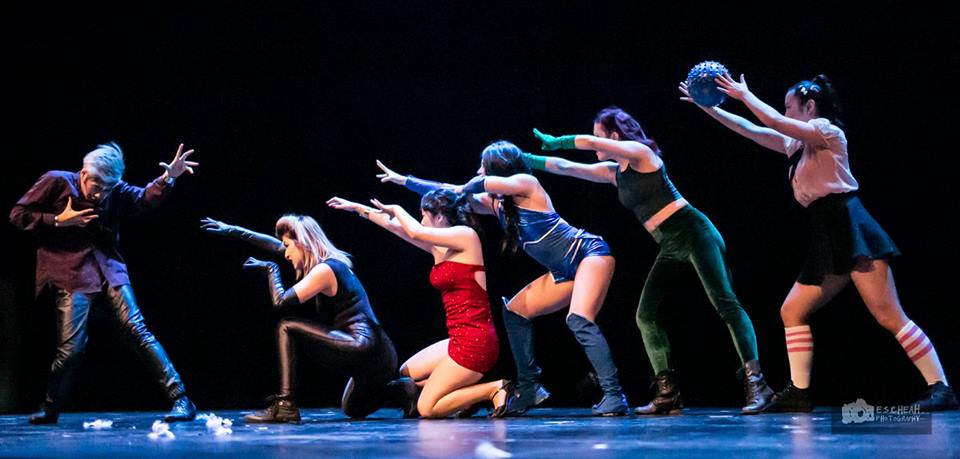
Photo Credit: E.S.Cheah Photography

Photo Credit: E.S.Cheah Photography

Kearney brought in choreographers “at the top of their game” in each style and gave them free rein to create. All she asked was that they each find ways to challenge themselves to choreograph pieces with a story. No themes were given, but as the pieces took shape a variety of stories emerged. One piece, performed by Raoul “Jin” Wilke and The Moon Runners crew, is an apocalyptic future based on the film “I am Legend.” Another dance is 12 minute long krump piece, choreographed by Amadeus “Primal” Marquez, about domestic abuse choreographed. The choreographers worked with their own dancers from their crews and came together to create the opening number of the show.

The challenges of this show came from the volume of people on stage. With about 30 people involved plus Kearney’s own people, it was no small feat to organize everyone involved. “The most rewarding is just seeing the pieces, the whole cast was watching the show just entirely in awe of each other,” Kearney says. “Many of these dancers don’t do theatre shows. They just battle.”

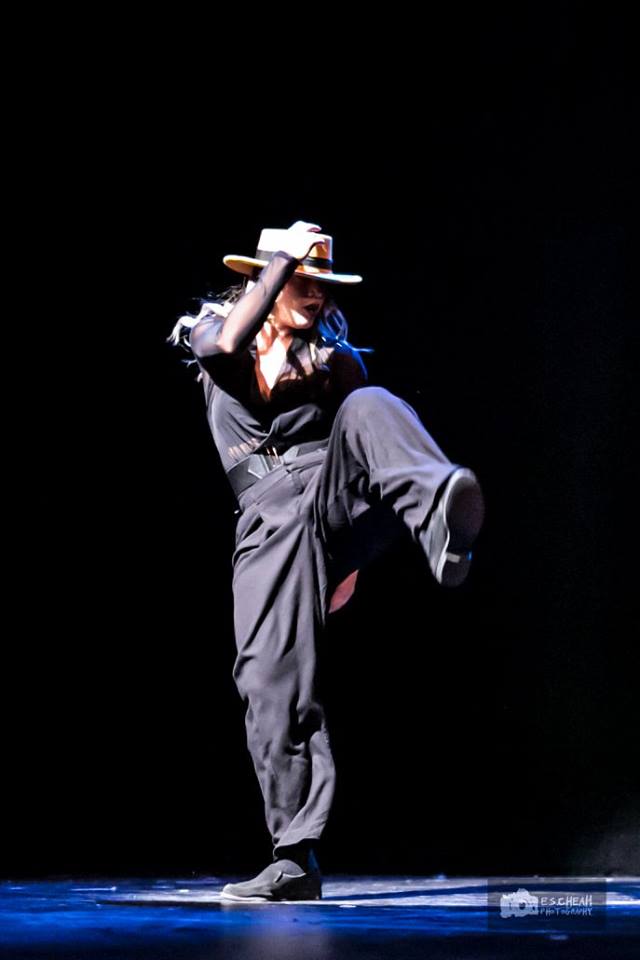
Photo Credit: E.S.Cheah Photography

Photo Credit: E.S.Cheah Photography

When asked about her inspirations, Kearney shouts out her friend and collaborator Anthony “Illz” Put. Illz is a b-boy who travels the world to battle. “He has amazing movement qualities and is so easy to work with,” Kearney says. “He just doesn’t know how good he is yet.”

Urban Myth is a hard-hitting, intricate and visceral show. If you catch it this weekend, be sure to make some noise.

Urban Myth

Presented by BreakinGround as part of the Next Stage Theatre Festival

12227809_430472613824754_5068180142720918499_n

Who:
Creator: Deanne Kearney
Choreographers: Amadeus “Primal” Marquez, Anthony “Illz” Put, Mariano “Glizzi” Abarca, Caroline “Lady C” Fraser, Caitlin “Caddy” Superville, Deanne “Dee” Kearney
Featuring: Dancers from Northbuck, Lions of Zion, Footnotes Dance, Ground Illusions, Twisted Ankles and The WaaquettesPresented by: BreakinGround

What:

Krump. Breaking. Popping. Locking. House. Waacking. Bringing raw urban dance from the street to the stage, created by Canada’s top urban dancers and choreographers.

Where: Factory Theatre Mainspace (125 Bathurst St)

When:
January 17 09:00 PM  buy tickets

Tickets: $15.00

Connect:

@breakingroundto
www.breakinground.ca


In Conversation with Kaitlyn Riordan – Acting in Mockingbird at the Next Stage Theatre Festival

Interview by Hallie Seline

HS: Tell me a bit about Mockingbird at the Next Stage Theatre Festival.

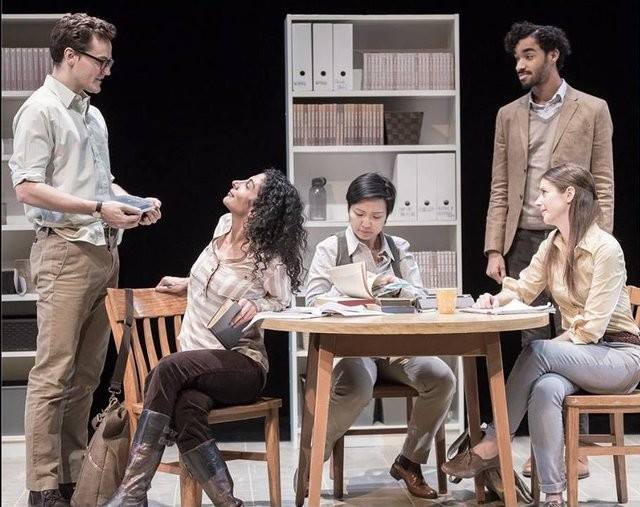
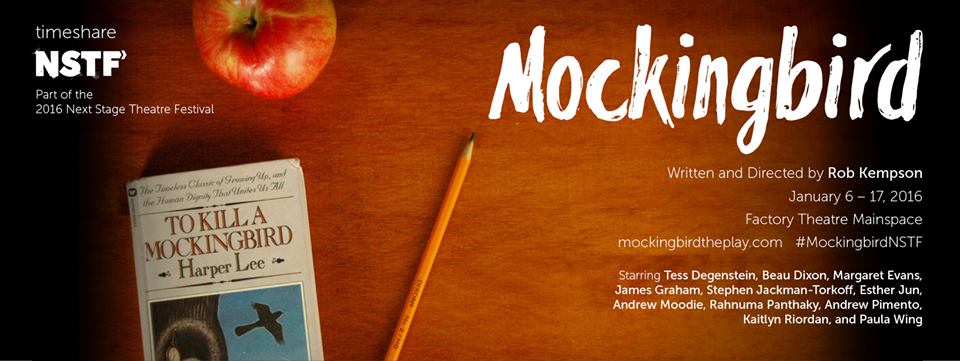
KR: “January is the new July” is the motto of the Next Stage Festival this year and that could not be more true; both for good and environmentally dubious reasons… But to focus on the positive, Mockingbird is a World Premiere of Rob Kempson’s second ‘high school’ play where we’re dropped into the secret and mysterious world of an English teacher’s office at a high school. We meet a varied cast of teachers, all with their particular roles to play in the claustrophobic room they retreat to for some respite from the teenagers they’re teaching. We soon discover that everyone’s favourite colleague, Jon Foster, is having a relationship with a student, and the delicate balance of harmony is quickly disrupted.

HS: Can you speak to me a bit about your character in the show?

KR: Alexandra Lee is a young woman with a very clear sense of right and wrong. She is ambitious and dedicated to her chosen profession in a way which she does not extend to her personal life. Jon Foster, her delightful gay best friend of 10 years, provides her with all the companionship she needs and working at the same school has been a dream come true. An aspiring novelist, Alex is searching for something, which when the show begins, is out of her grasp.

12509846_10101313341630451_8410015970779158533_n

HS: It’s so wonderful to see such a large cast on our Canadian stage. What has been your favourite aspect about working with such a large, diverse cast, which features a rich range of talent in experience, background and age?

KR: Having so many rich personalities in the same room creates a dynamism which is electric. Previous to the first day, I knew a few of the cast members to say hello, but I didn’t really know anyone very well. Starting rehearsals almost felt like that first day in September when you go back to school and meet your new class mates, but the beauty of the theatre is that we then got to play together. I laughed harder in these rehearsals than in any I recently recall and not always at the appropriate time.

12540633_10102522570336201_8320804205684864546_n


HS: Why do you think this story needs to be shared with audiences now?

KR: We live in a very progressive community here in Toronto and in the past few decades I think that the value of ‘rules’ has eroded. Very few professions carry an unbreakable code of conduct; doctors, lawyers, and many would argue teachers. How do those two concepts coexist? How do we marry our progressive society with an unbreakable code? How do we navigate those grey areas of life? That seems to be the crux of where so much of life exists, so we need to ask ourselves those questions.

HS: It’s just the beginning of a brand new year, which always feels like it opens up the potential for new possibilities. What do you hope to see this year in the Toronto/Canadian theatre community?

KR: Before moving to Toronto, I lived in London and New York. What struck me when I moved here was the lack of Canadian stories on our stages, in contrast to the prominence of British or American stories I witnessed in those cities. In Toronto I think that varies year to year, but that is always my hope as I go into a theatre; show me something about the world I live in, and the country if possible. Sorry to be a bother. Thanks 😉

Short Answer Questions:

What are you listen to lately? Alabama Shakes. I’m obsessed.

Where do you look for inspiration? In the theatre, in books, in friends, and in nature. I live near High Park and it never ceases to amaze me.

What is your favourite place in the city? Withrow Park, the AGO, or the Islands. That’s a tough one.

What’s the best advice you’ve ever gotten? Follow your passion, because you’re lucky to have one.”

Describe Mockingbird in 5 to 10 words: Drawing lines means picking sides.

Mockingbird

Presented by timeshare as part of the Next Stage Theatre Festival

mockingbirdWho:
Playwright/Director: Rob Kempson
Featuring: Tess Degenstein, Beau Dixon, Margaret Evans, James Graham, Stephen Jackman-Torkoff, Esther Jun, Andrew Moodie, Rahnuma Panthaky, Andrew Pimento, Kaitlyn Riordan, Paula Wing
Producer: Lisa Li
Set/Costume Designer: Brandon Kleiman
Lighting Designer: Michelle Ramsay
Sound Designer: Lyon Smith

What: When we first meet the English department at Finch Park Collegiate, rumours are flying about a teacher-student relationship. Two days later, Mr. Foster has been removed from the school and everyone is trying to make sense of what has happened. An exploration of what happens when innocence meets authority, and the grey area between right and wrong.

Where: Factory Theatre Mainspace (125 Bathurst St)

When:
January 14 07:45 PM  buy tickets
January 15 05:00 PM  buy tickets
January 16 03:45 PM  buy tickets
January 17 04:15 PM  buy tickets

Tickets: $15.00

Connect:

#MockingbirdNSTF
mockingbirdtheplay.com
www.robkempson.com
@Rob_Kempson


In Conversation with Chloé Hung, from All Our Yesterdays at the Next Stage Theatre Festival

by Bailey Green

In the spring of 2014, Boko Haram kidnapped 276 female students from their school in Chibok, Nigeria. The abduction caught the attention of the world media, celebrities, first lady Michelle Obama and playwright Chloé Hung. The popular hashtag #BringBackOurGirls swept across social media. In October 2014, Hung came across an article marking six months since the kidnapping. To her chagrin, she realized that she had forgotten about the girls whose story had outraged her in April. She wrote an idea on a Post-It, “two sisters kidnapped by Boko Haram” and promised herself she would not let their memory slip away again.

All Our Yesterdays grew out of a two scene assignment that Hung wrote for a class at NYU where she is currently completing her MFA in dramatic writing. In the spring of 2015 she began writing the play in earnest—the story of fictional sisters Ladi and Hasana who have been kidnapped by Boko Haram. Their parents cannot afford for both daughters to attend school, and so the older sister Ladi is sent to school while the younger, Hasana, is kept home. “There was never a draft where Hasana wasn’t on the autism spectrum,” Hung remembers. “In Hasana we see how much she does need school, and how that would give her an amazing opportunity for a life she would never be able to have without education. Hasana has also allowed me to talk candidly about some of the issues in this story.” As part of her research, Hung discovered the lack of support for autistic children outside of urban centres in Nigeria.

AllOurYesterdays

Photo Credit: Rick Bartram

When asked about the challenges of this piece, Hung describes the extensive research involved in the writing process. She credits York University professor Pablo Idahosa with providing her with a thorough crash course in Nigerian history and politics. Another key moment was when her step father, Michael Kaufman, who co-founded the White Ribbon Campaign, helped put Hung in contact with Hadiza Aminu in Nigeria. Hadiza Aminu were part of the creators of #BringBackOurGirls and spoke with Hung extensively about the situation in Nigeria, how the parents were coping and how the people in the community rallied and protested. “So it was challenging to distill all of that information into a story that felt relatable,” Hung says, “and the way I wanted to approach that was using a story of two sisters and the injuries that siblings can do to each other.”

In the transition from playwright to director, Hung adapted and learned to adjust pauses or movements that no longer served their purpose. “There were chances to do re-writing on our feet, and I have two amazing actors, Chiamaka Umeh and Amanda Weise, who brought it all to life,” Hung says.

AllOurYesterdays2

Photo Credit: Rick Bartram

All Our Yesterdays is partnering with Save the Children Canada for this run at Next Stage (during Fringe 2015 they partnered with Because I am a Girl). “It was really important to me that there was an outreach aspect to this show,” Hung emphasizes. “It’s all well and good for me to sit at home with my computer ranting and raving about the world, but what am I actually doing? What can I do from here?”

Short Answers:

Currently Reading: Room, by Emma Donoghue. It’s terrifying, but so good.

Favourite City: Toronto! Bloor/Ossington wasn’t so cool back when I was growing up, but now it’s pretty awesome.

Next Stage Show You Can’t Wait to See: All of them! But I didn’t get to see Rebecca Perry and Rachel Blair’s shows at Fringe this past July so I’m really looking forward to those.

All Our Yesterdays

All-Our-Yesterdays-650x843

Photo of Chloé Hung by Tanja Tiziana

Presented by AnOther Theatre as part of the Next Stage Theatre Festival

Who:
Playwright/Director: Chloe Hung
Featuring: Chiamaka Umeh, Amanda Weise
Stage Manager/Producer: Elizabeth Wilson

What: Sisters Ladi and Hasana have been kidnapped by Boko Haram. Through memory we journey through their captivity as they wrestle with autism, the need to escape and their past. When one makes a selfish decision, the effects reverberate to their present.
2015 Toronto Fringe Patron’s Pick

Where: Factory Theatre Studio (125 Bathurst St)

When:
January 14 09:15 PM  buy tickets
January 15 08:45 PM  buy tickets
January 16 05:45 PM  buy tickets
January 17 08:00 PM  buy tickets

* Talk Back after the show

Tickets: $15.00

www.anothertheatrecompany.com