Skip to content

A Few Words with Hart House’s Jeremy Hutton

By: Ryan Quinn

RQ: So, Robin Hood started as collective creation at Shakespeare by the Sea, correct?

JH: Yeah, 2005.

RQ: Would you like to tell me a little about how that came together?

JH: Shakespeare by the Sea had been doing created family shows for a bunch of years. Very, very kid oriented. Very silly. A lot of them featured pool noodle props and costumes. In 2004, I went to Shakespeare by the Sea and did one of those, it was a Snow White, and I got along really well with Jesse MacLean, who was one of the directors there at the time. I was also doing fight direction for them, and music, and acting. So, we started talking for that next season of doing something a little bigger than the regular family show. I wouldn’t call it “serious”, but there was a little more substance to it than what they had been doing. So I wrote maybe two songs before I got there. I rolled in and we had three weeks to throw together something. Back then, it was before Jesse or myself had really mastered the collective creation. I mean, we did it again this past year with an Alice in Wonderland, and it was a lot smoother process than when we did Robin Hood. It was literally like, we got our casting, and then went off in various groups and they just started improvising their way through the very loose structure that they had set up for us. So, some of that material was awesome. The sheriff and Prince John, a lot of their material remains today pretty much unchanged. Then there were other scenes like Robin Hood and the merry men, where you had ten people trying to improvise onstage at once. By the time we got to opening night on that, we were lucky that we had three quarters of the script done. We just made up the rest as we went along. But, it was hugely successful. It was sloppy but it was hugely successful.

RQ: At what point did it solidify? Is it still being changed? I know you’re in runs, so I assume it’s pretty set in stone.

JH: You’d be surprised, actually.

RQ: Are you still in the process of workshopping the script and the songs?

JH: Yeah, I spent two years after the first run rewriting almost all of the songs. There are only two songs left from the original production. One of those was a four-bar snippet that is now a full song. So, I wrote a lot of new music, and I brought on Kieran MacMillan once I thought that it needed a bit more of a quality composer as opposed to myself. I’m a decent one, but he’s fantastic. Then, there were two productions of it at the Toronto Youth Theatre, and it kept developing over that time. In 2011, I went back to Shakespeare by the Sea with all the new material, and we had to decide, Jesse and I, between the new material and the old material, what we wanted. There were two very different shows at that point. We literally had two different Robin Hood shows. So, we solidified a lot of that, but there was still a lot of stuff, especially music, that wasn’t quite ready yet. Shakespeare by the Sea is more or less a capalla, and you have to write the music to fit that, whereas here, we were rewriting songs throughout the rehearsal process for this. I think that last song we finished writing was on…December 19th. That was “Generosity”, the last song Robin Hood sings in the first half. The closing number we finished about a week before that. It was kind of intense. Even now, there are new orchestrations for the band on a daily basis. It’s mostly done, but we’re still adding minute details.

RQ: So that’s been your role in the Hart House production, you kept adapting and growing the script, the book, the music, etc.

JH: Yeah, exactly. And, I’m also the fight director. Also, the music director, Kieran, was off doing another show so while he was gone, myself and Tara Litvak who was the assistant music director, we taught everybody the music and sort of sat there waiting for Kieran to send us the new pages. Even if the song was written, a lot of it wasn’t on the page. So, there was an intense process of them transferring things to us, and us teaching it. We kept the fights almost identical to how they were in Halifax, so he would have a chance to score them musically. So, that was kind of nice, not having to rebuild all that from scratch. But then again, Robin Hood had an extra five goons to kill in the opening scene, so…

RQ: This is a really personal work of yours because you’ve been so close to it the whole time, was it difficult to let some of that control go when you got to Hart House?

JH: I don’t think that really happened. It was nice for Jesse to have a chance to direct it. He’s never directed it indoors before. He’s never directed it with a female Will Scarlet before, it’s always been a man before. I’m thrilled that I didn’t have to do that because I had enough on my plate. The music, the fights, the rewriting. I don’t think any of us feel like it’s “let go” yet. We’re really close, but you’ll read some reviews that tell you that the show’s a little long and they’re not wrong, so we have to tighten up the content a little bit. The Drowsy Chaperone had fourteen rewrites or something around there before it hit Broadway. We’re at rewrite number eight, so we have a few more to go.

RQ: What drew you to Robin Hood in the first place? Why Robin Hood instead of any of the number of other stories?

JH: I think initially it was that Jesse wanted to do one with a lot of fights in it. They always want to base it on some sort of legend or fairy tale when they’re building a show there. And because they had never really had a fight director before, we all got really excited about adding the possibility of that kind of theatrical magic to the mix. When you’re outside, there’s only certain kinds of theatrical magic you can have. You have costumes, lighting’s not much of an option. You can sing a lot, you can do a lot of acrobatics, you can fight, and those are your theatre magic tricks.

RQ: I want to ask you about Romeo and Juliet as well. You went straight from Romeo and Juliet into this. You must have been working on both at once. How was that experience?

JH: It was intense. Romeo and Juliet is another big, big monster of a production, then Robin Hood started rehearsals two days after Romeo and Juliet opened. So during the rehearsal process for one, I was in auditions for the other, realizing that we still had so much music that was unfinished and I was trying as much as I could to pump out lyrics and melodies. There as a couple actors in this show who were in that one as well, so while Romeo and Juliet was running, Jeremy LaPalme, Dave Difrancesco, these guys were madly rehearsing dances in between.

“Start, Stop, Continue” for 2013: A Conversation Starter for the Toronto Theatre Arts Community

By: Hallie Seline – Co-Founder & Editor

The past year in Toronto theatre has been a tumultuous one to say the least. From the firing of Ken Gass from the Factory Theatre, to the open letter to younger theatre artists by David Ferry on the Praxis website and the debate that ensued. From government funding, a desire for a new union model, the plethora of new independent theatre companies, and where emerging and veteran artists alike fit into the Toronto theater world, there is a lot of discussion to be had about where we stand as a community and where we should hope to go next. As we begin the new year I think this is a perfect time to reflect on what we have done as an arts community in 2012, where we currently stand and most importantly how we hope to move forward in 2013.

I have done this in the form of a “Start, Stop, Continue”. Our first installment features the ideas of Rob Kempson (Theatre Passe Muraille/Paprika Festival), Stacey Norton (Theatre Smash), Kelly Straughan (The Toronto Fringe, Seventh Stage Theatre) and Eric Double (Theatre Caravel).

Read our Feature’s first installment here!

Both Sides of the Wall: Natasha Greenblatt, Political Theatre & The Peace Maker

January 3, 2013

By: Alex ‘Addy’ Johnson

Even for the most well-read and curious person, it is difficult to get your bearings when trying to understand the Israeli-Palestinian conflict. Combine centuries of history with modern-day media noise and I’m not entirely surprised that, yes, if you Google it, there is an Israeli-Palestinian Conflict for Dummies.

But when you’re feeling particularly confused and ill-informed, and you would totally read all about it on the Globe and Mail site if it wasn’t for that pesky pay wall, it might be comforting to know that you’re actually part of a greater conversation – the social discourse aimed at creating more social discourse around the issue and, hopefully as a result, more understanding.

This was the bulk of my conversation with Natasha Greenblatt, the woman behind The Peace Maker opening tonight at the Next Stage Festival.

“It’s been a difficult conversation to have,” she says. “It’s been a bit taboo. But that’s changing. Obama started to change the language around it – not quite enough in my opinion, but he started to change the language. The paradigm is shifting. It’s a good time to push that conversation.”

In 2009 (not a particularly calm time in the Middle East), Natasha went on Birthright – the free heritage trip to Israel offered to all young Jewish people. Following that she spent two months in the West Bank volunteering as a drama teacher.

“When I started out I definitely felt [the conflict] was hard to talk about. I didn’t know enough. So I went to find out more.”

I asked her if she feels she knows enough about it now.

“I know enough,” she said, “to know that I have to talk about it.”

The Peace Maker, directed by Jennifer Brewin, is the story of Sophie, a young Jewish woman loosely based off Natasha, herself, and her struggles with ‘identity and justice and the desire to ‘make-peace’ in the Middle East.’ In Natasha’s own words it was inspired by her “time on both sides of the wall.”

The Peace Maker at The Toronto Fringe

Natasha fearlessly refers to The Peace Maker as “political theatre”. I say fearlessly because, like anything with the word political in front of it, a person is bound to get some mixed reactions. And when it comes to theatre, a handful of didactic bad eggs have given the whole genre a bad rap. But I would argue things are turning around, thanks to industry contributors like Praxis TheatreDocket Theatre, Michael Healey’s Proud, and Studio 180.

“I’m very inspired by the work Studio 180 does,” Natasha says. So inspired, in fact, that she wrote a piece for the Studio 180 blog wherein she described her bike ride home from The Normal Heart, absolutely elated with the “realization that people can talk about politics on stage, and it can be emotional and interesting.”

Her blog post continued: “There is sometimes a taboo about ‘political theatre,’ a sense that it is cerebral, or boring, or only for people that know a lot about the specific politics of the play. I have, at times, felt slightly sheepish writing my ‘Israel-Palestine play’. But I now strongly believe that political theatre is really just like any theatre, and that Israel and Palestine was just where my heart was living in 2009 when I     started writing this play. And ‘political theatre’ is for everyone, as long as it’s good theatre.”

Here’s the conundrum about political theatre that has always mystified me: Good drama is personal – the playwright puts their heart into it. And politics are personal – never bring elections up at family dinner. But good drama is also about two things pulling in opposite directions, presenting various perspectives. So how does a dramatist keep that opposing tension going when their heart lies strongly on one side? Natasha admits she struggled with this.

“It was very upsetting to be living in Palestine and seeing people confined. Not able to move because of checkpoints, and in some places really oppressed because of who they were. And I was critical in general of the notion of a state that is for one group of people. But,” she continues, “of course everything is more complicated. Palestinian people will tell you about things that are wrong with their government. And ultimately I can’t convince people to think a certain way. I just have to present a theatrical dilemma and allow people to take whatever they take from it.”

I asked Natasha if she would ever consider touring The Peace Maker to the Middles East.

“I’ve thought about it,” she says. “However, it’s a play about being a North American in a place that is completely different. Sophie is the eyes of the audience. It’s about being an outsider. It can be seen as an allegory for how Canada sees itself in politics as a peace maker, and that doesn’t always work out so well.”

However, while she hasn’t completely abandoned the idea of touring The Peace Maker to the Middle East, it exists in Toronto here and now for all of us to see including (but not limited to) a full band that Natasha described as “wicked.”

With Samuel Sholdice heading up the music, the band features four high school students as well as music from the actors and the well-known Maryem Toller. All told, The Peace Maker features two violinists, a bass clarinetist, a trumpeter, an accordion, two guitars, one piano, and an additional clarinet.

“The musicians transform between Israelis and Palestinians and that function is important to me because it’s about context. So often your identity is defined by context. This person is this person because they grew up on one side of the wall and not the other. The main character believes that music can bring peace and heal everybody and then she finds out that it’s a lot more complicated than that. However, there is still something true in her vision – that music is a universal language. And people can connect to music in that moment and forget all of the baggage that they have, which consists of many things, but it’s also context.”

And now friends, I leave you with:

Natasha Greenblatt’s Top Tunes to Listen To As You’re Getting Ready to Go Out and See The Peace Maker.

– Flatbush Waltz http://www.youtube.com/watch?v=TOys7cU_LeI

– Ammunition Hill http://www.youtube.com/watch?v=dM1L-ovPEOE

– Rafeef Ziadeh – We Teach Life, Sir! (Spoken word poem) http://www.youtube.com/watch?feature=player_embedded&v=wad5h5K38ms

– Leonard Cohen – Old Revolution http://www.youtube.com/watch?v=wNN0804olxw

Artist Bio:

Natasha Greenblatt  – Writer/Producer

A graduate of the National Theatre School, Natasha is an actress, writer, educator and director. She has played Anne Frank in Montreal and Hamilton, and won a Dora Award for Get Yourself Home Skyler James, a solo show by Jordan Tannahill that traveled to high schools in the GTA. She wrote and performed We Lived in a Palace, presented by SummerWorks. She is currently facilitating the Paprika Creator’s Unit and acting in the television show Bomb Girls.

Cast of Angelwalk’s Ordinary Days chat about Deconstructing Extraordinary Musicals

By: Ryan Quinn

Last week, I spoke with the cast of Adam Gwon’s musical Ordinary Days, which just finished its run in Winnipeg, and is playing for a limited engagement until December 9th at the Toronto Centre for the Arts. Directed by Kayla Gordon and produced by Angelwalk Theatre, Ordinary Days follows four New Yorkers throughout a day as they face their own demons and those of the big city.

This show was originally produced at Roundabout Theatre in New York, but this production features new orchestrations by Joseph Aragon (who also composed Theatre20’s Bloodless) and those orchestrations will become a standard option for all productions of the show in the future.

The show stars Justin Bott as Warren, a frustrated artist who finds a notebook belonging to Deb (Connie Manfredi), a grad student working on her thesis on Virginia Wolfe. The show also stars Jay Davis and Clara Scott as Jason and Claire, a couple on the brink of moving in together, who are experiencing a relationship crisis.

When I spoke to the cast, they had just moved into the Studio Theatre space at the TCA, and remarked that it immediately felt like a perfect place to mount the production. I asked if the show demands a small, conversational space, and Justin Bott replied that when they were performing in Winnipeg, they had to create the illusion of that intimate space in a larger area, but that this space immediately creates that atmosphere.

We also spoke about how approaching a sung-through musical is different than approaching one with more text, and the cast agreed that the approach is nearly the same. Bott remarked on how the challenge is to not have a sung-through show be very “musical-y”, saying: “A lot of these new musicals that are being written are not so much like the old musicals where it’s a dramatic scene launching into an even more dramatic song, everything is on a level of conversational”. He went on to explain that the music is telling the actor some information, and the lyrics are telling the actor some information as well, and that can make the exploration a little easier.

Connie Manfredi noted that in musicals with more dialogue, the challenge is that the spoken text has to lead you to a place where singing is the only option because the character can’t bring themselves to speak anymore, but in a musical like this, it’s heightened to that level from the beginning of the scene, and indeed throughout the play, so that can be difficult. Jay Davis mentioned that when he performed in last year’s production of Jason Robert Brown’s The Last Five Years, the process was to learn each song note for note, then make it his own emotionally without disrupting or modifying the composition of the songs. In that sense, it’s a two-step process, but the result is a fully realized character that lives within the confines of the musical’s orchestrations, and, in some ways, is freed by them.

You can catch Ordinary Days at the studio theatre at the Toronto Centre for the Arts until December 9th, call (416) 250-3708 or visit http://www.tocentre.com.

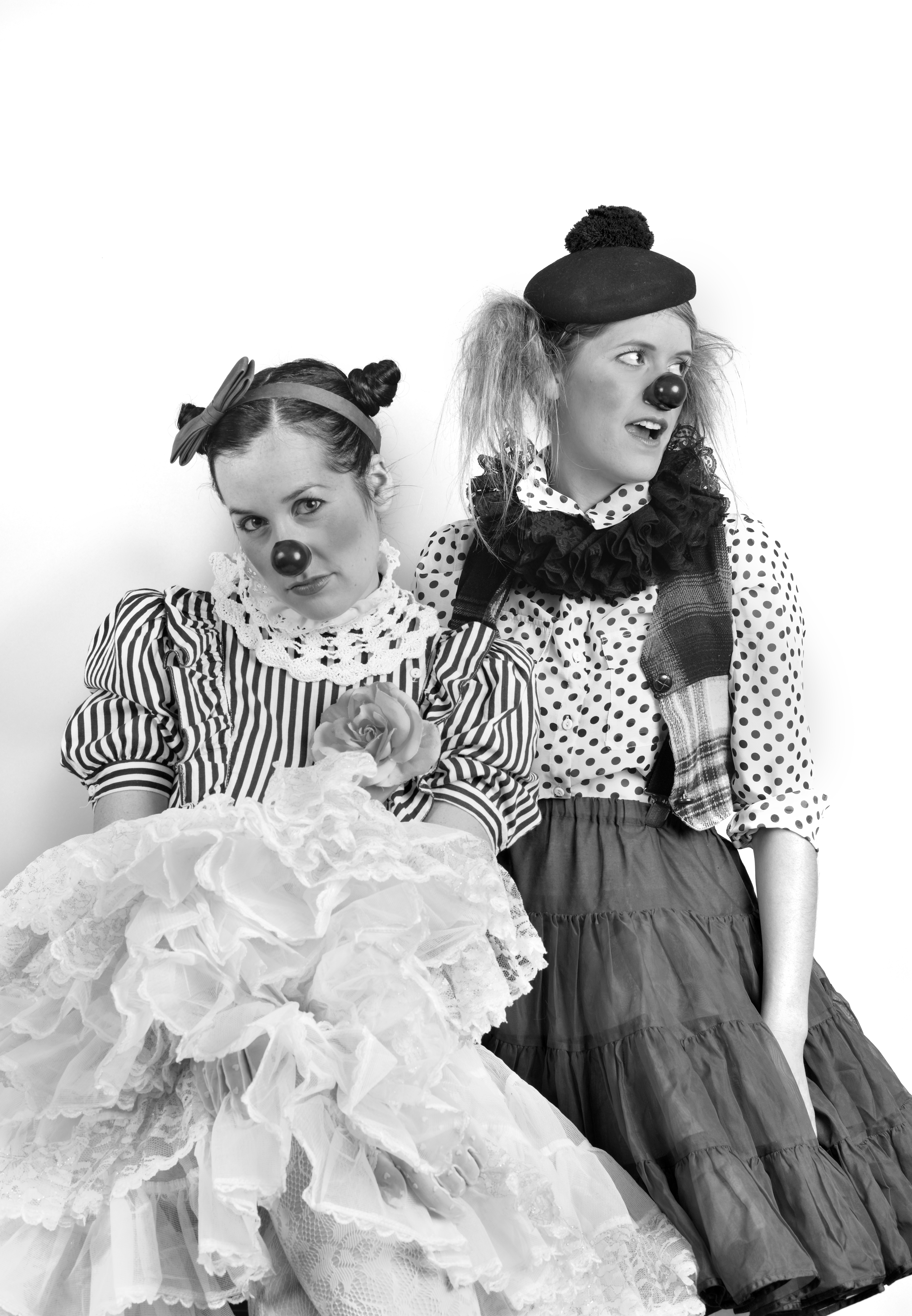
Morro and Jasp on the Nature of Relationships

Article by: Morro and Jasp
Photos by: Jackson Klie
Styled by: Mahro Anfield
http://www.morroandjasp.com

On the interpretation of ‘feelings’ as they pertain to the understanding of being ‘involved’ in, as, or with a society upon which the dependence of ‘another’ is debated and discussed OR How many licks does it take to get to the centre of a Tootsie Pop?

Morro and Jasp sit, sisterly, pondering the nature of relationships – theatrical, theoretical and thematic.  They often sigh before speaking, and pause before pronouncing their opinions.  They are very much, as the French say, “a la carte”.
JASP: Morro, tell me the honest truth – how do you feel about me?
MORRO: Without you I am not a thing, I am no thing, I am a lone tree in the forest and therefore not really there. Je suis la tristess!!!! Je suis la pizza without la sauce.
JASP: Really?
MORRO: Or maybe I’d be really excited to finally not have to report to anyone but secretly I’m too chicken-shit to find out if that could be true- the risk is too great. Take cover troops. Stay protected!!!
JASP: I see.
MORRO: And what about you Jasp? What are your feelings on this subject?
JASP: I think feelings are one of, nay, the most important things we have. They’re the only thing we have really. Every morning I wake up and write a journal entry about how I feel; from the dreams I had the night before; how my day is going to go; how hungry I am (hunger is after all, a feeling), etc.
MORRO: (sarcastically) Fascinating.
JASP: (ignoring her) Sometimes I think my sister is the only one who really knows me, yet she doesn’t know me. We share the same blood but different souls. I yearn for the day I will find the one who shares a soul with mine and we can lick to the centre of the proverbial Tootsie Pop together (No offense, Morro).
MORRO: None taken.
JASP: What are your thoughts Morro?
MORRO: I was pondering the other fortnight and upon my musings I imagined a world in which there were no farms. How horrible an utterance was this that a tear I did shed from my left eye. My right eye does not release fluids so readily. Imagine a city without a farm. Don’t’ actually imagine it , that was a rhetorical question. But think of it, what would we eat? I once sat under a tree at Riverdale Farm with my tootsie pop and let two drops of said liquid fall from mine eye (still the left one). Without a farm never can one indulge in such a delight. What was the question again? Jasp, it’s your turn.
JASP: My feeling about the actual topic, not about farms, is that relationships are so impossible because people place the importance of logic over feelings and emotion. People think logic is important, but it’s an illusion. There is no logic, our feelings are really all that guide us. That’s the only reason I don’t have a boyfriend. Boys want to think they can be independent and resist my charms. But the reality is that I am so romantic that it’s hard for people to handle.
MORRO: Boys are not the topic either Jasp.
JASP: (with conviction) I believe in romance films and novels. They are my religion, if you will, and people are intimidated by the feelings I bring out in them so they run away. Their logic tells them it’s not “normal” or “practical” to feel such strong romance in this day and age. An age of course cyber-dating and cheap pornography. But old-timey romance is alive and it burns like a fire within me. (You can find my profile on Plentyoffish.com)
MORRO: Oh I get it, you’re like a chicken with it’s feet cut off.
JASP: No.
MORRO: Your life is like the sound of two hands clapping, loud but lonely, and without me you’d be —
JASP: No, you’re not listening.
MORRO: I see, I see. What you’re saying is you can’t judge a book by its colour, that life is like rolling moss, it gathers, and then gets stoned.
JASP: MORRO!
MORRO: I know Jasp, It’s always darkest after the dawn.
JASP: Whatever.
MORRO: (singing) Feeeeeelings!  Nothing more than feeeeelings!!!
Jasp gets up and leaves. Morro continues to sing until she notices Jasp has left, then is silent, with no one to hear her, she becomes still.

– fin