Skip to content

“Parenting, Marriage, Punctuation and Onions” In Conversation with Actor Jennifer Villaverde on MUSIC MUSIC LIFE DEATH MUSIC

Interview by Bailey Green.

We spoke with Jennifer Villaverde after she spent the morning in the wandelprobe for MUSIC MUSIC LIFE DEATH MUSIC: An Absurdical, written, directed and composed by Adam Seelig and produced by One Little Goat Theatre Company. Hearing the band for the first time is an exciting part of the process, and Villaverde noted the flourishes of each instrument and how percussion can so skillfully create a mood or feeling. MUSIC MUSIC LIFE DEATH MUSIC is about three generations of a family and their attempts to communicate and connect. Villaverde plays DD, who is both a mother and daughter within the show. We spoke about parenting, marriage, punctuation and onions.

Bailey Green: This is your first production with One Little Goat and Adam Seelig, can you tell me more about working with this company?

Jennifer Villaverde: The first week or so I spent a lot of time getting to know Adam as a director and his approach to the piece. And it’s also very personal, I had to be sensitive because it’s different when you’re working with someone who wrote the piece, you don’t want to screw up the line. Adam has been so patient with us. He’s a very different writer, he’s really a poet, and it’s reflected in how he structures the text on the page. Visually, it’s very different. His style of writing has no punctuation, he likes to leave it open to be interpreted on the page. So for me, to see a sentence without structure and fractured, it was a bit of a learning curve. I discovered that I rely so much on punctuation so for it to be so open was a bit jarring. Where is my next thought emotionally? It was a lot of discovering on our feet, but he [Adam] writes very musically, looking at the words on the page as not quite notes, but with rhythm.

Jennifer Villaverde

BG: Who is DD? Where is she in her life when we meet her?

JV: My character DD is like a lot of women who is married with a teenage child and everything is changing. Her child is no longer a baby, but she wants her child to be a baby because there’s a certain dependence in that. The easy love is slipping away and it’s a bit scary for her so she’s hanging on to what was, even though she can’t because aging happens, time happens… She has a great relationship with her husband. She’s very lucky, it’s a true partnership and they rely on reach other and look to each other for support. They’re a tag team. And DD is also every woman who has that tension with her mother. ‘I’m a grown up Mom, I make my own decisions Mom’ because she [DD] wants her child to be a baby forever but she feels the opposite with her mom [B is played by Theresa Tova].

BG: This is a show about a family. How do their dynamics relate to your own family and how do they differ?

JV: I love my mother very, very, very, much but you know, I remember growing up and telling her ‘I’m not 15 anymore’ and growing older and having to repeat that ‘I’m not 15 anymore, I’m 20, I’m 30, I have my own child,’ I have to remind her that I am an adult and it’s okay for her to relinquish that motherly control that she has developed. It helps that she doesn’t live in the city, but I will always be her firstborn child, her baby and we both have to be okay with that. And it’s okay if she wants to baby me and I can just let her sometimes.

As for how we differ… I don’t have a teenage son, I have a five-year old daughter. She’s five going on fifteen. Maybe I’m a bit scared of when that time is going to come. We were just talking about it the other day, my husband and I, [about] mourning the loss of a child to their teens and going to high school and knowing how mean people can be. And we have no idea how we’ll negotiate that as a family. We have a 5-year-old and we know how to do that. But we have no idea what the world is going to be like ten years from now, for her. Now, we have social media and it drives all our lives. So what is that social media going to be in 10 years?

BG: What has been the most challenging part of this process?

JV: Absorbing and memorizing has been really hard. There is a lot of repetition of words or actions. I can’t forget these repeated words, it’s very important that it is repeated a certain number of times. Mom and mom and mom after these lines. I put a lot of pressure on myself, so it’s purely technical and saying it out loud to get it. I can memorize much easier when I am standing and moving around, it’s in my body. I don’t know why, other than the stakes felt really high to have it perfect. But Adam was really really patient with us, and I wasn’t the only one having trouble, so we are all in this together, and it’s almost there!

BG: Can I ask about the onions in the production photo, or would that be giving away something special and secret in the show?

JV: The onions in our show… it’s not so much of a secret… it symbolizes family tradition and honouring family tradition. It’s not like something most people celebrate, like Halloween for example. This tradition is specific to this one family and they honour that. It’s the feeling when families have this weird little thing and then you realize other people don’t do that. We’re not allowed to forget where we came from.

BG: Do you have any shows or artists you would like to shout out?

JV: I just saw Ma Raineys Black Bottom and it was just spectacular. It was so moving and such an important show to produce and to see on a stage and to see as a person of colour and to see other people of colour up on stage. To see a new story and not the same old story. I just saw Fun Home and I loved it so much. I’m excited to see La Bête, really great people in that, people I love so much. Frame by Frame by Lepage and Côté, I’m so excited by that collaboration.

(Interview has been edited for length and clarity.)

Music Music Life Death Music: An Absurdical

Who:
Presented by One Little Goat
WRITTEN, DIRECTED AND COMPOSED BY
Adam Seelig

STARRING
Richard Harte (One Little Goat’s Antigone: Insurgency, Talking Masks, Ubu Mayor)
Theresa Tova (NOW Magazine Top Theatre Artist of 2017, Tough Jews, The Jazz Singer)
Jennifer Villaverde (Soulpepper’s Animal Farm, Dora Nominee for YPT’s Hana’s Suitcase)

AND INTRODUCING
Sierra Holder (Sheridan College, Class of 2018)

FEATURING LIVE MUSIC BY
Joshua Skye Engel (guitar)
Tyler Emond (bass)
Lynette Gillis (drums)
Adam Seelig (piano)

music director Tyler Emond
set & costume designer Jackie Chau
lighting designer Laird Macdonald
stage manager Laura Baxter
publicist Ashley Belmer
assistant producer Annie MacKay
executive producer Derrick Chua

What:
“Toronto’s enterprising One Little Goat” (New York Times) presents the world premiere of MUSIC MUSIC LIFE DEATH MUSIC an “absurdical” with live music exploring the unexpected dynamics between three generations of family: a grandmother, her daughter, son-in-law and teenage grandson.

Featuring a cast and artistic team of multi-Dora Award nominees/winners. From the company that brought you the acclaimed Ubu Mayor and The Charge of the Expormidable Moose.

Where:
Tarragon Theatre Extraspace
30 Bridgman Ave, Toronto

When:
May 25 – June 10, 2018
Tue-Sat 8pm | Sun 2:30pm

Tickets:
Adults $35 | Seniors $30 | Arts Workers $25 | Students $20
Sundays all tickets $20

To purchase, phone the Tarragon box office at 416-531-1827 (no service charge) or online at tickets.tarragontheatre.com


In Conversation with Emerging Directors Ty Sloane, Bryn Kennedy & Kevin McLachlan on the 2018 Paprika Festival Directors’ Lab

Interview by Bailey Green.

This month, the Paprika Festival heads into its 17th year as the Paprika Directors’ Lab enters its 3rd year. The Directors’ Lab provides the opportunity for emerging directors to work with an experienced mentor and this year, the three directors had multidisciplinary artist Clare Preuss as their mentor. We sat down with emerging directors Ty Sloane, Bryn Kennedy & Kevin McLachlan to learn more about their experience participating in the Lab. We spoke about finding your voice, discovering your process and drawing inspiration from your peers.

Bailey Green: What drew you to Paprika?

Bryn Kennedy: As a young artist there’s not a lot of opportunities to take on a leadership position and put on a full production, while still having the support of mentorship. This is a festival that is helping you though the stages… it’s a unique opportunity. Mentorship and leadership, so there’s support and a challenge in that.

Kevin McLachlan: Direction is something I have always loved doing, even informally. Even as a kid, I was always the one organizing our mock battles against invisible armies. I’m currently in my final year of Musical Theatre at Sheridan College, and a teacher reached out to tell us about the festival and, being at the peak of the age range, I thought that it wasn’t an opportunity to miss. The more I read about it, the more we’ve participated in the program, the more awareness I’m getting and the more I can plant roots in such a rich theatre community. People are genuinely interested in your success and well-being. It has been a really amazing experience.

Ty Sloane: It’s a really rich opportunity in that you’re with other young emerging artists, you’re with folks who are still learning and struggling. Directing terrifies me. A lot of mentors have been like ‘you should direct’ and I’m like ‘no no no’. But I’ve tried to approach this year as an artist to challenge myself and seek what may not feel comfortable, and [for me] that was directing. I love it.

Photo of Ty Sloane by Neil Silcox

BG: Can you tell us a bit about working with your mentor Clare Preuss?

KM: We got paired with Clare, and she kind of got one of the hardest jobs in the world. Not in helping us, but how do you help someone make art? There’s no easy recipe on how to create something. But she has shared her patience and understanding of the industry and her own process with such a clear passion for the work and has extended all sorts of tools she has.

TS: She calls them games. What’s the game we’re playing? What’s the game of the show? How do you adjust the game? And I love that because games sounds a lot easier and a lot more open and she’s really done a great job of providing ways for the three of us to learn from each other and from her, and to adapt whether it’s a game or an approach.

BK: She comes from a performance background and so do all three of us, and so a lot of her process that she has been reminding us about is making a rehearsal hall that feels comfortable and safe to do work in and how do you keep that going. It’s about setting the rules for the game, not in a way that limits anyone, but in a way for all of us to feel safe. She’s been really good about meeting us all where we are at.

Photo of Bryn Kennedy by Neil Silcox

BG: What kind of theatre do you want to create?

TS: I am obsessed with Theatre of the Absurd, and breaking the conventions of what it means to put on a production. For the work I want to do, I like to talk about the really intimate stuff. I myself am a queer, mixed-race, mixed-gendered person and I want to talk about those things and explore them and unpack them.

BK: I am really interested in work that lives in the emotional reality of the characters as opposed to the physical or literal world around them. How do we bring the inner experience to the outer world? I started directing because I wasn’t seeing the kinds of stories on stage that I wanted to see or wasn’t feeling like there were characters who represented the person that I am as a young woman and the friends that I have.

KM: I’m completing my fourth year at Sheridan Musical Theatre so for myself Musical Theatre was an accidental gateway. I was not the kid that knew every show and sang the score to them and I’m still often exposed for my lack of knowledge in the music theatre world. Like the Gene Kelly quote, ‘if all it takes for someone to laugh and smile is to sing and smile and do a dance, then I’m happy to be a song and dance man’. That’s a simple way and a somewhat privileged way to look at it but I have always loved to make people laugh. I’m also struck by the kinds of questions that don’t have answers.

Photo of Kevin McLachlan by Neil Silcox

BG: Tell us a bit about the pieces you have chosen to direct.

TS: My piece is called Witness of Obsession and Desire and asks what stops you as a lover from leaving a relationship. It’s told from the perspective of Quinn telling the lover, which is the audience, about their experience falling in love with two people at the same time and learning about their own sexuality and polyamory. [It’s about] what it means when you think that the stories about the people who you’re in love with is actually about you and your journey into loving yourself.

BK: I’m directing Vitals by Rosamund Small. As a paramedic Anna meets people on the worst day of their lives, every call she receives is an emergency, but when professional trauma starts to slide into personal tragedy, she finds herself fighting for her own life. It’s an exploration of mental health in the medical community and we have a kick-ass all female team.

KM: My piece is based on the questions of playing God and how can you make a ‘right choice’ in a decision where there isn’t one… My mother is a retired hospice worker. She was a hospice worker for 20 years and I was inspired by her experience with grief in a work setting and in her own personal life,  and how she had to make that decision with people about to continue or discontinue someone’s end of life care. I’ve written an original piece called Fragments that looks at, in such a situation, how can you decide whether or not someone should continue or discontinue living and what are the moments that we define ourselves?

BG: What have you learned from working with each other?

BK: From Ty and Kevin I have learned to live longer in the process part. I tend to jump straight to product, ‘let’s block this!’ And for me it’s checking boxes instead of sitting in this world and exploring it. When we did our training days and got to direct in front of each other, I was just so in awe of how they (Kevin and Ty) trust the process. I was able to see how the end result will be richer by having patience with yourself and the performers as you move through creating something together

KM: I feel I’ve learned applicable hands-on things but I’ve been so inspired by seeing Ty and Bryn take on work that is so deeply personal to them. To see anyone step up to something that challenges them is inspiring. They have both been so open with the place they’d like to arrive but they can turn to me and ask if I’m freaking out like they are. These are people I would happily work for or alongside in the future in any capacity but also these are people I would just hang out on the weekend with.

TS: In the last year, I have met a lot of directors and artistic directors but having worked with Koovy [Kevin] and Bryn, they bring a genuine honesty and it moves me and inspires me and makes me feel that I can be as honest with my collaborators. They bring such magic to the work that they do, they hold space for people for learning and for them to learn to in the process. Greatest directors group I have ever been a part of.

The Paprika Festival

What:
Paprika Festival is a youth-led professional performing arts organization. We run year round professional training and mentorship programs that culminate in a performing arts festival of new work by young artists.

—We generate opportunities for young artists to lead their own creative process with the support of their peers and professional mentors.

—We set the stage for young artists to have their voices heard in a setting that is supportive and also dependent on critical response.

—We ensure that young artists are well equipped to find employment in diverse cultural industries and to become our successors.

Where:
Native Earth’s Aki Studio, located in the Daniels Spectrum at 585 Dundas Street East, on the south side of Dundas, just east of Parliament Street.

When:
May 14 – 20
Full Schedule here.

Tickets:
paprikafestival.com/festival-2018/tickets/

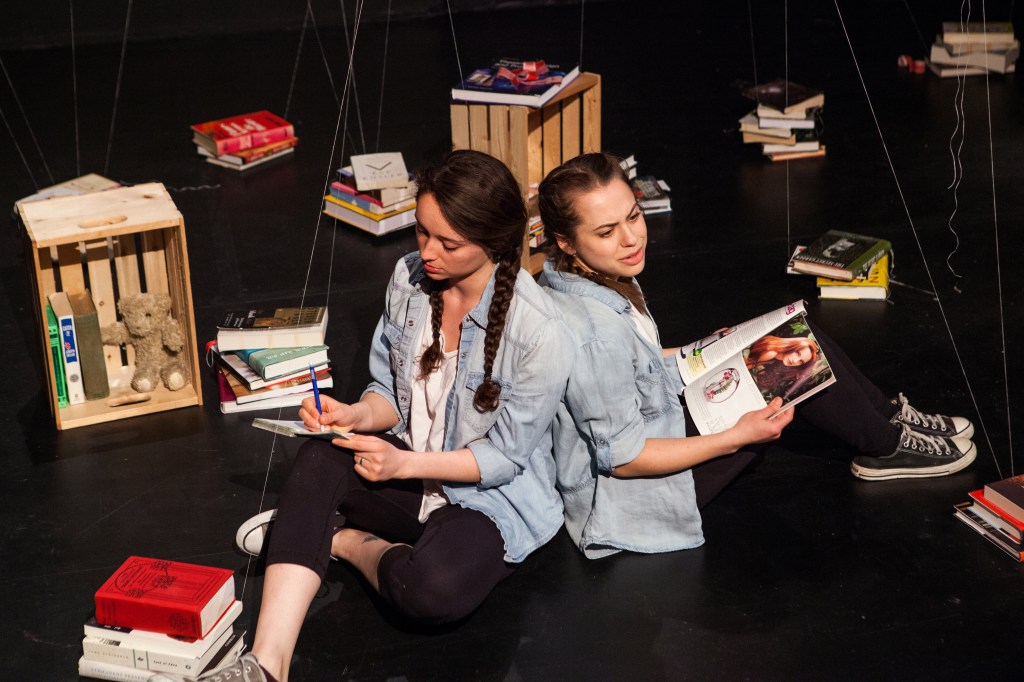
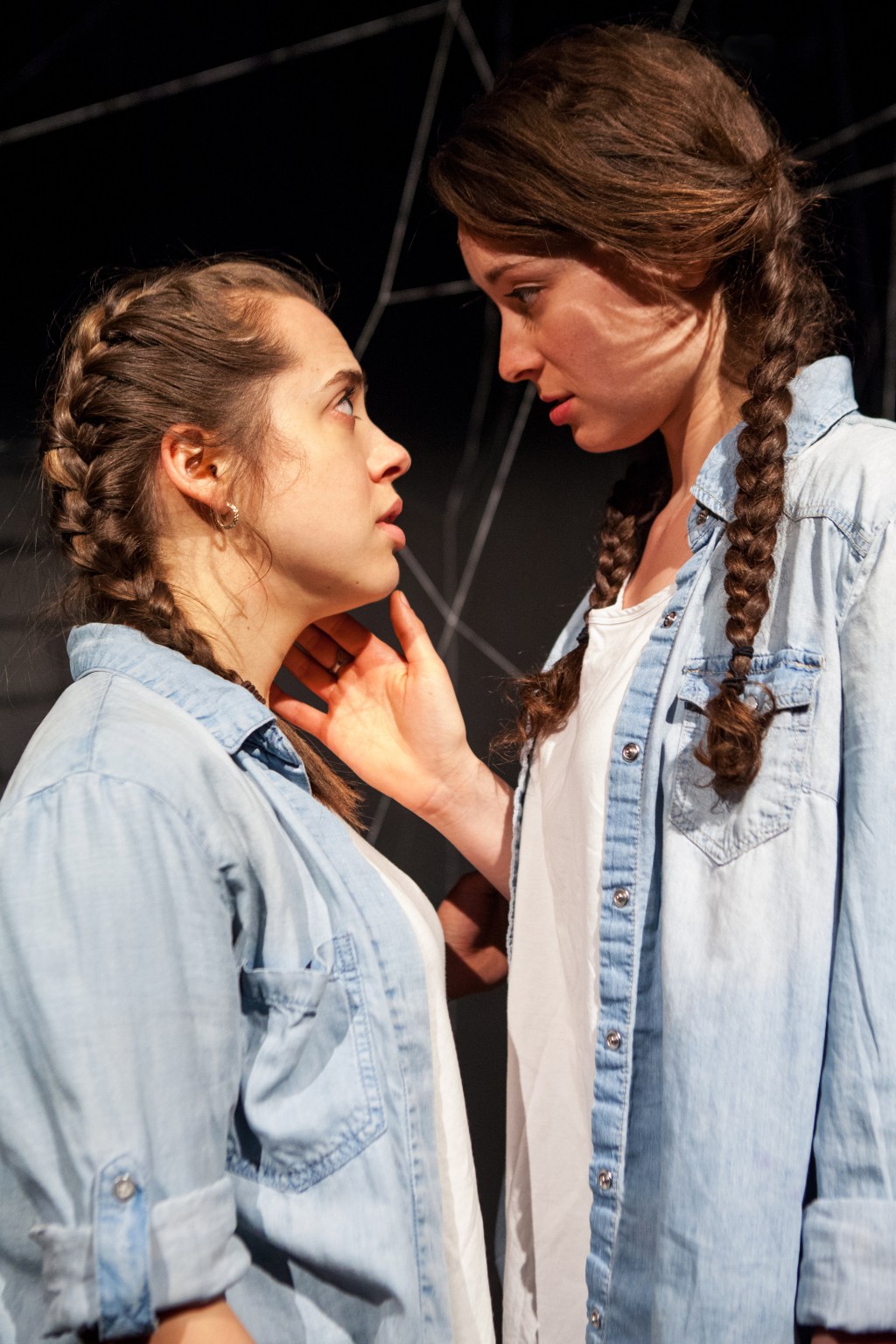
“Being a Teenager, Accepting Our Past & Self-Producing” In Conversation with Thalia Kane and Tamara Almeida on THE ’94 CLUB

Interview by Megan Robinson.

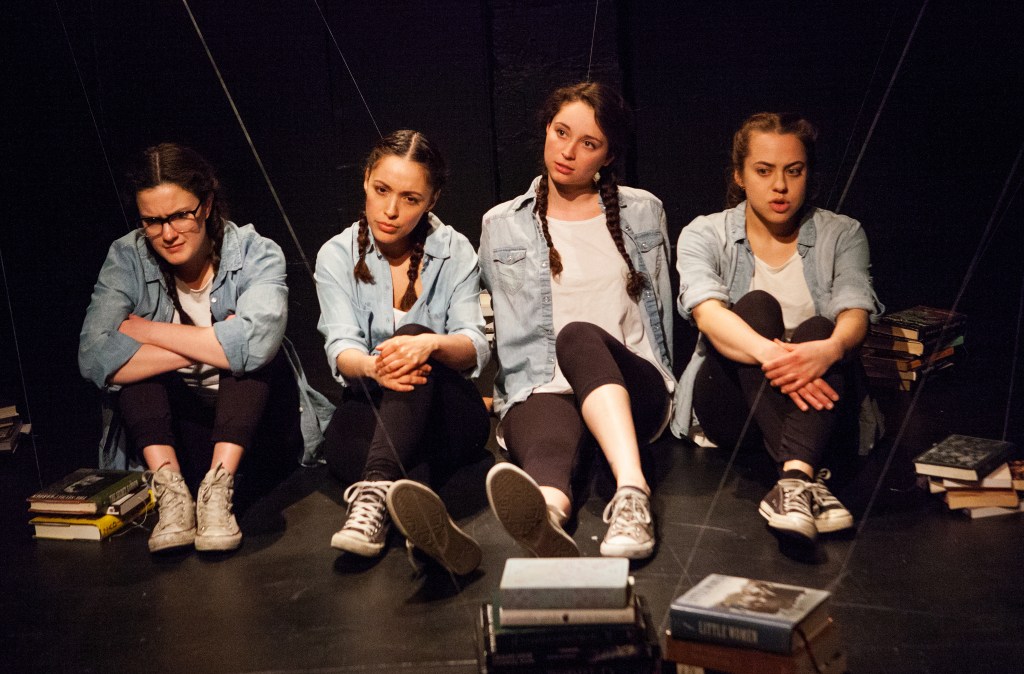
We sat down with playwright/actor Thalia Gonzalez Kane and actor Tamara Almeida to discuss their current production of The ’94 Club, playing now until May 12th at the Tarragon Extraspace. Inspired by real events, this exciting new play takes a look into the lives of four teenage girls, as they face the realities of growing up in a small-town and struggle to come to terms with their sexuality.

The ’94 Club may focus on female stories (it passes the Bechdel test) and have an all-female cast and crew, but at the end of the day, the themes are inherently universal.

“It’s about friendship and love and heart and compassion,” Kane explains.

“And self-discovery,” Almeida adds.

Not only is this Kane’s playwriting debut, it’s also what she considers her coming out play, which gives us even more to love about this self-reflective story. Doing our best to avoid any spoilers, we discuss what it was like to be teenagers, how to accept our past, and the triumphs of self-producing.

Megan Robinson: In your press release, you talk about self-reflection and telling stories from our past to make for a better future. First off, can you tell me a challenge that you may have faced in portraying teenagers and getting into that mindset again?

Tamara Almeida: It sounds silly but I love Lana Del Ray, and there’s this one line that she says about innocence lost. I keep going back to that. That I don’t know better yet. The part of me that knows how to protect myself now would never do some of these things. So a big part of playing a teen is going back to a time when you live on impulse and have fewer boundaries because you don’t know better.

Thalia Gonzalez Kane: We know better now, but it’s hard going back to a time when you threw caution to the wind and, also, to not judge yourself for that. It’s a struggle that came with the writing as well; some scenes were too self-aware. The fact is, it’s very easy to blame young people for things they do wrong or to accuse them of being a slut or to accuse them of being promiscuous but you can’t because they are too young to understand what that means and what that is. They need to learn over time. I think getting over the judgment of our characters was a challenge.

TA: I think it’s interesting in the same way that when I’m 50, I’m going to look back at something I did in my twenties and be like, I would never do that thing now, you know?

MR: Or even last week… I know better.

TA: Yeah! Like I know now not to drink that much tequila. But you don’t know that before you know that. I think that is cool to explore – before we knew, what did we do? That’s what I keep trying to go back to.

TGK: And just avoiding playing too young.

TA: And they’re smarter than we give them credit for. At fifteen-years-old, you’re already cunning and sophisticated and manipulative.

Photo Credit: Angela Besharah

MR: Can we talk about the differences between relationships as teenagers versus as adults, and what you wanted to explore about these relationships in your writing?

TGK: The relationship between the girls in the show is so sweet and beautiful. I found in writing that female friendship at that age is so pure and I think we lose a lot of that as we grow older. It starts to become about what do you do and what do I do and how do we help each other? And you do have those friends, and I have them, where you love each other, and that’s all you have, and you don’t need anything else. But, as teens, the love is so strong. You would do anything for one of your best friends, and you don’t question it. I mean part of the reason the club really gets going is because they don’t want to let anyone down and not be part of something that one of the girls has suggested. The scene where the club gets created is so sweet. “We are going to do something new together!” And they’re going to do it together. And that’s the point.

TA: I think the love is so pure at that age and that it really just comes from impulses a bit more. Whereas my friendships today are because I really want them, you know they mean something. We are a little more cautious about who we keep in our lives.

TGK: You have to make time now. In high school, you have lunch time and classes, and there are so fewer responsibilities.

TA: I wonder if we didn’t have to pay bills and have these responsibilities if it would be the same. I don’t know.

Photo Credit: Angela Besharah

MR: You’re self-producing the show. Can you tell me why you decided to do it this way?

TGK: A lot of people suggested SummerWorks and Fringe, and I didn’t love the idea of that much of a loss of control – not being able to choose the venue or choose my time slot. I don’t know how to say it… I didn’t want to just be a part of something. It felt too important to me. Also, doing indie theatre, I’ve worked on so many shows for free and I did it gladly but I think that it is becoming a problem because it’s just so expected. So with this show, one of the things I really wanted to make sure of was that every artist was paid a weekly salary. I thought in order to do that, I could self-produce and control it.

I’ve been fortunate to have a lot of experiences working with other theatres and learning from brilliant people so I was able to slowly figure out what works and what doesn’t and how to hire people and how to set up scheduling and stuff. It felt important as my first one to do it properly and suffer perhaps at times financially or mentally. But it feels very worth it.

MR: You said you’ve been lucky enough to do this because of all your experiences. Could you give three pieces of advice to someone out there who wants to put on a show that doesn’t have the same resources or experiences you’ve had?

TGK:
1. Ask.
People are so much more willing to talk than you realize. I’ve been able to foster relationships and valued friendships with people who I’ve just asked to have a coffee with and to pick their brain. Or just to ask them about themselves and their lives. From that I’ve been able to get so much experience. And with people reaching out to help. The amount of people who have offered to help me with this has been a bit surreal.

2. Commit yourself to fully doing it.
It’s terrifying but I wouldn’t have it any other way, because if this falls flat on its face and it’s a complete disaster, at least I’ll have put everything into it and I can feel really good and really proud of that.

3. Appreciate how lucky you are to do it.
We are so lucky to be in a city that supports indie theatre, and supports live theatre, and supports artists and young artists. It’s not out of the ordinary for someone to write a play and put it on.

MR: Tamara, when did you first read the script?

TA: Another cast member had conflicts and Thalia and I had met in a class so she sent it my way after it was complete and once the cast was set. I read it that night and messaged her back at 4 AM and was like “YES! I love it”. At first, it made me really uncomfortable.

MR: Can you unpack that for me?

TA: Yeah, high school is an interesting time. Some people love looking back… I didn’t. This just kind of struck a chord with the parts that I hadn’t uncovered again since leaving, the parts that are a little bit darker. Like who I was and the role I played in some of my friendships at that time, that maybe I haven’t wanted to be fully honest with even myself about. And it was interesting because the first time I read the script I thought it was a bit darker than what I was expecting. Then I read it again and I had a lot of compassion.

The biggest thing for me once I read it was asking: can I put myself aside and my ego aside and tell the truth about that girl? Because that girl exists.

MR: And that was hard because the girl reminded you of yourself?

TA: Yeah. I think… yeah. I mean all the girls do. The universality of Thalia’s writing is that all the girls are relatable. The reading was also kind of healing for me. To be able to go back and think about it and realize I’m not that person at all anymore. So let’s just open it up and really tell the truth and really go there. Let’s make sure these people feel uncomfortable.

Photo Credit: Angela Besharah

MR: Thalia, in writing it and now performing it, are you hoping for the audience to feel uncomfortable?

TGK: Yeah. I think it will cause people to reflect on themselves. One of my main goals is that I hope it will make people take a moment to look at how we treat others. And reconsider the next time they see a sixteen-year-old girl with a short skirt on and call her a slut, or say she’s asking for it. Because there is so much more to these people. In the play there are things you learn about the girls, and there are reasons that they act in certain ways and these are human reasons that we’ve all faced. There’s a big love story and that’s a universal love story. People can identify with those feelings of being so in love with someone who you have no idea what else to do about it except for proclaiming it.

But yes, people are going to feel uncomfortable when they see the show but it’s also healing in certain ways.

MR: And what is it exactly that will make them so uncomfortable?

TA: I think just looking at sexuality at such a young age. I think we don’t talk about it, other than sexualizing young women, we don’t talk about what that’s doing to them. The discovery of sexuality…

TGK: … and how misguided that is. No one tells them.

MR: Except your friends?

TA: Yeah, and then you rely on your experienced friend because you’re like, please tell me why that felt so good, what was that? And then, what happens if you have the wrong person leading the train, and that can derail…

TGK: In the show, each girl has their own thing that they have to confront. And it’s hard and what’s hard is that it’s the reality of a lot of people’s circumstances. There isn’t really an answer in the end, it’s just presenting the realities of our world that we don’t really look at.

TA: With this situation, you have some young girls who found themselves in trouble, which maybe could have been avoided if they were guided a little bit differently. And that’s accountability. Maybe we’re all complicit in what’s happening.

TGK: If the adults in their lives weren’t too scared to talk to them about what the realities of growing up are at that time, or when they’re curious, to talk to them and not just to sweep it under the rug.

THE ’94 CLUB

Who:
Written by: Thalia Gonzalez Kane
Cast: Tamara Almeida, Jeanie Calleja, Shaina Silver-Baird, Thalia Kane, Lily Scriven
Directed by: Monica Dottor

What:
After starting a dangerous game that rapidly spirals out of control, a group of teenage girls quickly begin to learn about the struggles that come with womanhood as they strive to come to terms with their own sexuality.

Based on true events, THE ’94 CLUB explores gender politics, sexuality, coming of age, queerness and the harsh realities of growing up in a small town. As our society grows into one of openness and understanding, it is important we hear these stories of oppression and pain. It is important we acknowledge our past and work to amend the future. Without self-reflection, we will not be able to better ourselves and our world.

“It’s just a game. I’ll tell you the rules and then we can play…”

When:
May 1st-May 12th
Tue – Sat 8pm, Sun 2:30pm

Where:
Tarragon Theatre Extraspace, 30 Bridgman Ave

Tickets:
$15 Previews, $22 Artsworker/Student, $30 Regular
tarragontheatre.com

In Conversation with actor Jeff Yung on MEASURE FOR MEASURE with Shakespeare BASH’d

Interview by Bailey Green

Jeff Yung is an actor, poet, tricker and martial artist. We met in the Fall of 2015 when we performed in the Shakespeare BASH’d production of King John. This week, BASH’d returns to the Junction City Music Hall with Measure for Measure, directed by Associate Artistic Director Catherine Rainville. With Jeff taking on the role of Claudio, it was the perfect opportunity to speak with my partner about his experience working on Measure for Measure, his history with BASH’d, and why he loves performing Shakespeare for contemporary audiences.

Bailey Green: So, how are rehearsals going? How are you feeling about Opening?

Jeff Yung: Rehearsals have been going well! We’re doing runs of the show so it’s really nice to have the whole cast in the room. I feel like we’ve just gotten to the place where the whole room feels that sense of ‘there’s the show’ with all of the pieces coming together. Now it’s just about repetition, and as Catherine said, connecting the dots we’ve laid out for ourselves. I’m feeling good about opening, I think we’re in a great place and we’re ready to move into the venue and feel that shift of bringing the whole show to the next level.

BG: What did you know about Measure for Measure beforehand?

JY: Funnily enough, Measure for Measure was one of the main stage shows my graduating class did at Ryerson University. Many BASH’d alum, including Co-Artistic Director James Wallis, were in that production, so I knew the plot pretty well and how topical it would be. What’s been surprising is how I view many of the characters and circumstances so differently in light of how the world has changed since we did that school production.

BG: So for those who may not know the plot as well (myself included), whats the story and how does your character fit in?

JY: Catherine has this great way of describing Measure for Measure as a weird Shakespearean version of Undercover Boss, which is a pretty apt description. A Duke in Vienna goes away and temporarily suspends his power to Angelo, a man known to be noble, honest and good. Though it is “strewn in the common ear” that the Duke is far away he is, in fact, disguised as a Friar and moves about his city engaging with the citizens to see if giving power to a man with such a great reputation will corrupt him and bring plight upon the city. My character Claudio’s actions are the ones that call the conflict into the play. In world of Measure for Measure, pre-marital sex is illegal and punishable by death, despite the fact that nearly everyone does it. Under the Duke’s rule, no one has been charged nor punished for such an act, and in fact, brothels are common both in the city and the suburbs. Claudio has had sex with a woman named Juliet who is basically his wife, only they haven’t yet done an official marriage ceremony, so technically, they’ve committed a crime. With the Duke gone, Angelo brings back enforcement of these old laws and arrests Claudio and sentences him to death. It is at this point that Claudio asks his sister Isabella, a novice nun about to enter into the sisterhood, to make a case for Claudio’s life.

BG: What has it been like working with Catherine as a director, as most (if not all) of the BASH’d shows you’ve been in were directed by James Wallis?

JY: Yes, every BASH’d show I’ve done has been directed by James prior to this one! It has been wonderful to work with Catherine. She has a very strong vision and knows how to bring it into the room, while still being very open and flexible to trying different things. This play is complex and messy in many places and Catherine has done an outstanding job leaning into the messiness and finding ways to make it work well with the story we are trying to tell. I also feel like there are so many different energies and personalities in a cast as big as ours, each individual actor has their own unique process and needs and Catherine has been really open and patient with all of us.

Bailey Green (left), Jeff Yung (centre) in KING JOHN. Photo Credit: Kyle Purcell

BG: The last time you performed in this space was when we were in King John. How has your life changed since that show?

JY: Haha good question…My life has changed a lot since King John. I’ve moved into a new neighbourhood, become the co-caregiver of a trouble-making, loveable cat named Puck, done some pretty cool acting gigs and tried to take steps towards growing into the best (or at least better) version of myself. Through it all, the greatest privilege, honour and joy has been to have you in my life as a partner (and yes I can hear the collective groan of your readers), but truly through all of the triumphs and defeats that have come my way since that show, I am so beyond grateful that I had you to share it with. Is this too much?

BG: Im gonna keep it. So, why do you love Shakespeare?

JY: As an actor I find the challenge of making Shakespeare’s text comprehensible to a contemporary audience is one of the things I love. Every time I approach a Shakespeare show it is like having to assemble a complex piece of IKEA furniture before you can actually play around with it.

BG: Youve known BASH’d Co-Artistic Directors James [Wallis], Julia Nish-Lapidus and Associate Artistic Director Catherine [Rainville] for years now. How has working with BASH’d changed over time? What do you enjoy the most about working with them?

JY: I think one of the greatest things about BASH’d is how the heart of every show has been the same. They’ve moved to different bars and enlist the talents of many other talented individuals in the company, but at the core it’s a group of committed artists, telling their clearest and most connected version of Shakespeare’s story, in a bar. There’s something about the simplicity of that that’s immensely difficult. You really have to use the tools given to you, which is your text and your body. And then you’re in a bar, so you have to contend with the space and its limits. But I think the combination of the space and tools is what makes BASH’d shows so deep in the work, and ultimately what makes the shows really stand out and come together so well. I honestly love watching the work of the other actors. Every actor brings something different to the characters they play, and it’s incredible to see someone’s journey to craft those characters. I am very grateful to have been in a BASH’d room so many times to witness the coming together of some really great shows.

BG: Three Shakespeare roles you’d like to tackle?

JY: I’d love to play Iago, Henry V, and also maybe Coriolanus? Those are the ones for now at least, I’m sure that will change with age and experience.

Measure for Measure

Who:
Directed by Catherine Rainville
Featuring: Geoffrey Armour, Olivia Croft, Sochi Fried, Melanie Leon, Tim MacLean, Michael Man, Megan Miles, Drew O’Hara, Cara Pantalone, Lesley Robertson, David Ross, Jeff Yung
Associate Director: Drew O’Hara
Stage Manager: Darcy Haywood Stoop
Producers: Julia Nish-Lapidus, James Wallis
Marketing Design: Kyle Purcell

What:
“To whom should I complain? Did I tell this/Who would believe me?”
Shakespeare’s story of sexual politics, consent, power, and corruption is given a barroom staging at Junction City Music Hall.

Where:
Junction City Music Hall
2907 Dundas St. West, Toronto

When:
ONE WEEK ONLY
May 1-6, 2018
Tuesday, May 1 – 7:30pm
Wednesday, May 2 – 7:30pm
Thursday, May 3 – 7:30pm
Friday, May 4 – 7:30pm
Saturday, May 5 – 2:00pm
Saturday, May 5 – 7:30pm
Sunday, May 6 – 2:00pm

Tickets:
www.shakespearebashd.com
$20 online
$25 at the door (pending availability)


“Recovery from Trauma, The “R” Word & the Power of Being A Storyteller in This Moment” In Conversation with Actor Tamara Podemski on THE MONUMENT at Factory Theatre

Interview by Bailey Green.

We spoke with award-winning Ojibway actor, dancer and singer/songwriter Tamara Podemski about playing the role of Mejra in Colleen Wagner’s Governor General award-winning play, The Monument. The Monument tells the story of a soldier, guilty of war crimes and fleeing from a death sentence, who gives himself over to a woman who has endured the horrific trauma of war. Factory Theatre’s production, directed by acclaimed Métis director Jani Lauzon, frames the play within the context of the centuries long war against the Indigenous people of Turtle Island. We spoke with Tamara about recovery from trauma, ‘the R word’ (reconciliation) and finding joy in darkness.

Interview has been edited for length and clarity.

Bailey Green: What was your relationship to The Monument prior to beginning this production? Had you seen other productions?

Tamara Pondemski: It was a brand new experience. I had heard it referenced as it is a famous play but I had never seen it, so I didn’t know it well enough to know what indigenizing The Monument meant, when it was presented to me.

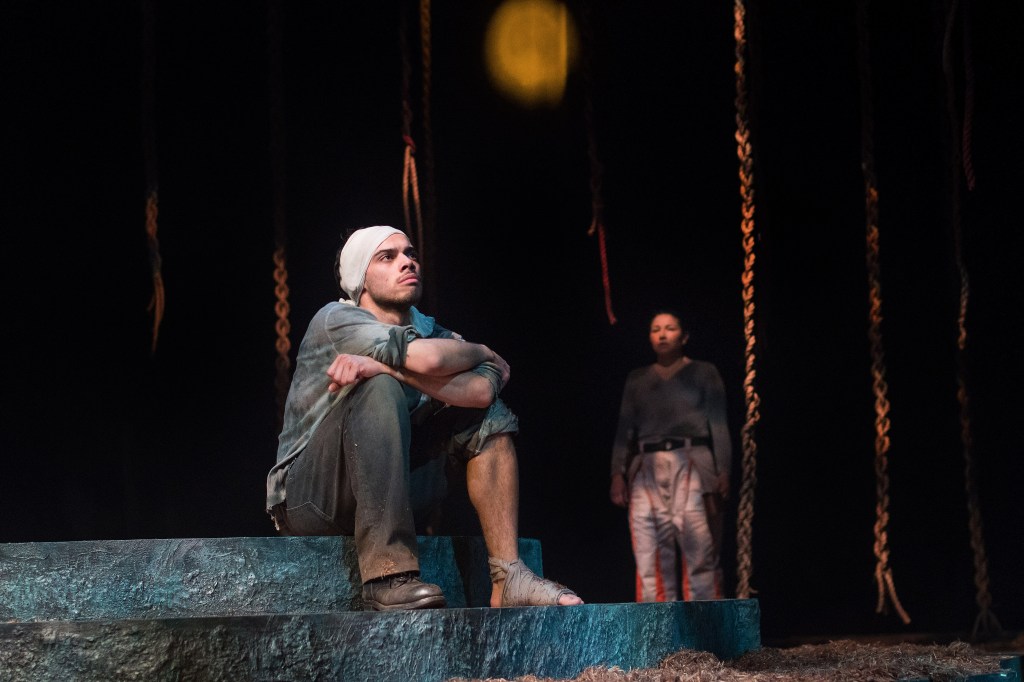
The Monument – Augusto Bitter and Tamara Podemski – Photo by Joseph Michael Photography

BG: Tell me more about your reaction reading the script for the first time, looking at the play through the lens of the war against the Indigenous people of Turtle Island.

TP: It’s very current. As an artist, an activist, and working in the Native community, this is the work I have been doing with Native youth, Native women, and conversations in my family. So there was nothing brand new but what was most exciting was that we would be able to explore this alternate method of storytelling. And through this transmission of knowledge, we would be able to shift this colonial narrative. The theatre just offers this beautiful alternative way to communicate really complex ideas without people feeling that it is stuffed down their throats. The power of the text is the power of the text, but what we are infusing into it is that different perspective, an indigenous injection into the work. The play wasn’t meant to be about war against Native people, but I believe it really does work and Jani [Lauzon] and Factory believes it works. It isn’t really a far stretch when you understand that a 500 year silent genocide has happened. When that is your experience, it’s not hard to see how The Monument fits. What is going to be really interesting is to see how ready people are to accept that that is what has been going on.

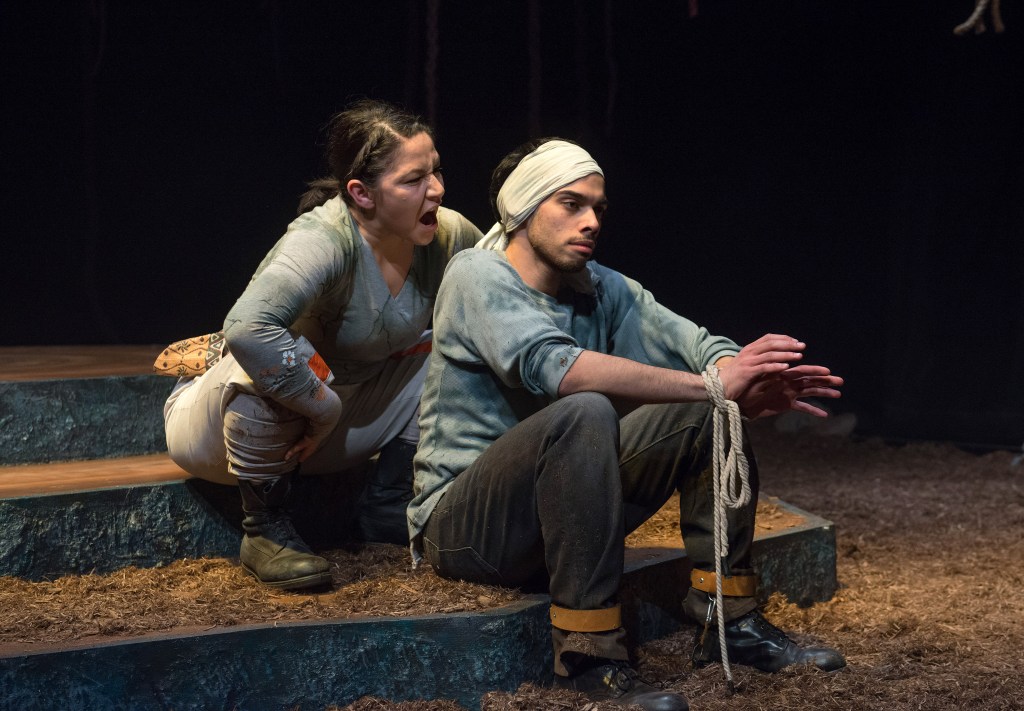
The Monument – Tamara Podemski and Augusto Bitter – Photo by Joseph Michael Photography

BG: Absolutely, I feel theres a resistance among settlers to revisit this history, theres willful ignorance there.

TP: Yes, and the sales pitch of Canada to the world is that we are this peaceful, equal, human rights focused and forward-thinking country. So it’s disrupting these notions to remind people that blood has been spilled here and it has been going on for longer than 150 years. We need to shake up their concepts of what it is to live in a country of war, the last place in the world people would say had participated in a war like this, and it’s an active war.

The Monument – Elahe Marjovi_s set design for The Monument incorporates conceptual imagery from The REDress Project. (Founder Jaimie Black www.theredressproject.org) – Photo by Joseph

BG: Tell me more about your character, what about her do you identify with?

TP: Mejra is a mother whose daughter has been murdered. She wants answers, she wants a resolution, she wants to find a place in her heart where she can reconcile the pain, anger and forgiveness with the perpetrators. I relate to her on so many levels because mostly in her application of how she tries to get the answers. She is so emotionally raw, she is very triggered and I relate a lot to that trauma response. I don’t often have the advantage of well thought-out behaviour or response. It’s very reactive and I understand that very well. As the granddaughter of a residential school survivor and the granddaughter of a Holocaust survivor, they passed that knowledge down to their children and we as a second generation of survivors have inherited that trauma. And we have the luxury to talk about it, my parents didn’t have that. We have a safe space to be able to process it. Recovery is more acceptable now and that wasn’t the experience of my parents.

I’m slightly different from Mejra, as she is very isolated in her grief and trauma. And in that one sense [she] isn’t reflective of how we grieve as Indigenous people – it is very communal. In a way that allows Mejra to be even worse off because she doesn’t have her community and is cut off. She is going through the grief on her own, which is why the need of another person with Stetko and also why they are perfectly matched. There’s a form of reconciliation, oh there’s the “R” word, but it is a beautiful example of it. And it’s a lot uglier than people want it to be. It’s ugly and messy and very triggering.

The Monument – Tamara Podemski and Augusto Bitter – Photo by Joseph Michael Photography

BG: What has been the most challenging aspect of working on this production, with triggering subject matter?

TP: This might sound a little weird…but nothing. I had prepared for a very difficult rehearsal process but what Jani has created is one of the safest spaces of creation that I have ever experienced. We start with each day with a smudge, as we are working with spirits and we’re asking the murdered and missing spirits of our sisters to be with us onstage. We have a responsibility to do that work in a respectful and culturally appropriate way. We’re considering our role as storytellers, the connection with each other and with our Creator, however you may define that. There is a safety that is created and it allows the strength and security to go to those places. For me, I’ve never done a two-hander so the stamina required, it’s more lines that I have had to work with, more time on your legs. You’re going non stop for the whole play. But that is just practical. Emotionally/spiritually I have been very supported by Jani and by my brother Augusto [Bitter, who plays Stetko]. Every day is joyful and an incredible experience. We are really privileged to be actors at this time. It’s a critical time as story tellers, to have this other access point to people’s minds and hearts when people are zoned in to their phones, tuning out of a quite oppressive world. It’s our job to crack open people’s hearts and minds.

The Monument

Who:
Written by Colleen Wagner
Directed by Jani Lauzon
Starring Augusto Bitter & Tamara Podemski

What:
The Monument tells the story of a soldier desperate to escape death for his war crimes who agrees to give himself to the complete servitude of an unknown woman. A harrowing and visceral journey of two people forced to confront the atrocities of war, this Governor-General’s Award-winning play asks questions that remain painfully familiar on our front pages today.

Re-imagining the conflict as the silent 500 year war that has been waged against the people of Turtle Island since European colonization, Lauzon’s lens on Wagner’s classic play will confront many of the dark and uncomfortable truths of Canada’s complicity around missing and murdered Indigenous women.

Where:
Factory Theatre Mainspace
125 Bathurst Street, Toronto

When:
March 15-April 1, 2018

Tickets:
factorytheatre.ca