Skip to content

Posts tagged ‘Artist Profile’

Artist Profile: Anthony MacMahon, playwright of “Trompe-La-Mort, or Goriot in the 21st Century” at SummerWorks 2016

Interview by Brittany Kay

I had the pleasure of sitting down with Anthony MacMahon to discuss his new play Trompe-La-Mort, or Goriot in the 21st Century premiering at SummerWorks. We spoke about his love for the festival and his way into writing through adaptation.

Brittany Kay: Where did the idea for this play start?

Anthony MacMahon: The idea for this play started when I was reading Thomas Picketty’s Capital in the Twenty-First Century. It’s a pretty dry book. It sits somewhere between a regular non-fiction and an economics textbook. There are continual references to literature in this book and how literature captures the spirit of an age. He talks about this book Le Père Goriot by Honoré de Balzac, which is about a very wealthy vermicelli vendor and his two daughters who live in this common house with a young man named Eugene, who’s studying to be a lawyer. The entire book is about how this young man Eugene has worked so hard for everything and even if he is the best lawyer in all of France, he’ll never make as much money as this vermicelli salesman. And despite this vermicelli salesman being the biggest vermicelli salesman in Italy and France, he will never have as much money as a queen, a king, or a prince or a duke. This was very reflective of the age.

I was reading this book in Paris and I was on a train and saw a guy get pick-pocketed and I also saw the after effects of the pickpocket. I saw him get bumped, the wallet stolen, and then I saw him start screaming at his daughter who he was with because she was the one who had gotten them on this train in France. She was living in France and was British and the father was visiting from the countryside and was carrying a giant thick wallet in his back pocket. Seeing this in my surroundings now, and reflecting on how the economy affects people at any given day, I was inspired to update the book and to set it today. It’s the same characters, the same kind of action, but it’s modern and they’re dealing with modern problems. So rather than someone studying to be a lawyer, they’re trying to be a programmer, and rather than someone having made all their money off of vermicelli, they make their money off of the stock market. I tried to make it a thriller because the book is actually quite thrilling and that was how I got to the script stage.

Photo Credit: Dahlia Katz

Photo Credit: Dahlia Katz

BK: What has been the process in mounting this play?

AM: I went through a bunch of ideas of how I could do it.

At one point, I sat down and wrote an entire scene and got to this one line, which encapsulated my whole theory about how this play works. I wrote the rest of the play in about a week and a half, and it actually hasn’t changed that much since. I went through about 10 different versions before that one scene came together and then from writing that scene, it organically fleshed itself out into a full play.

BK: Has the play gone through any workshopping or dramaturgy or is this the first kick at the can?

AM: This is the first kick at the can. I normally do the very standard playwriting process of two drafts and then a dramaturg and then another draft and then another dramaturg and then a two-day workshop and then a five-day workshop and then potentially a festival performance. This script was really written in about two weeks and has been edited and changed since then. Its workshop development is this production.

trompe la mort image

BK: Why SummerWorks?

AM: SummerWorks has always been good to me. SummerWorks is why I moved out to Toronto. I got in while I was still living in Saskatchewan and as a result, I kind of love doing it. I have a soft spot in my heart for the festival and I think the festival has a soft spot for me. I’ve gotten in every time I’ve applied now. I think it’s a place that really encourages people to fail boldly and, in that failure, you can have some great successes.

It gives you enough infrastructure so you’re not an absolute disaster of a person trying to figure out how to rent space and hire someone to sell tickets for you. It gives you just enough infrastructure so that you’re not constrained in any way, which is kind of why I chose it. I’ve always just met the most exciting artists working at SummerWorks. It’s August, it’s on Queen West, it kind-of feels like a vacation in the city to do this cool festival downtown. That’s why I chose it.

Photo Credit: Dahlia Katz

Photo Credit: Dahlia Katz

BK: Tell me a little bit about your team involved.

AM: Ted Witzel is our director. I think he is the coolest artist in Toronto. He just kind of bleeds cool. I wanted someone who doesn’t bore me in any way and nothing he has ever said or done has ever bored me. That’s kind of why I sought him out. We’re working with Anahita Dehbonehie, CJ Astronomo and Wesley McKenzie for our design team. It’s a big design for the show. We’re really trying to push SummerWorks to its design and structural limits. So we have 2 projectors, we have things on rails and guides, and we have 5 giant pieces of plexiglass hanging from the ceiling with like a neon light show and potentially smoke. Wesley, CJ, and Anahita are people who can really move astoundingly fast. They have this incredible way of taking these giant visual ideas and putting them onto paper in a 6 hour tech time. The cast is Mark Crawford, Farah Merani, Lindsay Owen Pierre, Ewa Wolniczek, and Jeff Yung. It’s a really great cast. A lot of the kind of directorial atmosphere that Ted gives them and that they run with, is what can I get away with as an actor? It has created such a playful atmosphere. Michelle Yagi is producing and she’s great. Having someone know what they’re doing and with her kind-of organizational mind and ability to plan and hit dates and targets just gives the rest of the team so much more opportunity to create much more positively. Justis Danto Clancy is our Production Manager. Alana Dunlop is our stage manager and has worked with Ted before so she knows how to manage his big ideas.

BK: What are you hoping audiences walk away with?

AM: I hope audiences walk away from the show debating it. The show is a debate essentially, or 5 or 10 debates really. I try not to be too prescriptive or too partisan or soap-boxy for lack of a better term. I want to present these things that I’m actually grappling with. I think we’re trying to grapple with some pretty big ideas and I want the audience to have the second act of the play being them grappling with these ideas that we’re presenting, whether it’s in the courtyard after the show, or at the bar, or after another show they see that informs a different version of these ideas. Ideally, I just want them to walk away talking about it. That would be my big hope for the show.

trompe mask

BK: Now let’s talk a little bit about you.

AM: About me?

BK: Yes, you. What propelled you into playwriting?

AM: I kind of tripped and fell into it. My friend Nathan Howe was doing a show that he had written at the Saskatoon Fringe Festival and I asked him if I could be in it. He had already cast it, so I decided I would write a play so that I could cast myself, because I wanted to do a show. I ended up not actually being allowed to be in the play because my director dropped out so I had to take over as director. Then I just started writing more. I just continually tripped and fell into things, which is the dumbest, luckiest thing in the world. I just happened to find out that I wasn’t a particularly skilled performer and my way of performing was all through literature and writing and all through trying to organize ideas as words.

I lobbied for a playwriting course in my university and I ended up doing a couple of public readings in a little reading series in Saskatoon. It was really cemented for me when I was producing Vern Thiessen’s, Vimy and I saw that he was the senior playwright at the Banff Centre. I had an early draft of Wild Dogs on the Moscow Trains and I really wanted to meet Vern, so I submitted. I ended up getting a call as we were producing Vimy saying, “Hey, here’s when you’re coming to Banff. “ At that point I realized I wasn’t going to be doing much acting anymore. I guess I was going to start writing.

BK: How did you figure out that this is where you needed to be?

AM: I think I had one of those stories that’s pretty common among artists, where you have a lot of teachers that don’t inspire you but then you have a drama teacher that does inspire you. His name is Blaine Heart and he’s a fantastic man out in Saskatchewan. He was our drama teacher but also performed in a local improv group in the city and he would perform in local plays. He was just such an inspiring guy, so great to be around, and he kind of took me under his wing. His friend from university, Jim Guido, ended up coming back and teaching in the university there. Blaine told me about Jim and said “You have to go into drama, at least just to take a class from Jim because he’s such an interesting guy,” which ended up with me taking a bunch of classes from Jim and him taking me under his wing, as well, in a different way.

BK: And how was your experience in the University of Saskatchewan’s theatre program?

AM: The theatre program was quite an academic program. You had to take a fully rounded education in the department as well as a fully rounded liberal education outside of that. The people who went to the University of Saskatchewan had a lot of freedom. We had a fully equipped black box studio and we were allowed to put on plays whenever we wanted. We could stay in the building until 2 or 3 in the morning rehearsing shows. In the time I was there I think I did twenty-four shows in four years. A lot of them were short pieces, but you just had consistent performance opportunity. I ended up doing lighting design for two shows because they didn’t have a lighting designer and I was trained on how a lighting board works. You got a really holistic sense of the theatre almost accidentally. It’s a great model of how Toronto theatre or any kind of theatre works. People always have to take a second, third, or fourth job on the production. It was a really good training example of how that all works.
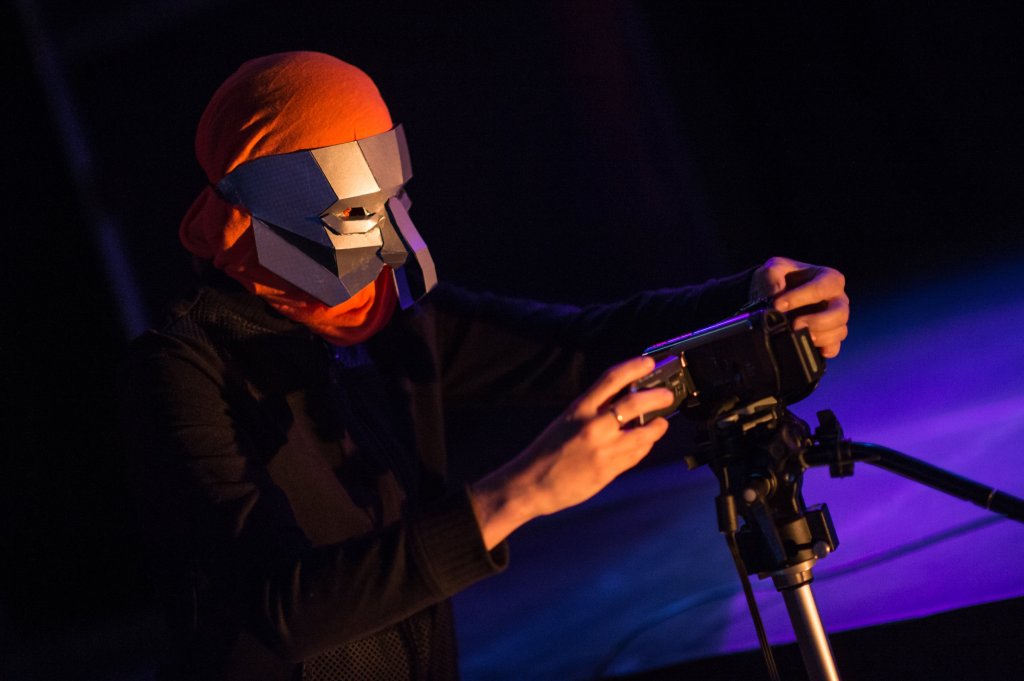
Photo Credit: Dahlia Katz

Photo Credit: Dahlia Katz

BK: When did you move to Toronto?

AM: I moved to Toronto in the summer of 2012. I was working on the show The Frenzy of Queen Maeve at the Saskatchewan Playwright Centre. I had read all of Hannah Moscovitch’s plays and I saw that they were all done at SummerWorks. I knew a bunch of other playwrights at SummerWorks and I figured that I would submit. I did and was accepted. I was considering either moving to Toronto or Vancouver because the Saskatoon theatre community is somewhat small. When I got accepted into SummerWorks, I decided that’s where I was going.

BK: When did Soulpepper happen?

AM: The program began in 2013. It kept me in the city. I’m happy with Toronto. I like this city a lot.

BK: How do you find inspiration for your work?

AM: I do a lot of adaptation… sometimes from literature. In this case it’s kind of literature and non-fiction. My way into writing, especially in the last couple of years, has really been about as a playwright trying to make a case for yourself in the theatre. I’ve always said “playwrights are the only people in the world who can have a dead person do their job,” in that if you can’t make a proper case for why your show should be done, people will just do Shakespeare or Ibsen or all the thousands of dead playwrights that are out there, who don’t have to be paid and have a name cache behind them. My way in is often through (whether or not it’s an adaptation) literature or non-fiction, it’s a hat tip towards it. I can interface with these old problems or these new problems and I can make them theatrical.

BK: What’s your process when you write?

AM: Usually I’ll do a lot of structural work beforehand… plot out scenes and find major action in the scenes. I’ll often work backwards writing a play. I figure out where I want a play to get to and then sometimes I’ll have where I want it to start and I’ll just fill in the middle. Generally, it will be a bunch of work that amounts to nothing and one line or one phrase that finally does something and that’s when I’ll pick that thing up.

BK: Do you find ways to keep yourself motivated?

AM: No… If you have any I’d love to hear them.

Deadlines are the best one. There’s always an internal motivation about just wanting to create something and wanting to show something. The best motivation besides deadlines, for me, is actually having a problem that I’m grappling with. If I am being dogmatic in my writing then I just get tired of it, whereas if I’m confused about why I’m writing something then that tends to just make me start writing it to try to work it out. I’m better at working things out on the page than I am verbally. Debating with myself on the page is the best way to do it.

BK: Do you have advice for emerging artists?

AM: I still consider myself one. The best thing that I have found as an artist is to not be afraid to ask. I never met Ted before I did this show. I sent him an email asking if he wanted to direct. You can get very far just by asking. The worst that’s going to happen is that they are going to say no.

Rapid Fire Question Round

Favourite Movie: Taxi Driver.

Favourite Play: Light Shining in Buckinghamshire by Caryl Churchill.

Favourite Musical: Assassins.

Favourite spot in Toronto: East Side Riverdale Park.

Favourite Food: Good pasta.

What are you listening to: I’m getting into electronic music for the first time in my life.

Mantra/Best advice you’ve ever gotten: Quit trying to be cool, start trying to be good.

TROMPE-LA-MORT, or GORIOT IN THE 21st CENTURY

trompe la mort image

Who:
Company – Live Lobster Theatre
Directed by Ted Witzel; Written by Anthony MacMahon; Set and Costume Design by Anahita Dehbonehie; Lighting Design by CJ Astronomo; Projection Design and Sound Design by Wesley McKenzie.

What:
An anarchist holds the world’s secrets on a hard drive. Three developers try and disrupt stagnant markets, missed connections, and freedom of speech. A venture capitalist finds his profit in the rubble. The old world is dying, and the new world struggles to be born: now is the time of monsters.

A loose adaptation of Honoré de Balzac’s Le Père Goriot smashed up against Thomas Piketty’s Capital in the 21st Century asking what’s the difference between terrorism and whistleblowing? What’s the difference between a human being and a start-up corporation? What is the difference between freedom and control? This digital age thriller explores what happens when your work life, relationships, and ideas are reduced to data processed in an app.

Curator’s Note
“‘After studying the world very closely, you’ll see that there are but two alternatives–stupid obedience or revolt.’ – Honoré de Balzac, Père Goriot

Anthony MacMahon, my favourite young commie playwright, has come to similar conclusions. This smart, fast, and funny play drops Balzac through the trapdoor of global capital.” – Guillermo Verdecchia

Where:
Factory Theatre Studio
125 Bathurst Street
Toronto

When:
Thursday August 4th 5:00 PM – 6:30 PM
Friday August 5th 9:00 PM – 10:30 PM
Sunday August 7th 7:15 PM – 8:45 PM
Monday August 8th 6:00 PM – 7:30 PM
Tuesday August 9th 10:30 PM – 12:00 AM
Saturday August 13th 8:00 PM – 9:30 PM
Sunday August 14th 4:15 PM – 545 PM

More Show Info:
summerworks.ca/trompe-la-mort/

Tickets:
summerworks.ca

Connect:
instagram – @livelobstertheatre
#trompelamort
#SW16

Artist Profile: Anusree Roy – Playwright & Performer of “PYAASA” at Theatre Passe Muraille until March 27th

Interview by Brittany Kay

I was lucky enough to sit down with my own personal mentor and friend, Anusree Roy, to talk about her upcoming production of Pyaasa opening today at Theatre Passe Muraille. In her dressing room, we spoke about the discipline it takes to be an artist in this business, the challenges of a remount, and her deep gratitude for Theatre Passe Muraille.

Anusree Roy in PYAASA. Photo Credit: Michael Cooper

Anusree Roy in PYAASA. Photo Credit: Michael Cooper

BK: Tell me a little bit about your show?

AR: Pyaasa is set in present time in Calcutta, India and it’s a play I wrote starting in 2006… so 10 years ago. It’s something that I’m coming back to, which I’m really excited about.

Untouchability is something that is constitutionally banned. Doctor B. R. Ambedkar, who was an untouchable himself, put forth this constitutional change. You can’t practice untouchabililty, but in India it’s very widely practiced. It’s changing, absolutely, but the caste system still very much exists.

When I wanted to write a play, I wanted to look at the world, that world, the caste system world, acknowledging my social location in the system, which is a higher caste person. We had untouchable people clean our toilets all the time and we treated them really badly and I treated them really badly because that’s the environment of the society you were raised in. Pyaasa is a journey about this beautiful young girl named Chaya and her life story in ten days, beginning to end of the show. She’s a girl who’s young, bright and wants to go to school desperately. That’s all she wants. It’s a fun show and it’s a heartfelt show. It’s also a sad show and a truthful show.

BK: It’s just you on stage. Is this is a one character show, or a show with many characters?

AR: I play four characters. Chaya, Chaya’s mother Meera, this other servant lady named Kamala, who both work for Mr. Bikash. So it’s 2 women, 1 man and 1 girl.

BK: Why the title Pyaasa?

AR: Pyassa means thirsty. There’s a lot of water and water nuances all through the play. The name came to me. It wasn’t something, where I was sitting there going what should I name my play? I just thought of it because subconsciously I was aware of the amount of water in the show. I think if I were to analyze why the way it works in the caste system, in the villages that are in the rural areas, our water tank is sacred because I’m from the higher caste and your not and you can’t get water from mine. There are a lot of disputes about water, which is a necessity in life. So when you cut something off that’s a necessity in life, it becomes even more important. The name came to me and I stuck with it. It’s allowed us to kind of really look at the play through that lens.

Anusree Roy in PYAASA. Photo Credit: Michael Cooper

Anusree Roy in PYAASA. Photo Credit: Michael Cooper

BK: There was a lot of development with this play in its first edition. What were the steps and processes it went through? Before this remount, how did it come about?

AR: In 2006, Thomas (my director), David (the designer of the show) and I were doing our masters together. I was having sushi with Thom and I was telling him about my life story back in India and telling him story after story about my past.

At one point I was talking about the untouchables, the caste system, and how it’s abolished but how it still exists and he stopped me and said, “There’s a play there. You know there’s a play there right?” I was like “yeah, okay.” And he insisted on saying, “No, there’s a play there and you have a three week deadline to get me a first draft.” I’m doing my masters and I have sixteen papers due, but he just kept on saying, “Get me a first draft in three weeks.” So in three weeks, I gave him the first draft and ironically, 90% of that first draft is what’s in the show today.

BK: If anyone can work under pressure, it’s you.

AR: It just came together. I felt so passionate about it. When you play a solo show, it’s not about how good your storytelling is, it’s all about how distinct each character is. Thom and I, while creating the show, did a lot of that character work. David, Thomas and I created a company together and we did our first one-night-only here at Theatre Passe Muraille. TPM was in a financial strain at the time and whatever money we raised, we gave it to them. We wanted a production space, so it seemed like a fair trade.

BK: That’s amazing. And ballsy.

AR: We just did it. We did it fearlessly and we did furiously and we did it in good faith. The universe was there. The play won 2 Doras for Outstanding Actress and Outstanding Writer and as a result of that, it just escalated. Suddenly we had a touring agent. TPM, beautiful Andy McKim, contacted us and said he wanted to produce the play and put in his very next season. That was his first season programming as an Artistic Director here. It just grew and grew. Our touring agent took us to many places: Vancouver, Ottawa, Victoria, and many others. It became our golden child. Honestly, it wasn’t something that we spent years labouring over. We just did it in good faith, really hoping it would bite and it did. And of course our awards helped us marketing-wise. That was the trajectory of the show.

For the last five years, the company is no longer together, but we’re all very good friends. Our lives have taken us very different places. David is doing a PhD, I’m more into film/television and theatre, and Thomas is the AD of Theatre New Brunswick. We’ve split as people but our core is the same. So when TPM contacted us to do the show again, we said of course, of course.

BK: What are the challenges and excitements of remounting a show?

AR: Challenges? It’s one person. I haven’t done a solo show in five years. It’s a lot of work. It’s A LOT of work. It’s kind of keeping your body in shape and your mind in shape. I feel like an athlete, you know what I mean?

Anusree Roy in PYAASA. Photo Credit: Michael Cooper

Anusree Roy in PYAASA. Photo Credit: Michael Cooper

BK: Oh for sure! It’s a whole marathon from beginning to end.

AR: Exactly. My meals are planned. My workouts are planned. Everything is very scheduled to save energy for those 5 hours of rehearsal and those 45 minutes of show. It’s a very intense show.

BK: What about the excitements? Anything you are looking forward to this time around?

AR: The excitements? It’s coming home to the boys. That’s what it feels like. TPM feels like home and the three of us are coming home.

BK: Why TPM initially?

AR: At the time, we knew it wasn’t doing well financially and we needed a space. So our proposal to them was, if you give us a space for one night, we’ll give you all the money we make. We didn’t know that it would grow. People stayed that night and said, “No no no no! This can’t just be one night. You have to do this show many, many, more times.”

TPM has always felt like home. It has supported me so much in my career, especially Andy McKim, huge shout out to him! My father calls him my theatre dad, because it’s true. He gave me that initial push you need as a creator when you’re 25. He gave me that. He really gave me that.

BK: That’s a lovely answer.

AR: It’s true.

BK: Because it was created in 2006, why does this story need to be told to audiences today?

AR: Because it’s still relevant. Judith Thompson, in one of the earlier versions, came to see the show and she asked me “Why is it relevant for a Canadian audience?” I found that really fascinating and at the time I didn’t have an answer for her. She told me to look at the homelessness in Toronto – look at the way we treat street people here, as if they don’t exist. People with mental health issues, they’re doing their thing and we’re just walking by.

We, as a society, practice classicism in the most heinous way. We do it. All of us do it. I’ve done it. I do it constantly because when you’re in a rush, you’re going, and you don’t want to give a panhandler money. There is a division in class that we practice. How is that different from the play I’m doing that’s set in India? It’s not really. I am segregating you and someone is segregating someone in India. It’s the exact same thing.

Anusree Roy in PYAASA. Photo Credit: Michael Cooper

Anusree Roy in PYAASA. Photo Credit: Michael Cooper

BK: Where do you find inspiration for your work?

AR: The truthful answer to that would be prayer. I have a very good, solid relationship with prayer and meditation. I really quiet myself when I need to think as to where the character is going and what their journey is or what the story will be. I’m writing a play for Nightwood Theatre right now called Trident Moon. It’s a ten person show and so I have to come up with characters for that and their journey. How do you sustain yourself for a three-year mark as it’s taken me three years to write the play. It’s prayer. It’s quieting yourself. Finding it inside of you, versus outside. Those things are true and I know that because I practice it.

BK: How do you commit to this kind of work?

AR: Discipline. Discipline. Discipline. There is no shortcut to success. I truly believe it. My mom always tells me that. It’s with everything. You wake up and you do the work. You don’t think about it. You don’t whine about it. You don’t wait for the inspiration to hit you. You don’t wait for Monday. You don’t wait for your soul to be ready. It is ready. Get up. Write. That’s it. I really practice it. You set your times, for me it’s four hours. Whatever it is in the day you decide to write, you turn everything off; your phone, the internet. You sit wherever you’re sitting, and you write. Do the job. Do not whine. Because the more you sit and wait for the clock to strike 12 and the inspiration to hit, it’s never going to happen. That’s not reality. You live in a state to be inspired. You’re not sitting there, waiting for inspiration to show up to write. That’s bullshit. That is bullshit. What I learned as a young writer, and I’m really grateful for it, is that discipline and inspiration are two separate things.

Success comes to people that work hard and opportunity arrives. That’s it. They work hard. You just do your job and let the world take care of itself. There’s a lot of glamorizing of what it is to be inspired in order to write. I do not prescribe to that. I prescribe to the discipline route. You will write shit, don’t get me wrong on that. There are days when everything you’re writing is shit. That’s the process. And then when you get there and it’s not shit. If you write everyday, something will be good. One day something is good and whatever is not, you throw away. But you wrote, versus sitting and waiting.

BK: You are absolutely right.

AR: You have to train like an athlete.

BK: Do you have a definition for success or what it means to be successful for you?

AR: That my parents are proud of me? I don’t know… (she laughs) I think my nine-year-old self wants me to make my parents happy. I don’t think that will ever go away. But my adult self is very goal orientated, in everything in my life. I strive to achieve them. But how do I define success? Going to bed in gratitude, knowing that I achieved my goals… but mainly to make my parents happy.

BK: How do you wear so many different hats, especially in this production? How do you divide your time?

AR: Priority and sacrifice. I have to make sacrifices for things that I want to do. I don’t socialize a lot, because I don’t have time. When I do socialize, I don’t do other things. It’s just knowing that whatever you’re doing is all you’re doing. Wearing so many hats has taught me that time becomes very valuable, so I have to make time for my partner. He is extremely important to me. I can’t have him feeling like I’m neglecting him because of work and I can’t neglect my work. It’s always a balance. One thing that I do fail miserably at is how to answer back to emails on time. I’m consistently behind. I get about thirty emails a day and I cannot get below the fifty-email mark. I feel like everyday my inbox goes up to a hundred and four emails and I get down to fifty but I can’t go past it. It just doesn’t happen.

BK: What about playwright versus actress in this show?

AR: When I’m a playwright in the show that’s all I’m doing, and I don’t care what actor Anusree feels. When I’m actor Anusree, I have to not care what playwright Anusree thinks. I have to do the job.

Anusree Roy in PYAASA. Photo Credit: Michael Cooper

Anusree Roy in PYAASA. Photo Credit: Michael Cooper

BK: What are your goals and plans for the next five years?

AR: I would like to make a transition to television where I write for TV and produce. Here is why; write this down. DON’T skip this…

I want to see the stories of my people on screen. Television is an incredible medium and I am deeply inspired by what I’m watching, but I do not watch our stories of people of colour on the screen. It’s important that a medium that has such a wide reach, share our stories, that we are more than the secondary characters… We are more than that! That’s something I want to do. Of course, I want to keep doing theatre. There’s no question about that. I have to. It feeds my soul. But television is something I want to make a transition to simply because I want to, because the medium is good and the writing is so good for TV. I want it to have stories from my people.

BK: Do you have advice for emerging artists?

AR: I’ve talked about this before, but I really, really believe in discipline. Do the work! Don’t participate in Facebook debates. Don’t participate in this convoluted need to please. Don’t participate in bringing each other down. Do YOUR work and the rest will follow.

I have a red folder, which my mother told me to start in 2006 that houses all of my rejection letters and all of my acceptance letters. To this day, I get rejected from things constantly, as I get accepted to things constantly. That’s how our business works. But it houses all of it to keep me on track and keep me grounded and focused on the work, because if I just save the rejection letters that doesn’t serve. If I just saved the acceptance letters, that’s not true. Because I house all of them, it makes me realize how much it actually takes to be an artist.

My true advice, honestly, is do the work. If you’re an emerging artist, contact every senior artist that inspires you and ask him or her to meet and take them out for coffee. Have conversations with them. Ask them if you can help them. You’ll be amazed at how approachable they are. Fear gets you nowhere. Fear is boring. You have fear. We all have it. So if you’re scared, it’s not going to serve you. You think a senior artist is not scared? We’re all equally scared because we’re just people sitting on a rock spinning through the universe doing nothing really. My best friend Barbara came up with that and I thought that was the most profound thing I ever heard because it’s true.

The more you do the work, the more it cultivates work. Then you’re more interesting and people are more interested. Ask senior artists what their trajectory and transitions were because they’ve all done the work. Ask to work with them. You’re going to be amazed at how many say yes because they’ve been through it or they’re going through it in their career right now. I’ve been fortunate to be in the business for the last ten years but I’m a complete newbie in the television world. I don’t think you’re ever not emerging if you’re constantly in a state to learn.

Rapid Fire Question Round:

Favourite Food: Mom’s cooking

Favourite Movie: Oh no! I can’t tell you, it’s too embarrassing. For Drama, it would have to be House of Sand and Fog. For ridiculousness, it would be Two Weeks Notice.

Favourite Book: Fall on your Knees, Ann-Marie MacDonald

Favourite Play:  Crackwalker by Judith Thompson

Favourite place in Toronto: Annex.

Best advice you’ve ever gotten: “Apply to everything”, from Thomas Morgan Jones. It even applies to life, not just career – Apply yourself. Or in terms of your career – Apply to everything. Best advice he ever gave me in 2006 and now we’re working together again.

PYAASAPYAASA TPM Cover Photo DRAFT C

Who:
A Theatre Passe Muraille Production

A Celebratory Remount of the 2008 sold-out TPM run, launching TPM’s 50th Anniversary Celebration Play Series, featuring the original creative team:

Written and Performed by Anusree Roy
Directed by Thomas Morgan Jones
Production Design by David DeGrow

What: “Life is not easy, Chaya… but you have to believe in it.”

Set in Calcutta, Pyaasa (meaning “thirsty” in Hindi) tells the story of Chaya, an eleven-year-old untouchable who dreams of nothing more than learning her times table. When Chaya’s mother begs a woman from a higher caste to give Chaya a job at a local tea stall, Chaya’s journey from childhood to adulthood begins and ends over ten days.

A moving and heartfelt play, Pyaasa illustrates with subtlety and nuanced truth the inequalities and injustices that persist through the Indian caste system. But it also speaks to us about the inequalities and injustices that are all around us here in our own community.

Anusree Roy is a Resident Playwright with Theatre Passe Muraille.

Where: Theatre Passe Muraille Backspace, 16 Ryerson Ave. Toronto.

Tickets: Pay-What-You-Can Saturday & Sunday 2pm Matinees, $17 Under-30, $20 Artsworkers, $28 Senior, $33 General Admission
passemuraille.ca/pyaasa

When: March 3-27, 2016
Tuesday to Saturday Evening – 7:30pm
Saturday & Sunday Matinee – 2:00pm

Connect with us!
Spread the word: #PyaasaTO
Anusree Roy – @i_write_plays
Theatre Passe Muraille – @beyondwallsTPM
In the Greenroom – @intheGreenRoom_
Brittany Kay – @brittanylkay

Artist Profile: Lesley Robertson takes on the role of King John in the upcoming production by Shakespeare BASH’d

Interview by Hallie Seline

Hallie Seline: King John has been scarcely performed up until last year when Stratford staged it. Why do you think King John is due for a ‘come-back’ and what about it stood out the most after working on it now in comparison to some of Shakespeare’s more often produced work in Canada?

Lesley Robertson: I think King John is definitely due for a come-back because I think we all need a break from the over-produced comedies for a bit, while still getting to enjoy Shakespeare’s spectacular poetry, characters, and timeless themes of humanity. I especially think it’s due for a come-back in the bare-bones, accessible way Shakespeare BASH’d is approaching the play.  The text is heavy with political maneuvering, battles over ‘right’, and religious language – it’s very dense and rooted in its history. But with the clear direction of James Wallis, I think we will make this difficult, murky-seeming play come alive for an audience through our emphasis on the story and language (without relying on expensive sets and costumes) and our youthful energy and passion to tell a story about oppression. I personally celebrate the play’s complexity and messy imperfections – I think it suits the story, which is full of political and moral errors and people switching back and forth between sides. I also think it’s a great time to tell a political story with Canada just having had a very interesting election and also a travelling Magna Carta exhibit!

HS: What have you discovered in exploring the character of King John? 

LR: I’ve thought a lot about manipulation and what is right and wrong. I’ve rarely played characters that, on the outside, might be perceived as ‘villainous’ or even not likeable. But from the inside, those people are simply acting in a manner they think best. They are doing what they think is right and they are simply going after what they want and need. So, I guess that’s to say, I’ve found it very interesting to empathize with someone that has been hated so widely and for centuries! (That’s not to say I think what John does is ‘good’ and ‘right’!) I think Shakespeare has created a deliciously complex play and I hope to imbue John with the complexity of any human being; we are all vulnerable. I hope to complicate the audience’s inherited perception of “Bad King John.”

HS: What are you most looking forward to in doing this piece in The Junction City Music Hall?

LR: The proximity between the audience and our playing space, I like being able to see audience members’ faces, and, of course, the beer.

HS: Describe this play in 10 words or less.

LR: Oh, I’m terrible at this… Crap, are you counting?… “Oppression.”

Lesley Robertson as King John. Photo Credit: Kyle Purcell

Lesley Robertson as King John.

Rapid Fire Question Round:

HS: Favourite Drink at The Junction City Music Hall:

LR: I remember noting several craft tall boys that I love, but I can only remember Conductor’s Ale at the moment. Ask me again at the end of the run!

HS: Favourite rehearsal moment:

LR: When everyone laughed at me during an early movement rehearsal in which I created a giant angry horse with my body that simply yells “NEIGH!!!”

HR: Favourite place in Toronto:

LR: Other than my home, the 13th floor of Robarts Library.

HS: Where do you find inspiration?

LR: Music, literature, history, documentaries…

HS: Best advice you’ve ever gotten:

LR: Hm… My streetcar driver today said “Life is too short to be grumpy” and that was pretty great.

HS: What do you think is on your King John’s pre-show playlist?

LR: Something that really pumps me up I guess… like gangster rap… Yeah, probably some gangster rap.

King John Graphic

Directed by James Wallis

Featuring: Sochi Fried, James Graham, Bailey Green, Catherine Rainville, Lesley Robertson, Caitlyn Robson, David Ross, Matt Shaw, Tim Welham, Kate Werneburg, Jeff Yung

When: November 16 – 21, 2015

Where: Junction City Music Hall, 2907 Dundas Street West, Toronto.

Tickets: $19 online: shakespearebashd.com $20 at the door.

Connect with us!

Shakespeare Bash’d: @ShakesBASHd

In the Greenroom: @intheGreenRoom_

Artist Profile: Qasim Khan of Theatre Direct’s “Beneath the Banyan Tree”

Interview by Brittany Kay

A sit down with Qasim Khan is like no other. He radiates positivity and hilarity, making him perfect for Theatre Direct’s current run and tenth anniversary of Beneath the Banyan Tree.

With Britney Spears blaring over the radio, Qasim and I spoke about the reality of life after theatre school and how to persevere in order to succeed.

Brittany: Tell me a little bit about yourself. Your journey, as you will, to where you are now.

Qasim: I was raised in Newmarket, which was a great place to grow up. I moved there when I was 6 months old from Scarborough and went to school like normal people go to school. I guess I started doing music stuff in elementary school. I wasn’t a drama kid ever-ever. Even in high school I had the mentality that if I didn’t go into a theatre school, I was going to go into vocal jazz school.

Brittany: You don’t say.

Qasim: Yeah… drama kids were really loud and really confident and I was not. I was singing a lot. Started doing some theatre in the last couple of years of high school and community musicals. The first show I ever did was Joseph and the Amazing Technicolor Dreamcoat and I played Benjamin, the baby brother. It was an amazing experience and they brought in an Equity choreographer and it was just…so fun. That sort of gave me the first taste of what doing this all the time could be like.

The show came at a time when my dad passed away in grade seven and I kind of feel like I had stopped talking to people. Being around people with the same interests and who were very nurturing, made me talk and communicate and be a human again. That was a really important thing for me to do. I then did more of it and then somehow got through high school and passed everything. Maybe it’s because I loaded my schedule with like every music class I could find.

I then auditioned into the circuit people do when auditioning for theatre schools. I had my heart set on going to the Randolph Academy for the Performing Arts because it would be a musical theatre program. The only fight I’ve ever gotten into with my mom is about what school I would go to and she wanted me to go where I went – The University of Toronto Mississauga (UTM/Erindale) joint program with Sheridan College – and I wanted to go to Randolph and so we didn’t talk for a week and then we got over it.

Brittany: Yes, the parental debacle of what college versus university theatre school seems to be a very universal artist experience.

Qasim: Then I moved away to university when I was seventeen and did four years at “Sherindale”.

Brittany: haha….Sherindale nice.

Qasim: Had an okay time at Sherindale I suppose. Theatre school’s weird. Theatre school is weird when you’re seventeen. I graduated from UTM and started auditioning for stuff in my fourth year and got an agent. I moved to Toronto and then promptly didn’t work as an actor for like two years where I was working in the box office at The Young Centre for Soulpepper. Then I needed money, so I started working there full time. I did get to see a lot of the stuff that Soulpepper was doing. I didn’t know much about the company before working there except for the people – I knew I wanted to work with those people one day. I would do the odd TV thing. There was a lot of film and TV auditions and I was very unsuccessful booking most of them

Brittany: I hear that…

Qasim: Right!? I did get a couple. My first TV role was playing a terrorist on Little Mosque on the Prairie, which made my mom super proud.

Brittany: So how did you decide to audition for the Soulpepper Academy?

Qasim: There was a weird bridge into introducing myself as a performer at Soulpepper. The notice came out for the academy auditions and at the same time I was offered a promotion in the box office that would have been a great salary and great normal job. The message from my boss was that if you take the promotion, you won’t be taken seriously at your academy audition, but if you go to the academy audition we’re going to fill this position. So pick one. It was….terrifying. I said no to the job and yes to the audition.

Brittany: Talk to me about the audition.

Qasim: My first audition for the academy was hilarious. I knew all the actors in the building kind of casually… like I would book their comps.

Brittany: Haha.

Qasim: I booked off vacation time from my box office job before the audition and after because it would be very embarrassing if I did very poorly. I’d still be in the building and I’d still be booking their comps.

So Mike Ross came out to call the next person and when he saw me he was kind of confused as to what I was doing out there. When I came in they all asked if I needed something and I was like, “Um I just want to audition,” and they kind of chuckled. The audition went okay I thought, but I ended up getting a call back and eventually being a part of the Academy.

Brittany: How did your experience in the Academy shape your future as an actor and performer?

Qasim: Soulpepper came at the right time for me. I was burned out from auditioning all the time and, being close to so many ‘breaks’, was constantly questioning whether I should be doing this, and was also getting really unhealthily overweight from stuffing my face after bad auditions and working jobs I hated.

Brittany: Preach.

Qasim: My time in the Academy refueled me and gave me a year of not having to worry about auditioning, working side jobs, and I was able to get back in touch with my creativity and artistry, and get healthy again. I learned the value of mentorship at Soulpepper, which is sort of the foundation of the company. I was mentored by so many actors and directors whose work I grew up admiring. In many ways, it was a dream come true.

Part of the experience at the Academy is being cast in scene studies and productions in the season, and when this happened, my experience shifted a bit from what I expected when I entered the program. I could see my classmates being challenged and pushed and given opportunities to progress, and that was not my experience. Regardless, in the end, what I took away from Soulpepper when it comes to being in a production is how to be a great teammate. I learned how to support action on stage and how to be in an ensemble. It was humbling and I’m very grateful for that experience.

Brittany: And after that?

Qasim: I felt like I needed a bit more experience, especially when it came to Shakespeare, which I didn’t get to really bite into in the way I wanted at the Academy, and that lead me to pursue an opportunity at Shakespeare’s Globe in London, UK. In 2013, I did a Fellowship at the Globe, which is a short residency with the company – every two years they invite 20ish actors from around the world to come, play, learn, and perform. At the Globe I was given great roles to work on, great scenes to play in, and it was the perfect button on my two years of ‘upgrade training’.

Photo by Naz Afsahi.

Qasim Khan in Beneath the Banyan Tree at Theatre Direct. Photo by Naz Afsahi.

Brittany: What made you want to become an actor?

Qasim: In high school, one of the only plays I did was Morris Panych’s 7 Stories and it’s a very funny play and I’m a funny person.

Brittany: Really!? I didn’t know that…

Qasim: That was the first time I realized I could be funny and that I could control people’s laughter. I remember doing the play one afternoon for my school and immediately people were laughing at me. That moment was so exciting and truly eye-opening. I think I may have been good at other things but I didn’t pursue them out of fear that I would be really good at them and wouldn’t be able to do this. I kind of just always knew that this is what I wanted to do.

Brittany: So how did you get involved with Theatre Direct?

Qasim: Lynda Hill gave me my first professional theatre job out of university and it was a workshop. We added each other to Facebook and I really liked working with her a lot. She sent me a message about the possibility of a remount and I came in to audition for the part I have today.

Brittany: What is “Beneath the Banyan Tree” about?

Qasim: The play is about the story of a girl named Anjali and it’s the day of her 12th birthday. She has just come from India to Canada with her family. It sort of centres on her first day of school and on her birthday where her grandmother, Ajji wants to celebrate by putting her in this beautiful salwar kameez, which is this beautiful traditional dress. She doesn’t want to because she fears she will be made fun of at school. We follow her as she makes a new friend named Mason that encourages her to share her culture and to be confident about it. She realizes she can be Canadian and Indian at the same time and those things intersect in a really beautiful way.

Brittany: Tell me a little bit about your character.

Qasim: I play a character named Maitri who is the spirit of the Banyan tree, and also three animal characters from the Indian fables of the Panchatantra. The fables and stories provide the framework for the play. Maitri acts as Anjali’s confidant throughout the play and helps her along her journey.

Brittany: I know there is big element of the fantastical in this show, especially with your character. How are the elements of fantasy created on the stage?

Qasim: There is a lot of puppetry, which is gorgeous! When the play veers into the fantastical it’s done though movement. Our choreographer Lata Pada is an amazing and really well known Bharatanatyam choreographer. Cheryl Lalonde’s set design and Michael Kruse’s lighting really help create this fantastical world. The set is essentially a big tree and things can come in and out of it in really magical ways.

Photo by Naz Afsahi.

Photo by Naz Afsahi.

Brittany: This is a show that is primarily aimed for young audiences. What are the important lessons they are to take away from this play?

Qasim: Acceptance – that’s the biggest one. How can kids accept other people and feel accepted in their day-to-day lives. Friendship – which is how Anjali gets comfortable in Canada. Roots – which is a big theme because the focal set piece is a tree. The conundrum that Anjali is in is how to preserve the roots she has in India while being quote on quote Canadian and what is the right way to do that. She learns there is no right way to do that – she’s just doing it by being herself.

Brittany: How has it been having young people as the core of your audience?

Qasim: This is my first time doing a show for young audiences. It’s been a good lesson of how to preserve the quality of the show without playing to the ages of the children. You’re also always trying to keep everyone engaged. A lot of my stories are out to the kids. I get to connect to the audience in a different way than the other players do, which is kind of fun.

Brittany: Young audiences can be extremely vocal at times. Have there been any instances that stick out?

Qasim: One of the puppets I operate is an elephant and I need to make elephant noises with my mouth. When I did the sound a kid really loudly yelled, “Did you just fart?” And I wanted to be like, “No, I don’t do that… I’m polite,” but I couldn’t.

Photo by Naz Afsahi.

Photo by Naz Afsahi.

Brittany: That’s amazing. How has it been having Lynda as a director?

Qasim: She’s been with the show for ten years and originally helped develop it. The show means a lot to her. She’s taken a lot of care with the play while keeping the same solid work that has happened before. It’s been remounted several times for a reason – it’s a great show. We were still able to explore our artistry in the process and during the show. I love working with her because she gives us the frame of the show and because of the audience and specificity of the play, a lot of it works like clockwork. The fun thing for me is finding freedom within the constraints of the show. It’s been lovely to work with her and spending time with her again. She really knows how to curate a visual story for young audiences. And the cast is super fun.

Brittany: What do you want audiences walking away with?

Qasim: I want them to have just experienced a visual feast. I want them to laugh a lot. I want young people to have seen a play they can identify with. While the story is very specific about a girl coming from India, the stuff she deals with is the same stuff that kids deal with on a regular basis. When young audiences see their own experiences reflected on stage, they can relate and reflect it back onto their own lives.

Rapid Fire Questions: 

Favourite book: Mindy Kaling’s Is Everyone Hanging Out Without Me?

Favourite movie: Anne of Green Gables 1 and 2

Favourite musical: It changes everyday, but recently Natasha, Pierre & The Great Comet of 1812

Favourite play: Three Sisters by Anton Chekhov

Favourite place in Toronto: King East, like Church and Parliament. The history and the architecture are amazing.

Favourite Food: Hamburgers. I love fast food.

Best Advice You’ve Ever Gotten: Don’t quit and stick with it! Most importantly, surround yourself with people who can give you air.


Beneath the Banyan Tree

unnamed

Written by Emil Sher with choreography by Lata Pada
Directed by Lynda Hill
Costume and Set Design by Cheryl Lalonde
Lighting Design by Michael Kruse
Music by Edgardo Moreno

Recommended For Grades K – 6 | Ages 4 & Up


When: March 5 – 28

Where: Wychwood Barns

Tickets & Info: http://www.theatredirect.ca/

Artist Profile: Sara Farb, Playwright & Performer of personal piece R-E-B-E-C-C-A at Theatre Passe Muraille

Interview by Brittany Kay

I had the utmost pleasure of sitting down with long time friend, Sara Farb, to discuss her new play, R-E-B-E-C-C-A, which opened this week at Theatre Passe Muraille. We shared our “somewhat” fondness of our suburban bubble and the journey into realizing that theatre is the fundamental lifeline that keeps us going.

Throughout the laughter and reminiscences, I couldn’t help but marvel at this woman. She is one of wit, talent and has created a truly remarkable play that shares a one of a kind story.

Brittany: How did you get to where you are now?

Sara: I’m originally from North York, so technically I’m from Toronto but my entire childhood was in Thornhill. A huge part of my childhood was spent at a community theatre program called Charactors Theatre Troupe. I went to Earl Haig Secondary School in the Claude Watson arts program as a drama major and then decided to go to the University of Toronto to get a normal person degree, because I’d been working as an actor and didn’t want to remove myself for too long. University was a constant struggle. I ended up doing really well, but it took me six years to finish. I don’t regret it for a second. It was a really good balance to exercise, especially entering a life where you know multitasking is sort of essential if you want to remain sane. 

For a while, I was working as an editor for on an online publication and the acting wasn’t really happening. At the age of 24, I made a decision to leave the business. 

Brittany: What made you come to that choice?

Sara: It was mostly musical theatre that I was doing and that’s already such a marginalized part of the arts community. What I offered was too astray from the norm that the musical theatre arts community is so devoted to here in this country. You know, not necessarily to its detriment, but very few risks are taken in casting. It was really hard to establish myself in any real momentous way. In like bits and pieces sure. It was just too much of a struggle… too frustrating.

I’ve always had an affinity for words and for literature and I had dabbled in online journalism. I decided that if I’m going to be unsatisfied in a profession, it might as well be one that is more lucrative, yields better results and where the competition isn’t as ferocious. I made the promise to myself that after I had a show in Halifax, that was going to be it. I enrolled in these courses to be an editor and my entire life perspective was going to be flipped after the show. This new re-focus would be in the middle and theatre would be its orbit. That’s the way it looked.

Brittany: That must have been an incredibly hard moment in your life.

Sara: I remember having this watershed conversation with my boyfriend where I felt like I was getting a divorce. I needed a clean break. It was such a huge decision and so monumental in my life. But the second I let it go, it just all came at me like I was a magnet. It was so crazy, but also very informative. I’m not an avid believer in cosmic anything but that’s the closest thing I can think of, of any universal involvement in ones’ life, it seemed. It’s inexplicable. So I decided to ride the wave, but I still didn’t take my foot out of the writing door.

It was evident that I obviously wasn’t ready to let go entirely. Eventually, it led to being asked to come in to audition for Stratford because they needed an immediate replacement. I got the part and that was sort of a no brainer.

Brittany: Well…obviously.

Sara: And so now I’m an actor. The feeling that this isn’t permanent never goes away. This always feels like a temporary fix and that’s why I still write and that’s why I’m very keen on exercising other skills. I am not delusional and I don’t in any way, shape or form think that this is going to stay as good as it’s been forever. That’s simply not realistic.

It’s important to pour everything you have into what you’re doing, but if that’s all you got then I think that’s a serious problem in this industry.

Sara Farb in R-E-B-E-C-C-A. Photo Credit: Michael Cooper

Sara Farb in R-E-B-E-C-C-A. Photo Credit: Michael Cooper

Brittany: Let’s switch gears and talk about the play. How did this play come to be? What was the development process? 

Sara: The last possible year I could participate in the Paprika Festival, I decided to submit. I had sort of been musing about what a play about my sister would even look like because I didn’t really want it to just be a family drama. That wasn’t it. I was kind of more interested in people’s perceptions of people with disabilities and how they might be wrong, especially in my very specific experience with my sister. I know that it’s easy to look at someone like her and feel an overwhelming sense of pity, but in reality she’s actually probably the happier of the two because she’s not aware of the minutia of day-to-day struggle. It just sort of felt like a really interesting place to start. It developed into a 20-minute piece that examined her day-to-day existence. It built a foundation for the development and growth of the play to where it exists now – with a Rebecca that is portrayed in the present and a hypothetical Rebecca.

Rebecca was born prematurely and there’s been speculation in her life that her developmental delay has to do with that. It’s a theory. That sort of coincided with the big question of what you do with legal adulthood even though there’s no comprehension of what that is or any real way of manifesting that with someone who is a perpetual child. What would a hypothetical Rebecca, who was brought fully to term, look like if she were turning eighteen? The play looks at both of those worlds on each of their respective birthdays.

Brittany: How did it come to Theatre Passe Muraille?

Sara: Rob Kempson, who ran Paprika at the time, invited me to participate in the “Old Spice” program, which invites Paprika alumni to further develop their work with a mentor of their choice. Until then, there were a couple years where the development of the play was kind of dead and I didn’t really know what to do with it. This program really sort of kicked me in the ass and it was more due to Rob’s insistence that I applied because I was on the fence about it. It’s just been a really long line of very supportive people, encouraging me to do something about it. So I had my pick of mentors and Richard Greenblatt had been very interested in the play back when I was first doing it with Paprika, so I invited him to be my mentor and dramaturg. It was a really great match. I really owe this to Rob, who brought it to the attention of Andy McKim. It’s been very much on his radar for a very long time.

Brittany: Talk to me about you relationship with your sister.

Sara: It’s very very close in the way that it is. There are few people that she feels comfortable showing all of her colours to, a part from my mom. I may be the next person in line who knows as much about the parts of Rebecca. Her life and my life will really be fused for our entire lives. I adore her to no end. It’s very protective.

Brittany: Like any other older sister would be.

Sara: Pretty much. Obviously there are significant parts of sisterhood missing. It’s like having a four-year-old sister forever. That has its benefits and its costs, but I’ve never wished her to be anything else. I’m pretty aware that I’d probably be a different person if I had an ally in my sister. That’s sort of fodder for why one writes a play like this.

Sara Farb in R-E-B-E-C-C-A. Photo Credit: Michael Cooper

Sara Farb in R-E-B-E-C-C-A. Photo Credit: Michael Cooper

Brittany: You play two Rebeccas in this play. Can you speak a bit about the two of them?

Sara: The characters’ names in the script are May and July. May is the Rebecca that exists and July is the hypothetical one if she were brought to full term. May is a pretty true to life representation that I’ve been able to master after all the time spent with my sister. It’s a little more articulate than she actually is, but it communicates what I perceive to be her thoughts and feelings. July Rebecca comes from the question of what someone would do if they had the deep feeling that they weren’t supposed to exist. The kind of person July is, is the direct opposite of May who’s fully unaware of her existence. Time is not a concept to May. July’s existence is constant. It is not supposed to have happened to her and therefore it’s always there.

Brittany: What has it been like being both playwright and actor?

Sara: It’s been extremely challenging. Richard gave me a week grace period of allowing the playwright into the room and then the playwright had to leave. It had to just be about performing the play. It’s mostly now about getting 80 minutes of theatre from beginning to end without worrying too much. Being able to treat the words like someone else wrote them is strange. Every now and then I’ll come across something and think, “I can’t believe I wrote that.” I’m trying to shelve those opinions. Not having an opinion on the writing has been a really difficult thing. 

Brittany: Richard Greenblatt has been a part of so much of this process. How has it been having him as your director?

Sara: It’s been outstanding. He’s such a champion of thought-provoking, unusual stories and his commitment to this one is humbling. Anytime my confidence has waivered, he’s there to slap me out of it. He’s just got such a keen eye for developing new work and his dramaturgy skills are unbelievable. I just feel so lucky. The whole team are masters in their field and the fact that they assembled because I wrote this play is a really gratifying thing to feel.

Brittany: Who does this play speak to? Speak for?

Sara: It’s an examination of our experience with people with developmental delay and what we project onto them. How we try to fit them into our world when they necessarily might not want to fit into it. The way they operate may be preferable or more natural. It’s sort of a look at everyone’s struggle of the idea and less about what somebody who is disabled struggles with. They could be the happiest people in life but because we know what they can’t do, that’s immediately a reason for pity.

As well as I know Rebecca this is all largely hypothesized. I’ll never truly know exactly how she feels about certain things because there’s a huge lack in ability of communicating. Even for me to impose all of this on her is sort of the point of what I’m trying to get across.

Brittany: What do you want audiences walking away with?

Sara: All I want is for them to be affected. I want them to like the play. I want it to not suck (she laughs).

It’s important to come to terms with these things and how we approach certain ideas and how much we force ourselves onto everything. How something isn’t necessarily a certain way because you feel a certain way about it.

The notion of the ease with which any one of us could have ended up with a genetic disorder. How easy it is for all of that to not go according to plan. If it does go according to plan is that necessarily better?

Rapid Fire Questions:

What is your favourite…

Book: Of Human Bondage.

Movie: Recently, Whiplash.

Place to write: Revel Caffe in Stratford.

Place in Toronto: I really like walking along Bloor Street.

Food: Lately it’s been Korean food. I cannot get enough kimchi into my mouth.

Best advice you’ve ever gotten: Don’t give up, get ready.

R-E-B-E-C-C-A

Written and performed by Sara Farb. Directed and dramaturged by Richard Greenblatt. A Theatre Passe Muraille production.

RBC TPM Cover Photo

Tickets: PWYC-$33  – Buy here.
Where: Theatre Passe Muraille Backspace (16 Ryerson Avenue)
Length: 80 min
When: On now until March 1st.

Connect: Sara Farb @SaraFarb
Theatre Passe Muraille @beyondwallsTPM
Brittany Kay @brittanylkay