Skip to content

Posts tagged ‘Artist Profile’

Artist Profile: Kelly Penner and Hallie Seline – Reconnecting with the Classic Tale of Love-at-First-Sight as the Title Roles in Shakespeare BASH’d Romeo and Juliet, November 19th-23rd

Interview by: Brittany Kay

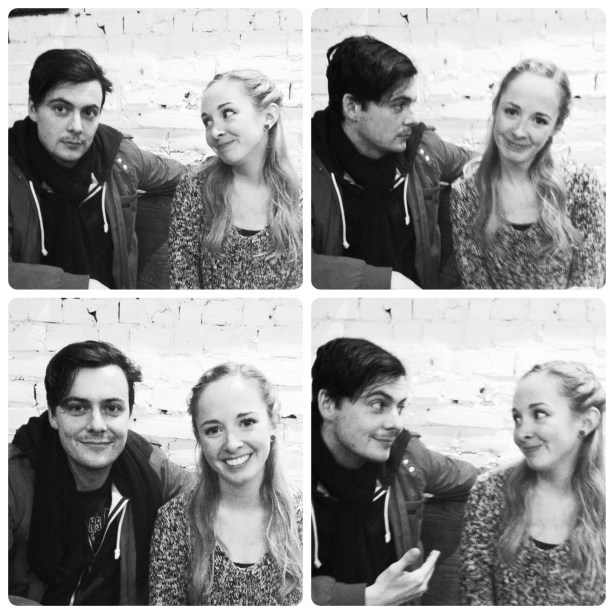
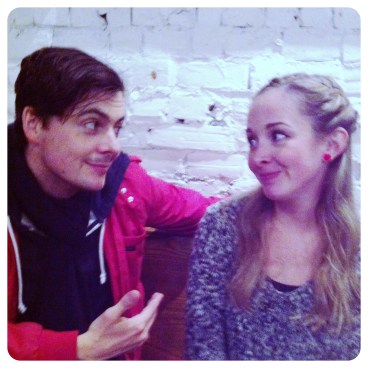
We sat down with the smart and sexy duet, Hallie Seline and Kelly Penner, who play the title roles inShakespeare BASH’d upcoming Romeo and Juliet, running this week, for one week only, November 19th-23rd. We discussed what it’s like approaching such iconic roles, working with BASH’d, on-stage chemistry and their thoughts on Canadian Theatre and its utilization of young artisits.

BK: Are you feeling the pressure of filling such iconic roles, in arguably one of the most timeless tragedies?

KP: Well yeah, you do feel the pressure. There’s the iconic movie versions… and Leonardo Di Caprio played Romeo, and they just did it at the Stratford Festival… So yeah. It’s there, it’s big. But the first thing to do, is to forget all of that and approach it like any other part. You try to figure it out for yourself.

HS: I’m trying to be like EVERYONE in one performance. Watch out! (she laughs) Sure, I would say there’s a pressure, however James Wallis, our director, was really great in advising us to approach the text with fresh eyes. There are definite ways in which we have heard these iconic words being performed. We are trying not to fall into those familiar patterns. Instead, we’ve been focusing on telling the story, what you’re saying and who you’re saying them to. I’m trying to make choices for myself and for the story.
IMG_5549

BK: Have you looked to any other actor’s portrayal for inspiration?

KP: Sure, I’m inspired by other Romeos I’ve seen, but I’m trying to figure Romeo out as myself like any other part that I’ve read for the first time, which is difficult because it is one of those plays that we think we know, and have so many other portrayals that have kind of defined the characters for us.

HS: And everyone will have an opinion on how it should be said or what they think Romeo and Juliet should be like. All you can do is stay true to yourself and your interpretation of the characters and the story that you and your cast are trying to tell.

IMG_7332B

BK: Talk to me about your rehearsal process?

KP: Once a week for a month we’d get together by scene and we would literally just go through the lines to make sure we were all clear with interpretation and meaning. We didn’t work on intention at all during this text work. It was just strictly for clarity of meaning. James had done an enormous amount of background work on certain words and phrases as well, which was incredible to work with as a starting off point. It was good to have that table work behind us so we could go into our blocking rehearsals really knowing what we were saying, giving us more freedom to play.

HS: Afterwards we were all really prepared to focus on our arguments and our scene partners and the story as a whole. James thinks Shakespeare is best when it’s story based. No bells and whistles just clear storytelling, which was a great way to approach our rehearsal process.
IMG_5548

BK: You have to fall in love every night. How has it been working with each other?

HS: Look at him! I may throw up in my mouth every time I think of kissing him (she laughs) … but seriously, you can start with this one, Kelly.

KP: You don’t want to start? You started?

HS: Nope. You take the lead, Romeo.

KP: The chemistry is…. good! These two characters fall in love instantly. And they are intensely in love. I didn’t know Hallie at all before, other than a “hi, hello” in public. We just tried to get to know each other, become friends. It made the intimacy on stage a lot easier and helped it to develop a lot faster. Ultimately, the chemistry on stage comes from listening and playing off each other. The chemistry is also in the language, let alone in the heart and the body. Really listening and taking in what the other person is saying, using each other’s words, and creating poetry together is where it mainly stems from.

HS: Ditto.

KP: That’s all you’ve got? Ditto? (he laughs)

HS: Well, I’m into that answer! It all comes from trust and feeling comfortable in the scene and in rehearsal with your partner. It’s really about what Kelly said… becoming friends. We are completely playing off each other. You know basic scene principles are that you are trying to affect your partner and you are fighting for what you want from them. In our scenes, that is what it is. We have fun.

BK: How did you get involved with Shakespeare BASH’d?

HS: I had seen both of their past productions in the Toronto Fringe, which were hugely successful and just so enjoyable as a spectator. I took a liking to what the company looks for in Shakespeare, performance and theatre in general. It was fun and laid-back, and in a bar, so you could have a drink during it, which is always nice. It was great, thought-provoking, fun, quality work with so much young local talent. I contacted them when I found out they were auditioning for Juliet and it’s been an incredible experience working with them!

KP: When I was in second year at theatre school at Windsor, I was cast in a production of As You Like It in Brampton. In that production there were many of the cast members of this Romeo and Juliet.  Because of that production, I met James through this network of guys and gals. We’ve connected through our love of Shakespeare and I’ve been working with them ever since.

IMG_7192

Shakespeare BASH’d Mission Statement: To present Shakespeare’s plays as they were written: with simple staging, clear and specific language with an emphasis on the words and characters telling the story.

BK: So you’d say you connect with what the company represents and stands for?

KP: I do. James and Shakespeare BASH’d idea of the text and story being the primary point of focus is why we clicked in the first place. Staying true to it is so important. They always start with such an intense textual analysis of the words in these classic stories and this what I like about them the most. It is also a room that I love working in. It’s such a fun, playful, vibrant room filled with young talent. You get easy access to trying and experimenting and being wrong and trying something completely different.

HS: What’s interesting is our ages range from 20s to roughly 40s give or take. It’s not just a group of 24 year olds, which I feel makes a difference. The room is filled with an incredible group of giving and intelligent performers with a wealth of experience and such variety in process. We all learn from each other constantly. It’s a room where you have the ability to develop your own approach to the work. The cast and crew are incredibly supportive. I feel like I’m coming into my own as an artist in terms of my process because of influence of this group of people.

BK: You are both playing leading roles that are meant to be young in age, and for the Toronto standard, you could both be described as young performers. Going off of a recent article to surface in Toronto, from Holger Syme’s blog dispositio, do you think the Toronto theatre industry has a youth problem? From your experience, do you think there is enough opportunity being given to young performers?

HS: I think it depends on the production. If it’s a choice to utilize an actor that’s different than what is written in the text, then that’s a specific choice. Being in the rehearsal room with all these relatively young performers and theatre makers, and from what I’ve seen of the independent theatre community, I find that there’s a lot of strong, intelligent, bold, exciting, thought-provoking artists out there, who I think should be given the opportunity to show and share their work and who are just as valid in themselves as artists to be seen on the major Canadian theatre stages and in the spotlight, as many 30+ artists are. Beyond that, I think that when you are a young artist with an opportunity for a role of this scale, it is a huge learning opportunity for yourself as an artist and not at some cost to the production. Personally speaking, to have this role of this scale at this time, has been a huge benefit in my development as an artist. I think it’s doable and there should be more trust given to younger artists. Furthermore, I think there needs to be more opportunity for all ages to work together.

KP: I do wish for more of that. For some professional companies they want the sure-fire thing, and often times that means going with someone older that they know rather than take a chance on a more age-appropriate actor with a shorter resume. In terms of theatre and the story, if they have the right spirit or if you look younger than you are and it’s not noticeably distracting, then I don’t mind it. But sometimes I see productions and it dawns on me that this actor is a man, playing a boy but they’re doing things in a manly way which really just seems inappropriate for the character and it will draw me out. I do wish we could find a way to get more young people on stage.

HS: I’ve seen a 35 year old playing a 15 year old and if the essence is appropriate then power to you. Do it!

IMG_7333

BK: Is Shakespeare BASH’d production of Romeo and Juliet different in anyway? Any specific concepts or time periods?

HS: James has been really clear in not putting a time period or a concept to it. I mean… it’s already a tragedy being put on in a bar! There is definitely a lot of comedy to it, but that alone is quite unique and will be interesting. But mainly, he wanted to focus primarily on the story and the relationships of such a classic play.

KP: The costumes are neutral colours but there are jeans and running shoes, but then we have swords.

HS: … and the sword fights are awesome! They are sexy and exciting… Get excited for those!

KP: We really wanted it to be about the story and not have any kind of heavy concept distract from that. Just from the work I’ve seen in rehearsal, I think, and hope, people will really take to it.

Rapid-Fire Question Round

IMG_5547

BK: Favourite Movie:

KP: On the Waterfront
HS: Hook

BK: Favourite Play:

KP: Othello
HS: Vimy by Vern Thiessen

BK: Favourite Musical:

KP: Into the Woods
HS: Cats! Of course… (she laughs) or definitely Next to Normal

BK: Favourite Actor right now:

KP: Ben Whishaw
HS: Carey Mulligan

BK: Favourite food:

KP: Cannelloni
HS: Nachos

BK: Guilty Pleasure:

KP: My pink cardigan. I love it but I never wear it out!
HS: Candy, Real Housewives of Orange County or Beverly Hills… yup.

BK: Best advice you’ve ever gotten:

KP: BLT-Breathe, Listen, Trust
HS: Don’t take yourself out of the part. They hired you for a reason or they are seeing you for a reason. The more of yourself in the part, the better.

BK: Advice for other young artists:

KP: Let it go. There are so many factors out of your control. Leave it in the audition room. You’d go crazy if you try to figure out why you didn’t get cast. Have fun!
HS: Be true to yourself. Also, James said this to me in rehearsal when I was trying really hard to find the right arc to one of the scenes. He said “If you’re looking for perfection, it doesn’t exist, and if it does, it’s boring. It’s just a play… Put into it what you can and don’t beat yourself up over it. It will be interesting” I think that’s great, especially for younger artists to be reminded of coming out of theatre school training. And yes… like Kelly said, have fun!

Romeo and Juliet

by William Shakespeare, presented by Shakespeare BASH’d

994940_10151784665008952_1205445970_n

When: One week only, Tuesday, November 19th-Saturday, November 23rd, Tuesday-Friday at 7:30pm, Saturday (Closing) at 4pm
Thursday, November 21 includes an after-show dance party with Silent Shout’s DJ ARP 2600 – http://silentshout.ca/
Friday, November 22 includes an after-show dance party called “Much Ado About Mixing” with DJs Slamlet and Rockthello.

Where: 3030 Dundas West, in the Junction

Tickets: Tuesday, Wednesday, Saturday – $16, Thursday & Friday – $21 (including after-show dance party admission) http://www.shakespearebashd.com/tickets.html

Artist Profile: We Chat with Dynamic Duo Donna Marie Baratta & Jessica Carmichael on their Upcoming SummerWorks Show with Present Danger Productions girls! girls! girls!

Interview by: Brittany Kay

I sat down with dynamic duo Donna Marie Baratta and Jessica Carmichael to discuss first time co-directing, life in Toronto and of course their upcoming show girls! girls! girls!

DSC_4661 cyan cropped

BK: Tell me about your show at SummerWorks?

DMB: The play was inspired by the murder of Reena Virk in Victoria in 1997, who was lured by a group of teenagers to a bridge and beaten to death. One girl stood up and said this is enough but two individuals, a girl and a guy went back and ultimately killed her. Both ended up in jail and the girl is still in jail.

JC: It explores themes of isolation, a sense that there is no way out of a small town, friendship, sense of loneliness in family relationships and marginalization. Reoccurrence of these types of stories keep coming up in the news and in society. I can speak to it as a mom as well. My daughter will be a teen one day and there’s no easy solution to these issues.

DMB: It’s not just a message play. It is certainly a play where you hopefully won’t be sedated, but instead explore and ask questions of why there is this banding together amongst the characters? There’s something in this banding together of friends.

BK: How did you find the play?

JC: We met Greg MacArthur at UofAlberta when he was doing his residency there. DM and I were completing our MFA in directing. Greg is wild and wonderful and fun. When DM and I were talking about going on a journey together in terms of creating a company, we were saying what do we want to do? What kind of work? We wanted to explore new Canadian work – that’s something which is very important to us. In reality, people don’t return to Canadian work. A new work will be workshopped and then there’s no life after that.

DMB: Greg hasn’t had a work produced in Toronto in ten years – he grew up in Lindsay ON, went to Ryerson theatre school, has been in Montreal for the last fifteen years and Edmonton for two. After reading his plays we were trying to figure out WHY they haven’t been looked at in this city. So many amazing Canadian plays get lost and forgotten.

JC: We approached him. We were in love with this play. It was about complicated female voices and there’s a lack of that in playwrighting. Even when there are strong female playwrights it’s not often a female voice.

DMB: Both of our energies and passion throughout our MFA were focused on looking at female voices. What is that voice and the complications around that, which are so fascinating.

JC: Greg’s story in and of itself is about that female voice that’s disillusioned. Reena, Amada Todd, Rehtaeh Parsons-they were disillusioned by society, they didn’t have the proper kind of help and that’s something that we’re interested in exploring as female directors. Why is that? Why is female violence on the rise and why is it taboo to talk about?

DSC_4518 white

DMB: The play’s issues are inundated right now in the media. There are so many things in the media right now that just said this is the right play to do now. This is the right play to bring out and have more questions asked.

BK: It is so relevant to the younger generation right now. I feel that there will be so much understanding from young audiences. Our lives are so wrapped up with social media and the lack of privacy and empathy.

DMB: The characters are all true victims in this. You are going to side with the perpetrators. They all are marginalized in their lives. They clearly needed someone in their lives to say I love you. I’m here for you. You realize they don’t have that and they only have each other. They’ve created some kind of bond around their own pain. That’s scary.

JC: They have to ‘other’ that pain around someone else.

DMB: They have to numb their pain in various ways, for example, like blasting music in their ears. They numb themselves from what is going on in society.

JC: In every play you ask questions, you get more questions coming back at you.

BK:  Your advertising is mysterious and doesn’t really give us any clues as to what the play is about. Can you speak to the ambiguity in your promos?

Promo Video 1 for girls! girls! girls!: https://www.facebook.com/photo.php?v=10151793347946031&set=o.133383070204277&type=2&theater

DMB: We wanted to create some interest in the world of these teens and their characters. We wanted the audience to see their lives together as friends before the play and the world they inhabit. We wanted to peak their interest making them ask questions. “What is this play about?” “I don’t know Reena Virk but there seems to be much more to it than that”.

JC: We don’t want people to see a message play. It is a play about an issue, but we didn’t want to promote it in that way. We wanted it to feel more like a character piece in which audience can relate to them. You’re dealing with human beings and fully formed creatures. Youtube is an outlet for these characters to speak, and for a lot of teens in this day and age. We wanted to hook into that. That’s their lives and that’s how they promote themselves.

DMB: We wanted an invitation. The video is good way to invite people into their world. The show can be quite heavy and we wanted to show that these are teens and these are their group of friends. See their playful interaction before you are exposed to the dark aspect of the play. You see that it is also about friendship as well, which is important. We all know how important our friends are, which is a big theme throughout the play, the extent of that friendship.

BK: Did filming these videos help the actors with character development?

JC: Yes, of course. The process is so important, not just the product. It was an exploration that we used with the actors so that they could develop their characters.

DMB: They explored their lives outside the rehearsal space. These videos were created during rehearsals in order to create a deeper character life.

Promo Video 2 for girls! girls! girls! https://www.facebook.com/photo.php?v=10151793351766031&set=o.133383070204277&type=2&theater

BK: Now about you both. Why the name Present Danger Productions?

DMB: One day I woke up, called Jess and said what about Present Danger? Can we use that? I had this image of traffic signs in my head – “caution” and “tread softly”.  We want to be on the edge. We want to be able to push the boundaries in what we can talk about and what we can show and explore.

JC: There’s not a lot of present danger in Canadian theatre. There’s not a lot of risk being taken. We want to be bold in our choices and not be afraid. We want to be present in being dangerous. It’s also a bit cheeky.

BK: So you guys met at the University of Alberta in the MFA program for directing?

JC: It’s funny because we were told on day one that we weren’t going to be friends – “You probably won’t get along, you don’t need to”. It’s intense in that it’s only two people in your year. We didn’t get to interact very often, so it’s very ironic that we in fact did get along so well.

DMB: We feel fortunate to have gone through it together. We have both come from different backgrounds. We see through different lenses.

JC: It’s very complimentary.

DMB: We would talk about our work together, bounce ideas off each other, and now have come together to start a theatre company.

BK: And where are you from originally?

JC: I lived in Toronto 10 years ago. I’m not originally from Edmonton but I grew up in Edmonton. Went to The National Theatre School in Montreal and RADA in London.

DMB: I was born in Thunder Bay, came to Toronto for a while to do a show, went back to Thunder Bay for University and moved back to Toronto in 2005.

BK: Now you’re here in the T.Dot. How do you feel about the theatre community in Toronto?

DMB: People are so friendly and open in the community.

JC: There’s more opportunity. There are so many artists here to collaborate with. The audiences here, especially for SummerWorks, are so much larger and of all different ages and interests. We’re really looking forward to meeting people. That’s the beauty of these festivals in the summer.

BK: Why SummerWorks as the launch for your company?

JC: There are a lot of theatre artists that will come to this, that’s who we wanted to expose our work to. Because it is the beginning for us in Toronto, we wanted to meet other artists and this festival will enable us to do that.

DMB: It opens up so many avenues and opportunities. It’s a place where artists go, where you can have discussions about the work being produced. We really want people to talk to us about the play. Whether they love it or hate it, we really want to hear it! Theatre for us is about talking, discussion and opening up the channels for communication.

JC: And we know it’s not going to be perfect. It’s nice to talk to other artists to hear those opinions, to allow us to grow as artists.

Jessica Carmichael and Donna Marie Baratta, Co-directors of girls! girls! girls!

Jessica Carmichael and Donna Marie Baratta, Co-directors of girls! girls! girls!

BK: Is there a future for Present Danger?

DMB: Yes, of course! We don’t want to rush what our next production will be. We both have projects we love. We need to sit and discuss what direction we want to go, and also what other avenues that can be produced, that wont cost us an arm and a leg!

JC: And after we’ve gone through this experience, we can have discussions about how we can move forward from what we’ve learned. This is the career. There’s no going back. It’s a love affair.

BK: What do you hope for audiences to gain from girls! girls! girls! ?

DMB: We want them to be asking questions. We are really thrilled with our actors. We hope audiences see how hard they’ve worked. We hope that this is a great platform for them and for their career as they’ve been such a true pleasure to work with. Hopefully audiences don’t want to leave their chair because they want more.

JC: I hope they laugh out loud at the show and are equally disturbed by their laughter. I hope they have an opportunity to reflect on the issues that need to be discussed and not overlooked. We want people to keep talking about the play once they’ve left, be challenged by the piece and be affected by it. We want them to think about it days after.

BK: What is the strongest advice you’ve ever gotten as an artist and how has it affected your work?

JC: You don’t need to be so polite in your work. You need to believe in your work. Don’t pussyfoot around the big issues that you want. Don’t be afraid to be passionate or to be a passionate woman at that!

DMB: Be bold. You can ask for what you want. You can really be bold and brave in the choices you make. Ultimately, be true to yourself. Being a director can be isolating as you are on your own. You’re constantly discovering your voice. Sometimes you need someone to say “yes, that’s okay”, that there is a right or wrong way to direct, that there is a system, but ultimately there is no system. Don’t be too polite and challenge yourself. Give yourself permission to do some crazy things.

JC: Pina Bausch once said “You just have to get crazier,” which is beautiful. You have to constantly ask why? Why this story right now? You have to keep going back to the root of that in rehearsal. That’s not often asked these days. When people just randomly choose the same shows across the country…for what purpose? Why are you choosing this show… because it is going to be a big sale? ? Just to ask yourself that question of ‘why this story’ as an artist, makes the work much more personal.

DSC_4784 enhanced contrast

girls! girls! girls!

by Greg MacArthur, presented by Present Danger Productions as part of the SummerWorks 2013 Festival

Where: The Scotiabank Studio Theatre, Pia Bouman, 6 Noble St. (at Queen and Dufferin)

When: August 8th-17th, 2013

Thursday August 8, 7:00 pm
Saturday August 10, 9:30 pm
Monday August 12, 7:00 pm
Tuesday August 13, 2:00 pm
Wednesday August 14, 4:30 pm
Thursday August 15, 2:00 pm
Saturday August 17, 9:30 pm

Tickets:  $15
Book tickets online – http://ticketwise.ca/
By phone: Lower Ossington Box Office at 416-915-6747

Sophia Fabiilli – Assistant Producer of One Little Goat Theatre Company’s “The Charge of the Expormidable Moose” Shares her TOP TEN THINGS She’s Learned About Producing

 Sophia Fabiilli is a Toronto-based actor and budding theatre producer. This spring she had the opportunity to work with One Little Goat Theatre Company, assistant producing their current production of ‘The Charge of the Expormidable Moose’ (on stage NOW at the Tarragon Theatre Extra Space until May 26th).
 
What does an indie assistant producer do? How was it been transitioning from acting to life on “the other side of the table”? Sophia shares her top ten lessons on producing thus far.
 

1) Input does not equal output

My first experience as a producer came last spring when the Amy Project facilitated an internship withSeventh Stage’s production of ‘Stockholm’, in partnership with Nightwood Theatre. I was lucky enough to be an intern producer and worked under the guidance of the magnificent Melissa Jane Shaw, Artistic Producer of Seventh Stage. One of my focuses was educational outreach. I called ninety-one high schools in the GTA and booked zero school groups. Zero. This was a crushing blow to my rookie producer ego…

If you work hard, it’ll pay off, right? It doesn’t always work that way when building new audiences. It’s extremely difficult and you must brace yourself with patience. Lots of patience. Remember: even if it doesn’t work out this time, reaching out to new people will somehow pay off down the road.

2) Cold calling perseverance

Let’s be real: people are busy and inevitably think that you want their money/will waste their time. From my experience, know exactly what you’re going to say before you pick up the phone, but don’t sound like a robot. Be concise. Spark their curiosity. And if they’re not interested, be polite and thank them for their time.

Once in a while, you’ll call someone who is absolutely thrilled that you’re not a pre-recorded message announcing that they’ve won a phony free cruise. “You’re inviting me to your play? Awesome!” You willconnect with people who will be excited to hear from you (and you’ll be happy that you made the call).

3) Know what you’re talking about

This spring, I was fortunate to be hired as the Assistant Producer for One Little Goat Theatre Company’s English language world premiere of ‘The Charge of the Expormidable Moose’ (on stage at the Tarragon Extra Space NOW until May 26th – go see it!). I assisted Artistic Director/Executive Producer/my incredible mentor, Adam Seelig, with everything from securing rehearsal spaces to sourcing insurance to locking down cross-promo deals to brainstorming ways to spread word about the show.

At one point, Adam suggested that I contact some local galleries that showcased surrealist artwork. Claude Gauvreau, who wrote ‘MOOSE’, was part of a radical group of surrealist artists and political activists in Montreal, called Les Automatistes.

This was a brilliant idea on Adam’s part, but when it came time to make the cold call, I got cold feet. I realized that I didn’t know enough about what our project and these galleries had in common. I was going to look like a fool… and worse, make One Little Goat and ‘MOOSE’ look second rate.

I confessed my concerns to Adam and put myself through a crash course on the core and content of the play’s cultural history. Moral of the story? Be an expert on your show. You need to be able to speak passionately about your project and tell people why they shouldn’t miss it.

4) Get organized

This one sounds like I’m running out of ideas, but it could easily be my #1 piece of advice. Keeping track of a thousand details can be overwhelming, especially when you have other projects, a ‘Joe’ job, and a semblance of a social life on the go as well…

The following is completely stolen from Arts Planner Extraordinaire, Sue Edworthy, who did the marketing for ‘MOOSE’ and from whom I’ve learned lots… (do yourself a favour and read Sue’s blog –www.sueedworthy.ca)

In order to keep our Expormidable team on the same page, we created a shared Google calendar and a giant grid of all our reciprocal deals in DropBox. Everyone kept the calendar and the grid up-to-date with deadlines, show openings, and important dates. We scheduled everything (e v e r y t h i n g), even down to our social media postings. It worked brilliantly.

5) Reciprocals are your best friend

What’s a reciprocal anyway? Basically, it’s an agreement between two companies to help promote each other’s shows. If your shows run at the same time, you can trade postcards or program ads. If they don’t, get creative… Offer shout-outs in your e-blast or on your website, free tickets, social media or blog posts, whatever you got!

Advertising is expensive, my friends. What better way to pump your shows than to connect with each other’s audiences?

The Charge of the Expormidable Moose - One Little Goat Theatre Company

The Charge of the Expormidable Moose – One Little Goat Theatre Company

6) Use social media wisely

Remember last July? Remember receiving 12,000 notifications a day about Fringe shows? Remember how much you loved that? …Yeah. Social media is a powerful tool, but it won’t do squat if someone stops following you or turns off notifications about your event.

I’m going to take a page from Sue Edworthy again. For the ‘MOOSE’ event page we posted: “IMPORTANT: We will not be posting to this page. To keep up-to-date about the show, please “like” One Little Goat Theatre’s page. Thanks!

SUCH a great idea! By directing people to “like” your page instead of “attend” your event, you retain those Facebook followers after your show closes… and have them on hand for your next project. LOVE. IT.

7) Be thoughtful about online etiquette

I was in charge of social media posting for ‘MOOSE’ and my first thought was “everyone is going to think it’s Adam posting, not me”. It was really important that I wrote in a style and tone that suited the aesthetic of One Little Goat Theatre.

Being the voice of someone else’s company is a huge responsibility! Go the extra mile and triple check… This is important to remember when it’s so easy to tweet or send off a quick email in a matter of seconds. Careful that what you’re writing won’t be misinterpreted or, quite frankly, sound rude. And while you’re at it, respond to correspondence in a timely matter. It makes a HUGE difference.

8) Get your hands dirty!

AH YEAH! This one sounds like fun!

When Adam and I were planning in January, I suggested that we create a promo video. Great idea, Sophia! Fast forward to April, when I shot and edited seven one-minute videos interviewing our incredible cast members (here’s an example: http://onelittlegoat.org/blog/2013/5/6/video-actor-sochi-fried-talks-moose).

I have neither shot nor edited a video in my life, but let me tell you… iMovie and I are intimate partners at this point. I also catered our opening night reception. Sometimes you just need to jump in and get a job done.

9) Ask questions

Holy hell, I asked a lot of questions! You can ask Adam. Actually don’t… that poor man needs a rest.

I’m new to this and didn’t want to screw up. So, I asked a bunch of questions and learned a lot (although I still have so many more to ask…). If you’re new to producing like I am, get out there and talk to people who’ve done it. There are incredible people in this community who are happy to share advice (and war stories).

10) Praise to producers everywhere!

Producing is an all-encompassing (and sometimes thankless) job and your work is never totally done. There’s always another post to be writing or another invite to send. Honestly, it has been a challenge to balance the workload with my other life as an actor.

Struggles aside, it has been fascinating to see a show come together from the “other side”. I had expected to find it artistically unsatisfying; I wondered if I would envy the cast, wishing that I were up there instead. I am happy to report the opposite! There is a creative side to this job and, let me tell you, sitting in a full house on opening night of the show you helped to produce feels DAMN GOOD.

So far, producing has been an eye-opening experience for me. The next time I work as an actor, I’ll remember that my director, producers, and designers have been working on the production for months(maybe years!) before I came onto the scene. The show cannot go on… without everybody’s efforts.

 
THE CHARGE OF THE EXPORMIDABLE MOOSE
by Quebec visionary Claude Gauvreau 
“A tour de force” -GLOBE AND MAIL
“A production not to be missed” -STAGE DOOR
“An unforgettable performance” -CHARLEBOIS POST 
 
Runs: May 10 – 26, 2013, Tue-Sat 8pm | Sun 2:30pm
Where: Tarragon Theatre Extra Space, 30 Bridgman Avenue Toronto
Tickets: $25 | $20 student senior artist + $3 final week | Fri & Sun rush tix $13
Buy your tickets over the phone: 416-531-1827 (no service fees!)or 
In person at the Tarragon box office: 30 Bridgman Ave. 
 
For more info go to One Little Goat Theatre Company’s Website – onelittlegoat.org/moose/