Skip to content

Posts tagged ‘Bailey Green’

“Loyalty, Musicality, Family and Leaving Home” In Conversation with Jeff Ho, creator and performer of “trace” at Factory Theatre

Interview by Bailey Green.

We spoke with Jeff Ho about his play trace, opening at Factory Theatre on November 16th (in association with b current performing arts). trace follows Ho’s own bloodline and lineage, from his great-grandmother, to his mother, to himself. The audience travels along with the journeys his family chose, or were forced to choose, over the course of their lifetimes. This two piano, one man chamber play spans decades and continents. Ho is the composer, writer and performer of the play. We spoke with Ho about loyalty, musicality, family and leaving home.

(Interview has been edited for length and clarity.)

Bailey Green: Can you tell me what sparked the desire to create trace?

Jeff Ho: I started writing trace when I was still at school at the National Theatre School. During second year, we have a component where we write our own solo show. I worked with Yael Farber, and she often says “What do your ancestors demand you speak?” and in my family we have this secret: My great grandma, she had my grandpa but she also had another son, and during World War 2 she had to make, well essentially, a “Sophie’s Choice” and she had to leave a son, my great-uncle, behind. From that deep guilt and shame, she never spoke of him. I did a lot of archaeological digging, looking at when she had run to Hong Kong after the Japanese invaded and set up internment camps. There was so much unspoken, like Unit 731 and essentially a Chinese holocaust. So I wrote a long form poem, trying to speak out for all of the atrocities and how she [my great-grandmother] ran most likely because of them. And Yael said that these stories end with me now, so I began working on all of this to trace and acknowledge and try to unearth my own history.

BG: Did you interview your mother or other family members? What did you learn through this process and did it change how you saw your family?

JH: It was super cool as a way to connect to my own mom. In a lot of ways, I paralleled the lost son in my family. I ran away from home to Montreal and it was a second rift trying to not disappear in my own family. So talking to her was this way of hearing all of these childhood stories, which was so important to me. My great grandmother… she was a lioness. She was a modern women, she smoked and she never married again. “I’m happy with my one son. I’m happy to live here now. I’m good.” And that’s what she was like. I would often bring my partner over during the interviews and so my mother spoke these stories in English. She would say, “Your uncle, he swam and swam and swam and he got there,” and found the most basic ways to communicate these epic stories. I got to see a picture of my mom when she came to Canada — a woman without any English, without my father, with two sons — and also who she is now.

BG: You have gone through multiple phases of development with the script. What are you learning so far in rehearsal?

JH: I’m learning about how to give all of myself. Composing the music and playing piano, that was director Nina [Lee Aquino]’s idea. Piano is something I have grown up with since I was 5. It’s another way to give myself through music. 
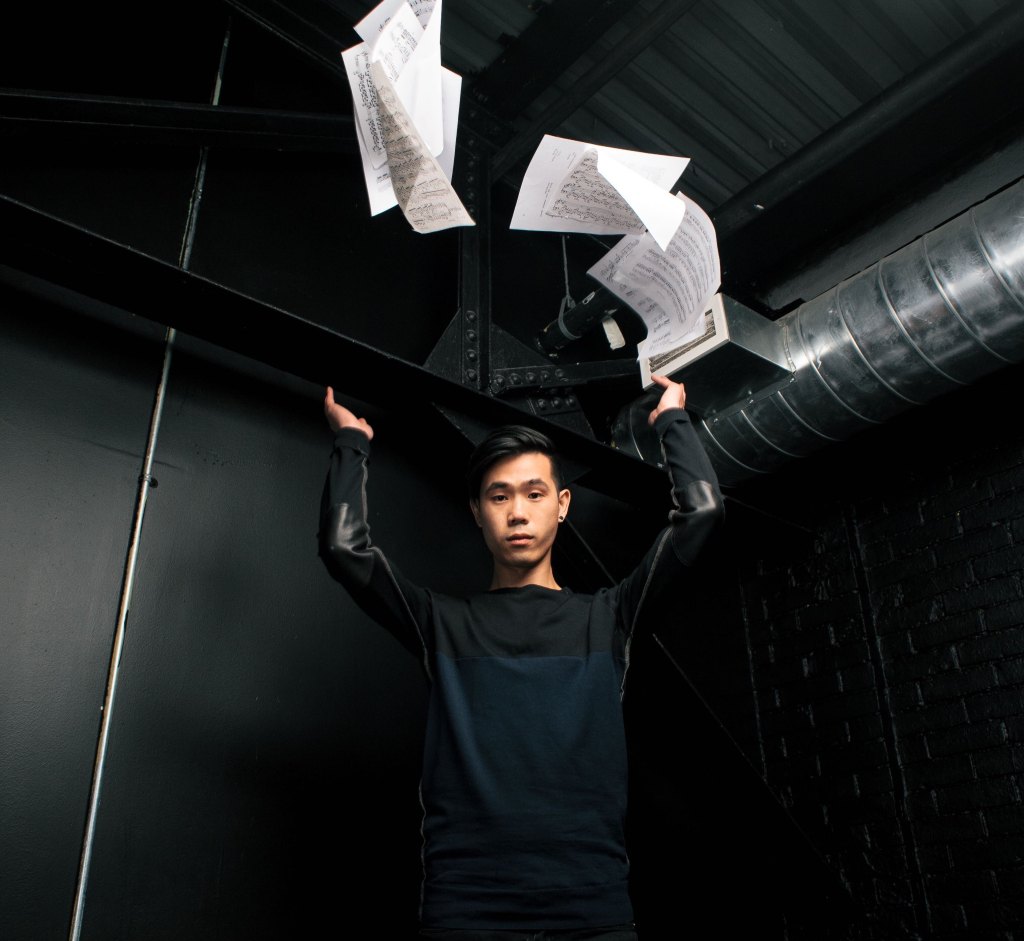
Jeff Ho in trace. Photo Credit: Marko Kovacevic

BG: Can you tell me more about your relationship to the piano, both as a musician and as a composer?

JH: I started in Hong Kong at 5, it was seen as a good skill set for me to have. I totally went into it adverse, but knew I had to appease my parents. I found my love for performance, though I never got along with any of my piano teachers. But I loved the applause! How I write and how I act stems through musicality, the mood of something. And any other language is just music and that really bridged the gap for me when my english was far worse [then it is now].

BG: The music of language is in the show, as well. Canto is such a musical language.

JH: Canto is always there for me. There are things that I just don’t know how to articulate in English. [Cantonese is] so succinct, it takes four words to say what it takes a paragraph to say in English. With Great Grandma and how she dealt with her kids and how she spoke her stories, it was important to include. We hear text from the women and the men speak through music. I didn’t want the men to speak, I wanted to hear the women and what they wanted to say, and we get the intention and feeling from the men from the piano.

BG: Tell me about working with Nina Lee Aquino.

JH: It’s a new relationship. I have known her as mentor, as teacher, as dramaturge, but I have never worked with her as director. We have a shorthand, but she loves using pop culture references and as an immigrant, sometimes I get lost! It’s a fluid and natural evolution. There’s a frankness to it. She will never let me off the hook, I can never hide in my words or anything, she will challenge me to get there and not to be precious.

BG: trace is so personal. What has been the greatest challenge creating it?

JH: In giving back and acknowledging my family, I have always dealt with the guilt of leaving my home. As a teenager I felt theatre was a greater calling but I was truly breaking my mother’s heart. There was a lot of ‘you’re a terrible son, you don’t honour our family’, and I can’t [honour them] in the way they want me to. I’m nomadic and mobile and artistic. But I can honour them in the way that I know, through everything I love.

BG: Have they seen it in any form?

JH: My mom has read snippets of it. I’ll transcribe things she’s said and show them to her. I’m excited and nervous for sure. Memory is fiction, and so I want to honour and reveal truths about our family.

BG: What are some of your inspirations right now?

JH: Yael Farber. When I get down on myself or I don’t know what I want to do, I read interviews with Yael Farber. She is the most articulate, does not settle for anything less than the painful truth, and she wants to shed light on what we’re capable of. I pull out my guts and get back to work. I’ve been wrapped up in Chopin, Rachmaninoff, the more turbulent composers. And Bijork’s song Black Lake, it’s about a pain and trauma in her family, and it’s 10 minutes long.

trace

Who:
Written by and starring Jeff Ho
A Factory production in association with b current performing arts
Directed by Nina Lee Aquino

What:
trace follows three generations of mother and son from the Japanese occupation of Hong Kong to Canada in the 21st century. Combining virtuosic original piano compositions with an incredible performance and lyrical text, this exquisite and stimulating one man chamber play offers a new look into the lasting implications of sacrifice across generations.

Where:
Factory Theatre Studio Theatre
125 Bathurst Street, Toronto

When:
November 11-December 3

Tickets:
factorytheatre.ca

Connect:
@kjeffho

“Consent, Growing Up & Telling Difficult Stories” In Conversation with Rose Napoli, playwright of LO (OR DEAR MR. WELLS)

Interview by Bailey Green

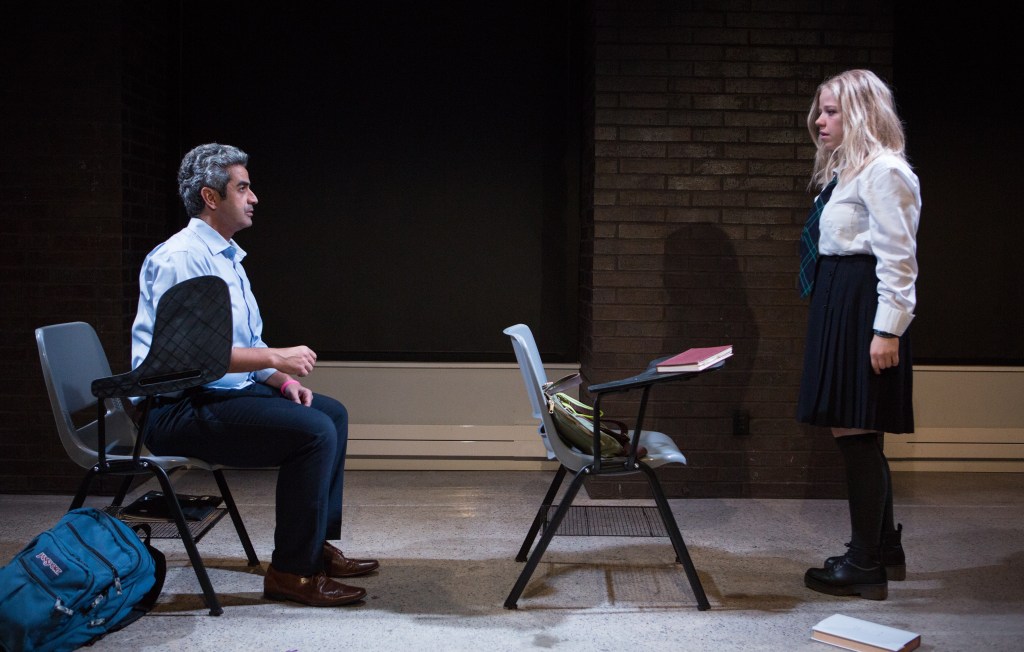
Nightwood Theatre continues their Consent Series with Rose Napoli’s play Lo (or Dear Mr. Wells). The play tells the story of Laura (nicknamed Lo) and her teacher Mr. Wells, and is a feminist retelling of an affair between a student and teacher. Napoli began writing Lo three years ago in Nightwood’s Write from the Hip program. Andrea Donaldson, the facilitator of the program, oversaw the play from the ground up and directed the show, on stage now at Crow’s Theatre.

Napoli’s own experiences and her work with young women in schools and a juvenile detention centre inspired the work. She got to know girls who heard society tell them that their bodies were the most valuable assets they had, and how those beliefs existed in her own lived experiences as well. We spoke with Napoli about consent, vulnerability, growing up and what it takes to tell a difficult story.

(Interview has been edited for length and clarity.) 

Bailey Green: Youve been writing Lo (or Dear Mr Wells) for three years. What initially provoked you to write this piece and what was the development process like?

Rose Napoli: The play started years before I started writing it, 8 or 9 years ago. I was teaching in Windsor and working afternoons as a child and youth worker for at risk/in need youth and a juvenile detention centre. It’s now shut down. There wasn’t enough funding to keep it going, which is unfortunate. At the time I met a number of young women who had really complicated relationships to sexuality and consent. A lot of young women between ages 13-16, I don’t even know if they were in a position to know what they wanted and didn’t. Their bodies became currency instead of something that could give them pleasure, pride and beauty. They traded that in a lot of cases for safety. Those profound experiences, coupled with my own, made me obsessed with this issue.

Vivien Endicott-Douglas & Sam Kalilieh. Photo by Cylla von Tiedemann

The breaking point for me came when a guidance counsellor in my school was arrested because he had been having an affair with a student who was 16-17, and [the affair had been going on] since she was in the 7th grade. Her confession was triggered by him becoming engaged to another teacher at the school. It was a horrifying time which lead me to quit teaching. I had a really hard time with how the administration handled the situation. The girl was seen as dramatizing the story, but she thought they would be together, so for her the engagement was a huge betrayal. The two teachers remained together. All of that has added to a whole lot of fire in me for a long time.

Sam Kalilieh & Vivien Endicott-Douglas. Photo by Cylla von Tiedemann

BG: This piece contains personal subject matter, both from your own life and from the lives of young girls you have met. What was that like for you as a playwright?

RN: The play is hard for me to hear. I’ve never actually been able to listen to it without weeping. There are moments where I don’t realize that I’m the one who wrote that. Laura, played by Vivien Endicott-Douglas, thinks that now that she knows Mr. Wells in this way, maybe he’ll be the one that stays. It’s hard to listen to that as it still continues to be the reality for me. I’m 34 and I think about what I’m going to do that is wrong, sexually or not, that will confirm my deepest fear that I’m not worth sticking around for. And that’s pretty common in terms of people I have spoken with.

Vivien Endicott-Douglas & Sam Kalilieh. Photo by Cylla von Tiedemann.

I also wasn’t interested in telling a story that vilified Mr. Wells, and Sam Kalilieh, who plays him, has had a really interesting journey and a challenging time championing a predator. I don’t want to speak for him, but any time you take subject matter like this on, separating your own beliefs from the beliefs of the character is a daily struggle. But both of us and Andrea have felt that this is a deeply confused man. And therein lies the complication—it is not as simple, and yet it is absolutely black and white.

Sam Kalilieh & Vivien Endicott-Douglas. Photo by Cylla von Tiedemann

BG: The quote written on your arm in the photo for the show (even if it costs you, you still have to share it), tell me about it and the social media campaign. 

RN: People were so creative with the #shareit campaign and I think people have craved it and wanted to talk but sometimes words are…challenging. And people came to express themselves through a photo and with a want to be a part of the conversation. The quote is in the play, something Mr. Wells says to Laura. The play is part of what Laura has written to him. He tells her as they are taking part in a creative writing club (she has an aversion to public sharing), he tells her that she has an obligation to the world to share her experience. And as she grows, she realizes that in a different way. And that’s a meta-theatrical personal line for myself, because this is not an easy thing for me to share. I feel nervous for people to see this because I don’t think it’s an easy thing to watch or even admit.

Photo of Rose Napoli by Dahlia Katz

BG: How do you feel with the run starting? 

RN: It’s wanting to shit your pants and feeling really excited and proud… there’s a lot going on. It’s a complicated time and I haven’t been that active in tech or rehearsal. I’ve been present for script evolutions but we’re talking specifics, like arguing over a comma. It’s their show now.

BG: What has it been like to be a part of the Consent Event with Ellie Moons play Asking for It and the Consent symposium?

RN: The conversations that the two plays inspire are different ones under the same heading, the consent topic we have to rewind back even further, way before the moment of no or yes. We have to think about it in how there is taking advantage of someone sexually and “no means no” and all of that. Empowering young women, not forcing them to kiss or hug family members. We send messages to children that their bodies or what they want doesn’t matter. We have to evaluate early on the message we send to young woman in particular. At the symposium we spoke about the importance of speaking about pleasure to young women. We don’t associate that as appropriate and we reinforce shame, which leads to people not being comfortable to say yes or no. I didn’t know what I wanted or what I didn’t want [when I was young], I was so confused.

BG: What would you say to your teenage self now?

RN: Oh gosh…I would tell her that she’s beautiful and she’s loved and that one day it will all make for some pretty interesting drama. I wrote a whole play for her.

Lo (or Dear Mr. Wells)

Who:
Written by Rose Napoli
Directed by Andrea Donaldson
A Nightwood Theatre production in association with Crow’s Theatre
Presented as part of The Consent Event, a play series and symposium navigating the minefield of modern sexuality.

What:
It was ten years ago that Laura was Alan Wells’ student at Northwood Catholic School. She was uncharacteristically intelligent for fifteen years old—perceptive and vulnerable—a dream student for an uninspired English teacher. Now, at twenty-five years old, Laura has written her first book. She calls it ‘Dear Mr. Wells’ and Alan is the first person she wants to read it.

A feminist retake on a student / teacher relationship, wrestling with burgeoning sexuality and consent, literature and passion, right and wrong, Lo (Or Dear Mr. Wells) was developed through Nightwood Theatre’s Write from the Hip playwright’s unit.

Where:
Crow’s Theatre: 345 Carlaw Avenue

When:
October 25 – November 11, 2017

Tickets:
crowstheatre.com

Connect:
@RoseNapoli1
@nightwoodtheat
@crowstheatre

#nwLo


“Exploring THE FISH EYES TRILOGY, Reflecting on High School & Anita’s Current Inspiration” In Conversation with Anita Majumdar, Playwright and Performer

Interview by Bailey Green 

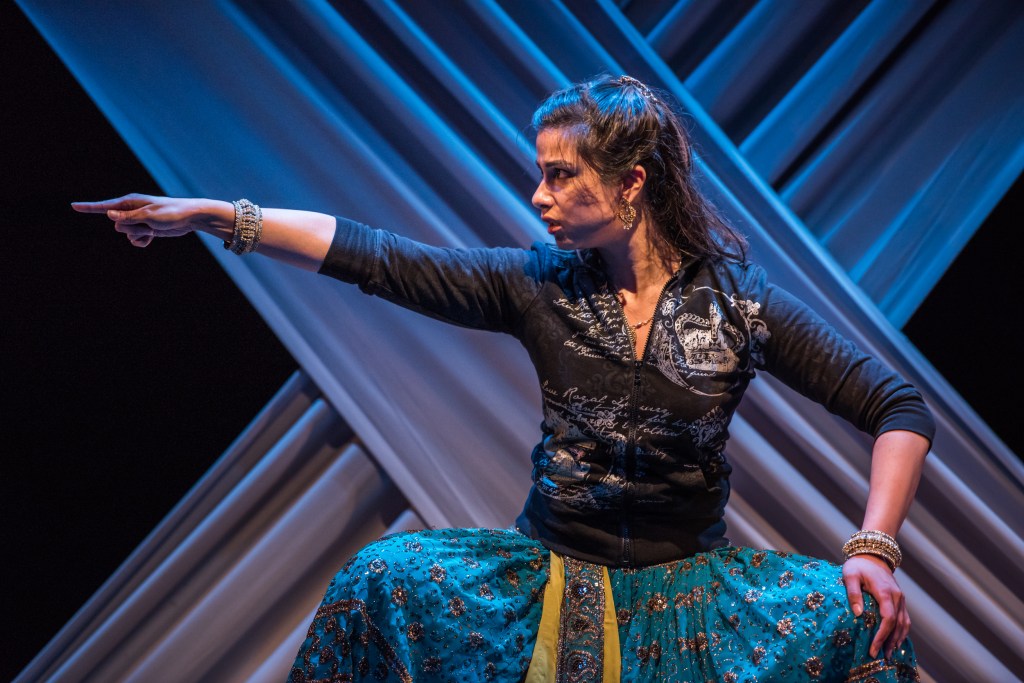
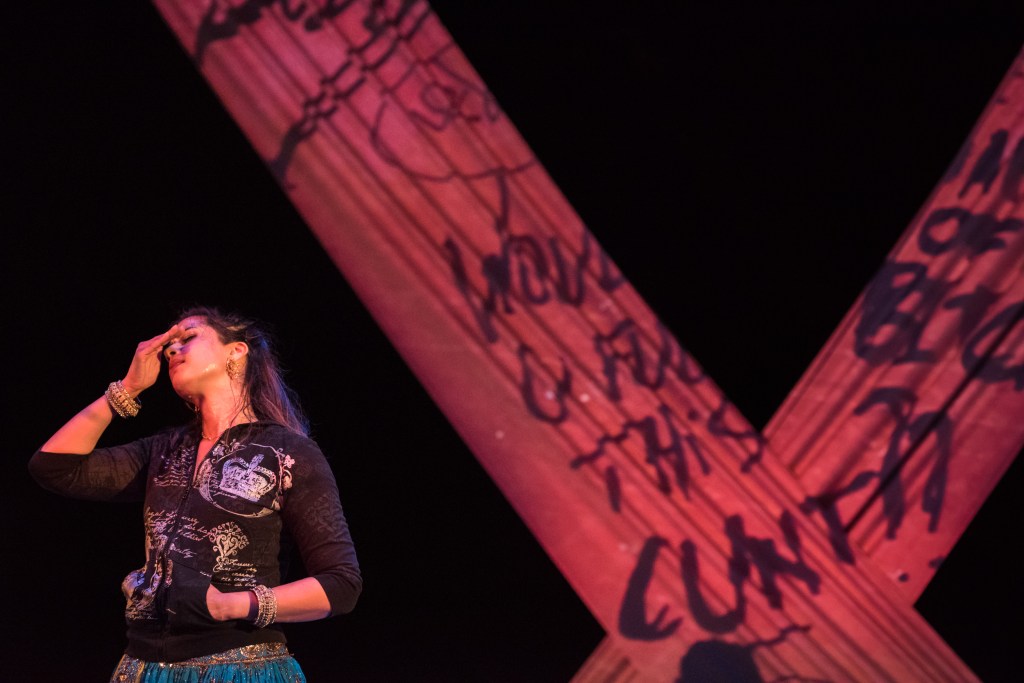
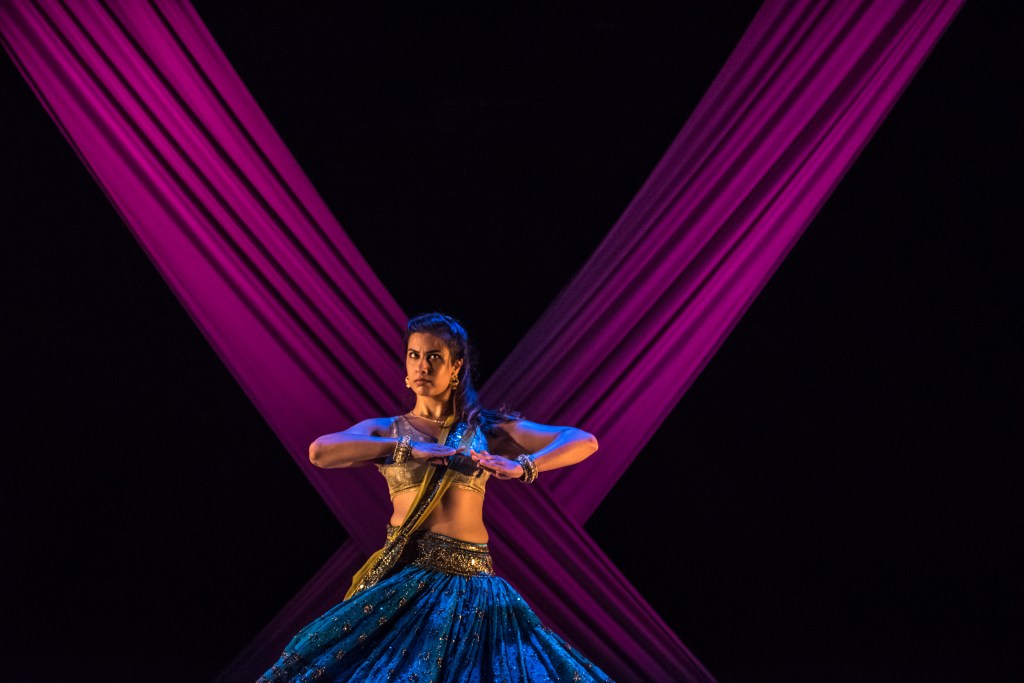
We spoke with Anita Majumdar about opening Factory Theatre’s 2017-2018 season with her play The Fish Eyes Trilogy. Majumdar is a multi-talented artist with a vibrant career in theatre, film and television and an extensive background in classical Indian dance. The Fish Eyes Trilogy follows three young girls through high school. Their intertwined stories reveal themes of bullying, consent, friendship and feminism. 

Bailey Green: These plays began in 2004, can you tell me about what initially drove you to create the piece?

Anita Majumdar: I was in NTS at the time in my third year and for almost three years we would have these board reviews as part of our acting conservatory. Every single time I sat down they’d say “You’re a good actor, but you’re a great dancer.” So I keep thinking how do I blend the joy I find in Indian dance in my work as an actor. I was so tired of hearing that comment! We had a solo show coming up as part of our curriculum, and I wanted to show my teachers that I could do that with acting and dancing together. I just wanted to nail this comment. When I performed that solo show for the school, I was encouraged to take the show to Toronto, so I contacted Franco Boni (who was the AD of SummerWorks at that time) and I did a really basic version, which was part of a double bill called Tell Tale with Dian Marie Bridge, Karim Morgan and Djennie Laguerre.

Photo Credit: Dahlia Katz

BG: In the spring you adapted a large portion of the show for high school audiences. Can you tell me about that experience? 

AM: What was really interesting about that version with Young People’s Theatre [where it was just] the first two stories, is that no one asked us to censor the show. There was no ask to adapt or take out the swear words. The only criteria was we had to cut it down for time. So I don’t think we understood the impact or the power of the show until we were in front of kids and teen audiences, and that was really powerful. They are really honest and they will let you know what they are thinking. I was expecting rowdy audiences but I actually experienced very little of that, which I was very shocked by. The questions during the talk backs were so smart and adult, conversations about feminism and what makes feminism and what makes two women in these stories do what they do. Why can’t they be friends? The response and the engagement really threw me. 

Photo Credit: Dahlia Katz

BG: What did you learn from your young audience?

AM: I think really acknowledging the need for this conversation and the complexity. Whose fault is it? What is consent? Young people aren’t the only ones having these conversations and wanting answers. We live in a time, particularly in the last year and a half with what is happening in the US, where we are confronting why locker room talk is not acceptable anymore. Who does it hurt and why is the gender that it hurts [treated as] less important? It became very clear now that we’re adding the third story back, the focus on how each woman/protagonist endures a double standard and rails against that and challenges it in her own way. Each of them are doing the best they can and their circumstances are extreme within the context of their own lives. I remember being in high school and realizing men and women aren’t treated the same and railing against that, asking those questions, “Well, why is it this way?

Photo Credit: Dahlia Katz

BG: How have these plays caused you to reflect on your own experience in high school?

AM: These parts are a reclamation of that time because there were very few people of colour in my high school. I have a lot of regret for not having enough courage due to circumstances and self-protection. I wish I had spoken up then but I know why I didn’t. A lot of doing these plays feels like doing the things I wish I had done or said or brought up in high school with those raging hormones running through me. Thinking that everyone was looking at me all the time, when you’re a brand new person, it feels like it’s happening to you for the first time in human history. And everyone thinks ‘I’m weird’ but then multiply that by 500 and you have a high school. When that stopped and into my twenties and beyond, I realized no one was looking at me and that was in my head. Reflection is part of the human experience. You can’t see it when you’re in it. 

Photo Credit: Dahlia Katz

BG: What feedback has been invaluable to your process?

AM: Our core team is amazing. Brian Quirt has been my director and dramaturge for years and, on this version for the trilogy, we’re just able to get more specific and really look at the through line of each story. Now that the plays are together again, the women are together, and we’re really looking at how each woman picks up the baton from the other. They seem like very different stories but finding the thematic links of movement and dance, the coin of phrase, and how does that add to the overall story. That has asked me to break out of old habits and that has been difficult. This is part of my long-term memory, and now I have to re-record a new way. It keeps me really active and on my toes, and when you get to the third story, I really have to keep my mental alertness in check. It takes a new level of concerted effort. 

Photo Credit: Dahlia Katz

BG: What advice do you have for emerging artists and women of colour?

AM: I actually just sat on a writing jury and I was really floored by the young writers and what they choose to write about. It is really really encouraging to me that many young people are angry and are not happy with the world we live in. The rights we took for granted, the right to choose, women’s rights in general are being called into question again. And no one is taking it lying down and no one is normalizing it. Young people want to write about it and they have something to say and so I would encourage them to keep having something to say. Don’t accept what the media tells us and what Trump tells us is normal.

Photo Credit: Dahlia Katz

BG: Who is inspiring you right now?

AM: I’m quite inspired by Rihanna right now!

BG: Fenty!

AM: Fenty! I went to Sephora and it just floored me every single time, there are these throngs of women of colour huddled around the Fenty kiosk. A makeup line is saying that we’re thinking about you. We’re not excluding anyone, we’re being inclusive and keeping it at a price point at the middle of the range. It is incredible seeing these women of different shades and backgrounds wanting to try on the makeup. And there are larger societal ramifications and how that makes young women and older women and men, all of us feel included in a beauty practice.

And I’m very inspired by the NFL, which I never thought I would say in my life.

BG: So I have to ask, your twitter bio says you’re a Shoppers Drug Mart Expert Extraordinaire? How does one become a Shoppers Drug Mart Expert Extraordinaire?

AM: So it involves spending a lot of time in Shoppers, which I have done. My addiction started when I was doing a season at Stratford. And I don’t drink much, it’s just not my thing, so Shoppers was the only place open until midnight. I didn’t know anybody and I’m sort of an introvert so I would walk the aisles. And I made a friend, Asha, who would be my maid of honour, she would just join me and we’d walk the aisles and then she would drive me home. I came back to Toronto loving Shoppers. The Optimum personalized coupons… they get you every time!

The Fish Eyes Trilogy

Who:
Written by Anita Majumdar
Directed by Brian Quirt
A Nightswimming Theatre production presented by Factory

What:
With razor sharp writing, a Dora Award-winning performance, and spellbinding dance, Anita Majumdar’s wildly successful The Fish Eyes Trilogy is a unique portrait of the intertwining lives of three teenage girls at one BC high school. Presented together in a single three-act play; The Fish Eyes Trilogy innovatively tackles coming of age, cultural heritage, empowerment, and consent with humour and elegance.

Where:
Factory Theatre Mainspace
125 Bathurst Street.
Toronto

When:
September 28 – October 15

Tickets:
factorytheatre.ca

Connect:
t: @AnitaMajumdar

“Community, Hedonism & a Reminder of Why We Do What We Do” In Conversation with Courtney Ch’ng Lancaster, Director of GRAY

Interview by Bailey Green

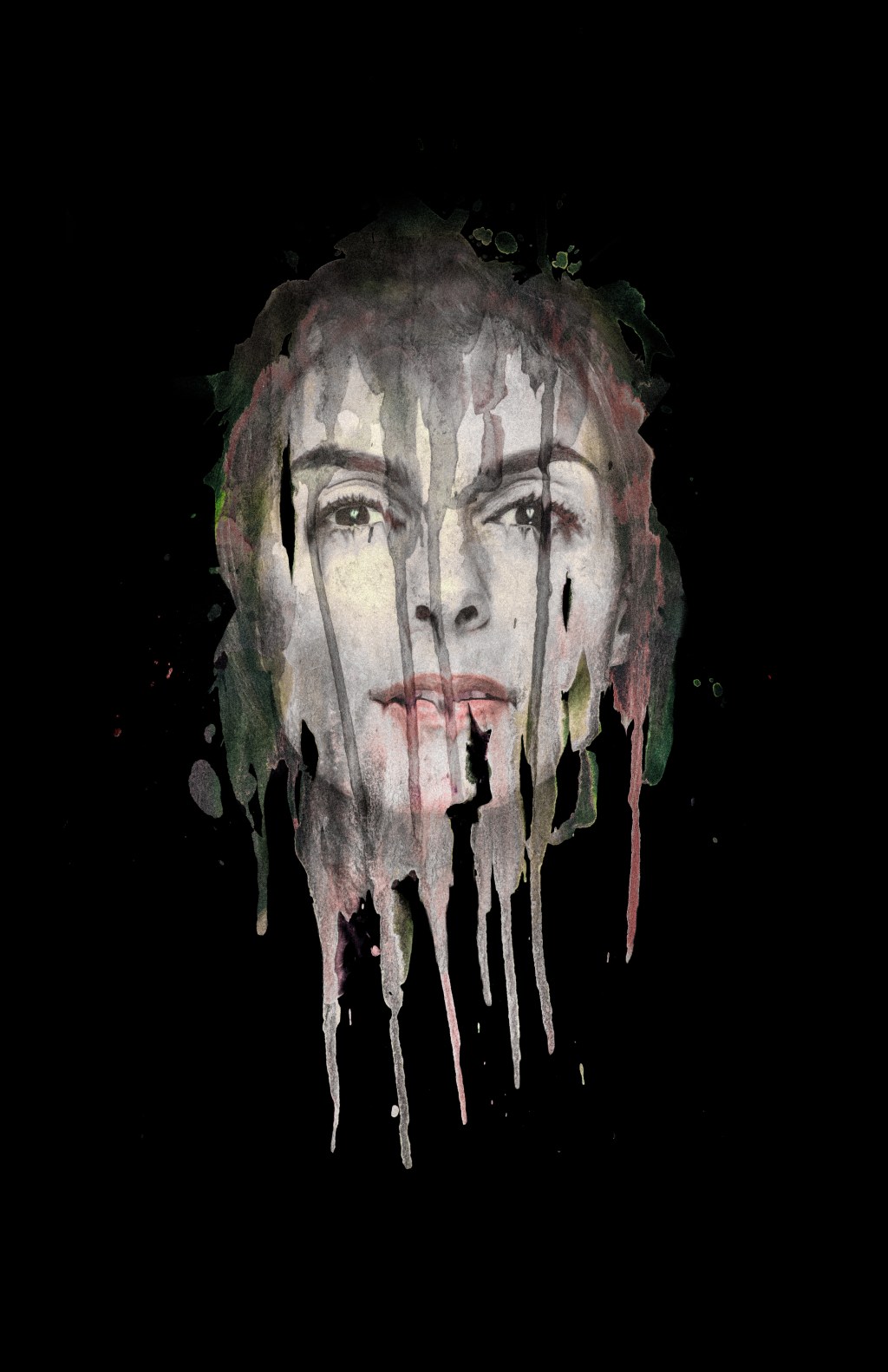
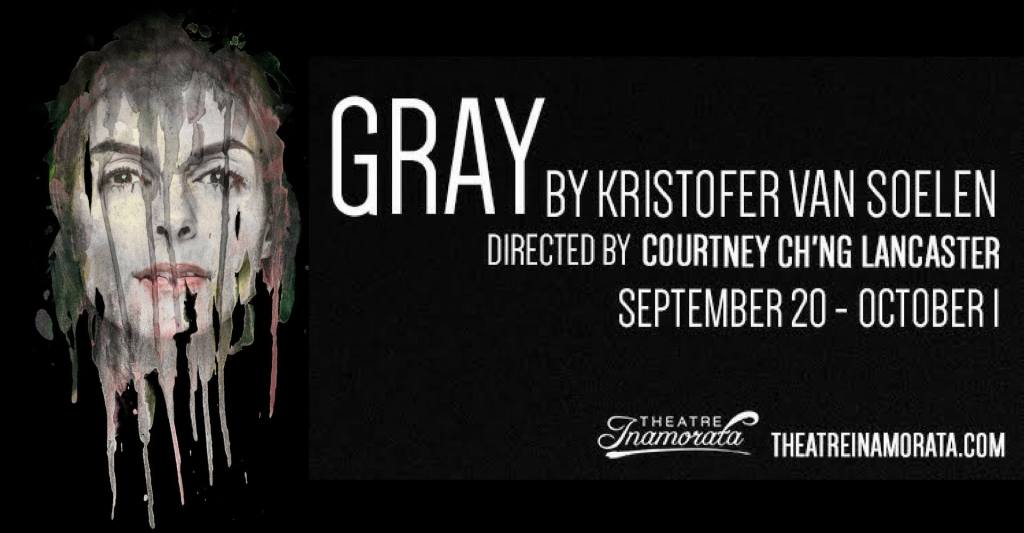
It was a pleasure to sit down with director Courtney Ch’ng Lancaster to chat about Theatre Inamorata’s upcoming production of Gray. Gray, set in modern-day Toronto, was inspired by Oscar Wilde’s The Picture of Dorian Gray. Playwright Kristofer Van Soelen re-imagines Dorian’s world, altering the genders and relationships of the characters. The cast and crew are predominantly female-identified. Gray begins when Jane sculpts Dorian and creates a work of pure beauty. But when a gallery owner named Opal introduces Dorian to the hedonism and chaos of the arts world, everything changes. As time passes, the sculpture incurs the damage that Dorian inflicts on herself and others. Gray explores art, beauty, sexuality and female identity.

Bailey Green: When were you brought on board with Gray?

Courtney Chng Lancaster: Well, I helped Theatre Inamorata looking at a different script more than a year ago and spent a little bit of time with them to see if that was a project they wanted to move forward with. Though that specific project didn’t end up working out, when they were ready to produce Gray, Michelle Langille called and asked if I wanted to direct and I said yes. 

BG: What were your initial reactions reading the script?

CCL: I thought it was fantastic and very brave. It’s a really wild adaptation. Set in the present day, the fundamental themes remain the same but a lot has been changed. Kris has really taken a wide open approach and it was really brave and made me completely terrified when I read it. [The play has] a large amount of people and spans a lot of years, so it made me nervous.

BG: Were you part of the development process, as well, and is the script still growing in rehearsal?

CCL: Kris is such a wonderfully open playwright. There was a process before I came on board, with a number of drafts before. I came into a reading six months ago and suggested some changes and a new draft came from the input from everyone in the room. And then [we had] a two-day workshop at the beginning of the summer. We’re still tweaking things as we go, seeing where we need more information and where can we trim back. Kris is wonderful. 

BG: What was your relationship to Dorian Gray (if any) before this project?

CCL: Very little. I barely remembered it, actually. I’d read it in high school. It’s quite fun, and so gothic. It’s a very dark verging on melodramatic story, which is quite pleasurable to play with on stage!

BG: How do you think a modern setting in Toronto enhances some of the themes of the play?

CCL: I think we can all relate in the theatre world to the wonderful strength of our community. In the original, the big temptation and the ultimate downfall comes from hedonism that overwhelms Dorian and becomes his drug. Kris has translated that into the dangers of getting pulled into the hedonistic part of the art world. [In the play] Dorian is not an artist but spends all her time going to these parties and is part of the scene. It explores how great the community can be, but also when does it become detrimental to the work? When is it all too much?

BG: Would you say that themes of addiction and alcoholism come up as well?

CCL: It goes hand-in-hand. Graham Isador recently wrote an article in Vice about addiction and how artists are so prone to that. When we were rehearsing and starting to link scenes together, we realized how much they drink in every scene. We need so many wine glasses in this show. A drink is a lure, an avoidance, a temptation, a polite offering. So I would say [addiction] is an unspoken theme, for sure. It’s not overt, but the audience can assume there are drugs. They’re the last ones at the party and as my grandma used to say, nothing good happens after 2am. [They have] that fixation on being at the centre of things and never taking time for yourself, always being out and socializing.

BG: And how social media really enhances the performative nature of living like that, because there’s the drive to show it to everyone else.

CCL: I’m glad you mentioned social media, because now we’re performing online how we’re out, keeping up appearances. At one point during the play Dorian celebrates having broken a threshold of followers. And it becomes the work, she has to display her hedonism, as well, lest she lose interest.

Rehearsal Photo of Tennille Read and Mamito Kukwikila taken by producer/performer Michelle Langille.

BG: What has been the most challenging aspect of working on this show?

CCL: Purely practically, I have never directed something with this number of people before. It’s a lot of bodies, and it’s been a wonderful challenge. I’m learning a lot about blocking and the physical positioning of people on stage. And how to tell what is a massive complex gothic story on an indie theatre budget with really compelling storytelling without slashing props. We don’t want to distract but it is a big tale to be telling with a minimal aesthetic onstage 

BG: What has brought you the most joy?

CCL: When it works. We’ve just finished the 3rd week of rehearsal now, and they are all wonderful team players. You have your exciting discoveries of the first two weeks, then the shiny-ness starts to wear, and then you think “Do I really know what is happening?”, “Do I really know what I’m doing here?”, the mud and the mire… it’s a hard slog, but it has been a great journey figuring out when it works.

BG: What has Gray made you reflect on in your own life?

CCL: Remembering what is important, reminding yourself why you’re doing it. I forget that on a regular basis. What you’re actually interested in as an artist. It can be very easy to be distracted by accolades and excitements, press and parties, and then to feel empty when that stuff isn’t coming anymore. So to remember why you’re an artist and what it’s about.

Rapid Fire Question Round: 

Favourite coffee shop: We’re rehearsing near Dupont and Ossignton, so right now I would say Contra Cafe, they make a really great latte. 

Current neighbourhood: We moved from the west side to Riverdale, and it’s been lovely.

What are you reading: This is so embarrassing but gardening books – Let it Rot! It’s about compost.

What are you listening to: Jason Isbell, despite how SOME people don’t appreciate him, aka my husband.

Next show on your calendar: Soulpepper’s Waiting for Godot and then Picture This. Oh and Michael Ross Albert’s Miss at the Assembly Theatre space, I’m a big Michael Ross Albert fan.

Gray

Who:
Company: Theatre Inamorata
Written by Kristofer Van Soelen
Directed by: Courtney Ch’ng Lancaster
CAST: Tennille Read, Michelle Langille, Ximena Huizi, Mamito Kukwikila, Edward Charette and introducing Sydney Violet-Bristow
Set and Costume Design: Lindsay Woods
Lighting Design: Steph Raposo
Sound Design: Andy Trithardt
Stage Manager: Hannah MacMillan
Producer: Michelle Langille
Associate Producer: Emma Westray

What:
“The only way to get rid of temptation is to yield to it.”

When Jane meets and sculpts Dorian, a naive and exquisitely beautiful woman, it is perfection – until Dorian is swept into the hedonistic and morally ambiguous world of contemporary art. As Dorian becomes more and more self-involved and destructive, the sculpture begins to absorb her acts of cruelty, while Dorian’s youth and beauty are intact. An examination of beauty, aging and self-indulgence, Gray contrasts the themes of the classic novel with our modern world. Featuring a predominantly female-identified cast and creative team, Gray takes a hard look at female identity and the implications of our society’s obsession with beauty.

Where:
The Commons | 587a College Street, Toronto, ON

When:
Wed. Sept. 20 – 8pm (PREVIEW)
Thurs. Sept 21 – 8pm (OPENING)
**Fri. Sept. 22 – NO SHOW**
Sat. Sept. 23 – 8pm
Sun. Sept. 24 – 2pm & 8pm
– – – – – – – – – – – – – – – – – – –
Wed. Sept. 27 – 8pm
Thurs. Sept 28 – 8pm
Fri. Sept. 29 – 8pm
Sat. Sept. 30 – 8pm
Sun. Oct. 1 – 2pm & 8pm

Tickets:
$25 General | $20 Seniors/Students/Arts-Worker | $15 Preview
theatreinamorata.com

Connect:
Courtney Ch’ng Lancaster: @courtneyvl
#Gray17
t: @TheaInamorata
i: @TheatreInamorata

“Puppets, The Service Industry & The Fringe” – In Conversation with Sex T-Rex on their new show BENDY SIGN TAVERN at the 2017 Toronto Fringe

Interview by Bailey Green

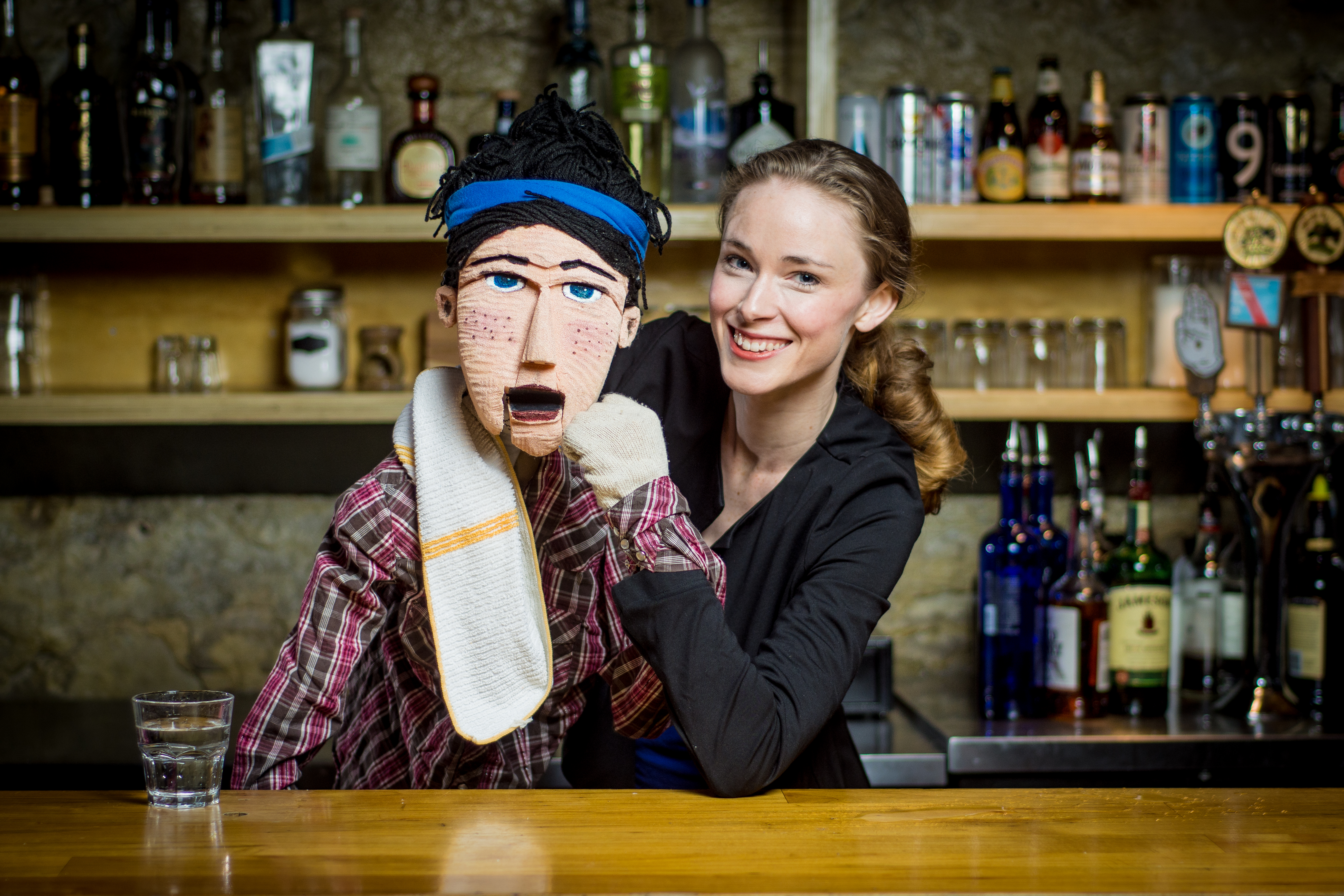
We spoke with Kaitlin Morrow, Seann Murray and Elliot Loran about Sex T-Rex’s site-specific Fringe show, Bendy Sign Tavern (located at Venue 26: The Paddock Tavern). We spoke about puppets, the service industry and supporting each other at the Fringe.

(Interview has been edited for length and clarity.)

Kaitlin Morrow: So… because it’s a puppet show, I think a lot of people are wondering if kids are allowed, and they are, even though it’s a bar, but they have to be accompanied by someone who is… not a kid. I think it’s important to distinguish that it isn’t a ‘kids show’, but if your kid can put up with swearing, they can see the show.

Seann Murray: It’s about as racy as most of our shows. There’s certainly less murder in this one. I wouldn’t say no murder… but less.

Bailey Green: When did Bendy Sign Tavern start to take shape? I know a lot of your shows have a somewhat quick turnaround time, so when did this one start to grow?

KM: This one had a sort of longer process. I used to work at this cafe in the east end for years, and my friend worked there before I did, so I had this long-standing relationship with this place. And like most cafes, it was full of characters and we were always joking about different characters you see coming in. And then, [in 2012] Comedy Bar and Insight Productions teamed up and had this pilot week competition where you pitch a TV show and if you get accepted you perform your pilot live for TV producers. The prize was $5000 and you get to go to these pitch meetings and then… we won.

BG: You won! That’s the best ending to the story

KM: We built about 20 puppets in a month and wrote the show and put it on its feet. We didn’t get into the Fringe this year with the lottery, which was good to know, but then site-specific came up… I said, “Look I have this puppet show in my closet. Let’s pull it out and do it in a cafe.” We couldn’t find a cafe but then a bar became available so we were like, “It’ll work in a bar!” It didn’t work in a bar. The story was about characters coming in and grabbing a coffee and going and that relationship doesn’t really exist in a bar. You don’t walk up to a bar and leave.

SM: So we started the process thinking that we had this show in the bag and then on second consideration, not really. A 20 minute TV pilot set in a coffee shop does not translate to an hour-long play set in a tavern. But there are still a lot of the same elements. At its core, it’s about the service industry

KM: [The puppets] were sitting in my closet for years so it was good to get them out and make use of them.

Photo of Kaitlin Morrow by Connor Low

BG: How many puppets did you already have and how many did you need to build? What’s the creation process like?

KM: I wish I had a photo of my apartment – it’s a mess. I believe we had to make 14 new puppets for this show. Some are really simple, some are more complex.

SM: There were a few big ones, for sure, something that is worth noting is that when it comes to creation there are a lot of different styles of puppets in this show, so there are very different processes in terms of how long it takes to make them.

[this part of the interview has been removed as it was mostly the author freaking out over several awesome Sex T-Rex puppets. See the show, and you too will be amazed by puppets. Also Elliott Loran, who plays the Human Piano Player in Bendy Sign Tavern and composed original music for the show, joins the interview.]

KM: So we made two dozen of our closest friends and family suffer through a 2 hour super secret preview of the show last Sunday.

Elliott Loran: It was great to have a run before opening. I don’t think I’ve ever been in an indie company that’s done that. Usually it’s like, “Okay we might get a run in before we open.”

BG: And usually Sex T-Rex brings the show to Montreal Fringe before?

KM: It’s our first time premiering a show in Toronto… It’s a little baby show. Usually we do make changes every single show. We’re always working on it. Sometimes the change is big, sometimes it’s small, but it never stays the same. So this is just going to be a raw, fresh creation!

SM: Montreal is also an especially good community in terms of giving feedback because they are used to being the first stop on the Fringe circuit. The audiences there are so generous with trying to improve your show.

Photo by Connor Low

BG: And this show is a really different style and genre from what you’ve done before. Music is now a part of the show, as well! What has that been like?

KM: It has been wonderful working with Elliott. None of us are musicians… I’m a hobbyist musician at best.

SM: Any amount of canned music we could get for this would be repetitive and so distracting. And Elliott is someone for us to play off of, as well.

EL: We’ve written some original music for the show too, so it’s not all improvised. It’s been a fun collaborative process! How has that been for you guys having not done it before?

KM: Super fun and terrifying. I wouldn’t say it’s a musical, but there’s music!

EL: I would call it a play with music. It’s a delightful surprise that there are songs. The music that is written is a bit jazz-inspired.

KM: Also a bit of bar atmosphere, drinking music… We’ve also never straight up written a love story before. Some of our shows may have romantic elements in them but often it is like a surprise ending.

SM: All of Sex T-Rex’s other shows are an action-based show, where the principal action revolves around combat, specifically, which is not the case in the play. And as a genre parody, I guess you could say it’s a romantic comedy but it’s not even a rom com because it is very situational. It’s about a workplace and it’s about this team.

EL: The characters are so surprising and it’s so different. It’s such a mash-up of all these fantastic ideas.

SM: This story is more anecdotal – many of us in Sex T-Rex are working in the service industry. It’s probably a story that will connect to a lot of Fringe artists.

KM: Speaking of that, we’re going to be featuring a different Fringe show every show! So the Fringe artists happen to be there in the bar and we are so excited that they’re there because they are celebrities in our world and so the puppets interview them.

BG: That’s a great way to really bring in the community and give back.

KM: We’ve been doing the Fringe for so long that I feel like at this point, in a way, we sort of need to. I remember when we were starting out with Callaghan! and we had like 40 people in our audience for most shows (if we were lucky), and then the very slow growth arc where we could finally sell out a 200 seat theatre. It wasn’t like 0 to sold-out for us. We had a slow growth so we had to work for a while to build a reputation. Now that we’ve been around for a while, it’s been 5 years, there are now people who will tweet about us and help to prop us up and spread the word. That’s amazing and we want to do that for other shows.

EL: You want to share that kind of support and share the work that inspires you. There’s so much. Like, I think to the Mind of a Snail team, that did Curious Contagiousthey have a new show called Multiple Organism and it has gotten so little Fringe pre-buzz, and their work is incredible! So I’m going to be promoting the shit out of that.

Bendy Sign Tavern

Who:
Creators: Sex T-Rex
Cast: Conor Bradbury, Julian Frid, Elliott Loran, Kaitlin Morrow, Seann Murray

What:
Award winning comedy company Sex T-Rex (Second City, Just For Laughs and Atlantic Fringe Best Comedy Award winners) return to the Toronto Fringe for the fifth year in a row with a Full Service puppet Rom-Com! “Life is hard when you’re a young puppet trying to make your way in the big city. But with a song in her heart and a crew of loveable co-workers by her side, Joan will overcome rude customers, packs of Bachelorette Wolves and literally battle her deepest fears to achieve her dreams.” Note: July 9th show is 8:30pm, which is updated from printed program.

Where:
THE PADDOCK
178 Bathurst Street, Toronto

When:
6th July – 7:30pm
7th July – 7:30pm
8th July – 7:30pm
9th July – 8:30pm
10th July – 7:30pm
11th July – 7:30pm
12th July – 7:30pm
13th July – 7:30pm
14th July – 7:30pm
15th July – 7:30pm

Tickets:
fringetoronto.com

Connect:
t: @sextrex
f: /sextrexcomedy
i: @sextrexcomedy