Skip to content

Posts tagged ‘Bailey Green’

In Conversation with Joshua Browne & Alec Toller on “The Queen’s Conjuror”

by Bailey Green

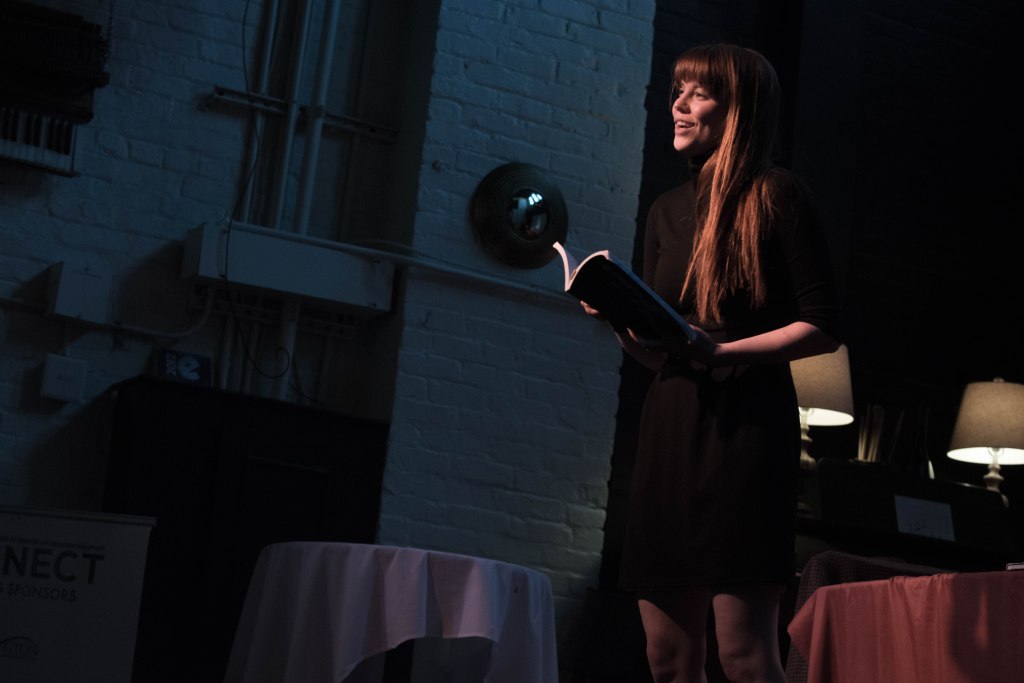
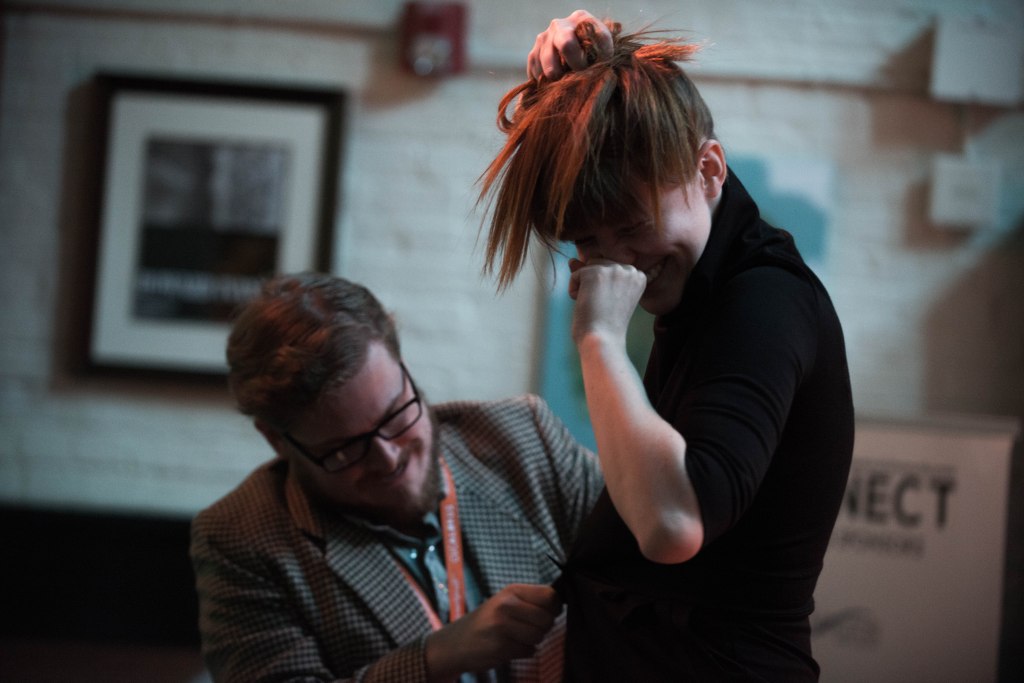
In the 16th century, John Dee—alchemist, scientist and magician—met an erratic, emotionally disturbed scryer named Edward Kelley. Dee believed Kelley had the ability to speak to angels and that this could help Dee unlock secrets beyond man’s understanding. A tumultuous partnership was formed between the two men and their wives. These flawed, complex relationships are explored in Circlesnake Productions’ new play, The Queens Conjuror, written by Joshua Browne and Alec Toller.

Director and writer Alec Toller came across John Dee on Wikipedia after he’d used the word ‘thaumaturgy’ on a date. John Dee is often considered the original wizard archetype. Dee is said to perhaps have inspired the characters of Prospero and Faust. Toller was captivated by Dee’s story and reached out to Joshua Browne. Browne, who had worked with Circlesnake Productions on Dark Matter and Angel City, says he was on board from the word ‘wizard.’

“The relationship between John Dee and Edward Kelley is really fascinating,” Browne says. Browne plays the character of Edward Kelley, “Edward Kelley was a scryer, a channel for the voices of angels. John Dee actually turned to the occult for knowledge because he reached a point in his work where he believed the knowledge of man would not get him closer to God.” Shortly after Dee and Kelley began working together, Edward and Joanna Kelley moved in with John and Jane Dee. The two couples lived and travelled together for years before the relationships began to fracture. “It wasn’t satisfying to write Kelley off as crazy or psychotic,” Toller says. “But he was very emotionally disturbed and we look at how that affects all of the relationships there.”

johndeeforqueen

John Dee with the Queen

The initial drafts of The Queens Conjuror by Toller and Browne, provided a historical baseline for improvisation with the company of actors. Feedback was instrumental when it came to writing the characters of Jane Dee and Joanna Kelley. According to Dee’s writings, Jane was integral to his work. Their relationship was quite egalitarian for the time. By contrast, all that is known of Kelly’s wife Joanna is that he despised her. “We have one man’s opinion of her,” Toller says. Browne and Toller emphasize that a central focus of this piece was ensuring that Jane and Johanna’s voices were heard.“We had to invent them,” Toller says of writing Jane and Joanna. “We explored the gender dynamics involved in the world they were living in, but it is a challenge because how do we show what the reality was without reinforcing it? We wanted to write something that is not going to ring as these women being two props for the ‘larger story’ of these men.”
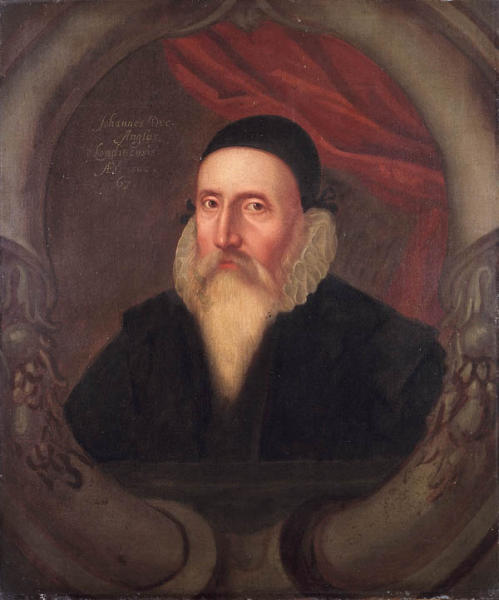
john_dee_ashmolean

John Dee

Browne speaks of the risk and vulnerability involved in working on this process, “This feels like a risky show to me… I have tons of fear surrounding this show! It’s about the 16th century with very little in the way of budget[…] It’s about these contentious relationships and personal things, and how do you do that without making the play a soap opera or historical drama? And how do you write women and facilitate women writing themselves? How do you represent the patriarchy without reproducing it? As two white, male writers, we had to get our actors’ opinions and involve women in the conversation. We can acknowledge our privilege and ask how can we be better.”

In the rehearsal room Toller and Browne transitioned into their roles as director and performer, respectively. Both Browne and Toller speak of gratitude for their company of actors (Tim Walker, Khadijah Roberts-Abdullah, Sochi Fried, John Fray) whose contributions helped The Queens Conjuror change and grow. The collaborative nature of the rehearsal process is at the core of Circlesnake’s mandate: “It’s really important when we’re engaging artists and actors who are all very talented,” Toller explains, “that they don’t just walk away with the small money you get from a profit share and maybe a fun rehearsal/show process, but that there’s an ownership there. They’ve helped make this together and it’s important that these actors get the most agency and a sense of pride in the show they made with us.”

The Queen’s Conjuror
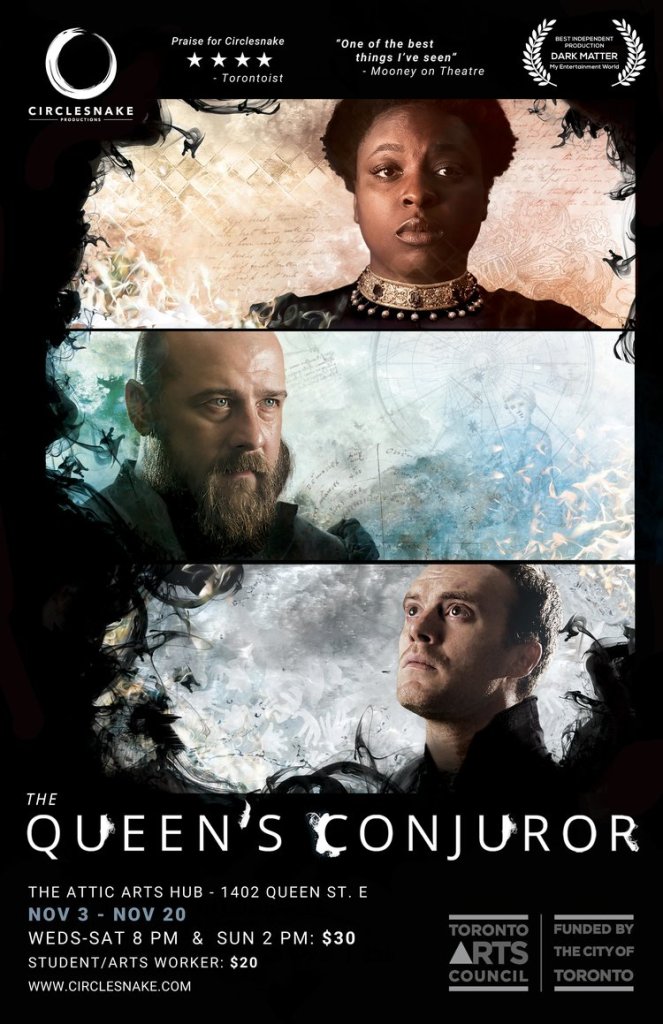
tqc-11x17-fa-high-page-001

Who:
Directed by Alec Toller
Written by Alec Toller & Joshua Browne

Featuring Tim Walker
Joshua Browne
Khadijah Roberts-Abdullah
Sochi Fried
John Fray

What:
John Dee was a 16th century adviser to Queen Elizabeth, and a scientist and magician when those two professions were indistinguishable. The Queen’s Conjuror follows John Dee as he tries to decipher an enticing but ominous vision which he hopes will provide critical information that will impress the QueenElizabeth enough to gain her patronage. To do this, Dee enlists the help of Edward Kelley, a scryer, medium, and possible charlatan. Kelley proves to be as brilliant as he is disturbed, and Dee must work through the wretchedness of Kelley’s soul and his erratic behaviour to access his revelatory visions and gain the Queen’s support. The show explores the complexity of intimacy, the dangers of vulnerability, and the necessities of both for the alchemical transformation of the soul.

Where:
The Attic Arts Hub
1402 Queen St E

When:
Nov 3 – Nov 20
Wed – Sat, 8pm
Sun 2pm

Tickets:
$30
$20 Student/Arts Worker
queensconjuror.brownpapertickets.com

Connect:
fb: /Circlesnake
t: @Circlesnake
w: circlesnake.com

In Conversation with Georgina Beaty, Playwright and Performer of “Extremophiles” at Summerworks

by Bailey Green

A woman gives birth to an unusual child in a dying society. In a world that is collapsing in on itself, an anthropologist arrives at a remote outpost to study the mother and the strange child. In the world of Extremophiles, the north has been deserted, the oceans have acidified and reproduction has ceased. “I’m interested in how we deal with impossible situations,” playwright and performer Georgina Beaty says. “How we have impossible conversations, how do we deal with still being alive and having so much love for each other? How do we find the desire to keep going and achieve?”

The title of the play is a scientific term— extremophiles are microscopic organisms who survive in the most extreme environments. Extremophiles is set in a near future with a contemporary feel. It’s just ahead of where we are now, Toronto of 2020. “The absurdity has been very liberating,” Beaty says. “but it’s the relationship between the characters and dealing with the nitty-gritty of how they are connecting to each other that has been a challenge. Finding what they are going for in the moment, yet still providing those world-building details for the audience.”

The piece first took shape in 2013-14 when Beaty participated in Write from the Hip, Nightwood Theatre’s year-long playwriting program for new writers. Extremophiles is the first piece Beaty has written individually, as the four shows she has created with her company Architect Theatre (Beaty is co artistic director with Jonathan Seinen) have used verbatim work and collective creation.

EXTREMO1-byDahliaKatz

Photo Credit: Dahlia Katz

The process for this show involved a great deal of improvisation and work with dramaturge Karen Hines. “Karen has a great eye for dark comedy and a really precise understanding of alternative logic,” Beaty says. “It’s not a well-made play, it has a slippery form and two characters who bleed into each other. So we did a lot of improvisational work to generate material and then I would shape that as a writer.”

“I keep being blown away that this is a 10 person team,” Beaty says of the creative crew of Extremophiles. “The people in the room have broad theatrical minds and are involved in several aspects of theatre. [Director] Megan Watson has a hunger for different approaches to theatre and a mind for collaboration. Erin and Sarah [of Caterwaul Theatre] are bringing the child to life. It has been so great to have Megan, who is newer to the process, come in with all the questions the audience may have.”

The play explores themes of isolation in a world that once relied on the internet for connectivity and now finds that all that human beings have is each other and how intimate that need for connection can be. “I’m in my early 30’s and I’m at this age where it is possible for us to have children and reproduce and also ask this question of reproduction,” Beaty says. “We’re in a world that looks like it will be dealing with the severe fallout of climate change, and that ‘what if’ is part of the play. What if the world changed quite drastically?”

Extremophiles

EXTREMO2-byDahliaKatz

Photo Credit: Dahlia Katz

Who:
Company: Golden Age in association with Architect Theatre
Directed by Megan Watson; Written + Performed by Georgina Beaty; Dramaturged by Karen Hines; Production Design by Patrick Lavender; Live Visuals by Caterwaul Theatre; Sound Design by Chris Stanton; Stage Management by Tamara Vuckovic; Production Management by Daniel Bennett; Produced by Sascha Cole, with Rashida Shaw.

What:
“Field Notes –
September 1, 2020. I’ve arrived. The desert is a desert. There is only Margaret, her baby, and one doctor. The supply drop contained: tuna (live), salt tablets, and me. I parachuted out of a plane. It is… exciting…is the wrong word but it is the only one I have. The question: What is going on right here, right now?”

A darkly funny meditation on a world past the precipice, Extremophiles is an unconventional dissertation, a eulogy, and a mid-apocalyptic bedtime story. In the midst of a spontaneous pregnancy epidemic, only Margaret gives birth – to a very unusual baby. She is quarantined in the far North with her growing child. When April, an eager young anthropologist, arrives to chronicle the emerging society, she becomes more entangled than she anticipated. Featuring live visuals from SummerWorks favourites Caterwaul Theatre, Golden Age and Architect Theatre (Like There’s No Tomorrow, SummerWorks 2015) present Extremophiles, a new solo play written and performed by Georgina Beaty.

Curator’s Note
“There are a growing number of artistic responses to climate crisis but this is one that goes beyond. This is beautifully committed allegory – it touches a nerve as it presents an absurd and acutely recognizable dystopia that investigates the truth of the times in which we are living. It bends our brains in a delicious way and asks us to look at our state of affairs. It is a rigorously attacked performance, so earnest and intelligent it can only ring true.” – Tara Beagan

Where: 
The Theatre Centre BMO Incubator
1115 Queen Street West
Toronto

When:
Sunday August 7th 10:30 PM – 11:30 PM
Monday August 8th 5:15 PM – 6:15 PM
Thursday August 11th 9:30 PM – 10:30 PM
Saturday August 13th 2:45 PM – 3:45 PM
Sunday August 14th 7:30 PM – 8:30 PM

More Show Info:
summerworks.ca/extremophiles/

Tickets:
summerworks.ca

Connect:
twitter – @GeoginaBeaty
facebook – Extremophiles

THIS IS THE AUGUST: When Different Waves of Feminism Collide & the Social Politics of YouTube – In Conversation with Playwright Hillary Rexe

by Bailey Green

Subjectivity is a powerful fucking place. What happens when the specimen that you have under the magnifying glass speaks back? We are children of the universe, no less than the sun or stars. Its about time you started acting like it. – Kim Katrin Milan, from her speech at SlutWalk (Toronto, 2012)

Before the dialogue for This is the August begins, this powerful quote on the second page of the script sets the tone. Playwright Hillary Rexe was moved to tears when she found Kim Katrin Milan’s speech while browsing through YouTube. “I found it while I was in my last draft, and it spoke to me. I wanted to inform the piece based on discourses of intersectionality and empathy,” says Rexe.

This is the August tells the story of three people. There’s Edie – a queer, sex-positive, millennial film student focused on building her YouTube brand. Bea – a baby boomer, out lesbian and a once successful documentary filmmaker who begins the play as Edie’s professor and lover. And Sam – Bea’s kid, a gender-neutral artist who paints galaxies and values their privacy.

IMG_1776

The play grew out of conversations Rexe had with friends about second and third wave feminism and where they diverge. “[I was interested in] the places they collide or connect. For example, gender and gender identity do collide,” Rexe says. “Bea is a second wave feminist documentary filmmaker, who in her time was really revolutionary but she can’t wrap her head around this person who she thinks she knows, her 23-year-old kid.” The second divergence Rexe addresses in the piece is around sexuality. One of the ways this is explored is with Edie’s YouTube channel content, which often concerns her personal and sexual history. Bea cannot understand why Edie would want to make an object of herself. But Edie sees her work as sex-positive.

“I have so much empathy for Bea, because the good work of [second wave] feminism isn’t done, but the way she hears the characters in this play is ‘your ideas are dated, we’ve all moved on from this’,” Rexe says. “All three are volleying to each other and they just fail, but ultimately all three want to be understood and they have commonality.”

Rexe has an extensive background in editing prose, poetry, novels and has often focused on facilitating other people’s creative work. This is the August is her first play, and Rexe didn’t want to draw any hard and fast conclusions about the political topics that the characters battle with. “There aren’t easy answers,” Rexe says. “This is the first piece that, beyond my ego and shyness, I actually want to finish this and put it out into the world.”

13891862_1097103353705033_3067342281671395868_n

Rexe’s piece explores the social politics of YouTube and how people present a version of themselves on YouTube versus how they interact in their public life. The production features Edie in real life and real-time recording her videos and then in the transitions, the audiences sees her edited videos. “YouTube dramatizes the need to please and be liked and wanted. You’ve been given this elevated place in the world, why did I get this and what did I do to keep this?” Rexe says.

Casting the show was an amazing experience for Rexe. She had set out to find a gender fluid, queer, or neutral person to play Sam who was also sexy, could sing/play music, who was local and who wasn’t white. “People laughed in my face,” Rexe says, “but I didn’t feel comfortable just casting any actor. So we posted on Jobs for Queers, and Heath V Salazar, and the magical unicorns that they are appeared.” Lauren Beatty, who identifies as queer and femme, is also a YouTuber. “I felt really lucky to find queer performers to play queer parts. Lauren is often cast as straight, and she’s said that it means a lot to her to represent her community,” Rexe says of Beatty who plays the character of Edie. Kimberly Huffman is “fantastic” as Bea and rounds out the cast.

“[Megan Piercey Monafu] is such a gift,” Rexe says of her director. “There has never been a time that someone has asked a question about set, aesthetic, anything, and Megan didn’t have the exact words in my mouth.”

For Rexe, this piece is the beginning of new ideas and projects. She praises her team, “the greatest joy in turn has been working and collaborating with such beautiful people who are so dedicated and invested to my script.” This is the August is just the beginning.

This is the August

august postcard

Who:
Company – Young Prince Collective
Directed by Megan Piercey Monafu; Written by Hillary Rexe; Performed by Lauren Beatty, Kimberley Huffman, and Heath V. Salazar; Set Design by Allie Marshall; Original Artwork by Andrew Classen; Sound Design by Dave Clark; Stage Managed by Maricris Rivera; Produced by Curtis te Brinke, Rashida Shaw, Hillary Rexe, and Dana Herlihey.

What:
Live music, painting, and YouTube videos engage and provoke in this darkly funny performance about the intersection of our real and online selves, especially when one goes viral.

Edie is a YouTube star who has just gone viral. Bea, her girlfriend and professor, is a documentary filmmaker who focuses her lens on marginalized women. She wants Edie to stop vlogging about her sex life and focus on more “important” work. Together they passionately negotiate their identities with, and without, each other: Millennial and Boomer, student and professor, lover and adversary. These conflicts of identity come to a head when Edie meets Sam – a multimedia artist who defies definition.

Curator’s Note
“Vlogs or docs? Second or third wave? Empowerment or power? Either/Or? Both/And? Throw love in there and what have you got? Something like a Venn diagram of sexuality, gender, and feminism today. But This is the August is no simple diagram; it’s a smart, funny play, rich with the complexities of contemporary life in the west.” – Guillermo Verdecchia

Where:
The Theatre Centre BMO Incubator
1115 Queen Street West
Toronto

When:
Saturday August 6th 12:00 PM – 1:15 PM
Sunday August 7th 8:00 PM – 9:15 PM
Tuesday August 9th 9:15 PM – 10:30 PM
Thursday August 11th 6:45 PM – 8:00 PM
Saturday August 13th 5:30 PM – 6:45 PM
Sunday August 14th 12:00 PM – 1:15 PM

More Show Info:
summerworks.ca

Tickets:
summerworks.ca/this-is-the-august/

Connect: 
twitter – @youngprinceTO
facebook – YoungPrinceCollective


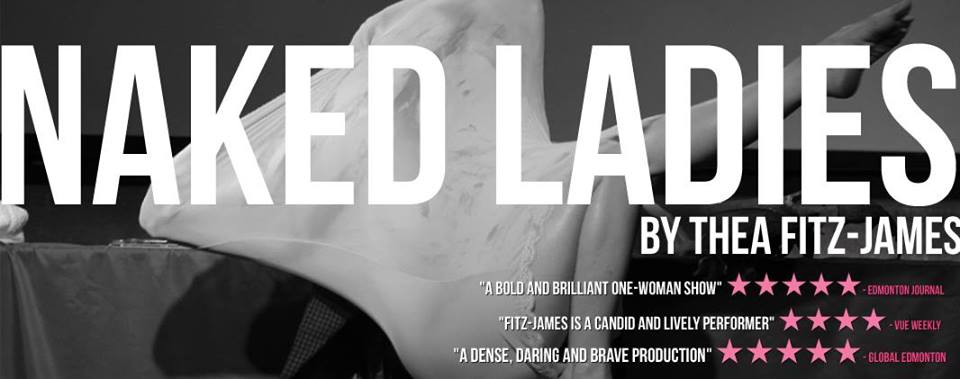
NAKED LADIES: Critiques & Assumptions, Post-Show Conversations, and How It Doesn’t Get Easier – In Conversation with writer/performer Thea Fitz-James

by Bailey Green

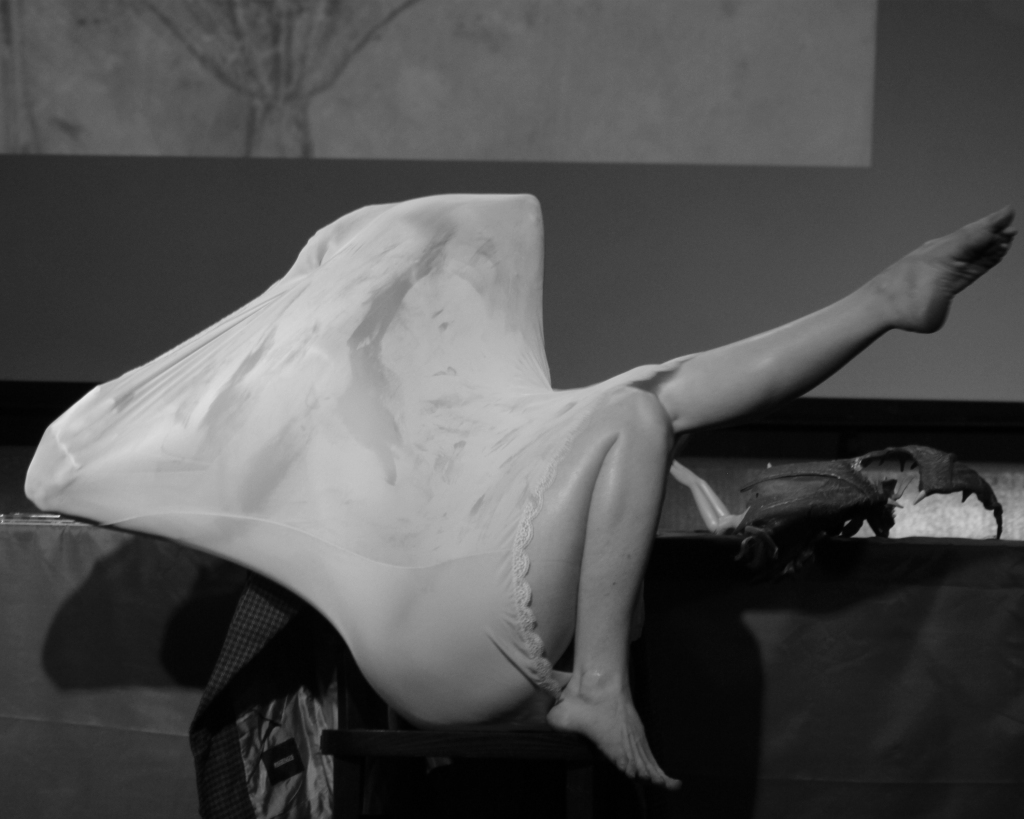
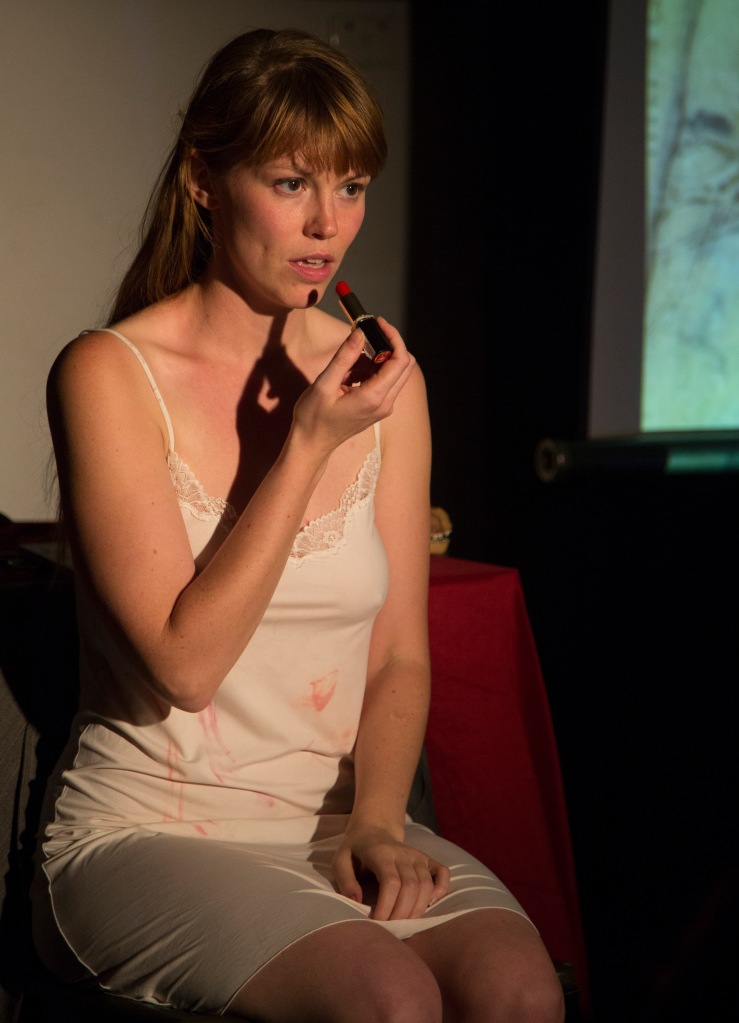
Thea Fitz-James came into contact with naked art in university when she read Rebecca Schneider’s The Explicit Body in Performance. She created an explicit body piece and performed it for her class. When Fitz-James told her mother (over the phone, drunkenly, in Halifax, on Valentine’s Day) that she was doing this kind of art. Her mother without missing a beat said that women take their clothes off to forget about their fathers. “That assumption really stuck with me, this daddy issues assumption,” says Fitz-James. “That all women who choose to get naked are somehow doing it for an absent male in the room. So Naked Ladies is a combination of personal and academic.”

“The people who are mean to naked ladies are afraid for them,” Fitz-James says. “In the show, I talk about my mother and her criticisms [of Naked Ladies] which are totally valid and come from love. We’re in a really good place now.”

NakedLadies- 5

Naked Ladies began in December of 2014 as a 30 minute piece, part of a double bill at hub14 with theatre creator Andrew Gaboury who performed his piece totem. When Fitz-James was accepted to the 2015 Edmonton Fringe, she reached out to director Zoë Erwin-Longstaff who was immediately on board with the project. “We spent a lot of time tearing the script apart and writing new stuff, and though it is my writing, the development process was very collaborative,” Fitz-James says.

Naked Ladies has travelled to Edmonton Fringe, Cucalorus Film Festival, Adelaide Fringe and most recently to the Montreal Fringe this past June. When asked about the differences between each experience Fitz-James says, “Edmonton was very raw… there was a fresh-off-the-press kind of energy. In Adelaide I had to work harder to find my audience. It’s not just come see Naked Ladies, it’s come see my feminist solo show where I challenge your concepts about the way we imagine women.”

Naked Ladies 2 (1)

In Montreal, Fitz-James got to bring her piece home. “Naked Ladies is about the systematic abuse of women, it’s about the way we treat naked ladies — either putting them on pedestals and calling them goddesses or throwing them on the ground and calling them whores,” Fitz-James says. “So what was magical about being in Montreal was that was the site of so many of my young female abuses, things that I am now comfortable to call sexual assaults. And Montreal really picked up what I was putting down in a way no other Fringe has.”

NakedLadied-213

After a year of shows, getting naked in front of an audience hasn’t gotten easier, Fitz-James says, it has gotten harder. “There’s assumptions about this show — that it’s sexy, that it’s therapy on stage, that’s it’s some sort of personal healing for me. That somehow it is easy to do this because I am a pretty white female,” Fitz-James says. “I address some of that in the show, that I’m white, and how this show would be an entirely different show if I was a black woman. But I’m not going to tell that show because it isn’t mine to tell. I would absolutely support that show. I would dramaturge it for free.”

Fitz-James emphasizes that though the show is about women it is important for men to bear witness as well, “If you’re worried about being that creepy guy who comes to see my show, don’t be! It’s very accessible.” Naked Ladies can be for anyone who has felt outside of their own body.

Production Image 3

It is the visceral response from audiences that has been the greatest gift for Fitz-James and it is what inspires her to continue performing the piece. “The way the play lives on has been in conversations with women, and men, after the show,” Fitz-James says. “And it isn’t always men, but it is mostly men who want to give me their comments, criticisms, change me, curate me […] I had a man tell me my pubic hair was an easy way out because it hides my labia. My experience is certainly not isolated, I think it is just heightened. I think any woman doing a solo female show experiences men trying to direct them. It’s heightened when you’re naked because all of those questions of representations are already there.”

SummerWorks may be the last bash for Naked Ladies, so you don’t want to miss it!

13769565_10154294971507114_5997982986385647667_n

Who:
Directed by Zoë Erwin-Longstaff; Written and Performed by Thea Fitz-James; Projection and Lighting design by Remington North; Outside Eye by Arlen Aguayo Stewart; Stage Managed by Stephanie Taylor.

What:
A layered history of naked female bodies in performance, NAKED LADIES asks tough questions around the nature of the female body and tries to understand its contested position between stigma and celebration. It brings together personal anecdotes – both traumatic and silly – alongside art history, feminist theory, and performance art, as the performer attempts a queer reckoning the/her own body. Between the naked and the nude, between forgetting fathers and remembering mothers, past sexual stigma and personal secrets, NAKED LADIES asks why women get naked on stage. Why, where, and for whom?

“This is a bold and brilliant one-woman show — filled with more questions than answers” ★★★★★ -Edmonton Journal

“Porn, porn porn porn, men want to f you, or any person they see naked, or did you miss that class in grade ten biology?” – Doreen Savoie, concerned citizen

“Maybe that’s what you are trying to do: reach through shame to seek worthiness? belonging? love? But why can’t you do one show that I can see?” – Thea’s mom

Curator’s Note
“Nekked. Oh yeah.
Bodies. They’ve been around all this time and we still don’t know what to do with them. Why do they still trouble us? Why do they still mean so much, and in so many ways! Smart. Honest. And funny.” – Guillermo Verdecchia

Where:
The Drake Underground
1150 Queen Street West
Toronto

When: 
Thursday August 4th 7:00 PM – 8:00 PM
Friday August 5th 8:30 PM – 9:30 PM
Sunday August 7th 6:15 PM – 7:15 PM
Monday August 8th 8:30 PM – 9:30 PM
Thursday August 11th 5:15 PM – 6:15 PM
Friday August 12th 8:00 PM – 9:00 PM

More Show Info:
summerworks.ca/naked-ladies/

Tickets: 
summerworks.ca

Connect:
web – theafitzjames.com
twitter – @theafitz


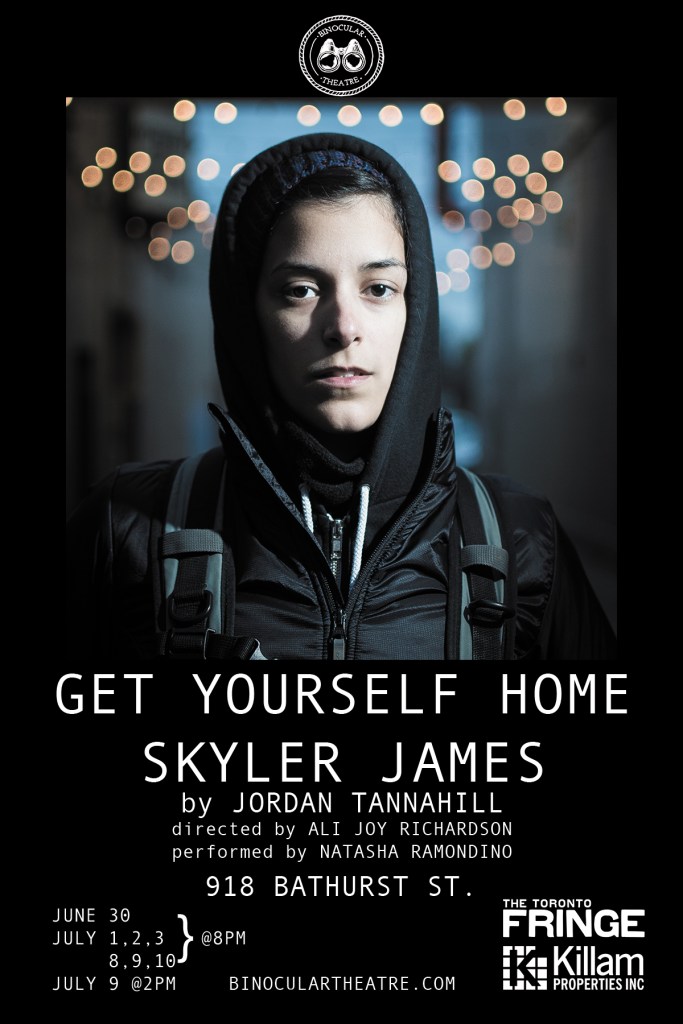
“Get Yourself Home Skyler James” – In Conversation with Director Ali Joy Richardson & Performer Natasha Ramondino

by Bailey Green

“I trusted the library, like Hermione Granger, and I got to thinking—is there a solo play for a young female voice?” In the Fall of 2015, director Ali Joy Richardson asked herself this question as she searched for a script to submit for the 2016 site-specific Fringe category. Richardson knew she wanted to collaborate with actor and friend Natasha Ramondino. Then, in Jordan Tannahill’s award winning collection of short plays Age of Minority, Richardson discovered Get Yourself Home Skyler James. The play tells the funny, honest, searing account of 19-year-old ex-soldier Skyler James. Though the play diverges slightly from true events, the core story remains largely intact.

The audience finds Skyler in back of the KFC where she works. After police officers show up to talk to Skyler, her girlfriend locks herself in the bathroom. Over the course of 40 minutes, Skyler tells the woman she loves the truth about her past and reveals everything she has fought for and against. As a director, Richardson found one of the challenges of this piece was to keep her direction simple and focused. “It’s a 40 minute show of a young woman talking through a door to another young woman, [and I had to trust] that fight, that act of endurance is compelling, and not succumb to the temptation to embellish with tech or unmotivated blocking. We focused on her actions and the sustained goal of proving herself and justifying her actions.”

FringeFemme Skyler James

Actor Natasha Ramondino was drawn to the character of Skyler instantly. “I was immediately on board,” remembers Ramondino. “Skyler is so funny while she tells what is such a serious, and at times awful, story. When things get really heavy, she’ll thrown in a joke. She describes herself as the most normal girl in the world, and she really is so relatable.”

Ramondino and Richardson bounce ideas back and forth, punctuating each other’s sentences with affirmatives and nods. “There’s a good sense in the room where I know when we can stop and chat about a moment,” Ramondino says. Richardson adds, “It’s so nice to just get to work with an actor I know well. And it feels a bit spoiled to work on a show where there’s no huge cast or complicated transitions or furniture to move. We’re just stripping it down to cracking a performance.” The pair laugh about a moment in rehearsal where they were using verbs to action sections of the text. They had chosen the verb ‘embrace’, and as Ali encouraged Natasha to embrace harder, Natasha’s line got softer and softer. They stopped the rehearsal only to discover that ‘embrace” for Ali meant a hug that sweeps you off your feet but for Natasha it meant to hold someone softly in your arms.

20160624_Skyler_Rehearsal (0033 of 0041)

For both women, this play is incredibly relevant. “For me, one of the most important aspects, is that the burden of proof is always placed on the survivor of abuse or violence,” Richardson says. “The play leads to a point where Skyler discusses a conversation she has with her lawyer and the account is chilling, yet so familiar.” Richardson mentions the Canadian military probe in 2014 which found that an alarming amount of women in service had been sexually assaulted or harassed. “Women are being harassed for just being women, not to mention the [harassment for] being a gay woman,” Ramondino says.

For Ramondino, telling this story is a privilege and an honour. “It shouldn’t be so rare to have a young, queer, female voice on stage, so thank you to Jordan Tannahill. I’m very excited to bring this story to people who may not be part of the theatre community or may not feel comfortable calling themselves an ally. It will be interesting to see their expectations flipped by such a real, raw character.”

Get Yourself Home Skyler James

Presented by Binocular Theatre as part of the 2016 Toronto Fringe Festival

4 x 6 Skyler Handbill

Who:
Written By: Jordan Tannahill
Company: Binocular Theatre
Company origin: Toronto, Ontario
Director: Ali Joy Richardson
Cast: Natasha Ramondino
Creative team:
Neil Silcox – Production Manager

What:
When Private Skyler James was outed as a lesbian after joining the US Army, she packed a truck, fled her base in Kentucky, and started driving north…
Based on a true story, this gripping play reveals the true damage of prejudice and the strength of a young woman’s spirit in a society that teaches, “don’t ask, don’t tell”.
(2014 Governor General’s Award)

Where:
918 Bathurst Basement, Bathurst Street

When:
July 8th at 8:00 PM
July 9th at 2:00 PM
July 9th at 8:00 PM
July 10th at 8:00 PM

Connect:
binoculartheatre.com
@Binoculart