Skip to content

Posts tagged ‘Brittany Kay’

“Punk Rock, Remounts & SITUATIONAL ANARCHY” In Conversation with storyteller Graham Isador

Interview by Brittany Kay

It’s always the best chatting with storyteller/artist Graham Isador so we were thrilled to catch back up with him about remounting Situational Anarchy, which was runner-up for outstanding production at the 2016 SummerWorks Festival. We spoke about Against Me, punk rock, remounts, and why it’s important to keep doing what means something to you.

Brittany Kay: Tell me a bit about the show?

Graham Isador: Situational Anarchy is a storytelling show about how punk rock is the most important thing in the world. It’s also a show about how punk rock is the stupidest thing in the world. The show is framed as an open letter to Laura Jane Grace, the lead singer and frontwoman of the band Against Me. It chronicles my times growing up in the Southern Ontario Music scene, my obsession with her band, and the frustration I felt when Against Me signed to major label Sire Records (a division of Warner Records). While the framing device has to do with music, the show is a series of stories about the compromises we make and the things we leave behind as we get older.

BK: What was your initial draw into Against Me!?

GI: I found Against Me in my adolescence. Like a lot of creative types, my teen years were spent in turmoil. I didn’t have a lot of friends. My creative inclinations – which mostly consisted of unreadable poetry and a penchant for eyeliner – made me stand out from my peers. Those differences often lead to violence both psychological and physical. Against Me’s music offered refuge. I could sing along with tracks that celebrated my outsider status. The band introduced me to punk rock and gave me a place to belong. They mattered to me in that overwhelming, heartbreaking way, things can matter to you as a teenager. But it was more than just that.

There is a saying that my friend Frank has: If you grow up and your favorite band was Oasis it means you liked a band called Oasis. If you grew up and your favorite band was Minor Threat, it means you liked a band called Minor Threat and had a certain opinion about how the world was supposed to function. To me, and to a lot of my friends, punk rock is more than just shitty music played very loud. It’s a set of ideologies and values. Those ideologies and values shaped the person I am today.

BK: Why do this again? What was successful about it the first time around?

GI: Theatre is such a ridiculous medium. Situational Anarchy has been celebrated as the most successful thing I’ve done in my career, we were awarded runner-up for outstanding production at the 2016 SummerWorks festival, but we only did three performances. A couple of hundred people saw the show. I’m grateful to everyone who bought a ticket. I’m also grateful for the praise we were given. But I’d like more people to see what I do. This is a chance to do that.

I don’t think it’s up to me to decide what was successful about the show. I just get up there and try to do the best job I can. Without giving too much away, people have told me they enjoyed the depictions of how awkward growing up can be, what depression can do to people, and the nature of the things we love. Also there are jokes.

http://www.youtube.com/watch?v=d1W7Ptg_Ies

BK: What was the creation process for this show? How do you rehearse/structure a show that is based in storytelling?

GI: I started writing this show because it was impossible not to. When Against Me signed to a major label it felt like a personal affront. It hurt my feelings. I was sad and I was pissed off and despite knowing that those emotions might seem laughable to others – why should a band being on the radio throw your life into a tailspin? – it’s still how I felt. I couldn’t not talk about it. I’d be at a house party and I’d talk about Against Me. I’d be at Thanksgiving dinner and I’d talk about Against Me. I’d be interviewing another band for my job and it’d turn into an interview about Against Me. It was all getting to be a bit much.

When I was at Soulpepper a first draft of the script was created as a part of the playwrights unit. I performed different versions of the story at smaller stages across Toronto and it kept getting longer. When we got into SummerWorks last year, I brought on longtime collaborators Tom Arthur Davis and Jiv Parasram to help me shape the story into an actual play. They’re both wizards with that type of thing. They were a crucial part of taking my anecdotes and making them into something palatable. If anyone enjoys the show that is as much to do with their work as it is to do with mine.

BK: Why is this story important for you? Why is this something that is close to your heart

GI: Growing up there are so many times when we have to question whether the things we believed in as youth still matter to us as adults. I devoted my life to mediums which people at best ignore and at worst actively dislike. But I do it because these things are important. They mean something to me and if I do my job then this show will make them mean something to other people. I need them to be important to other people because otherwise what’s the point?

BK: Why the title?  

GI: It is a clever play on words.

BK: What do you want audiences walking away with?

GI: That punk rock is the most important thing in the world. And that punk rock is the stupidest thing in the world. We are also donating the proceeds of the show to Trans life Line and Gender is Over. They are two organizations helping trans at risk youth and hopefully people will know we tried our best to help them.

 Situational Anarchy

Who:
Written & Performed by Graham Isador
Directed by Tom Arthur Davis & Jivesh Parasram

What:
Situational Anarchy is 100% true. Sort of.

For the past thirteen years Graham Isador has been in an on again/off again relationship with transgender rockstar Laura Jane Grace. The relationship is characterized by two main factors:

1. Laura Jane Grace is the lead singer, lyricist, and front woman for the punk rock band Against Me.
2. Laura Jane Grace does not know that Graham exists.

Framed as an open letter to the singer, Isador chronicles his teenage years spent in the Southern Ontario punk scene, sharing stories of Internet message boards, strip mall record stores, and concerts in basements and backrooms.

Situational Anarchy is a one-man storytelling show about the growing pains of adolescence and the inevitable heartbreak of teenage conviction.

Where: 
Stop, Drop, and Roll (Located Above Rancho Relaxo)
300 College St, Toronto, ON M5T 1R9

When:
May 24th-27th and May 31st-June 3rd
All shows at 8pm, with an additional performance June 3rd at 4pm

Tickets:
Door tickets are Pay What You Want
Advanced tickets are $15
Very limited seating. Only 25 seats per night.

All proceeds from the show (after expenses) will be donated to TRANS LIFE LINE/GENDER IS OVER.

Connect:
w: http://www.pandemictheatre.ca/situational-anarchy/
fb: /pandemictheatre
t: @presgang

“No one story is the same. No one mental health case is the same.” In Conversation with director Brittany Cope for GREEN IN BLUE

Interview by Brittany Kay

BK:  Tell me a little bit about the show you directed – Green in Blue:

Brittany Cope: Daniel and Curtis are two strangers who were destined to meet on this one bench at Woodbine Beach. Both are going through a personal crises and both unknowingly end up helping each other. Curtis fails to help Daniel in his biggest time of need, which results in personal tragedy. After having thought about everything Daniel told him that night, Curtis is changed. He tries to express his gratitude to Daniel’s mother, only to be shut down. Daniel saved Curtis’ life, now Curtis must try to keep Daniel’s legacy alive.

BK: This play has been performed before? What has the development been, if any, from its first installment?

BC: This play was first performed as a staged reading last summer and then we [Greenlight Theatre] produced a workshop production in Windsor, ON last fall. As far as development goes, the major changes we’ve made this time around have taken place in little character nuances. We’ve focused on clarifying responses and making sure only the words that need to be said on stage are actually spoken. The second act has changed the most. We wanted to really understand these two characters [Daniel and Curtis] and their views on mental health; why they think the way they do about the main actions in the play.

BK: Why the title, Green in Blue?

BC: Green in Blue actually comes from a Miles Davis song titled Blue in Green which we use in the show. It was flipped around because of a line one of the characters says in the play (you’ll have to come see the production to figure it out!)

BK: Why this piece right now?

BC: This piece is important right now because it looks at mental health and suicide in a different light. With shows like 13 Reasons Why becoming so popular and inciting conversations about the “correct” ways to look at and discuss suicide, I think it is important to open ourselves up to new and different perspectives. No one story is the same, no one mental health case is the same, so instead of judging, I think it is important to be open to a wide scope of experiences.  

BK: This is Greenlight Theatre’s first production. Are there future productions in the works? What sets you apart as a company?

BC: The goals for the future of Greenlight Theatre are simple: We want to continue creating new Canadian work by emerging artists. This mandate seems straight-forward and seems to be what we hear all the time in audition postings, but we really want to focus on the emerging artist aspect of it. We want to give these artists the opportunity to work at a professional level when they produce their work. Just because you’ve applied for several grants and never received one, doesn’t mean that your show doesn’t deserve to be seen. We want to foster those opportunities. As for the near future, we are hoping to put up another show later this fall and we will be hosting our annual Backyard Play-Reading Evening this summer to hear new work and hopefully find some collaborators for the future!

BK: What do you want audiences walking away with?

BC: I want our audiences to walk away with questions. I’d like everyone to question their own ability to listen to others instead of focusing solely on themselves. I think we all need to question our pre-conceived notions of how people “should” cope with the issues surrounding mental health and suicide. What would it be like in those final moments? The suicide in this play isn’t the climax of our story – it’s about the people who are affected by it.

BK: Describe the show in 3-5 words.

BC: Dark, quick, witty, thought-provoking.

Who:
by Duncan Rowe
Directed by: Brittany Cope
Featuring: Kevin Doe, Kasia Dyszkiewicz, Stacey Iseman and Duncan Rowe
Produced by: Emma Westray

What:
Daniel and Curtis are two strangers who were destined to meet on this one bench at Woodbine Beach. Both are going through a personal crises and both unknowingly end up helping each other. Curtis fails to help Daniel in his biggest time of need, which results in personal tragedy. After having thought about everything Daniel told him that night, Curtis is changed. He tries to express his gratitude to Daniel’s mother, only to be shut down. Daniel has saved Curtis’ life, now Curtis tries to keep Daniel’s legacy alive.

Where:
Beach United Church
140 Wineva Ave., Toronto, ON
(a wheelchair accessible venue)

When:
May 11-13, 2017 at 7:30pm

Tickets:
Tickets are $20 cash at the door, or you can buy $15 advanced tickets at http://greeninblue.bpt.me.

Connect:
fb: /GreenlightTheatreProductions
ig: @greenlighttheatre

A Little Chat with playwright Anusree Roy on “Little Pretty and The Exceptional”

Interview by Brittany Kay

We always leave a chat with Anusree Roy feeling inspired and motivated. It was once again a pleasure to have a little chat with her about her latest play LITTLE PRETTY AND THE EXCEPTIONAL, on now at Factory Theatre. We spoke about her inspiration for the piece, where the name comes from, and how her working relationship and friendship with the late dramaturge Iris Turcott played an instrumental part in her life as a writer.

BK: Tell me a little bit about your show?

Anusree Roy: Please come see it. Then you’ll know what it’s about : )

BK: What inspired you to write this piece? Where did this story come from?

AR: In 2011 when I was finishing up my play Brothel #9, I saw a vision in my minds eye, of a father holding his daughter who was wearing a white outfit. Instinctually I knew it was a play and I knew I had to write it. I started to investigate what it might be about and gradually a plot started to emerge. Slowly character voices came and before I knew it I was writing.

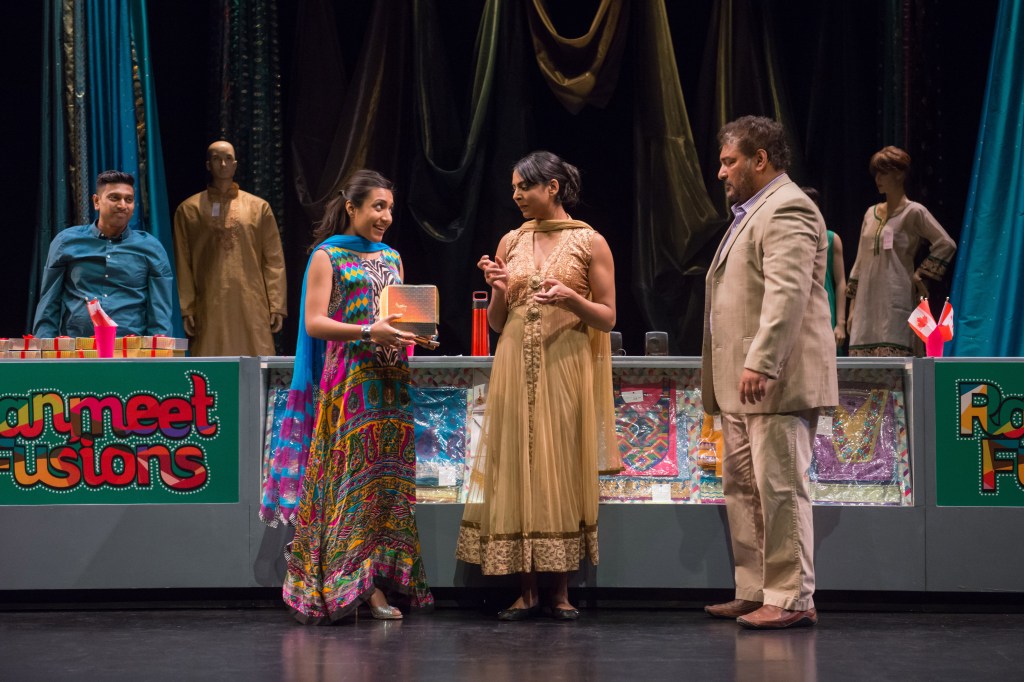
Shelly Antony, Shruti Kothari, Farah Merani, Sugith Varughese in LITTLE PRETTY AND THE EXCEPTIONAL

BK: Why the title Little Pretty and The Exceptional?

AR: The title was given by Iris (Turcott) actually. Since the play is about two sisters and a lot of it is inspired by my sister and my life and our dynamic, Iris suggested the name. My name, when translated to Bengali, means Anu = Little, Sree = Pretty and my sisters name Ananya = The Exceptional. So Iris wanted that to be the name as it was fitting.

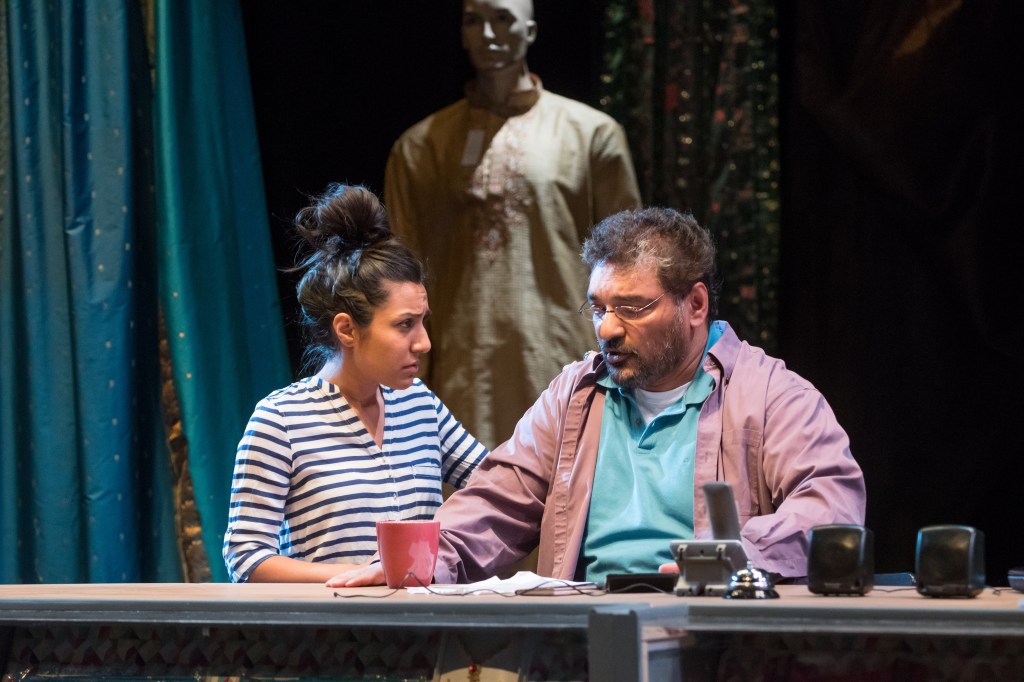
Sugith Varughese and Shruti Kothari in LITTLE PRETTY AND THE EXCEPTIONAL – Joseph Michael Photography

BK: I know the late Iris Turcott played a critical part in the development for this piece. Can you talk about the process, what it was like to work with her, and how she played an instrumental part in your life as a writer? 

AR: It was phenomenal actually. Along with being my dramaturge, she was my best friend. We would do weekly sessions. I would go to her place every Wednesday with scenes and she would sit by her blue coffee table, with a red pen in hand, and edit my words. It was the most terrifying and exciting time! Slowly when a draft emerged we did workshops to test it out and then more rewrites.

BK: You wear so many different hats, from playwright to director, in so many of your shows. What has it been like wearing just one hat (playwright) for this production?

AR: It’s been great actually. I have just been able to focus on the writing. It’s been useful.

Shruti Kothari and Sugith Varughese in LITTLE PRETTY AND THE EXCEPTIONAL – Joseph Michael Photography

BK: Why Factory Theatre for this show?

AR: Because I love them. They treat me well – with respect and kindness and Nina is a brilliant AD along with being a beloved friend of mine. I am in awe of the work she is doing at Factory and how much she has changed the face of that theatre. There is passion in that company.

BK: What do you want audience’s walking away with?

AR: I want them to walk away with compassion and a greater awareness of the world around them. That will make me so happy.

Little Pretty and The Exceptional

Who:
Written by Anusree Roy
Directed by Brendan Healy

What:
Simran is gifted, complex and, haunted. Jasmeet, her younger sister, is the typical hip Toronto teenager. Together with Dilpreet, their delightfully overprotective and traditional father, they are frantically trying to get ready for the opening of their new sari shop on Gerrard Street. To achieve their life-long dreams, the family must come together to find new strength and exorcise the demons of their past. Charming, tragic, and full of life, this is a deeply moving story about the taboo around mental health issues in the South-Asian community, and the power of familial ties in the face of adversity.

Where:
Factory Theatre Mainspace
125 Bathurst Street

When:
On now until April 30th

Tickets:
factorytheatre.ca


“Exploring Home, History & Family in TOUGH JEWS” In Conversation with playwright Michael Ross Albert and actor G. Kyle Shields

Interview by Brittany Kay

I sat down with two delightful men with 3 names – playwright Michael Ross Albert and actor G. Kyle Shields to talk about their current production Tough Jews, running March 31 – April 16th. We spoke about the undeniable parallels in the sociopolitical climates we see today versus 100 years ago, why this story is incredibly important to stage now and how family is at the core of everything.

Brittany Kay: Tell me a little bit about the show.

G. Kyle Shields: This is how I’ve been pitching it to people: it’s a Kensington-specific, period gangster drama that takes place in 1933.

Michael Ross Albert: Well the Second Act takes place in 1933.

Laughter.

GKS: Yeah, yeah. I’m just keeping it concise for people.

MRA: The first act takes place in 1929 on Yom Kippur, which was 10 days before the Stock Market crashed. We follow this family over the course of two moments of crisis.

GKS: In 1933, it’s only a couple of months after Hitler becomes chancellor of Germany.

MRA: And it’s at a moment not dissimilar to the political climate we’re in now, where the mounting anti-immigrants sentiments and Anti-Semitism is very prevalent all across North America, including very specifically Toronto, Ontario. The second act takes place shortly after the riot at Christie Pitts.

GKS: Do you know about the Christie Pitts riot?

BK: I do, I’m Jewish.

GKS: You know, most people don’t know about the riot.

MRA: I guess I realized what a bubble I lived in, in realizing how culturally significant that moment is for Toronto Jewish families. If you’re from here and your grandparents are from here, everyone has a story about the Riot or the time surrounding the Riot. It’s a big part of our Torontonian cultural heritage that’s sort of being forgotten.

GKS: And not really passed down outside of those circles too. I didn’t know about the riot before I read the show.

MRA: It was considered one of the biggest race riots in Canadian history. It’s pretty insane.

Photo by John Gundy

BK: Is Toronto Jewish history your main inspiration for this piece? Where did the inspiration come from to write this story?

MRA: I had originally set out to write a play about the Purple Gang, which was a Detroit family, made up of first generation Jewish immigrants who kind of briefly inserted themselves into the major big time American crime families. For a short period, they were terrible criminals.

GKS: They were reckless. They were absolutely reckless.

MRA: They were responsible for the St. Valentine’s Day Massacre, which was one of the biggest gangland assassinations ever. I became pretty interested and started reading up on the different exploits that they were involved in and I wanted to write about them.

I realized that Detroit itself needed to become another character of the play but I have no personal connection to Detroit nor have I ever been there. I didn’t feel like I had the wherewithal to write about a city that I wasn’t from.

So I started thinking about this period of time that my grandparents would have lived in and the neighborhood that they’re from. I started researching that period and found all of these wonderful parallels to what I had initially been interested in. By shifting my focus it let me speak to the experiences that my family comes from and to make it a story about my city, so I was able to romanticize its past, but also be critical of it at the same time.

Photo by John Gundy

BK: How did you find your way into the hearts and minds of these people?

MRA: It was really about personalizing their experiences and thinking about the psychology of these types of people.

GKS: Who were also marginalized.

MRA: Yeah definitely. Marginalized people who were doing illegal activities…

GKS: They were forced to do illegal activities, because they didn’t have job opportunities like the rest of the population had.

MRA: They were trying to make the most of a bad situation, which comes with a moral compromise. Each of the characters within this story has a different place where they draw the line of that morality. Each of them exists within this familial structure and has a different relationship towards one another.

GKS: They were very actively secluded from the rest of society. Signs legitimately said, “No dogs. No Jews. Gentiles only.”

MRA: Yeah, those were signs that were hung up here. When buying real estate, going to the beach…

GKS: Going to hotels… There was almost an Anti-Discrimination Policy that got proposed to Parliament in, I want to say somewhere in the 1910s, that was very similar to the government’s Anti-Islamophobia law that’s currently being debated. It was intended to denounce Anti-Semitism, but the counter argument was, of course, it would hinder free speech. What ended up happening was that it gave a lot of Torontonians the license to put up those signs.

MRA: That’s where we come from and it exploded in this massive display of violence that went through an entire night with the riot at Christie Pitts.

The neighborhoods were so segregated. The city did not welcome immigrants. We had a Prime Minister that said, “None is too many.”

BK: So how does all of this comment on Toronto now and then? 

MRA: It’s taking a look at Toronto, which has become the most multicultural city in the world, and looking at what needed to happen in order to get here.

GKS: To go from a point where the city was 80% British to what we are now.

MRA: Within a lifetime. Within a couple of generations. The spooky thing and the really unfortunate thing is that we are seeing now, after all of this amazing progress, a resurgence of incredibly similar sentiments against Jews, against Muslims, against the LGBTQ community.

BK: All of this rich history, how does it make its way into the play?

GKS: The events of this history directly affect all of the characters and affect their decisions and how they live their lives and the actions they take in the play. A lot of what the characters are doing, are reacting to the historical events, whether or not they know it or whether or not they think it.

BK: For the people who have spent their whole lives in Toronto and have never heard about the riot at Christie Pitts, is this explained and talked about?

MRA: Absolutely. It’s really just the given circumstances of the play. The play isn’t so much a history lesson as it is a family drama that takes place against the backdrop of these critical events in our city’s history.
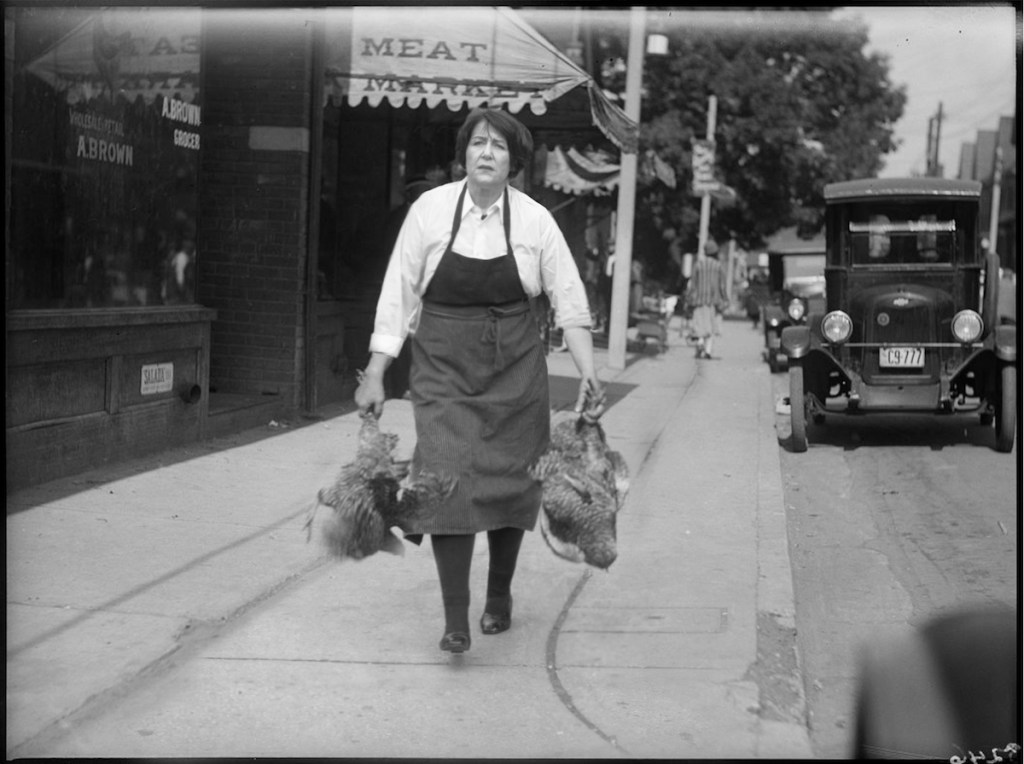
Photo by John Gundy

BK: So family is that core of your story? Why is that such an integral part of it?

MRA: When I was doing my research on the Purple Gang, I was going through my old notes and I wrote on the first page in big capital letters, “WHAT WAS THEIR MOTHER LIKE?”

Laughter  

GKS: There’s a certain something that the matriarch of this family goes through that propels all of her choices. Where she comes from is a major motivation and she makes a point to instill that in her children. “Never forget.” She never lets them forget about where they came from.

MRA: It all begins with family. Their business exploits, their major sources of conflict, of escapism, and love come from within this family unit. I really wanted to be able to explore history from a very personal place and to me the logical start was by creating this family.

GKS: It explores this family enterprise. There are secrets that they keep from one another. There are things that they do to protect one another that involve manipulation and deceit.

MRA: They’re living in extreme times and circumstances, but I’m hoping those tactics are still relatable to everyone because families are fucked up.

GKS: Families are fucked up.

BK: Very true. Very relatable.

GKS: Not only that, all they’ve got are each other. They don’t have the option to move somewhere else and restart their lives.

BK: G. Kyle, tell me about your character and how he fits into this dysfunction?

GKS: I play Teddy, who’s the youngest son of four. He has an older sister and two older brothers. The two older brothers run whatever racket they have going on. As the youngest, as it usually goes, Teddy is very much kept out of the loop. As the youngest in real life, I can relate to that.

In the first Act he’s about 19, so he’s pretty young but he’s coming into his own. We see him trying to be the thing that everyone else in the play wants him to be. Everybody makes a demand of Teddy. There’s a traumatic event that happens through the course of the First Act that informs the four years between Act 1 and Act 2. When we see Teddy in Act 2, we can see how they’ve changed him into who he is now. In a sense, we get to see him grow up. We see this really informed shift in his choices and his personal honour system and values and morality.
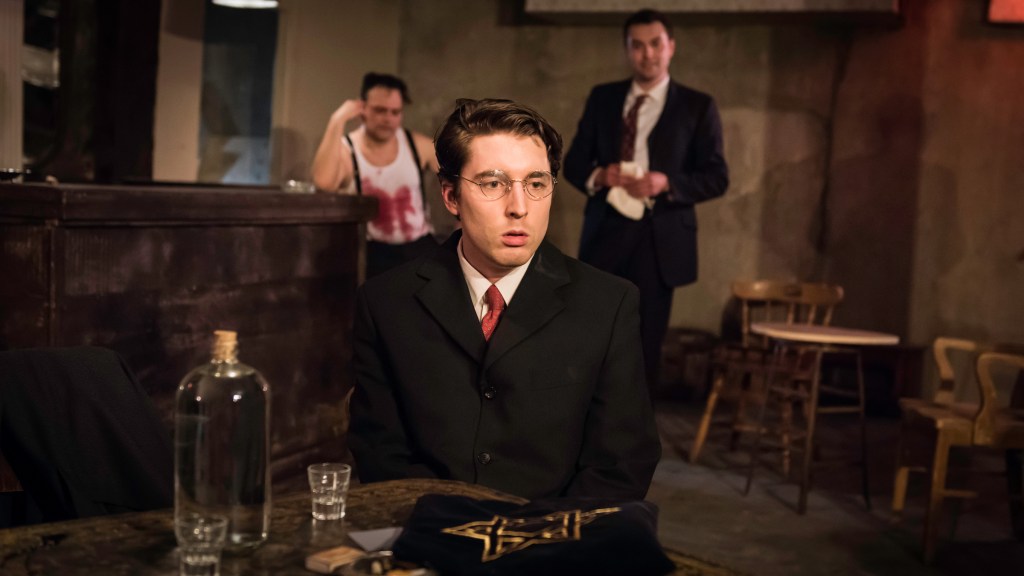
Photo by John Gundy

BK: Tell me about the pop-up location, the speakeasy, and how it’s going to be an immersive audience experience.

MRA: The Storefront unfortunately lost its permanent home and as soon as we heard the news, we tried to think of it as a blessing in disguise for this particular production. We found this space, Kensington Hall, which is an old punk club.

GKS: It used to be an old booze can and two people have died there.

MRA: Maybe more people have died there.

GKS: May have been murder… Does that sell the show, do you think? That could be a selling feature?

Laughter.

GKS: I mean, it sells it for me.

More laughter.

MRA: We’re working with this amazing set designer named Adam Belanger, who has completely transformed the space. We’re creating a time machine essentially. It’s going to be a speakeasy experience, where the audience will enter through the back alley and as soon as you walk through the door it will be as if you have stepped back in time to the 1920s.

GKS: And when you take your seat too, it’s like you will be a fly on the wall.

MRA: The audience is complicit in the action. It’s not an immersive production, but it is site-specific and right in your face.

GKS: It’s gonna be loud. No one will be able to fall asleep in the theatre.
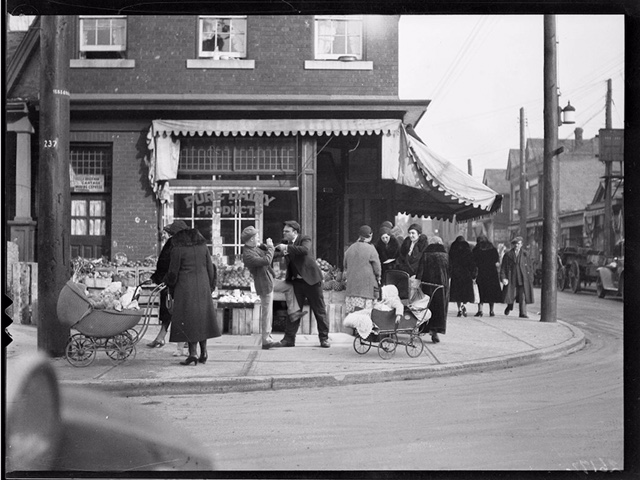
Photo by John Gundy

BK: Why this story right now?

MRA: I mean personally it was my final project of school. I studied playwriting and it was my graduate project. Over the years, it has been developed at different companies all over the place. I had finally come to a place where I thought it was ready for a production. Current events just happen to unfold around it.

BK: Wow. What timing.

MRA: I didn’t write it with any kind of agenda.

GKS: You went into history and took this out and of course it happens to apply right now.

MRA: There are sentiments expressed in the play about the refugee crisis in the 1930s and the unwillingness of governments in Canada and the US to accept refugees. I felt around this time last year that it was important to remind people what that sentiment and the effects of those government policies have on the families. That contributed to thinking about doing the play sooner rather than later, but really, the world turned, it feels like, on a dime, you know? We’re seeing a legitimization of hatred and intolerance, which is very common to the circumstances these people in the play. It’s not specific to Jews, although the play is, but it does carry with it those universal themes of communities that are marginalized, who feel vulnerable in the face of governmental policies that exclude them from the norm.

GKS: …and excludes them from protection from that discrimination.

MRA: I’m so angry at the world right now, that it feels like a very important time for me personally to be staging this play.

GKS: That’s exactly what drew me into this play – that realization of the repetition of history. How I can see the patterns in my world today that are happening in the play as well. Then reading about the riot and the political events surrounding that time just kind of compounded all of that. We’re living in a time of increased intolerance and we need to remember what that does.

MRA: When the second act begins in 1933, we as an audience know there’s a dramatic irony in that we know politically what’s about to happen. This family and Teddy specifically are railing against the circumstances that they’re living in and they think that there’s a way to overcome it. We as the audience know that it’s going to get much darker before any type of light can shine through, before the city and the world can respect and welcome people that aren’t necessarily like themselves. I don’t think it’s so awful to remind contemporary audiences that the spectrum goes to an incredibly dark place.
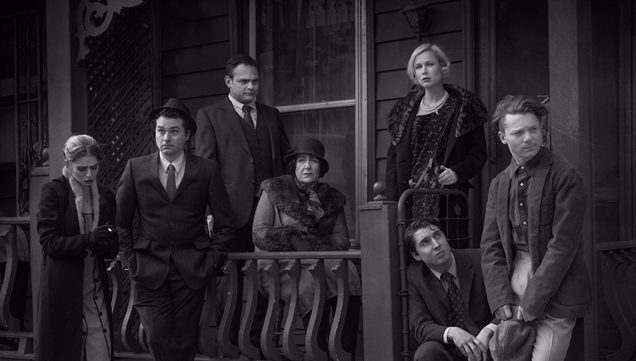
Photo by John Gundy

BK: What do you want audiences walking away with?

GKS: That might be a Ben question. (Cue Director Benjamin Blais who has happened to walk by our table!)

BK: Yes, Ben, join our interview!

Benjamin Blais: I want people to walk away with a realization and sense of responsibility. One of the aspects of our production that I’ve extended or posed the challenge to the designers and to the actors in their portrayal is the concept of Photo Realism. Audiences are going to walk down this graffitied alleyway and turn the corner and walk into a door and, because of the fine work of Adam Belanger and the entire design team, it’s going to be like walking through a veil of time. They’re going to bare witness to this story of this family in a period of unrest and growth and then they’ll walk right out again into today’s world. But because it’s in Kensington Market, in a place where this speakeasy probably existed, they’ll be forced to recognize that they’re standing in a place where all of this happened. I want them to be able to look around say, “Holy shit, is the drama and the extremes of what I just saw still happening today? Is it happening to me?”

One of the themes that Michael is working with is this concept of the sins of our ancestors being repeated upon ourselves. Our choices, our ethics, our behaviour, our actions… What are the consequences to the people we love and how does that affect the society as a whole? What we become in order to survive… We do it with the best intentions to protect the family but what are the ramifications of that? I just want people when they’re watching it to really feel like flies on the wall. When they’re able to come out and be active in their world again to think: “What am I doing? How do I treat other people? What am I doing to survive?… I’m contemplating life of crime-oh shit don’t say that.”

But seriously, steal a little piece of bread to feed my family. Am I criminal? Are corporations oppressing people much like fascist nations were of the time? What do we have to do on the day-to-day to put food in our bellies? Are we animals? Are we really criminals?

Photo by John Gundy

BK: Nice. So happy you sat down.

GKS: I want people to walk away with the feeling that it really could have happened exactly that way. That it was a reality that it could and can still exist.

MRA: I always want an audience to walk away with a deeper, more developed sense of empathy. I think that in showing these particular characters, warts and all, that the audience should be able to find themselves in each of them. That they can think about the people and the relationships in their own lives that they could understand better. Whether that relates to politics or their community or just their immediate families and loved ones, so long as they can see that even if people are acting terribly, that there’s something relatable in them and universal that we share.

TOUGH JEWS

Who:
Written by Michael Ross Albert
Directed by Benjamin Blais*
Starring: Blue Bigwood-Mallin, Luis Fernandes, Stevie Joffe*, Anne van Leeuwen, G Kyle Shields, Theresa Tova*, Maaor Ziv
Set Designer: Adam Belanger
Costume Designer: Lindsay Dagger
Make Up Artist: Angela McQueen
Fight Director: Simon Fon*

*Appear with permission of the Canadian Actors’ Equity Association. This is a Canadian Actors’ Equity Association production under the Artists’ Collective Policy.

What:
When a murder is committed in Prohibition-era Kensington Market, a family of would-be criminals is suddenly flung into the high-stakes gangland world of American organized crime. Set against the backdrop of the Roaring Twenties, the Great Depression, and the one of the largest riots in Canadian history, this darkly comedic historical drama is the story of an immigrant family’s struggle to rise above their station in a violent, intolerant city.

Where:
KENSINGTON HALL
56K Kensington Ave. (back alley entrance)
Please note: This space is not wheelchair accessible.

When:
March 31st – April 16th

Tickets:
toughjews.brownpapertickets.com


“Power, Authority & Shaking Up Traditional Structures” In Conversation with Rob Kempson, Playwright/Director of TRIGONOMETRY

Interview by Brittany Kay

We had the pleasure of re-connecting with playwright/director/artist/educator/all-around smart-cookie Rob Kempson to chat about Trigonometry, the final instalment of his trilogy, The Graduation Plays. We spoke about what can come with taking time to explore a subject more thoroughly, the need to shake up traditional structures with power and form, and how he wants these plays to ignite more complex discussions that continue beyond the show. The world premiere of Trigonometry runs from March 16th to March 25th.

Brittany Kay: Tell me a little bit about your show?

Rob Kempson: I think the best way talk about the show is in the context of it as part of a bigger series. I think, like all the other shows in the Graduation Plays series, Trigonometry is about the interaction of power and authority structures in a school setting. What I found from my own teaching is that students have the capacity to take power that maybe isn’t assigned to them in a traditional school atmosphere. The authority in the school is clear but the power is not. These plays explore how we manipulate power and how the powerless gain their voice.

I have found in this series that some sort of student expression of sexuality is a great way for them to steal power because, being in a school setting, a lot of that is about tight-lipped, very square principals. It doesn’t always mean that they’re having sex. It means that they understand that by talking about, or referring to, or in some way bringing up sexuality, it makes teachers uncomfortable because they’re not allowed to talk about it in a school. I found that sort of tension really interesting.

Photo of Daniel Ellis, Alison Deon and Rose Napoli by Robert Harding.

BK: Why are you so drawn to the themes of student power and authority?

RK: I’m really interested in that idea because I don’t know how the education system can grow and change and find what’s next, unless we address the way in which students are now on the same level as teachers. We aren’t as different as we once were. I think unless we figure out how to tackle that, the education system is going to be stuck in this bizarre route for a long time.

BK: What makes Trigonometry different from your other two shows in the series?

RK: In this particular case, I tried to take a different perspective than the other two plays. If I was to simplify it down, I think SHANNON 10:40, Mockingbird and Trigonometry are all about the same thing. Something happens where a student takes power, it’s unexpected, and it’s about the way into that, which I think is different between them. SHANNON 10:40 is a largely student perspective, Mockingbird is a largely teacher perspective and Trigonometry is about the parent perspective. I think that’s why this is the end of the trilogy. I sort of found three different ways into the same problem. I don’t think I’ve solved the problem in any of the plays, but I’m interested in finding out how using those different perspectives enlightens new aspects of it.

Trigonometry 1

Photo of Rob Kempson by Robert Harding

BK: In the Greenroom has been able to talk to you about both shows in The Graduation Plays. You and I spoke at the beginning of your process and here we are at the end of it. Do you feel satisfied that this is the final play of the trilogy?

RK: I needed to work out what I wanted to work out. What all of this meant? Why this has been a multi-year process of writing all these things? I think this started as a nugget that I was picking at and I realized I wasn’t going to be satisfied just picking at it. I needed to go as deep as I could. I felt in writing the first two that I hadn’t quite uncovered everything that I wanted to uncover. I knew there was more there to explore, but I didn’t know exactly what that was going to be. The Graduation Plays, in a way, is a graduation for me as a writer and as an artist because I really gave myself the opportunity to spend time exploring a particular theme in a particular area. Not only with different plays, but in different structures of those plays with really different numbers of characters and really different play setups.

Photo of Daniel Ellis by Robert Harding

BK: Why the title Trigonometry?

RK: Everyone should read Sarah Ruhl’s 100 Essays I Don’t Have Time to Write. Sarah Ruhl is one of the greatest writers still living and that book says a lot of smart things that are very digestible. She talks a lot about play structure and one of the things she questions is why we see plays as having an arc and what would happen if a play had a different shape. I started thinking about that, what would a triangle shape play be like? The laymen’s answer is that it would have 3 people in it. I just started to think about why that was an interesting structure to explore. What did making a triangle play mean for me? Does this play have an arc? Of course it does, but it does happen in 3 separate parts. Each character is used in the same way. Each are only in 2 of the three scenes.

BK: How does trigonometry come into the structure of the play?

RK: The play is designed like a trigonometric function. If you know the sohcahtoa method, so SOH stands for Sine, which is opposite over hypotenuse; CAH stands for Cosine, adjacent over hypotenuse; and TOA stands for Tangent, opposite over adjacent. I built the play that way. If you assign each of those to characters and you sort of extrapolate as to why you might call those characters by those titles and then you apply those trigonometric functions to those characters, what happens in those scenes is mathematical.

Photo of Alison Deon by Robert Harding

BK: Incredible. Do you need to know anything about math to see the play?

RK: No. (laughs) If you watch it, you would never see that unless you really went into it with that perspective. That’s where the title came from. It came from me wanting to write a triangle play and I get a bit obsessed with ideas like that. I sort of spin into what could that mean structurally, what could that mean in content, in tone, and form, and all of the other things you think about. I love finding things to weave through.

One of the most common things teachers say is that math is all about relationships. If math is all about relationships between angles and lines and numbers and symbols and all of the things that go into that, then math is of humans and humans are of math. There is a connection there that maybe we like to sometimes deny. It was a really neat discovery… I also had to watch so many Youtube videos about trigonometry to try to remember.

Photo of Daniel Ellis, Alison Deon, Rose Napoli by Robert Harding

BK: Where did the inspiration for this specific story in the trilogy come from?

RK: I have no idea. I mean a lot of the catalyst for the first play, SHANNON 10:40, came from what was the 2015 fight against the new Sex Ed. Curriculum. This play riffs on that in a way that Mockingbird didn’t. I needed to explore it more actively. It started from there.

The other thing that is true of Trigonometry, is that I don’t really love any of the characters. That’s not something that people generally do. I tend to write people who I mostly like with some villains. I started thinking about people who I don’t agree with politically or philosophically or educationally. We are living in such a polarized world that we have to try to learn how we listen to one another and who’s deserving of that respect. I tried to listen to what those people had to say. They became some of the voices in the play.

BK: Why this story right now?

RK: I think that this is a story that is now. One of the things that I think is a fact in contemporary classrooms that is such a struggle are cell phones. It sounds so simple and silly and trite. The effect of having personal property that you can’t abscond or take away from kids that is so distracting to them changes the education game entirely. It changes the power dynamic between students and teachers. I think that anyone who has been in a contemporary classroom will see themselves in this play in a way that is frustrating.

BK: Oh yes. It’s insane, they’re just staring at their phones and re-watching Snapchat videos.   

RK: I’ve been in those rooms, where the integration of technology is really exciting and innovative, but where I get a bit lost, is the way in which it allows a whole other avenue for students to be making bigger choices in the way they choose to react to what their teachers are saying. It’s not only the choice of apathy or tuning out and looking at their phone, it’s also the choice of if they record you. Are they taking your picture? Are they texting their friends saying something about you? The power dynamic really changes because students have this thing that disables you. This play is for “now” because this is a story that happens everyday in schools and I really wanted to explore that.

Photo of Rose Napoli by Robert Harding

BK: Tell me about your cast?

RK: The actors are the most amazing humans. Rose Napoli is giving a performance that will be talked about for a long time. She is remarkable. I was new to Daniel Ellis. I saw him in The Circle and, working with him, he has just so many great insights about who the character of Jackson is and how he is able to tread the line between being a good kid that maybe does bad things. Alison Deon, who I think is one of the most under-used actors in the country, who I’ve known for a number of years from the Thousand Islands Playhouse, is a brilliant performer. Her range is enormous and it’s really exciting to be able to showcase her in this city. People deserve to see the work of all three of these actors. They’re just phenomenal.

BK: And your creative team?

RK: I’m once again collaborating with the fabulous Lisa Li. She’s the best and has been a real dream to work with as she always is. She’s also working with the support of Erin Vanderberg. Katie Saunoris is our marketing and publicity person. Beth Beardsley is our stage manager and is amazing and everyone should hire her. They are an amazing team. Dream dream dream.

Then we look into the design. Anna Treusch is our set and costume designer and is one of my most deeply loved collaborators. In the next 3 months, we are working on 3 shows because we work so well together. She forces me to work really hard. It’s a good relationship. Kaileigh Krysztofiak is a new collaboration for me and is a such cool up-and-coming lighting designer. When I found out that Andy Trithardt, who I’ve seen as an actor a million times, was also a sound designer, I wanted to get him on board. He’s looking at how the idea of trigonometry comes into the design. How and where do we see triangles and how do we hear that? How can we hear things in three? The design team is allowing this play to be explored more fully and deeply.

Photo of Anna Treusch, Beth Beardsley & Rob Kempson by Robert Harding

BK: What do you want audiences walking away with?

RK: I want them to be divided. My favourite thing is for audiences to walk out and have something to talk about on the car ride home. I don’t want them to come out and have the same opinions of each of the characters. I want people to like one character over the other. Questioning who is making the right decisions for the right reasons. I hope that there is a lot of disparate conversations happening after the show. I really want audiences to walk out with something to chew on for themselves. John Patrick Shanley’s Doubt is such a brilliant parable not only because it’s such a well written play, but because it makes you feel doubt. You walk out feeling the thing that he asks you to explore through these characters. While my play is not called Doubt, I want people to walk out feeling differently about the people that they just witnessed and maybe testing their own morals or testing their own values through the lens of these characters on stage. That’s exciting…I think, I hope!

BK: Anything else we need to know about?

RK: This play stands on its own, so if you haven’t seen the other two in the trilogy that’s okay. You don’t need to. There’s nothing that you will miss. For those who have seen both or any part of it, I think that this will be a really great conclusion for you. I feel so grateful that I have been able to work with collaborators on all three of these pieces that have allowed me the artistic freedom and desire to explore something as fully as I can. If you want to see the outcome of that, I’d encourage you to come out and check out the show.

Trigonometry

Who:
WRITER & DIRECTOR: Rob Kempson
SET & COSTUME DESIGNER: Anna Treusch
LIGHTING DESIGNER: Kaileigh Krysztofiak
SOUND DESIGNER: Andy Trithardt
FEATURING: Alison Deon, Daniel Ellis, Rose Napoli
PRODUCER: Lisa Li
PUBLICIST: Katie Saunoris
ASSOCIATE PRODUCER: Erin Vandenberg

What:
Gabriella wants action. Jackson wants a scholarship. Susan wants a family. In this new play by Rob Kempson, three disparate people find themselves bound together by desire, destiny, and a few scandalous photos. Trigonometry is about how far we go to get what we want: what we do to survive.

Where:
Factory Theatre, Studio Space
125 Bathurst Street, Toronto, ON M5V 2R2

When:
March 16 – March 25

Tickets:
416.504.9971
trigonometrytheplay.com

Connect:
#trigtheplay
w: trigonometrytheplay.com
fb: Trigonometry Facebook Event
t: @rob_kempson

Meet Some of the Cast & Characters: