Skip to content

Posts tagged ‘Brittany Kay’

Artist Profile: Rosamund Small, Playwright of Outside The March’s “TomorrowLove”

Interview by Brittany Kay

Rosamund Small has always been the most kind-hearted and generous artist that I know in this city. Her passion and love for her craft is always apparent. She is insanely smart, courageous and incredibly funny, which always shines through in her work. We sat down over nachos to talk about her current show TomorrowLove, which opens tonight with Outside the March. We talk about the magic in site-specific/immersive work, her writing process and the much anticipated experience audiences will have in this fantastical show.

Brittany Kay: Tell me a little bit about your show?

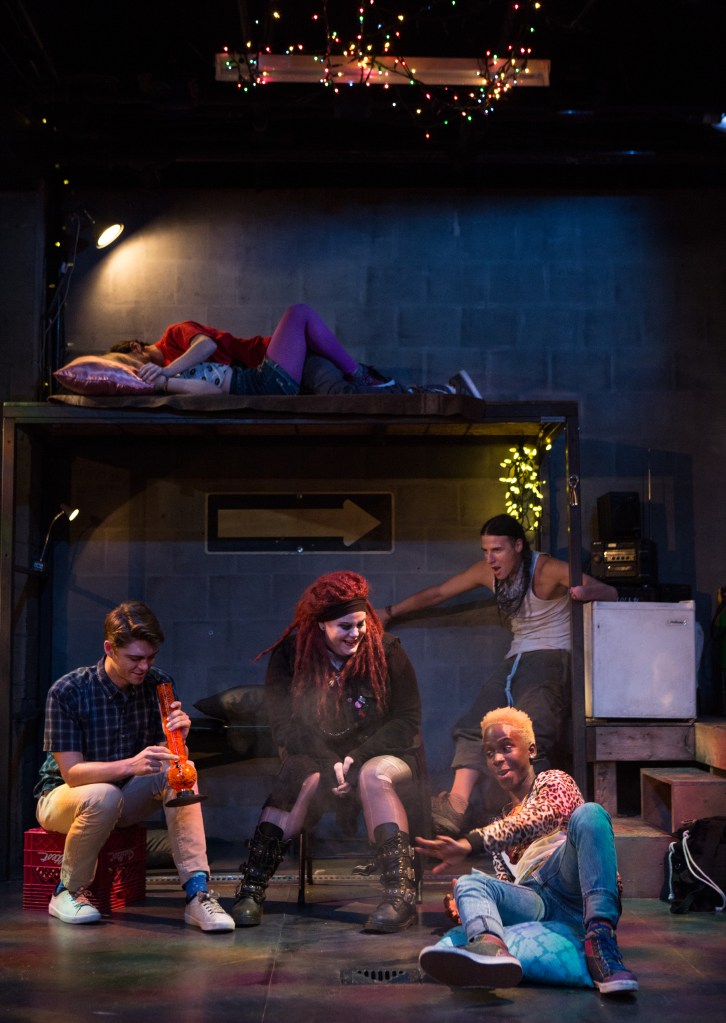
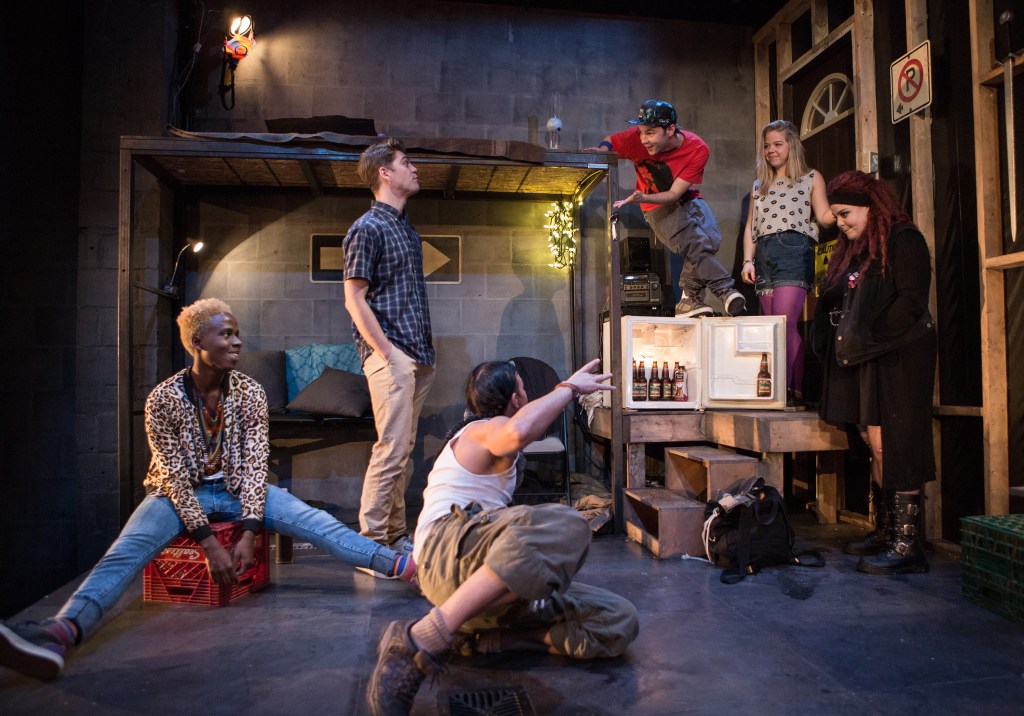
Rosamund Small: The show is called TomorrowLove. It’s an immersive experience with Outside the March. It’s about love and it’s set in many different versions in the very near future, where one piece of amazing technology exists. Everything else is pretty much the same as our world except for just one thing. It’s about exploring different relationships and how this one thing activates change in the way that two people relate to each other. Sometimes it ends up bringing people closer together and sometimes it pushes them further apart. TomorrowLove touches on a lot of things to do with love and identity and sometimes consent and sometimes loss. The dream is that it will be a varied experience no matter what. There’s a lot of material and the idea is that you’ll wander through this futuristic environment and find yourself in these different stories.

BK: So things are happening…

RS: Simultaneously. There are multiple things happening at the same time. I think sometimes immersive theatre is structured so that you purposefully miss things. You miss whole stories, you miss the beginning, and you miss the end. In TomorrowLove, you grasp an entire story. It’s short but it’s complete, and then there’s another one and another one. It’s quite curated and carefully put together to make sure that you get the entire narrative and then a different entire narrative.

Photo by Neil Silcox

Photo by Neil Silcox

BK: Can you talk about this lottery system the actors are going to take part in each night? There are so many layers to this experience!

RS: So many layers! It’s got a lot going on underneath in terms of how the show is put together. One really exciting thing that we came across is that I wrote all of the characters to be gender blind, so they are not necessarily man or woman. I just didn’t make that decision when I was writing it.

Typically we have really gendered stories about anything from a break up to sexual violence to anything really to do with how two people relate in a relationship. Those stories can be super valuable, but in this case I wanted to sort of push out of those ideas and explore the idea that if I didn’t know the gender of the person, how would I navigate that in the writing? The characters have genders because whatever actor is playing them inhabits their gender, but that, I think, is part of a larger piece of the feeling of the show. It’s about the self and the individual and what is innate to you and how did you end up in your life?

There is also an aspect of the show where every night there’s a lottery and the actors get assigned their roles.

BK: So the actors have to learn a lot of material?

RS: Yeah.

BK: Shit, that’s fun. Cool!

RS: That is the reaction I’m hoping for: “That’s fun!” I hope they all say that. I think it’s going to be one of those things that ends up being really fun and then really hard and you cry and then it gets really fun again. All of the actors are going to be learning about as much as Hamlet or a little more, in terms of numbers of lines

BK: Wow!

RS: They are also playing different people, so they’ll inhabit very different stories. In one sense, in a lot of theatre, you feel like you want to rehearse and rehearse until you’ve hit something, but in another way that sense of rehearsal can take away from a sort of urgency or hopefully a sense of live-ness that I think we’re finding. It’s a big risk, obviously. They’ll be rehearsed. Their scene partner will be changing. Their goals will be changing. I think the experiences intrinsically will be a little bit out of control. Where you end up is a little bit out of your control. That’s a really big theme of the show.

Photo by Neil Silcox

Photo by Neil Silcox

BK: How did you start writing this? How did this idea come to be?

RS: I started working on it about two years ago. In a way it started because Mitchell Cushman and I wanted to work on another project together. It took us a really long time to shape what that would be. We had some specific goals. We wanted to make theatre that would appeal to people that often don’t go to the theatre. That’s kind of a tenant of a lot of theatre companies, but definitely of OTM. He’s really generous and I think he really wanted to create something that was my voice. It’s not like it was going to be something that he would come up with and I would execute. He really wanted to do something that we both felt really passionately about.

We started with short stories about sex. The idea to push them into a place that couldn’t quite happen was the next thing, so then you end up in the world of technology. For me, personally, I realized that the idea of a show about technology doesn’t really interest me because I think about technology a lot in a literal way. I can think about my phone and what it means but I think this show is more of a metaphorical access point to that. The pieces of technology are very nearly possible, in fact, I think a few of them have become more possible since I’ve started writing them.

BK: What kind of technology are we talking here?

RS: One is an implant that you can get that prevents you from saying certain things that you really want to make sure you never say… so you don’t let something slip, which obviously has huge implications for relationships. Another one is you can choose to show your partner an extended montage of all of your memories. Another one is an online chatting app that actually finds you your soul mate. Another one is you can get a piece of someone’s DNA put into a little mixture and inject it into yourself so that you can experience their emotions.

BK: Why site-specific and immersive for this show?

RS: I think immersive and site-specific theatre is very magical because you immediately don’t know what’s going to happen and that’s very much how I feel about all relationships. I think how I feel about progress and technology is really surprising and personal. Immersive theatre really lends itself to heightening that experience. Sometimes people have an idea of immersive theatre being scary or that it’s going to put you on the spot or make you uncomfortable and I think, in a lot of ways, it’s the opposite of that. It’s an invitation to this world.
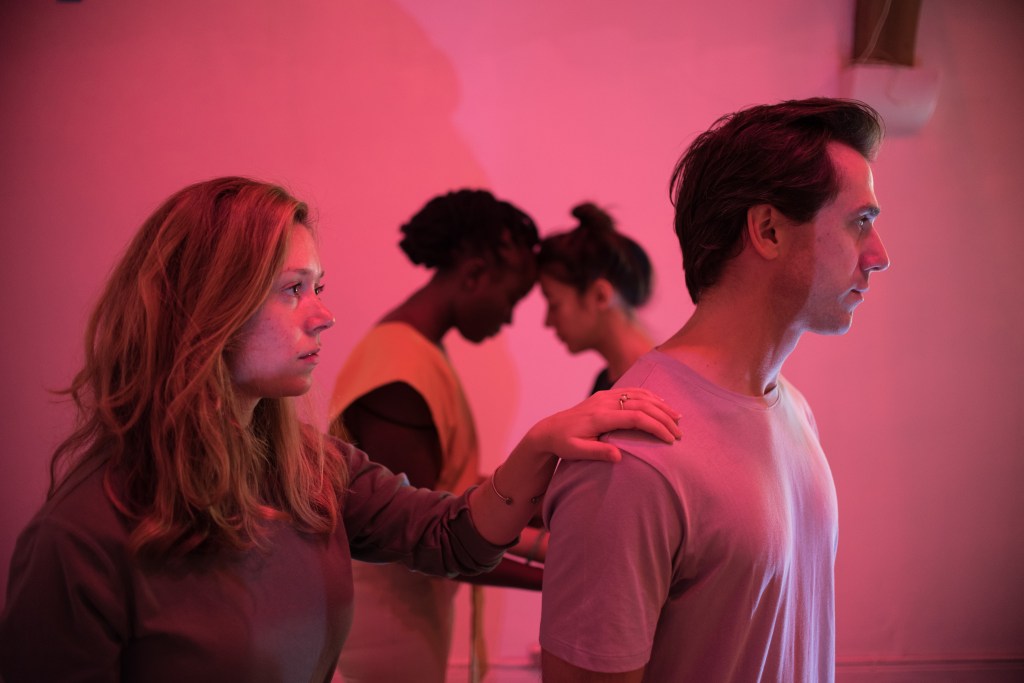
Photo by Neil Silcox

Photo by Neil Silcox

BK: I know a lot of your plays has been verbatim or immersive in their nature and presentation. What draws you to that kind of work? What makes you keep doing this?

RS: It’s funny because TomorrowLove is such a departure from that. This is heightened and fiction.

The draw to documentary and to interviews and to Vitals (which was fiction but really well researched) is that the world is really interesting. I would always advise writers who were stuck in their writing or were just starting to write, to think about starting there because it grounds you in the way that people actually talk and the way that things actually happen. You put so much of your heart and yourself into your documentary work but a lot of the time people don’t know that because they assume it’s more distant from you. I think, for this piece, it’s scary because it’s going to be really hard to hide that the characters and observations are going to seem like they are from me.

BK: What was your process to write this script?

RS: This is such a boring answer because it’s such a writer answer: I would just start. A lot of it is really just like improvisation except I was writing it down. I would just go. I would always go for a relationship problem or a change in a relationship or a relationship crisis and then ask how would a piece of technology either begin that or change that or heighten that? So I never made up a piece of technology and wrote the play to go with it. I started to write the story and then the necessary technology would merge into the story.

There are definitely pieces that are inspired from things that have happened to me or to people that I’ve loved. I think all writers steal shamelessly. They are much more me, honestly. They are much more from my own questions about people. Fiction is so embarrassing, somehow.

BK: The audience is invited to the Aorta? What is that?

RS:

BK: Ahh, a mystery?

RS: (she smiles.)

BK: Love that. How are your actors rehearsing this show?

RS: There has to be more than one thing rehearsing at once because there is so much material. They are all crazy pros. These artists are really, truly the real deal and really experienced, as well as being really good. They are like a crazy dream. It’s a real ensemble. So we’re reading the pieces, we’re doing the pieces, and we’re trading off because there will be more than one actor playing every part. There’s a bit of a tap in tap out mentality going on. We also have two amazing assistant directors (Llyandra Jones and Griffin McInnes) and Mitchell and myself. We’re all “do-si-do”ing the rehearsal process.

Photo by Neil Silcox

Photo by Neil Silcox

BK: Are there any fears or excitements for this show?

RS: No.

I’m joking. I’m joking so hard.

I think the fears and the excitements are always the same thing. The fear and the excitement is that I think the pieces are very vulnerable. The characters are in really vulnerable places. I feel very vulnerable. They’re really raw, sometimes in a comedic sense and sometimes in a tragic sense with really painful experiences. So the fear and the excitement is about sharing that, but that’s also such a part of theatre and such a part of love.

BK: What’s your working relationship like with Mitchell Cushman? How did you guys meet? What makes you want to continue to collaborate with him?

RS: We met at the Paprika Festival. He was working there and I was one of the oldest participants. He directed a staged reading of mine in the festival and so that’s the first time we worked together really. I think you can tell immediately when you work with someone like him that you can just trust him. You can trust him to be honest. You can trust him with your work. Actors trust him. He’s just a really sort of subtly supportive and reassuring person, you know? You also trust him because it’s so obvious how wicked smart he is.

He saw a little bit of Vitals and he asked to direct it and we turned it into Outside The March doing this huge production of it. It was incredible. It’s a very close working relationship. We’re really in each other’s business. It’s not like I write the script and he directs the show, it’s very collaborative. We argue and we compromise and we work really well together. I’m incredibly lucky to work with someone like that and to work with our whole team, as well.

BK: Why Outside The March for your show?

RS: I think the short answer is because this is the kind of work that Mitchell wants to develop with the company. I remember when I saw their production of Mr. Marmalade and it blew my mind. I was like this is the kind of theatre that I want to do.

BK: What do you want audiences walking away with from this show?

RS: That’s hard because you can’t really control it, no matter how hard you try. I hope they experience some empathy and have been entertained. I think entertainment is really undervalued as a quality. Not thoughtlessly, but entertained. I think it depends what kind of person you are – if you are interested in a mind-bending puzzle, you might be interested in crazy technology and its implications, if you’ve been through a break up, it might stir some things up, might make you think about your own life or it might just be an experience that you leave behind you at the door. I just hope for something.

Rapid Fire Question Round

Favourite Book: What? That isn’t fun, that’s so hard.

Favourite Play: What? What is this? Like which is your favourite parent Brittany?

Favourite Food: Pizza. Is that a boring answer? It’s why I moved to Little Italy.

Favourite Place in Toronto: The Island, Ward’s Island specifically.

What are you listening to: I’m leaning heavily into this Carly Rae Jepsen album “Emotion”. It’s like really good… Love good pop music!

Best advice you’ve ever gotten: Katherine Cullen once told me, “When you feel like you just can’t go on and something terrible has happened, it’s really important to just go to bed and wake up tomorrow.” We can fall asleep and escape and wake up and something will be recharged in us. It’s amazing.

TomorrowLove

by Rosamund Small, Presented by Outside The March

unnamed-2

Who:
Written by Rosamund Small
Directed and Developed by Mitchell Cushman

Ensemble
Damien Atkins
Katherine Cullen
Paul Dunn
Amy Keating
Cyrus Lane
Mayko Nguyen
Oyin Oladejo
Anand Rajaram

Producer – Michelle Yagi
Stage Manager – Kate Sandeson
Production Manager/Technical Director – Alanna McConnell
Scenic Design – Anahita Dehbonehie
Lighting Design – Nick Blais
Costume Design – Lindsay Dagger Junkin
Composition and Sound Design – Richard Feren
Choreographer – Robert Binet

Associate Director – Llyandra Jones
Associate Director – Griffin McInnes
Associate Production Manager – David Costello
Apprentice Stage Manager – Kate Hennigar
Assistant Producer – Deanna Galati
Front of House and Group Sales Manager – Sabah Haque
Assistant Choreographer – Cassandra Martin
Production Consultant – Katherine Devlin Rosenfeld
Publicist – Samantha Eng

What:
An intimate immersive encounter that imagines the future of romantic connection.

Navigate your way through a series of simultaneously-unfolding duets, in which innovations in technology grant physical transformation, time and space travel, immortality, the extraction of the human soul, and a fridge that expands to hold infinite groceries—all in the name of love.

If you roll over in bed and reach for your iPhone, if you store more memories on your feed than in your brain, if you’ve ever longed to upgrade yourself or your partner, then welcome to TomorrowLove™.

From the creative team behind Vitals (2014 Dora Awards for Outstanding Production and Outstanding New Play).

Where:
The Aorta (733 Mt Pleasant Rd)

When:
Show runs from From November 19 – December 18 (Mondays excluded)

Tickets:
Tickets: $40 General, $30 for under 30/arts workers http://tomorrowlove.brownpapertickets.com/

Connect:
w: outsidethemarch.ca
fb: /OutsideTheMarch
t: @outsidethemarch
ig: @outside_the_march


Artist Profile: Actor Jakob Ehman on Rebellion, Drive, Risk & “The Circle” at Tarragon Theatre

Interview by Brittany Kay

I sat down with the incredibly talented Jakob Ehman who is making his Tarragon Theatre debut in The Circle. We discussed rebellion, his drive for the craft, and the need for established theatre companies to take risks on young artists.

Brittany Kay: What has been your journey to getting to where you are right now?

Jakob Ehman: I was born in Regina, Saskatchewan. I lived there for a short couple of years. I moved to Calgary, Alberta until I was 5 and then we drove across the country to Nova Scotia. I lived in a couple of different places in Nova Scotia: LaHave, which is in the country and very rural, I lived in Bedford, and I lived in Dartmouth where I spent the most amount of time. At the end of grade 8, I moved to Toronto and started high school here at the Danforth Collegiate Technical Institute.

BK: What made you go to theatre school?

JE: I don’t know… I can’t really remember what it was that got me into it, but I had to take some sort of arts class in high school. I was interested in drama, I guess, and I had a great teacher! Her name was Heli Kivilaht. I think I remember one of the first classes I played this character ‘Indiana Jake’ and everyone laughed. My childhood memories have a lot do with me entertaining the family. I started to like making people laugh a lot. The years went by and that drama teacher left, but while she was there, I was pretty heavily exposed to some wicked writers – David Mamet, Beckett, MacIvor. I was in grade 10 and 11 studying those writers and that was kind of crazy to me at that time. I was so fascinated by it because it reminded me of the type of films I was into when I was in high school – ones with dark writing. It seemed pretty cool just to be able to do that, to say those words. I felt like I had an affinity for it. I wasn’t sure if I was going to pursue acting or not. I was still pretty into the idea of some sort of work in policing, investigations or the military. I decided I would apply to George Brown, NTS and Ryerson.

Vivien Endicott Douglas & Jakob Ehman. Photo by Cylla Von Tiedmann.

Vivien Endicott Douglas & Jakob Ehman. Photo by Cylla Von Tiedmann.

BK: Why those three?

JE: They’re all that I really knew, I guess. I was more into the idea of doing some sort of conservatory. Figured that if I was going to go do this, I didn’t want to have to also take a bunch of other classes and be in a university setting. I kind of decided if I didn’t get in, that would be that. I would go to UofT and be a spy or something.

I got into George Brown and I loved the feeling I had when I went to that audition and the Young Centre was new, beautiful and seemed great. So I kind of left everything else behind… gave in and immersed myself into that program and into the life of what I thought it was to be an actor and eventually then a creator, which George Brown wasn’t very helpful in overall.

BK: To create your own work?

JE: Yeah.

BK: Is that where HUMANZOO came from?

JE: Yeah. Sort of. George Brown had a couple of projects that were based in creation, but they had pretty specific ideas of what being a professional actor was and what they wanted us to be, at least that’s how I felt. It was actually helpful because it really gave me something to rebel against. That’s generally when I feel most at home.

BK: When you rebel?

JE: Yeah, I’m sort of an antagonistic kind of person, especially as an artist, though not necessarily in rehearsals. I don’t want to be like that. But you know, challenging everything.

BK: So how did HUMANZOO come to be? What happened after theatre school?

JE: HUMANZOO was an idea that was formed in theatre school. My great friend Edward Charette and I lived together. I talked a lot about ideas I had, just all the time…. just spouting off things. I think it annoyed him quite a bit. We had this idea about a human zoo, a zoo for humans. The actual company was all just ideas and a name that I liked, until I was contacted from the Hamilton Fringe. Somehow a spot had opened up there and they didn’t want to put it out to the public or have a whole bunch of people applying for this spot, so they asked me if I would be interested in doing something. At that time I had no clue what that would be. I decided to take the spot and figure it out after. I spent a week in the reference library reading every play that looked interesting. I looked for ones that had small casts since we were all going to be living at my parent’s house in Hamilton. Eventually I found this play called Normal by Anthony Neilson about this real life serial killer in Germany who killed a great many people. I thought the play was terrific and felt very inspired by it as soon as I read it. I kind of took the book… went downstairs and I ripped the sticker out of it.

BK: You stole it from the library?

JE: Yeah, I stole it from the Reference Library. The Reference Library, if you’re reading this… come get me, I guess. I’ve got it and I don’t intend to give it back.

So yeah, we did that and it was awesome. We won the Critic’s Choice Award. It was the first thing I directed.

Photo by Cylla Von Tiedemann

Photo by Cylla Von Tiedemann

BK: Do you have future plans with this company?

JE: I definitely want to do stuff in the future with the company. That sort of becomes about deciding how to manage your own time. I’ve been quite fortunate in the last couple of years where I haven’t necessarily had a lot of off time to plan a production or knowing when I’m going to have time next year. I haven’t committed to deciding that I won’t accept any acting work so that I can do that.

BK: You’re not just an actor, though. You’ve also sound designed, produced, directed, and written. How do you choose when you want to do what? Is it whatever is offered at the time or is it an active choice you make?

JE: Well, we went back to the Hamilton Fringe the next year. We really enjoyed our time there. I like the city of Hamilton. I knew I wanted to direct again but I also wanted to write and sound design once I started writing the play. I always want to be doing all of those things. I think that theatre is such a collaborative thing that if you want to, you can sort of have a part in all of those things, no matter what role you are in with the production. As an actor, you are still collaborating with a director. If you fight for your ideas of your character, you could feel like you have a say in some parts of the direction.

I guess it does come down to what is offered more. Acting happens more frequently for me. It takes a lot more of my own drive to make any of the other things happen. I’ve done a couple of sound designing jobs on the side but I’ve also been involved in the production as an actor so it’s never one thing at a time.

BK: What motivates you?

JE: I think just being really hungry. I’m obsessive – about the craft and about wanting to be…awesome. I want to be better every time. I want to inspire other people. I want to inspire people who I’m working with to work as hard as I want to work, so that what we give in the moment on stage is truthful and electric and vibrating with energy and life. I’m just sort of addicted to that feeling and to that kind of presence, but that type of presence takes a lot of preparation work and a lot of thought and time. It’s literally just thinking about the work, about the character’s stories and motivations like a detective.

BK: This is part of your rehearsal process, as well?

JE: Yeah. For sure.

How can I find other things to bring into this? How can I go deeper? And sometimes it can be really simple things you might not think of. Where does this person look when someone’s talking to them? Which eye? Do they look at both eyes? There’s an infinite level of details humans have. That makes me excited to investigate.

BK: We’re going to shift into talking about The Circle. What is it about?

JE: The Circle is about a group of young people from 15-18 years old. There’s this guy Ily, who I’m playing, and he’s living in his girlfriend’s mom’s garage. He’s dropped out of school and he sells weed and works at The Keg. During the day when his girlfriend is at school he gets this call from Tyler, an old friend of his that used to live at his place. It’s this guy who’s ended up living on the street and in various squats and in and out of homelessness. Tyler calls him wanting to hang out that night and Ily agrees but meanwhile his girlfriend has also invited her friend Will over that night with his new boyfriend Daniel. There’s this clash of groups that are going to come together and it really becomes a fucked up party.

Photo by Cylla Von Tiedemann

Photo by Cylla Von Tiedemann

BK: What draws you to this character?

JE: I think I’ve played a lot of emotionally unstable and intense kind of characters. When I read this one, I was excited because it felt more like a side of me. You know, a happier kind of guy. He’s just generally smiling and laughing. He’s the kind of guy who can hang out with any group. I dunno, it felt like I needed a change and play that part of myself and to not always be going down those dark paths.

I really think that within each of the characters there’s something every person in the audience, whether young or old, can relate to. The characters are so varied. The play is about them figuring out who they are and figuring out who they want to be. They are looking for a place of belonging with each other and in their own lives.

Jakob Ehman in The Circle. Photo by Cylla Von Tiedemann.

Jakob Ehman in The Circle. Photo by Cylla Von Tiedemann.

BK: This is a cast of all young people and a big first for Tarragon. It’s nearly everyone’s Tarragon debut. There’s been a bit of a trend with professional theatres not often hiring younger performers. How do you feel about Tarragon programming this kind of show filled with young actors?

JE: It’s a huge risk for them. This is Geoff’s debut play. It’s been produced before at ATP (Alberta Theatre Projects) but he’s still a very young writer. The cast needs to be playing 15-18 years old, so no matter what, you’re going to be taking a gamble on some very young actors that may or may not perform at the sort of level that an audience or critics are used to from an establishment like Tarragon. I think it’s going to pay off for them. The first step to making it pay off was hiring director Peter Pasyk, who took the time to find the right actors that were going to be able to make this thing live. Even then, it could still really have not worked out for them, but they have to do it. They have to do this play and plays like this, written by young people with young directors and young actors so that they can get younger audiences because their subscriber base is going to end and if they don’t have a new subscriber base and new people who are interested, they won’t survive. It’s a risky production but I think necessary for their survival.

Photo by Cylla Von Tiedemann

Photo by Cylla Von Tiedemann

BK: What is it like working with Peter?

JE: Peter is a funny guy.

BK: That’s it?

JE: He and I joked once when we were leaving the theatre about how he’d like to be described, and he said he’d like someone to say that he’s a funny guy. So yeah, I’ll leave it at that…

But he’s actually tremendous. He’s a tremendous director. A wonderful, lovely person to work with everyday. Really patient and demanding and never gives up on anybody or anything that he wants. I think he’s quite courageous and I had a great time working with him.

BK: Why is this story relevant today?

JE: I don’t think it’s specifically the story that makes it relevant. It’s quite simply about young people – that young people are portrayed fully, at all. They aren’t used as a device for some older character’s story. They’re not the singular teen in the play. It’s a play about them. That’s really different. That’s what’s relevant, I think.

Photo by Cylla Von Tiedemann

Photo by Cylla Von Tiedemann

Rapid Fire Question Round

Favourite Movie: That’s an impossible question.

Favourite Play: Nope.

Favourite Book: “East of Eden” by John Steinbeck.

Favourite Food: Sushi. Chino Loco’s burritos.

Last play you saw in Toronto that stayed with you: James Smith’s Lessons in Temperament.

What are you currently listening to: Solange, Bon Iver’s new album.

Advice for young emerging artists: Don’t settle for doing what a director asks you to do, always suggest something to do… make offers, continue every moment that you can. Try and give your own perspective, different intentions/objectives/movements. Never settle for just taking direction. Always take it, but give more than what you’re asked for.

The Circle

A Tarragon Theatre Production

The Circle, Tarragon Theatre

The Circle, Tarragon Theatre

Who:
by Geoffrey Simon Brown
directed by Peter Pasyk
starring Nikki Duval, Jakob Ehman, Daniel Ellis, Vivien Endicott-Douglas, Brian Solomon & Jake Vanderham
set designer Patrick Lavender
lighting designer Rebecca Picherack
sound designer Thomas Ryder Payne
costume designer Joanna Yu
fight director Steve Wilsher
stage manager Sandy Plunkett
apprentice stage manager Victoria Wang

What:
Welcome to Ily’s high school garage party: there’s the genius, the drug dealer, the runaway, the kid with ADHD, and the son of a priest. Everyone’s a total mess, but it’s better than being alone on a Friday night in suburbia. This remarkable debut by 26-year-old playwright Geoffrey Simon Brown is an explosive SOS from an orphaned generation desperately looking for a place to belong.

Where:
Tarragon Theatre Extraspace
30 Bridgeman Ave.
Toronto

When:
Oct 18 – Nov 27, 2016

Tickets: 
tarragontheatre.com

Connect:
Jakob –
w: jakobehman.com
t: @JakeEhman

Tarragon –
w: tarragontheatre.com
fb: /tarragontheatre
t: @tarragontheatre

LESSONS IN TEMPERAMENT: Authenticity, Why Site-Specific & Fine-Tuning – In Conversation with creator/performer James Smith & director Mitchell Cushman

Interview by Brittany Kay

Sitting down over coffee and grilled cheese, my conversation with James Smith and Mitchell Cushman was a true joy. We spoke about the intricacies of putting on a site-specific show, the authenticity you need in storytelling and the very personal world audiences are invited into in Lessons in Temperament.

Brittany Kay: Tell me a little bit about the show?

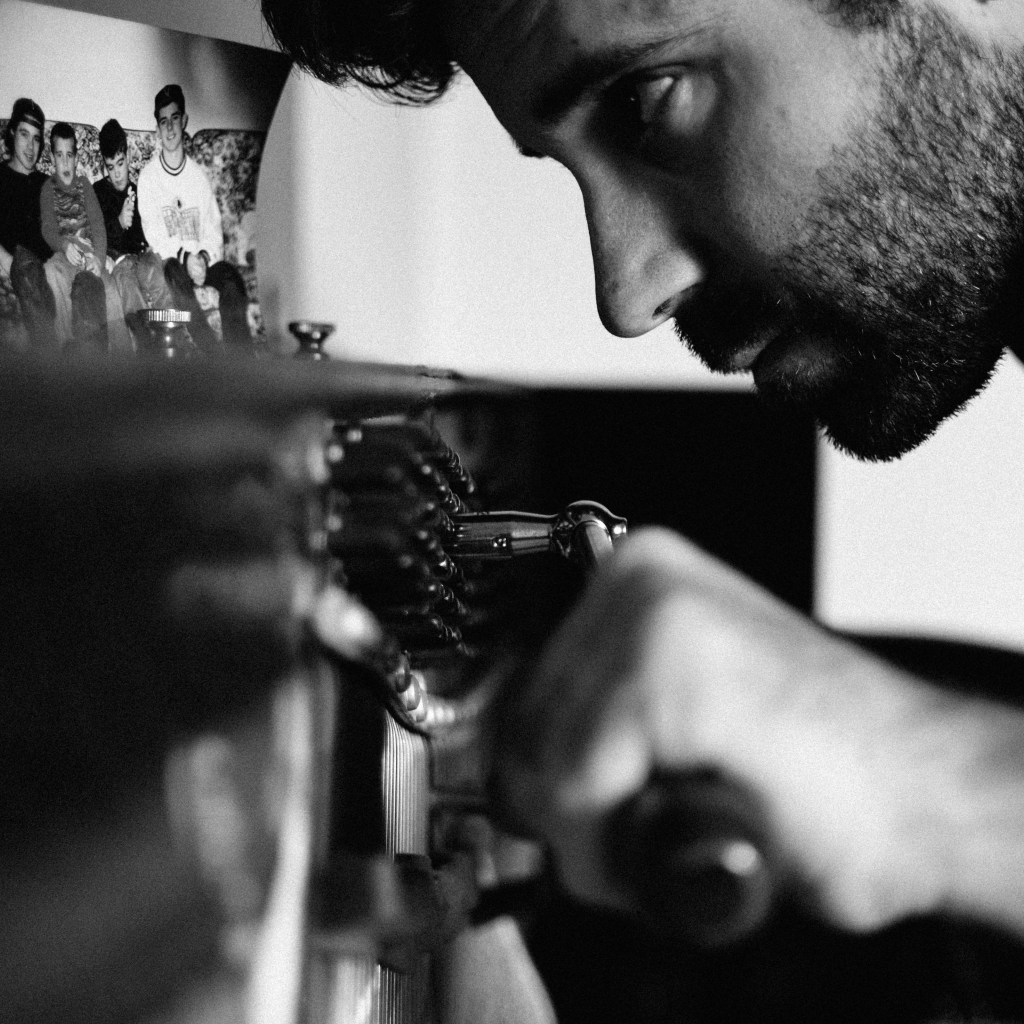
James Smith: For years now I’ve wanted to do something with some stories I have from growing up because I have three older brothers, all of whom have some kind of mental disability. Growing up, that was very normal for me because it was just my world. But something I’ve learned in the meantime is that I actually have a pretty unique insight into mental illness because of the way I was raised around it. So I thought it would be interesting to be able to offer that insight to people. I never knew how I wanted to frame that in a theatrical setting and then a couple of years ago I started tuning pianos and I was struck by the kind of imperfections of that process. Tuning is all about compromise and spreading out this dissatisfaction so it’s not noticeable in any particular spot of the piano. I thought that was a good metaphor to life, how minds work, and the way I was growing up trying to facilitate all these different relationships with my brothers and their minds. I thought maybe it would be interesting to do a show where I tune a piano and tell stories.

Outside the March is Mitchell Cushman’s company and they were doing something last year called Forward March, where you could submit show ideas anonymously and get some funding so I submitted this show idea. Then one day I got a call from Mitchell and he said, “Is this your anonymous submission about piano tuning?”

Mitchell Cushman: I mean the application was pretty specifically related to things I knew about James.

JS: I was like, “Yeah, nice guess.” He said, “We’re not going to fund you because I feel like this doesn’t need any money,” but he suggested we apply for SummerWorks.

MC: The nature of Forward March was to fund larger projects that would maybe develop over a couple of years and this felt like something that urgently could and needed to happen sooner. SummerWorks seemed like a really great foray for that. I’ve directed a couple of other shows at SummerWorks and at least one other site-specific show at this festival, so it seemed like a really good home.

BK: What can SummerWorks do for this show? Why this festival right now?

MC: The cool thing about SummerWorks, over the time that Michael Rubenfeld ran it, it’s sort of evolved from a theatre festival to a performance festival and has more connections to performance art or live art and multidisciplinary work. A lot of the unique things about this show, and while not being a musical, owes something to music, it’s very much steeped in storytelling, and it’s presented in a very non-traditional way. I think there’s a lot of audience at SummerWorks hungry for that.

BK: What was the process in creating this show?

JS: Well, I wrote for a while… a lot of different things – a series of short stories that didn’t really feel right for the show. I just spent a lot of time writing, trying to find the voice of the show and then we went into our first day of rehearsal and I had about 45 minutes of kind of written down spoken word. We went through that and we kind of found, through rehearsals, that the best approach seemed to be pretty sincere, honest storytelling as opposed to pre-written short story type snippets. We started honing in, right away at the beginning of rehearsals, a way to keep it really natural. We’ve written down very little since we started. We’ve mostly made cue cards of things and organized the stories into a structure that makes sense to us. It was less about writing and more about creating the flow of the story.

MC: We put tons of post-it notes on walls. James, if he wanted to, could create a four-hour show on the same subject.

JS: Yeah, our main problem is having way too much material.

BK: That is a beautiful problem to have. 

MC: There are so many memories and different aspects of James’ family or extended family that could be explored, so it’s been a process of trying to zero in on what fits with the tight focus of the piece.

BK: Why choose site-specific for this show? Why change locations for each performance? 

JS: You could feasibly do this show in a theatre with a piano on a stage, but I kind of wanted to keep the authenticity of actually tuning a piano, then leaving it tuned for a family to use, and then moving on to the next one. Throughout the run of the show, I feel like I’m making some tiny impact on the community in terms of leaving it slightly more in balance.

MC: If we did it in a theatre, every night we’d have to un-tune the piano.

JS: This feels more authentic.

MC: Especially now that we’ve been in all of the venues doing practices, I think it’s a very intimate show. I think that these locations will really support that intimacy because we are really in people’s private living spaces for very small groups of audience.


BK: How does the audience find out where they are going?

JS: It’s a secret because working with 8 different venues brings up a lot of logistical issues. People backing out or people wanting to change their capacity or their time or date, so if we had announced all of the locations right away, we would be constantly changing it and updating it.

MC: It also helps protect people’s privacy a little bit and all of their addresses.

JS: So 24 hours before each performance, Summerworks will email everyone who has bought a ticket letting them know where to go.

MC: They’re all in the general vicinity of SummerWorks, between the Queen and Dufferin area.

BK: Building from that, how does being at these unique different locations heighten the experience for your audience coming to see the show? What does it do for them?

JS: I think it sets up just a different experience for them right away in terms of going to theatre. I think it’s stretching the idea of what theatre is and what it can do.

MC: The show is really based in reality. I mean, James is telling a series of stories, all of which happened. I think by walking into someone’s house and having a real piano that actually needs to be tuned just supports the reality of the piece. Early on James was asking me if anyone else could perform this show and I don’t really think so partially because you’d need James’ skill set of being a performer and also being able to tune pianos. Even if someone could, I think it would be strange because it’s based so much on James’ personal experience.

BK: Let’s talk about site-specific and immersive theatre. What do they mean to both of you in terms of this show and more broadly speaking?

MC: I was actually thinking about this last night because I was writing an e-blast for this show. I was thinking about if this is a site-specific piece or immersive. I described it as a site-specific show. To me, I guess, it’s definitely site-specific in the sense that the location we’re performing in is going to radically inform what the piece is and we’re going to do this show 8 different times in 8 different spaces and it’s going to be 8 different shows. It would be a very different show if we did it in a traditional theatre. I think it would be a less activated experience. If we did it in a traditional theatre, I don’t think the space would have as much of a role on this show as it will when we perform it.

I guess when I think about immersive theatre, I think about the audience taking on a little bit more of an active experience, not necessarily physically active. That wouldn’t be the first word I would use for this show, but you could probably make arguments about parts of it being immersive too. I don’t know, what do you think James?

JS: I agree with what you said. The idea of immersive or site-specific theatre didn’t really exist until I met Mitchell. I had only done more standard types of theatre. Mitchell and Julie Tepperman asked me to do Brantwood at Sheridan, which was my first experience with immersive theatre.

MC: James was the musical director for the show, which was a monster task.

JS: After that, Mitchell hired me to do Mr. Burns: A Post Electric Play as well, which was site-specific in a way.

MC: That was a show that was probably on the borderline of immersive. I think there we really took over a space and radically transformed it. We did it in an old adult movie theatre in the east end. We really tried to transform what that space was to make it look post-apocalyptic and make the audience really feel like they were taking shelter in that place to weather out the apocalypse. We did that show without using the grid electricity and so that added to what made it immersive.

There’s sort-of set criteria to what people expect a theatrical experience to be and it’s trying to challenge some of those pre-conceptions. One of the cool things on that show, because we didn’t have any electricity, the sound design became really interesting. James held the major part in it – he was like a foley artist. He was popping balloons to signify gunshots. He worked in collaboration with Samuel Sholdice who did the sound design. We needed the sound of crickets in the first act and so, without electric sound, we got real crickets in cages living in the ceiling. We made jokes like “Can we hear that at 50%?”

temperament-photo-2

BK: That is amazing. What are the challenges, not only with Lessons in Temperament but with site-specific as a genre of theatre?

JS: Well, for this show I thought it would be a lot easier but because I’m inexperienced, I quickly learned that…

MC: Everything’s more complicated.

JS: I didn’t plan on having a producer. I thought this would be a small thing that I could handle on my own. Handling the logistics of the spaces was the hardest part because you have to think about audience capacity and whether or not we can hang lights. It became this kind of never-ending and always-expanding list of things that had to be done that a producer would normally do.

BK: Cue Sarite Harris.

JS: Exactly. I was trying to write the show and I found the only thing I was doing was writing emails.

MC: Even if you’re trying to do a piece and take it outside of a theatre, what you’re actually doing is trying to create a theatre inside of a space that isn’t a theatre. There are certain things like tech, seating capacity, audience comfort, and health and safety that are givens in a theatre… you don’t have to deal with that. When you go into a space that isn’t a theatre, your work has to start so much earlier in terms of figuring out things auxiliary to the actual presentation. In this case, when you’re in different locations every night, that’s just doing that work over again, all the time. Site-specific is very time consuming.

BK: Where did these sites come from?

JS: One we got off of Bunz Trading Zone on Facebook. A couple of friends and friends of friends gave us places.

BK: What about your working relationship with each other? How have you collaborated and worked together? 

MC: It’s horrible…

(they laugh)

JS: I really couldn’t have done this without Mitchell. He’s working, not just as the director, but as the developer of the piece, as well. He’s helped me organize my thoughts and my stories into something that is theatrically effective. I think, without him there with all of this info inside of his head, I would have never gotten past the stage of confused writing. I really needed him to kind-of put this into a world that would actually serve an audience properly. Mitchell is really smart and knows what’s good, so I can know that and trust him.

MC: I do know very little about music and music theory. I’ve been the ground zero test case for the most musically ignorant audience member. I can hear things better than I can two weeks ago! I’ve never had the opportunity to work on a show like this. I’ve been doing more new work development in the last couple of years and worked on a couple of solo shows, which is always interesting. You’re sort of getting a window into their brain. Given the subject matter and how this show is based so much around James’ memories and experiences, I’m just really… I’m thankful to be working on it. James has taken me and the other members of the core creative team into a very personal bubble, where the work has been living. One of the things I love about directing, and I don’t come from a performance background, is that you get to work with people and help them do something that you could never do and that’s tenfold on this experience. James has such a unique range of skills that are so far outside of what I would ever be able to do. It’s so fascinating to collaborate with him.

BK: That was a really nice answer guys. 

MC: We practiced outside.

JS: We’re going to hug later.

MC: I think we both came into this with a notion to fly by the seat of our pants. I think the show will continually evolve until our closing night. We have the freedom to do that. SummerWorks is a great place for experimentation. I think if either of us were too stressed about it being perfect right now, it would be less of a productive working relationship.

BK: What about the rest of your team?

JS: Nevada Lindsay Banks, our assistant director, has been so helpful. Just to have someone else in the room, who has this information in their head has been really great. She’s been there since the beginning kind-of helping as we’ve organized this piece. She’s always able and willing to chime in with something I’ve forgotten or Mitchell has overlooked. Just to have that third eye, kind-of taking care of things has been so beneficial.

MC: Nevada was one of the performers in Brantwood. She’s got really great instincts and also comes from a musical background. It’s helpful to have her to work with. Nick Blais is doing the design.

JS: He’s brilliant, I can’t believe he’s doing the show. He’s so good and so committed to it and he’s coming to all of these site visits and putting so much time into it. He’s so excited about it and I respect him so much as an artist. I feel so lucky.

MC: We’ve done a lot of site-specific stuff together and he’s one of the Outside of the March resident designers. He’s just got an amazing balance of a really creative mind and a really practical mind and you need that when doing these kinds of shows. He’s a truly unique talented dude who can kind of do it all. Kate Sandeson is our stage manager and we’ve both worked with her before. She can really work in non-traditional environments. Her calling the show will be moving dimmers connected to her binder while she’s sitting behind the piano with earplugs. She’s going to have a unique experience in every venue.

BK: What do you want audiences to walk away with at the end of this piece?

JS: I want people to feel like they’ve gained some insight into mental illness that is not textbook information or information a psychiatrist would give them. I want to offer a perspective that is very normalized and simple and understanding.

MC: There is a beautiful metaphor that James has created in this show. The show will start with him taking out a screwdriver and opening up these pianos. You get to see the piano exposed and the inner workings of it. Over the course of the show, you learn about what makes a piano work and how to keep it in tune. It’s something that most people don’t know about, but it’s an incredibly intricate process and it’s fascinating how this thing works and what gets in the way of it working. I think that’s a great metaphor for what goes on inside our brains and how many things in the world that we sort of interact with and accept, without really knowing what the underpinnings are. Beyond pianos, it makes me think about that.

Rapid Fire Question Round

Favourite Movie
MC:
The Big Lebowski
JS: Sandlot

Favourite Play
MC:
King Lear.
JS: The Seagull.

Favourite Musical
MC:
Hamilton but really Into the Woods.
JS: Sweeney Todd.

Favourite Food
MC:
The grilled cheese I just ate.
JS: Cherry cheesecake my mom makes.

Favourite Spot in Toronto
MC:
Trinity Bellwoods Park.
JS: Skyline Diner.

What music are you currently listening to?
MC:
The cast recording to Hamilton.
JS: Joel Plaskett Ladida

Advice you live by?
MC:
Don’t try to do what everyone else is doing, try to do the thing only you can do.
JS: Don’t ever argue with an idiot, they’ll drag you down to their level and defeat you with experience.

Lessons in Temperament

13495129_10205787779567685_4035958632835137684_n

Who:
TuneSmith Productions
Written and Performed by James Smith; Directed and Developed by Mitchell Cushman; Sound Design by James Smith; Production Design by Nick Blais; Stage Management by Kate Sandeson; Assistant Directed by Nevada Banks; Produced by Sarite Harris, James Smith, and Mitchell Cushman.

What:
Every piano is unique in its imperfection — in its flawed relationship to the sonic world. It’s impossible to perfectly tune a piano, so the job of a piano tuner is to tame this imperfection into an even balance, an even spread of dissatisfaction. This balance is known as Equal Temperament: a game of constant compromise and a lesson in disappointment.

Every mind is unique in its imperfection. In Lessons In Temperament, James Smith tunes pianos in various public and private spaces throughout Toronto while exploring theories behind Equal Temperament as well as his three older brothers’ mental illnesses: obsessive compulsive disorder, autism, and schizophrenia. Smith attempts to grant balance to the instrument that has, throughout his life, kept him grounded and kept him company, while reflecting on the discord that runs through his family. Each performance takes place in a different venue, gathered around a different piano. Part autobiographical story-telling, part performance art, part tune-up, this site-specific show offers a unique theatrical experience, and a singular glimpse into the lives of those living with troubled, beautiful, distempered minds.

Because our venues are site specific, we want to give you our patrons as much prior knowledge as possible. For allergy purposes, the performances on August 10th, 12th, and 14th have dogs as well as one cat on the 10th. Please note that the pets will not be at the performances.

Curator’s Note
“‘This working-through of the resistances may in practice turn out to be an arduous task ….’
– Freud

It’s a lovely performance metaphor: the tuning of pianos, the tuning of our hearts and minds, our lives. It’s might be a Sisyphean task but: ‘the struggle itself toward the heights is enough to fill one’s heart’. (Camus)” – Guillermo Verdecchia

Where:
Secret Location

When:
Wednesday August 10th 8:00 PM – 9:30 PM
Friday August 12th 8:00 PM – 9:30 PM
Sunday August 14th 8:00 PM – 9:30 PM

More Show Info:
summerworks.ca/lessons-in-temperament/

Tickets:
Sold out in advance but limited tickets at the door.

Connect: 
twitter – @tunesmithprod
instagram – @tunesmithproductions


Artist Profile: Anthony MacMahon, playwright of “Trompe-La-Mort, or Goriot in the 21st Century” at SummerWorks 2016

Interview by Brittany Kay

I had the pleasure of sitting down with Anthony MacMahon to discuss his new play Trompe-La-Mort, or Goriot in the 21st Century premiering at SummerWorks. We spoke about his love for the festival and his way into writing through adaptation.

Brittany Kay: Where did the idea for this play start?

Anthony MacMahon: The idea for this play started when I was reading Thomas Picketty’s Capital in the Twenty-First Century. It’s a pretty dry book. It sits somewhere between a regular non-fiction and an economics textbook. There are continual references to literature in this book and how literature captures the spirit of an age. He talks about this book Le Père Goriot by Honoré de Balzac, which is about a very wealthy vermicelli vendor and his two daughters who live in this common house with a young man named Eugene, who’s studying to be a lawyer. The entire book is about how this young man Eugene has worked so hard for everything and even if he is the best lawyer in all of France, he’ll never make as much money as this vermicelli salesman. And despite this vermicelli salesman being the biggest vermicelli salesman in Italy and France, he will never have as much money as a queen, a king, or a prince or a duke. This was very reflective of the age.

I was reading this book in Paris and I was on a train and saw a guy get pick-pocketed and I also saw the after effects of the pickpocket. I saw him get bumped, the wallet stolen, and then I saw him start screaming at his daughter who he was with because she was the one who had gotten them on this train in France. She was living in France and was British and the father was visiting from the countryside and was carrying a giant thick wallet in his back pocket. Seeing this in my surroundings now, and reflecting on how the economy affects people at any given day, I was inspired to update the book and to set it today. It’s the same characters, the same kind of action, but it’s modern and they’re dealing with modern problems. So rather than someone studying to be a lawyer, they’re trying to be a programmer, and rather than someone having made all their money off of vermicelli, they make their money off of the stock market. I tried to make it a thriller because the book is actually quite thrilling and that was how I got to the script stage.

Photo Credit: Dahlia Katz

Photo Credit: Dahlia Katz

BK: What has been the process in mounting this play?

AM: I went through a bunch of ideas of how I could do it.

At one point, I sat down and wrote an entire scene and got to this one line, which encapsulated my whole theory about how this play works. I wrote the rest of the play in about a week and a half, and it actually hasn’t changed that much since. I went through about 10 different versions before that one scene came together and then from writing that scene, it organically fleshed itself out into a full play.

BK: Has the play gone through any workshopping or dramaturgy or is this the first kick at the can?

AM: This is the first kick at the can. I normally do the very standard playwriting process of two drafts and then a dramaturg and then another draft and then another dramaturg and then a two-day workshop and then a five-day workshop and then potentially a festival performance. This script was really written in about two weeks and has been edited and changed since then. Its workshop development is this production.

trompe la mort image

BK: Why SummerWorks?

AM: SummerWorks has always been good to me. SummerWorks is why I moved out to Toronto. I got in while I was still living in Saskatchewan and as a result, I kind of love doing it. I have a soft spot in my heart for the festival and I think the festival has a soft spot for me. I’ve gotten in every time I’ve applied now. I think it’s a place that really encourages people to fail boldly and, in that failure, you can have some great successes.

It gives you enough infrastructure so you’re not an absolute disaster of a person trying to figure out how to rent space and hire someone to sell tickets for you. It gives you just enough infrastructure so that you’re not constrained in any way, which is kind of why I chose it. I’ve always just met the most exciting artists working at SummerWorks. It’s August, it’s on Queen West, it kind-of feels like a vacation in the city to do this cool festival downtown. That’s why I chose it.

Photo Credit: Dahlia Katz

Photo Credit: Dahlia Katz

BK: Tell me a little bit about your team involved.

AM: Ted Witzel is our director. I think he is the coolest artist in Toronto. He just kind of bleeds cool. I wanted someone who doesn’t bore me in any way and nothing he has ever said or done has ever bored me. That’s kind of why I sought him out. We’re working with Anahita Dehbonehie, CJ Astronomo and Wesley McKenzie for our design team. It’s a big design for the show. We’re really trying to push SummerWorks to its design and structural limits. So we have 2 projectors, we have things on rails and guides, and we have 5 giant pieces of plexiglass hanging from the ceiling with like a neon light show and potentially smoke. Wesley, CJ, and Anahita are people who can really move astoundingly fast. They have this incredible way of taking these giant visual ideas and putting them onto paper in a 6 hour tech time. The cast is Mark Crawford, Farah Merani, Lindsay Owen Pierre, Ewa Wolniczek, and Jeff Yung. It’s a really great cast. A lot of the kind of directorial atmosphere that Ted gives them and that they run with, is what can I get away with as an actor? It has created such a playful atmosphere. Michelle Yagi is producing and she’s great. Having someone know what they’re doing and with her kind-of organizational mind and ability to plan and hit dates and targets just gives the rest of the team so much more opportunity to create much more positively. Justis Danto Clancy is our Production Manager. Alana Dunlop is our stage manager and has worked with Ted before so she knows how to manage his big ideas.

BK: What are you hoping audiences walk away with?

AM: I hope audiences walk away from the show debating it. The show is a debate essentially, or 5 or 10 debates really. I try not to be too prescriptive or too partisan or soap-boxy for lack of a better term. I want to present these things that I’m actually grappling with. I think we’re trying to grapple with some pretty big ideas and I want the audience to have the second act of the play being them grappling with these ideas that we’re presenting, whether it’s in the courtyard after the show, or at the bar, or after another show they see that informs a different version of these ideas. Ideally, I just want them to walk away talking about it. That would be my big hope for the show.

trompe mask

BK: Now let’s talk a little bit about you.

AM: About me?

BK: Yes, you. What propelled you into playwriting?

AM: I kind of tripped and fell into it. My friend Nathan Howe was doing a show that he had written at the Saskatoon Fringe Festival and I asked him if I could be in it. He had already cast it, so I decided I would write a play so that I could cast myself, because I wanted to do a show. I ended up not actually being allowed to be in the play because my director dropped out so I had to take over as director. Then I just started writing more. I just continually tripped and fell into things, which is the dumbest, luckiest thing in the world. I just happened to find out that I wasn’t a particularly skilled performer and my way of performing was all through literature and writing and all through trying to organize ideas as words.

I lobbied for a playwriting course in my university and I ended up doing a couple of public readings in a little reading series in Saskatoon. It was really cemented for me when I was producing Vern Thiessen’s, Vimy and I saw that he was the senior playwright at the Banff Centre. I had an early draft of Wild Dogs on the Moscow Trains and I really wanted to meet Vern, so I submitted. I ended up getting a call as we were producing Vimy saying, “Hey, here’s when you’re coming to Banff. “ At that point I realized I wasn’t going to be doing much acting anymore. I guess I was going to start writing.

BK: How did you figure out that this is where you needed to be?

AM: I think I had one of those stories that’s pretty common among artists, where you have a lot of teachers that don’t inspire you but then you have a drama teacher that does inspire you. His name is Blaine Heart and he’s a fantastic man out in Saskatchewan. He was our drama teacher but also performed in a local improv group in the city and he would perform in local plays. He was just such an inspiring guy, so great to be around, and he kind of took me under his wing. His friend from university, Jim Guido, ended up coming back and teaching in the university there. Blaine told me about Jim and said “You have to go into drama, at least just to take a class from Jim because he’s such an interesting guy,” which ended up with me taking a bunch of classes from Jim and him taking me under his wing, as well, in a different way.

BK: And how was your experience in the University of Saskatchewan’s theatre program?

AM: The theatre program was quite an academic program. You had to take a fully rounded education in the department as well as a fully rounded liberal education outside of that. The people who went to the University of Saskatchewan had a lot of freedom. We had a fully equipped black box studio and we were allowed to put on plays whenever we wanted. We could stay in the building until 2 or 3 in the morning rehearsing shows. In the time I was there I think I did twenty-four shows in four years. A lot of them were short pieces, but you just had consistent performance opportunity. I ended up doing lighting design for two shows because they didn’t have a lighting designer and I was trained on how a lighting board works. You got a really holistic sense of the theatre almost accidentally. It’s a great model of how Toronto theatre or any kind of theatre works. People always have to take a second, third, or fourth job on the production. It was a really good training example of how that all works.

Photo Credit: Dahlia Katz

Photo Credit: Dahlia Katz

BK: When did you move to Toronto?

AM: I moved to Toronto in the summer of 2012. I was working on the show The Frenzy of Queen Maeve at the Saskatchewan Playwright Centre. I had read all of Hannah Moscovitch’s plays and I saw that they were all done at SummerWorks. I knew a bunch of other playwrights at SummerWorks and I figured that I would submit. I did and was accepted. I was considering either moving to Toronto or Vancouver because the Saskatoon theatre community is somewhat small. When I got accepted into SummerWorks, I decided that’s where I was going.

BK: When did Soulpepper happen?

AM: The program began in 2013. It kept me in the city. I’m happy with Toronto. I like this city a lot.

BK: How do you find inspiration for your work?

AM: I do a lot of adaptation… sometimes from literature. In this case it’s kind of literature and non-fiction. My way into writing, especially in the last couple of years, has really been about as a playwright trying to make a case for yourself in the theatre. I’ve always said “playwrights are the only people in the world who can have a dead person do their job,” in that if you can’t make a proper case for why your show should be done, people will just do Shakespeare or Ibsen or all the thousands of dead playwrights that are out there, who don’t have to be paid and have a name cache behind them. My way in is often through (whether or not it’s an adaptation) literature or non-fiction, it’s a hat tip towards it. I can interface with these old problems or these new problems and I can make them theatrical.

BK: What’s your process when you write?

AM: Usually I’ll do a lot of structural work beforehand… plot out scenes and find major action in the scenes. I’ll often work backwards writing a play. I figure out where I want a play to get to and then sometimes I’ll have where I want it to start and I’ll just fill in the middle. Generally, it will be a bunch of work that amounts to nothing and one line or one phrase that finally does something and that’s when I’ll pick that thing up.

BK: Do you find ways to keep yourself motivated?

AM: No… If you have any I’d love to hear them.

Deadlines are the best one. There’s always an internal motivation about just wanting to create something and wanting to show something. The best motivation besides deadlines, for me, is actually having a problem that I’m grappling with. If I am being dogmatic in my writing then I just get tired of it, whereas if I’m confused about why I’m writing something then that tends to just make me start writing it to try to work it out. I’m better at working things out on the page than I am verbally. Debating with myself on the page is the best way to do it.

BK: Do you have advice for emerging artists?

AM: I still consider myself one. The best thing that I have found as an artist is to not be afraid to ask. I never met Ted before I did this show. I sent him an email asking if he wanted to direct. You can get very far just by asking. The worst that’s going to happen is that they are going to say no.

Rapid Fire Question Round

Favourite Movie: Taxi Driver.

Favourite Play: Light Shining in Buckinghamshire by Caryl Churchill.

Favourite Musical: Assassins.

Favourite spot in Toronto: East Side Riverdale Park.

Favourite Food: Good pasta.

What are you listening to: I’m getting into electronic music for the first time in my life.

Mantra/Best advice you’ve ever gotten: Quit trying to be cool, start trying to be good.

TROMPE-LA-MORT, or GORIOT IN THE 21st CENTURY

trompe la mort image

Who:
Company – Live Lobster Theatre
Directed by Ted Witzel; Written by Anthony MacMahon; Set and Costume Design by Anahita Dehbonehie; Lighting Design by CJ Astronomo; Projection Design and Sound Design by Wesley McKenzie.

What:
An anarchist holds the world’s secrets on a hard drive. Three developers try and disrupt stagnant markets, missed connections, and freedom of speech. A venture capitalist finds his profit in the rubble. The old world is dying, and the new world struggles to be born: now is the time of monsters.

A loose adaptation of Honoré de Balzac’s Le Père Goriot smashed up against Thomas Piketty’s Capital in the 21st Century asking what’s the difference between terrorism and whistleblowing? What’s the difference between a human being and a start-up corporation? What is the difference between freedom and control? This digital age thriller explores what happens when your work life, relationships, and ideas are reduced to data processed in an app.

Curator’s Note
“‘After studying the world very closely, you’ll see that there are but two alternatives–stupid obedience or revolt.’ – Honoré de Balzac, Père Goriot

Anthony MacMahon, my favourite young commie playwright, has come to similar conclusions. This smart, fast, and funny play drops Balzac through the trapdoor of global capital.” – Guillermo Verdecchia

Where:
Factory Theatre Studio
125 Bathurst Street
Toronto

When:
Thursday August 4th 5:00 PM – 6:30 PM
Friday August 5th 9:00 PM – 10:30 PM
Sunday August 7th 7:15 PM – 8:45 PM
Monday August 8th 6:00 PM – 7:30 PM
Tuesday August 9th 10:30 PM – 12:00 AM
Saturday August 13th 8:00 PM – 9:30 PM
Sunday August 14th 4:15 PM – 545 PM

More Show Info:
summerworks.ca/trompe-la-mort/

Tickets:
summerworks.ca

Connect:
instagram – @livelobstertheatre
#trompelamort
#SW16

Artist Profile: Jordi Mand – Playwright of CAUGHT, on stage now at TPM

Interview by Brittany Kay

I had the utmost pleasure of talking with the incredible Jordi Mand, playwright of CAUGHT, which opened this week at Theatre Passe Muraille in their Backspace. We spoke about creating your own work, the inner struggles you face when graduating university, and the differences between doing the job and getting the job.

Brittany Kay: Tell me a little bit about your new play? 

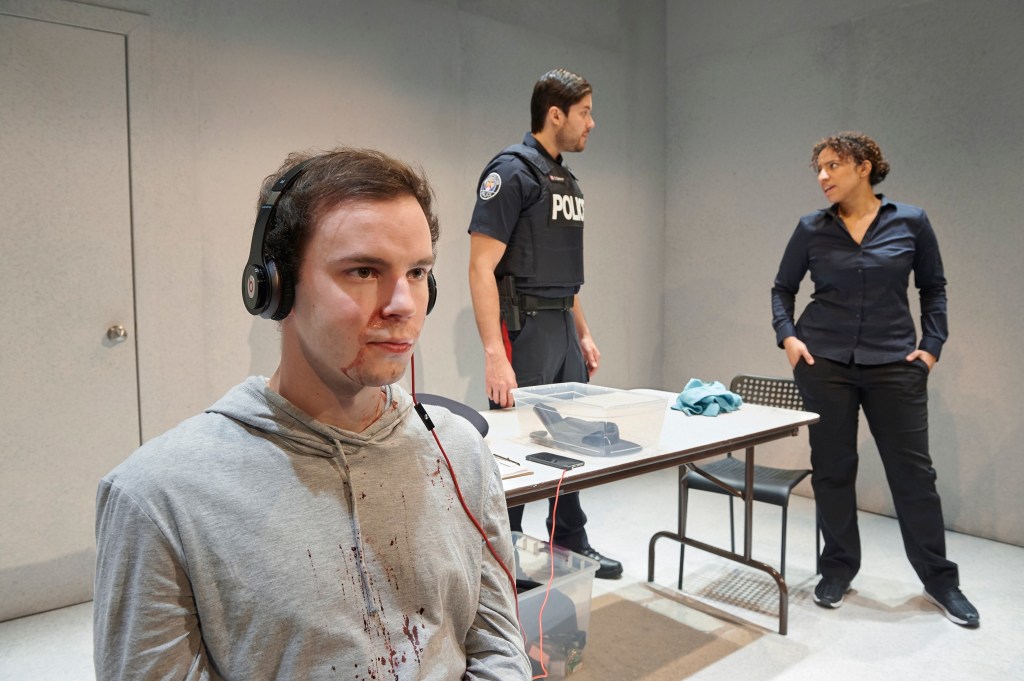
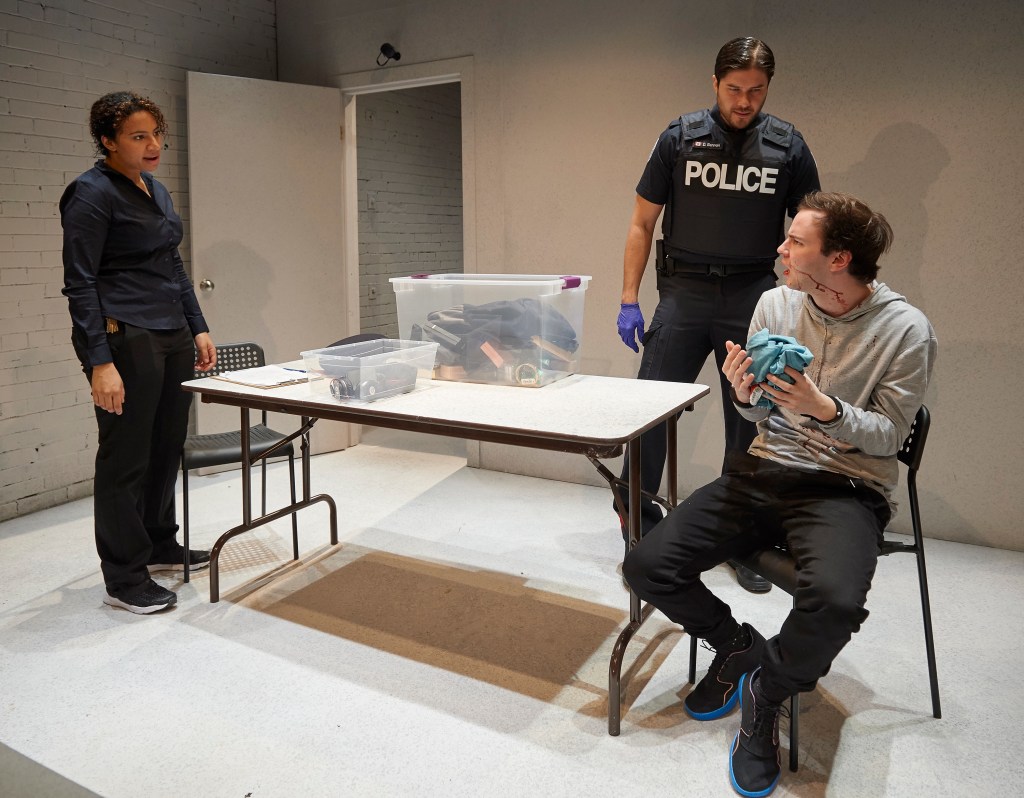
Jordi Mand: Caught takes place in the security holding room of a major department store in Toronto. It focuses on a female security guard and a teenage guy who she has caught shoplifting and how the situation unfolds between them. A police officer arrives to process him and the tables are sort of turned on this security guard. She thinks she has caught this shoplifter but everything starts to go awry for her. That’s focusing more on the events of the actual play, but the piece, itself, has changed a lot over time. To me, it’s really about justice and interpersonal justice – justice between people and their steep inner personal justices that they feel. I’ve spent a lot of time thinking about how some people in this world for lesser reasons seem to be able to get away with things and other people can’t. How does that come to be? What are the ingredients of our lives that bring us to that place? What is our moral code that allows us to actually break the rules or make the rules? That was a really big launching point for the show.

Photo of Jakob Ehman, Meegwun Fairbrother, Sabryn Rock by Michael Cooper.

Photo of Jakob Ehman, Meegwun Fairbrother, Sabryn Rock by Michael Cooper.

BK: There was a lot of development that went into this play. How did it come to be?

JM: It’s actually had a bit of a long life. So in 2009/2010 I was part of Nightwood Theatre’s Write from the Hip Unit, which is their emerging writer’s unit for emerging female playwrights. Write from the Hip has changed considerably in terms of its format, but at that time the objective was to write a 15-minute piece and so I wrote the first 15 minutes of Caught. Andy McKim at Theatre Passe Muraille asked me if I wanted to present something or hear something read at their Buzz festival. I hadn’t touched the piece in about a year and then decided I wanted to hear it again. I had been a resident artist at TPM for a number of years and both Andy and I knew we wanted to work on a project together. We were circling around different ideas and at the same time we both came back to that piece and the themes of justice and injustice, entitlement and consequences that are found in the play. We both agreed that there was a longer life for this piece than just a few minutes and started exploring it. I had been working with Andy dramaturgically and further developing it. There was a workshop of a earlier full draft in September and now we’re sharing it with the city.

BK: Why TPM? 

JM: When I graduated theatre school, I had been working for Obsidian Theatre in an administrative capacity. I was their Director of Development and Obsidian had done a co-production with Roseneath Theatre and TPM and it was just as Andy was moving into the theatre as Artistic Director. I first got to know him then and the philosophy of TPM, which I just sort of fell in love with. I just found their attitude towards storytelling and their artists and emerging artists really real and wonderful. They had put a call out around that time for Elephants in the Room, which was their emerging artist program, and they were looking for people to help launch that. So I approached them and said it was something I was really interested in doing. I became one of the four co-founders of Elephants in the Room. We also started Crapshoot, which still happens and so I’ve had a long relationship with TPM. I think a lot of artists, especially in this season who are sharing stories and are part of TPM, have similar connections with the TPM. The company has been an integral part of their journeys as they have been moving forward in this crazy theatre world. Then I became a resident artist with TPM and Andy and I really wanted to tell a story together and I wanted to tell a story with that company and Caught just seemed like the right fit.

BK: What a lovely journey.

JM: Yeah! Sort of a natural evolution over many, many years.

BK: Why the title Caught?

JM: The action is certainly a big part of it. I love how it has to do with how we find ourselves caught, either by our own doing, people catching us, us being caught by our own habits and our own hang-ups that we can’t get past, us being caught within society’s rules and regulations of what we can and cannot do – how that sometimes can work in our favor and sometimes it can work against us. We’ve really been spending a lot of time in rehearsals talking about how we can get these characters caught as much as possible. It’s also part of the ride for the audience and part of the fun of it – how can we get into as much trouble as possible?

Photo of Sabryn Rock, Jakob Ehman and Meegwun Fairbrother by Michael Cooper.

Photo of Sabryn Rock, Jakob Ehman and Meegwun Fairbrother by Michael Cooper.

BK: Tell me about your team?

JM: I’ve known Sabryn Rock (who plays Trisha) for a decade now. We went to the National Theatre School together. She’s amazing. I’m really spoiled, it’s a really incredible team. Jacob Ehman is playing our kid, James.

BK: I saw him in Sophia Fabiilli’s play “The Philanderess” in the Toronto Fringe and just thought “Who are you? You’re amazing!”

JM: I am really thrilled for him that he is getting the attention that I think he really deserves. He’s such a talented actor and he gives so much. I love watching him work on this piece because James is a confusing character, Jakob is such a spontaneous actor. It’s wonderful watching him process the play, moment by moment. I know what the character is going to do next but I don’t know what Jakob is going to do next. It’s really an actor’s play. The joy and pleasure of this world is really the moment-by-moment, tiny details that each character either brings to the other and the journey that the actors take their characters on. An actor named Meegwun Fairbrother plays our police officer and he’s a real presence in the room. As soon as the character walks in, everything changes. I feel that way with who Meegwun is as a person as well, so that’s just really amazing that those two line up. Sarah Garton Stanley who is the Associate Artistic Director of English Theatre at Canada’s National Arts Centre is our director. She is so focused in her storytelling. Each moment is so fresh and calculated. She has a really great brain and heart for this world. Our design team is fabulous. It feels like the right ingredients in the room for our world.

BK: Tell me about the design concept?

JM: It’s one room, one location, almost like a holding deck. There’s only a table and chairs. It’s very neutral. It has very little personality and it’s almost as if there’s the forth wall and part of it has just been cut out so you can see through it. Not like a two-way mirror… someone has just taken a knife and removed a chunk of it. So the audience will feel like a fly on the wall, like they shouldn’t be there or they’re intruding. It should feel a little bit like a scene of car accident on the street, where people are driving by and they can’t turn their eyes away from it. Hopefully we can do the same thing for our audiences. Fingers crossed!

Photo of Sabryn Rock and Jakob Ehman by Michael Cooper.

Photo of Sabryn Rock and Jakob Ehman by Michael Cooper.

BK: I’m going to put a hold on the play and ask about you. Tell me a little bit about your journey to where you are now.

JM: I’ve been involved in theatre for a long time. I was one of those theatre kids, where babysitters loved me because I would coordinate plays for parents to watch and they would sit upstairs and do nothing. I had been involved in productions as an actor as a kid for a very long time. I grew up in Richmond Hill and I was part of CharActors Theatre Troupe, where they had just auditioned to be one of the choirs in Joseph and the Amazing Technicolor Dreamcoat. They asked me if I wanted to be a part of it and that was a big thing for me as it was my first professional show. I missed school for a year. It really changed a lot for me. There was never a moment where I said, “I don’t want to do this.” At that point I thought I still wanted to act and so I went to Unionville High School, which is a performing arts school. Then I went to York for their theatre program for a year.

I’m not a particularly impulsive person, but there are these few markers in my life where I’m like, “I’m going to make this decision!” and I have no basis for it or even an understanding if it’s going to work out. York is great because it’s a generalized theatre program where in your second year you specialize. This might have just been the really bad student in me because school and I have had a bit of a complicated relationship, but I just remember hearing this voice being like “you need to be in a more of a conservatory program”. Someone I went to high school with who I considered to be the best actor was at the National Theatre School and I just remember saying, “I have to go there.” I started looking at all of the artists that really inspired me and a lot of them had graduated from NTS.

BK: So you left York before specializing?

JM: Yes. I auditioned for the acting program at NTS and got in. I went there really thinking I was going to focus on classical theatre, with my ultimate intention of acting at Stratford or Shaw. I was very focused on that being my trajectory. What I didn’t anticipate was that when I was there I would find this unexpected joy in creating my own work. The curriculum in our second year was focused more on creating your own work and largely for yourself. I ended up finding that work really enjoyable and craving it more, which was a big surprise for me because I thought I had really defined for myself what I thought I was going to do.

I graduated and moved to Toronto and started auditioning. I had applied to SummerWorks the year after I had graduated with this solo show that I had written in school. It was about my family and me. I used my own name. It was a very personal story. I applied and they said that they were interested in my voice but they were not offering me a slot in the festival. They had offered me a spot in the Under-25 Reading Series instead, which provided the opportunity to develop my piece with a mentor, followed by a live reading. They partnered me with Hannah Moscovitch.

BK: Wow! What an amazing person to be paired up with.

JM: Right?!

BK: Could you ask for a better mentor?

JM: No. It was crazy. That was sort of one of two path-changing moments, I think. Even when I was at school and we were graduating, I was still conflicted about whether I wanted to be an actor. My parents are pretty academic and they are huge supporters and lovers of the arts but they are not artists. I don’t come from an artist family. I really felt that after going to a conservatory, where you don’t get a degree and you don’t get a diploma, the idea of me saying that I don’t know if I want to act anymore, felt like such a slap in the face for them and that I was letting myself down. It sounds so silly saying it out loud, but I actually felt so ashamed that I wasn’t sure if I wanted to keep acting. So in meeting Hannah, who had gone to NTS and who had been in the acting program, who had really started very seriously on her trajectory as a writer at that point, was the first person I could actually talk to about writer things. She was the first dramaturge I had in my life. She was the first mentor I ever had. Sometimes when you find the right person at the right time it just makes all the difference. She answered every question that I had. We worked really closely together. There was something about it that, as I was working on that piece, and as I was working with her, something just started to feel right.

BK: So that was it for your actor days?

JM: I just wasn’t always prepared to do the work as an actor that I should have been. I liked the idea of getting the part but once I got the part I was like, “well I guess I gotta do this now.” Actors have to have such a commitment and dedication to the process. I just don’t think I have that as an actor. Whereas, as a writer, I can see the difference in my process now, in that case. Meeting Hannah and working with her was a huge game-changer for me.

BK: So what happened with Summerworks and your play?

JM: I ran into Michael Rubenfeld on the street and he said, “Just to let you know, we’re going to hire an actor to read your piece for you.” I was confused because the play was about my family and me. I was writing it for me. I was supposed to be in it.

His response was, “That’s fine and you can pick it up and take it wherever you go afterwards, but I think it would be really helpful for you to just hear it.”

BK: How did that change things for you as a writer?

JM: As I started writing, knowing that in mind, I decided to change the character’s name from my name because I thought it was bit silly for somebody else to say it. Then I stared changing other details and this solo show went from being one actor on stage to there be being three actors on stage, with multiple characters. What seemed like such an inconvenience at the time, turned out to be one of the biggest gifts. I was really only writing for as well as I could act as opposed to telling a story fully. If I started writing in territory that really scared me as actor, then I would stop writing it, because it was just for me. Somebody else having to do that work meant that I could go anywhere. It never occurred to me to write for other people. So the combination of working with Hannah, somebody who was really at the rising point of her process as a writer, and this large shift writing for other people made everything click. That was the key moment I unlocked everything. From there, I’ve been writing pretty seriously ever since.

Photo of Sabryn Rock, Meegwun Fairbrother and Jakob Ehman by Michael Cooper.

Photo of Sabryn Rock, Meegwun Fairbrother and Jakob Ehman by Michael Cooper.

BK: Where do you find inspiration for your work?

JM: My life. There is a lot of me in every world that I touch. People may see it and not know anything about that. I’m really inspired by my family. I’m very inspired by the world that we are living in, this city and beyond. What is it that is defining and challenging and turning our world right now? I’m really worried about the state of our world right now. There’s just chaos in so many areas of our lives. I don’t know where it’s going to go, but in the last 10 years even, things have changed so much. Our connections to each other have changed so much. I find inspiration in how troubling I find that. So that’s a large part of Caught, too. Who are we as people today? Who are we raising? Who is this next generation? Do we have any accountability to each other anymore? Do we mean anything to each other?

I have a lot of those questions. I find inspiration in fear, in anger and in not knowing. For me and for a lot of writers these plays sort of become our venues to try to work out a problem or a query.

Photo of Meegwun Fairbrother and Jakob Ehman by Michael Cooper.

Photo of Meegwun Fairbrother and Jakob Ehman by Michael Cooper.

BK: Is there a way you stay motivated to write? What are ways you keep the motivation alive and dedicate yourself to the work?

JM: The last two years I’ve found it really helpful to work on multiple projects. That’s the way it’s sort of panned out. If I feel like inspiration is resting a little bit, I find myself cheating on my plays with other plays that I’m working on. It’s not that I’m not working, I’m just working on something else. So that helps.

Thinking about an audience, I find, is the thing that always keeps it going for me. Continuing to come back to what’s at the heart of it. What is it that I’m trying to say? What is that I want audiences taking away? Writing is such a solitary process. You spend so much time here in your head. I mean, you have your team which is amazing, but then you’re in a rehearsal hall and it’s still pretty contained. Thinking about the people who are going to be receiving it; who you may never have any contact with, you never know how they are going to experience it and you can only hope that it’s the way that you intend. Thinking about them, that magical audience, is the biggest thing for me.

BK: What do you want audiences walking away with?

JM: Right now, today, I would really like audiences to walk away and think about how they are treating other people and how they are treating themselves in relation to other people in this crazy world.

Photo of Meegwun Fairbrother and Jakob Ehman by Michael Cooper.

Photo of Meegwun Fairbrother and Jakob Ehman by Michael Cooper.

Rapid Fire Question Round:

Favourite Book: Today, I will chose The Unbearable Lightness of Being by Milan Kundera.

Favourite Play: Shape of Girl by Joan MacLeod

Favourite place in Toronto: My bed.

Favourite Food: Berries.

Favourite Movie: Toy Story.

Last play you saw: The Public Servant.

Best advice you’ve ever gotten or words to live by: Do the work. Focus on the work.

Advice for emerging artists: Do what works for you. The amount of work you get might mean you might not be able to sustain yourself in any capacity. I’ve talked to a lot of artists recently and they’ve expressed a shame or trepidation about having part-time jobs or full-time jobs to support themselves. They think they have failed or they’re dishonouring their craft in some capacity, but I don’t think there’s one way to make something happen for yourself. I think everyone’s life and reality is different. You have to shape your life in a way that you can do the work and do it with a full heart and not have to feel guilty for making excuses for yourself. Don’t ask yourself, why you’re not doing it like this person or that person. You have do it the way you do it. I wish someone told me that early on. It would have saved me a lot of sleepless nights. It’s so hard. It’s hard for everyone, even the people it doesn’t seem hard for. Look for mentors and make connections. Treat those connections like gold. Find people that help you do what you want to do. 

CAUGHT

A Theatre Passe Muraille Production. On stage now until April 24th.

Who:
Written by Jordi Mand
Directed by Sarah Garton Stanley
Dramaturgy by Andy McKim
Starring Jakob Ehman, Meegwun Fairbrother & Sabryn Rock
Production Design by John Thompson
Sound Design by Debashis Sinha
Assistant Director: Donna Michelle St. Bernard

Where: Theatre Passe Muraille Backspace, 16 Ryerson Ave. Toronto.

When: March 31 – April 24, 2016

Tickets: Pay-What-You-Can Saturday & Sunday 2pm Matinees, $17 Under-30, $20 Artsworkers, $28 Senior, $33 General Admission

passemuraille.ca/caught

Connect with us

Connect with us!

Spread the word: #CaughtTO

Theatre Passe Muraille – @beyondwallsTPM

In the Greenroom –  @intheGreenRoom_

Brittany Kay – @brittanylkay