Skip to content

Posts tagged ‘Brittany Kay’

Artist Profile: Anusree Roy – Playwright & Performer of “PYAASA” at Theatre Passe Muraille until March 27th

Interview by Brittany Kay

I was lucky enough to sit down with my own personal mentor and friend, Anusree Roy, to talk about her upcoming production of Pyaasa opening today at Theatre Passe Muraille. In her dressing room, we spoke about the discipline it takes to be an artist in this business, the challenges of a remount, and her deep gratitude for Theatre Passe Muraille.

Anusree Roy in PYAASA. Photo Credit: Michael Cooper

Anusree Roy in PYAASA. Photo Credit: Michael Cooper

BK: Tell me a little bit about your show?

AR: Pyaasa is set in present time in Calcutta, India and it’s a play I wrote starting in 2006… so 10 years ago. It’s something that I’m coming back to, which I’m really excited about.

Untouchability is something that is constitutionally banned. Doctor B. R. Ambedkar, who was an untouchable himself, put forth this constitutional change. You can’t practice untouchabililty, but in India it’s very widely practiced. It’s changing, absolutely, but the caste system still very much exists.

When I wanted to write a play, I wanted to look at the world, that world, the caste system world, acknowledging my social location in the system, which is a higher caste person. We had untouchable people clean our toilets all the time and we treated them really badly and I treated them really badly because that’s the environment of the society you were raised in. Pyaasa is a journey about this beautiful young girl named Chaya and her life story in ten days, beginning to end of the show. She’s a girl who’s young, bright and wants to go to school desperately. That’s all she wants. It’s a fun show and it’s a heartfelt show. It’s also a sad show and a truthful show.

BK: It’s just you on stage. Is this is a one character show, or a show with many characters?

AR: I play four characters. Chaya, Chaya’s mother Meera, this other servant lady named Kamala, who both work for Mr. Bikash. So it’s 2 women, 1 man and 1 girl.

BK: Why the title Pyaasa?

AR: Pyassa means thirsty. There’s a lot of water and water nuances all through the play. The name came to me. It wasn’t something, where I was sitting there going what should I name my play? I just thought of it because subconsciously I was aware of the amount of water in the show. I think if I were to analyze why the way it works in the caste system, in the villages that are in the rural areas, our water tank is sacred because I’m from the higher caste and your not and you can’t get water from mine. There are a lot of disputes about water, which is a necessity in life. So when you cut something off that’s a necessity in life, it becomes even more important. The name came to me and I stuck with it. It’s allowed us to kind of really look at the play through that lens.

Anusree Roy in PYAASA. Photo Credit: Michael Cooper

Anusree Roy in PYAASA. Photo Credit: Michael Cooper

BK: There was a lot of development with this play in its first edition. What were the steps and processes it went through? Before this remount, how did it come about?

AR: In 2006, Thomas (my director), David (the designer of the show) and I were doing our masters together. I was having sushi with Thom and I was telling him about my life story back in India and telling him story after story about my past.

At one point I was talking about the untouchables, the caste system, and how it’s abolished but how it still exists and he stopped me and said, “There’s a play there. You know there’s a play there right?” I was like “yeah, okay.” And he insisted on saying, “No, there’s a play there and you have a three week deadline to get me a first draft.” I’m doing my masters and I have sixteen papers due, but he just kept on saying, “Get me a first draft in three weeks.” So in three weeks, I gave him the first draft and ironically, 90% of that first draft is what’s in the show today.

BK: If anyone can work under pressure, it’s you.

AR: It just came together. I felt so passionate about it. When you play a solo show, it’s not about how good your storytelling is, it’s all about how distinct each character is. Thom and I, while creating the show, did a lot of that character work. David, Thomas and I created a company together and we did our first one-night-only here at Theatre Passe Muraille. TPM was in a financial strain at the time and whatever money we raised, we gave it to them. We wanted a production space, so it seemed like a fair trade.

BK: That’s amazing. And ballsy.

AR: We just did it. We did it fearlessly and we did furiously and we did it in good faith. The universe was there. The play won 2 Doras for Outstanding Actress and Outstanding Writer and as a result of that, it just escalated. Suddenly we had a touring agent. TPM, beautiful Andy McKim, contacted us and said he wanted to produce the play and put in his very next season. That was his first season programming as an Artistic Director here. It just grew and grew. Our touring agent took us to many places: Vancouver, Ottawa, Victoria, and many others. It became our golden child. Honestly, it wasn’t something that we spent years labouring over. We just did it in good faith, really hoping it would bite and it did. And of course our awards helped us marketing-wise. That was the trajectory of the show.

For the last five years, the company is no longer together, but we’re all very good friends. Our lives have taken us very different places. David is doing a PhD, I’m more into film/television and theatre, and Thomas is the AD of Theatre New Brunswick. We’ve split as people but our core is the same. So when TPM contacted us to do the show again, we said of course, of course.

BK: What are the challenges and excitements of remounting a show?

AR: Challenges? It’s one person. I haven’t done a solo show in five years. It’s a lot of work. It’s A LOT of work. It’s kind of keeping your body in shape and your mind in shape. I feel like an athlete, you know what I mean?

Anusree Roy in PYAASA. Photo Credit: Michael Cooper

Anusree Roy in PYAASA. Photo Credit: Michael Cooper

BK: Oh for sure! It’s a whole marathon from beginning to end.

AR: Exactly. My meals are planned. My workouts are planned. Everything is very scheduled to save energy for those 5 hours of rehearsal and those 45 minutes of show. It’s a very intense show.

BK: What about the excitements? Anything you are looking forward to this time around?

AR: The excitements? It’s coming home to the boys. That’s what it feels like. TPM feels like home and the three of us are coming home.

BK: Why TPM initially?

AR: At the time, we knew it wasn’t doing well financially and we needed a space. So our proposal to them was, if you give us a space for one night, we’ll give you all the money we make. We didn’t know that it would grow. People stayed that night and said, “No no no no! This can’t just be one night. You have to do this show many, many, more times.”

TPM has always felt like home. It has supported me so much in my career, especially Andy McKim, huge shout out to him! My father calls him my theatre dad, because it’s true. He gave me that initial push you need as a creator when you’re 25. He gave me that. He really gave me that.

BK: That’s a lovely answer.

AR: It’s true.

BK: Because it was created in 2006, why does this story need to be told to audiences today?

AR: Because it’s still relevant. Judith Thompson, in one of the earlier versions, came to see the show and she asked me “Why is it relevant for a Canadian audience?” I found that really fascinating and at the time I didn’t have an answer for her. She told me to look at the homelessness in Toronto – look at the way we treat street people here, as if they don’t exist. People with mental health issues, they’re doing their thing and we’re just walking by.

We, as a society, practice classicism in the most heinous way. We do it. All of us do it. I’ve done it. I do it constantly because when you’re in a rush, you’re going, and you don’t want to give a panhandler money. There is a division in class that we practice. How is that different from the play I’m doing that’s set in India? It’s not really. I am segregating you and someone is segregating someone in India. It’s the exact same thing.

Anusree Roy in PYAASA. Photo Credit: Michael Cooper

Anusree Roy in PYAASA. Photo Credit: Michael Cooper

BK: Where do you find inspiration for your work?

AR: The truthful answer to that would be prayer. I have a very good, solid relationship with prayer and meditation. I really quiet myself when I need to think as to where the character is going and what their journey is or what the story will be. I’m writing a play for Nightwood Theatre right now called Trident Moon. It’s a ten person show and so I have to come up with characters for that and their journey. How do you sustain yourself for a three-year mark as it’s taken me three years to write the play. It’s prayer. It’s quieting yourself. Finding it inside of you, versus outside. Those things are true and I know that because I practice it.

BK: How do you commit to this kind of work?

AR: Discipline. Discipline. Discipline. There is no shortcut to success. I truly believe it. My mom always tells me that. It’s with everything. You wake up and you do the work. You don’t think about it. You don’t whine about it. You don’t wait for the inspiration to hit you. You don’t wait for Monday. You don’t wait for your soul to be ready. It is ready. Get up. Write. That’s it. I really practice it. You set your times, for me it’s four hours. Whatever it is in the day you decide to write, you turn everything off; your phone, the internet. You sit wherever you’re sitting, and you write. Do the job. Do not whine. Because the more you sit and wait for the clock to strike 12 and the inspiration to hit, it’s never going to happen. That’s not reality. You live in a state to be inspired. You’re not sitting there, waiting for inspiration to show up to write. That’s bullshit. That is bullshit. What I learned as a young writer, and I’m really grateful for it, is that discipline and inspiration are two separate things.

Success comes to people that work hard and opportunity arrives. That’s it. They work hard. You just do your job and let the world take care of itself. There’s a lot of glamorizing of what it is to be inspired in order to write. I do not prescribe to that. I prescribe to the discipline route. You will write shit, don’t get me wrong on that. There are days when everything you’re writing is shit. That’s the process. And then when you get there and it’s not shit. If you write everyday, something will be good. One day something is good and whatever is not, you throw away. But you wrote, versus sitting and waiting.

BK: You are absolutely right.

AR: You have to train like an athlete.

BK: Do you have a definition for success or what it means to be successful for you?

AR: That my parents are proud of me? I don’t know… (she laughs) I think my nine-year-old self wants me to make my parents happy. I don’t think that will ever go away. But my adult self is very goal orientated, in everything in my life. I strive to achieve them. But how do I define success? Going to bed in gratitude, knowing that I achieved my goals… but mainly to make my parents happy.

BK: How do you wear so many different hats, especially in this production? How do you divide your time?

AR: Priority and sacrifice. I have to make sacrifices for things that I want to do. I don’t socialize a lot, because I don’t have time. When I do socialize, I don’t do other things. It’s just knowing that whatever you’re doing is all you’re doing. Wearing so many hats has taught me that time becomes very valuable, so I have to make time for my partner. He is extremely important to me. I can’t have him feeling like I’m neglecting him because of work and I can’t neglect my work. It’s always a balance. One thing that I do fail miserably at is how to answer back to emails on time. I’m consistently behind. I get about thirty emails a day and I cannot get below the fifty-email mark. I feel like everyday my inbox goes up to a hundred and four emails and I get down to fifty but I can’t go past it. It just doesn’t happen.

BK: What about playwright versus actress in this show?

AR: When I’m a playwright in the show that’s all I’m doing, and I don’t care what actor Anusree feels. When I’m actor Anusree, I have to not care what playwright Anusree thinks. I have to do the job.
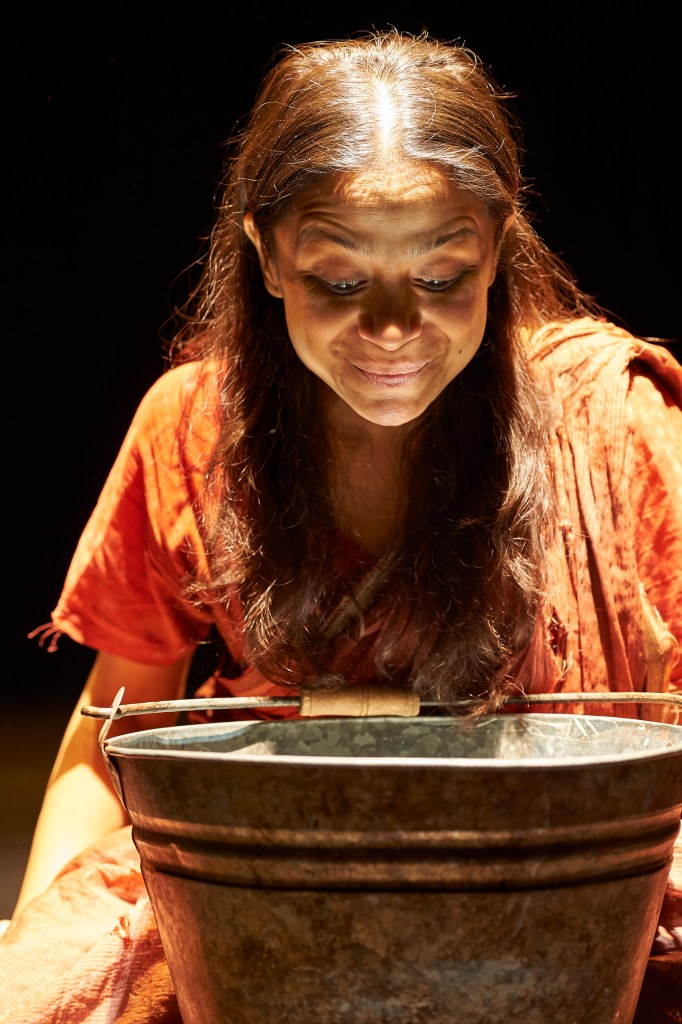
Anusree Roy in PYAASA. Photo Credit: Michael Cooper

Anusree Roy in PYAASA. Photo Credit: Michael Cooper

BK: What are your goals and plans for the next five years?

AR: I would like to make a transition to television where I write for TV and produce. Here is why; write this down. DON’T skip this…

I want to see the stories of my people on screen. Television is an incredible medium and I am deeply inspired by what I’m watching, but I do not watch our stories of people of colour on the screen. It’s important that a medium that has such a wide reach, share our stories, that we are more than the secondary characters… We are more than that! That’s something I want to do. Of course, I want to keep doing theatre. There’s no question about that. I have to. It feeds my soul. But television is something I want to make a transition to simply because I want to, because the medium is good and the writing is so good for TV. I want it to have stories from my people.

BK: Do you have advice for emerging artists?

AR: I’ve talked about this before, but I really, really believe in discipline. Do the work! Don’t participate in Facebook debates. Don’t participate in this convoluted need to please. Don’t participate in bringing each other down. Do YOUR work and the rest will follow.

I have a red folder, which my mother told me to start in 2006 that houses all of my rejection letters and all of my acceptance letters. To this day, I get rejected from things constantly, as I get accepted to things constantly. That’s how our business works. But it houses all of it to keep me on track and keep me grounded and focused on the work, because if I just save the rejection letters that doesn’t serve. If I just saved the acceptance letters, that’s not true. Because I house all of them, it makes me realize how much it actually takes to be an artist.

My true advice, honestly, is do the work. If you’re an emerging artist, contact every senior artist that inspires you and ask him or her to meet and take them out for coffee. Have conversations with them. Ask them if you can help them. You’ll be amazed at how approachable they are. Fear gets you nowhere. Fear is boring. You have fear. We all have it. So if you’re scared, it’s not going to serve you. You think a senior artist is not scared? We’re all equally scared because we’re just people sitting on a rock spinning through the universe doing nothing really. My best friend Barbara came up with that and I thought that was the most profound thing I ever heard because it’s true.

The more you do the work, the more it cultivates work. Then you’re more interesting and people are more interested. Ask senior artists what their trajectory and transitions were because they’ve all done the work. Ask to work with them. You’re going to be amazed at how many say yes because they’ve been through it or they’re going through it in their career right now. I’ve been fortunate to be in the business for the last ten years but I’m a complete newbie in the television world. I don’t think you’re ever not emerging if you’re constantly in a state to learn.

Rapid Fire Question Round:

Favourite Food: Mom’s cooking

Favourite Movie: Oh no! I can’t tell you, it’s too embarrassing. For Drama, it would have to be House of Sand and Fog. For ridiculousness, it would be Two Weeks Notice.

Favourite Book: Fall on your Knees, Ann-Marie MacDonald

Favourite Play:  Crackwalker by Judith Thompson

Favourite place in Toronto: Annex.

Best advice you’ve ever gotten: “Apply to everything”, from Thomas Morgan Jones. It even applies to life, not just career – Apply yourself. Or in terms of your career – Apply to everything. Best advice he ever gave me in 2006 and now we’re working together again.

PYAASAPYAASA TPM Cover Photo DRAFT C

Who:
A Theatre Passe Muraille Production

A Celebratory Remount of the 2008 sold-out TPM run, launching TPM’s 50th Anniversary Celebration Play Series, featuring the original creative team:

Written and Performed by Anusree Roy
Directed by Thomas Morgan Jones
Production Design by David DeGrow

What: “Life is not easy, Chaya… but you have to believe in it.”

Set in Calcutta, Pyaasa (meaning “thirsty” in Hindi) tells the story of Chaya, an eleven-year-old untouchable who dreams of nothing more than learning her times table. When Chaya’s mother begs a woman from a higher caste to give Chaya a job at a local tea stall, Chaya’s journey from childhood to adulthood begins and ends over ten days.

A moving and heartfelt play, Pyaasa illustrates with subtlety and nuanced truth the inequalities and injustices that persist through the Indian caste system. But it also speaks to us about the inequalities and injustices that are all around us here in our own community.

Anusree Roy is a Resident Playwright with Theatre Passe Muraille.

Where: Theatre Passe Muraille Backspace, 16 Ryerson Ave. Toronto.

Tickets: Pay-What-You-Can Saturday & Sunday 2pm Matinees, $17 Under-30, $20 Artsworkers, $28 Senior, $33 General Admission
passemuraille.ca/pyaasa

When: March 3-27, 2016
Tuesday to Saturday Evening – 7:30pm
Saturday & Sunday Matinee – 2:00pm

Connect with us!
Spread the word: #PyaasaTO
Anusree Roy – @i_write_plays
Theatre Passe Muraille – @beyondwallsTPM
In the Greenroom – @intheGreenRoom_
Brittany Kay – @brittanylkay

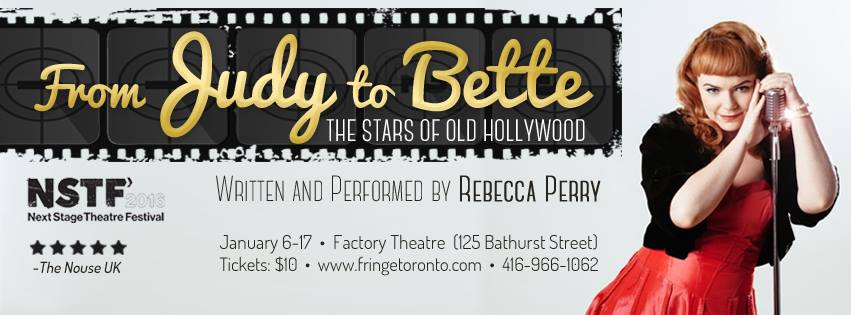
In Conversation with Rebecca Perry – Creator & Performer of “From Judy to Bette: The Old Stars of Hollywood” at the NSTF

Interview by Brittany Kay

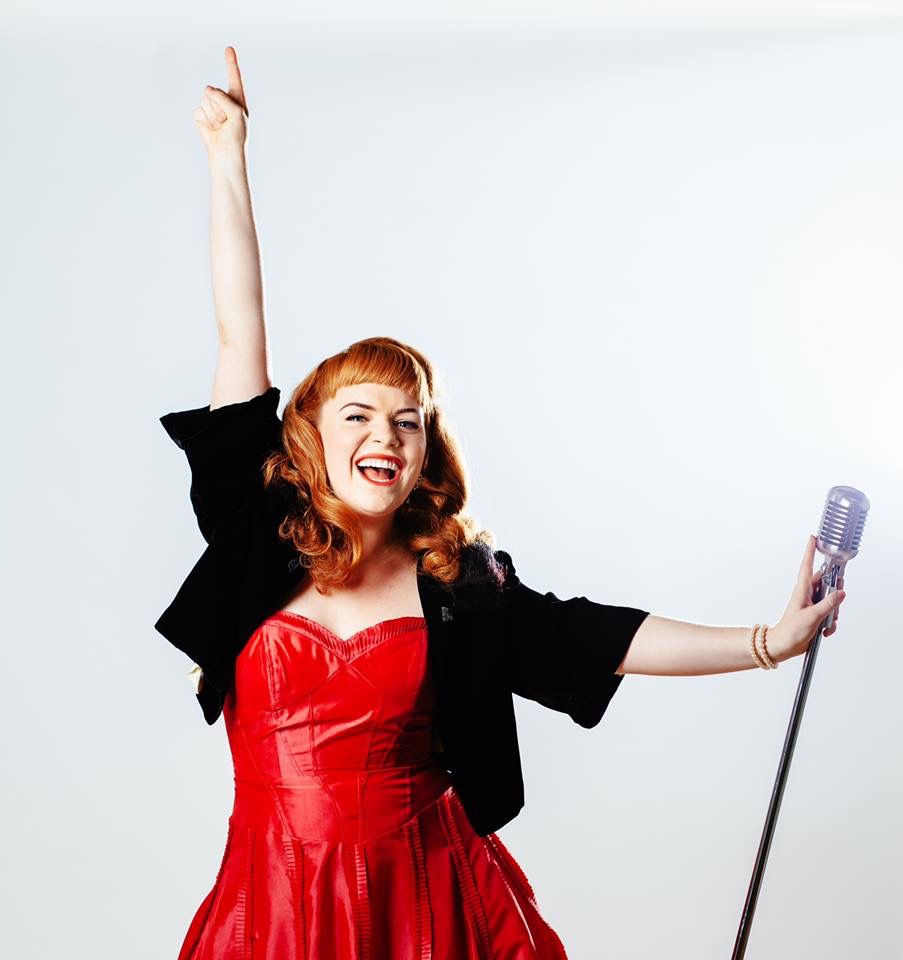
Rebecca Perry is back and at it again with her new solo show that will surely steal your hearts and sell out seats. She is best known for her sold out runs in the Toronto Fringe and Edinburgh Fringe for Confessions of a Redheaded Coffeeshop Girl. Her newest creation, From Judy to Bette: The Old Stars of Hollywood will be presented at this year’s Next Stage Festival from January 6th-17th and I’m thinking that it will no doubt be a crowd favourite.

Perry’s strength lies in the creation and presentation of solo shows. She is able to seamlessly transform from one character to the next by her stunning physicality and vocal manipulation. Her performances have always been incredibly engaging to watch as each new character introduced. 

Through holiday correspondence, I was able to talk creation process, inspiration and girl power.

Brittany Kay: What is this show about? How does this show differ from your other shows? How is it similar?

Rebecca Perry: From Judy To Bette: The Stars Of Old Hollywood is a power-punch of cabaret style entertainment that chronicles the life and times of Bette Davis, Judy Garland, Betty Hutton and Lucille Ball: four stars from the Golden Age of cinema who refused to be just another ingénue. They were trailblazers, who saw their value before anyone else did and fought for the roles that made them famous… and infamous. It’s an evening of marvellous melodies and scandalous headlines.

This is quite a departure from my previous work in that From Judy To Bette: The Stars of Old Hollywood explores the life and times of four real ladies from the last century and the positive effects that they had on their industry. The Redheaded Coffeeshop Girl shows, while based in real life experiences (at least the first one) and with much research into Jane Goodall and her work, are still fictional stories about a fictional character. However, there are two small similarities: From Judy To Bette shares: the upbeat and humorous tone of the RCSG shows and both of these shows look at strong women and their drive to better their situation. Empowerment and breaking the mold will always be themes in my solo shows.

BK: What is so attractive about one woman shows for you?

RP: I think because I can pick a major theme and run with it! I’ve seen (or acted in) shows where I don’t agree with how the women are being portrayed, or the message isn’t clear. I still very much believe theatre can be used for positive change. With solo shows, you are given the luxury of sharing your point of view and how you see the world. It’s heart-warming when somebody relates to a message you’ve hand-picked. It’s also quite fun to play multiple characters who sing and act and have lots of sass and brass, but when you get down to it, I hope people leave the theatre feeling like they can take on the world.

Photo of Rebecca Perry by Tanja Tiziana

Photo of Rebecca Perry by Tanja Tiziana

BK: What is your creation process when devising your solo shows?

RP: All three of my shows have a lot of improv moments because I like to connect with the audience, but I find that the bulk of the core script starts to write itself once I’ve decided what subject I am most passionate about (ex: women empowering themselves) and what elements of it are worth sharing on a stage, then making it into an active story. Anything I do is full of songs and various characters that illustrate what is important and fun about the message or major theme.

BK: Where does your inspiration come from? 

RP: Honestly, these women. I grew up idolizing them when I felt like I couldn’t relate to the role models in my generation.  Don’t get me wrong, there were some great ones… Spice Girls forever!… but something resonated with me in regards to that Old Hollywood charm that Bette, Judy, Betty and Lucille possessed. They paved the path for women of talent and drive, making it okay for women of Hollywood to have comedic chops or character acting skills, essentially making it okay to be more than just a pretty face. While many people today continue this message, I appreciate it from the source.

BK: Is there a major theme or message that the show centres on?

RP: Absolutely: that these four women wouldn’t take no for an answer – and look where it got them!  They knew their value before anyone else did and kept soldiering on. We could all take a page from them.

Photo of Rebecca Perry by Tanja Tiziana

Photo of Rebecca Perry by Tanja Tiziana

BK: Do you plan on touring this piece?

RP: Absolutely! We already have an expanded version that runs at 70 minutes. This is the cocktail hour version – a power punch of entertainment!

BK: You have a new director – Michael Rubinstein. Can you talk to me about his directorial style and approach to your show?

RP: Michael loves these women and what they stand for just as much as I do, so my script and his directorial ideas are collaborating seamlessly. It’s always a treat to have a director who is as passionate about the topic as you are. In rehearsal we basically nerd out together about how awesome these four women are and then channel that into the show so that we can pay tribute to them in the best way possible. We spent forever even debating over which Judy Garland songs to keep and cut from the script because we love them all!

BK: What do you want audiences walking away with?

RP: That they should stick to their guns. That’s what these women did. They were unapologetically themselves and 80 years later their legacies live on. So go ahead: embrace your inner Lucy, Judy, Betty or Bette.

10603314_10153837684979894_8894948713486133180_n

Who:
Featuring: Rebecca Perry with Quinton Naughton on keys
Director: Michael Rubinstein
Dramaturg: David Kingsmill
Lighting Designer: Chin Palipane
Stage Manager: Natalie Frijia
Co-Producer: Jennifer Walls

Where: Factory Theatre Antechamber

When: January 6 – 17, 2016 as part of the Next Stage Theatre Festival

January 06 07:10 PM  buy tickets
January 07 06:10 PM  buy tickets
January 08 08:40 PM  buy tickets
January 09 05:40 PM  buy tickets
January 10 05:40 PM  buy tickets
January 11 07:55 PM  buy tickets
January 12 05:55 PM  buy tickets
January 13 05:55 PM  buy tickets
January 14 06:55 PM  buy tickets
January 15 08:55 PM  buy tickets
January 16 05:25 PM  buy tickets
January 17 03:25 PM  buy tickets

Connect:

Twitter: @Redheaded_CSG or @rebeccaperry21
Facebook: Redheaded Coffeeshop Girl
Instagram: @Redheaded_Coffeeshop_Girl
Web: www.redheadedcsg.com

Brittany Kay: @brittanylkay
In the Greenroom: @intheGreenRoom_

The Sex Ed Curriculum, Plays in Threes & Making a Statement with a Dildo – In Conversation with Rob Kempson, Playwright/Director of SHANNON 10:40

Interview by Brittany Kay

Brittany Kay: Tell me about your title character Shannon and SHANNON 10:40?

Rob Kempson: Shannon, the character, was born out of my work as a teacher and meeting students who don’t feel like they are welcomed in the environment of school. I’ve taught in a lot of settings where they are welcomed and that is truly amazing, like if you look at an arts school, for example, and the amount of students who are queer or questioning or in some of sort in-between place with their sexual identity or gender identity, those schools tend to be leaning towards a more supportive side. What was most interesting to me were kids who are incredibly confident with their sexuality and are able to talk about it openly, and the way that other kids in school respond to that kind of confidence and power. I was not one of those kids. After creating Shannon, I started thinking about myself as a queer teacher and the challenges associated with that in this day and age. I thought putting those two people on stage together might create an interesting dynamic.

BK: What has been your inspiration for writing this show?

RK: I’m producing two plays of mine this year. SHANNON 10:40 is the first one before the holidays and the second one is called Mockingbird, which will be in the Next Stage Theatre Festival in January 2016. They are part of a series that I’m calling The Graduation Plays. I think that I tend to work in threes. I kind of get obsessed with an idea for a little while and hang out with that idea in my brain. I’ve been teaching for a long time and so I’ve obviously always thought about school settings but for SHANNON 10:40 and Mockingbird, it was just their time in my brain to come into being. I was ready for them to exist. Jokingly, 2014 was the year of Grandmas for me. I did a musical that was about a grandma (The Way Back To Thursday) and then I did a piece at Hatch that featured three grandmas (#legacy). I don’t think my grandma phase is over, perhaps, but I’d like to think that now I’m on to my school phase.

Once I get interested in a given environment or topic, I want to explore that from a lot of different places before I’m done with it and sometimes you can’t fit all of that into one play, so it becomes two plays.

BK: Is there a third one in your series?

RK: I think there’s a third play… and I think I know what it’s about. I certainly didn’t imagine I would get into Next Stage this year and also get to produce SHANNON 10:40 this year, so the fact that they are being presented so close together is very exciting. I feel really lucky.

BK: Why the title of the series – The Graduation Plays?

RK: I always thought of them as a series and then a smart publicist friend of mine told me that I needed to name it as a series if it’s going to be one. Of course, initially what came to my mind was the Education Plays and I thought, “well that sounds stupid,” and then I thought that that’s not actually what this is about. It’s about all of us as an education community but also us as a world advancing in some way. Getting to somewhere that we weren’t before. That’s what graduation is in theory and I think I imagine these plays to both showcase characters and situations that challenge what we expect and challenge what we understand to be acceptable.

I think that there are so many examples of students taking back power because they need to act out, they need to say they’re not happy, they need to stand up for themselves… there’s a lot of different reasons. The term ‘graduation’ is kind of about all of that – it’s about moving forward and understanding something new. Both plays have that sort of characteristic to them.

BK: How has teaching, being in a school environment, and around these types of students influenced your writing?

RK: I feel so lucky that I get to work as an artist educator and as an artist because those two streams for me are incredibly important in my life, in my career, and they ultimately inform one another. So things that I’m working on in my artistic practice often end up infiltrating my work as an artist educator and vice versa. Things that happen in my practice as an artist educator always make their way into my writing. There’s this real sort of back and forth between those two parts of my brain.

Hallie Seline as Shannon in SHANNON 10:40

Hallie Seline as Shannon in SHANNON 10:40

BK: Why 10:40?

RK: Oh, because that’s the time of Shannon’s guidance appointment. She’s going to a guidance appointment at 10:40. It’s not like 4.48 Psychosis or anything crafty. It’s literally the time of her guidance appointment. The timeline is all about the school day and 10:40 is midway through second period, it’s right before lunch and she’s been called out of class to come to this guidance appointment. There’s a very different kind of day for students because school starts so early in the morning and ends so early in the afternoon.

BK: This play is very timely and appropriate for what some are calling The Education Crisis that is going on.

RK: Yes. It’s not really brain surgery though… Oh, the world changes but we’ve done the exact same thing for a very long time? If we expect to be relevant and expect to connect with our students and we expect to have our education system actually do anything for the community that we live in, it needs to change with the world. The bureaucracy that prevents it from doing so is, in fact, the problem. We need to be able to respond quickly with curriculum development. We need to give teachers enough autonomy to be able to work with the curriculum in an innovative and progressive way, but we also need to be able to support them as they make those choices. The message of Shannon 10:40 is definitely political in scope in the sense that a teacher, Mr. Fisher, is dealing with this desire to be a progressive forward thinking teacher and he’s not receiving the support that he needs to in order to do that effectively. Shannon is a student who’s caught in the cross-fire, not feeling represented in her school, not feeling represented in her classes that she has to take and, therefore, feeling oppressed. She is feeling like she is the victim of oppression in her everyday life as a student and so, of course, she’s going to do something to change that, because she has to.

I think the play is about students figuring out a way to state their case, to share their message, to say what they need to say—and students don’t always do that in the most appropriate way. That’s what it’s about: a student taking back the power and fighting the oppression of that system.

BK: Tell me you’re inviting Kathleen Wynne because this is so timely around what is happening right now in the world of education.

RK: I do have dreams of doing so. I’m definitely inviting some folks who are into education pedagogy and hoping we’ll be able to have a discourse around that.

BK: I think that’s what theatre is about… that, often it needs to reflect what’s happening in our day-to-day.

RK: I agree. I also think that we don’t give students tools to talk about or react to oppression, but we then oppress them. If we’re not teaching them how to react to that in a way that’s appropriate, how can we expect anything but outbursts, outrage and acts of defiance because they need to be heard. They need to say what they feel.

I think the last great bastion to knock down in a school setting is really around sexual and gender diversity and it’s way better than it used to be. It’s not like we aren’t making progress but it’s when in that progress that we need to recognize we’re never done… We still need to work. We still need to continue and develop.

BK: What do you want audiences walking away with from SHANNON 10:40?

RK: Hopefully, a new perspective in their toolkit when they’re thinking about the way that education works in this province. And, also, that they got to see a show with a dildo in it! We haven’t even said that—Shannon brings a dildo to school.

Rapid Fire Question Period:

Favourite movie: Sister Act 2.

Play: Impossible to choose… You Are Here by Daniel MacIvor?

Musical: Elegies.

Food: Cheese.

TV Show: Please Like Me.

Book: Favourites are so hard… I don’t like the commitment… The Interestings by Meg Wolitzer

Best advice you’ve ever gotten or something you live by: This is where I find myself. You have to be happy where you are.
12096604_10153332772663952_6415745338846030385_n

Who: Written and Directed by Rob Kempson
Featuring Qasim Khan and Hallie Seline
Set and Costume Design by Anna Treusch
Lighting Design by Oz Weaver
Sound Design by Daniel Maslany

When: Wed‐Sat at 8pm, Sun at 2pm

Where: Videofag, 187 Augusta Avenue, Toronto

Tickets: $20 or $15 for Artsworkers/Students. Plus a $10 Halloween ticket treat for Saturday October 31st at 8pm.
Available at shannon1040.bpt.me

Connect with us:

Rob Kempson – @rob_kempson #shannon1040

Brittany Kay – @brittanylkay

In the Greenroom – @intheGreenRoom_


*Disclaimer: Please note the editor’s personal involvement in the show has not affected the editing and content of this piece. The views of this interview are that of the interviewer and the subject.

Artist Profile: Jenna Harris of “This is Where We Live” at the 2015 SummerWorks Festival

Interview by Brittany Kay

My theatre crush on Jenna Harris started out when I saw “Mine” at this past year’s Next Stage Festival. Her work in this year’s Fringe Festival in ­”there/Gone” was uniquely engaging and unlike anything I’ve ever seen before. My level of respect and admiration for this artist is at an all time high and that’s why it was an extreme honour to sit down and talk with Jenna about her SummerWorks show, “This is Where We Live”. We talked about the Toronto theatre community, creating your own work and finding inspiration in the world around you. 

Brittany Kay: Tell me about the play.

Jenna Harris: It’s an Australian play, written by Vancouver born playwright Vivienne Walshe. She lived here until she was 10, then moved to Australia and has been in LA for the last little while. It’s a play set in the middle of nowhere about two teenagers [Chloe and Chris], both of whom are not from there. It focuses on Chloe, who’s recently moved in with her mom and her mom’s boyfriend and so she’s figuring out her life there. It’s quite dark – it looks at both of their outcast lives and what they’re dealing with at home and a little bit with how they see the world for themselves…their disparate views of fantasy versus reality and how their life will unfold. It’s gorgeously poetic in the most beautiful way, talking about some really heart wrenching and very dark themes. These characters tell their stories through their eyes- you see the other people through their perspectives and thus they end up playing the different people.

BK: It’s just a two hander?

JH: Yes. They take on and play the different characters in their lives. It’s loosely based on the myth of Orpheus. So Chloe is Eurydice stuck in this small town hell, in which sees as an underworld. She kind of conjures Chris to come and save her maybe, but there’s some kind of connection there.

BK: How do you move from one character to the next?

JH: It’s an interesting thing because the characters are from the main characters’ perspective. So some of the characters overlap. The teacher in their school is Tim’s character’s dad. We both have slightly different views on who this dad is, but that it’s similar enough for the audience to get. So it’s playing with that. It’s a combination of physicality and voice and it happens really quickly. Sometimes it’s one word to the next.

BK: Have you been able to find your own nuances and make you own choices with a script that’s already there?

JH: We’ve done a decent amount of movement work, which has definitely made things our own. Because it is a bit like performing a poem or spoken word, there are certain things you can’t break out of due to the rhythm. But within that, there has been lots of room to play.

Photo by Dahlia Katz

Photo by Dahlia Katz

BK: Your company, Discord and Din is producing it? What has it been like wearing both hats as actor and producer?

JH: It’s been interesting. For the production of Mine, [Next Stage Festival 2015] it was still my company but I wasn’t the producer on it, which was a good idea. For this one, there have been moments where there are only so many hours in the day, it’s what do you chose to do – whether it’s split 50/50 working on the show or working on the text and the acting.

BK: Like memorizing your lines…

JH: Ya, you know that… or in this case, dialect. Or whether it’s actually working on the production side. Time will tell with the show how the producing goes around. We have a really great team. We started the process as early as you know with SummerWorks. It’s almost the same design team I worked with on Next Stage so having that ability to communicate is great. It seems to have all come together.

BK: How did Discord and Din come to be?

JH: I put together this company as you end up doing when you want to put up a show. I didn’t go to school in Toronto, so when I first moved it was knowing nobody and figuring out how to negotiate and understand the business here and the people who are here. I think after a few years of being here, I decided that it was actually doable. It’s a lot trickier in New York, where I trained, to be able to put up a show. So I put together this company and the name is from a movie that I loved as a kid called the Phantom Tollbooth. It’s about this boy who’s very bored and this present arrives on his doorstep (I think the movie’s from the 70s, my aunt showed it to me) and this box opens up and it’s this car that takes him out of his boredom and into this animated world. There’s a doctor in it named Doctor Discord and he has this character with him, Din. It’s about all sounds and noises. I liked the idea of sound and noise and it doesn’t always necessarily go together, but it makes something beautiful, hopefully. That’s where that came from and shortly after, my friend wrote a show that I co-produced with her. SummerWorks used to have a performance gallery and I did something there. The company was on the backburner for a bit as other things were going on and recently it surfaced. I think I have a better sense of what I want to produce with it and the type of work I connect with. I just started to figure out more and more as time goes on what that mission is, for lack of a better word.

Photo by Dahlia Katz

Photo by Dahlia Katz

BK: How did you find this play?

JH: When I have time – which is not right now – I like to read as many plays as humanly possible. Sometimes I’ll try and go through places in the world. It gets trickier when you get away from the English language countries, but at one moment I went, “Oh I don’t know anything about Australia.” I know nothing about their theatre scene. I don’t know what they’re producing. And given that we’re not altogether dissimilar as countries, in terms of coming from the British Commonwealth, I was really curious what they do there and how their system works. There happens to be a website called Australianplays.org and it’s a huge database of plays where you can read excerpts and get a membership. I read a bunch of them and I came to this one and I kind of just went “yes”. I didn’t fully understand it at the time, but I knew there was something there.

BK: So, is this a North American premiere?

JH: It’s been done before but her work has never been shown in Canada. It’s her coming home debut, which is great. I found it very fascinating that out of all of the plays I read, it was one that was written by someone who is still a Canadian citizen and who was born here.

BK: Tell me a little bit about working with your director Taryn Jorgenson?

JH: Taryn I met several years ago when she was bartending. I found out she was a director and the way we talked about theatre was quite similar. It was really nice to sit down and have similar conversations. Having that same sort of excitement about the show has been great.

BK: What has it been like working with Tim Welham?

JH: It’s been great. I didn’t know him before. He and Taryn both graduated from Ryerson. He’s super lovely and open. It’s been very collaborative, as much as you can be with a script that’s already there.

BK: Talk to me about the playwright?

JH: We also have a dramaturg on this. There are things we couldn’t tell if they were Australian slang or language that she made up for the poetry of the piece. We needed someone else in the room to research and look those things up. We’ve been in dialogue with Vivienne – she’s asked a number of questions. I did too. She’s been great and available. She’s been excited and has been giving great feedback.

BK: What are some of the major themes or ideas in the piece? What do you want audiences walking away with?

JH: It is so much about these two characters that hopefully audiences will find another level of connection with them. The main one for me is the feeling of being an outsider. Neither of these characters feel like they’re a part of the world that they live in nor do they have any control whatsoever being teenagers. It’s their making the best of it and their coping strategies and how they both deal with that. Within that, it’s also about Chloe’s dissociation when things are not going right. What we do when we’re not feeling in control. It’s also the idea of home and friendship and love and how do we build that world for ourselves-not only in the moment but also in the future. I think both of them are trying to figure out where they want to be and where they see themselves being. It’s about the places where we live and where we grow up and how that affects how we go out into the world.

Photo by Dahlia Katz

Photo by Dahlia Katz

BK: Let’s shelf the play and move into your life. What has been your journey up until now?

JH: I was born and raised in Kingston I did very little theatre there. I grew up around theatre but primarily was a dancer. I would do theatre camps. I think, truthfully, I always wanted to be an actor or be in theatre, I was just afraid as a kid I wasn’t going to be good at it. In my final year of high school I kind of shelved the dancing because it was just too much. I knew I wasn’t going to do that for my life, so I kind of put that on hold and did a Midsummer Night’s Dream where I was a fairy that had to make up my own name.

Then I applied to University for Physics and Astronomy and got in and then freaked out because it wasn’t what I wanted to do. I took a year off and ended up doing a couple month program in the UK for acting, which was kind of my first concentrated acting program. And then came back and still didn’t think theatre was a viable option, obviously, and so did my undergrad in International Development and Anthropology at Wilfred Laurier. So that’s what I was going to go into with theatre somehow involved – theatre for social change, maybe? Laurier was tiny and so as soon as I got there the four theatre classes they had were canceled and disappeared, which I think worked to my advantage because I would audition for the fringe that happened there. It made it a safer environment to get in it and work. I did a show in my 3rd year, which was a two hander and it was kind of the first show where I went, “Oh I think I might actually be able to do something with this.” At the end of the year I applied for a couple schools in Toronto and a couple schools in New York and then told my parents. Then I went to New York to audition and ended up getting into a school there and deciding to go.

BK: What kind of program was it?

JH: It was a two-year theatre conservatory. New York was great. It’s amazing looking back realizing what you actually needed and for me, I think I needed to get away. I needed to be somewhere where I could completely fail and be in a new city where I knew no one and be completely overwhelmed. It’s theatre school – one day you’re on the top of the world and the next you’re bawling and the world is over.

BK: Yep, theatre school.

JH: Yes, so it’s a common experience for everyone. It was great and exhausting and then it came to the decision to stay or come back. I decided to come back for a number of reasons. So I arrived here not knowing anyone and not having any sense of who people were or how any of it worked. That took a bit of time to do that. I was fortunate enough that I got into a couple of small shows when I moved but quickly realized that I needed to find places where I fit.

There was a certain point where I was working at Buddies [in Bad Times Theatre] and surrounded by all of these artists but no one knew me to be an artist. I couldn’t go there and be like hire me as an actor, here’s my resume and now I’m going to go work front of house for your show, not that this is awkward at all and I’m not making it more awkward by talking about it.

So I went – okay, how do I do this? How do I build community and make connections with people?

In New York I started writing a bit because auditioning isn’t the most creative outlet. Here, I was writing more and finished a draft of a play and I had this idea for a monologue book. If I couldn’t give my stuff to other people, maybe I could solicit stuff. It was a combination of that, a Fringe show called Tick, and my decision to leave Buddies and move away from admin jobs to be an artist. It feels like in the last couple of years the foundation I started to foot when I came here now feels like there’s something actually going on.

Yeah, so there’s my really long-winded story.

BK: It’s fantastic. I find it very admirable – your perseverance to break into the Toronto theatre community. For people who are just trying to establish themselves in the theatre scene, do you have any advice?

JH: Being in the theatre is hard, regardless if you went to school here. For acting, when you do shows you naturally build that community but it is getting in there in order to do that. One of the big things that I learned which isn’t super tangible, is that having goals are great… you should absolutely have goals. In the going after them, my advice would be to stay open to anything else that is going to come your way. That doesn’t mean saying yes to everything. What theatre school does is focus you, whether that’s to focus on acting or playwriting. If your focus is too wide you’re probably going to flop around. The world isn’t quite that way. There are so many different options and so many grey areas. What it means to be an actor is so varied. It’s not necessarily one thing. The big advice is have those goals but allow yourself to be open to other possibilities and if it’s of interest, go for it. I would have never thought to become a playwright. In terms of building community – really try hard not to see it as a competition but that you’re all in it together. Do intensives or programs. Getting out there. Also trying stuff, even if it never sees the light of day. It’s bit by bit and then one day you wake up and everyone is there. What’s nice about the city is you can rent a small place and get a bunch of people together and do a small reading. Just create. Being around people that like doing stuff.

BK: Where do you find your inspiration?

JH: I like watching people. I like seeing how they interact. Sitting on a bench. I also find life really funny even at the darkest possible times and that humor is fascinating to me. What is it that makes us human is really interesting and finding ways to solidify and write that. It also comes from, sounds crazy but I’m not I swear, is hearing voices of characters and by that I mean dialogue. Sometimes that’s what starts it and I have no idea where it’s going to go.

Rapid Fire Round:

Favourite book: The Shadow of the Wind

Favourite TV show: 30 Rock

Favourite play: August Osage County

Favourite food: Anything chocolate

Favourite place in Toronto: Anything by the water.

Best advice you’ve ever gotten: Never settle.

This is Where We Live

presented by Discord and Din as part of the 2015 SummerWorks Performance Festival

11692556_1158288837521083_1737135751888622223_n

http://www.discordanddintheatre.com

Where: Theatre Passe Muraille Backspace

Ticket Price: $15

Run Time: 75min

When: Wednesday August 12th 7:30 PM – 8:45 PM
Thursday August 13th 9:45 PM – 11:00 PM
Sunday August 16th 7:45 PM – 9:00 PM

About: Discord and Din Theatre

Directed by Taryn Jorgenson; Written by Vivienne Walshe; Dramaturged by Emma Mackenzie Hillier; Performed by Jenna Harris and Tim Welham; Lighting Design by Adrien Whan; Set and Costume Design by Jenna McCutchen; Sound Design by Alicia Porter; Stage Managed by Laura Paduch; Produced by Discord and Din Theatre

Artist Profile: Qasim Khan of Theatre Direct’s “Beneath the Banyan Tree”

Interview by Brittany Kay

A sit down with Qasim Khan is like no other. He radiates positivity and hilarity, making him perfect for Theatre Direct’s current run and tenth anniversary of Beneath the Banyan Tree.

With Britney Spears blaring over the radio, Qasim and I spoke about the reality of life after theatre school and how to persevere in order to succeed.

Brittany: Tell me a little bit about yourself. Your journey, as you will, to where you are now.

Qasim: I was raised in Newmarket, which was a great place to grow up. I moved there when I was 6 months old from Scarborough and went to school like normal people go to school. I guess I started doing music stuff in elementary school. I wasn’t a drama kid ever-ever. Even in high school I had the mentality that if I didn’t go into a theatre school, I was going to go into vocal jazz school.

Brittany: You don’t say.

Qasim: Yeah… drama kids were really loud and really confident and I was not. I was singing a lot. Started doing some theatre in the last couple of years of high school and community musicals. The first show I ever did was Joseph and the Amazing Technicolor Dreamcoat and I played Benjamin, the baby brother. It was an amazing experience and they brought in an Equity choreographer and it was just…so fun. That sort of gave me the first taste of what doing this all the time could be like.

The show came at a time when my dad passed away in grade seven and I kind of feel like I had stopped talking to people. Being around people with the same interests and who were very nurturing, made me talk and communicate and be a human again. That was a really important thing for me to do. I then did more of it and then somehow got through high school and passed everything. Maybe it’s because I loaded my schedule with like every music class I could find.

I then auditioned into the circuit people do when auditioning for theatre schools. I had my heart set on going to the Randolph Academy for the Performing Arts because it would be a musical theatre program. The only fight I’ve ever gotten into with my mom is about what school I would go to and she wanted me to go where I went – The University of Toronto Mississauga (UTM/Erindale) joint program with Sheridan College – and I wanted to go to Randolph and so we didn’t talk for a week and then we got over it.

Brittany: Yes, the parental debacle of what college versus university theatre school seems to be a very universal artist experience.

Qasim: Then I moved away to university when I was seventeen and did four years at “Sherindale”.

Brittany: haha….Sherindale nice.

Qasim: Had an okay time at Sherindale I suppose. Theatre school’s weird. Theatre school is weird when you’re seventeen. I graduated from UTM and started auditioning for stuff in my fourth year and got an agent. I moved to Toronto and then promptly didn’t work as an actor for like two years where I was working in the box office at The Young Centre for Soulpepper. Then I needed money, so I started working there full time. I did get to see a lot of the stuff that Soulpepper was doing. I didn’t know much about the company before working there except for the people – I knew I wanted to work with those people one day. I would do the odd TV thing. There was a lot of film and TV auditions and I was very unsuccessful booking most of them

Brittany: I hear that…

Qasim: Right!? I did get a couple. My first TV role was playing a terrorist on Little Mosque on the Prairie, which made my mom super proud.

Brittany: So how did you decide to audition for the Soulpepper Academy?

Qasim: There was a weird bridge into introducing myself as a performer at Soulpepper. The notice came out for the academy auditions and at the same time I was offered a promotion in the box office that would have been a great salary and great normal job. The message from my boss was that if you take the promotion, you won’t be taken seriously at your academy audition, but if you go to the academy audition we’re going to fill this position. So pick one. It was….terrifying. I said no to the job and yes to the audition.

Brittany: Talk to me about the audition.

Qasim: My first audition for the academy was hilarious. I knew all the actors in the building kind of casually… like I would book their comps.

Brittany: Haha.

Qasim: I booked off vacation time from my box office job before the audition and after because it would be very embarrassing if I did very poorly. I’d still be in the building and I’d still be booking their comps.

So Mike Ross came out to call the next person and when he saw me he was kind of confused as to what I was doing out there. When I came in they all asked if I needed something and I was like, “Um I just want to audition,” and they kind of chuckled. The audition went okay I thought, but I ended up getting a call back and eventually being a part of the Academy.

Brittany: How did your experience in the Academy shape your future as an actor and performer?

Qasim: Soulpepper came at the right time for me. I was burned out from auditioning all the time and, being close to so many ‘breaks’, was constantly questioning whether I should be doing this, and was also getting really unhealthily overweight from stuffing my face after bad auditions and working jobs I hated.

Brittany: Preach.

Qasim: My time in the Academy refueled me and gave me a year of not having to worry about auditioning, working side jobs, and I was able to get back in touch with my creativity and artistry, and get healthy again. I learned the value of mentorship at Soulpepper, which is sort of the foundation of the company. I was mentored by so many actors and directors whose work I grew up admiring. In many ways, it was a dream come true.

Part of the experience at the Academy is being cast in scene studies and productions in the season, and when this happened, my experience shifted a bit from what I expected when I entered the program. I could see my classmates being challenged and pushed and given opportunities to progress, and that was not my experience. Regardless, in the end, what I took away from Soulpepper when it comes to being in a production is how to be a great teammate. I learned how to support action on stage and how to be in an ensemble. It was humbling and I’m very grateful for that experience.

Brittany: And after that?

Qasim: I felt like I needed a bit more experience, especially when it came to Shakespeare, which I didn’t get to really bite into in the way I wanted at the Academy, and that lead me to pursue an opportunity at Shakespeare’s Globe in London, UK. In 2013, I did a Fellowship at the Globe, which is a short residency with the company – every two years they invite 20ish actors from around the world to come, play, learn, and perform. At the Globe I was given great roles to work on, great scenes to play in, and it was the perfect button on my two years of ‘upgrade training’.

Photo by Naz Afsahi.

Qasim Khan in Beneath the Banyan Tree at Theatre Direct. Photo by Naz Afsahi.

Brittany: What made you want to become an actor?

Qasim: In high school, one of the only plays I did was Morris Panych’s 7 Stories and it’s a very funny play and I’m a funny person.

Brittany: Really!? I didn’t know that…

Qasim: That was the first time I realized I could be funny and that I could control people’s laughter. I remember doing the play one afternoon for my school and immediately people were laughing at me. That moment was so exciting and truly eye-opening. I think I may have been good at other things but I didn’t pursue them out of fear that I would be really good at them and wouldn’t be able to do this. I kind of just always knew that this is what I wanted to do.

Brittany: So how did you get involved with Theatre Direct?

Qasim: Lynda Hill gave me my first professional theatre job out of university and it was a workshop. We added each other to Facebook and I really liked working with her a lot. She sent me a message about the possibility of a remount and I came in to audition for the part I have today.

Brittany: What is “Beneath the Banyan Tree” about?

Qasim: The play is about the story of a girl named Anjali and it’s the day of her 12th birthday. She has just come from India to Canada with her family. It sort of centres on her first day of school and on her birthday where her grandmother, Ajji wants to celebrate by putting her in this beautiful salwar kameez, which is this beautiful traditional dress. She doesn’t want to because she fears she will be made fun of at school. We follow her as she makes a new friend named Mason that encourages her to share her culture and to be confident about it. She realizes she can be Canadian and Indian at the same time and those things intersect in a really beautiful way.

Brittany: Tell me a little bit about your character.

Qasim: I play a character named Maitri who is the spirit of the Banyan tree, and also three animal characters from the Indian fables of the Panchatantra. The fables and stories provide the framework for the play. Maitri acts as Anjali’s confidant throughout the play and helps her along her journey.

Brittany: I know there is big element of the fantastical in this show, especially with your character. How are the elements of fantasy created on the stage?

Qasim: There is a lot of puppetry, which is gorgeous! When the play veers into the fantastical it’s done though movement. Our choreographer Lata Pada is an amazing and really well known Bharatanatyam choreographer. Cheryl Lalonde’s set design and Michael Kruse’s lighting really help create this fantastical world. The set is essentially a big tree and things can come in and out of it in really magical ways.

Photo by Naz Afsahi.

Photo by Naz Afsahi.

Brittany: This is a show that is primarily aimed for young audiences. What are the important lessons they are to take away from this play?

Qasim: Acceptance – that’s the biggest one. How can kids accept other people and feel accepted in their day-to-day lives. Friendship – which is how Anjali gets comfortable in Canada. Roots – which is a big theme because the focal set piece is a tree. The conundrum that Anjali is in is how to preserve the roots she has in India while being quote on quote Canadian and what is the right way to do that. She learns there is no right way to do that – she’s just doing it by being herself.

Brittany: How has it been having young people as the core of your audience?

Qasim: This is my first time doing a show for young audiences. It’s been a good lesson of how to preserve the quality of the show without playing to the ages of the children. You’re also always trying to keep everyone engaged. A lot of my stories are out to the kids. I get to connect to the audience in a different way than the other players do, which is kind of fun.

Brittany: Young audiences can be extremely vocal at times. Have there been any instances that stick out?

Qasim: One of the puppets I operate is an elephant and I need to make elephant noises with my mouth. When I did the sound a kid really loudly yelled, “Did you just fart?” And I wanted to be like, “No, I don’t do that… I’m polite,” but I couldn’t.

Photo by Naz Afsahi.

Photo by Naz Afsahi.

Brittany: That’s amazing. How has it been having Lynda as a director?

Qasim: She’s been with the show for ten years and originally helped develop it. The show means a lot to her. She’s taken a lot of care with the play while keeping the same solid work that has happened before. It’s been remounted several times for a reason – it’s a great show. We were still able to explore our artistry in the process and during the show. I love working with her because she gives us the frame of the show and because of the audience and specificity of the play, a lot of it works like clockwork. The fun thing for me is finding freedom within the constraints of the show. It’s been lovely to work with her and spending time with her again. She really knows how to curate a visual story for young audiences. And the cast is super fun.

Brittany: What do you want audiences walking away with?

Qasim: I want them to have just experienced a visual feast. I want them to laugh a lot. I want young people to have seen a play they can identify with. While the story is very specific about a girl coming from India, the stuff she deals with is the same stuff that kids deal with on a regular basis. When young audiences see their own experiences reflected on stage, they can relate and reflect it back onto their own lives.

Rapid Fire Questions: 

Favourite book: Mindy Kaling’s Is Everyone Hanging Out Without Me?

Favourite movie: Anne of Green Gables 1 and 2

Favourite musical: It changes everyday, but recently Natasha, Pierre & The Great Comet of 1812

Favourite play: Three Sisters by Anton Chekhov

Favourite place in Toronto: King East, like Church and Parliament. The history and the architecture are amazing.

Favourite Food: Hamburgers. I love fast food.

Best Advice You’ve Ever Gotten: Don’t quit and stick with it! Most importantly, surround yourself with people who can give you air.


Beneath the Banyan Tree

unnamed

Written by Emil Sher with choreography by Lata Pada
Directed by Lynda Hill
Costume and Set Design by Cheryl Lalonde
Lighting Design by Michael Kruse
Music by Edgardo Moreno

Recommended For Grades K – 6 | Ages 4 & Up


When: March 5 – 28

Where: Wychwood Barns

Tickets & Info: http://www.theatredirect.ca/