Skip to content

Posts tagged ‘hallie seline’

Artist Profile: Kelly Penner and Hallie Seline – Reconnecting with the Classic Tale of Love-at-First-Sight as the Title Roles in Shakespeare BASH’d Romeo and Juliet, November 19th-23rd

Interview by: Brittany Kay

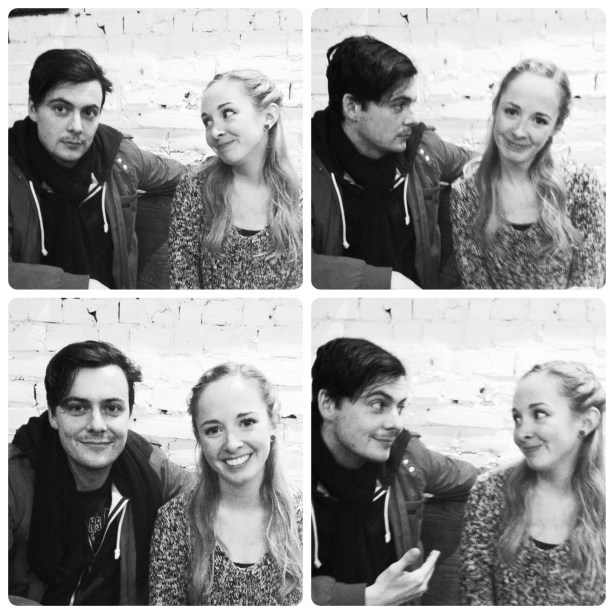
We sat down with the smart and sexy duet, Hallie Seline and Kelly Penner, who play the title roles inShakespeare BASH’d upcoming Romeo and Juliet, running this week, for one week only, November 19th-23rd. We discussed what it’s like approaching such iconic roles, working with BASH’d, on-stage chemistry and their thoughts on Canadian Theatre and its utilization of young artisits.

BK: Are you feeling the pressure of filling such iconic roles, in arguably one of the most timeless tragedies?

KP: Well yeah, you do feel the pressure. There’s the iconic movie versions… and Leonardo Di Caprio played Romeo, and they just did it at the Stratford Festival… So yeah. It’s there, it’s big. But the first thing to do, is to forget all of that and approach it like any other part. You try to figure it out for yourself.

HS: I’m trying to be like EVERYONE in one performance. Watch out! (she laughs) Sure, I would say there’s a pressure, however James Wallis, our director, was really great in advising us to approach the text with fresh eyes. There are definite ways in which we have heard these iconic words being performed. We are trying not to fall into those familiar patterns. Instead, we’ve been focusing on telling the story, what you’re saying and who you’re saying them to. I’m trying to make choices for myself and for the story.
IMG_5549

BK: Have you looked to any other actor’s portrayal for inspiration?

KP: Sure, I’m inspired by other Romeos I’ve seen, but I’m trying to figure Romeo out as myself like any other part that I’ve read for the first time, which is difficult because it is one of those plays that we think we know, and have so many other portrayals that have kind of defined the characters for us.

HS: And everyone will have an opinion on how it should be said or what they think Romeo and Juliet should be like. All you can do is stay true to yourself and your interpretation of the characters and the story that you and your cast are trying to tell.

IMG_7332B

BK: Talk to me about your rehearsal process?

KP: Once a week for a month we’d get together by scene and we would literally just go through the lines to make sure we were all clear with interpretation and meaning. We didn’t work on intention at all during this text work. It was just strictly for clarity of meaning. James had done an enormous amount of background work on certain words and phrases as well, which was incredible to work with as a starting off point. It was good to have that table work behind us so we could go into our blocking rehearsals really knowing what we were saying, giving us more freedom to play.

HS: Afterwards we were all really prepared to focus on our arguments and our scene partners and the story as a whole. James thinks Shakespeare is best when it’s story based. No bells and whistles just clear storytelling, which was a great way to approach our rehearsal process.
IMG_5548

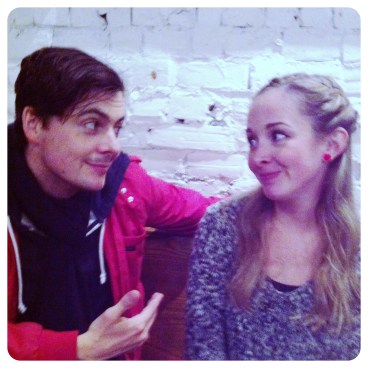
BK: You have to fall in love every night. How has it been working with each other?

HS: Look at him! I may throw up in my mouth every time I think of kissing him (she laughs) … but seriously, you can start with this one, Kelly.

KP: You don’t want to start? You started?

HS: Nope. You take the lead, Romeo.

KP: The chemistry is…. good! These two characters fall in love instantly. And they are intensely in love. I didn’t know Hallie at all before, other than a “hi, hello” in public. We just tried to get to know each other, become friends. It made the intimacy on stage a lot easier and helped it to develop a lot faster. Ultimately, the chemistry on stage comes from listening and playing off each other. The chemistry is also in the language, let alone in the heart and the body. Really listening and taking in what the other person is saying, using each other’s words, and creating poetry together is where it mainly stems from.

HS: Ditto.

KP: That’s all you’ve got? Ditto? (he laughs)

HS: Well, I’m into that answer! It all comes from trust and feeling comfortable in the scene and in rehearsal with your partner. It’s really about what Kelly said… becoming friends. We are completely playing off each other. You know basic scene principles are that you are trying to affect your partner and you are fighting for what you want from them. In our scenes, that is what it is. We have fun.

BK: How did you get involved with Shakespeare BASH’d?

HS: I had seen both of their past productions in the Toronto Fringe, which were hugely successful and just so enjoyable as a spectator. I took a liking to what the company looks for in Shakespeare, performance and theatre in general. It was fun and laid-back, and in a bar, so you could have a drink during it, which is always nice. It was great, thought-provoking, fun, quality work with so much young local talent. I contacted them when I found out they were auditioning for Juliet and it’s been an incredible experience working with them!

KP: When I was in second year at theatre school at Windsor, I was cast in a production of As You Like It in Brampton. In that production there were many of the cast members of this Romeo and Juliet.  Because of that production, I met James through this network of guys and gals. We’ve connected through our love of Shakespeare and I’ve been working with them ever since.

IMG_7192

Shakespeare BASH’d Mission Statement: To present Shakespeare’s plays as they were written: with simple staging, clear and specific language with an emphasis on the words and characters telling the story.

BK: So you’d say you connect with what the company represents and stands for?

KP: I do. James and Shakespeare BASH’d idea of the text and story being the primary point of focus is why we clicked in the first place. Staying true to it is so important. They always start with such an intense textual analysis of the words in these classic stories and this what I like about them the most. It is also a room that I love working in. It’s such a fun, playful, vibrant room filled with young talent. You get easy access to trying and experimenting and being wrong and trying something completely different.

HS: What’s interesting is our ages range from 20s to roughly 40s give or take. It’s not just a group of 24 year olds, which I feel makes a difference. The room is filled with an incredible group of giving and intelligent performers with a wealth of experience and such variety in process. We all learn from each other constantly. It’s a room where you have the ability to develop your own approach to the work. The cast and crew are incredibly supportive. I feel like I’m coming into my own as an artist in terms of my process because of influence of this group of people.

BK: You are both playing leading roles that are meant to be young in age, and for the Toronto standard, you could both be described as young performers. Going off of a recent article to surface in Toronto, from Holger Syme’s blog dispositio, do you think the Toronto theatre industry has a youth problem? From your experience, do you think there is enough opportunity being given to young performers?

HS: I think it depends on the production. If it’s a choice to utilize an actor that’s different than what is written in the text, then that’s a specific choice. Being in the rehearsal room with all these relatively young performers and theatre makers, and from what I’ve seen of the independent theatre community, I find that there’s a lot of strong, intelligent, bold, exciting, thought-provoking artists out there, who I think should be given the opportunity to show and share their work and who are just as valid in themselves as artists to be seen on the major Canadian theatre stages and in the spotlight, as many 30+ artists are. Beyond that, I think that when you are a young artist with an opportunity for a role of this scale, it is a huge learning opportunity for yourself as an artist and not at some cost to the production. Personally speaking, to have this role of this scale at this time, has been a huge benefit in my development as an artist. I think it’s doable and there should be more trust given to younger artists. Furthermore, I think there needs to be more opportunity for all ages to work together.

KP: I do wish for more of that. For some professional companies they want the sure-fire thing, and often times that means going with someone older that they know rather than take a chance on a more age-appropriate actor with a shorter resume. In terms of theatre and the story, if they have the right spirit or if you look younger than you are and it’s not noticeably distracting, then I don’t mind it. But sometimes I see productions and it dawns on me that this actor is a man, playing a boy but they’re doing things in a manly way which really just seems inappropriate for the character and it will draw me out. I do wish we could find a way to get more young people on stage.

HS: I’ve seen a 35 year old playing a 15 year old and if the essence is appropriate then power to you. Do it!

IMG_7333

BK: Is Shakespeare BASH’d production of Romeo and Juliet different in anyway? Any specific concepts or time periods?

HS: James has been really clear in not putting a time period or a concept to it. I mean… it’s already a tragedy being put on in a bar! There is definitely a lot of comedy to it, but that alone is quite unique and will be interesting. But mainly, he wanted to focus primarily on the story and the relationships of such a classic play.

KP: The costumes are neutral colours but there are jeans and running shoes, but then we have swords.

HS: … and the sword fights are awesome! They are sexy and exciting… Get excited for those!

KP: We really wanted it to be about the story and not have any kind of heavy concept distract from that. Just from the work I’ve seen in rehearsal, I think, and hope, people will really take to it.

Rapid-Fire Question Round

IMG_5547

BK: Favourite Movie:

KP: On the Waterfront
HS: Hook

BK: Favourite Play:

KP: Othello
HS: Vimy by Vern Thiessen

BK: Favourite Musical:

KP: Into the Woods
HS: Cats! Of course… (she laughs) or definitely Next to Normal

BK: Favourite Actor right now:

KP: Ben Whishaw
HS: Carey Mulligan

BK: Favourite food:

KP: Cannelloni
HS: Nachos

BK: Guilty Pleasure:

KP: My pink cardigan. I love it but I never wear it out!
HS: Candy, Real Housewives of Orange County or Beverly Hills… yup.

BK: Best advice you’ve ever gotten:

KP: BLT-Breathe, Listen, Trust
HS: Don’t take yourself out of the part. They hired you for a reason or they are seeing you for a reason. The more of yourself in the part, the better.

BK: Advice for other young artists:

KP: Let it go. There are so many factors out of your control. Leave it in the audition room. You’d go crazy if you try to figure out why you didn’t get cast. Have fun!
HS: Be true to yourself. Also, James said this to me in rehearsal when I was trying really hard to find the right arc to one of the scenes. He said “If you’re looking for perfection, it doesn’t exist, and if it does, it’s boring. It’s just a play… Put into it what you can and don’t beat yourself up over it. It will be interesting” I think that’s great, especially for younger artists to be reminded of coming out of theatre school training. And yes… like Kelly said, have fun!

Romeo and Juliet

by William Shakespeare, presented by Shakespeare BASH’d

994940_10151784665008952_1205445970_n

When: One week only, Tuesday, November 19th-Saturday, November 23rd, Tuesday-Friday at 7:30pm, Saturday (Closing) at 4pm
Thursday, November 21 includes an after-show dance party with Silent Shout’s DJ ARP 2600 – http://silentshout.ca/
Friday, November 22 includes an after-show dance party called “Much Ado About Mixing” with DJs Slamlet and Rockthello.

Where: 3030 Dundas West, in the Junction

Tickets: Tuesday, Wednesday, Saturday – $16, Thursday & Friday – $21 (including after-show dance party admission) http://www.shakespearebashd.com/tickets.html

A Play-Within-a-Play-Within-A-Church: We Chat with Rosamund Small, Writer of Genesis & Other Stories at the 2013 Toronto Fringe

Interview by Hallie Seline

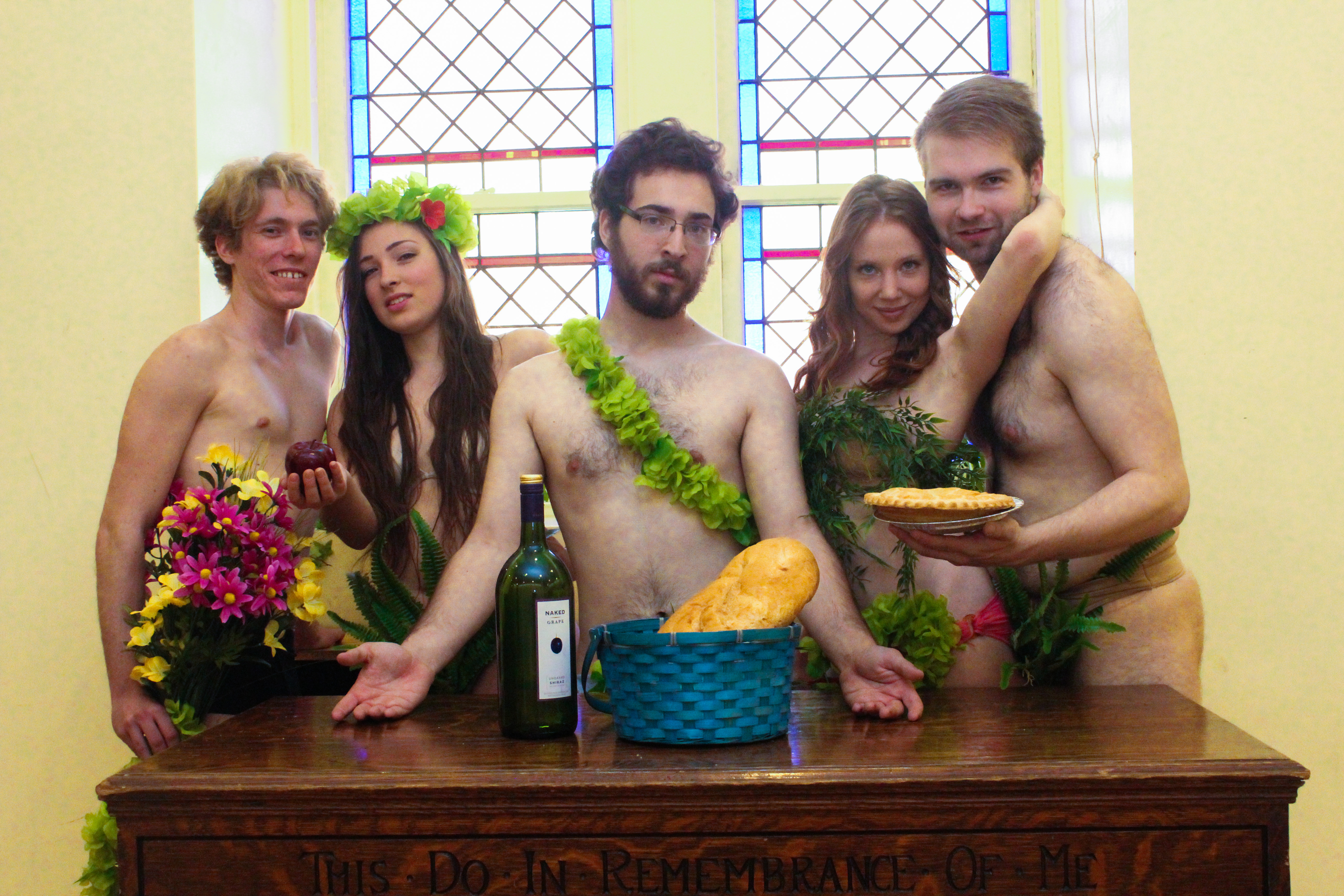
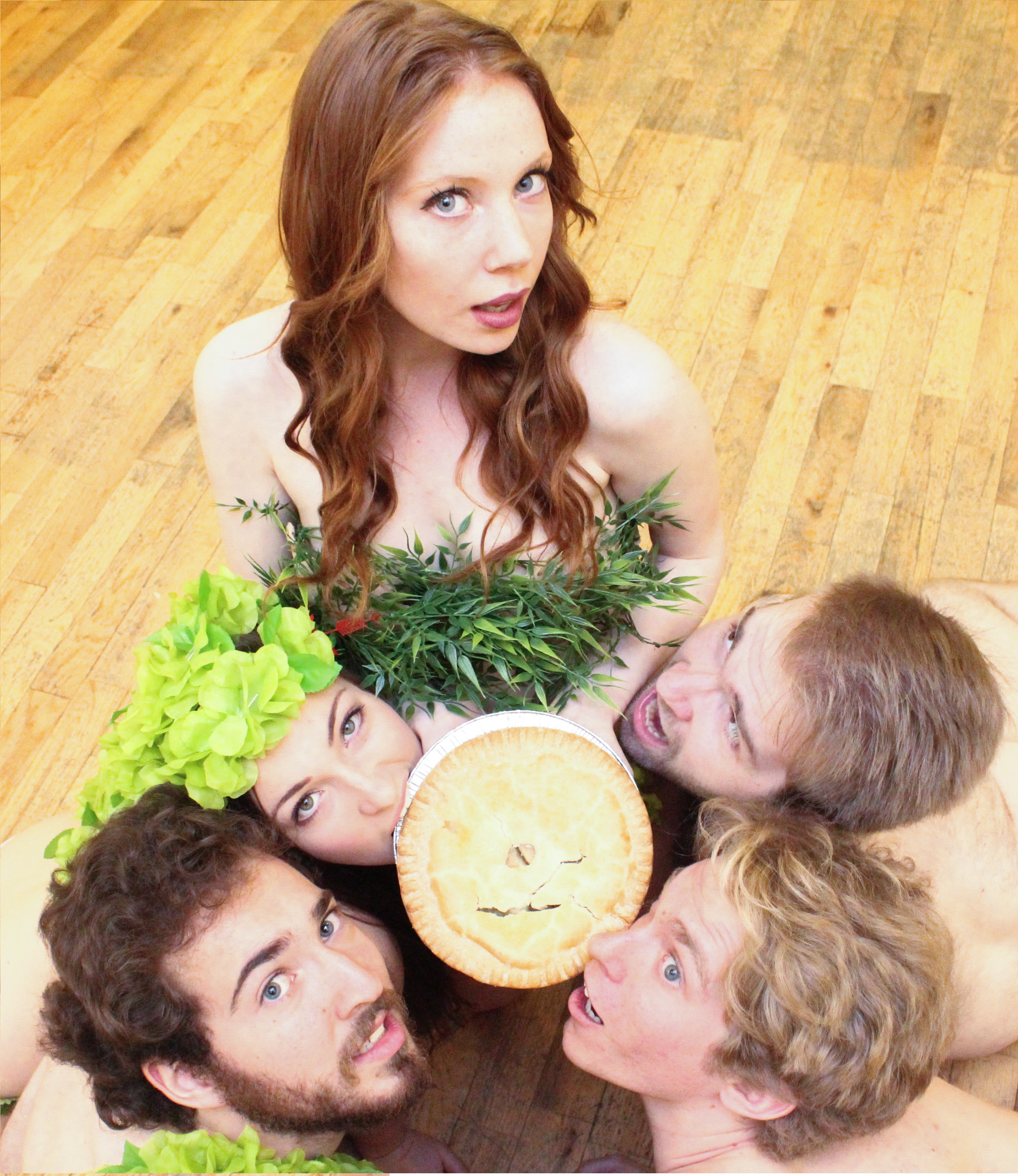
I met up with Rosamund Small, writer of Genesis & Other Stories, one of the site-specific productions that you can (and should) check out as part of the 2013 Toronto Fringe Festival July 3rd to the 14th. Contrary to what the promo pictures might suggest, should you have seen them tantalizing your facebook walls and twitter accounts, she was fully clothed in a lovely summer outfit, with no cheekily-playful shrubbery keeping her modest. We talked craft beers, excessive amounts of hummus and the world of theatre school and life after on the patio of Grapefruit Moon in the Annex. And then when our hummus plate finally was left bare, we talked about the play she’s been developing for four years and is still apparently re-writing a week before show-time, Genesis & Other Stories…

Genesis Poster

HS: Let’s begin. Talk to me about Genesis & Other Stories.

RS: Genesis is a show that I actually started writing when I was really young. I started writing it when I was seventeen. I had just written my first show that I was really proud of, which is hilarious because I was about fifteen/sixteen at the time, but it had like three jokes in it and people really, really laughed and I thought…

HS: “Am I funny?”

RS: Yeah! Exactly. And I mean, you know, it wasn’t some work of genius but that was in high school and I had never really experienced that very specific high of sitting in an audience, and the moment when every body laughed, you could really know, “oh wait, they are really listening”. So I determined that I wanted to write a really balls-to-the-walls comedy. (She laughs.) It was a really long time ago when I wrote the first version of Genesis & Other Stories and did a performance of it in high school. After that, I continued to work on it for the first time through the Paprika Festival with Damien Atkins as my mentor, who, may I say, is just the most wonderful person. He has such a specific sense of humor, which makes me laugh so much all while he’s being incredibly serious. He was such an inspiring person to work with. All of this was, believe it or not, about four years ago. We did a staged reading at Paprika and the improvements I had made on the script and having done the staged reading with a really solid group of actors, meant that I felt like there was something I could clock about that success.

After that I put it away and didn’t really read it, in fact I didn’t read it for about four years. When I finally looked at it again, all I could think was, “Ah, this doesn’t make any sense. This is dreadful!” I had thought it was so funny and cleaver and then four years later you read it and you’re just like “oh god!” But still, we did a table read of it and by just sort of happenstance, Vivien Endicott-Douglas, who was in the table read playing the main character, who is actually supposed to be a man, (she was great, obviously), was really enthusiastic about it. I don’t know, just her response to it… the fact that she, who is so smart and able to analyze scripts in a very thoughtful way, still really loved it… which for someone who thought after four years that this play didn’t make any sense, it was incredibly inspiring.

So I decided that I would ‘fix’ it, and that’s why we brought it back to Paprika. We teamed up together, Vivien and I. It was really her enthusiasm that made this show go back into development. We worked on it last summer and did another staged reading in January and a production with Paprika in March and even now we are still…

HS: Re-writing?

RS: Yes.

HS: Still?

RS: Yes! Oh my gosh, the obsessive re-writing of this show is… crazy. Like it’s crazy. It’s crazy!

HS: And the show is going up in the next week?

RS: Yup.

HS: Alright!

RS: Well it’s really different now. At first it was like, new scenes and new elements, but now it’s really just about clarifying little tiny moments. I think it’s a testament to the actors and to Vivien and to the fact that we’ve all worked so long on this project together, that usually when the change happens we all think “Oh, good! There it is. That makes more sense” and everyone is on the same page about it.

The Cast of Genesis & Other Stories: Jared W. Bishop, Tess Dingman, Hayden Finkelshtain, Katie Housely, Wesley J. Colford

The Cast of Genesis & Other Stories: Jared W. Bishop, Tess Dingman, Hayden Finkelshtain, Katie Housely, Wesley J. Colford

HS: So the cast you have now, you’ve been working with them throughout your development with the show for the past year?

RS: Yes, since November, so they’ve played a really valuable part of the show’s development of where it is today. I think when you trust your actors, I mean you always have to let them try things out and see what works, but when they ultimately don’t know what they are doing, it’s incredibly helpful for the development of the script.

HS: It gives you a chance to see it fleshed out in front of you and realize when the script really isn’t working.

RS: Yes! Totally.

HS: So, let’s talk about the origin of Genesis & Other Stories. Where did the idea for this play come from?

RS: You mean, why would I write about a Christian play within a play? Well, religion and theatre, I think, are really the two obsessive, kind of crazy, kind of amazing things that I see people really dedicate their whole lives to, so I thought, why not put them together. (She laughs). For example, the idea that when you go on stage, you know, if you fail it’s just terrible and it’s often thought of as being just the worst for an actor. So I thought, well great, let’s talk about that. We have some characters who are all about that, who think “Oh I’ll just look stupid” and that fear underlines everything for them, while we have other characters who are working on this play and thinking “Well if I fail, it’s for the grace of God” and “I care about this play because it’s a part of the other thing that people really dedicate their lives to”. The idea of really having to put yourself on the line and having faith in something is a real unity between a lot of the ways that artists think and the ways that many people who are religious think.

HS: You know, I have never really thought of it like that, but it’s kind of true. It’s funny, we were discussing earlier how theatre can be a little cult-like sometimes and it can almost consume you.

RS: Totally.

HS: Well and I guess with both that and religion, there can be a fine line.

RS: Yeah, I think there is. And I also think that there is a really great parallel of following a script, you know, following text, which you don’t realize as having that kind of power. Which is so funny, because I’m a writer, and in our rehearsal room, the writer is present, you can ask me about the text. But ultimately, the writer isn’t present for most theatre and you’re just supposed to trust how you think and interpret it for your time, which is very similar to a lot of bible conversations. So for this to be a bible play, and for the characters to be arguing about how they should literally be following this bible play was just a very appealing little dynamic for me.

HS: So in a description of the show, it’s labeled as a “romp to get you thinking”…

RS: Oh my. Sounds exciting!

HS: Very! Specifically it’s described as follows: “Slapstick, satire and meta-theatre frame a surprisingly complex story about lonely people trying to fill roles that do not suit us.” Can you talk to me about the roles that humor and pain play in Genesis & Other Stories and about your thoughts on using humor to get to something a little more poignant in your writing?

RS: For sure. I mean up until very recently, and I really mean like February, I thought that comic relief was important in a dark story or it’s important to have pain and comedy next to each other, like there should be a moment of pain and a moment of comedy. We went through these drafts of Genesis & Other Stories where everything would just sort of stop, all of the ‘funny’ would stop and we would have our moment of ‘pain’, then the comedy would start again, and I’ve just really shifted my thinking on that. I think that a real comedy is pain, like it’s all mixed in together. It’s not like you inject the drama or place it in other scenes. Anything that really makes someone laugh from his or her gut is probably about pain. So I’m not equipped or interested in, at this moment in time, writing something that makes anyone in the audience want to cry. That’s not where I’m at right now, particularly. But at the same time, I don’t think comedy is a real escape, at all. It’s like facing something in a way that you feel you actually can face it. It’s the fun-house mirror version of reality, but that doesn’t mean that it’s not completely real.

So the fact there there’s a lot in the play about being in the wrong place, not being able to live up to expectations, not being able to be who you are, like there’s queer themes and gender themes and a lot of things about people being in the wrong role and then literally, on stage in a role where they don’t fit or can’t do, those situations can be funny, even though they can be awful or poignant at the same time.

Genesis & Other Stories - Promo Pic #7

HS: So you are performing at Trinity St. Paul’s United Church. Are you rehearsing in the church, as well, or are you just performing there for the duration of the Fringe Festival?

RS: We’ve rehearsed on and off a few times in the church, but we haven’t been able to be there every day.

HS: Being labeled as a site-specific show, how has being in the church with the show affected your actors or the play, itself, as you’ve said you’re still re-writing?

RS: I think it forces you to face exactly what you’re talking about, you know? I mean it makes you think, “What church is it? Where are you? What’s out the window? How old is it?” All of those hyperrealism elements come into play with site-specific and that has been really great. But it’s also meant that we can’t get away with anything cheap. I’m not interested in making fun of all religion and I’m not interested in making fun of Christianity, in particular, even. You really want to make fun of a very specific moment and a very specific character with a specific belief and so performing in an actual church has really heightened that kind of specificity for this story. In terms of the actors, I think to have them doing a play in an environment where plays aren’t really ‘supposed’ to be done, they’ve had to work so hard just to make that work, which they do, I think. It’s going to be totally theatrically valid, especially because of Vivien’s work, but it’s just because they are so used to thinking “Well, the lights will light me in a way that draws attention to me” and now it’s like, no, if you’re not good enough, no one will even know what you’re doing. So, yeah, they’ve really risen to that challenge in a fantastic way.

HS: What do you think someone can hope to get out of seeing Genesis & Other Stories that that they, perhaps, might not be expecting?

RS: I think probably that it will be really inclusive, I hope. I only say this because Performing Occupy Toronto, which was my last play, most of the response that I received from people is how they really expected it to be incredibly preachy or politically, it would be really one-sided, and I didn’t speak to anyone who felt misrepresented or angry or that their perspective was really left out of the show, so I hope that I am able to repeat that. I really hope that this play incorporates respectful perspectives from very religious people, from atheists, from somewhat religious people. I hope that will be what people can walk away with, unexpectedly, maybe… that everyone feels included. I think when you’re satirizing something, especially something like religion, or politics et cetera, it gets people’s backs up quite immediately, and I really like people to be surprised by the fact that you can have a thoughtful conversation in art and it doesn’t have to be anger-inducing. It can be thoughtful and enjoyable. I really think this is the case.

HS: Fantastic. Lastly, what song would you encourage your audience members to listen to before coming to see Genesis & Other Stories?

RS: William Tell Overture.

HS: And with that, we’ll see you at the Fringe in a church!

RS: See you at the Fringe in a church.

Genesis & Other Stories - Promo Pic #3

 
What: GENESIS & OTHER STORIES by Rosamund Small, directed by Vivien Endicott-Douglas, a production by Aim for the Tangent Theatre
 
When: The Toronto Fringe Festival – July 3rd to 14th, Weeknight and Saturday shows at 9pm, Sunday shows at 8pm
** With a special Pay-What-You-Can Preview Performance Friday June 28th at 8pm.**
 
Where: Trinity St. Paul’s United Church, 427 Bloor Street West
 
For more information visit http://www.aimforthetangent.com/genesis-other-stories/
 
Tickets: Purchase by phone or online – 416-966-1062 or http://fringetoronto.com/ 
 
Check out the trailer for Genesis & Other Stories here: 
 

We want YOU!

Hey nifty peeps! Like the cut of our jib? Want to join the fun? Check out our latest Job Posting for Writers/Contributors for our In the Greenroom team! We want YOU! Read more on our Job Board.

Artists Profile: Britta Johnson – She’s Funny, She’s Sharp & She’s Pushing Boundaries with Musical Theatre Big-Wigs in “Life After”

by: Hallie Seline

Britta Johnson – Three-time Playwright in Residence with the Paprika Festival featuring her piece “Life After” – A New Musical to be shown at the Paprika Festival Fundraiser April 5th in the Tarragon Theatre Back Space.

HS: If you could describe yourself in five words, what would they be?

BJ: This is a hard question.
Whoops, that was five words.
So was that. My god.
And that. I can’t stop.
“Does not follow directions well.”
There. I did it.

HS: Tell me a little bit about your piece being featured as part of the Paprika Festival Fundraiser this Friday, April 5th.

BJ: “Life After” was born during my time as a playwright-in-residence with Paprika last year. I presented just a few plot sketches and songs in last year’s festival and had the amazing opportunity to return to it this year and let it grow into a more fully realized piece of theatre. The draft is still far from completion but it’s certainly at a point where I am ready to hear it and let an audience help me decide what the next step should be.

The story begins at the funeral of a man named Frank Carter, a celebrity self-help author whose car smashed into a truck just as his book was becoming a smash hit. The protagonist is his 16-year-old daughter, Alice, who finds herself running into some questions about the very nature of her relationship with a man who meant so much to so many but seemed like a stranger to her. The show hopes to examine some questions about life and death, celebrity and fame and coming of age. At its core, it really is a comedy (even though it talks about death an awful lot) and it features ten brand new songs.

HS: Any hints as to whom these Canadian Musical Theatre “big wigs” are who will be performing?

BJ: Well, the cat’s out of the bag! The names are on the facebook event. So I won’t just hint. I’ll tell you.

I am very pleased to announce that the reading will feature Sheila McCarthy, Trish Lindstrom, Steven Gallagher, Kelly Holiff, Laura Jean Elligsen and my incredible older sister, Anika Johnson. I can’t really believe I get to work with these people (except my sister. She had to say yes. Saying no would have been really bad form. But I’m still very excited she is involved). I have been doing some breathing exercises to ensure that I don’t pass out when I first meet the cast.

HS: How did you get started with the Paprika festival?

BJ: I was in my first year of university and found myself really craving opportunities to create my own work and connect with other people doing the same. I really took for granted how many platforms you are given for your writing in high school and how many resources you have access to just by virtue of the fact that that they all exist in the same building. Suddenly I was spending my days sitting in lectures about pre-renaissance chant music and trying to figure out how the hell to use an oven while neglecting my writing and composing, two activities that were central features to my lifestyle back in my hometown.  I finally decided to seek out some programs that would help to give me the structure I needed to get writing again, found Paprika online, applied for the Creator’s Unit and never looked back. Paprika has since connected me with my now dearest friends and collaborators and has given me the chance to work with some of the most inspiring theatre professionals in the city (not to mention the fact that there are sometimes snacks at the training days, which comes in handy because I still don’t totally know how to work my oven.)

HS: What has been the most notable experience or realization that you have gained from your involvement with the Paprika Festival?

BJ: That’s so hard to answer. I have had a countless number of hugely valuable experiences during my time with this festival. Perhaps the most important thing that I have realized is that the self-doubt never goes away and that’s ok. What I mean is that I often paralyze myself with self-intimidation. “Who do you think you are?”, “Your ideas are stupid”, “Why do you write musicals? You should be in an indie band or something if you ever expect to get dates” are all thoughts that often play on loop in my head and keep me from doing anything productive, even though I know deep down that creating is a valuable way to spend time whatever the outcome may be. Through my Paprika mentorships, I have realized that there is no amount of success that will make these thoughts go away. I have worked with Leslie Arden and Reza Jacobs, two of the most incredible theatre composers in the city who struggle with the same challenges. They both have explained to me that the trick is not to expect yourself to rise above these thoughts altogether but to learn to work with them and not give them too much power. They rarely reflect the actual quality of the work and even if they do, it was worthwhile to do the work anyways. The fact that the Paprika Festival focuses on process over product is something that has totally transformed how I go about creating. My goal is no longer to create something totally amazing. My goal is to challenge myself, to find the bravery to share my ideas even when they aren’t polished, to push my own boundaries even when it scares me and to dare to be dreadful.

HS: What is the strongest advice you have ever gotten as an artist and how has it affected you and your work?

BJ: Other than the afore mentioned valuable advice about feeling the fear and doing it anyways, I have learned a whole lot about process from working with Reza Jacobs on “Life After”. Reza has consistently encouraged me to just keep churning out new material and to not get stuck trying to perfect what has already been created. “Life After” has been the first show I have ever written for which I didn’t have a plot pre-conceived when I began. I applied for Paprika last year without a clue about what to write. (I honestly don’t know why they let me in. They asked me about my ideas in the interview and I was just like “Dunno. We’ll see.” And for some reason they had faith in me. Weird.) Reza always pushes me to just keep writing. If I have a thought, write it. If I have a question, write about it. Don’t get too stuck looking at what I have and trying to sculpt it into anything before it is ready. This process has been so freeing and organic and I think the concepts in the show are more complex because I gave them the time to be fully realized without stressing about what the show “needed to be.” The draft that has resulted is at times a little chaotic but ultimately more interesting.

HS: If you could choose one artists/musician/playwright to work with in the future who would it be and why?

BJ: Steven Sondheim. No question. He is the reason I tried writing musicals in the first place. He completely transformed everything about what I thought was possible in a piece of theatre. I have to hurry up and find out where he lives though. He’s getting old.

Also Tina Fey and Victor Borge (who is no longer alive but I didn’t think we were going for realistic situations here.) I could keep going… Shakespeare, Debussy, Carol Burnett. I guess you only asked for one. Sondheim tops the list.

HS: At In the Greenroom we like to discover how artists find inspiration, especially in their downtime. Where do you look to find creative inspiration?

BJ: All kinds of places! I have an incredible community of artists around me (some of whom I live with) and daily I am inspired and challenged simply by spending time and sharing my ideas with them. More specifically, when I am stuck writing a song I usually play music that I love, try to figure out why I love it and proceed to imitate it. It’s usually just a jumping off point and the music grows into being my own voice. But sometimes it doesn’t. I won’t tell you the parts of this show that are direct imitation but they are certainly there.

HS: What is your favourite place in Toronto and why?

BJ: That’s a hard one. Is it lame to say my apartment? I have amazing roommates, nice lamps and a good movie collection. Beyond that, Kensington Market (because I am very indie), the Island, Honest Ed’s, Future Bakery, Flip Toss and Thai (No. I can’t get into food places. I’ll never stop. There are so many food places I could say.) I love so many places. I love this city.

HS: What are you passionate/jazzed about these days?

BJ: So many things! I don’t know how to answer this…. Here are some things that I like… I’m really digging a Schubert piece I’m playing on piano right now. I just discovered the show “Portlandia” which I think may be one of the funniest things I’ve ever seen. I’m obsessed with my friends. Honestly, I hang out with the most interesting and talented people. I have been so inspired by the other work I have seen in the Paprika Festival so far. The other two playwrights-in-residence, Jennie Egerdie and Sabrina White, are unbelievable. Remember those names. These two women are something special. I also just rediscovered Justin Timberlake’s “Futuresex/Lovesounds” and it’s taken over my life in a pretty extreme way. I’m just excited about this city and the people I know in it. A lot of really exciting work is happening. This was a poorly organized answer.

HS: It’s fantastic. Any plans for the near future?

BJ: In the immediate future, I have to figure out a way to finish off my school year without skipping town. I take procrastination to a whole new level, which makes this time of year a particular kind of hell.
Beyond that, I have a few writing projects on the back burner that I hope to invest some serious time in this summer. I will likely go visit my mom in Ireland (she moved to Ireland. How cool is that?), teach some piano lessons and keep on working on this show because it is far from completion. Honestly, I feel like I’m just getting started.
I also probably need a haircut pretty soon.

HS: What can people hope to expect from “Life After”?

BJ: I hope that people will laugh. I hope the story will ring true with the audience. I hope it will pose some interesting questions and look at loss and grief in a new and refreshing way. I hope that the music will heighten the story-telling in a way that is enchanting and entertaining. It’s hard to know what to expect. The piece is very much still in-process right now and I’m not even sure what features will be the most striking when I hear it read out loud. I look forward to learning as much as possible from having an audience in the room. I know for certain that the audience will bear witness to some dazzling performances. The cast I get to work with is world class. I also know for certain that it will make my mother cry so I will walk away feeling like I did something right. Saying that, I think my mother’s just deeply proud I kept up with piano practice and wear sensible shoes so the tears may not have to do with the writing. We’ll see.

Tickets for “Life After”, The Paprika Festival Fundraiser – $20 includes show, pre/post show receptions & talk-back.

For tickets go to the Tarragon Theatre website, call the Box office: 416-531-1827, or get them in person.

The 12 Annual Paprika Festival runs March 27th – April 6th at the Tarragon Theatre Extra Space.
For complete show descriptions & a detailed calendar of their productions and events check out the Paprika Festival website: paprikafestival.com

Shows have been selling out so catch them while you can!

Strong Shows in Small Spaces – Rarely Pure Theatre Opens The Pillowman

45888_504141126303344_269709780_n

I sat down with Ryan Quinn and David DiFrancesco, director and actor of Rarely Pure Theatre’s The Pillowman running from Wednesday February 27th to Sunday March 3rd at the Propeller Gallery. Over hot chocolate and croissants, we talk about the show, get to know these gentlemen, discuss the benefit of strong shows in small spaces and explore the challenges and benefits when working with those you know so well. We even get a little playlist to listen to before the show!

The Pillowman – Trailer

Hallie Seline: Tell me a little bit about Rarely Pure Theatre and something that we might not know about the company?

David DiFrancesco: Rarely Pure Theatre was started around last January by a group of people from the University of Windsor. Essentially, its function is to be a hub that artists can come to when they want to put on work and Rarely Pure will help them do it. It doesn’t necessarily have to be people we have worked with either. When someone has an idea for a show they can just throw it at us and we’ll work on all of the ins and outs to help put it on.

Ryan Quinn: This is our second production with Rarely Pure Theatre and as for something you might not know, we are now doing a dinner theatre in Erin Ontario!

HS: Tell me about that.

DD: We are going up to Erin Ontario, which is just outside of Brampton to do two performances of The Pillowman before our Toronto run. It’s going to be a dinner theatre feel at an inn location. It’s a small town that doesn’t get a lot of theatre, so they are very excited to have us up there and if all goes well, it may be something that we can continue doing with Rarely Pure.

RQ: Yeah, and I think what’s interesting is that with a lot of dinner theatre, the dinner becomes part of the theatre, whereas this is going to be more like you sit down for dinner then after you see a show. It will definitely be interesting to gauge the reactions of our dinner theatre audience who may think they are coming for a certain kind of theatre and will be getting, I believe, something quite different and a little more hard-hitting and real.

DD: The Pillowman has some dark themes to say the least.

RQ: Oh yeah. Reading The Pillowman, at times, still makes me feel uncomfortable but I believe at its heart, it has a very beautiful story. That’s what captures me every time. I read it, I get caught up in it, I feel disgusted with what the characters do and with what they say, but at the end it’s rewarding and actually kind of heartwarming.

HS: What is one thing that we might not know about you?

DD: Well, this is Ryan’s first full directorial show that he’s taking up all on his own, which is really exciting.

RQ: Last year I had the chance to work with Lee Wilson, assistant directing on The Merry Wives of Windsor up at Theatre By The Bay. This year I really wanted to do some of my own work and then maybe go back to assistant directing and hopefully continue to go back and forth to really develop both skills at once.

This has been a really big undertaking but it has been incredibly rewarding so far.

RQ: I’ve also started doing a little bit of stand-up comedy.

HS: Oh, that’s fun! And what about you, David?

DD: I’ve got nothing…

We all have a good chuckle about that.

HS: We’ll leave David as a Man of Mystery. So, why The Pillowman?

RQ: It’s a show we’ve been talking about doing since we were in second-year University. It came up in Scene Study and all of us were completely taken by it. The aspect that I still love about The Pillowman is how it still surprises me. I go through the script and I write things down like ‘Ok, I know the show is about this, and trying to talk about this,’ and then I read it again and I can come out with something completely different. It is a show that poses a lot of questions and doesn’t necessarily assert answers.

DD: Because it has been such a fantasy project for us, we never thought that it was actually going to happen. One of our main actors, Davydd Cook (who plays Tupolski), moved to Greece and we just figured it was never going to happen with just the few of us but he sent us a message saying he’d be back for the Christmas holidays and a few months after so we jumped at the opportunity. We just decided that it was now or never.

HS: What has been the most interesting or the most challenging aspect about working on this play as an actor, for you David, and as a director, Ryan?

DD: I think for me, the most challenging aspect has been finding my character Michal’s mentality. Because the character is slow, having severe mental damage from being beaten by his parents for several years, it has been interesting and a challenge trying to get into his mindset, figuring out where his thoughts are coming from and really attempting to speak through the truth of the character.

RQ: For me, it has been working with people who I know so well and their processes, which I also know so well, and still making sure they challenge each other. It can be tempting to say that something is good enough or to say ‘that’s what I thought you would bring to the table’. I needed to make sure that we kept the rehearsal process fresh and challenging in hopes of achieving the best from everyone involved. And they’re so good at that, leaving the years of experience that they have with each other at the door, getting in the space and really trying to affect one another. For something that I thought would be a bigger challenge, it has turned out to be a great benefit in many ways. We can regroup quicker and dive into the material, working relationships a lot more smoothly without the reserve there is at times when actors are meeting for the first time.

DD: I think that is the most exciting part about it too. Getting to work with these guys on our own project. We’ve never gotten to work just the five of us outside of school on something we were all really passionate about. It’s great.

HS: What should people hope to expect when coming to see The Pillowman?

RQ: Well, it’s at the Propeller Gallery (Queen Street West & Ossington), which is a small, intimate space and it is a very emotionally and physically violent play, so I think that audiences can expect to be taken for quite the ride and really feel the heart of this story. Some of the best shows that I have seen in Toronto have been in small, intimate spaces with shows that pull the audience in and make them feel complicit. I think that’s really what we’re going to do with this show – make the audience question what they’re watching, question why they’re enjoying it and question the nature of violence in theatre or in art.

DD: We have commissioned a couple of artists who have devised paintings for our play and they will be showcased around the gallery for the week, as it still needs to function as a gallery space. I think with all of the elements that we’ve employed, from the actors, to the projections we’ll be utilizing throughout the show, to the images showcased in the gallery, it will make for a very overwhelming show, to say the least.

HS: If someone from the audience could have a playlist to listen to before coming to see The Pillowman, what would you recommend they include on it?

RQ: This is the best question.

Gustav Holst – The Planets Suite. http://www.youtube.com/watch?v=AHVsszW7Nds
It’s just a very emotional and god-like suite. It is very intense but also very gentle at times

Aphex Twin – “Selected Ambient Works 85-92”. http://www.youtube.com/watch?v=Xw5AiRVqfqk
This is a really great album of ambient music, which is also very slow and droning.

Set Fire to Flames – “Sings Reign Rebuilder & Telegraphs in Negative”, “Mouths Trapped in Static” http://www.youtube.com/watch?v=qPc26RnZij4
They are a group of improvisational musicians from Montreal who locked themselves in a house and starved themselves until they could write an entire album. It is the most raw, human thing I have ever heard because they just wanted to get it out there and to get out of the house, while still working to make something they could be proud of. It’s a little sadistic but it really made me think of the play.

Finally, there’s a great album by The Mountain Goats called “The Sunset Tree” or there’s a stripped-down acoustic version called “Come, Come to the Sunset Tree”, and it comes out of the lead singer’s experiences as an abused child. What I love about the album is how optimistic, child-like and full of wonder it is but always with that underlying darkness. http://www.youtube.com/watch?v=xa-DWtGsl8I

DD: For me, there is a song by The Tallest Man on Earth called “Kids on the Run”. http://www.youtube.com/watch?v=pfYu4MEuQuQ
It’s about just looking back on life and not really being able to move forward, which is a lot of what my character deals with in the show.

270802_503688596348597_969923593_nHS: Now a little word association, for fun.

HS: Story-telling:

DD: The Pillowman
RQ: Danger

HS: Toronto:

DD: Crazy
RQ: Community

HS: Theatre:

DD: Awesome
RQ: Danger

HS: Pillow:

DD: Comfort
RQ: Smother

HS: Emerging Artist:

DD: Rarely Pure
RQ: Rarely Pure

HS: Favourite Spot in Toronto:

DD: The Stockyards (St. Clair Avenue West & Christie)
RQ: The Distillery District (Just south of Parliament & Front)

HS: Any last words?

DD: The seats for the show are very limited because we’re in a small art gallery and we can only fit approximately forty people, so there’s the possibility that there won’t be tickets available at the door. Advanced tickets are available at www.ticketbreak.com. Search The Pillowman. Other than that, I’m just very excited for this show and we can’t wait to put it out there for you all.

RQ: Yeah, I’m really excited about the show. Every single person that we are working with in design, illustration, music, lighting, is so talented and so ‘on-the-ball’ with this piece. It really blows me away how beautiful the show has become and how much everyone has been able to contribute to our final product. We can’t wait for people to see it.

The Pillowman opens tonight until Sunday March 3rd.
 
Breakdown: Katurian the writer stays in and writes stories. That’s it. Brilliant but often grotesque tales, shaped by a twisted childhood experiment conducted by his own parents towards his brother, Michal, heard through the cracks in the wall separating the siblings. Now Katurian has been blindfolded and taken out of his home to face questioning at the hands of two brutal detectives, representatives of an ominous totalitarian state. His stories have put them on the trail of a serial child killer, and several lives hang in the balance as Katurian wrestles with his responsibilities to (and for) his art. Martin McDonagh’s play is a harrowing and blackly funny meditation on the tricky power of words to shape the world.
 
Where: Propeller Gallery (984 Queen W)
When: Wednesday, February 27th to Sunday March 3rd
Time: 8pm
Tickets: $10 and can be bought online here:

http://www.ticketbreak.com/Pages/Search.aspx?search=rarely+pure+theatre

For more on Rarely Pure Theatre: http://rarelypuretheatre.com/ https://www.facebook.com/RarelyPureTheatre