Skip to content

Posts tagged ‘Indie Theatre’

A Play-Within-a-Play-Within-A-Church: We Chat with Rosamund Small, Writer of Genesis & Other Stories at the 2013 Toronto Fringe

Interview by Hallie Seline

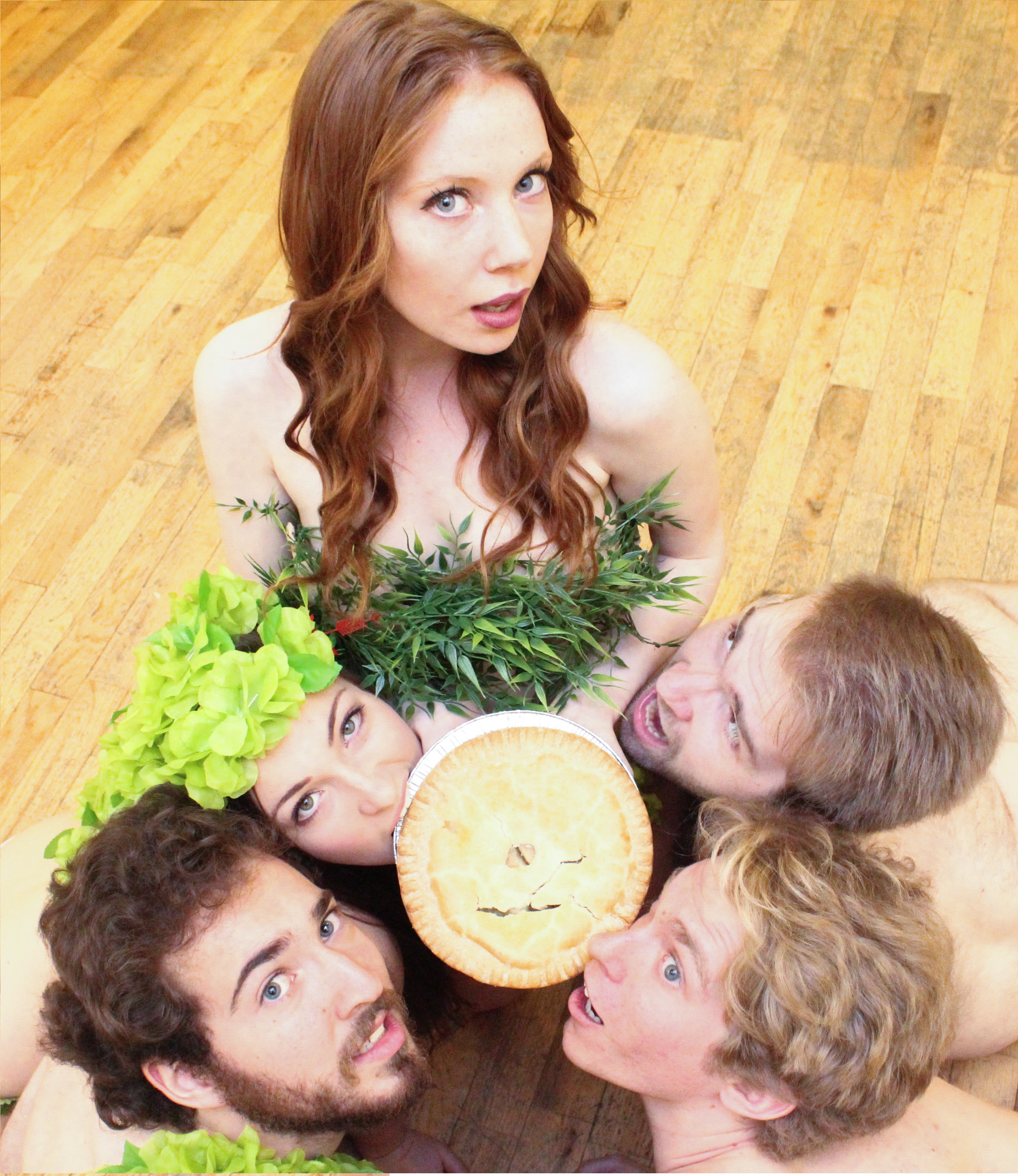
I met up with Rosamund Small, writer of Genesis & Other Stories, one of the site-specific productions that you can (and should) check out as part of the 2013 Toronto Fringe Festival July 3rd to the 14th. Contrary to what the promo pictures might suggest, should you have seen them tantalizing your facebook walls and twitter accounts, she was fully clothed in a lovely summer outfit, with no cheekily-playful shrubbery keeping her modest. We talked craft beers, excessive amounts of hummus and the world of theatre school and life after on the patio of Grapefruit Moon in the Annex. And then when our hummus plate finally was left bare, we talked about the play she’s been developing for four years and is still apparently re-writing a week before show-time, Genesis & Other Stories…

Genesis Poster

HS: Let’s begin. Talk to me about Genesis & Other Stories.

RS: Genesis is a show that I actually started writing when I was really young. I started writing it when I was seventeen. I had just written my first show that I was really proud of, which is hilarious because I was about fifteen/sixteen at the time, but it had like three jokes in it and people really, really laughed and I thought…

HS: “Am I funny?”

RS: Yeah! Exactly. And I mean, you know, it wasn’t some work of genius but that was in high school and I had never really experienced that very specific high of sitting in an audience, and the moment when every body laughed, you could really know, “oh wait, they are really listening”. So I determined that I wanted to write a really balls-to-the-walls comedy. (She laughs.) It was a really long time ago when I wrote the first version of Genesis & Other Stories and did a performance of it in high school. After that, I continued to work on it for the first time through the Paprika Festival with Damien Atkins as my mentor, who, may I say, is just the most wonderful person. He has such a specific sense of humor, which makes me laugh so much all while he’s being incredibly serious. He was such an inspiring person to work with. All of this was, believe it or not, about four years ago. We did a staged reading at Paprika and the improvements I had made on the script and having done the staged reading with a really solid group of actors, meant that I felt like there was something I could clock about that success.

After that I put it away and didn’t really read it, in fact I didn’t read it for about four years. When I finally looked at it again, all I could think was, “Ah, this doesn’t make any sense. This is dreadful!” I had thought it was so funny and cleaver and then four years later you read it and you’re just like “oh god!” But still, we did a table read of it and by just sort of happenstance, Vivien Endicott-Douglas, who was in the table read playing the main character, who is actually supposed to be a man, (she was great, obviously), was really enthusiastic about it. I don’t know, just her response to it… the fact that she, who is so smart and able to analyze scripts in a very thoughtful way, still really loved it… which for someone who thought after four years that this play didn’t make any sense, it was incredibly inspiring.

So I decided that I would ‘fix’ it, and that’s why we brought it back to Paprika. We teamed up together, Vivien and I. It was really her enthusiasm that made this show go back into development. We worked on it last summer and did another staged reading in January and a production with Paprika in March and even now we are still…

HS: Re-writing?

RS: Yes.

HS: Still?

RS: Yes! Oh my gosh, the obsessive re-writing of this show is… crazy. Like it’s crazy. It’s crazy!

HS: And the show is going up in the next week?

RS: Yup.

HS: Alright!

RS: Well it’s really different now. At first it was like, new scenes and new elements, but now it’s really just about clarifying little tiny moments. I think it’s a testament to the actors and to Vivien and to the fact that we’ve all worked so long on this project together, that usually when the change happens we all think “Oh, good! There it is. That makes more sense” and everyone is on the same page about it.
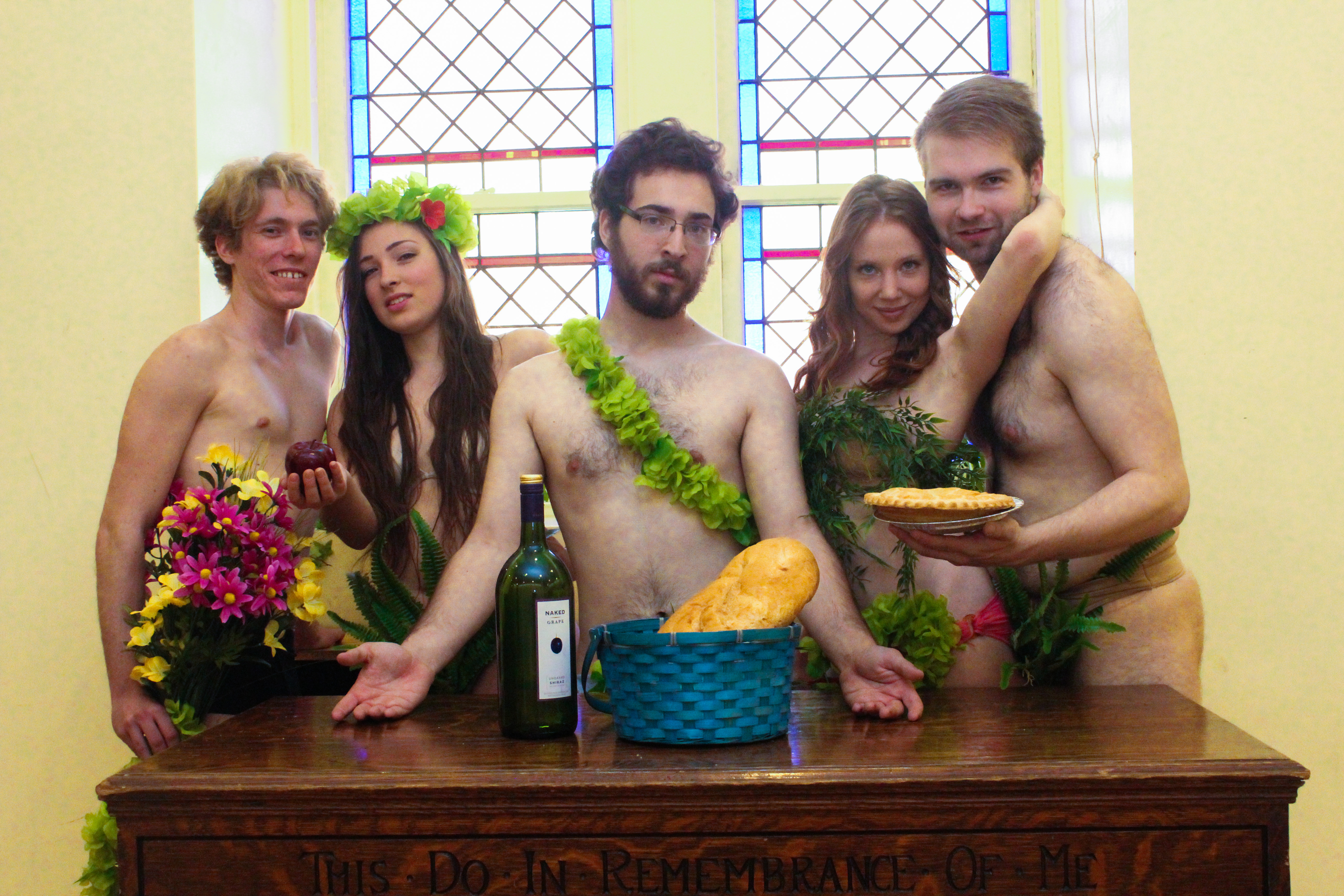
The Cast of Genesis & Other Stories: Jared W. Bishop, Tess Dingman, Hayden Finkelshtain, Katie Housely, Wesley J. Colford

The Cast of Genesis & Other Stories: Jared W. Bishop, Tess Dingman, Hayden Finkelshtain, Katie Housely, Wesley J. Colford

HS: So the cast you have now, you’ve been working with them throughout your development with the show for the past year?

RS: Yes, since November, so they’ve played a really valuable part of the show’s development of where it is today. I think when you trust your actors, I mean you always have to let them try things out and see what works, but when they ultimately don’t know what they are doing, it’s incredibly helpful for the development of the script.

HS: It gives you a chance to see it fleshed out in front of you and realize when the script really isn’t working.

RS: Yes! Totally.

HS: So, let’s talk about the origin of Genesis & Other Stories. Where did the idea for this play come from?

RS: You mean, why would I write about a Christian play within a play? Well, religion and theatre, I think, are really the two obsessive, kind of crazy, kind of amazing things that I see people really dedicate their whole lives to, so I thought, why not put them together. (She laughs). For example, the idea that when you go on stage, you know, if you fail it’s just terrible and it’s often thought of as being just the worst for an actor. So I thought, well great, let’s talk about that. We have some characters who are all about that, who think “Oh I’ll just look stupid” and that fear underlines everything for them, while we have other characters who are working on this play and thinking “Well if I fail, it’s for the grace of God” and “I care about this play because it’s a part of the other thing that people really dedicate their lives to”. The idea of really having to put yourself on the line and having faith in something is a real unity between a lot of the ways that artists think and the ways that many people who are religious think.

HS: You know, I have never really thought of it like that, but it’s kind of true. It’s funny, we were discussing earlier how theatre can be a little cult-like sometimes and it can almost consume you.

RS: Totally.

HS: Well and I guess with both that and religion, there can be a fine line.

RS: Yeah, I think there is. And I also think that there is a really great parallel of following a script, you know, following text, which you don’t realize as having that kind of power. Which is so funny, because I’m a writer, and in our rehearsal room, the writer is present, you can ask me about the text. But ultimately, the writer isn’t present for most theatre and you’re just supposed to trust how you think and interpret it for your time, which is very similar to a lot of bible conversations. So for this to be a bible play, and for the characters to be arguing about how they should literally be following this bible play was just a very appealing little dynamic for me.

HS: So in a description of the show, it’s labeled as a “romp to get you thinking”…

RS: Oh my. Sounds exciting!

HS: Very! Specifically it’s described as follows: “Slapstick, satire and meta-theatre frame a surprisingly complex story about lonely people trying to fill roles that do not suit us.” Can you talk to me about the roles that humor and pain play in Genesis & Other Stories and about your thoughts on using humor to get to something a little more poignant in your writing?

RS: For sure. I mean up until very recently, and I really mean like February, I thought that comic relief was important in a dark story or it’s important to have pain and comedy next to each other, like there should be a moment of pain and a moment of comedy. We went through these drafts of Genesis & Other Stories where everything would just sort of stop, all of the ‘funny’ would stop and we would have our moment of ‘pain’, then the comedy would start again, and I’ve just really shifted my thinking on that. I think that a real comedy is pain, like it’s all mixed in together. It’s not like you inject the drama or place it in other scenes. Anything that really makes someone laugh from his or her gut is probably about pain. So I’m not equipped or interested in, at this moment in time, writing something that makes anyone in the audience want to cry. That’s not where I’m at right now, particularly. But at the same time, I don’t think comedy is a real escape, at all. It’s like facing something in a way that you feel you actually can face it. It’s the fun-house mirror version of reality, but that doesn’t mean that it’s not completely real.

So the fact there there’s a lot in the play about being in the wrong place, not being able to live up to expectations, not being able to be who you are, like there’s queer themes and gender themes and a lot of things about people being in the wrong role and then literally, on stage in a role where they don’t fit or can’t do, those situations can be funny, even though they can be awful or poignant at the same time.

Genesis & Other Stories - Promo Pic #7

HS: So you are performing at Trinity St. Paul’s United Church. Are you rehearsing in the church, as well, or are you just performing there for the duration of the Fringe Festival?

RS: We’ve rehearsed on and off a few times in the church, but we haven’t been able to be there every day.

HS: Being labeled as a site-specific show, how has being in the church with the show affected your actors or the play, itself, as you’ve said you’re still re-writing?

RS: I think it forces you to face exactly what you’re talking about, you know? I mean it makes you think, “What church is it? Where are you? What’s out the window? How old is it?” All of those hyperrealism elements come into play with site-specific and that has been really great. But it’s also meant that we can’t get away with anything cheap. I’m not interested in making fun of all religion and I’m not interested in making fun of Christianity, in particular, even. You really want to make fun of a very specific moment and a very specific character with a specific belief and so performing in an actual church has really heightened that kind of specificity for this story. In terms of the actors, I think to have them doing a play in an environment where plays aren’t really ‘supposed’ to be done, they’ve had to work so hard just to make that work, which they do, I think. It’s going to be totally theatrically valid, especially because of Vivien’s work, but it’s just because they are so used to thinking “Well, the lights will light me in a way that draws attention to me” and now it’s like, no, if you’re not good enough, no one will even know what you’re doing. So, yeah, they’ve really risen to that challenge in a fantastic way.

HS: What do you think someone can hope to get out of seeing Genesis & Other Stories that that they, perhaps, might not be expecting?

RS: I think probably that it will be really inclusive, I hope. I only say this because Performing Occupy Toronto, which was my last play, most of the response that I received from people is how they really expected it to be incredibly preachy or politically, it would be really one-sided, and I didn’t speak to anyone who felt misrepresented or angry or that their perspective was really left out of the show, so I hope that I am able to repeat that. I really hope that this play incorporates respectful perspectives from very religious people, from atheists, from somewhat religious people. I hope that will be what people can walk away with, unexpectedly, maybe… that everyone feels included. I think when you’re satirizing something, especially something like religion, or politics et cetera, it gets people’s backs up quite immediately, and I really like people to be surprised by the fact that you can have a thoughtful conversation in art and it doesn’t have to be anger-inducing. It can be thoughtful and enjoyable. I really think this is the case.

HS: Fantastic. Lastly, what song would you encourage your audience members to listen to before coming to see Genesis & Other Stories?

RS: William Tell Overture.

HS: And with that, we’ll see you at the Fringe in a church!

RS: See you at the Fringe in a church.
Genesis & Other Stories - Promo Pic #3

 
What: GENESIS & OTHER STORIES by Rosamund Small, directed by Vivien Endicott-Douglas, a production by Aim for the Tangent Theatre
 
When: The Toronto Fringe Festival – July 3rd to 14th, Weeknight and Saturday shows at 9pm, Sunday shows at 8pm
** With a special Pay-What-You-Can Preview Performance Friday June 28th at 8pm.**
 
Where: Trinity St. Paul’s United Church, 427 Bloor Street West
 
For more information visit http://www.aimforthetangent.com/genesis-other-stories/
 
Tickets: Purchase by phone or online – 416-966-1062 or http://fringetoronto.com/ 
 
Check out the trailer for Genesis & Other Stories here: 
 

Meet the Passion Players – Ensemble, Front-of-House, Crew, Chorus, Musicians, Sound, Puppeteers, Wardrobe… Needless to Say, They’re a Busy Bunch!

Interview by Ryan Quinn

RQ: So I’m here with the Passion Players and Assistant Director Lillian Ross-Millard, part of Passion Play being put up out here on the Danforth. Would you like to introduce yourselves?

JW: Jesse Watts!

APM: Aviva Philip-Muller.

KD: Kasey Dunn.

HD: Howard Davis.

HS: Harsharan Sidhu.

CS: Cheyenne Scott.

LRM: Lillian Ross-Millard.

KDa: Kathryn Davis.

RQ: Can you tell me a little bit about Passion Play, and how the Passion Players fit into it?

HD: I guess you could say, from what we know of it, it’s been a very long process for the creative people on deck. Three companies have created this epic show. It’s the Canadian premiere of a show by American playwright Sarah Ruhl. It’s been created by Outside the March, Convergence Theatre, and Sheep No Wool.

APM: Someone said early on that the Passion Players are like the glue. Alan said that. The glue that fills in the cracks of everything that needs to get done, be that onstage or technical; but also in the sense that we relate the show back to their original purpose of why they wanted to do the show and why now. We link it back to the people seeing the show. We’re a bridge to these different historical time points. We’re always dressed the same way, we’re always contemporary, and we’re guiding them through this journey, helping them make that leap.

LRM: It’s a very historical play, of course. It starts off in Elizabethan England, then Nazi Germany, then South Dakota during the Vietnam war. You’ll notice that it doesn’t land in the present, so it sort of causes us to reflect upon our own historical period. She’s not shoving it down our throats to criticize someone specific in our time period. However, having the Passion Players there makes us very aware that it’s applicable to our historical moment as well.

APM: It’s sort of interesting the points in the play where we show up physically. So in Part 1, there’s a point where we come on with fish puppets and we have a little moment onstage as opposed to doing sound foley in the background. In that moment, we’re wearing shirts that say “Jesus is coming. Look busy”. So, it’s very obvious that we’re not in that Elizabethan period, we’re not trying to pretend to be actors that are a part of a company. We’re something else. We’re something other coming in, and I think it’s very deliberate where Alan, Aaron, and Mitchell have decided that they want people in modern-day dress coming onto the stage and bringing us back to the present.

RQ: So you’re preventing people from forgetting that it’s performative.

KD: I think it’s very hard, while watching this play, to forget that you’re watching a play. There’s constant reminders that these are actors and this is a theatrical setting. Very “meta”.

JW: Title-wise, I’d say that we’re Ensemble, Front-of-House, Crew, Singing, Musicians, Sound, Puppeteers, Wardrobe…

HD: What’s interesting to me is that in moments we bring people back to reality, but in others, we function as a heightened theatricality in the show. Even with the fish puppets in the first act, they’re very symbolic, where in act three, it’s very different. The way these different directors have asked us to embody the fish. They change from something deliberately symbolic to something that’s almost real.

RQ: A lot of shows strive for that conversation on the drive home about what things mean, but it sounds like you’re instigating this conversation during the show itself about the nature of performance.

KD: It feels very Brechtian. We have these symbols and signs coming out. Even reading our shirts the first time we come onstage, it’s almost like subtitles.

LRM: Or the prologues and epilogues. Very Brechtian, sure.

CS: I feel like the Passion Players are also mystical elements in the show. With the fish puppets and the fact that we’re in the balcony creating these sounds physically and not using any recorded elements. They always refer to the stage for us as “coming down to Earth”. It maintains a mysticism when we’re in the balcony like we’re the angels pulling the strings.

KDa: Or the puppeteers from above.

CS: Yeah, just being present and observing the show.

KDa: We also make commentary as well. Certain directors in certain scenes want us to be witnessing what’s happening below. I think that intensifies the overall theme of the section. We’re not just an invisible crew, we’re an ensemble that people can see up on the balcony, commenting on what’s happening.

KD: Like a Greek chorus where the audience feeds their own reactions through seeing us observe it.

KDa: In certain scenes in the end of act two, we’re standing and watching what’s happening. I think it gives it a more sinister feel. The stage is entirely red, and Violet comes on and says “My white ribbon is red” in the dark, and Aaron wanted the Passion Players to be overlooking this entire scene as people who are seeing something nasty but doing nothing to stop it. The people of Oberammergau had a Jew living in their village but still denied the existence of a concentration camp at Dachau for a number of years. We are commenting on the moral aspect at that point in the play. There were a few people who really believed in the ideology of the Nazi regime and everybody else just went along with it because they were so… blinkered, in a way.

APM: So by us standing there, it’s like we’re commenting on the hypocrisy.

KD: And I think Violent comments on that when she says “You’re not in a play even when they give you a costume to wear, even if they’re watching like an audience”. I always feel like she’s speaking about us as an audience.

LRM: The Passion Players don’t feature very much in Part Two, and I think that’s intentional. I feel like Aaron was saving that meta moment for the very end, the audience feels very complicit for what’s occurring onstage. Each director working with each time period used a dramatic acting style of the time, and I think that’s written into the play. So I think there’s a more naturalistic feel to Part Two. So having people with a more contemporary visual takes us out of that. We feel very comfortable seeing the Nazi imagery come into play, like “Oh, well, we know what’s going to happen because it’s history and we’re not implicated” but then at the end we see the Passion Players again and we’re reminded. Even the actors look at the audience as if to say “Is this okay that we’re persecuting this young girl?”. I think it’s very powerful.

APM: One of the moments that we get to be a part of that I think has many layers because of who we are as this modern force is this moment where Hitler has just said “Continue with your holy play”, and we turn around, face the audience, and sing In Perpetuum which, of course, means “forever”. So we get that history always repeats itself, and every time I sing that I’m looking right at Hitler and I can’t help feeling how prophetic that is. And then the play gets repeated, you know, right after break, we’re doing this in perpetuum. And other than in Part One, we’re always the ones singing In Perpetuum, it’s like our anthem. We show up again, the Passion Play happens again, and so do the tortured characters and the ways people treat each other.

LRM: But it’s also a current of passion and of love. It’s what causes it to recur. It’s a cyclical thing. It’s interesting the way the relationships between the characters change and modify in each new time period. It’s kind of a weird reiteration of a classical love story, but I feel like it’s a much more philosophical approach while staying accessible.

The Passion Players - BACK ROW, LEFT TO RIGHT:  Bilal Baig, Kathryn Davis, Howard Davis, Aviva Philipp-Muller, Kasey Dunn, Jesse Watts FRONT ROW, LEFT TO RIGHT:  Cheyenne Scott & Harsharan Sidhu

The Passion Players – BACK ROW, LEFT TO RIGHT:
Bilal Baig, Kathryn Davis, Howard Davis, Aviva Philipp-Muller, Kasey Dunn, Jesse Watts
FRONT ROW, LEFT TO RIGHT:
Cheyenne Scott & Harsharan Sidhu

RQ: It sounds like you’re performing a lot of opposites at once. You’re this mystical force but you’re also the most human force. You’re the most anachronistic force but you’re also the least anachronistic because you’re in modern garb. The most passive observers who are also very active. It’s a lot of these back-and-forth at once moments, which is very cool.

CS: It’s the same for the characters. There’s a difference between what they should be and how they feel inside.

RQ: This being a co-production between three different companies, have you found any differences in the way the work is approached.

APM: I was talking to Kathryn the other day about how the directors all have different approaches but they’re all such amazing and beautiful approaches. You can tell when you see the production that each play ends up being very unique. I think that helps the audience feel like it’s a lot shorter because it’s like you’re watching three different plays. It’s like when you watch TV for three hours, it’s different shows, so you don’t realize it’s three hours. So, having these three different directors from three different companies, it does end up being a different experience, both being in it and as an observer.

KD: It was also very powerful when they found ways to steal from each other, in a way. They’d watch what the others were creating and then find ways to thread similar themes through so that there are connections. I think it was Alan that first used the triangle as a sound cue to mean stepping outside the action, whether it’s a tableau or an aside. So, once that was introduced in Part One, the other directors picked it up to bring it through so it becomes a constant for the audience. They always know what that sound means. So, while they’re all different in style, there are all these tiny threads that, when you pick up on them, it’s powerful.

KDa: It’s also interesting how we’re used in each act. For example, we use the fish puppets in completely different ways. Alan doesn’t want us to move the fish puppets whereas Mitchell wants movement to it.

KD: Alan’s style in this show is very symbolic and very simple and honest. He’s interested in the fish as a symbol, a Brechtian “This is a fish”. For Mitchell, it’s something more mystical that’s coming in and it’s alive in its own right.

RQ: So during the process, the show has kind of had a conversation with itself because of these different voices.

KD: It’s amazing how it all came together. At first, it seemed like having too many cooks in the kitchen. All these powers trying to work toward the same goal but each in their own way. It’s been amazing watching them come together and create one big thing.

LRM: I think we also came in late in the process. I mean, I was there on the first day of rehearsal, but they had been thinking about this and planning this for a really long time. Two years. So, I think one of the rules, when they wanted assistant directors and Passion Players was actually just to get out their heads or have some extra eyeballs lying around. I mean, when you’re working with people for a very long time and talking about all the same ideas, it’s good to talk to other people about it. You might have this amazing idea that makes complete sense in a language you’ve been using with one person, but once you bring it to a more public audience, it can be redefined or clarified. So, I think that’s another role we serve.

JW: What’s great about this for me is that I worked on a professional show at Theatre Columbus, and it was very straightforward, everyone knew what they were doing, everyone had a position; but with this one, it’s so big that all of us can help out. I feel comfortable enough to just walk up to one of the directors and say “Hey, can I do this for you? Do you need help with this?”. Everyone is so friendly and collaborative that it’s just an amazing process.

HD: They’re not opposed to new ideas. Because it’s so big, everyone’s opinion is valid.

KD: There’s so much room to slot yourself in somewhere. Even with costuming. Coming into this, I didn’t know too much about it, but someone asked for help, and I kind of became in charge of wardrobe in a weird way. There are a lot of jobs to be done and only so many people to do them.

APM: In my experience, nobody here has had such a big ego that they wouldn’t want help. Even if between where they are in their career and where I am in mine is a huge disparity, if they need help with something, they’ll turn to us.

HD: Some of us went to school together, and the program we have is very multi-disciplinary, so you work closely with production. So, I had an appreciation for production anyway, but it’s…my goodness. I have even more of an appreciation for people who do lighting and props. I’ve done shows where I needed endurance, but in this, it’s a different kind of feeling. We finish a show and we’re exhausted physically, and the actors are exhausted emotionally. I’ve always been used to being on the other side of things.

KDa: We have to be constantly present while remembering our cues and knowing to do our sound effects, lighting, et cetera. So, you’re constantly on edge. I don’t want to mess up a gel. So, constantly present and making that commentary, as I said, like then end of Part Two, for instance. We are the creative ensemble but also the technical crew. So it’s physically draining but also requires a lot of mental focus. It’s been fun. I remember that tech week was quite chaotic because we knew we’d have to make certain sound effects, but when lighting started to come into play as well, it was harder. We needed to have spotlights, and gel changes. At one point, for instance, one of the directors said “Oh, I want to have a spotlight there, who’s up above?”, and we were all onstage. So, I was removed from an ensemble scene and put on the spotlight instead. So, it was chaotic because we were desperately trying to remember cues. The whole thing has been very fluid because I was asked to do a gel change and I’m actually on the other side, so Aviva stepped up. All hands on deck.

LRM: This sort of independent theatre would not happen without people like this. The funding is not feasible. Passion Play has gotten a lot of buzz and part of me is wondering if it means people might be more open to the idea of trying to put on epic theatre done by independent companies. It’s really amazing.

KD: Not only is it really gratifying, but it gives me a sense of invincibility. If I can actually do the lighting and the sounds and be onstage in one show, what could I not do? If I wanted to put on my own show tomorrow, I feel like I’d be that much more capable, and I’d have more confidence.

KDa: This show is setting a precedent in Canadian theatre, I think, for being an epic show, and one that reviews have said will be talked about for years. But, yet, it’s three small, growing companies coming together with thirty-five people working on this. We’re moving locations, we move the audience from Withrow Park to Eastminster Church. Even that is ambitious in one way. Then there’s the acting company, and eight Passion Players, we have the assistant directors, and Evan [Harkai] and Bryn [McLeod] all working to make sure this piece comes together.

KD: It’s a labour of love in the truest sense. These groups were so passionate about making this happen, no matter what they had to do. It’s exciting.

APM: I feel like I have the experience of doing four plays from this one show!

PASSION PLAY by Sarah Ruhl
When: June 6-30th
What: Three of Toronto’s leading indie theatre companies, Outside the March, Convergence Theatre, and Sheep No Wool present the Canadian premiere of Passion Play by Sarah Ruhl. Brought to Toronto’s East End by Crow’s Theatre.
Where: Passion Play is an immersive performance experience in three acts. Act One begins in Toronto’s beautiful Withrow Park, after which the audience and performers will walk together across the Danforth to Eastminster United Church’s magnificent auditorium for Acts Two and Three. 
Tickets: can be purchased online or in person at Withrow Park beginning one hour before showtime.
Book your tickets online herehttp://passionplaytoronto.eventbrite.ca/