Skip to content

Posts tagged ‘Megan Robinson’

“Working With Your Ex, The Genius of Jason Robert Brown & On Dating Another Artist” In Conversation with Tess Benger & Daniel Greenberg on reconnecting for THE LAST FIVE YEARS

Interview by Megan Robinson.

Performers Tess Benger and Daniel Greenberg have quite the history.

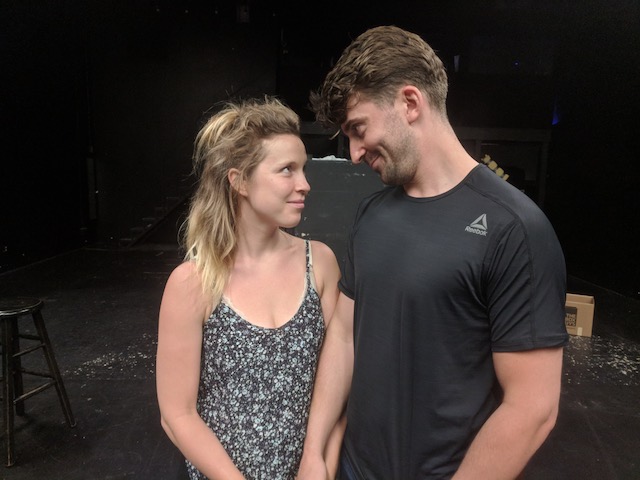
The stars of the upcoming two-person musical, The Last Five Years at Wychwood Theatre, both studied musical theatre performance together at Sheridan College, and, perhaps more interestingly, also dated for almost five years. So, when it comes to performing this relatable love story about two passionate artists, Benger and Greenberg are in the unique position of drawing from their own relationship. After all, they know intimately what each other was like as a twenty-something-year old dealing with the ups and downs of first love.

Seeing this particular story performed by artists who share a romantic past is what Benger considers one of the biggest reasons to come out and see it.

“We’re putting this show up in ten days and four years!” she tells me during our interview.

This highly popular musical by lyricist and composer Jason Robert Brown is loosely based off one of the writer’s romantic fallouts and is told following two timelines, switching between each character’s point of view. We meet the character Jamie at the beginning of the relationship, whereas we meet Cathy at the end. While his story moves forward, hers goes backward. Only briefly, in the middle of the show, do their stories intersect.

In this candid interview with Benger and Greenberg, we talked working with your ex, the genius of JRB’s work, and what they’ve discovered about themselves through their work on the show.


MR: Can we talk about how you approached working together? Did you talk about boundaries, or did you just dive in?

DG: Back in the kind of genesis of this whole thing, I was chatting one day with Stephanie Graham, our director, and she asked me if there were any girls who I had imagined doing the show opposite and I kind of looked through my Facebook friends. One of the names that stuck out for a multitude of reasons, most so the fact that we dated for four years so many years ago, was Tess! This is a show about a relationship, similar to the length of our own, about two 20-something-year-olds, which we were at the time we dated. So I said to Steph, “Tess could really do this,” and Steph said that she was on her list too, so I reached out the next day.

TB: My side of that was I was doing a show out in Edmonton and I got this Facebook message and to be honest, since breaking up, we tried to keep in touch but that’s complicated to do. I didn’t know what he was up to in his life. I wish I had video recorded some of my friends reactions to telling them about this because Daniel and I were in the same year at Sheridan so we have a tribe of friends that were a huge part of our relationship and know all about our history. So I was like, “Could I do this? Do I want to re-live this?” But luckily, Daniel’s in a really happy relationship. I’m in a really happy relationship. So there was never really a risk of this messing with our lives and I said yes right away. There was nothing else that was going to get in the way.

MR: Daniel, why is this a show that you’ve always wanted to do?

DG: I’ll be honest, at the beginning I just wanted to sing the crap out of the score. I’ve heard it sung numerous times by certain singers who I idolize and I just wanted to do it, I wanted to be able to say that I’ve done it.

MR: So it’s a bit of a dream role?

DG: Yes, it absolutely was.

MR: I find Cathy a perplexing character. She is an actor, she is struggling with her career, struggling to be happy for Jamie (her partner). Tess, as an actor yourself, what has it been like to portray the challenges of this character?

TB: There’s not one thing that happens in this show that I can’t understand. Where I’m at right now in my career, there’s not one moment in the show where I go, “How could that have happened?” And I might see another production and be like, “Jesus Christ Cathy, get your shit together!” or “Jamie stop being such an asshole!” but maybe it’s because it’s Daniel, and maybe because it’s me, I see how human it is. Because for so long there was so much love with Daniel and I. And as two people who were so good together but didn’t work out, because of little reasons… I just see the truth in it.

MR: Do you think it is hard for two artists to date?

TB: Yeah, I do. Actually my partner is an actor and he’s transitioning into a director. And it was only two nights ago that we had the “we thought this was going to be easier” conversation.

We met at the Shaw Festival as actors, and in our first season we fell in love and we thought “Oh my gosh, we’re going to work here forever.” And it’s just hard.

And there’s always going to be dark moments and we will push through it and there is a lot of hope and there’s a lot of positivity surrounding that fear, but the fear is real.

DG: I think there are wonderful benefits to both people in the relationship being artists. Our lifestyle is a really nomadic lifestyle and it takes you all over the place for a couple weeks at a time, or a couple months at a time, and everything is new to the individual so often that having an artist as a partner, they understand what that lifestyle is. You understand the kind of ebbs and flows that this lifestyle brings you as a person.

TB: Even this! Saying to your partner, “I’m going to do a show with my ex-girlfriend where we unpack all our baggage in ten days. We have to kiss and get married, okay? See you in ten days! And please buy a ticket cause I can’t get you a comp!”

DG: And artists have to be understanding because they have done that too. They know where you are coming from. But say someone who works in an office tower somewhere might not feel great about that.

MR: But even someone who understands it might still have their reservations about it, right?

TB: And even someone who works in an office tower might be very cool about it.

DG: Sure, of course.

MR: If you could give your characters any advice what advice would you give them?

DG: For Jamie I think he needs to ask for time and space from his partner and just trust that it’s going to be okay.

TB: This is a hard one. The thing that comes to mind is trust. Trust the universe, I guess? The thing is I think Cathy is talented, and I don’t know if being a broadway actor would be the result if she trusts, but I think happiness would be.

Cathy really thinks through all the thoughts in her songs so I understand her brain and I wish I knew what she needed because Jamie’s success shouldn’t ruin her. But I think it’s just trust and self-love.
MR: If you could rewrite the ending would you change the fate of their relationship?

DG: No. I don’t think I’d change it. Their story is so their own. It’s so perfect and tragic. It’s a very real story about two working artists, who just unfortunately go off in different directions.

MR: Have you guys discovered anything new about yourself through portraying these characters and this particular struggle of being a working artist trying to make love work?

DG: For me, keep communicating. Be honest with yourself. Be honest and forthright with your loved one. You’ve got to trust your love. You’ve got to trust that they will be okay.

TB: I think as a partner giving space. I think knowing who I am coming to a partnership as a complete version of myself. I think there are a lot of holes in Cathy that she keeps trying to get Jamie to fill. And the more time I take with myself doing what I need to do to feel really wonderful just makes me a better partner, so I think that’s a nice reminder.

The whole thing has also been a reminder of a really important time in my life; which was our relationship. I think to protect yourself in a breakup there comes a point where you kind of pretend it never happened and that’s been a really interesting thing… I wouldn’t say difficult… but I’ve learned that I did bury this. And how lucky am I as an artist to get to unpack it through some of the best music ever?

MR: What is a lyric that particularly speaks to you and why?

DG: There are a lot of lyrics…

TB: Oh, you know what I like? It’s at the wedding, in “The Next Ten Minutes”, when we sing “I’m gonna love you ‘till the world explodes”. I heard that for the first time today. I don’t know if you saw that, my reaction, I was like, “THAT’S GREAT!” It’s so good. It feels very good to say these words. I’ve never felt so human on stage.

DG: Also in “The Next Ten Minutes” for me, Jamie says, “There are so many lives I want to share with you.” And “There are so many dreams I need to share with you”. It’s so true. The person who is your person, the person who you love, you just want to do absolutely everything with.

MR: We’ve talked a lot about love, are there any other themes in this show that stick out to you, or that you’ve enjoyed exploring?

DG: It’s hard to talk about the show ignoring the relationship because the show is about the relationship. I think the show takes a look largely at the balance of work life and love life in both these characters. They find personal success in their industries very differently. He becomes very successful way faster than he thought he was ever going to. Whereas she tries and tries and tries and she’s super talented and she does get success but maybe not success that is as reassuring. But when one partner is super successful and the other partner isn’t, how to balance that?

TB: Time! I guess, because “The Schmule Song” wasn’t my song so I never listened to it and now that I’ve heard it a bunch in the runs and Daniel sings it to my face, I’ve recently really felt that time is something, especially I think as an artist… Give yourself time. Take time to pay attention.

MR: Can you each ask each other one question?

TB: What’s it like doing this show with me!?

DG: Honestly, I get flashes of our relationship ages ago. There are moments where I’m like, “She’s pretty cool. She’s pretty great. I got a lot of feelings for her.” But on the flip side, I’m like, “Oh my god, Tess, relax please.”

(Tess laughs)

DG: I think that probably goes both ways though, I think Tess probably thinks the same about me.

My question: Was your initial reaction to me asking you to do the show, and be honest, was it immediate or did you have to…

TB: …It was immediate! I checked with my boyfriend to make sure he was comfortable with it and then I said yes right away. That’s your question!?

(they laugh)

MR: Final question, how do you feel that each other has changed and grown since school, now that you’re working with each other as professionals?

TB: Daniel’s gotten more confident, more self-deprecating. His neck has gotten bigger, which I noticed in a scene. And his voice has grown a lot. As a performer he’s grown so much. You know there’s only so much people can do in school. You really learn by doing in this business.

DG: Tess has always been a fantastic actress, fantastic performer. One of the big things I’ve seen spending these last 9 days with her is she’s really become more comfortable, more confident with who she is and she’s able to bring that into her work and it’s a really lovely thing to see. She’s so open-hearted and talented and caring and ridiculous but all in the best ways. It’s.. it’s really been quite an experience to have her agree to do this with me. Just cause we both have grown so much in very different ways.

TB: Mostly his neck though…

DG: Apparently!

(they laugh)

The Last Five Years

Who:
Directed by Stephanie Graham
Music Direction by Chris Tsujiuchi
Starring: Tess Benger & Daniel Greenberg
Lighting Designer: Jareth Li
Stage Manager: Thalia Kane

What:
The Last Five Years is an emotionally powerful and intimate musical about two New Yorkers in their twenties who fall in and out of love over the course of five years. The show’s unconventional structure consists of Cathy Hiatt, the woman, telling her story backwards while Jamie Wellerstein, the man, tells his story chronologically.

Where:
Wychwood Theatre, Artscape Wychwood Barns
601 Christie Street, Studio 176
Toronto, Ontario
M6G 4C7

When:
Five performances only!
July 27th: 7:30pm
July 28th: 1:00pm & 7:30pm
July 29th: 1:00pm & 7:30pm

Tickets:
$30 – General Admission
$25 – Arts Worker
TheLastFiveYearsYRG.brownpapertickets.com

“Making Improv Magic, The Value of Play & Working with Colin Mochrie” In Conversation with Liz Johnston & Mimi Warshaw on ENTRANCES AND EXITS at the 2018 Fringe

Interview by Megan Robinson.

The concept of Entrances and Exits, a new farce on stage now as part of the Toronto Fringe Festival, is a complicated one. To make things more complicated, it’s also entirely improvised!

This impressive and unscripted farce is split into two parts; with the first twenty minutes playing out in the living room with a series of entrances and exits into and out of the bedroom and then restarting a second time with the same scenario, but set in the bedroom. This requires that the cast do an instant replay of sorts; filling in the blanks of the story, hitting all the main plot points, and eventually culminating with a satisfying resolution. And hopefully they can make us laugh along the way.

Somehow, the cast pulls this off without any planning and with very minimal mid-show discussion.

We sat down with actor, improviser, Bad Dog Theatre Company member and Entrances and Exits co-creator Liz Johnston and Howland Company member and E&E production manager Mimi Warshaw to figure out how they make that improv magic happen, some common misconceptions about improv, and, of course, what it’s like working with Colin Mochrie.


Megan Robinson: What does a rehearsal look like for this type of improvised show?

Mimi Warshaw: Paolo (Santalucia, the director) brought a lot of his acting training into it and was really interested in playing with characters, discovering characters and trying on some clown work. So that was the beginning, just to play. That helped to know how everyone worked. That was the focus of the first half.

The last month and a half was about finding the show. And it grew in pieces. There was a lot of, “Let’s play with one room, then the next room, now let’s see what happens if we flip the set.”

A lot of playing and coming back and saying, “How did that feel? What worked? What can we do better?”

MR: Is there anything not improvised? What might be consistent throughout the show? The characters? Anything?

Liz Johnston: You really don’t know what will happen.

MW: I’ve seen maybe a dozen versions, maybe more, and no two shows have been the same.

MR: How much do you play for each other and how much is for the audience?

LJ: The audiences have been really generous, so I think we’ve been playing a lot for the audience. The thing about improv is that you also get the joy of making each other laugh. There are so many fabulous moments where someone will say something, and you just can’t help it. And the audience feels kind of in on it because they know it’s improvised. That’s really joyful. That’s what I love more than any kind of theatre, where you can really have everybody be on the same page, and they can be like, “I know exactly why this is funny. I was here for every part of it.”

MR: What is a myth or misconception about improv?

MW: I firmly believe that people think improv is just people going up and being funny. But I think good improv is funny because it’s recognizable. When I’m at an improv show, there’s always somebody who gives a suggestion like, ‘we’re in a volcano at the end of the earth.’

And I’m like, ‘we’ll never be there so…’ Maybe it would be funny, but I’m more interested in seeing somebody in a bakery having a traumatic moment and seeing the comedy in that.

I don’t know if it’s a misconception, but I like seeing reality on stage, and I think there’s comedy in that. I think that’s funnier than just a bunch of jokes.

I also think people are terrified of doing improv because they think they aren’t funny…

LJ: Another thing is that it’s nice to have people now recognize that there really are different styles of improv, that are all valuable.

So you can go to an improv show and have big laughs and fast scenes and big characters and enjoy that just as much as going to see something like this longer narrative unfold and have unexpected turns, more dramatic moments, and have them both be beautiful and both be improv.

I don’t want to run into a trap here… I love short-form improv. I love games (an easy thing to describe it as is what you see on Whose Line Is It Anyway). There’s so much joy in that, and there’s so much talent in being able to do that well. It’s truly harder than anything else. So I never want to say those aren’t worth as much as a long-form unscripted piece of theatre.

MR: So farce is very slapstick and physical. How do you improvise that sort of thing? Or do you?

MW: It’s not just physical, it leans towards the improbable, leans towards the ridiculous, so it doesn’t need to be grounded to reality. And we definitely do that. As much as there’s still truth, it still has that sense of play.

The other thing I’ve been told about farce is it doesn’t need to have to have a moral. It can just be a really beautifully fun and hilarious time.

LJ: I always forget we have so many different definitions we’ve gone through describing what farce is, but again leaning towards the improbable.

Like: There’s a dead body in the other room, this is true, what else is true? It’s not about calling the cops or trying to figure out what happened. It’s us trying to be like, “Okay, there’s a body in the other room, but we also have to make sure everything’s fine for the party.”

We like the fact that as much as it is ridiculous, it’s all stuff that could happen. It’s all about the foibles of humanity and the relationships between people and it takes those tensions that might already exist, those love affairs that exist, and heightens them to the point of the ridiculous.

MR: Must be fun!

LJ: It is nice to escape a little bit. Which is not to say that we don’t deal with the issues of what’s going on in reality, but because it is so focused on just relationships between individuals and how silly and absurd they can be, it is a bit of an escape to get to go there and just live in that ridiculous and joyful place.

MR: Have you ever showed up to rehearsal and been in the shittiest mood and not been able to find that joy?

LJ: I had one where it was an 11 pm show, and I had just done D&D Live!, which is another show that I LOVE, and it’s so funny and also improvised. I’d done that earlier in the day and I’d done another show, so I came to do the 11pm show, and I was so zonked. I could not find my energy. But it’s the same thing that happens for any performer; the audience starts to come in, you have the cast around you, you put on your costume, and you’re like, “This is the best thing ever! What’s next?”

So it’s a nice medication for tiredness.

MR: Some of the best questions can come from inside the process. Do you have a question you’d like to ask each other about your experience within the show?

MW: Liz, when you’re standing backstage, and you’re like, “I need to figure out what I’m bringing to this scenario”, what’s that process like? How do you feel in that moment?

LJ: I don’t know. I really don’t think about it. I like to just go on stage. That’s the kind of classic improv thing: if you can really get used to just trusting yourself to go onstage.

Just open the door, going, “Here we are! What happens next?”

MW: In the show, how much awareness do you have of the bedroom when you’re in the living room?

LJ: I usually have an idea of what I think is going on. And everybody is so good at having their own ideas.

We talk about this in improv, it’s called “group mind” where everyone sort of ends up on the same page without discussing it at all.

The number of times that will happen with this show… I mean, it’s the magic of it!

MR: So the magic of it is a surprise to the improvisers too? I know as an audience member, that’s how it feels. Those moments feel…

LJ: Totally, you come back, and you’re just like wow! It feels so wild.

MR: What about pushing boundaries?

LJ: You check in. You talk about it, whether it’s physical touching or subjects you can touch on that may be a boundary. Even just one night, with my nose bleeds, and I was like, “Listen, guys, it might happen. I have tissue in my pocket. I’m okay, it’s okay.” And any of those types of conversations, you just need to have them. And we’ve had those. Any good cast will talk about it constantly.

MW: There are moments where people will say things, and we’ve had this in rehearsals, where somebody will take a dive, and be like, “I’m going to propose something…”

But our cast is really supportive and really knows each other and so they’re able to support them. And that’s what I love about improv – you can do something, and guaranteed, five people will say we’ve got your back, we’ve got you, we’ll take care of you.

There have definitely been moments where you need to be risky, but these people handled that with such care, and such responsibility, they made it so safe.

LJ: Anyone who is making a faux pas, it’s coming from a place of fear.

The biggest thing in improv is you need to go on stage making a choice to make everyone else look as good as possible so if you can do that, if everybody is doing that, then everybody is going to look great. You’re setting up everyone else to succeed. You can’t do that if you’re undercutting them or sacrificing them for a laugh or commenting on something for the sake of the audience.

MR: Lastly, tell me about working with Colin Mochrie!

LJ: He’s just the most generous man.

It’s such a generous thing to do; to know your name will lend fame, or excitement to someone’s show. He does that so willingly and generously.

He did this exercise with us, which is really difficult. Everyone was struggling to keep up and we started playing with the format of the game so it got faster and went backwards and forwards, so fast! But Colin was having no trouble, just breezing through it. Everyone know’s how funny he is and how sharp, but good lord the man is fast. And so present. We’re so excited to have him on the show!

Entrances and Exits

Who:
Presented by The Howland Company in association with Bad Dog Comedy Theatre
Created by Liz Johnston & Ruth Goodwin
Director: Paolo Santalucia
Starring: Ghazal Azarbad, Conor Bradbury, Nigel Downer, Dylan Evans, Ruth Goodwin, Liz Johnston, Connor Low
Designed by: Christian Horoszczak
Production Manager: Mimi Warshaw

What:
A completely improvised play based on the structure of traditional farces we love like “The Norman Conquests” and “Noises Off”.

Where:
FACTORY THEATRE – MAINSPACE
125 Bathurst St
Toronto
Ontario
M5V 2R2

When:
13th July – 7:30pm
14th July – 9:15pm
15th July – 12:00pm

Tickets:
fringetoronto.com

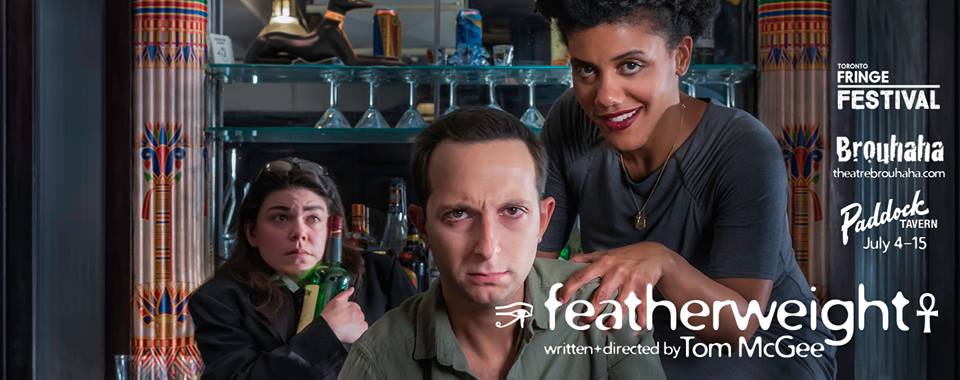
In Conversation with artist Tom McGee on Being a Dramaturge, Collaborating with Kat Sandler and Embracing His Own Style as Playwright & Director with FEATHERWEIGHT at the Fringe

Interview by Megan Robinson.

Tom McGee is a story nerd, with a resume to prove it.

Behind every hit Theatre Brouhaha show has been McGee, working as the diligent dramaturge alongside playwright Kat Sandler. He has been there helping her craft the hilarious, dark and punchy scripts we’ve all come to expect from this ambitious company.

With their newest production, Featherweight, McGee is swapping places with Sandler. While McGee steps into the roles of writer and director, Sandler is working as both producer and dramaturge.

Featherweight is a dark comedy that promises to be as relevant as your Facebook feed and to prompt your most heated post-show debates (did you see Bang Bang?), remaining faithful to the Brouhaha mandate of creating theatre for the Netflix generation.

Brouhaha’s fast-paced shows speak to what is in the zeitgeist; this is a company that understands it is competing not only with other theatre but with all digital content. And the company has a creative process that moves as quick as their dialogue. In this age of content, it’s important to McGee that each show gets put on stage quickly, while the story is still topical. Rather than two years of development, a Brouhaha show gets more like two months (the script will get a little longer). Concerning the longevity of this style of theatre, McGee believes that it’s the memory of the play and the experience of the audience that matters more than it’s potential success in the unlikely event of a remount. Plus, at the rate Sandler and McGee can whip up a script, McGee would sooner come up with a new show that can speak to what is happening in the current moment anyway.

I got to speak with Tom to get his thoughts on the struggles of dramaturgy and learning to embrace his own writing style.


On Working with Brouhaha and Kat Sandler

Tom McGee: I’ve worked in some capacity on all of Kat’s scripts, with the exception of her long-forgotten piece Dirty Girls, which she did in the Fringe. Even Mustard and Bang Bang; I was a consulting dramaturge on both of those. Often Kat will hire me on the side because Factory and Tarragon will have their own dramaturges (who are excellent) but I’ve been working with Kat so long that our short-hand is so good. She can basically call me up and be like, “You know that thing I’m always worried about? This scene.” And I’ll be like, “Oh ya, I see what you’re talking about – how about this, this, this, and this?” And she’ll be like, “Great! Thank you! I needed that.”

As a Dramaturge, If You’re Doing Your Job Right, You’re Invisible

TM: Tom Arthur Davis, one of the guys who runs Pandemic Theatre, wrote a really interesting piece around the Dora Awards about depression and dramaturgy, “Being Nominated For An Award Made Me Suicidal,” and it’s pretty intense, but he touches on something about dramaturgy that I’ve certainly struggled with. It’s the same thing that a good editor will encounter on a film or in a novel which is; the job is to make the writer’s work as good as the writer’s work can be, and there isn’t a ton of credit in that. Aside from the writer’s indulgence at the end of the novel, that everyone usually skips, where the writer will say, “Oh my god, I can’t fucking describe how much I need my editor”, and everyone goes, “I don’t know who that is but I loved your book!”

Dramaturgy can often be that way and I struggled with that for a long time.

Kat and I are very dear friends, and she’s always been very appreciative of what I’ve done, but the first Brouhaha show we did was very, very tough.

I was producing it, and I dramaturged it, and I was a ghost. At the time I was hell-bent on being an actor, and I just helped make this company, and my name was all over the show, but I felt completely invisible. And it was really hard.

For me what ended up really helping was getting an art therapist. What I’ve been working on with her, which has been tremendously helpful, is unpacking those feelings of invisibility and how to accept personal credit when there isn’t necessarily big, flashy, showy credit. It’s definitely a struggle. Every part of the arts comes with a cost and I think this is the big one for dramaturgy.

Tom Arthur Davis summed it up in his piece, something along the lines of, your job is basically to facilitate other people’s brilliance… and that’s cool, and there’s huge satisfaction in that. Like when I can make one of Kat’s pieces click, which is what we call it: the click. It’s that moment where she’ll be like, “Great, got it, thanks,” and then she hangs up and goes and punches out like a billion pages. That feels tremendously satisfying.

Photo Credit: John Gundy. Michael Musi as Jeff in FEATHERWEIGHT

On Swapping Roles With Sandler

TM: Honestly, we’re both nerds for story so this is has always been both a job and a hobby for us. The number of times that we’re like, “Okay, we’re both really stressed. Let’s just go out and get a drink and not talk about this,” and then, of course, we end up talking about it because it’s fun!

Early on the struggle that Kat was having working as my dramaturge was she’d say, “I’m always going to try to make your script more like my scripts.” And in my head, I’m thinking Thats fucking great, your scripts are great. Let’s do that! So we had a few, not necessarily growing pains, but I had to adjust to being a little more assertive about my style and what I actually liked about my script.

I had a reading of what was supposed to be the production Featherweight script, right before we were about to go into rehearsals and it was rough. A lot of the criticisms, all fair, where people were kind of being like, “Is this what you were trying to say?” and, no one had said it outright, but it was a lot of that classic, “It’s very interesting” and I was like, “Oh shit, no one likes this…”

So I’m on the subway on the way home and Megan Miles, my wife, was like, “Do you even like this play anymore”? And I was like, “No, actually… I fucking hate it.”

I was writing some short story at the same time that was just completely bonkers and I was like, “I like this short story! It’s fun. But this play is so weighed down, and I don’t know what to do… blah blah blah.” Just admitting that got me thinking that I needed to re-write it the way I would like it to be, and suddenly it all just clicked into place! What is funny is this draft of Featherweight that’s onstage now is actually closer to the very first draft I wrote. It’s come completely full circle. Even though the characters are different, and their arguments are different, and what’s going on is kind of different, it feels more like the original because that’s when I was expressing the style I actually wanted.

Because I look up to Kat and I like Kat’s style so much I took every note as gospel. You know, my style is strange, and Kat and I have a similar tone but a different style, so I had to kind of grab hold of my own style harder for this show. Which she, again, had been advocating for the whole damn time, but just not necessarily in terms I was understanding.

Photo Credit: John Gundy
L-R: Kat Letwin as Thoth, Michael Musi as Jeff, Amanda Cordner as Anubis in FEATHERWEIGHT

A Very Brouhaha Directing Process

TM: We always work our stuff on its feet and what is on stage is wildly different than what I went in with on the first day of rehearsal. We’ve cut a bunch, we’ve changed some things, we’ve tailored it to the performers, but I’ve never run that process. I’ve always dramaturged that process, Kat’s always been the leader of that. So at first, I wasn’t sure if I could do that myself. But despite how different I am as a director and a writer, ultimately the rehearsal style ended up still being a very Brouhaha process.

That Brouhaha Style 

TM: What’s been really nice is that even just from the reviews no one has been like, “Oh this is really different from a normal Brouhaha show.” Everyone’s just taking it as a Brouhaha show, which means a lot to me. It has been many, many years, and it’s very nice to put my name and style to one of these things and have audiences respond to it in a way that I would hope for. I’ve been thinking about these audiences for a long time.

Making the Job Work for You

For me, the solution was to find ways to keep working on my own style to fill in the gaps. In this case, it was writing short stories and basically just doing things that, even if they don’t really have wide reach, they fill that need for me to be creating and developing my own voice.

I love dramaturgy. I don’t think I could make it my only output, but that’s also just me. I’ve got a really restless brain and on the one hand that’s great for dramaturgy because I always like to be chewing on something, but if I’m only chewing on other people’s stuff I tend to get restless, so it works as long as I have multiple things to sink my teeth into.

Featherweight

Who:
Director – Tom McGee
Cast – Amanda Cordner as ANUBIS
Michael Musi as JEFF
with Kat Letwin as EVERYONE ELSE
and Ammit as THE DEVOURER OF HEARTS
Producers – Kat Sandler, Tom McGee

What:
Upon dying, Jeff awakes in a bar full of ancient gods that will weigh his browser history against a feather to determine if he was a good person… or face damnation. Equal parts ‘American Gods’ and ‘Twelve Angry Men,’ FEATHERWEIGHT asks: what effect does our online life have on others? Will Jeff’s browser history damn him? Would it damn you? From the minds behind BRIGHT LIGHTS (NNNNN) and SHAKEY-SHAKE AND FRIENDS (NNNNN)

Where:
THE PADDOCK TAVERN
178 Bathurst Street
Toronto
Ontario

When:
12th July – 8:00pm
13th July – 8:00pm
14th July – 8:00pm
15th July – 8:00pm

Tickets:
Featherweight is SOLD OUT online but you can always show up early at the venue and try your luck at the door!


Photo of Tom McGee by James McKay

“Being a Teenager, Accepting Our Past & Self-Producing” In Conversation with Thalia Kane and Tamara Almeida on THE ’94 CLUB

Interview by Megan Robinson.

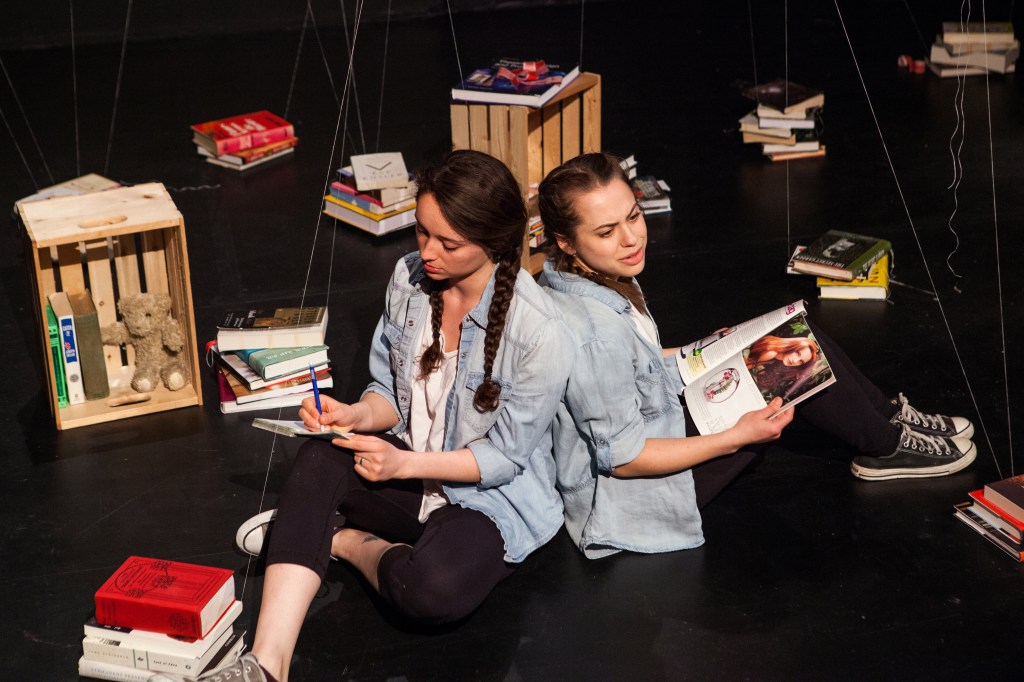
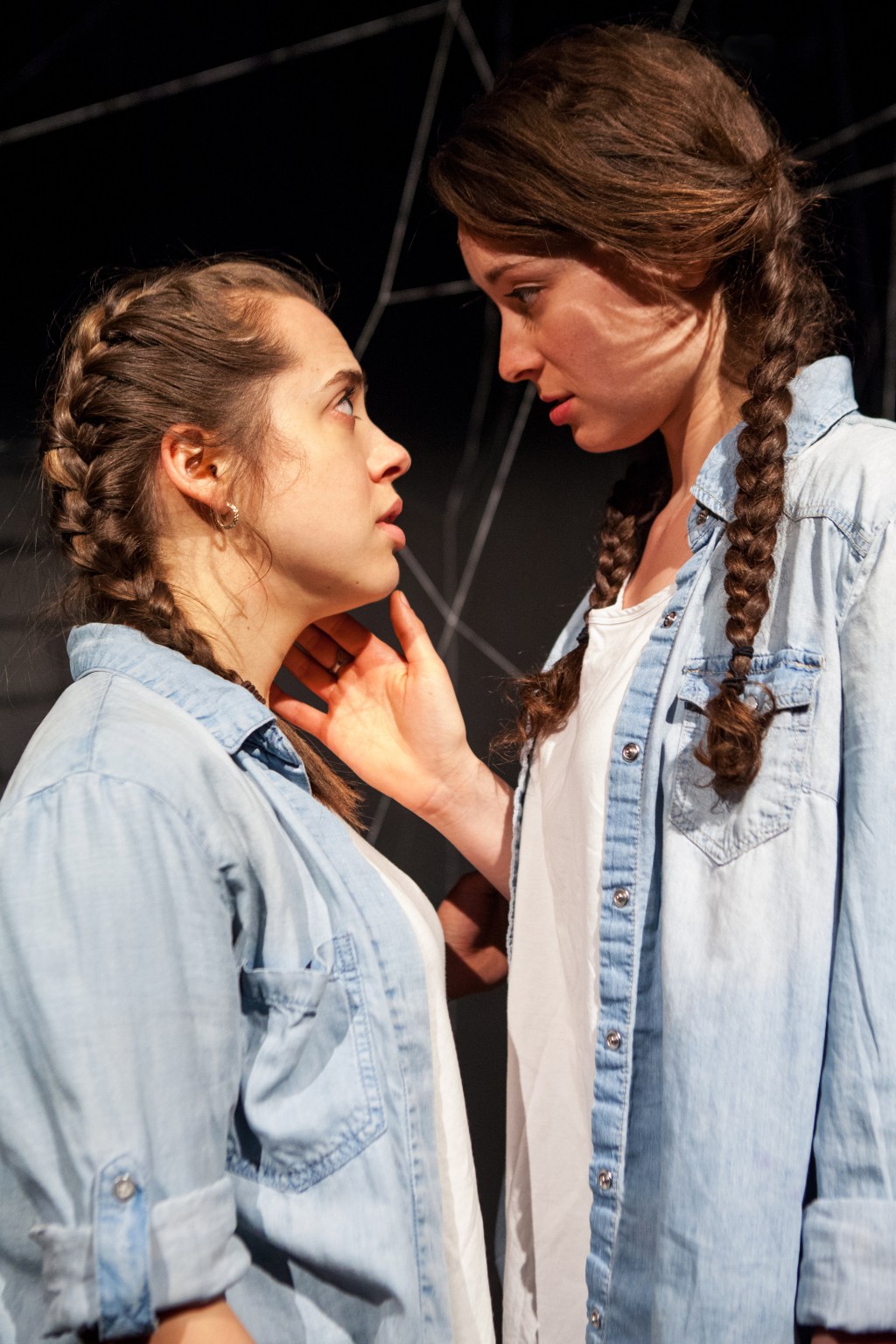
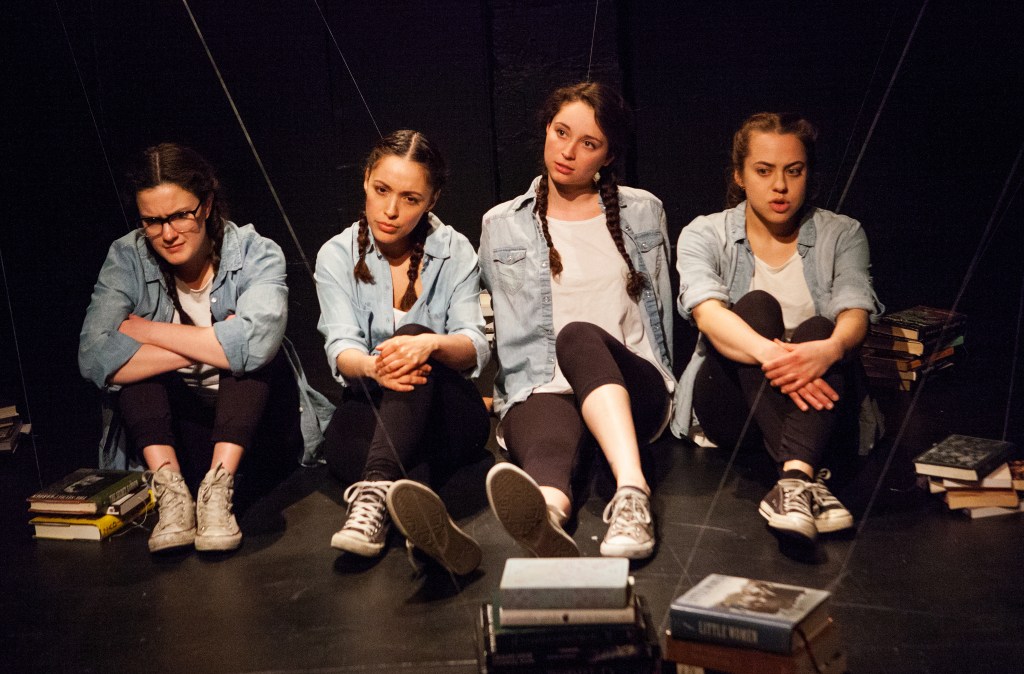
We sat down with playwright/actor Thalia Gonzalez Kane and actor Tamara Almeida to discuss their current production of The ’94 Club, playing now until May 12th at the Tarragon Extraspace. Inspired by real events, this exciting new play takes a look into the lives of four teenage girls, as they face the realities of growing up in a small-town and struggle to come to terms with their sexuality.

The ’94 Club may focus on female stories (it passes the Bechdel test) and have an all-female cast and crew, but at the end of the day, the themes are inherently universal.

“It’s about friendship and love and heart and compassion,” Kane explains.

“And self-discovery,” Almeida adds.

Not only is this Kane’s playwriting debut, it’s also what she considers her coming out play, which gives us even more to love about this self-reflective story. Doing our best to avoid any spoilers, we discuss what it was like to be teenagers, how to accept our past, and the triumphs of self-producing.

Megan Robinson: In your press release, you talk about self-reflection and telling stories from our past to make for a better future. First off, can you tell me a challenge that you may have faced in portraying teenagers and getting into that mindset again?

Tamara Almeida: It sounds silly but I love Lana Del Ray, and there’s this one line that she says about innocence lost. I keep going back to that. That I don’t know better yet. The part of me that knows how to protect myself now would never do some of these things. So a big part of playing a teen is going back to a time when you live on impulse and have fewer boundaries because you don’t know better.

Thalia Gonzalez Kane: We know better now, but it’s hard going back to a time when you threw caution to the wind and, also, to not judge yourself for that. It’s a struggle that came with the writing as well; some scenes were too self-aware. The fact is, it’s very easy to blame young people for things they do wrong or to accuse them of being a slut or to accuse them of being promiscuous but you can’t because they are too young to understand what that means and what that is. They need to learn over time. I think getting over the judgment of our characters was a challenge.

TA: I think it’s interesting in the same way that when I’m 50, I’m going to look back at something I did in my twenties and be like, I would never do that thing now, you know?

MR: Or even last week… I know better.

TA: Yeah! Like I know now not to drink that much tequila. But you don’t know that before you know that. I think that is cool to explore – before we knew, what did we do? That’s what I keep trying to go back to.

TGK: And just avoiding playing too young.

TA: And they’re smarter than we give them credit for. At fifteen-years-old, you’re already cunning and sophisticated and manipulative.

Photo Credit: Angela Besharah

MR: Can we talk about the differences between relationships as teenagers versus as adults, and what you wanted to explore about these relationships in your writing?

TGK: The relationship between the girls in the show is so sweet and beautiful. I found in writing that female friendship at that age is so pure and I think we lose a lot of that as we grow older. It starts to become about what do you do and what do I do and how do we help each other? And you do have those friends, and I have them, where you love each other, and that’s all you have, and you don’t need anything else. But, as teens, the love is so strong. You would do anything for one of your best friends, and you don’t question it. I mean part of the reason the club really gets going is because they don’t want to let anyone down and not be part of something that one of the girls has suggested. The scene where the club gets created is so sweet. “We are going to do something new together!” And they’re going to do it together. And that’s the point.

TA: I think the love is so pure at that age and that it really just comes from impulses a bit more. Whereas my friendships today are because I really want them, you know they mean something. We are a little more cautious about who we keep in our lives.

TGK: You have to make time now. In high school, you have lunch time and classes, and there are so fewer responsibilities.

TA: I wonder if we didn’t have to pay bills and have these responsibilities if it would be the same. I don’t know.

Photo Credit: Angela Besharah

MR: You’re self-producing the show. Can you tell me why you decided to do it this way?

TGK: A lot of people suggested SummerWorks and Fringe, and I didn’t love the idea of that much of a loss of control – not being able to choose the venue or choose my time slot. I don’t know how to say it… I didn’t want to just be a part of something. It felt too important to me. Also, doing indie theatre, I’ve worked on so many shows for free and I did it gladly but I think that it is becoming a problem because it’s just so expected. So with this show, one of the things I really wanted to make sure of was that every artist was paid a weekly salary. I thought in order to do that, I could self-produce and control it.

I’ve been fortunate to have a lot of experiences working with other theatres and learning from brilliant people so I was able to slowly figure out what works and what doesn’t and how to hire people and how to set up scheduling and stuff. It felt important as my first one to do it properly and suffer perhaps at times financially or mentally. But it feels very worth it.

MR: You said you’ve been lucky enough to do this because of all your experiences. Could you give three pieces of advice to someone out there who wants to put on a show that doesn’t have the same resources or experiences you’ve had?

TGK:
1. Ask.
People are so much more willing to talk than you realize. I’ve been able to foster relationships and valued friendships with people who I’ve just asked to have a coffee with and to pick their brain. Or just to ask them about themselves and their lives. From that I’ve been able to get so much experience. And with people reaching out to help. The amount of people who have offered to help me with this has been a bit surreal.

2. Commit yourself to fully doing it.
It’s terrifying but I wouldn’t have it any other way, because if this falls flat on its face and it’s a complete disaster, at least I’ll have put everything into it and I can feel really good and really proud of that.

3. Appreciate how lucky you are to do it.
We are so lucky to be in a city that supports indie theatre, and supports live theatre, and supports artists and young artists. It’s not out of the ordinary for someone to write a play and put it on.

MR: Tamara, when did you first read the script?

TA: Another cast member had conflicts and Thalia and I had met in a class so she sent it my way after it was complete and once the cast was set. I read it that night and messaged her back at 4 AM and was like “YES! I love it”. At first, it made me really uncomfortable.

MR: Can you unpack that for me?

TA: Yeah, high school is an interesting time. Some people love looking back… I didn’t. This just kind of struck a chord with the parts that I hadn’t uncovered again since leaving, the parts that are a little bit darker. Like who I was and the role I played in some of my friendships at that time, that maybe I haven’t wanted to be fully honest with even myself about. And it was interesting because the first time I read the script I thought it was a bit darker than what I was expecting. Then I read it again and I had a lot of compassion.

The biggest thing for me once I read it was asking: can I put myself aside and my ego aside and tell the truth about that girl? Because that girl exists.

MR: And that was hard because the girl reminded you of yourself?

TA: Yeah. I think… yeah. I mean all the girls do. The universality of Thalia’s writing is that all the girls are relatable. The reading was also kind of healing for me. To be able to go back and think about it and realize I’m not that person at all anymore. So let’s just open it up and really tell the truth and really go there. Let’s make sure these people feel uncomfortable.

Photo Credit: Angela Besharah

MR: Thalia, in writing it and now performing it, are you hoping for the audience to feel uncomfortable?

TGK: Yeah. I think it will cause people to reflect on themselves. One of my main goals is that I hope it will make people take a moment to look at how we treat others. And reconsider the next time they see a sixteen-year-old girl with a short skirt on and call her a slut, or say she’s asking for it. Because there is so much more to these people. In the play there are things you learn about the girls, and there are reasons that they act in certain ways and these are human reasons that we’ve all faced. There’s a big love story and that’s a universal love story. People can identify with those feelings of being so in love with someone who you have no idea what else to do about it except for proclaiming it.

But yes, people are going to feel uncomfortable when they see the show but it’s also healing in certain ways.

MR: And what is it exactly that will make them so uncomfortable?

TA: I think just looking at sexuality at such a young age. I think we don’t talk about it, other than sexualizing young women, we don’t talk about what that’s doing to them. The discovery of sexuality…

TGK: … and how misguided that is. No one tells them.

MR: Except your friends?

TA: Yeah, and then you rely on your experienced friend because you’re like, please tell me why that felt so good, what was that? And then, what happens if you have the wrong person leading the train, and that can derail…

TGK: In the show, each girl has their own thing that they have to confront. And it’s hard and what’s hard is that it’s the reality of a lot of people’s circumstances. There isn’t really an answer in the end, it’s just presenting the realities of our world that we don’t really look at.

TA: With this situation, you have some young girls who found themselves in trouble, which maybe could have been avoided if they were guided a little bit differently. And that’s accountability. Maybe we’re all complicit in what’s happening.

TGK: If the adults in their lives weren’t too scared to talk to them about what the realities of growing up are at that time, or when they’re curious, to talk to them and not just to sweep it under the rug.

THE ’94 CLUB

Who:
Written by: Thalia Gonzalez Kane
Cast: Tamara Almeida, Jeanie Calleja, Shaina Silver-Baird, Thalia Kane, Lily Scriven
Directed by: Monica Dottor

What:
After starting a dangerous game that rapidly spirals out of control, a group of teenage girls quickly begin to learn about the struggles that come with womanhood as they strive to come to terms with their own sexuality.

Based on true events, THE ’94 CLUB explores gender politics, sexuality, coming of age, queerness and the harsh realities of growing up in a small town. As our society grows into one of openness and understanding, it is important we hear these stories of oppression and pain. It is important we acknowledge our past and work to amend the future. Without self-reflection, we will not be able to better ourselves and our world.

“It’s just a game. I’ll tell you the rules and then we can play…”

When:
May 1st-May 12th
Tue – Sat 8pm, Sun 2:30pm

Where:
Tarragon Theatre Extraspace, 30 Bridgman Ave

Tickets:
$15 Previews, $22 Artsworker/Student, $30 Regular
tarragontheatre.com

In Conversation with Jay Turvey & Jeff Irving on “existential thriller” GRIMLY HANDSOME at The Assembly Theatre

Interview by Megan Robinson

“You’re a mouse in my hands. You’re safe.” – Grimly Handsome (Director Jay Turvey’s favourite quote)

The excitement that director Jay Turvey and actor Jeff Irving share for their upcoming production of Grimly Handsome, starting November 4th at The Assembly Theatre, is infectious. “You’re listening to people on the cusp of inspiration right now,” Irving says with a laugh.

Grimly Handsome is the first production of their new theatre company, Theatre Animal, as well as the play’s Canadian premiere. At one point in our phone interview, Irving bounces between some ideas for their company’s creative future, telling me, “our limit is our imagination.” Creating their own work is something they’ve been talking about for years.

The director and the cast of Grimly are all ensemble members at the Shaw Festival and they’ve been rehearsing the production in Niagara-on-the-Lake on and off for a couple of months now. With load-in happening the day after the interview, Turvey and Irving are looking forward to being in the new space that Unit 102 and Leroy Theatre have created near Queen and Jameson. “They’ve been great with us,” Turvey tells me. “I’m so glad they were able to create this space for small theatre to exist and continue.” With the turnover of small theatres in Toronto shutting down, this new space is a win.

Irving describes Grimly as an “existential thriller,” and then Turvey jumps in, elaborating, “There’s a murder. There’s a serial killer on the loose who is killing young people at Christmastime.” It is a play in three parts that is funny as well as scary. They reference another actor in the show, Ben Sanders, who says that it is unlike anything he’s seen before in Toronto.

Surreal and avant-garde, the story unfolds in a way that invites the audience to lean in a little closer to make sense of what is going on. In doing so, Irving says, it forces them to “practice listening and being present in the space.” The ending leaves itself open to interpretation but is not vague for the sake of being vague, instead the play is open-ended with the hope that afterward, the audience will walk away wanting to discuss their take on it.

Julia Jarcho, the playwright, is greatly influenced by Samuel Beckett and David Lynch, and Turvey has worked with designer Christine Urquhart to create a world reflective of this. In one example, Turvey explains how they’ve worked to create a forest that is both inviting and dangerous by using lots of red, greens and blacks, playing with Jarcho’s idea of Grimm’s fairytales. The result of the design is a dream world that is both urban and other.

It is a show that deals with themes of psychological unrest and plays into the universal and very human need to find our place in the grand scope of the world. This last part is what Irving says all young people think about a lot, or at least, he does.

Grimly Handsome, is being produced at the perfect time of year. “It’s basically Halloween and Christmas. People started celebrating Christmas yesterday.” Irving says with a laugh.

Why should you see the show? Irving pulls the final punch, “It’s going to be fucking fantastic.”

Grimly Handsome

Who:
Written by: Julia Jarcho
Directed by: Jay Turvey
Cast: Jeff Irving, Ben Sanders, Julia Course
Original Music: Paul Sportelli and John-Luke Addison
Lighting: Mikael Kangas
Costume and Set Design: Christine Urquhart

What:
The Obie-award winning play is a triptych of urban stories: two unusual Christmas tree salesmen peddle their wares on the street, two cops follow the trail of a serial killer and in a vacant lot people transform in ways they never thought possible. GRIMLY HANDSOME is a haunting, comic thriller that exposes the underbelly of the city and the animal in us all.

Where:
The Assembly Theatre, 1479 Queen St West

When:
November 3rd-November 19th
Thu – Sat 8pm, Sat 2pm, Sun 4pm

Tickets:
brownpapertickets.com