Skip to content

Posts tagged ‘theatre’

Artist Profile: Vivien Endicott-Douglas, Actress

Interview by Brittany Kay

This Lady Boss had a kick-ass 2016, which appears to be shaping into an even more exciting 2017. We couldn’t be luckier to sit down and chat with actress Vivien Endicott-Douglas, who’s performing in the current remount of Infinity at TarragonWe spoke about not going to theatre school, how she has grown as an artist at Tarragon over the years, and the love that comes with Infinity.

Brittany Kay: What made you choose performing as a career?

Vivien Endicott-Douglas: I’ve always been a performer, ever since I could talk. I loved to perform for my family. My family is a huge fan of the original Winnie the Pooh stories by A.A. Milne. I had listened to these stories on tape a bunch. There was one point where I was 4 or 5 years old when my dad turned on the tape and I had memorized it entirely. I just recited it, instead of listening to the tape. I asked my parents if I could start acting when I was 8 and they sent me to these drama classes called Dragon Trails with a woman named Jill Frappier, who’s this incredible actress and had this drama school for kids. I was in love with her. I was in awe of her. She was always doing voices and had so much energy and we created plays with her. She said to my parents, “Have you ever considered Vivian doing this professionally?” I really wanted to, so when I was 11, I got an agent and started working professionally. That was mostly in TV and film so I was able to learn so much. I got a lead in a TV series when I was a year into working professionally and I was in almost every scene, so I really absorbed a lot and got to work with some incredible actors.

Richard Rose gave me my first professional theatre gig right out of high school at 18. I was taking a year off and trying to figure out whether I wanted to go to theatre school or not. I was working and there were all of these other actors who were like, “If you’re already working, maybe theatre school isn’t right for you and you can find other people to train with on your own.” That was a big debate for me for a while of whether I should go or not go. Not going kind of won out in the end, just based on friends and people’s advice to me. The biggest challenge for me was the fact that I really wanted to find a community of artists and actors and theatre makers.

BK: That can be hard if you’re not going to theatre school.

VE-D: Exactly. And I was always kind of like the kid amongst the other artists. I was so lucky to be working with these older, super experienced actors but I didn’t feel like they were people who I could necessarily create new projects with. Around that time it was important for me to find people my own age who wanted to experiment and create. I met Rosamund Small during my time at UofT and our friendship and working relationship blossomed from there.

BK: Well that’s a great connection! Without the training of theatre school, what is your process or preparation for auditions and rehearsals?

VE-D: I started taking voice classes with a woman named Rae Ellen Bodie about 4 years ago out of Pro Actors Lab. She’s an incredible actor, director and coach. I took this class because I thought I should have something on my resume that says that I’ve had some kind of training. I walked in on my first day and Rae was like, “Where have you trained?” and I was like, “Mhmm… I haven’t.” Everyone started making these sounds and moving freely and I just tried to do that too with absolutely no idea what I was doing. It turned out to be about breath and body work to connect with how you’re feeling right now in this present moment and so I have incorporated that into my daily practice. It helps with auditions, a lot. Auditioning is not easy for me. I don’t think it’s easy for anybody.

BK: What are you talking about? It’s the best process ever…

VE-D: (laughter) I certainly enjoy auditioning for theatre more than I do for TV/Film just because there feels like there is more time and you can really talk about it and get into it. I’ve picked up other things along the way. There’s a book called the Power of the Actor by a woman named Ivana Chubbuck. It’s these twelve steps to approaching a character and script. What really spoke to me was this idea of what you need from the other person and what you want to make them do. That has really helped my work. I have played a lot of victims or people who don’t necessarily have a lot of agency, just because of the nature of the roles I’ve been given in my career so far. This book really empowers you. Instead of just wanting something from them, it forces you to look at what are you doing to that person to make that happen.

I think I have an emotional intuitiveness and I’m a very empathetic person. I think I bring that to my work. For the past few years it’s been really important to be more powerful. Not just in the work but in the room. Really have my voice heard by directors and other actors. Because I started as kid, I’ve always felt like a kid.

paul-braunstein-amy-rutherford-vivien-endicott-dougas-in-infinity-photo-by-john-lauener

Paul Braunstein, Amy Rutherford, Vivien Endicott-Douglas in Infinity. Photo Credit: John Lauener

BK: Tell me a little bit about the show?

VE-D: Infinity is about a couple, who are two brilliant people. One is a theoretical physicist and the other is a musician. I play a young woman, named Sarah Jean who’s a mathematician and I go between being in my mid twenties to playing an eight year old. It’s about her figuring out her emotional life because she doesn’t actually live in that at all. She’s a very intellectual academic, a very smart, driven person, who doesn’t often take an emotional inventory of where she’s at or of her past relationships. Without giving away too much, there’s kind of an incident that makes her have to reflect on it. It’s about how we come to understand love in our lives, with parents and with lovers.

It’s also filled with beautiful live music. There’s a violinist, named Andréa Tyniec that plays throughout the show. It’s amazing because live music has such a resonance as you’re working. It’s so visceral. It’s really intertwined with what we’re doing and how we’re feeling. She has an incredible ear so she can be dynamic in the way that she plays. She changes with us from night to night.

BK: There’s definitely something about strings that brings you further into the experience as an audience member. It just hits you somewhere deeper.

VE-D: Well the vibrations hit you. I find it so moving when there’s live music.

BK: Were there excitements or fears or challenges coming into a remount, where Haley McGee played the part before you?

VE-D: Well yeah, those are certainly big shoes to fill. Because I didn’t see the original production, I didn’t have any preconceived notions about the character. I just had a couple of monologues and read the script and went into the audition bringing what I had to it. We worked quite intensively in the audition. I think we made a lot of fresh discoveries about the character and about how I relate to Sarah Jean. Our director Ross Manson was really willing and very interested in me finding the character myself, which was awesome because I felt like he gave me the kind of support to just go. There are certain things about the character that are true for anyone playing this part but within that, I was able to find what my own relationship to her was. We only had 10 days of rehearsal…

BK: Whoa! Why so short?

VE-D: Well because it was a remount and originally Haley was going to do it. She wasn’t available and so they had only budgeted for 10 days.

BK: Wow…

VE-D: Yeah… It was an intensive rehearsal process. I found out that I got the part while I was doing Killer Joe, so I had a lot of time leading up to prepare. The first day we just got on our feet. I came into a room of people who were already so confident in the work, which was actually really neat. Amy and Paul, the other actors in the play, have such a great dynamic in their relationship. They were very encouraging and supportive of the work that I was doing. Ross worked with me and really challenged me. He pushed me, which was important because we didn’t have a lot of time so I had to be on my toes. I felt like I came into a room that was filled with a lot of love because I think people really love the play. From the whole team, everybody loves the play, and you really feel this connection… they all feel connected to it.

BK: Why is this play so important and important to bring back?

VE-D: It’s so relatable in the way that it shows a relationship between two people who are deeply in love and who can’t quite get on the same page or can’t quite give each other what they need. My character, Sarah Jean, is so relatable because she’s this young woman who’s trying to figure out her relationship to her parents and what their legacy is and her relationship to how her childhood has made her into who she is. It’s her opportunity to reflect on how she’s gotten to where she is and that she can actually change… that the future is not written and she kind of comes to this realization that she can change for the better.

andrea-tyniec-vivien-endicott-douglas-in-infinity-photo-by-john-lauener

BK: This is your fourth show with Tarragon. What do you love about being there and what keeps you coming back?

VE-D: I feel very grateful to have the opportunity to work there. I have learned so much working there because they produce all of these new plays. I actually have also been a part of numerous workshops that have taken place there. Being a part of those with other actors and directors has allowed me to learn so much about theatre and about being an actor and the process to creating a show. I have been able to learn how other actors approach the work. People will really question playwrights and then the play changes and grows and that’s a huge part of working at Tarragon – having these conversations about stories. You’re often not getting a static play that’s already written. So much of the time it’s about dramaturgy. I love that part of it.

BK: What do you want audiences walking away with from Infinity?

VE-D: I hope that people walk away feeling hopeful. I hope that people walk away and maybe call someone they love and tell them that they’re grateful to have them in their lives or if they come with family or friends and can walk away and talk about their connection to each other. I hope that it opens people up.

Rapid Fire Question Round

Favourite Movie: Back to the Future

Favourite Play/Musical: The Sound of Music

Favourite Book: Fall On Your Knees, closely followed by The Sun Also Rises

Favourite Food: Salmon

Best place in Toronto: Either of grandparents’ houses or the ravine close to my parent’s house.

Advice you live by: Trust your instincts.

Infinity

Tarragon_Infinity

Who:
Written by Hannah Moscovitch
Original score composed by Njo Kong Kie
Directed by Ross Manson
Co-produced by Volcano Theatre
Featuring Paul Braunstein as Elliot Green, Vivien Endicott-Douglas as Sarah Jean Green, Amy Rutherford as Carmen Green and Andréa Tyniec as violinist

What:
How does a new Theory of Time change everything we know about ourselves? Three brilliant minds – a musician, a mathematician, and a theoretical physicist – smash together like colliding particles in an accelerator. Together they learn that love and time are connected in ways they couldn’t have imagined. Infinity is a shocking, funny and revelatory play about love, sex, & math by Tarragon Playwright-in-Residence Hannah Moscovitch developed with Volcano Theatre. Back by popular demand from Tarragon’s 2014/15 season.

Where:
Tarragon Theatre

When:
January 4 – 29, 2017

Tickets:
tarragontheatre.com


In the Greenroom’s Next Stage Theatre Festival Favourites

We couldn’t think of a better way to start 2017 on a high note than with a jam-packed festival of new theatre, dance, music, storytelling and improv; watching artists take their work to the ‘next stage’; and, of course, some good beer tent times re-connecting to old friends and meeting new ones!

We wanted to share some of In the Greenroom’s Festival Favourites, with the hopes of inspiring you as you begin your final NSTF scheduling. We’ve chosen something different, something new, something bloody and something true… maybe.

Be sure to share your favourite festival moments!

Connect with us on:
twitter: @intheGreenRoom_
facebook: @ InTheGreenroom.ca
instagram: @inthegreenroom
#NSTFestivalFaves


Something Different: MANICPIXIEDREAMGIRLS

manic-2

Go to MANICPIXIEDREAMGIRLS if you want: something different… completely different!

It’s hard to find just one word to describe MANICPIXIEDREAMGIRLS. Wild, weird and wonderful, this show is bold, hilarious, absurd, athletic and completely fun! There’s nostalgia. There’s glitter. There’s incredible “wow-did-they-just-do-that” dancing, blow-up props, Garden State references, singalongs, and bags of milk! Yup, it’s a total trip and the more we think back on everything we experienced during MANICPIXIEDREAMGIRLS, the more we smile.

**We also recommend reading the program note on the work by choreographer Alyssa Martin either before or after for an even deeper appreciation of the piece.

What:
Join dance-theatre renegades Rock Bottom Movement for a hallucinatory romp through millennial nostalgia and classic indie film. Choreographer Alyssa Martin conjures a gleefully glitter-soaked pop-culture mashup featuring 90’s singer-songwriter karaoke and athletic dance breaks.

Where:
Factory Theatre Mainspace (125 Bathurst St.)

When:
January 11 at 06:45 PM
January 12 at 07:30 PM
January 14 at 09:00 PM
January 15 at 05:15 PM

Tickets:
fringetoronto.com


Something New: Songbuster, an improvised musical

songbuster-1

Go to Songbuster if you want: something new… every time!

Songbuster, an improvised musical is perfect if you’re looking for heart-wrenchingly hilarious ballads about _____ (You fill in the blank!) At this fully improvised musical, audience members get to choose the subject matter of the play! On opening we witnessed an entire saga about comicon that we won’t soon forget. We especially loved the improvised flamenco duet… Enough said!

What:
Fast paced, ridiculous and always entertaining, the cast creates an hour-long musical from suggestions provided by the audience. This dynamite cast has been seen in mainstage musicals and comedy clubs around the country and knows how to make you laugh one moment and break out your jazz hands the next.

Where:
Factory Theatre Studio (125 Bathurst St.)

When:
January 11 at 07:00 PM
January 12 at 05:30 PM
January 14 at 06:00 PM
January 15 at 01:45 PM

Tickets:
fringetoronto.com


Something Bloody: Blood Ties

blood

Go to Blood Ties if you want: something bloody…fun & musical!

Witty, charming and funny dialogue, plus beautiful songwriting with clear and engaging narrative sung throughout, Blood Ties is a bloody fun musical. Hats off to their thoughtful and clever costume design and a special shout-out to performer Jeremy Lapalme!

What:
Sheila’s uncle shoots himself in his bathroom on the eve of her wedding, and when her three best friends arrive in town to celebrate they are instead faced with the task of cleaning up the considerable mess left behind. This flagship musical show by Dora-nominated team Anika Johnson and Barbara Johnston has previously been a hit at SummerWorks, the Edinburgh Fringe, and on BBC America’s ‘Orphan Black.’ Based on true events.

Where:
Factory Theatre Mainspace (125 Bathurst St.)

When:
January 12 at 05:15 PM buy tickets
January 13 at 10:00 PM buy tickets
January 14 at 02:00 PM buy tickets
January 15 at 07:00 PM buy tickets

Tickets:
fringetoronto.com


Something True (or False… either way there’s Spam!): Two Truths And A Lie

truths

Go to Two Truths and a Lie if you want: something true… or false! Regardless, someone is going home with a can of SPAM after this truly feel-good, laugh-out-loud, intimate storytelling show, so how could you miss it?

Though filled with lies and liars, Two Truths and a Lie promises to be filled with hilarious laugh-out-loud moments for a truly feel-good time in a cozy venue. These three talented storytellers transport us to horrifying yet still somehow endearing moments in their lives, and whether you can figure out who the ultimate liar is or not, a can of Spam is up for grabs, so… who wouldn’t want that?!

What:
Each night of the festival, Graham Isador (Situational Anarchy), Helder Brum (Born with a Tale), and Rhiannon Archer (Life Records) will regale audiences with three unbelievable stories…one of which is completely made up. After the critical successes of their honest and funny solo shows, these veterans of Toronto’s storytelling scene are coming together to make you laugh while lying to your face.

Where:
Factory Theatre Antechamber (125 Bathurst St.)

When:
January 11 at 05:55 PM
January 12 at 08:40 PM
January 13 at 06:40 PM
January 14 at 05:40 PM
January 15 at 04:25 PM

Tickets:
fringetoronto.com


We hope this inspires you to kick off your weekend NSTFestival schedule planning and be sure to see something you wouldn’t normally! This list is just the beginning.

There’s 10 shows that have each been selected to offer something different. Be bold. See something on a whim! That’s what the festival spirit is all about. You never know what you might be surprised by.

Happy Closing, NSTF! We’ll cheers you in the beer tent!

cropped-untitled-1-12.jpg


“It’s the scariest performance I do. But it’s also why I love this job.” – A Chat with Kristian Bruun on SONGBUSTER – an improvised musical

Interview by Shaina Silver-Baird

I had the joy of chatting with Kristian Bruun, one of the artists performing and creating nightly Songbuster – an improvised musical on now at the Next Stage Theatre Festival. He spoke about the need to put on more musical improv in the city, how they prepare for a performance that is always changing, and how this is both the scariest kind of performance and why he loves his job. 

Shaina Silver-Baird: How did Songbuster start? What was the inspiration for creating a fully improvised musical?

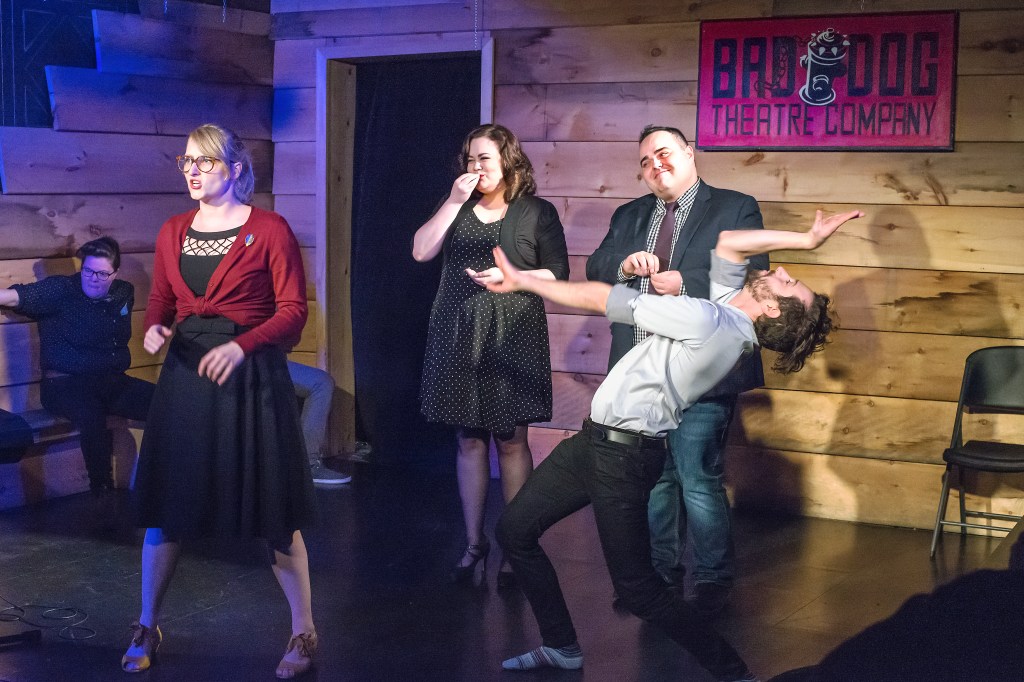
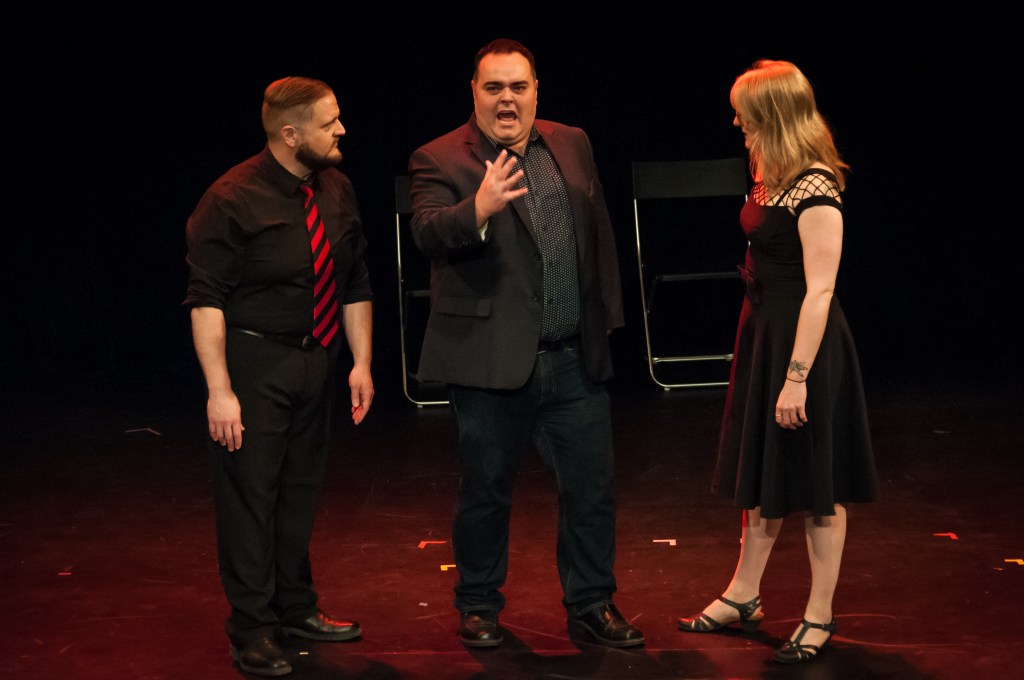
Kristian Bruun: It started with Stephanie Malek and Josh Murray in the summer of 2015. They both wanted to see more musical improv represented in the city and went out to all the people they thought would not only bring top talent, but also be fun to perform with. We all love musicals, and the excitement that comes from improvising one is unlike anything else. Originally, we were just doing a couple shows for Blockbuster Week at Bad Dog and Big City Improv Festival and it just grew from there.

songbuster

SSB: How did you get involved?

KB: Stephanie approached me and said she was putting a group together. How could I say no? I’ve worked with some of the cast before (like Nug in Evil Dead! The Musical) and it seemed like a fun project.

SSB: Is it scary going out on stage not knowing what’s going to happen?!

KB: Always. It’s the scariest performance I do. But it’s also why I love this job.

songbusterfringe-07472

SSB: How do you prepare/rehearse for an improvised musical?

KB: We run songs, scenes, mini versions of shows. We work on different varieties of songs and song structures. We revisit classic story arcs found in musicals, and character archetypes, and always go back to the basic foundations of storytelling. It always helps having an expert eye to guide us and this year we’ve been working a lot with Carly Heffernan, who is brilliant and always sharp with her notes.

songbusterfringe-07533

SSB: You did this show before at the Fringe Festival. Will this version be any different?

KB: Not really. Of course, we hope we’ll be even tighter as a group. We love these chances to do a run of shows because we always learn so much from night to night. It’s improv, so every show will be wildly different and wonderfully weird.

SSB: Do you have any favourite moments from the last run?

KB: We had a musical take place on the moon that got very randy. Everybody was making out and grinding on each other. The audience really got their money’s worth that night. Yeah. That was fun.

songbusterfringe-07550

SSB: Many people know you from your TV/film work. How is this style of performance different? What are the challenges and are the two related for you?

KB: This is a type of performance where I’m left to my own creativity and that of my cast mates. No script, not much of a plan… It’s so open and nerve-wracking and fantastic! It’s a complete rush being on stage with no script (also a common theme in my nightmares). I sometimes get to improv on set, but here the world is our oyster and we shuck the hell out of it.

songbusterfringe-07418

Rapid Fire Question Round:

Favourite play you saw this year: Obsidian Theatre’s stunning production of “Master Harold”… and the Boys.

Favourite movie: Swiss Army Man.

What’s on repeat on your iTunes: The Hamilton Soundtrack.

Favourite food: Roti.

Most embarrassing moment (or the most embarrassing one you’ll tell us): Anytime someone recognizes me I turn beet red, get all shy and start flop sweating. I walk away embarrassed every time. Thank god it doesn’t happen too often…

Describe Songbuster in 5 words: Musical appears before your eyes.

Songbuster – an improvised musical

songbuster-1

Photo by Tanja Tiziana

Who:
Presented by Songbuster Inc.
Created by the Ensemble – every night!
Featuring Tricia Black, Kristian Bruun, Ashley Comeau, Alexandra Hurley, Stephanie Malek, Josh Murray, Nug Nahrgang, Nicky Nasrallah and Connor Thompson
Musical Director Tom King

What:
Fast paced, ridiculous and always entertaining, the cast creates an hour long musical from suggestions provided by the audience. This dynamite cast has been seen in mainstage musicals and comedy clubs around the country and knows how to make you laugh one moment and break out your jazz hands the next.

Where:
Factory Theatre Studio (125 Bathurst St.)

When:
January 06 at 09:00 PM
January 07 at 04:00 PM
January 08 at 08:00 PM
January 09 at 09:00 PM
January 11 at 07:00 PM
January 12 at 05:30 PM
January 14 at 06:00 PM
January 15 at 01:45 PM

Tickets:
fringetoronto.com


“To Clap or To Boo… What would The Claque do?” – In Conversation with Mark Brownell & Victor Pokinko on CLIQUE CLAQUE

Interview by Brittany Kay

I got to sit down with playwright Mark Brownell and actor Victor Pokinko of Clique Claque, premiering at The Next Stage Festival. We talked about who and what the “Claque” are, the potential timelessness of period pieces, and the importance of the festival model as a way of producing theatre.

Brittany Kay: Tell me a little bit about the show? 

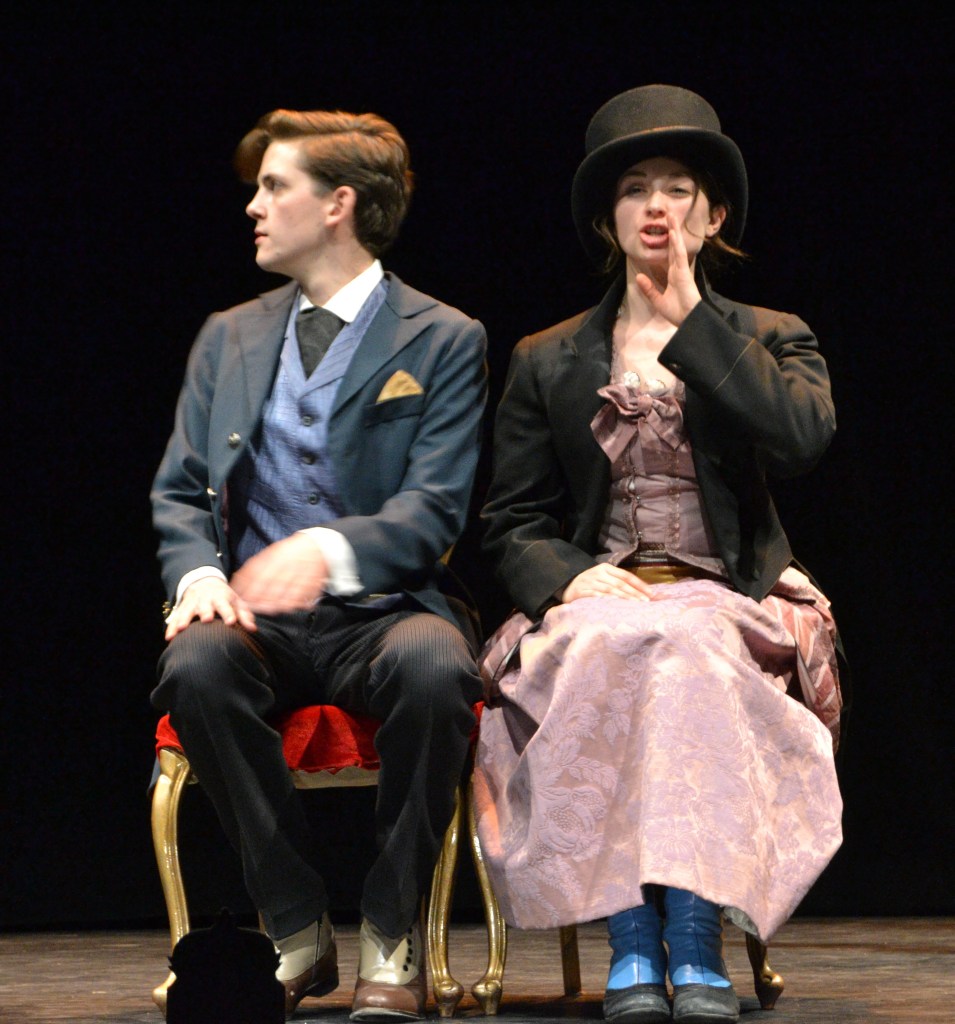
Mark Brownell: We’ve been working on the show for about two years. Last year we did Three Men in a Boat and our time machine kind of got stuck in the late 1800s in the 19th Century. Clique Claque is set in Paris and the topic is one that I have wanted to do for a long time. It’s focusing on a thing called the Paris Claque. They were essentially professional clappers who make money promoting or booing various shows. At the time, theatre was never more popular but they had a problem promoting the new shows, same as they do today. So they decided to create and hire the Claque. It started in Paris around the 1830s and kept growing and growing until the point where you couldn’t have a new opening or a new play or opera or musical piece without the Claque. They became a part of the theatre. Then, after a certain point, people started to question why that was and why these people were getting paid to do to fake an audience, essentially. Clappers would say that they are definitely part of the business. Everybody else started to think that wasn’t the case. So it’s kind of a turning point in the Claque’s existence, where people started to turn their backs on the Claque.

Victor Pokinko: The Claque also served this nefarious purpose. Actors would be able to hire the Claque to boost their own performances and convince the greater public that they were doing something better than they were. At the same time, they would be able to sabotage their competition by sending them to their counterparts and either boo, or stay completely silent during comedies, or do something to simply sabotage them and make the public think they must not be that good if no one’s clapping.

victor-thalia

Victor Pokinko & Thalia Kane

MB: They had several different types of applause, cheering and booing where they would talk in between the acts about the show, so it became a real art. They really perfected it. Claques have been around a lot longer; it goes back to ancient Greeks. It was at its height in the 1800s and then it started to die off as the theatre started to die off with the introduction of film and stuff like that. It still kind of existed but sort of mutated into things like laugh tracks in television.

BK: Amazing, I never knew about that.

VP: We briefly mention Wagner in the play. Wagner is responsible for the house lights going down in theatre, before that it was just lit everywhere. And that benefited the Claque because the leader of the Claque would stand behind a pillar, where they would actually give hand signals. They were these strange, elaborate, almost like an umpire in baseball, for what the Claquers should do. We made these signals for ourselves to applaud or laugh etc. So one of the reasons Wagner wanted to bring the house lights down was to foil the Claque so they couldn’t see these signals and they would have to react genuinely.

MB: That’s sort of the basis around when we meet the characters and what they are doing. It’s set up like a melodrama simply because in melodrama at the time, your fortunes would gain with virtuous activity or they would diminish with rotten activity. Most of the characters in this play are rotten and wicked and they are punished for it. Some aren’t. It’s definitely good versus evil. It’s quite a dastardly group of characters and the opposite of Three Men in a Boat.

BK: Why are you inspired by the 19th Century? Where did this inspiration first come from to write about this specific movement in theatre history? 

MB: We’ve had a lot of success in the past with period pieces. It’s liberating. To tell you a secret, it never goes out of date because with so many contemporary plays, you write them or you see them and then the situation changes. Oddly with historical drama, because it’s already happened, because it is already dated, you can play with it and it remains popular. Our historical dramas are amongst our most popular shows that get redone. I also teach Theatre History so I’m constantly kind of learning about new eras. We’re stuck in the 19th Century because it was amazing. For artists, it was immaculate. We just love doing these period pieces because it deals with the familiar and it deals with the alien at the same time. That’s really fascinating to me. We also have a very physical style and that fits very well into this time period.

BK: Three Men in a Boat was a very stylized, physical type of storytelling. Is that the case with this show?

MB: Three Men in a Boat was a style called spoken décor, where the three men and their bodies are the show. This is more along the lines of a classic melodrama, which is a different style, of course. We don’t have huge sets or anything like that. It is still quite stripped down and our director Sue Miner is very, very used to that. We were into the Poor Theatre before Grotowski.

BK: hahaha.

VP: There are a few segments where my character is led through the catacombs of Paris. How do you make the winding sewers and tunnels of Paris without the Mirvish budget? Moments like that, we snap into a physical style and then snap back out into this melodrama.

MB: The cast is very strong. We have a great mix of (they’ll kill me for saying this) older actors and young actors/emerging artists who we love working with. We’re mixing Victor and Thalia Kane with Michelle Langille, and then two gentleman Ron Kennell and Robert Clarke, who are veterans and really wonderful. The cast chemistry is really important and we like working with people who we’ve enjoyed working with before, as does everybody.

robbie

Robert Clarke

BK: How is your working relationship with Sue and Mark coming to a new show?

VP: This is my second show with both of them and my third with Sue. It’s great. I was sort of thrown into Three Men in a Boat. That was a whirlwind of a rehearsal process and then we grew and grew as the show developed. This one feels like a new beginning – a fresh, wonderful adventure. There’s a lot of me in this character.

MB: I’ve written the character for him. Sometimes you write with actors in mind and it’s rare that they are able to do it given everybody’s crazy schedules. I wrote every one of these characters for the actors playing them. I know their quirks.

BK: Oh yes, and Victor has none…

VP: (Laughs) My character is a Polish Canadian piano playing man named Victor with big ears and a distinctive laugh.

BK: That’s not you at all.

VP: Yes, it’s a real stretch. (Laughs) Our relationship has grown in a very big way. We joke a lot in rehearsal and there is a common vocabulary we all use. It’s lovely to simply jump into that work and know exactly the style we’re going for and know the vernacular.

MB: You get into a rhythm and a language together. We’re working as a tight ensemble. We really enjoy working that way.

BK: Why is this story important for audiences today?

MB: I’ve thought about this a lot. It’s important because in any one of our period plays, there’s a reflection of the modern. The time that we’re setting it in, is at a time when Modernism kicks in and the 20th Century is around the corner. We’re in the 21st Century now, but people’s motivations are the same. The wickedness is the same. Melodrama has a bad rep. People think that Melodrama is over the top acting. It’s not that. If you really study Melodrama, it’s a sort of style that survives to this day. If you look at any Hollywood film, the manipulation of the audience is still there but it’s grown more sophisticated and subtler. You have music to pull the heartstrings. Go to a Stephen Spielberg film and find your tear ducts starting to go. Take away the sound, take away the orchestra, and sometimes you’ll see a lot of bad acting.

The laugh track has fallen out of favour, but you have things like The Big Bang Theory, which is the perfect example. Take the laugh track out of that show and sorry, but it’s not that good. We’re still cueing people constantly with music, laughter, and the chatter. It’s still with us, so I think that’s the biggest message. That said, we don’t use the Claque in this production but the audience is co-opted a bit to behave as the Claque.

VP: I think it’s a big commentary on what theatre was and has become. In a cool way, it gives an inside look into what theatre was historically. For the non-theatre people, it shows a bit of an inside look at what it is that we are struggling for and struggling against constantly.

thalia

Thalia Kane

BK: Why does Pea Green Theatre keep coming back to the Next Stage Festival?

MB: This is our third Next Stage. We started in ’88, so it’s been a long journey. Over that time, the pie that’s available for funding from grants etc. has shrunk significantly. Our way of producing and creating theatre has changed over the years simply because there is less money available and we have to raise money in different ways. But also, for the economics of theatre itself, the festival model is very, very strong. If you’re smart and don’t have a cast of 20, you can actually make money on the Fringe tour. The Next Stage Festival, is the next step in that. The last 4 of our shows that have come up through the festival circuit have gone onto larger productions. That’s why Next Stage is important because it is literally the next stage for the work.

BK: A good stepping-stone.

MB: And that’s what it is supposed to be. Larger theatres are now plucking shows out of the Fringe. They’re taking from the festival circuits. The Festival model is the way to go. The days of licking stamps and sending off scripts to the mainstream theatre doesn’t exist anymore.

BK: What has Next Stage done for you as an actor Victor?

VP: I like festivals and they are great opportunities. Big companies come out to Next Stage and can see your work. It’s a weird thing to talk about exposure, but Next Stage is great because there are only 10 shows and people attend and really care about it. It’s nice to know there is a large artistic reach for the art we are making and wanting to share.

BK: What do you want audiences walking away with from Clique Claque?

MB: Primarily to be entertained.

VP: It’s nice to be transported when watching a period piece. You’re going to enter this other world. I’m excited, as an artist, to explain the Claque and this part of history. As an audience, it’s always exciting to feel like you’ve experienced history and to walk out having learned something. Hopefully, I want them to walk out with a sense of involvement in that.

Rapid Fire Question Round:

Favourite Movie
VP: La Vie en Rose MB: Babette’s Feast

Favourite Book
VP: Pass! MB: A Wizard of Earthsea

Favourite Play
VP: Our Town or House OR The Goat MB: Les Liaison Dangereuses

Favourite Food
VP: Coffee MB: The whole hawg from the Bar-B-Barn in Montreal.

Favourite Place in Toronto
VP: Christie Pitts MB: Cherry Beach

Best advice you’ve ever gotten
VP: Don’t take yourself seriously. MB: Be nice to people on the way up because you’re going to meet them on the way down.

Clique Claque

clique

Photo Credit: Tanja Tiziana

Who:
Presented by Pea Green Theatre Group
Written by Mark Brownell
Director Sue Miner
Featuring Robert Clarke, Thalia Kane, Ron Kennell, Michelle Langille, and Victor Pokinko

What:
Clique Claque marks Pea Green’s return to the festival after last year’s Dora-nominated hit Three Men in a Boat. Clique Claque is a dastardly period comedy/ melodrama set in 1880’s Paris. Madame Clothilde is the “Chef de Claque” – the overseer of a motley group of professional “clappers” who manipulate audience applause for cash. Together with her detestable husband she seeks to control the life and fortunes of every performing artist in Paris.

Where:
Factory Theatre Mainspace (125 Bathurst St.)

When:
January 06 at 09:30 PM
January 07 at 08:30 PM
January 08 at 04:00 PM
January 09 at 06:45 PM
January 11 at 08:45 PM
January 13 at 05:00 PM
January 14 at 06:30 PM
January 15 at 02:45 PM

Tickets:
fringetoronto.com

“Exploring Archetypes, Storytelling & Country Music that isn’t about Football” – In Conversation with Matthew Gorman, writer of WESTERN, a play with music at NSTF

Interview by Hallie Seline

I spoke with Matthew Gorman, writer of Western, a play with music, at the Next Stage Festival, to discuss exploring the Western genre in the theatre, using music as a driving force in storytelling and the excitement of watching the NSTF grow over the years.

Hallie Seline: Tell me a bit about Western, a play with music.

Matthew Gorman: Western started as a retelling of a Johnny Cash song. It’s actually written by Sting, but Johnny’s version is the good one. It’s a song about a boy accidentally shooting a man and being hanged for it. I had initially intended it to be a solo piece and just follow along with the plot from the song but as I got going, I started to like the people around that story more and more. After trying a few versions of the script, we hit on the idea of a theatrical campfire, where a story was shared between the characters and the audience rather than having it presented in a more traditional fashion. This gave us more space to breathe and see what parts of the story needed telling and what needed showing.

HS: What drew you to explore the Western genre in a theatrical setting with this piece?

MG: I like archetypes. You know a bad guy is a bad guy because he’s the bad guy. People have expectations of characters in a western, so you don’t need to spend time explaining who everyone is. The sheriff is the sheriff. You’re playing with the form those characters take.

wester_collage_filtered

HS: The show is described as being “a play with music”. What kind of role does the music play in the show and why was it important in the creation of the piece?

MG: Any good campfire has music playing. You pass around instruments and people take turns sharing a song. When we initially approached Gord (Bolan) about providing some music for an early staged reading, we thought he’d maybe play a few Hank Williams songs between scenes. When he showed up, he’d scored the whole thing and written a few originals. His presence in that reading showed us that he could be a featured part of the story, a driving force that influences the characters, rather than just accompaniment. We called it a play with music because it wasn’t a traditional musical, it’s a play where people sing sometimes.

SONY DSC


HS: What are you most looking forward to this Next Stage Festival? (aside from the presentation of your piece, of course.)

MG: I was a bartender at the first couple Next Stage Festivals, so I’m always looking forward to how the feel of the whole festival grows every year and things change.

HS: If your audience could listen to a song, album or playlist before coming to see Western, what would you recommend?

MG: People should listen to lots of John Fahey, Leo Kottke, Bonnie Prince Billy, Neko Case, some Gillian Welch. Any country music that isn’t about football.

Rapid Fire Question Round:

Favourite Western Film: The Proposition. Nick Cave wrote all the music, it’s great.

What are you watching these days? I’ve been on tour most of the fall, so a lot of Netflix. I watched a bunch of Penny Dreadful. It was amazing and terrible and cheesy and great and Simon Russel Beale is always delightful.

Where do you look for inspiration? Art galleries, always.

Favourite place in the city? We’ve been members at the zoo for years. We almost got married there. It’s the best.

Best advice you’ve ever gotten? Write whatever you want, let someone else worry about how to stage it.

Describe Western in 5 words: A campfire where people die.

Western, a play with music

western

Photo by Tanja Tiziana

Who:
Presented by The Harvey Dunn Campfire
Text by Matthew Gorman
Music by Gordon Bolan
Director Geoffrey Pounsett
Featuring Mairi Babb, Gordon Bolan, Brendan Murray, and Caroline Toal

What:
Part myth, part campfire song, this show is a reckless chase through an imagined western landscape. Nance wants a son, Reach wants a home, Dirt wants release, Jenet wants her brother, and Rabbit just wants to run. Join these acclaimed indie theatre artists ‘round the fire for a story about family, blood, and claiming what’s yours.

Where:
Factory Theatre Studio (125 Bathurst St.)

When:
January 05 at 06:30 PM
January 06 at 05:15 PM
January 07 at 07:30 PM
January 08 at 04:15 PM
January 10 at 06:30 PM
January 12 at 07:15 PM
January 13 at 08:45 PM
January 14 at 02:15 PM
January 15 at 03:30 PM

Tickets:
fringetoronto.com