Skip to content

Posts tagged ‘theatre’

“It’s Funny. It’s Feminist. It’s a Sexy Thriller, Horror Musical!” – In Conversation with Anika Johnson & Barbara Johnston on their flagship show Blood Ties at NSTF

Interview by Hallie Seline

It’s a complete joy to connect with Anika Johnson and Barbara Johnston of Johnson & Johnston, the power duo boss ladies behind Blood Ties at the Next Stage Theatre Festival. We spoke about where the inspiration for their horror musical came from, why they keep coming back to their flagship show after 10 years, and why the Next Stage Festival is like a big community party. 

Hallie Seline: This is your flagship show as Johnson & Johnston. How did the two of you meet and start creating together?

Anika Johnson & Barbara Johnston: We met as acting students at Ryerson Theatre school and wrote the first draft of this show for a festival of student work in our fourth year.

HS: So Blood Ties is based on a true story? How did you come across it?

J&J: One time Barb was stuck on a long car-trip with her family and her mom talking about this crazy day when her uncle shot himself in his bathroom and she and her friends had to clean up the mess.

HS: And what made you think “This has to be a musical!”?

J&J: Duh.

HS: This will be the fourth time presenting Blood Ties, right? The Next Stage Festival is all about bringing the work to the next level. What are you hoping for/exploring with this run of the show?

J&J: The first draft of Blood Ties was the first thing we ever wrote together, almost 10 years ago. Since then, we’ve written a whole bunch of other things, but for some reason we keep coming back to this one. In some ways, it’s the work that most unabashedly represents our taste – it’s funny, it’s feminist, it’s a horror musical, it’s a sexy thriller – and we’re excited to revisit it now as more seasoned writers and share a work that’s had some time to develop and grow.

HS: The festival is celebrating its 10th Anniversary and it’s been growing every year! Why do you think it’s so important for the theatre community and for the city for festivals like this to exist and be supported?

J&J: New work needs an audience, both for exposure and development. It’s hard for theaters to risk programming or developing a new show, especially a new musical, which takes years to finish. In a festival like Next Stage, we get the opportunity to fully realize an idea and then try it out in front of an audience – and audiences get the opportunity to see professional work from artists who may not otherwise have a platform. Plus, a festival is an event – like a giant family reunion. It brings the city together and builds community, which is so important. It’s a party. And we love to party.

HS: If your audience could listen to a song, album or playlist before coming to see Blood Ties, what would you recommend?

J&J: Maybe the soundtrack to The Virgin Suicides’? But actually.

Rapid Fire Question Round:

Favourite Horror Film: Scream and Fatal Attraction.
Favourite Musical: Sweeney Todd.
What you’re listening to right now: Current faves that made their way into Blood Ties somehow: Kimbra ‘Settle Down’, The Rolling Stones ‘Miss You’, Martha Wainwright ‘I am a Diamond’.
Where do you look for inspiration? For this show, classic 90’s sexy thrillers and the lives of ourselves and our friends.
Favourite place in the city? This month, we’re really into karaoke at the Duke on Queen East.
Best advice you’ve ever gotten? It’s not going to look the way you thought it would.
Describe Blood Ties in 5 words: The things we never mention.

Blood Ties

blood

Photo of Anika Johnson & Barbara Johnston by Tanja Tiziana

Who:
Presented by Edge of the Sky
Playwrights Johnson & Johnston
Director Ann Merriam
Featuring Anika Johnson, Barbara Johnston, Jeremy Lapalme, Carter Hayden and Kent Sheridan
Musical Director Jeffrey Newberry

What:
Sheila’s uncle shoots himself in his bathroom on the eve of her wedding, and when her three best friends arrive in town to celebrate they are instead faced with the task of cleaning up the considerable mess left behind. This flagship musical show by Dora-nominated team Anika Johnson and Barbara Johnston has previously been a hit at SummerWorks, the Edinburgh Fringe, and on BBC America’s ‘Orphan Black.’ Based on true events.

Where: 
Factory Theatre Mainspace (125 Bathurst St.)

When:
January 04 at 08:15 PM
January 05 at 07:00 PM
January 07 at 04:15 PM
January 08 at 06:30 PM
January 10 at 08:45 PM
January 12 at 05:15 PM
January 13 at 10:00 PM
January 14 at 02:00 PM
January 15 at 07:00 PM

Tickets:
fringetoronto.com

“Two Truths and a Lie… Oh, and a Can of Spam” – In Conversation with Storyteller Graham Isador

Interview by Brittany Kay

I had the joy of sitting down with Graham Isador, one of the creators and storytellers of Two Truths and a Lie, opening this week as part of the Next Stage Theatre Festival. We spoke about the fundamentals of the show, the Storytelling community in Toronto, and how sometimes what we really need is just a feel-good performance where we can sit back and laugh.

Brittany Kay: Tell me a little bit about your show Two Truths and a Lie?

Graham Isador: Rhiannon Archer, Helder Brum and myself tell three outrageous stories, one of which is completely fictional. The goal of the performance is to trick the audience into thinking that all of them are false or all of them are true and at the end somebody has to guess which one is the lie. If they guess right, they win a can of Spam.

BK: A can of Spam?

GI: A can of Spam.

BK: Alrighty! So there is audience participation?

GI: Ish. Do you hate audience participation?

BK: Some people do. It really depends on my mood that night.

GI: Well it’s very limited audience participation. We’re probably going to single someone out. They don’t have to do anything other than picking out which story is fake. It’s basically a fun storytelling show.

BK: Are there different stories each night?

GI: We are switching them up. So each one of us has a lie story and a truth story and, depending on the night, we decide before the show who’s going to tell what.

BK: Where did the idea for this show come from?

GI: Well it’s like the party game, right? It was just kind of a very easy, recognizable format to put the stories in and hopefully entertain some people. Helder, Rhiannon and I have all had pretty successful solo shows throughout the past year. Rhiannon’s Life Records sold out a complete Fringe run at the Backspace of Theatre Passe Muraille. Helder did very, very well with the show called Born with a Tale and I did a show called Situational Anarchy in this past SummerWorks Festival. We put together a proposal because we wanted to work together to do some sort of storytelling thing with the Fringe and this is what we had come up with for the Next Stage Festival.

BK: Where do these stories come from? Do we know what the stories are about?

GI: Nope. We’re not putting that out there. We’ve discussed what we’re going to use. Alternates included a story Rhiannon refers to as the Legend of Mudbutt, the time Helder ate a pepper so spicy he questioned his place on the space-time continuum, and a time that I became a pallbearer for a man I never met. But what we’ve come up with to share is a lot of fun. Or if it’s not, we lie until it is!

BK: What’s the process to craft and rehearse these stories? Do the three of you work together?

GI: I mean, we are all performers who are constantly doing shows. I perform probably once or twice a week. Rhiannon and Helder both perform more than that because they are stand-ups, so we’re always working on new material and always putting out different stuff. It’s the kind of material that we’ve sort of perfected, or are trying to perfect, at different shows through the city. It’s honing those skills down down down until we’ve got those tight 5-8 minute pieces to be able to give to the people.

BK: What’s your rehearsal process like?

GI: (whispers) There isn’t one. Hahaha…

Testing out the stories at different shows is kind of like our rehearsal process. They’ve been developed in front of a live audience to figure out what jokes are working. We said to each other, “Come up with 8 minutes, don’t go over that 8 minutes, and we’ll figure it out the night of.” We’re in the antechamber space. It’s a half hour. It’s fun, low-key and easy for the audience.

15727201_10157974964950015_6243318068359184894_n

Photo Credit: Tanja Tiziana

BK: Why is this show’s concept important right now for Toronto audiences?

GI: I think, first and foremost, this is just a show that we hope is entertaining. It’s going to be a fun half hour and a cool night out with your friends. It’s not one of those things where there are bigger through lines or emotional arcs. Don’t get me wrong, I enjoy finding morals to stories and bigger truths to that stuff, but there’s also times where you want something a little dumb and hopefully people like it.

This is honestly a night where we are telling jokes. We want to entertain some people and send them home happy. It’s a feel-good event in the winter.

BK: How did you first start working with Rhiannon and Helder? Did you know them through the storytelling community? 

GI: I did a show with Rhiannon called Raconteurs, which is a monthly event that happens at the Tranzac Club. It’s a big storytelling event, which brings in about 100 people. We both admired each other’s work and wanted to be in each other’s shows. I run Pressgang out of the Garrison, which has become a little bigger with about 80-100 people per show. Rhiannon and Helder’s is called Fire Side, it happens at Dufferin Grove Park when the weather permits. We sit around a campfire and tell stories to each other.

BK: That’s wicked.

GI: Yeah, it’s free. People might have cheeky beers… It’s nice. It’s a good way to do things.

BK: I want to go to that.

GI: It’s awesome. We have marshmallows. People bring dogs. It’s a really fun show to do.

BK: What about director Tom Arthur Davis?

GI: Oh, we don’t need to talk about him.

BK: Hahaha. How is he as a director?

GI: Terrible. Just useless. I give him no credit for anything I’ve done.

No, no. We’ve known each other since University. We went to UofT together. We didn’t talk to each other for the first year and then eventually we started giving each other the head nod when we would see each other on campus. We became friends once when we got really drunk together at an improv jam in a basement. We lived together for a while and worked on various projects. He was the co-director for my SummerWorks show. We co-directed for a play I wrote called Served that happened at the Fringe two years ago. He’s been a part of Pressgang Storytelling on and off since its inception like 5 years ago. He’s genuinely the most talented director I know in this city and a total garbage human being.

BK: Nice. Good. He’ll like this.

GI: Yeah, no I love him like a brother. He’s excellent. He’s very, very good. So it was one of those things where we thought for the little rehearsal time that we had, we needed an outside eye to make sure we weren’t being too self-indulgent. Tom is good at being an outside eye and good at telling me when I’m being too self-indulgent, which is more or less all the time. So it’s a great fit.

BK: Haha. Love that. Anything else we should know about Two Truths and a Lie

GI: The goal of this show is to make people laugh. I can’t speak to my own talents but I think that Rhiannon and Helder are some of the funniest people in this city. In terms of up-and-coming comedians, they have both performed on JFL42 this year and they both have up-and-coming projects (that they’re not allowed to talk about) but are going to be very, very big deals in the spring time. It’s the recognition of talent and being able to catch them before they’re going to be a huge deal in this city and I’m really glad that a hack like me can come along for the ride.

BK: What do you hope audiences will walk away with?

GI: I hope they just go, “Wow, that was outrageous and remember when that happened?” and that they giggle at some stuff and then relay this information to their friends.

BK: What are 3-5 words that would describe your show?

GI: Just the best party.

Rapid Fire Question Round:

Favourite…
Movie: The Royal Tenenbaums
Book: Permanent Midnight.
Play: Swimming to Cambodia.
Food: Tacos
Place in Toronto: Top steps of Castle Loma.
What are you currently listening to: Jeff Rosenstock/Frank Turner/Converge.
Best advice you’ve ever gotten: Try and say as little as you can. 

Two Truths and a Lie


truths

Photo Credit: Tanja Tiziana

Who:
Presented by Pressgang Theatre
Created by Graham Isador, Helder Brum, and Rhiannon Archer
Director Tom Arthur Davis
Featuring Graham Isador, Helder Brum, and Rhiannon Archer

Where: Factory Theatre Antechamber

When:
Wed      January 4th – 9:40 pm
Thurs   January 5th  – 6:10pm
Fri         January 6th  – 8:40pm
Sat         January 7th  – 7:40pm
Sun       January 8th  –  5:40pm
Mon      January 9th  –  8:25pm
Tues     January 10th – 7:55pm
Wed      January 11th – 5:55pm
Thurs   January 12th  – 8:40pm
Fri         January 13th  – 6:40pm
Sat         January 14th  – 5:00pm
Sun        January 15th  – 4:25pm

Tickets:
fringetoronto.com


Artist Profile: Rosamund Small, Playwright of Outside The March’s “TomorrowLove”

Interview by Brittany Kay

Rosamund Small has always been the most kind-hearted and generous artist that I know in this city. Her passion and love for her craft is always apparent. She is insanely smart, courageous and incredibly funny, which always shines through in her work. We sat down over nachos to talk about her current show TomorrowLove, which opens tonight with Outside the March. We talk about the magic in site-specific/immersive work, her writing process and the much anticipated experience audiences will have in this fantastical show.

Brittany Kay: Tell me a little bit about your show?

Rosamund Small: The show is called TomorrowLove. It’s an immersive experience with Outside the March. It’s about love and it’s set in many different versions in the very near future, where one piece of amazing technology exists. Everything else is pretty much the same as our world except for just one thing. It’s about exploring different relationships and how this one thing activates change in the way that two people relate to each other. Sometimes it ends up bringing people closer together and sometimes it pushes them further apart. TomorrowLove touches on a lot of things to do with love and identity and sometimes consent and sometimes loss. The dream is that it will be a varied experience no matter what. There’s a lot of material and the idea is that you’ll wander through this futuristic environment and find yourself in these different stories.

BK: So things are happening…

RS: Simultaneously. There are multiple things happening at the same time. I think sometimes immersive theatre is structured so that you purposefully miss things. You miss whole stories, you miss the beginning, and you miss the end. In TomorrowLove, you grasp an entire story. It’s short but it’s complete, and then there’s another one and another one. It’s quite curated and carefully put together to make sure that you get the entire narrative and then a different entire narrative.

Photo by Neil Silcox

Photo by Neil Silcox

BK: Can you talk about this lottery system the actors are going to take part in each night? There are so many layers to this experience!

RS: So many layers! It’s got a lot going on underneath in terms of how the show is put together. One really exciting thing that we came across is that I wrote all of the characters to be gender blind, so they are not necessarily man or woman. I just didn’t make that decision when I was writing it.

Typically we have really gendered stories about anything from a break up to sexual violence to anything really to do with how two people relate in a relationship. Those stories can be super valuable, but in this case I wanted to sort of push out of those ideas and explore the idea that if I didn’t know the gender of the person, how would I navigate that in the writing? The characters have genders because whatever actor is playing them inhabits their gender, but that, I think, is part of a larger piece of the feeling of the show. It’s about the self and the individual and what is innate to you and how did you end up in your life?

There is also an aspect of the show where every night there’s a lottery and the actors get assigned their roles.

BK: So the actors have to learn a lot of material?

RS: Yeah.

BK: Shit, that’s fun. Cool!

RS: That is the reaction I’m hoping for: “That’s fun!” I hope they all say that. I think it’s going to be one of those things that ends up being really fun and then really hard and you cry and then it gets really fun again. All of the actors are going to be learning about as much as Hamlet or a little more, in terms of numbers of lines

BK: Wow!

RS: They are also playing different people, so they’ll inhabit very different stories. In one sense, in a lot of theatre, you feel like you want to rehearse and rehearse until you’ve hit something, but in another way that sense of rehearsal can take away from a sort of urgency or hopefully a sense of live-ness that I think we’re finding. It’s a big risk, obviously. They’ll be rehearsed. Their scene partner will be changing. Their goals will be changing. I think the experiences intrinsically will be a little bit out of control. Where you end up is a little bit out of your control. That’s a really big theme of the show.

Photo by Neil Silcox

Photo by Neil Silcox

BK: How did you start writing this? How did this idea come to be?

RS: I started working on it about two years ago. In a way it started because Mitchell Cushman and I wanted to work on another project together. It took us a really long time to shape what that would be. We had some specific goals. We wanted to make theatre that would appeal to people that often don’t go to the theatre. That’s kind of a tenant of a lot of theatre companies, but definitely of OTM. He’s really generous and I think he really wanted to create something that was my voice. It’s not like it was going to be something that he would come up with and I would execute. He really wanted to do something that we both felt really passionately about.

We started with short stories about sex. The idea to push them into a place that couldn’t quite happen was the next thing, so then you end up in the world of technology. For me, personally, I realized that the idea of a show about technology doesn’t really interest me because I think about technology a lot in a literal way. I can think about my phone and what it means but I think this show is more of a metaphorical access point to that. The pieces of technology are very nearly possible, in fact, I think a few of them have become more possible since I’ve started writing them.

BK: What kind of technology are we talking here?

RS: One is an implant that you can get that prevents you from saying certain things that you really want to make sure you never say… so you don’t let something slip, which obviously has huge implications for relationships. Another one is you can choose to show your partner an extended montage of all of your memories. Another one is an online chatting app that actually finds you your soul mate. Another one is you can get a piece of someone’s DNA put into a little mixture and inject it into yourself so that you can experience their emotions.

BK: Why site-specific and immersive for this show?

RS: I think immersive and site-specific theatre is very magical because you immediately don’t know what’s going to happen and that’s very much how I feel about all relationships. I think how I feel about progress and technology is really surprising and personal. Immersive theatre really lends itself to heightening that experience. Sometimes people have an idea of immersive theatre being scary or that it’s going to put you on the spot or make you uncomfortable and I think, in a lot of ways, it’s the opposite of that. It’s an invitation to this world.
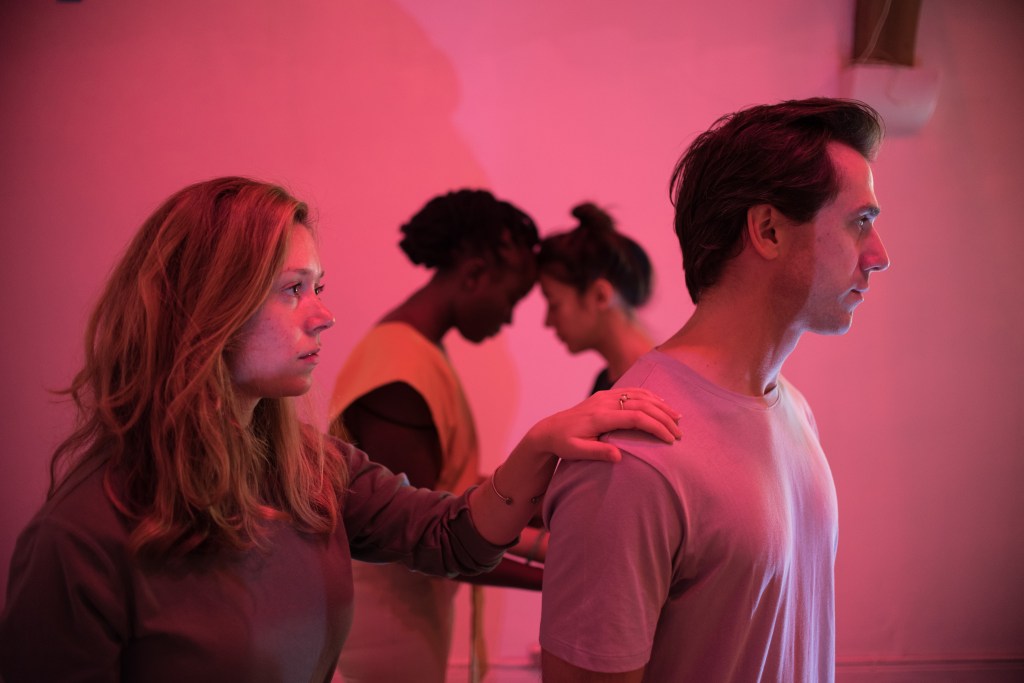
Photo by Neil Silcox

Photo by Neil Silcox

BK: I know a lot of your plays has been verbatim or immersive in their nature and presentation. What draws you to that kind of work? What makes you keep doing this?

RS: It’s funny because TomorrowLove is such a departure from that. This is heightened and fiction.

The draw to documentary and to interviews and to Vitals (which was fiction but really well researched) is that the world is really interesting. I would always advise writers who were stuck in their writing or were just starting to write, to think about starting there because it grounds you in the way that people actually talk and the way that things actually happen. You put so much of your heart and yourself into your documentary work but a lot of the time people don’t know that because they assume it’s more distant from you. I think, for this piece, it’s scary because it’s going to be really hard to hide that the characters and observations are going to seem like they are from me.

BK: What was your process to write this script?

RS: This is such a boring answer because it’s such a writer answer: I would just start. A lot of it is really just like improvisation except I was writing it down. I would just go. I would always go for a relationship problem or a change in a relationship or a relationship crisis and then ask how would a piece of technology either begin that or change that or heighten that? So I never made up a piece of technology and wrote the play to go with it. I started to write the story and then the necessary technology would merge into the story.

There are definitely pieces that are inspired from things that have happened to me or to people that I’ve loved. I think all writers steal shamelessly. They are much more me, honestly. They are much more from my own questions about people. Fiction is so embarrassing, somehow.

BK: The audience is invited to the Aorta? What is that?

RS:

BK: Ahh, a mystery?

RS: (she smiles.)

BK: Love that. How are your actors rehearsing this show?

RS: There has to be more than one thing rehearsing at once because there is so much material. They are all crazy pros. These artists are really, truly the real deal and really experienced, as well as being really good. They are like a crazy dream. It’s a real ensemble. So we’re reading the pieces, we’re doing the pieces, and we’re trading off because there will be more than one actor playing every part. There’s a bit of a tap in tap out mentality going on. We also have two amazing assistant directors (Llyandra Jones and Griffin McInnes) and Mitchell and myself. We’re all “do-si-do”ing the rehearsal process.

Photo by Neil Silcox

Photo by Neil Silcox

BK: Are there any fears or excitements for this show?

RS: No.

I’m joking. I’m joking so hard.

I think the fears and the excitements are always the same thing. The fear and the excitement is that I think the pieces are very vulnerable. The characters are in really vulnerable places. I feel very vulnerable. They’re really raw, sometimes in a comedic sense and sometimes in a tragic sense with really painful experiences. So the fear and the excitement is about sharing that, but that’s also such a part of theatre and such a part of love.

BK: What’s your working relationship like with Mitchell Cushman? How did you guys meet? What makes you want to continue to collaborate with him?

RS: We met at the Paprika Festival. He was working there and I was one of the oldest participants. He directed a staged reading of mine in the festival and so that’s the first time we worked together really. I think you can tell immediately when you work with someone like him that you can just trust him. You can trust him to be honest. You can trust him with your work. Actors trust him. He’s just a really sort of subtly supportive and reassuring person, you know? You also trust him because it’s so obvious how wicked smart he is.

He saw a little bit of Vitals and he asked to direct it and we turned it into Outside The March doing this huge production of it. It was incredible. It’s a very close working relationship. We’re really in each other’s business. It’s not like I write the script and he directs the show, it’s very collaborative. We argue and we compromise and we work really well together. I’m incredibly lucky to work with someone like that and to work with our whole team, as well.

BK: Why Outside The March for your show?

RS: I think the short answer is because this is the kind of work that Mitchell wants to develop with the company. I remember when I saw their production of Mr. Marmalade and it blew my mind. I was like this is the kind of theatre that I want to do.

BK: What do you want audiences walking away with from this show?

RS: That’s hard because you can’t really control it, no matter how hard you try. I hope they experience some empathy and have been entertained. I think entertainment is really undervalued as a quality. Not thoughtlessly, but entertained. I think it depends what kind of person you are – if you are interested in a mind-bending puzzle, you might be interested in crazy technology and its implications, if you’ve been through a break up, it might stir some things up, might make you think about your own life or it might just be an experience that you leave behind you at the door. I just hope for something.

Rapid Fire Question Round

Favourite Book: What? That isn’t fun, that’s so hard.

Favourite Play: What? What is this? Like which is your favourite parent Brittany?

Favourite Food: Pizza. Is that a boring answer? It’s why I moved to Little Italy.

Favourite Place in Toronto: The Island, Ward’s Island specifically.

What are you listening to: I’m leaning heavily into this Carly Rae Jepsen album “Emotion”. It’s like really good… Love good pop music!

Best advice you’ve ever gotten: Katherine Cullen once told me, “When you feel like you just can’t go on and something terrible has happened, it’s really important to just go to bed and wake up tomorrow.” We can fall asleep and escape and wake up and something will be recharged in us. It’s amazing.

TomorrowLove

by Rosamund Small, Presented by Outside The March

unnamed-2

Who:
Written by Rosamund Small
Directed and Developed by Mitchell Cushman

Ensemble
Damien Atkins
Katherine Cullen
Paul Dunn
Amy Keating
Cyrus Lane
Mayko Nguyen
Oyin Oladejo
Anand Rajaram

Producer – Michelle Yagi
Stage Manager – Kate Sandeson
Production Manager/Technical Director – Alanna McConnell
Scenic Design – Anahita Dehbonehie
Lighting Design – Nick Blais
Costume Design – Lindsay Dagger Junkin
Composition and Sound Design – Richard Feren
Choreographer – Robert Binet

Associate Director – Llyandra Jones
Associate Director – Griffin McInnes
Associate Production Manager – David Costello
Apprentice Stage Manager – Kate Hennigar
Assistant Producer – Deanna Galati
Front of House and Group Sales Manager – Sabah Haque
Assistant Choreographer – Cassandra Martin
Production Consultant – Katherine Devlin Rosenfeld
Publicist – Samantha Eng

What:
An intimate immersive encounter that imagines the future of romantic connection.

Navigate your way through a series of simultaneously-unfolding duets, in which innovations in technology grant physical transformation, time and space travel, immortality, the extraction of the human soul, and a fridge that expands to hold infinite groceries—all in the name of love.

If you roll over in bed and reach for your iPhone, if you store more memories on your feed than in your brain, if you’ve ever longed to upgrade yourself or your partner, then welcome to TomorrowLove™.

From the creative team behind Vitals (2014 Dora Awards for Outstanding Production and Outstanding New Play).

Where:
The Aorta (733 Mt Pleasant Rd)

When:
Show runs from From November 19 – December 18 (Mondays excluded)

Tickets:
Tickets: $40 General, $30 for under 30/arts workers http://tomorrowlove.brownpapertickets.com/

Connect:
w: outsidethemarch.ca
fb: /OutsideTheMarch
t: @outsidethemarch
ig: @outside_the_march


“Body As Costume” An Exploration of Process with Anthony DiFeo of Theatre Parallax Toronto’s KATA

by Anthony DiFeo

Imagine telling your designer that in order to build the costume they will need to apply pressure to it for at least an hour a day for a few months. Then you remind them that if you stop applying pressure, it will start to lose its form. It becomes imperfect with each neglectful decision you make. Couple that information with a bit of panic by letting the designer know that too much pressure or pressure in the wrong area could damage the costume and that can really set the piece behind.

Now imagine that costume is your body. Every decision you make affects the look of the show. A cheat day is only paid for by an extra work day and you’re well aware of how close the show date is. Your normal comforts are replaced by the discomfort of muscle tearing, which is fuelled by an equal mix of ambition and the fear of falling behind. You are one of four and, despite what you tell yourself, you’d hate to be the last on that list.

This is the process of KATA; a piece that only works when each performer owns the responsibility of their design.

Photo by Sam Hurley

Photo by Sam Hurley

The concept for the show itself began as an opportunity to explore masculinity and the toxic nature that often surrounds it. We were looking to create a piece that exhausted its performers and pushed them to an extreme. We’ve been constructing and reconstructing this piece for years and each time, we turn it into something we couldn’t have imagined a year ago.

kata-4

Early on, we saw a design opportunity. When discussing a revamp of costumes, we realized that our design wasn’t aligned with the piece. The costumes were meant to represent masculinity and we looked at all articles of menswear that could fit the bill. None of it worked. During these talks we hadn’t considered the intense physical training that goes into this piece. It’s completely unsustainable as a performer without months of care. The training inevitably shows up in our bodies. We quite quickly realized that we were never meant to design a costume, as we were building them through the process. KATA focuses on the concept of bodies as costume.

katad1web

Photo by Sam Hurley

During the building phase of KATA, the performers spend months managing their discipline. We make a pact that has us all eating clean and cutting what we would consider junk food, we put away all alcoholic drinks during the process, we surrender our free time to five days a week at the gym, and we subject ourselves to a weekly early morning assessment by our personal trainer (who often dresses us in garbage bags to sweat out whatever is left of us each week). What this creates is not only four men who can handle being pushed to physical extremes for a two-week run, but the bodies to match them.

Photo by Sam Hurley

Photo by Sam Hurley

The process of forming our bodies to an ideal show state is as mentally taxing as it is physically. The show is intended to explore the toxic effects of traditional masculinity in all of its competitive brutality, its emotional suppression, and its selfish pride. The journey we take to get there makes it difficult not to get sucked into the very thing we understand to be flawed. We’ve created circumstances where we feel the pressures in a heightened state and that experience is what we’re bringing to the stage.

anthakataweb

The concept of body as costume isn’t new. Actors have been shaping their bodies to fit their roles for a long time as well, all of them understanding the struggle that comes with it. What we bring is a visualization of that challenge. The bodies you’ll see shaking on stage are a physical representation of what it has been like to build the costumes for this show. Those are the moments where the performers are asking themselves not to quit as they try not to feel the pressure and pain. A question they have asked themselves daily for the months leading up to these moments.

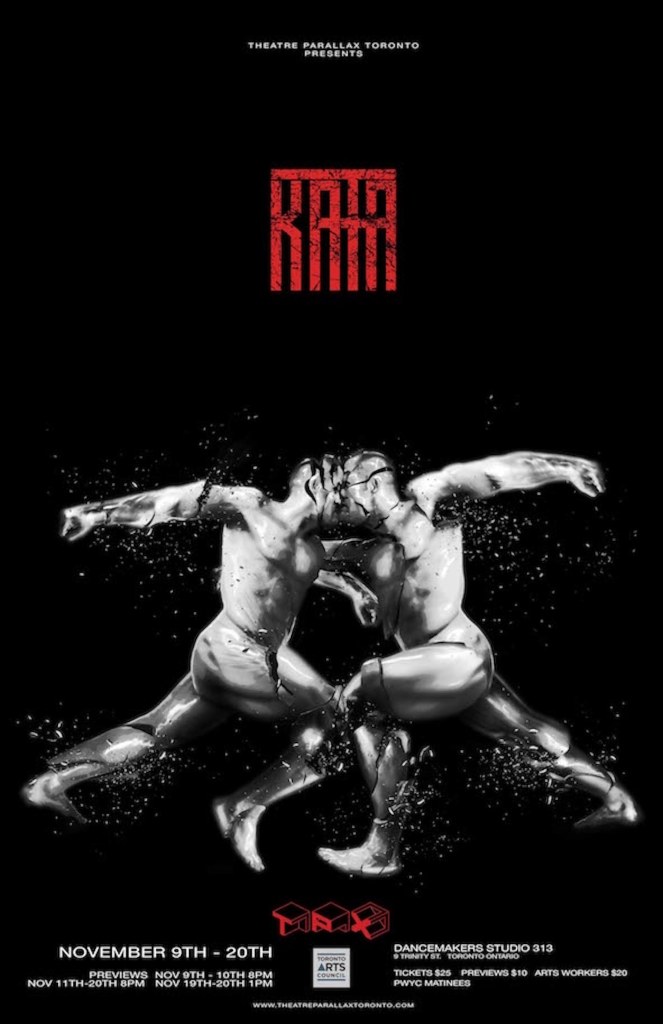
kata-poster-2016-final-copy

KATA

Who:
Presented by Theatre Parallax Toronto

What:
A surrealist physical performance piece inspired by Antonin Artaud, KATA, explores masculinity through it’s title. A Japanese word describing specific behavioural conditioning that emphasizes the learning and reinforcement of patterns through repetition.

In KATA, four subjects are born into a dystopian world, not unlike our own, where, through the inheritance and perpetuation of long-established masculine expectations, they are bred into perfect soldiers. Observed by an audience of investors, the demands of the war industry and of fellow peers systematically enforce gender norms, hardening these men into products sold to satisfy the needs of external forces. As the product test progresses and the veneer of masculinity cracks, the audience is left asking, “ Is this a sustainable investment?”

KATA combines content and form in a way that merges theatre and performance art. In an attempt to present the unrealistic construction of the “ideal male”, our performers commit their bodies and minds to the exploration of “toxic masculinity”. They suffer through repetitive physical training, sacrifice their personal vices, and work tirelessly to attain physical and mental control. In this process they question their own masculinity, their loyalties to their art, and if this form is worth subscribing to.

Theatre Parallax hopes KATA will aid in the study of gender to better understand the development of masculinity and therefore understand the gender binary and its inequality more thoroughly as a whole.

Where:
Dancemakers Studio 313
9 Trinity Street, Toronto

When:
November 11-19 at 8pm
November 19 & 20 at 1pm

Tickets:
theatreparallaxtoronto.com

Connect:
w: theatreparallaxtoronto.com
fb: /TheatreParallaxToronto
t: @ParallaxTO
ig: @theatreparallax


https://vimeo.com/190422299/%20


In Conversation with Dr. Suvendrini Lena, playwright of “The Enchanted Loom”

by Bailey Green

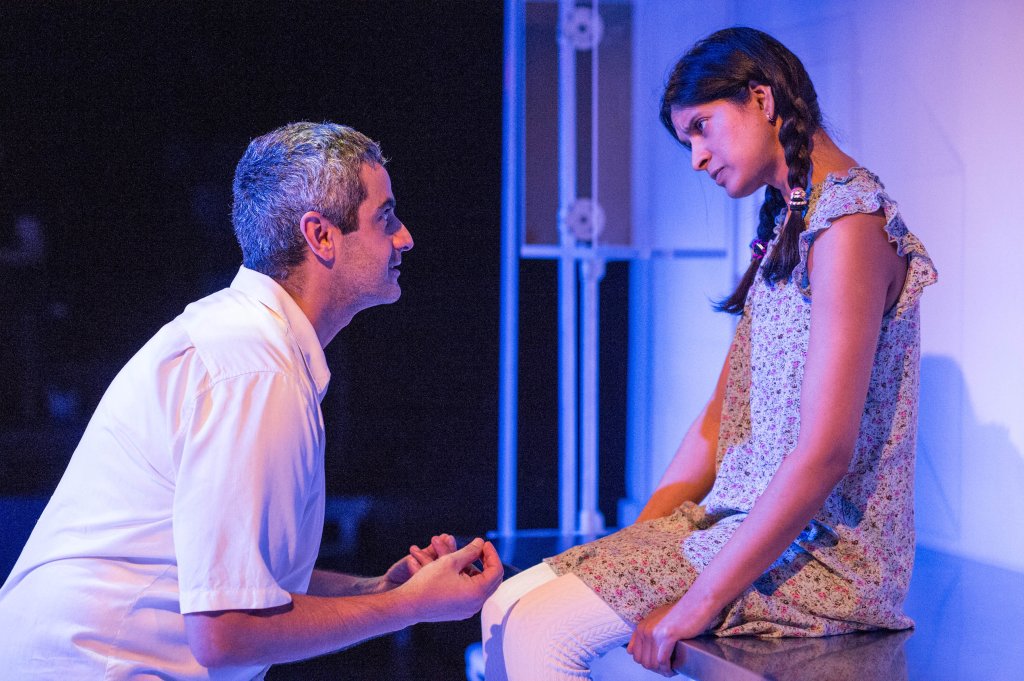
The story of The Enchanted Loom, written by Dr. Suvendrini Lena, begins in Toronto, where demonstrations against the Sri Lankan civil war have taken over the Gardiner expressway. The protests take place during the final weeks of the war and trigger memories of trauma for a Tamil family. The family had come to Canada to escape the violence in Sri Lanka. The father, Thangan, was imprisoned and tortured during the war. He struggles to cope with epilepsy brought on by scars in his head from the beatings he endured. As Thangan’s seizures worsen, his family begins to unravel. In order to have a chance to heal, Thangan must decide whether to undergo a surgery that would cut out his scars but could erase pieces of his memory. One memory in particular, a memory of his oldest son who died during the war, Thangan doesn’t know if he can bear to lose. “The surgery is a metaphor for how societies and communities can move through trauma, will it fix things or won’t it? How deeply are these traumas embedded in us and in our communities?” says Dr. Suvendrini Lena, neurologist and playwright of The Enchanted Loom, produced by Factory Theatre and Cahoots Theatre, on stage now to November 27th.

Photo by Dahlia Katz

Photo by Dahlia Katz

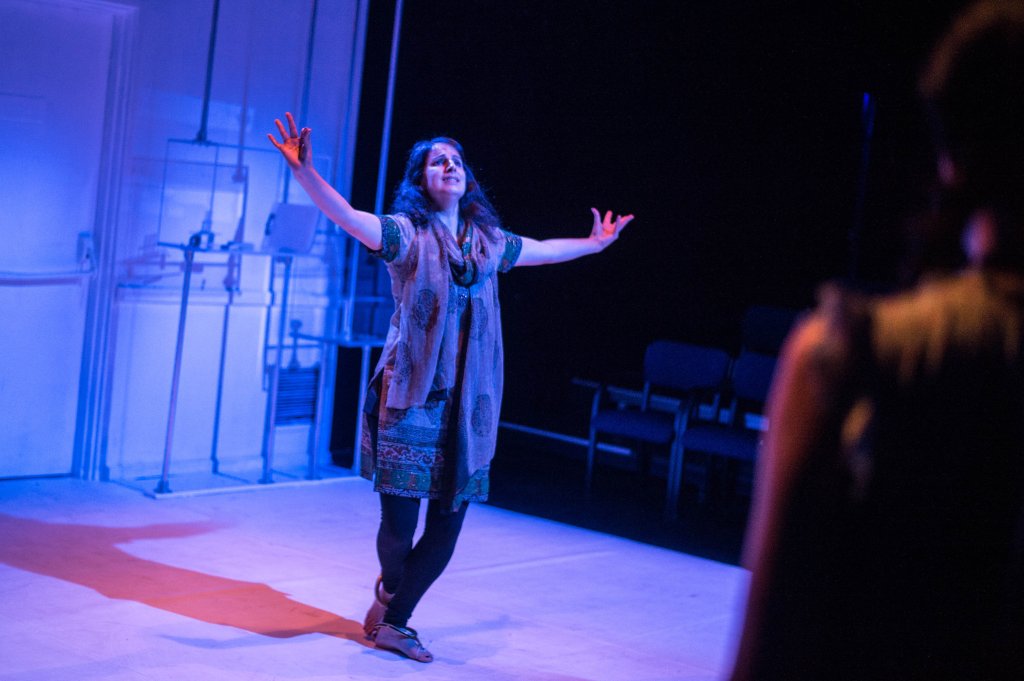
The Enchanted Loom is the product of years of hard work that took place while Dr. Lena worked full-time as a neurologist and raised her child as a single mother. The play was first developed as a research project about epilepsy. Subsequently, the play has grown to explore the dynamics of family. “I chose epilepsy because seizures are a huge disruption of consciousness. It arrests everything and you don’t know what is going to happen next,” Dr. Lena explains. “There’s a potential of being paralyzed so you’re very vulnerable. And that is what happens in war, the kind of disruptions and the way daily life becomes unlivable.” The play focuses on the question of whether or not Thangan will chose to have a surgery that Dr. Lena describes as a unique procedure: “The patients are often awake so that when the parts of the brain are being removed the doctors can preserve everything around them, as much as possible. It is one of the penultimate scenes, this awake craniotomy, and it is very evocative – you can see consciousness right in front of you.”

Photo by Dahlia Katz

Photo by Dahlia Katz

Working on her first play has helped illuminate Dr. Lena’s work at CAMH. “I have learned a huge amount from watching the actors play these characters,” Dr Lena says. “The family life [in the play] is structured by [Thangan’s] illness and every aspect is affected[…] I teach a course on theatre and medicine to medical residents and I do that because theatre allows us to inhabit alternate lives. As doctors you need to be in a patient’s position and understand what that means.”

Photo by Dahlia Katz

Photo by Dahlia Katz

The play’s title is drawn from a quote written by pioneer neurophysiologist Charles Sherrington. Sherrington used ‘the enchanted loom’ as a metaphor for the mystery of the brain. “Memory, to me, is this intricate fabric that is being reworked by everything that happens. It is the key to the future but is constantly changing, being influenced by what other people remember and by the present,” Dr. Lena says. “The whole play is about the family’s memory of trauma and how it informs their future and the difficulty of remembering traumatic things but also the necessity to remember them in order to heal from them.”

Photo by Dahlia Katz

Photo by Dahlia Katz

Marjorie Chan, Artistic Director of Cahoots Theatre, is the director of The Enchanted Loom. Dr. Lena expresses her gratitude and admiration for Chan’s patience and expertise: “I don’t have a playwright’s training, but she championed this play with 6 actors and poetic medical language and has woven it together in this beautiful way. I couldn’t be in better hands. It has been spectacular, like nothing else.”

Photo by Dahlia Katz

Photo by Dahlia Katz

For Dr. Lena, the greatest joy of working on this play may be seeing it on stage now during its run, when the play has come together fully. “It has been so meaningful to know this is a story worth telling,” says Dr. Lena. “Epilepsy is a stigmatized illness and a difficult illness. To have people take risks to portray it and the Sri Lankan story…to remember what happened and how the future could be different… it’s quite something to see it fully realized on stage at Factory.”

Photo by Dahlia Katz

Photo by Dahlia Katz

The Enchanted Loom

1617_tel_logo2_950x200

Who:
Written by Suvendrini Lena
Directed by Marjorie Chan
A Cahoots Theatre production in association with Factory Theatre

What:
The Sri Lankan civil war has left many scars on Thangan and his family, most noticeably the loss of his eldest son and crippling epileptic seizures brought on by his torture during the war. As the final days of the war play out; the family watches from Toronto, where a neurological procedure provides them with a chance to heal. This poetic play, part medical, part mystical is a harrowing tale of loss and hope that reminds us of the joys and pain of unconditional love for family, and freedom.

ASL Interpreted Performance, followed by a Post-Show Q&A, Sunday, November 20

Where:
Factory Theatre Studio Theatre
125 Bathurst St.
Toronto

When:
November 10-27, 2016

Tickets:
factorytheatre.ca

Connect:
Factory Theatre –
w: factorytheatre.ca
fb: /FactoryTheatreTO
t: @factorytoronto
Cahoots Theatre –
w: cahoots.ca
fb: /CahootsTheatre
t: @cahootstheatre
ig: @cahootstheatre

#enchantedloom