Skip to content

Posts tagged ‘theatre’

Artist Profile: Actor Jakob Ehman on Rebellion, Drive, Risk & “The Circle” at Tarragon Theatre

Interview by Brittany Kay

I sat down with the incredibly talented Jakob Ehman who is making his Tarragon Theatre debut in The Circle. We discussed rebellion, his drive for the craft, and the need for established theatre companies to take risks on young artists.

Brittany Kay: What has been your journey to getting to where you are right now?

Jakob Ehman: I was born in Regina, Saskatchewan. I lived there for a short couple of years. I moved to Calgary, Alberta until I was 5 and then we drove across the country to Nova Scotia. I lived in a couple of different places in Nova Scotia: LaHave, which is in the country and very rural, I lived in Bedford, and I lived in Dartmouth where I spent the most amount of time. At the end of grade 8, I moved to Toronto and started high school here at the Danforth Collegiate Technical Institute.

BK: What made you go to theatre school?

JE: I don’t know… I can’t really remember what it was that got me into it, but I had to take some sort of arts class in high school. I was interested in drama, I guess, and I had a great teacher! Her name was Heli Kivilaht. I think I remember one of the first classes I played this character ‘Indiana Jake’ and everyone laughed. My childhood memories have a lot do with me entertaining the family. I started to like making people laugh a lot. The years went by and that drama teacher left, but while she was there, I was pretty heavily exposed to some wicked writers – David Mamet, Beckett, MacIvor. I was in grade 10 and 11 studying those writers and that was kind of crazy to me at that time. I was so fascinated by it because it reminded me of the type of films I was into when I was in high school – ones with dark writing. It seemed pretty cool just to be able to do that, to say those words. I felt like I had an affinity for it. I wasn’t sure if I was going to pursue acting or not. I was still pretty into the idea of some sort of work in policing, investigations or the military. I decided I would apply to George Brown, NTS and Ryerson.

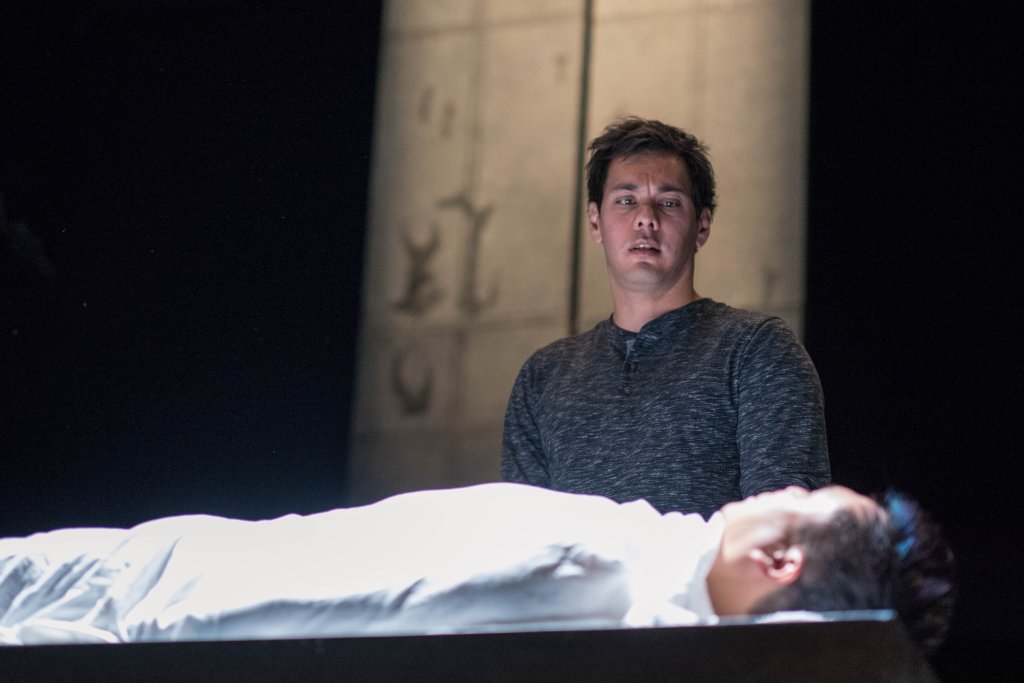
Vivien Endicott Douglas & Jakob Ehman. Photo by Cylla Von Tiedmann.

Vivien Endicott Douglas & Jakob Ehman. Photo by Cylla Von Tiedmann.

BK: Why those three?

JE: They’re all that I really knew, I guess. I was more into the idea of doing some sort of conservatory. Figured that if I was going to go do this, I didn’t want to have to also take a bunch of other classes and be in a university setting. I kind of decided if I didn’t get in, that would be that. I would go to UofT and be a spy or something.

I got into George Brown and I loved the feeling I had when I went to that audition and the Young Centre was new, beautiful and seemed great. So I kind of left everything else behind… gave in and immersed myself into that program and into the life of what I thought it was to be an actor and eventually then a creator, which George Brown wasn’t very helpful in overall.

BK: To create your own work?

JE: Yeah.

BK: Is that where HUMANZOO came from?

JE: Yeah. Sort of. George Brown had a couple of projects that were based in creation, but they had pretty specific ideas of what being a professional actor was and what they wanted us to be, at least that’s how I felt. It was actually helpful because it really gave me something to rebel against. That’s generally when I feel most at home.

BK: When you rebel?

JE: Yeah, I’m sort of an antagonistic kind of person, especially as an artist, though not necessarily in rehearsals. I don’t want to be like that. But you know, challenging everything.

BK: So how did HUMANZOO come to be? What happened after theatre school?

JE: HUMANZOO was an idea that was formed in theatre school. My great friend Edward Charette and I lived together. I talked a lot about ideas I had, just all the time…. just spouting off things. I think it annoyed him quite a bit. We had this idea about a human zoo, a zoo for humans. The actual company was all just ideas and a name that I liked, until I was contacted from the Hamilton Fringe. Somehow a spot had opened up there and they didn’t want to put it out to the public or have a whole bunch of people applying for this spot, so they asked me if I would be interested in doing something. At that time I had no clue what that would be. I decided to take the spot and figure it out after. I spent a week in the reference library reading every play that looked interesting. I looked for ones that had small casts since we were all going to be living at my parent’s house in Hamilton. Eventually I found this play called Normal by Anthony Neilson about this real life serial killer in Germany who killed a great many people. I thought the play was terrific and felt very inspired by it as soon as I read it. I kind of took the book… went downstairs and I ripped the sticker out of it.

BK: You stole it from the library?

JE: Yeah, I stole it from the Reference Library. The Reference Library, if you’re reading this… come get me, I guess. I’ve got it and I don’t intend to give it back.

So yeah, we did that and it was awesome. We won the Critic’s Choice Award. It was the first thing I directed.

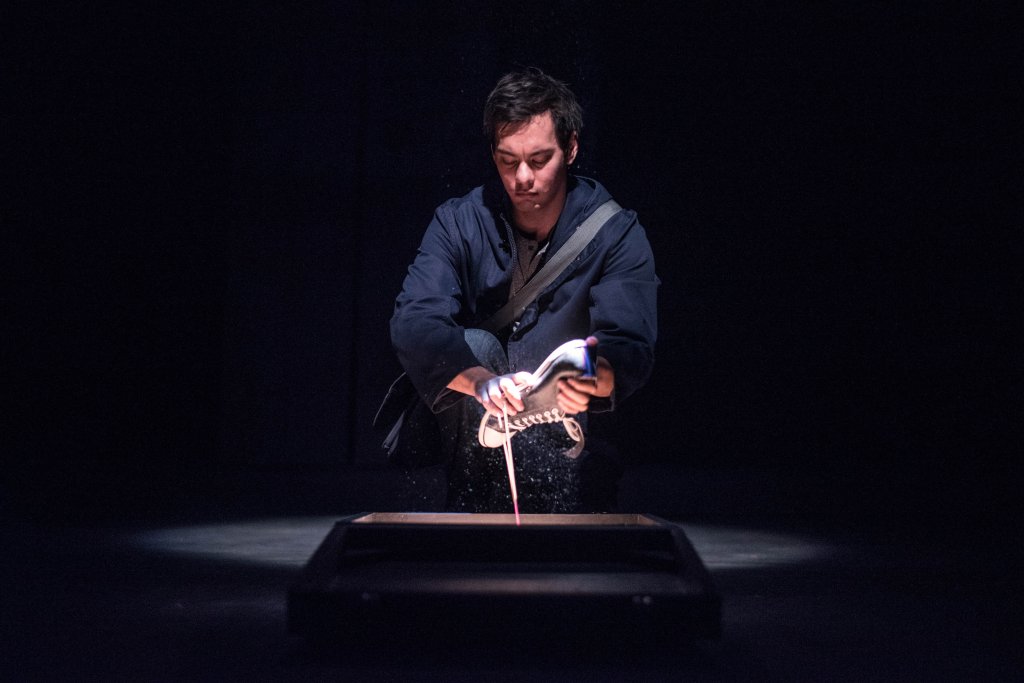
Photo by Cylla Von Tiedemann

Photo by Cylla Von Tiedemann

BK: Do you have future plans with this company?

JE: I definitely want to do stuff in the future with the company. That sort of becomes about deciding how to manage your own time. I’ve been quite fortunate in the last couple of years where I haven’t necessarily had a lot of off time to plan a production or knowing when I’m going to have time next year. I haven’t committed to deciding that I won’t accept any acting work so that I can do that.

BK: You’re not just an actor, though. You’ve also sound designed, produced, directed, and written. How do you choose when you want to do what? Is it whatever is offered at the time or is it an active choice you make?

JE: Well, we went back to the Hamilton Fringe the next year. We really enjoyed our time there. I like the city of Hamilton. I knew I wanted to direct again but I also wanted to write and sound design once I started writing the play. I always want to be doing all of those things. I think that theatre is such a collaborative thing that if you want to, you can sort of have a part in all of those things, no matter what role you are in with the production. As an actor, you are still collaborating with a director. If you fight for your ideas of your character, you could feel like you have a say in some parts of the direction.

I guess it does come down to what is offered more. Acting happens more frequently for me. It takes a lot more of my own drive to make any of the other things happen. I’ve done a couple of sound designing jobs on the side but I’ve also been involved in the production as an actor so it’s never one thing at a time.

BK: What motivates you?

JE: I think just being really hungry. I’m obsessive – about the craft and about wanting to be…awesome. I want to be better every time. I want to inspire other people. I want to inspire people who I’m working with to work as hard as I want to work, so that what we give in the moment on stage is truthful and electric and vibrating with energy and life. I’m just sort of addicted to that feeling and to that kind of presence, but that type of presence takes a lot of preparation work and a lot of thought and time. It’s literally just thinking about the work, about the character’s stories and motivations like a detective.

BK: This is part of your rehearsal process, as well?

JE: Yeah. For sure.

How can I find other things to bring into this? How can I go deeper? And sometimes it can be really simple things you might not think of. Where does this person look when someone’s talking to them? Which eye? Do they look at both eyes? There’s an infinite level of details humans have. That makes me excited to investigate.

BK: We’re going to shift into talking about The Circle. What is it about?

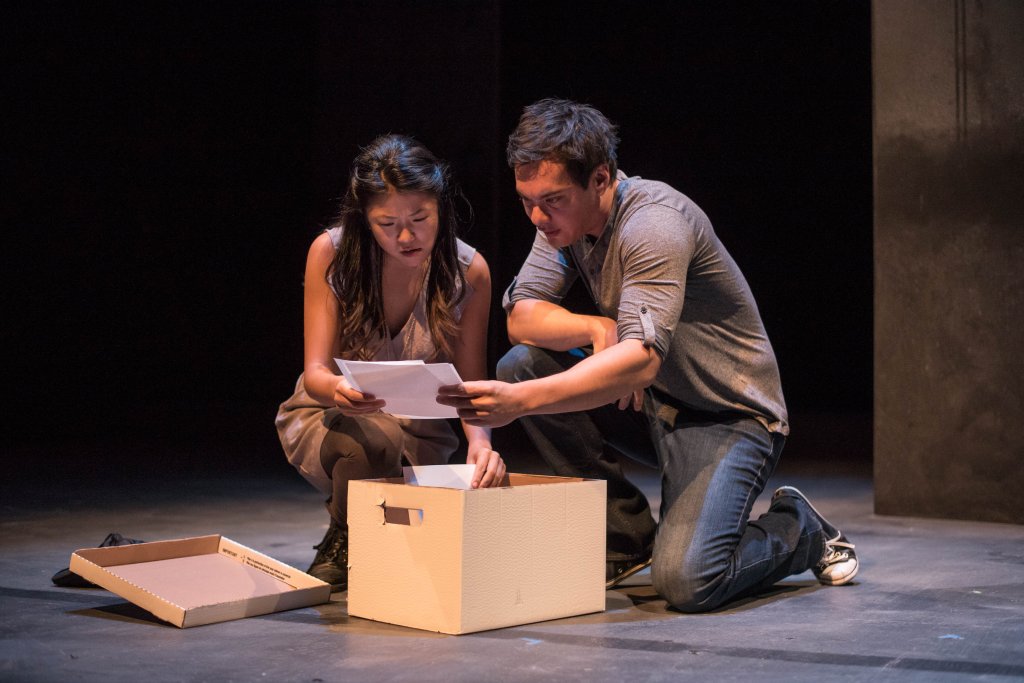
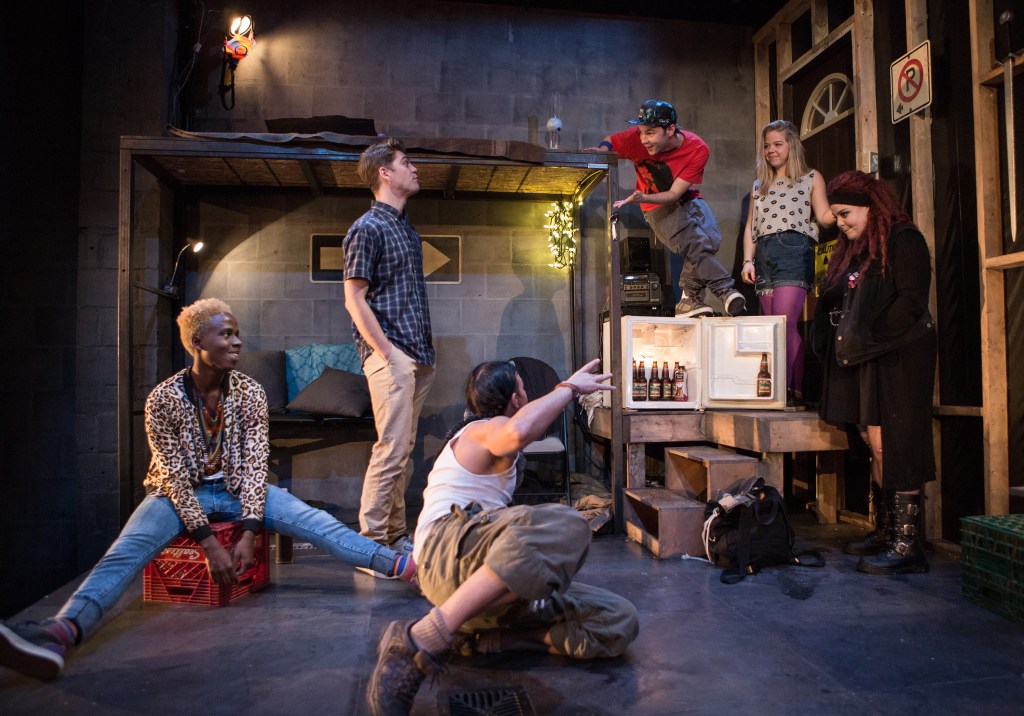
JE: The Circle is about a group of young people from 15-18 years old. There’s this guy Ily, who I’m playing, and he’s living in his girlfriend’s mom’s garage. He’s dropped out of school and he sells weed and works at The Keg. During the day when his girlfriend is at school he gets this call from Tyler, an old friend of his that used to live at his place. It’s this guy who’s ended up living on the street and in various squats and in and out of homelessness. Tyler calls him wanting to hang out that night and Ily agrees but meanwhile his girlfriend has also invited her friend Will over that night with his new boyfriend Daniel. There’s this clash of groups that are going to come together and it really becomes a fucked up party.

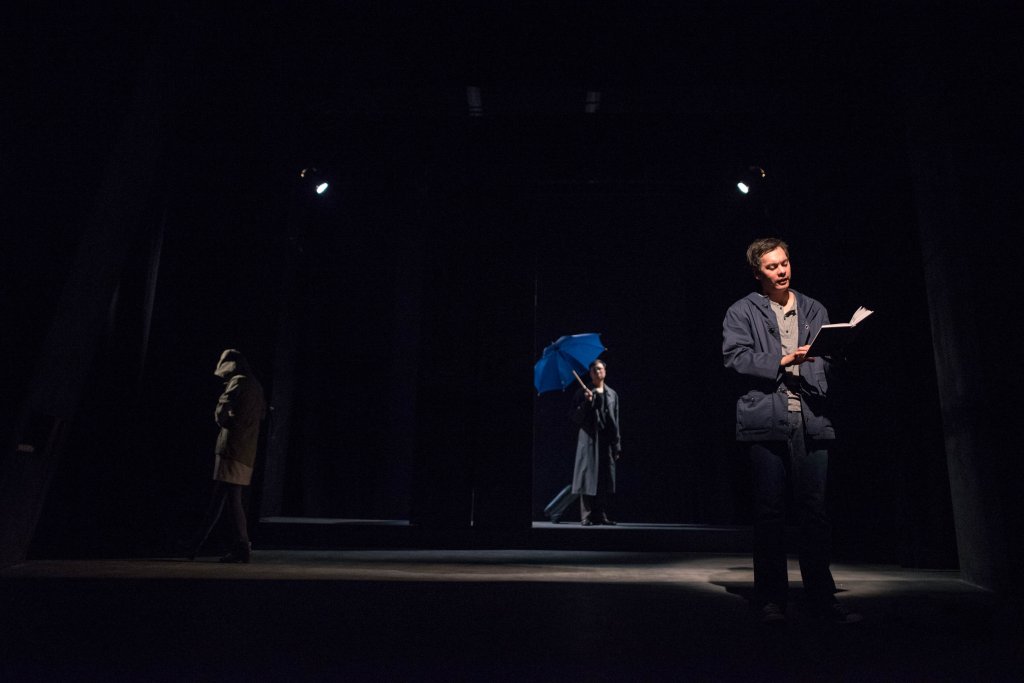
Photo by Cylla Von Tiedemann

Photo by Cylla Von Tiedemann

BK: What draws you to this character?

JE: I think I’ve played a lot of emotionally unstable and intense kind of characters. When I read this one, I was excited because it felt more like a side of me. You know, a happier kind of guy. He’s just generally smiling and laughing. He’s the kind of guy who can hang out with any group. I dunno, it felt like I needed a change and play that part of myself and to not always be going down those dark paths.

I really think that within each of the characters there’s something every person in the audience, whether young or old, can relate to. The characters are so varied. The play is about them figuring out who they are and figuring out who they want to be. They are looking for a place of belonging with each other and in their own lives.

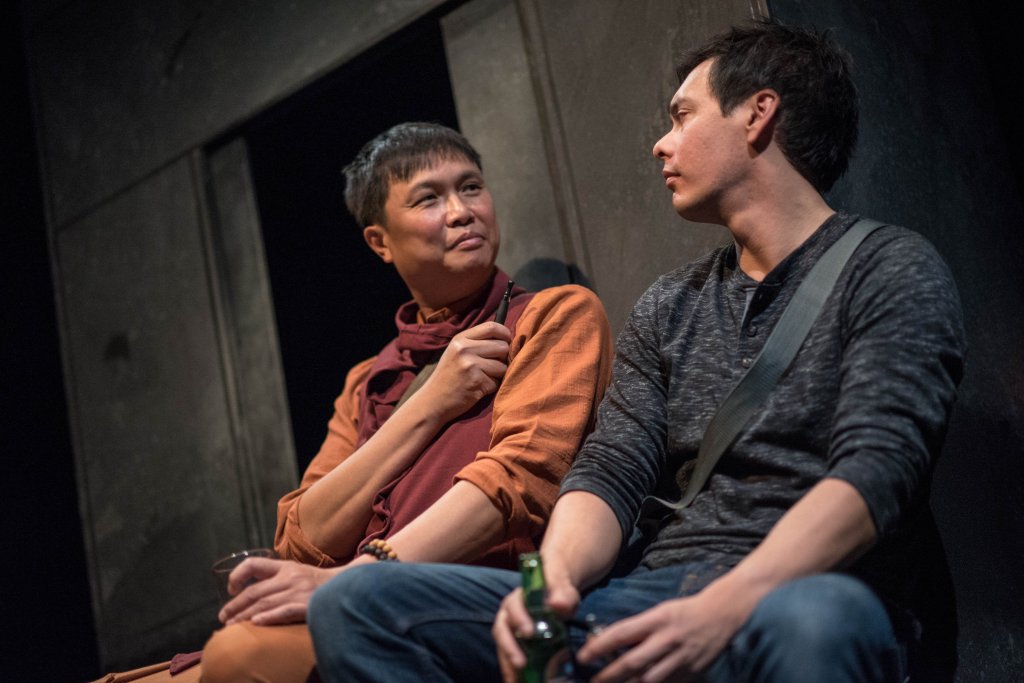
Jakob Ehman in The Circle. Photo by Cylla Von Tiedemann.

Jakob Ehman in The Circle. Photo by Cylla Von Tiedemann.

BK: This is a cast of all young people and a big first for Tarragon. It’s nearly everyone’s Tarragon debut. There’s been a bit of a trend with professional theatres not often hiring younger performers. How do you feel about Tarragon programming this kind of show filled with young actors?

JE: It’s a huge risk for them. This is Geoff’s debut play. It’s been produced before at ATP (Alberta Theatre Projects) but he’s still a very young writer. The cast needs to be playing 15-18 years old, so no matter what, you’re going to be taking a gamble on some very young actors that may or may not perform at the sort of level that an audience or critics are used to from an establishment like Tarragon. I think it’s going to pay off for them. The first step to making it pay off was hiring director Peter Pasyk, who took the time to find the right actors that were going to be able to make this thing live. Even then, it could still really have not worked out for them, but they have to do it. They have to do this play and plays like this, written by young people with young directors and young actors so that they can get younger audiences because their subscriber base is going to end and if they don’t have a new subscriber base and new people who are interested, they won’t survive. It’s a risky production but I think necessary for their survival.
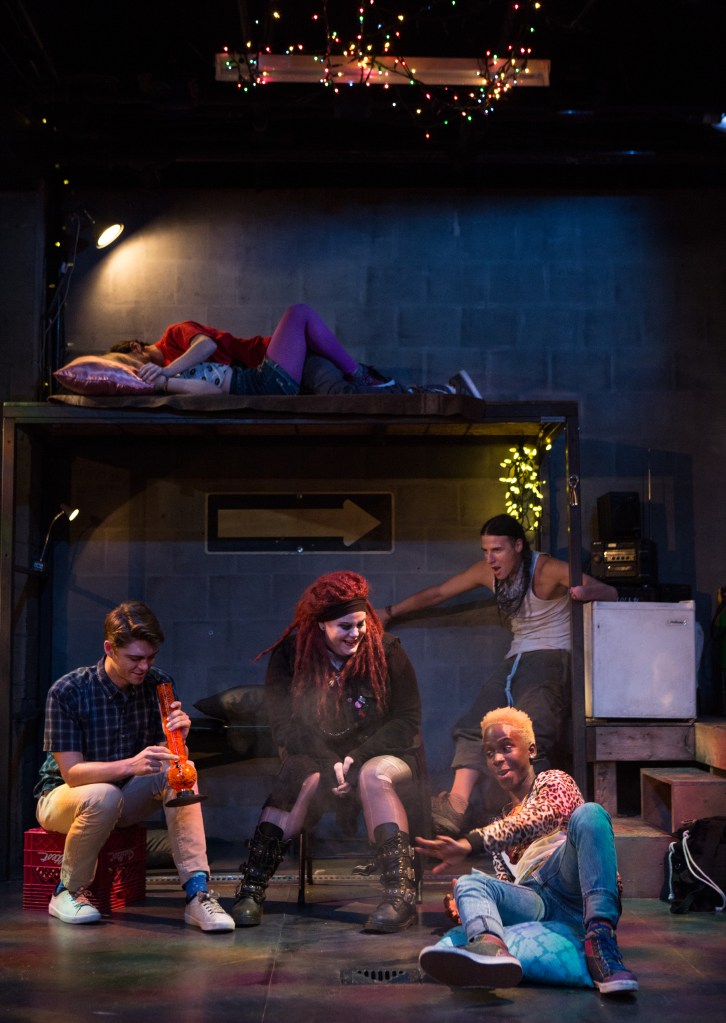
Photo by Cylla Von Tiedemann

Photo by Cylla Von Tiedemann

BK: What is it like working with Peter?

JE: Peter is a funny guy.

BK: That’s it?

JE: He and I joked once when we were leaving the theatre about how he’d like to be described, and he said he’d like someone to say that he’s a funny guy. So yeah, I’ll leave it at that…

But he’s actually tremendous. He’s a tremendous director. A wonderful, lovely person to work with everyday. Really patient and demanding and never gives up on anybody or anything that he wants. I think he’s quite courageous and I had a great time working with him.

BK: Why is this story relevant today?

JE: I don’t think it’s specifically the story that makes it relevant. It’s quite simply about young people – that young people are portrayed fully, at all. They aren’t used as a device for some older character’s story. They’re not the singular teen in the play. It’s a play about them. That’s really different. That’s what’s relevant, I think.

Photo by Cylla Von Tiedemann

Photo by Cylla Von Tiedemann

Rapid Fire Question Round

Favourite Movie: That’s an impossible question.

Favourite Play: Nope.

Favourite Book: “East of Eden” by John Steinbeck.

Favourite Food: Sushi. Chino Loco’s burritos.

Last play you saw in Toronto that stayed with you: James Smith’s Lessons in Temperament.

What are you currently listening to: Solange, Bon Iver’s new album.

Advice for young emerging artists: Don’t settle for doing what a director asks you to do, always suggest something to do… make offers, continue every moment that you can. Try and give your own perspective, different intentions/objectives/movements. Never settle for just taking direction. Always take it, but give more than what you’re asked for.

The Circle

A Tarragon Theatre Production
The Circle, Tarragon Theatre

The Circle, Tarragon Theatre

Who:
by Geoffrey Simon Brown
directed by Peter Pasyk
starring Nikki Duval, Jakob Ehman, Daniel Ellis, Vivien Endicott-Douglas, Brian Solomon & Jake Vanderham
set designer Patrick Lavender
lighting designer Rebecca Picherack
sound designer Thomas Ryder Payne
costume designer Joanna Yu
fight director Steve Wilsher
stage manager Sandy Plunkett
apprentice stage manager Victoria Wang

What:
Welcome to Ily’s high school garage party: there’s the genius, the drug dealer, the runaway, the kid with ADHD, and the son of a priest. Everyone’s a total mess, but it’s better than being alone on a Friday night in suburbia. This remarkable debut by 26-year-old playwright Geoffrey Simon Brown is an explosive SOS from an orphaned generation desperately looking for a place to belong.

Where:
Tarragon Theatre Extraspace
30 Bridgeman Ave.
Toronto

When:
Oct 18 – Nov 27, 2016

Tickets: 
tarragontheatre.com

Connect:
Jakob –
w: jakobehman.com
t: @JakeEhman

Tarragon –
w: tarragontheatre.com
fb: /tarragontheatre
t: @tarragontheatre

In Conversation with Nina Lee Aquino on Directing “acquiesce” & 15 Years of Collaborating with Playwright/Actor David Yee

Interview by Bailey Green

acquiesce, directed by Nina Lee Aquino and written by David Yee, kicked off Factory Theatre’s 2016/17 season “Beyond the Great White North”. The play marks Yee and Aquino’s 15 year anniversary of collaboration. Yee wrote acquiesce 15 years ago as part of the playwrights lab at Factory. Aquino was invited to a private reading of the play with dramaturge Brian Quirt. “In our hearts of hearts we knew we would come back [to acquiesce],” Aquino says. “But other works were getting first in line. Looking back there was a good reason for that, I don’t think David could have finished it before and I don’t think I could have directed it, being the director I was then.” acquiesce was rediscovered when dramaturge Iris Turcott found a draft tucked behind a filing cabinet at Factory. Turcott called Yee, gave him two notes and told him it was time to work on the play again. “It has always been one of my favourite unfinished plays of David’s,” Aquino says.

Photo of David Yee by Dahlia Katz

Photo of David Yee by Dahlia Katz

acquiesce tells the story of Sin Hwang, a novelist who receives news that his father has died. As per his father’s instructions, he embarks on a journey to bury his father. “He discovers secrets about himself, about his father and family history that have been brewing underneath,” Aquino says. “He gets to confront that grief and rage and not get to forgiveness but an acceptance of knowing one can correct the cycle of violence and let go of that baggage.”

Photo of David Yee by Dahlia Katz

Photo of David Yee by Dahlia Katz

Aquino and Yee’s shared values have been a core element to their artistic partnership. Aquino has been director and dramaturge for all of Yee’s plays. “We’re here to fight, to say something, to give hope,” Aquino says. “We are despairing of the world at times but through theatre we feel like we’re doing something about it. The kinds of plays I tackle as a director reflect that.”

Photo of David Yee by Dahlia Katz

Photo of David Yee by Dahlia Katz

Aquino speaks of how individual growth as artists has brought herself and Yee to the right time and place to tackle acquiesce. The more personal David gets with his work, the more personal I get with mine,” Aquino says. “It makes it more harrowing. Now being a mom and AD of this company is very different and I bring that experience to the table.” In 2015, Yee won the Governor General’s Literary Award for Drama with his play carried away on the crest of a wave (directed and dramaturged by Aquino). Aquino was the Founding Artistic Director of fu-gen theatre in 2002 (Yee is the current Artistic Director) and Artistic Director of Cahoots Theatre in 2009. In June 2012, Aquino became co-artistic director of Factory Theatre with Nigel Shawn Williams, and in the Fall of 2014, Aquino was appointed sole Artistic Director of Factory Theatre.

When asked about how working on acquiesce compares to working on Yee’s other plays, Aquino says that acquiesce has been a very personal process. “An Aquino/Yee work has a social justice to it, an activist voice in it, a revolutionary,” Aquino says. “But [with acquiesce] the social justice is subtle, the angle is different. It’s in a very personal container, which is family, where the heart of an activist is born. It is the hardest Yee work that I have tackled because it is quite personal. acquiesce comes in whispers, the complexity comes in quiet ways.”

Photo of John Ng & David Yee by Dahlia Katz

Photo of John Ng & David Yee by Dahlia Katz

The mutual respect and admiration that Aquino and Yee share is evident, as Aquino calls Yee her “most favourite playwright in the universe.” Aquino says working with Yee always challenges her as a director to grow and discover how to bring the play to life. “I never take his work for granted,” Aquino says. “He challenges me through his work, so what world do I build around the world he has built and how will that coalesce. David writes plays that are yummy for a director, if you’re the kind of director that thrives on imagination. David is magic, so how do you put the magic on stage?”

Photo of Rosie Simon & David Yee by Dahlia Katz

Photo of Rosie Simon & David Yee by Dahlia Katz

Yee takes the stage in acquiesce to play the role of Sin Hwang. Yee hasn’t acted in his own work since Paper SERIES at Summerworks in 2012. “This is the first time he’s accepted to play a role in his own play,” Aquino says. “I’ve depended on him for so much as a playwright in the past. During tech he’s a second eye, so this year will be a bit lonely! On opening who is the one person who will sit beside me? I won’t be able to crush his hand, because he’ll be onstage! There are things about it that I miss, but I don’t see anyone else playing that role.”

acquiesce

by David Yee

1617_a_logo_950x200

Who:
Written by David Yee
Directed by Nina Lee Aquino
Co-produced with fu-GEN Asian Canadian Theatre Company
For full cast & creative team, visit the Factory Theatre website.

What:
Plagued by the success of his first book and haunted by his past, Sin Hwang arrives in Hong Kong with some unusual cargo and a lot of emotional baggage. Featuring a surreal cast of characters, from a foul-mouthed Paddington Bear to a wisecracking Buddhist monk, this sharply comedic and heartbreakingly poignant tale of self, familial and spiritual discovery reflects the cycles from which we must all break free as we find our way.

Where:
Factory Theatre Mainspace
125 Bathurst Street

When:
November 3-27, 2016

Tickets:
factorytheatre.ca

Connect:
w: factorytheatre.ca
fb: /FactoryTheatreTO
t: @factorytoronto

Talking Canadian Stories & the Upcoming Production of AGENCY with actor Ben Sanders

Interview by Shaina Silver-Baird

Shaina: What’s different about working on a new play like this that’s never been done before, compared with something that has been in the theatre canon for awhile?

Ben Sanders: It’s very liberating when you don’t have to worry about the burden of a precedent for your character. Rather than doing the ten thousandth Mercutio, I get to be the very first Peter Gottschild (my character in Agency). There’s a great freedom that comes with that. My impulses and choices are brushstrokes on a fresh canvas.

Shaina: What is a ‘Canadian’ story? Would you say this is a Canadian play?

Ben: Canadian stories are anything dreamed up in the mind of a Canadian (including brand new Canadians) or anything set in Canada. Aside from some of our indigenous stories, just about all Canadian stories involve relationships to other countries. Agency is set in Germany, and features all German characters, but it also has a whole lot of the heart and soul – and some of the heritage – of Eva Barrie, a Canadian artist.

Photo of Eva Barrie & Ben Sanders by Greg Wong

Photo of Eva Barrie & Ben Sanders by Greg Wong

Shaina: What’s been the biggest challenge and biggest joy in tackling your character so far?

Ben: We’re playing with time and memory in the play. Sometimes my character is onstage as a part of someone else’s memory, rather than really being there. So I can’t be too picky about my “reality”, or my circumstances. The biggest joy, so far, is the crackling dialogue – Eva’s lines just roll off your tongue. Makes my job easy!

Shaina: Describe the show in 5 words.

Ben: Suspense. Surveillance. Betrayal. Obsession. Turtlenecks.

Photo of Earl Pastko & Ben Sanders by Greg Wong

Photo of Earl Pastko & Ben Sanders by Greg Wong

Shaina: Do you think it’s important for the other characters to explore the past as they do? At what point is this exploration positive and at what point is it detrimental to get trapped in the past?

Ben: Everybody’s got skeletons in the closet… everybody. So if you want to dig into your own past, or your family tree, you’ve got to do so with empathy, and brace yourself for unseemly discoveries. A family history is just a story we’ve been told, usually edited and revised for our benefit by people who care about us. Do you really want to challenge that story? It takes a lot of courage and offers little reward. But, then again, some stories demand to be told, and don’t ask politely.

Photo of Earl Pastko & Ben Sanders by Greg Wong

Photo of Earl Pastko & Ben Sanders by Greg Wong

Shaina: Did you have to do any research into the specific events of 1980s Berlin to tackle this play? What was the most interesting fact your discovered?

Ben: The extent of the surveillance state was pretty astounding, especially the network of “Inoffizieller Mitarbeiter” – informal collaborators. These were not official Stasi agents, just ordinary people feeding the authorities information on their acquaintances. Friends reported on friends; family reported on family. Once the wall fell, and it all came out in the open – once the hundreds of thousands of shredded files were pieced together by hand – reconciliation was not easy.

One of the most moving stories was of a woman who was devastated to learn, after the wall fell, the names of all the friends that had been reporting on her behind her back. At the end of her research into her file, she was reminded that she, also, had briefly informed on her friends, and completely forgotten about it. Surveillance and betrayal were just a part of everyday life.

Photo of Earl Pastko, Ben Sanders & Eva Barrie by Greg Wong

Photo of Earl Pastko, Ben Sanders & Eva Barrie by Greg Wong

Shaina: There is so much going on in the city right now, why should people come see this play? What will they get here that they won’t get anywhere else?

Ben: Eva Barrie is a major new talent. Her writing is totally engrossing: it’s got an impressive technical complexity – lots of tasty plot – but also a very natural, relatable tone that will catch you off-guard. And she’s written a terrific role for Earl Pastko to act the hell out of. Which he does.

arn_3517

Photo of Earl Pastko, Ben Sanders & Eva Barrie by Greg Wong.


About Ben Sanders:


headshot-ben-sanders

Ben Sanders is a Toronto-based actor. He has performed at the Shaw Festival for seven seasons, appearing in 14 productions, including The Intelligent Homosexual’s Guide to Capitalism and Socialism with the Key to the Scriptures, The Sea, Major Barbara, Cabaret, Our Betters, French without Tears, Misalliance, Serious Money, and four world premieres: Michel Marc Bouchard’s The Divine: A Play for Sarah Bernhardt, Peter Hinton and Allen Cole’s musical version of Alice in Wonderland, Lisa Codrington’s adaptation of The Adventures of the Black Girl in Her Search for God, and Michael Healey’s reimagining of On the Rocks. He also performed with The Grand Theatre (A Christmas Carol, Dry Streak, Playwright’s Cabaret) and with Toronto’s Praxis Theatre (Objections to Sex and Violence, Tim Buck 2). In 2015, he was named one of NOW Magazine’s Top 10 Theatre Artists of the year, and the My Theatre Awards Performer of the Year. He trained at Ryerson University.
Up next, Ben will be back at the Grand Theatre in The Lion in Winter.

Agency

A New Play by Eva Barrie

agency-banner

Who:
Presented by Yell Rebel
Written by Eva Barrie
Directed by Megan Watson
Dramaturged by Thomas Morgan Jones
Featuring: Earl Paskto, Ben Sanders & Eva Barrie

Set & Costume Designer: Karyn McCallum
Lighting Designer: Mikael Kangas
Sound Designer: Lyon Smith
Stage Manager: Théa Pel
Technical Director: Tamara Vuckovic
Design Assistant: Echo Zhou
Producer/Production Manager: Noah Spitzer

What:
In the height of the Cold War, Hannah’s father is killed as her family makes a desperate escape out of East Berlin. Years later, she reads her father’s Stasi files and unearths a 25 year old mystery. The only one who can help her solve it: the man who spied on her father. Demanding answers and getting far more than she bargained for, Hannah takes a trip into the past.

Where:
The Theatre Centre, 1115 Queen Street West

When:
November 10th – 20th
Tuesday – Saturday 7pm
Saturday/Sunday 1pm

Tickets:
General Admission: $22.00
Arts-worker/Student $18.00
PWYC Performances: Nov. 10th (7pm), Nov. 12th (1pm), Nov. 13th (1pm) & Nov. 19th (1pm)
tickets.theatrecentre.org

Connect:
w: yellrebeltheatre.com
fb: /yellrebeltheatre
t: @yellrebelTO


In Conversation with Joshua Browne & Alec Toller on “The Queen’s Conjuror”

by Bailey Green

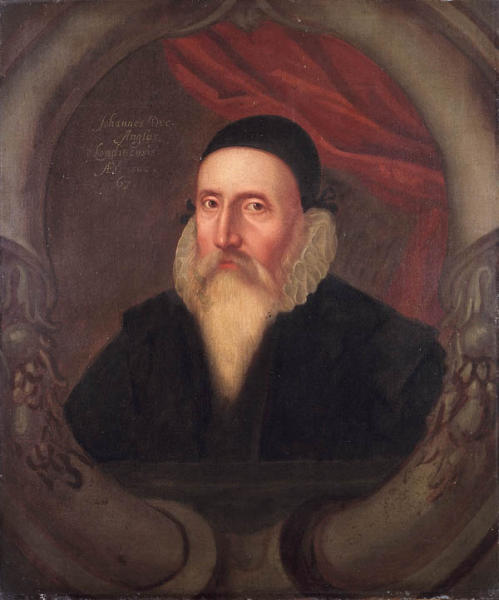
In the 16th century, John Dee—alchemist, scientist and magician—met an erratic, emotionally disturbed scryer named Edward Kelley. Dee believed Kelley had the ability to speak to angels and that this could help Dee unlock secrets beyond man’s understanding. A tumultuous partnership was formed between the two men and their wives. These flawed, complex relationships are explored in Circlesnake Productions’ new play, The Queens Conjuror, written by Joshua Browne and Alec Toller.

Director and writer Alec Toller came across John Dee on Wikipedia after he’d used the word ‘thaumaturgy’ on a date. John Dee is often considered the original wizard archetype. Dee is said to perhaps have inspired the characters of Prospero and Faust. Toller was captivated by Dee’s story and reached out to Joshua Browne. Browne, who had worked with Circlesnake Productions on Dark Matter and Angel City, says he was on board from the word ‘wizard.’

“The relationship between John Dee and Edward Kelley is really fascinating,” Browne says. Browne plays the character of Edward Kelley, “Edward Kelley was a scryer, a channel for the voices of angels. John Dee actually turned to the occult for knowledge because he reached a point in his work where he believed the knowledge of man would not get him closer to God.” Shortly after Dee and Kelley began working together, Edward and Joanna Kelley moved in with John and Jane Dee. The two couples lived and travelled together for years before the relationships began to fracture. “It wasn’t satisfying to write Kelley off as crazy or psychotic,” Toller says. “But he was very emotionally disturbed and we look at how that affects all of the relationships there.”

johndeeforqueen

John Dee with the Queen

The initial drafts of The Queens Conjuror by Toller and Browne, provided a historical baseline for improvisation with the company of actors. Feedback was instrumental when it came to writing the characters of Jane Dee and Joanna Kelley. According to Dee’s writings, Jane was integral to his work. Their relationship was quite egalitarian for the time. By contrast, all that is known of Kelly’s wife Joanna is that he despised her. “We have one man’s opinion of her,” Toller says. Browne and Toller emphasize that a central focus of this piece was ensuring that Jane and Johanna’s voices were heard.“We had to invent them,” Toller says of writing Jane and Joanna. “We explored the gender dynamics involved in the world they were living in, but it is a challenge because how do we show what the reality was without reinforcing it? We wanted to write something that is not going to ring as these women being two props for the ‘larger story’ of these men.”

john_dee_ashmolean

John Dee

Browne speaks of the risk and vulnerability involved in working on this process, “This feels like a risky show to me… I have tons of fear surrounding this show! It’s about the 16th century with very little in the way of budget[…] It’s about these contentious relationships and personal things, and how do you do that without making the play a soap opera or historical drama? And how do you write women and facilitate women writing themselves? How do you represent the patriarchy without reproducing it? As two white, male writers, we had to get our actors’ opinions and involve women in the conversation. We can acknowledge our privilege and ask how can we be better.”

In the rehearsal room Toller and Browne transitioned into their roles as director and performer, respectively. Both Browne and Toller speak of gratitude for their company of actors (Tim Walker, Khadijah Roberts-Abdullah, Sochi Fried, John Fray) whose contributions helped The Queens Conjuror change and grow. The collaborative nature of the rehearsal process is at the core of Circlesnake’s mandate: “It’s really important when we’re engaging artists and actors who are all very talented,” Toller explains, “that they don’t just walk away with the small money you get from a profit share and maybe a fun rehearsal/show process, but that there’s an ownership there. They’ve helped make this together and it’s important that these actors get the most agency and a sense of pride in the show they made with us.”

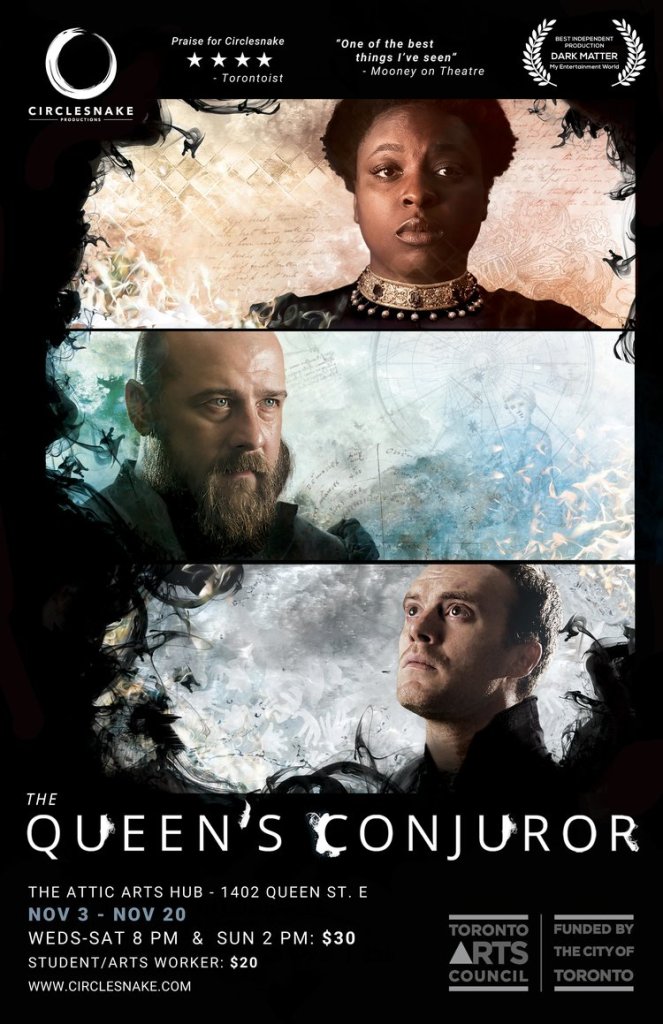
The Queen’s Conjuror

tqc-11x17-fa-high-page-001

Who:
Directed by Alec Toller
Written by Alec Toller & Joshua Browne

Featuring Tim Walker
Joshua Browne
Khadijah Roberts-Abdullah
Sochi Fried
John Fray

What:
John Dee was a 16th century adviser to Queen Elizabeth, and a scientist and magician when those two professions were indistinguishable. The Queen’s Conjuror follows John Dee as he tries to decipher an enticing but ominous vision which he hopes will provide critical information that will impress the QueenElizabeth enough to gain her patronage. To do this, Dee enlists the help of Edward Kelley, a scryer, medium, and possible charlatan. Kelley proves to be as brilliant as he is disturbed, and Dee must work through the wretchedness of Kelley’s soul and his erratic behaviour to access his revelatory visions and gain the Queen’s support. The show explores the complexity of intimacy, the dangers of vulnerability, and the necessities of both for the alchemical transformation of the soul.

Where:
The Attic Arts Hub
1402 Queen St E

When:
Nov 3 – Nov 20
Wed – Sat, 8pm
Sun 2pm

Tickets:
$30
$20 Student/Arts Worker
queensconjuror.brownpapertickets.com

Connect:
fb: /Circlesnake
t: @Circlesnake
w: circlesnake.com

“A woman in front of a microphone, a master of ceremonies of her story.” In Conversation with Anna Chatterton, creator/performer of QUIVER

Interview by Hallie Seline

I had the chance to speak with prolific Toronto playwright Anna Chatterton, creator/performer/master-of-all of QUIVER. We discussed her inspiration for the piece, the importance of collaboration, taking risks, and allowing her new pieces to breath, grow and adapt with her over time.

QUIVER is on stage now to November 6th at Buddies in Bad Times Theatre, presented by Nightwood Theatre as a double bill with Quote Unquote Collective’s MOUTHPIECE.

Hallie: This is an incredible set up for a show with one performer. How did the idea for the show and then the idea for the need of this specific performance format come about?

Anna Chatterton: This story is inspired by my teenage self. When I was fifteen my older sister moved out and my mom would, at times, spend many nights at her boyfriend’s house. While I was welcome to join them, I was often alone at home. I was close to my dad but he lived in B.C., so we would talk on the phone a lot, but it was different than having him in the same city. Though I could take care of myself, it was pretty lonely. I remember a lot of silence, coming home to silence, waking up to silence.

Quiver was born out of that memory of feeling lonely, the dynamics in our single parent family and my teenage angst and anxieties. This play is a fictional account of that period in my life, and I am playing a fictional and dramatic version of myself, my sister, and my mother. I should point out that my sister and mother are actually very different than I portray them in the play – thus, fiction. The protagonist Maddie is closest to reality and myself, though I exaggerate parts of her for dramatic effect.

Photo by John Lauener

Photo by John Lauener

Hallie: Can you speak about how the play was developed? 

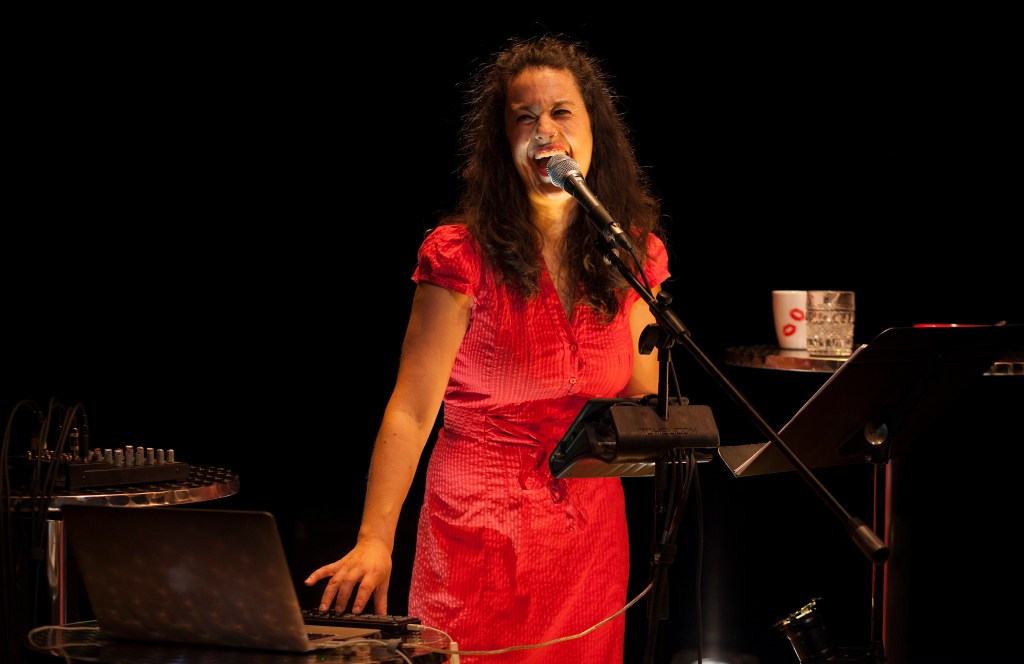
Anna: I originally began writing the play to be a solo show but then I started to write scenes so I thought, okay I guess this is a regular three-person play. Then I started becoming really interested in sound art, and wanted to learn more about creating live vocal effects for a theatre play. Luke Brown at Theatre Aquarius in Hamilton asked me if I had a play for their studio series and I started to think Quiver might actually be the right fit as a solo play working with sound in the forefront. My partner Jim Ruxton, who is an electronics engineer, did some research and found a vocal processor that could pretty much do anything. When I approached Andrea Donaldson to direct Quiver, and told her what I wanted to do she said, “I love it – a woman in front of a microphone, a master of ceremonies of her story.” Then we hired sound designer Mike Rinaldi to help me actualize my sound dreams and we created a workshop production for Aquarius.

Photo by John Lauener

Photo by John Lauener

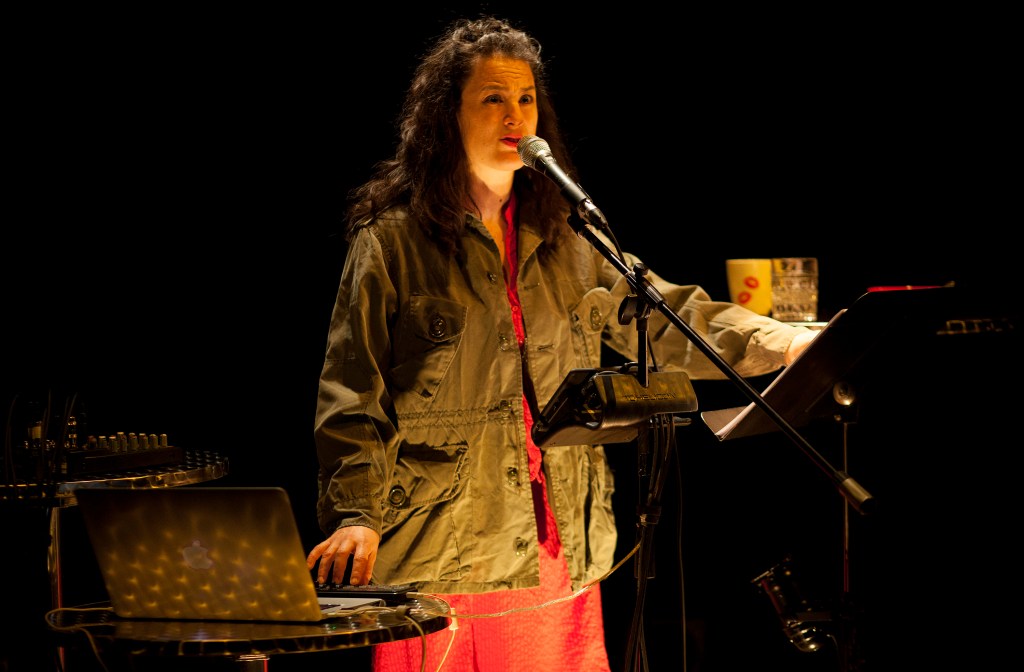
We talk about this show as being like a radio show that you watch happening live. I think the technology serves this story as the audience is always aware of me, the creator/performer, manipulating sound in front them while telling this intimate tale about a broken family. This woman (me, the performer) needs the technology to help tell the audience this story and I am totally in control of the storytelling.

Photo by John Lauener

Photo by John Lauener

Hallie: This is your 4th premiere in Toronto this year! Can you speak to your creation process and how you like to work and how you decide when a piece is ready to premiere?

Anna: I can write fairly quickly initially but I like to have a lot of time to sit with a piece, to come back to it again and again. I believe in the long process, often I will take up to three to four years before I feel a piece is ready to premiere. I like to allow a play/libretto breathe, as I change, grow, learn, and then let the pieces I am writing to change accordingly. I feel that ideally all plays or operas should have a workshop production, as that is the best way to see a piece, to learn what works and what doesn’t work in front of an audience (who understands they are watching a work in process), and then rewrite it before a premiere.

Photo by John Lauener

Photo by John Lauener

I really like collaborating. If I am writing a play, I like working with directors fairly early in the process so we can share our visions and dreams and thoughts and I can let those dialogues and notes guide the next drafts of the play. I also often work with my company Independent Aunties (with evalyn parry and Karin Randoja), where we create our plays together from the ground up and in the studio, evalyn and I co-write and act in the plays, and Karin dramaturges and directs. In opera the composer and I will come up with the story idea together and then I write the libretto, and the composer will set my text to music. 

Photo by John Lauener

Photo by John Lauener

Hallie: What would you like to see more of in Toronto Theatre?

Anna: More Risk. Allowing ourselves to fail in order to learn. Experimenting as artists, not playing it safe.

Hallie: Any advice for young emerging artists?

Anna: Have patience, and put in the work. It takes a long time to make good art. Ask for what you want, don’t expect to be asked.

Quiver

_mg_0711-johnlauener

Who:
Written and Performed by Anna Chatterton
Directed by Andrea Donaldson
Produced by Nightwood Theatre
Presented as a double bill with Mouthpiece

What:
“A brilliant and brave play.” – JUDITH THOMPSON
A single mother and a rebellious teenage daughter collide when a love interest comes between them, leaving 14 year old Maddie caught in the crossfire. Armed with little more than a microphone, laptop and vocal processor, writer-performer Anna Chatterton crafts and controls a sonic landscape in a masterful performance. A dark, delicious comedy about a passionate and imperfect family.

Where:
Buddies in Bad Times Theatre
12 Alexander Street, Toronto ON, M4Y 1B4

When:
October 21 – November 6, 2016

Tickets:
tickets.buddiesinbadtimes.com

Connect:
t: @a_chatterton
#Quiver