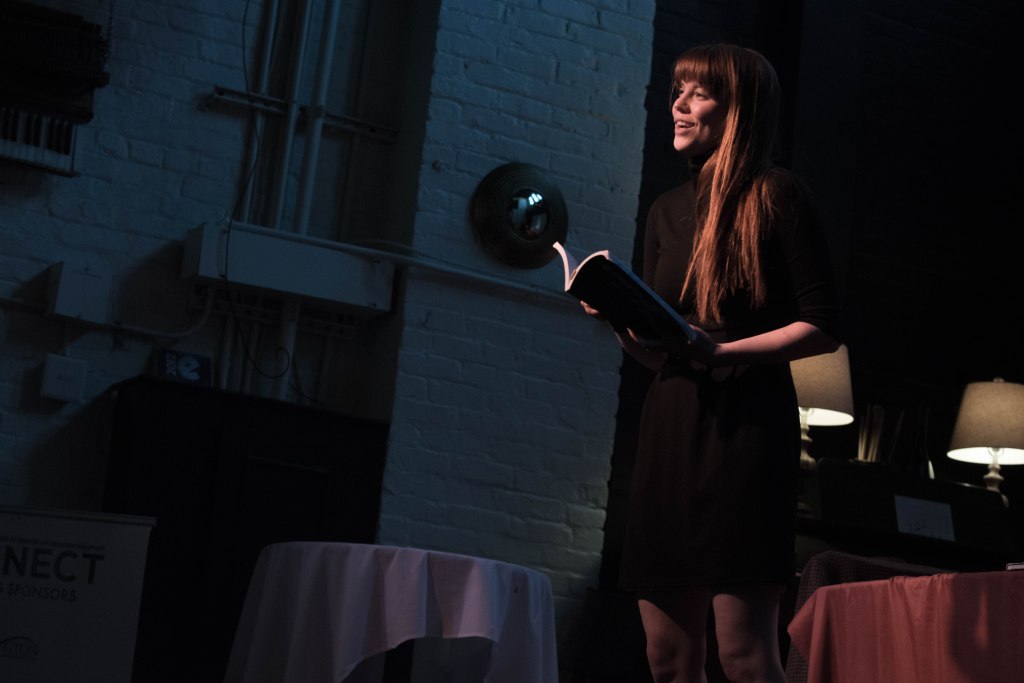
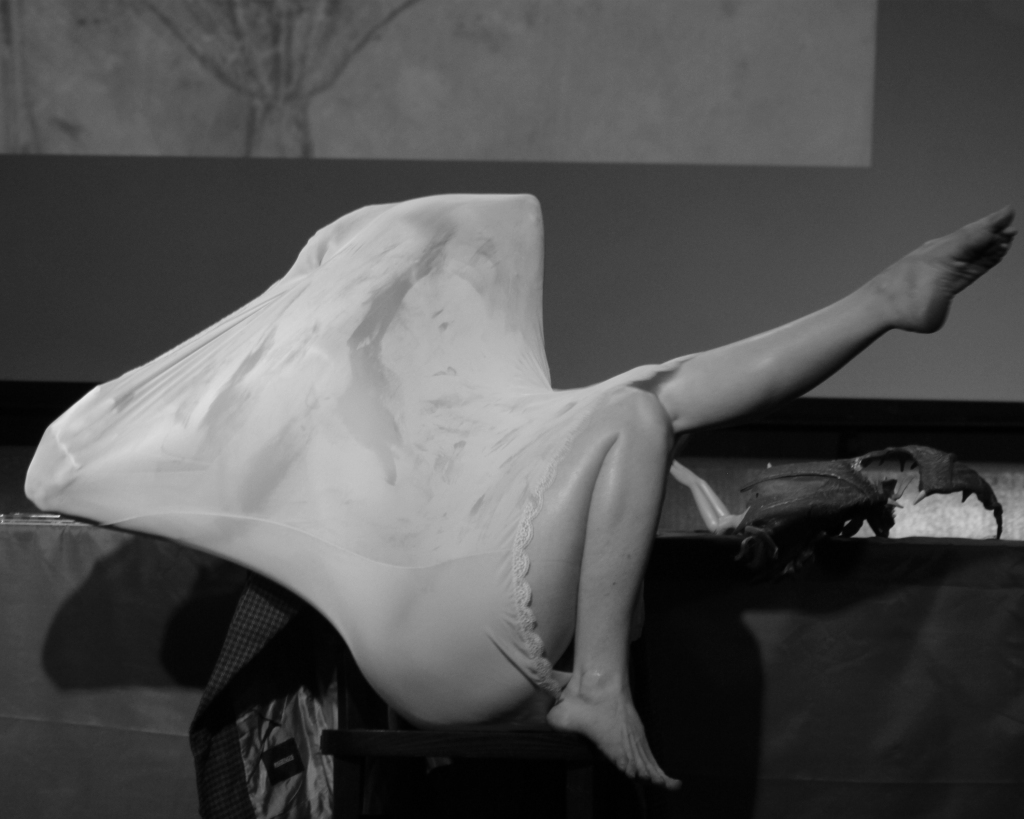
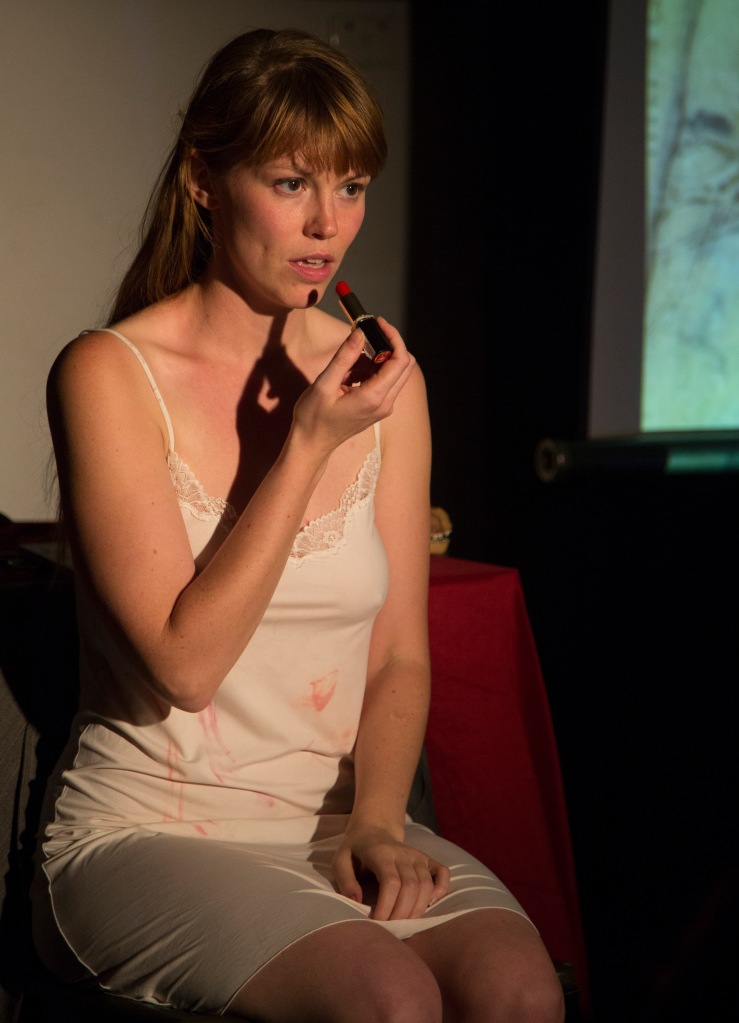
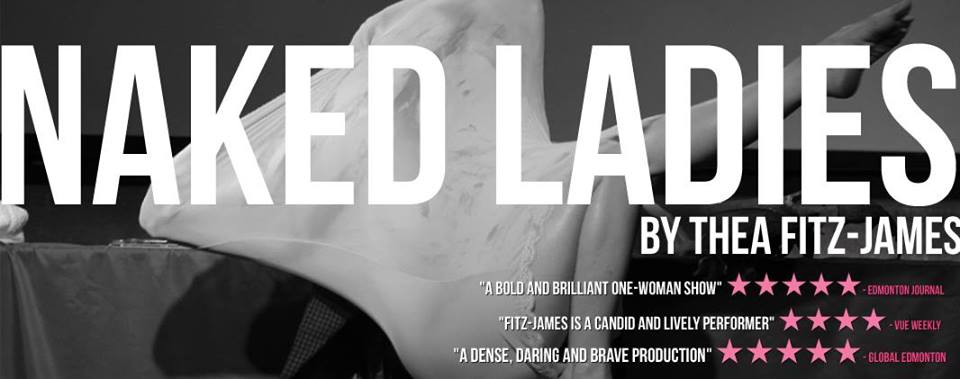
Thea Fitz-James came into contact with naked art in university when she read Rebecca Schneider’s The Explicit Body in Performance. She created an explicit body piece and performed it for her class. When Fitz-James told her mother (over the phone, drunkenly, in Halifax, on Valentine’s Day) that she was doing this kind of art. Her mother without missing a beat said that women take their clothes off to forget about their fathers. “That assumption really stuck with me, this daddy issues assumption,” says Fitz-James. “That all women who choose to get naked are somehow doing it for an absent male in the room. So Naked Ladies is a combination of personal and academic.”
“The people who are mean to naked ladies are afraid for them,” Fitz-James says. “In the show, I talk about my mother and her criticisms [of Naked Ladies] which are totally valid and come from love. We’re in a really good place now.”
Naked Ladies began in December of 2014 as a 30 minute piece, part of a double bill at hub14 with theatre creator Andrew Gaboury who performed his piece totem. When Fitz-James was accepted to the 2015 Edmonton Fringe, she reached out to director Zoë Erwin-Longstaff who was immediately on board with the project. “We spent a lot of time tearing the script apart and writing new stuff, and though it is my writing, the development process was very collaborative,” Fitz-James says.
Naked Ladies has travelled to Edmonton Fringe, Cucalorus Film Festival, Adelaide Fringe and most recently to the Montreal Fringe this past June. When asked about the differences between each experience Fitz-James says, “Edmonton was very raw… there was a fresh-off-the-press kind of energy. In Adelaide I had to work harder to find my audience. It’s not just come see Naked Ladies, it’s come see my feminist solo show where I challenge your concepts about the way we imagine women.”
In Montreal, Fitz-James got to bring her piece home. “Naked Ladies is about the systematic abuse of women, it’s about the way we treat naked ladies — either putting them on pedestals and calling them goddesses or throwing them on the ground and calling them whores,” Fitz-James says. “So what was magical about being in Montreal was that was the site of so many of my young female abuses, things that I am now comfortable to call sexual assaults. And Montreal really picked up what I was putting down in a way no other Fringe has.”
After a year of shows, getting naked in front of an audience hasn’t gotten easier, Fitz-James says, it has gotten harder. “There’s assumptions about this show — that it’s sexy, that it’s therapy on stage, that’s it’s some sort of personal healing for me. That somehow it is easy to do this because I am a pretty white female,” Fitz-James says. “I address some of that in the show, that I’m white, and how this show would be an entirely different show if I was a black woman. But I’m not going to tell that show because it isn’t mine to tell. I would absolutely support that show. I would dramaturge it for free.”
Fitz-James emphasizes that though the show is about women it is important for men to bear witness as well, “If you’re worried about being that creepy guy who comes to see my show, don’t be! It’s very accessible.” Naked Ladies can be for anyone who has felt outside of their own body.
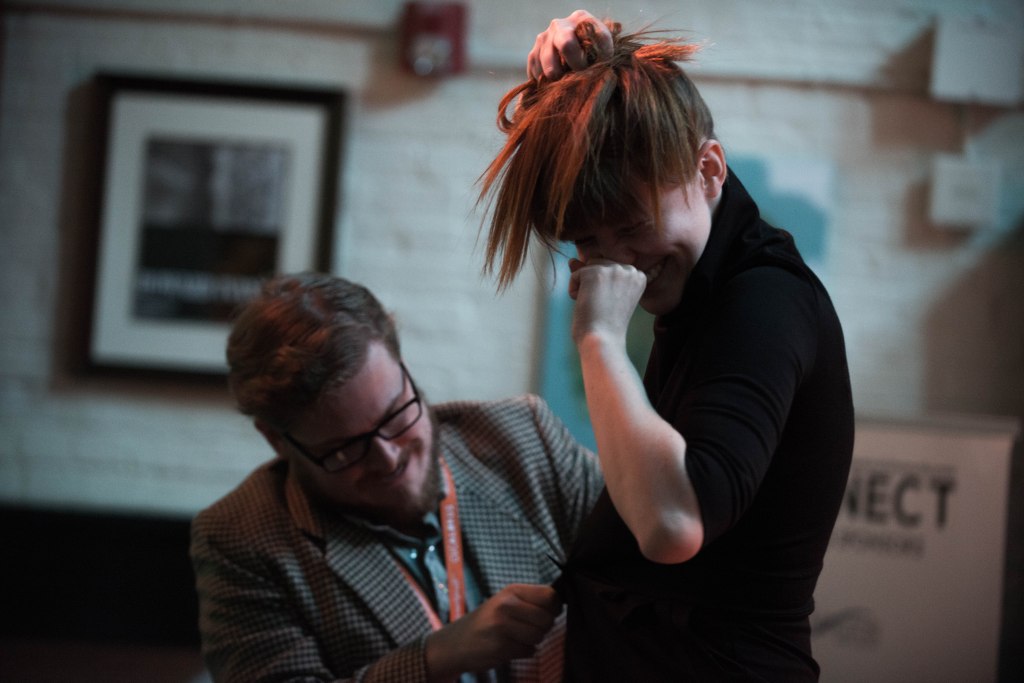
It is the visceral response from audiences that has been the greatest gift for Fitz-James and it is what inspires her to continue performing the piece. “The way the play lives on has been in conversations with women, and men, after the show,” Fitz-James says. “And it isn’t always men, but it is mostly men who want to give me their comments, criticisms, change me, curate me […] I had a man tell me my pubic hair was an easy way out because it hides my labia. My experience is certainly not isolated, I think it is just heightened. I think any woman doing a solo female show experiences men trying to direct them. It’s heightened when you’re naked because all of those questions of representations are already there.”
SummerWorks may be the last bash for Naked Ladies, so you don’t want to miss it!
Who:
Directed by Zoë Erwin-Longstaff; Written and Performed by Thea Fitz-James; Projection and Lighting design by Remington North; Outside Eye by Arlen Aguayo Stewart; Stage Managed by Stephanie Taylor.
What:
A layered history of naked female bodies in performance, NAKED LADIES asks tough questions around the nature of the female body and tries to understand its contested position between stigma and celebration. It brings together personal anecdotes – both traumatic and silly – alongside art history, feminist theory, and performance art, as the performer attempts a queer reckoning the/her own body. Between the naked and the nude, between forgetting fathers and remembering mothers, past sexual stigma and personal secrets, NAKED LADIES asks why women get naked on stage. Why, where, and for whom?
“This is a bold and brilliant one-woman show — filled with more questions than answers” ★★★★★ -Edmonton Journal
“Porn, porn porn porn, men want to f you, or any person they see naked, or did you miss that class in grade ten biology?” – Doreen Savoie, concerned citizen
“Maybe that’s what you are trying to do: reach through shame to seek worthiness? belonging? love? But why can’t you do one show that I can see?” – Thea’s mom
Curator’s Note
“Nekked. Oh yeah.
Bodies. They’ve been around all this time and we still don’t know what to do with them. Why do they still trouble us? Why do they still mean so much, and in so many ways! Smart. Honest. And funny.” – Guillermo Verdecchia
Where:
The Drake Underground
1150 Queen Street West
Toronto
When:
Thursday August 4th 7:00 PM – 8:00 PM
Friday August 5th 8:30 PM – 9:30 PM
Sunday August 7th 6:15 PM – 7:15 PM
Monday August 8th 8:30 PM – 9:30 PM
Thursday August 11th 5:15 PM – 6:15 PM
Friday August 12th 8:00 PM – 9:00 PM
Shaina Silver-Baird: Based on the description on the SummerWorks webpage, I’m very intrigued, but know very little about what happens in the play itself. Tell me a bit, from your perspective, about the show.
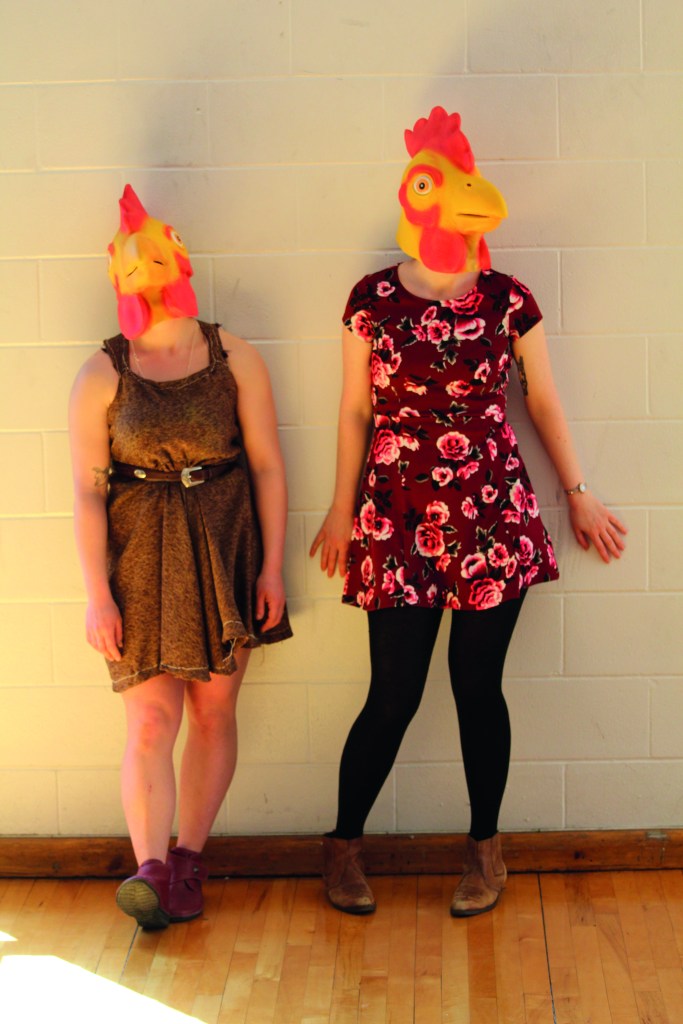
Carly Chamberlain: The description is intentionally ambiguous because it’s actually an impossible play to describe without diminishing it in some way. Basically, it’s an absurd fable centered around a family farm. On this farm, for generations, the women have been turned into chickens by their fear. And in this world, eggs are extremely profitable – think thousands of millions of dollars. The men on the farm are trying to harvest these eggs in order to become millionaires.
The play all takes place on a single day during a period when there have been no chickens on the farm for twenty years. There are two women in the family: a mother and a daughter. The men (a father and a grandfather who has turned into a rooster), have been waiting for over 20 years for Abigail (the mother) to turn into a chicken.
The play starts on the morning that Abigail finally turns into a chicken, and that transformation sets a series of events in motion. For example, the daughter has promised herself that when her mom eventually turns into a chicken, she’s going to run away so that she doesn’t also turn into a chicken. Each scene is loosely an hour of the day as it progresses.
In a nutshell: Plucked is about fear turning women into chickens, and the men of the family making money off of that. It’s big and political, grappling with misogyny and patriarchy, but it’s also quite personal. We watch the cycles of generations in this family, repeating the same mistakes. It begs the question: is it even possible not to become our parents? The fear of that makes us lash out and try to control things we can’t actually control.
Shaina: What role does the bluegrass music play in the show?
Carly: I wouldn’t classify this show as a musical, because I imagine musicals to be beautifully sung expressions of emotion. And that’s not what this is.
The rooster (otherwise known as the grandfather) is a character in the scenes but also a kind of MC/storyteller. There are often songs underscoring, or interrupting scenes. So the music plays a pretty chaotic role in the storytelling. The rhythm is quite fast, as all the characters are on stage the whole time, often popping out of character to play some kind of instrument.
Shaina: Is it all original music?
Carly: No, all the songs are bluegrass standards that are quite old. The oldest one is called “Black Eyed Susie” and it’s impossible to know who originated it. These are standards that all the bluegrass greats have played. They’re really infectious.
I haven’t been sleeping very well, because I’ve had choruses playing on loop in my head as I lay in bed. They’re total earworms.
Shaina: I understand that you and Rachel have collaborated before?
Carly: We met at the National Theatre School while I was studying as a director and she was studying as a playwright. We were paired together to create a 15 min play – I was directing and dramaturging her piece. That play was so challenging and so exciting. It was also far from realism. For example, the opening stage direction were:
“A giant fist makes its way through a groaning door in agony.”
~ Rachel Ganz
That was the set up! I’m a pretty cerebral person and I like planning and structure. And Rachel works from a really visceral, gutsy, imaginative place. She takes a lot of risks. So I think that’s actually why we work so well together. I find I’m able to bring some structure to her images. She’s a generous writer because she doesn’t tell you exactly how you should stage her work. For example, one of the stage directions in Plucked is:
“Abigail explodes into eggs.”
~ Rachel Ganz (Plucked)
And that means whatever you want it to mean. I’m really excited by her work because it doesn’t feel safe. I never know how it’s going to go. Which is terrifying, but I feel like I have to be scared to do my best work. I can’t go in with a complete plan. It’s interesting working on this play for me, because I feel like so much of my journey developing as a director has been trying to change my relationship to fear. It’s a valuable thing, because when you’re afraid, you know you have something at risk.
Shaina: Did you start as a director?
Carly: No, I started as an actor. But I was getting to play really good roles and not feeling satisfied. I finally produced and directed a double bill of two short plays at a tiny venue. From my point of view, it was a bit of a mess because I was directing purely based on a mix of impulse and what I had liked about working with other directors, without really having a process. But it was the one time in my life when I felt like “this is what I’m supposed to be doing.” I knew there were still skills I needed to develop, so I applied to NTS and ended up getting in. Now, I’m back!
Shaina: So this is your welcome back to Toronto project?!
Carly: Yes! No pressure! With directing I find I can’t compartmentalize the way I could with acting because I had my one part. With directing I feel like I’m vulnerable all the time, because even when I’m not in rehearsal, I’m constantly processing it. It’s kind of inevitable that it becomes my everything.
Carly: Ultimately, Plucked is not going to be for everyone. It’s dark, it’s really irreverent and the characters are not nice people. There are parts of it that will intentionally make people uncomfortable. My expectation is that it’s not going to be everyone’s cup of tea. But that’s actually exciting to me because I go to so many plays which everyone (seemingly) loves and I don’t. It’s a really alienating experience to go to a “hit” and everyone’s jumping to their feet, and I’m like… “what?!” And I feel like a lot of us secretly experience that.
I’m just not interested in doing realism in theatre. If I want to see good realism I can watch a movie. In theatre, there are so many more exciting, fun and challenging things we can do, than try to replicate real life. My hope is that this play will appeal to the people who are like me – who go see the really conventional work and are not satisfied.
Shaina: Describe “Plucked” in five words.
Carly: Dark
Chaotic
Playful Uncomfortable
(ever-so-slightly) Hopeful
Who:
Company: Newborn Theatre
Written by Rachel Ganz; Directed by Carly Chamberlain; Set and Costume Design by Anna Treusch; Stage Managed and Sound Design by Daniel Bennett; Produced by Laura Paduch; Dramaturged by Jonathan Garfinkel; Lighting Design by: Frank Donato; Fight Direction by Nate Bitton; Performed by Faisal Butt, Sochi Fried, Qianna MacGilchrist, Tim Machin, Tyrone Savage, Tim Walker.
What:
Infusing comedy, bluegrass music, and a complete lack of sentimentality, Plucked is set in a world where fear turns women into chickens, eggs are high currency, and vaginas are near-dangerous possessions. Plucked skewers patriarchy without holding punches. It exposes hard truths about fear and family. It’s funny because it’s fake; it’s vulnerable, but it’s okay because it ends with a curtain call, but it’s not okay because it’s familiar. Plucked is, after all, a true story. It’s just full of lies.
With Plucked, playwright Rachel Ganz and director Carly Chamberlain make their return to Toronto after collaborating together in Montreal at the National Theatre School of Canada. Ganz’s writing rejects the convention of the “well-made play”. Through her writing, comedy, music, and magic collide to expose humour, discomfort, and a sliver of hope.
“Rachel Ganz is an appalling, compelling, intelligent and hilarious new voice in theatre. Her play, “Vacuum”, directed for maximum distress and delight by Carly Chamberlain, was an articulate howl.” -Ann-Marie MacDonald
Curator’s Note
“Crafted chaos is one of my favorite things. It’s the feeling of a deep laugh caught in the belly because you don’t want to miss the next moment, which promises to hold as much delight as the previous. All this, plus unapologetically subversive politically-inspired outbursts!” – Tara Beagan
Where:
The Theatre Centre Mainspace
1115 Queen Street West
Toronto
When:
Friday August 5th 5:15 PM – 6:45 PM
Saturday August 6th 1:00 PM – 2:30 PM
Sunday August 7th 9:15 PM – 10:45 PM
Tuesday August 9th 7:45 PM – 9:15 PM
Wednesday August 10th 4:00 PM – 5:30 PM
Friday August 12th 5:00 PM – 6:30 PM
Sunday August 14th 6:00 PM – 7:30 PM
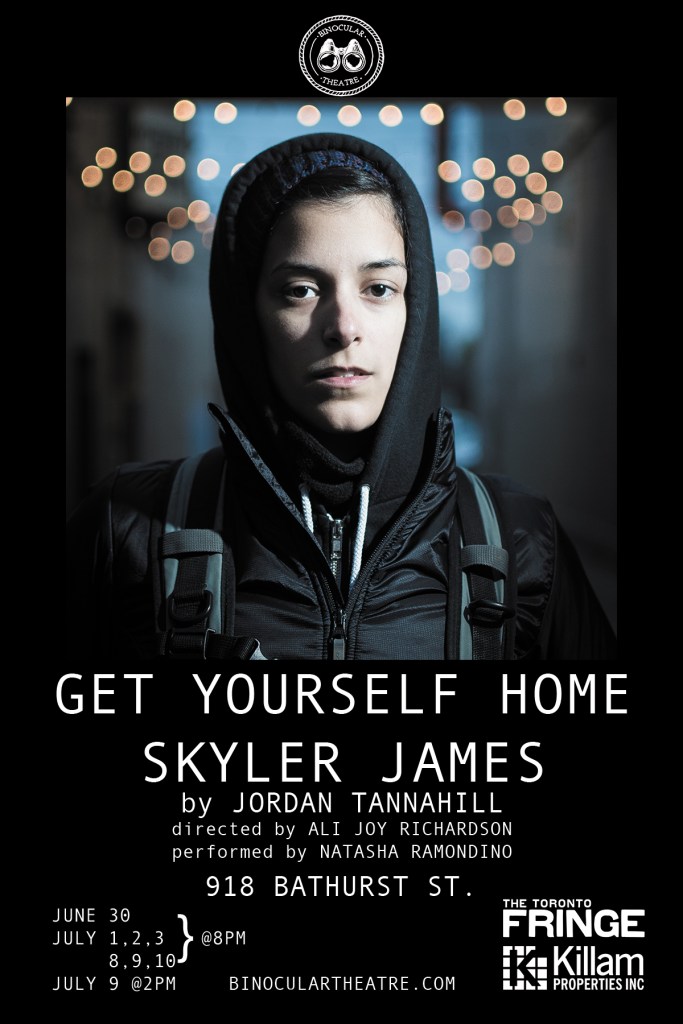
“I trusted the library, like Hermione Granger, and I got to thinking—is there a solo play for a young female voice?” In the Fall of 2015, director Ali Joy Richardson asked herself this question as she searched for a script to submit for the 2016 site-specific Fringe category. Richardson knew she wanted to collaborate with actor and friend Natasha Ramondino. Then, in Jordan Tannahill’s award winning collection of short plays Age of Minority, Richardson discovered Get Yourself Home Skyler James. The play tells the funny, honest, searing account of 19-year-old ex-soldier Skyler James. Though the play diverges slightly from true events, the core story remains largely intact.
The audience finds Skyler in back of the KFC where she works. After police officers show up to talk to Skyler, her girlfriend locks herself in the bathroom. Over the course of 40 minutes, Skyler tells the woman she loves the truth about her past and reveals everything she has fought for and against. As a director, Richardson found one of the challenges of this piece was to keep her direction simple and focused. “It’s a 40 minute show of a young woman talking through a door to another young woman, [and I had to trust] that fight, that act of endurance is compelling, and not succumb to the temptation to embellish with tech or unmotivated blocking. We focused on her actions and the sustained goal of proving herself and justifying her actions.”
Actor Natasha Ramondino was drawn to the character of Skyler instantly. “I was immediately on board,” remembers Ramondino. “Skyler is so funny while she tells what is such a serious, and at times awful, story. When things get really heavy, she’ll thrown in a joke. She describes herself as the most normal girl in the world, and she really is so relatable.”
Ramondino and Richardson bounce ideas back and forth, punctuating each other’s sentences with affirmatives and nods. “There’s a good sense in the room where I know when we can stop and chat about a moment,” Ramondino says. Richardson adds, “It’s so nice to just get to work with an actor I know well. And it feels a bit spoiled to work on a show where there’s no huge cast or complicated transitions or furniture to move. We’re just stripping it down to cracking a performance.” The pair laugh about a moment in rehearsal where they were using verbs to action sections of the text. They had chosen the verb ‘embrace’, and as Ali encouraged Natasha to embrace harder, Natasha’s line got softer and softer. They stopped the rehearsal only to discover that ‘embrace” for Ali meant a hug that sweeps you off your feet but for Natasha it meant to hold someone softly in your arms.
For both women, this play is incredibly relevant. “For me, one of the most important aspects, is that the burden of proof is always placed on the survivor of abuse or violence,” Richardson says. “The play leads to a point where Skyler discusses a conversation she has with her lawyer and the account is chilling, yet so familiar.” Richardson mentions theCanadian military probe in 2014 which found that an alarming amount of women in service had been sexually assaulted or harassed.“Women are being harassed for just being women, not to mention the [harassment for] being a gay woman,” Ramondino says.
For Ramondino, telling this story is a privilege and an honour. “It shouldn’t be so rare to have a young, queer, female voice on stage, so thank you to Jordan Tannahill. I’m very excited to bring this story to people who may not be part of the theatre community or may not feel comfortable calling themselves an ally. It will be interesting to see their expectations flipped by such a real, raw character.”
Get Yourself Home Skyler James
Presented by Binocular Theatre as part of the 2016 Toronto Fringe Festival
Who:
Written By: Jordan Tannahill
Company: Binocular Theatre
Company origin: Toronto, Ontario
Director: Ali Joy Richardson
Cast: Natasha Ramondino
Creative team:
Neil Silcox – Production Manager
What:
When Private Skyler James was outed as a lesbian after joining the US Army, she packed a truck, fled her base in Kentucky, and started driving north…
Based on a true story, this gripping play reveals the true damage of prejudice and the strength of a young woman’s spirit in a society that teaches, “don’t ask, don’t tell”.
(2014 Governor General’s Award)
Where:
918 Bathurst Basement, Bathurst Street
When:
July 8th at 8:00 PM
July 9th at 2:00 PM
July 9th at 8:00 PM
July 10th at 8:00 PM
RQ: I’m here with three members of the team from Romeo and Juliet Chainsaw Massacre – Scott Emerson Moyle, fight director and Lord Capulet; David Kingsmill, playing Escalus and the Chorus as well as being the production manager; and Matt Bernard, the writer and director. Do you want to tell me a bit about the show?
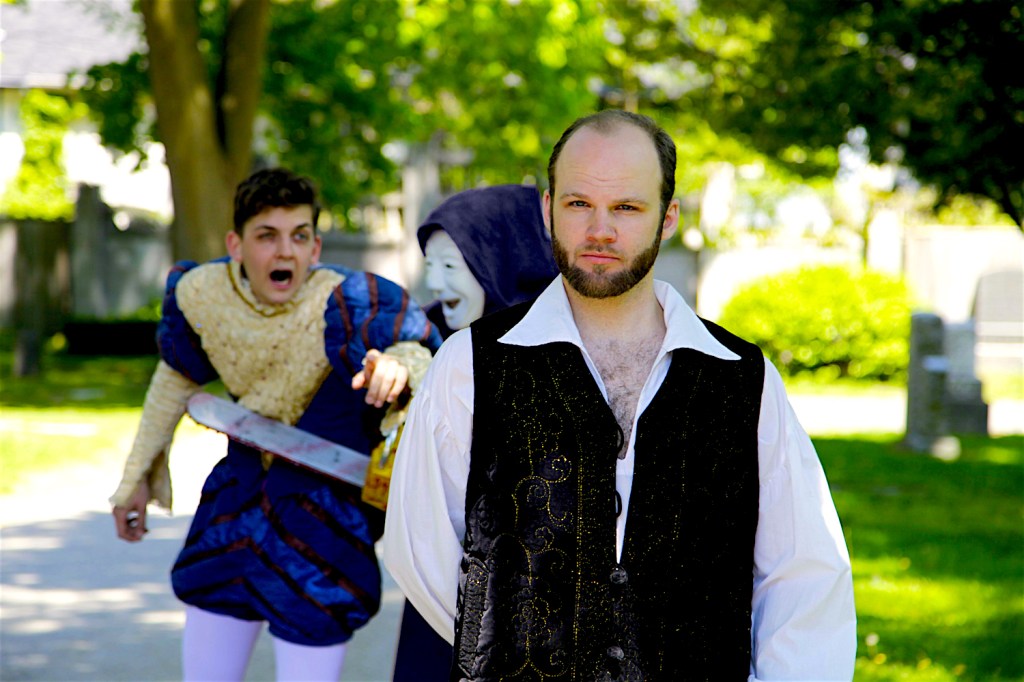
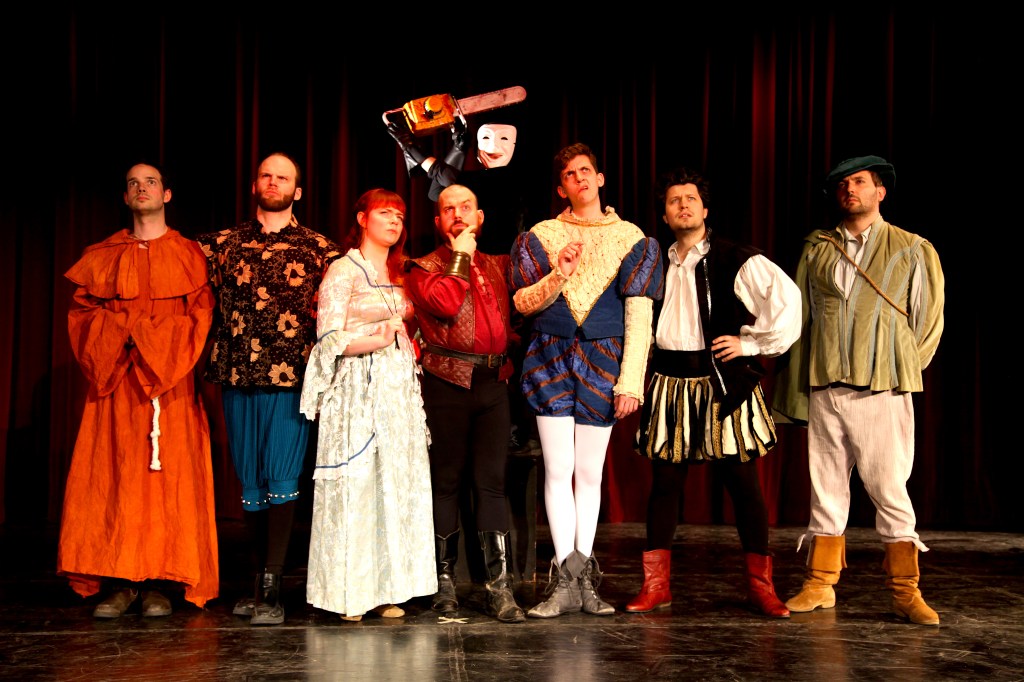
MB: Yes! So the tag line is that it’s a comedic-horror mash-up of Romeo and Juliet. It’s the tale of two star-crossed lovers with the added element of a chainsaw-wielding maniac, kind of taken from old horror movies. So that’s thrown in to see how the story would change, and how it would alter the fates of Romeo and Juliet.
RQ: How did this come about? What was the process?
MB: My comedy troupe Bain and Bernard did shows for the St. Lawrence Shakespeare festival, it was part of their Sunday series, and we would always parody whatever Shakespeare show they were doing. So, we’ve done Sherlock Holmes and the Case of Hamlet, A Midsummer’s Nightmare (Or, How I Learned to Stop Worrying and Love Desdemona Anyway). So, when we were heading back in the car from our last one, the question came up of what to do next. After doing Hamlet, I thought there’s nothing else you can do after that, but we realized we hadn’t done arguably the most known Shakespeare show, Romeo and Juliet. So the idea came up of doing Romeo and Juliet Chainsaw Massacre, and we talked about it for a while, threw some ideas out there, and that was two years ago. We were sitting on it for a while, not sure how to approach the project, but we eventually had to pull the trigger on it, do it for Fringe, and see what we could create.
RQ: What do you think it is about Shakespeare and campy horror that makes them fit together so well?
SEM: The pitch I’ve been using is that the show I’m doing for Fringe is Romeo and Juliet Chainsaw Massacre is exactly what you’re picturing when I say the title. They are two really iconic sets of visuals, and two very iconic story archetypes. They’re so incredibly different that jamming them together seems to not make sense, yet somehow you can completely picture it.
MB: It’s like Snakes on a Plane in that way. Everything you need to know is in the title.
DK: Also, I think when you say “star-crossed lovers”, Romeo and Juliet is the first thing you think of. When you say “chainsaw”, Leatherface probably pops into their head immediately. So it’s two incredibly iconic things featured in the same room at the same time.
RQ: I feel like there’s a certain reverence for 80s horror that we often casually dismiss.
MB: Well, yeah, the 80s is when horror films kind of came into themselves. There was a horror movement in the 60s, but then in the 70s and 80s, that’s when the slasher flicks came in. They started getting really gory, so that’s the prime time for it. We’re taking prime horror and prime Shakespeare, and it actually fits really well.
DK: It was a time when horror was based around being horrifying, not around being a shock spectacle. These days, I think if you look at something like Saw, yes it’s horrifying but the film exists to shock you by killing people in the most brutal ways we can think of. It loses some of the actual horror element and I think it goes beyond horror into something totally different. Something like Hostel takes that further still.
RQ: Suspense and disgust?
DK: Yeah, and I think suspense is certainly a part of horror, but disgust doesn’t have to be. I mean, look at Psycho. What was it, eighty-three stabbings of Janet Leigh in the shower and you never see one connect? It’s all the mind’s image filling in blanks. I think that’s something seminal of that time, as well.
RQ: Do you think horror films from the 80s said something about us in the same way that Romeo and Juliet said something about us when it was written?
MB: There was certainly a lot of chasing in those movies, everyone was chasing someone or something. I mean, I’m not sure because those movies do scare the hell out of me. They do their job.
SEM: Actually?
MB: Oh yeah. For inspiration, I had to watch all these horror movies and I was hiding my face behind my hands! I was terrified! I’d take notes and shut it right off at the end. They really work on me. So this was a very terrifying show to write.
SEM: It might not even be a very period-specific thing. I mean, Romeo and Juliet comes out of 16th Century dueling culture and people actually looking for ways to be idiots for love. But, the reason we still do it is because it’s enduring. We all know what it is to be in love and not have circumstances support that. It’s complicated. The horror thing might be pretty enduring as well. We’re scared of isolation, and a lot of horror movies are about being alone. We’re scared of the unknown, and that’s what horror gives us.
RQ: Is there also a connection when it comes to fate? Just by virtue of being a character in a horror movie, or a character in a Shakespearean tragedy…
SEM: You are on notice. You’re not getting out alive.
DK: I read once that people write fiction as a means to experience things they normally don’t. We don’t normally experience duels. We don’t normally get chased around by a psychotic killer. We don’t normally fly a rocket to Mars. Whatever it happens to be, it’s a way to experience something beyond the normal. So, I think the manifestation of a story is the product of its time, but at the center is a wish for vicarious experience.
RQ: What do you think makes Fringe perfect for a show like this?
MB: Fringe is all about the entire community coming together in one spot. Seeing the tents go up, seeing shows all around, it’s a whole two-week celebration of throwing together a show. I think this show is perfect for Fringe because we’ve got a large team on this and everyone is bringing everything they can to the table. So for two weeks everyone works on this together, and then we all go away.
DK: It’s a space that gives you permission to try something a little crazy. The professional theatre world is becoming more and more of a place where audience members aren’t willing to take risks. Producers and companies aren’t willing to take on the risk of a show that isn’t a proven commodity, that’s doing something really different. Fringe is all about embracing that risk. You just do a thing, whatever that thing is. It can be an improvised musical, it can be a mash-up of Shakespeare and horror…
SEM: Wasn’t there someone reading a phone book last year?
DK: Something slightly crazy like that, yeah. It’s great. Normally you can only get away with that if you have a level of, I suppose, celebrity.
SEM: Yeah, major theatres would have a hard time marketing this as part of their season, but because it’s Fringe, everyone is getting really excited about it. It’s a space to get weird.
RQ: Is there a way to support this kind of work for the rest of the year?
SEM: (laughs) Canadian Stage should pick us up.
MB: There’s kind of a rise in “geek chic”, or an appreciation of it. There’s a theatre company in Washington that sent an email saying “We do this kind of pop culture stuff, and we’d like to do the show”, so I’d like to see more of that in Toronto. Instead of doing classic theatre all the time, doing more fun, pop culture things to address millennials. They’re the future audiences, and they grew up with video games.
DK: There needs to be a place for things like this, otherwise theatre is going to stagnate. I saw a production of Pippin in London five or six years ago that was entirely set within a video game world. After about a third of the show, he leveled up and became more powerful before going back into the dungeon… things like this. It was so spectacularly nerdy. And they got away with it because it’s a well-known, already accepted musical. I think what I’m looking for in the theatre world is for me to be able to write a video game piece or something like that with absolutely no ties to an existing license, and still have it looked at. I think that needs to happen. We need to get to a point where popular culture merges with theatre, not just in the sense of being avant-garde but by wrapping the two things together.
MB: I think when non-theatre people hear the word “theatre”, they picture someone holding a skull, or the masks. So, there’s always going to be a sense of traditional theatre, and people exploring ways to change it. Hamlet done in the post-apocalypse… things like that. Switches on the classics. But I think there will be a rise of new material that doesn’t take on classical theatre elements.
SEM: We’re starting to see genre stuff come into its own in theatre. At Storefront a couple of years ago, they did Dark Matter. It was a hard sci-fi, Battlestar Galactica take on Joseph Conrad’s Heart of Darkness. This year at the Humber River Shakespeare’s sonnet show, where you direct a new short play in a day, I was handed a science fiction play about three martians coming to Earth. People are writing genre fiction for theatre now.
MB: It’s hard to do in theatre.
SEM: So hard!
MB: This is actually the first Fringe show in the “horror” category. It wasn’t in the pull-down list. Just things like dramatic, comedic, physical theatre, dance, and so forth.
SEM: We should have marketed this as a dance show.
DK: I think part of the problem with it being such a niche type of theatre at the moment, is that when something succeeds well at it, then it can become an accepted type of theatre. Like, look at The Woman in Black in London. It’s probably a little less scary now than when it opened, but it’s still terrifying. If you say “horror theatre” in London, everyone immediately thinks of that. It’s the only horror show, as far as I’m aware, that has run for any length of time on the London stage. I mean, I’m British, so I do have the most experience in London, but I think that’s something that happens here, as well. When something niche succeeds, it becomes the poster boy for it a little too hard, so we can only hope it will trickle down. Sometimes it does. I mean, who would have written a science fiction play before something like War of the Worlds or Journey to the Center of the Earth came along in fiction? I think fiction tends to precede theatre by a bit, and speculative science fiction, as we know it, hasn’t been around long. A hundred and thirty years? We’ve always had mythology, but until you get to H.G. Wells and his kind, you don’t get that kind of fiction. Theatre just needs to catch up with them a little bit, and maybe we’ll see more of it.
MB: It is hard to do genre fiction like horror or sci-fi onstage because so many of the elements are done in post, or with a lot of dedicated time. Though, isn’t that kind of the fun of live theatre? Recently, I was watching Total Recall. You see the new one with Colin Farrell and it’s all bullshit. It’s all CGI. So I went back to the Arnold Schwarzenegger one and there’s some great prop work! That’s fun to do in theatre as well! Our costume designer Gwyneth Barton should really also be credited for special effects. She created gore rigged into the costumes. We can’t use liquids because it’s a Fringe show, but it’s so thrilling to see actual spines and ribs and stuff. Practical effects are really thrilling, and a huge part of the puzzle of bringing genre-based stories to the stage. I really wish we could have used blood. Next time you see this show, there will be much more blood.
SEM: Can I just say, as the fight captain and guy who would have had to help clean up all that blood, I’m grateful for the “no blood” rule. Not only selfishly, but because limitations breed creativity. The scariest horror movie you’ll see is The Changeling, and they did it by never letting you see the horror. It’s this tiny, low-budget Canadian horror film. Their big special effect is a wheelchair that can roll down the stairs by itself. They blew their budget on that thing. And yet it’s terrifying because you never see the monster. Or, look at Jaws. If they had shot it as planned with an animatronic shark, it would suck. It’s awesome because their shark broke.
RQ: You just see the barrels coming across the water.
SEM: Yeah, and lots of shark-cam. All that… It’s so iconic and it’s bred from that limitation. I think in terms of how the fights in our show work, that lack of blood made us focus more on storytelling in those violent moments. That’s always the challenge. You can choreograph spectacular fights all day and night, but it’s easy to lose track of the story in that violence.
DK: The deaths in this are spectacular, but it’s not spectacle for its own sake. It’s the end of someone’s story in the show.
MB: (laughs) Regardless, blood next time.
RQ: Before we finish up, this show is a mash-up of Romeo and Juliet and The Texas Chainsaw Massacre. I wanted to name some other Shakespeare shows and see what horror movies you’d mash them up with, now that you’ve done your research.
SEM: I love this game.
RQ: Let’s start with Hamlet.
DK: Scream.
RQ: Why?
DK: When I think of horror and a play where everybody dies, that mask is the first thing that pops into my head.
SEM: I’d say Psycho because it’s an isolated dude with a really weird relationship with his mom.
RQ: That is…uncanny. What about A Midsummer Night’s Dream?
DK: Cabin in the Woods, possibly.
SEM: Or Sleepaway Camp.
DK: Actually, I change my vote to Tucker and Dale Vs. Evil. Those fit together really well.
SEM: Oh yeah, people only seeing half the story, and conflict coming from the dissonance. And they play the horror in it really straight, that’s what makes it funny.
MB: Or Friday the 13th, in the woods. The lake, the summer camp, that atmosphere. I’d like to mirror some of the deaths from that. Isn’t there a drill through Kevin Bacon’s neck? That would be great for the lovers.
RQ: Julius Caesar.
MB: I’d say something with zombies for that.
SEM: It is a play about an uprising where the people in power lose control and it all goes to shit.
DK: 28 Days Later.
SEM: The first half of Julius Caesar is kind of Dawn of the Dead where the power structure is crumbling and the second half is Day of the Dead where it’s all gone to shit and they’re hiding out and trying to keep it together.
RQ: There’s been a major paradigm shift and now everyone’s zombies. Alright, last one, The Winter’s Tale.
DK: What has a zombie bear in it?
SEM: Isn’t The Winter’s Tale kind of a genre mashup on its own? It’s kind of magic and kind of not. It’s kind of self-aware storytelling but there’s a point where things get real. You know what? Cabin in the Woods. That idea that there’s a sort of magic, and a higher power pulling all the strings behind it. Cabin in the Woods has the shadowy organization, The Winter’s Tale has Time come out halfway through and say “Hope you’re enjoying it! It’s been all me so far, it’s all me for the rest of the show. You’re not going to see me again but it’s all me. We’re moving the play ahead sixteen years, see you later”. Such a small amount of screen time for such a big power player in the story.
RQ: Thanks so much for your time, and have a blast with the show!
MB: Thanks!
Romeo and Juliet Chainsaw Massacre
Presented by Bain and Bernard Comedy as part of the 2016 Toronto Fringe Festival
Who:
By: Matt Bernard and William Shakespeare
Director: Matt Bernard
Cast: Warren Bain, Scott Garland, Sarite Harris, Michael Iliadis, Brittany Kay, David Kingsmill, Scott Emerson Moyle, Rylan O’Reilly, Rebecca Perry, Victor Pokinko, Nicholas Porteous, Jeremy Lepalme
Creative team:
Matt Bernard – Writer/Director, Rebecca Perry – Producer, Edward de Vere, Earl of Oxford – Dramaturge, Scott Emerson Moyle – Fight Choreographer, Kayla Brattan – Stage Manager, David Kingsmill – Production Manager, Andrew Clemens – Lighting/Sound Design, Gwyneth Barton – Costume Design, Akiva Romer-Segal – Graphic Design, Kayla Brattan – Assistant Stage Manager, Caitlin Cooke and Lacey Juk – Assistant Stage Managers
What: Nothing is more terrifying than love. When a chainsaw-wielding maniac is added into Shakespeare’s classic tragedy, it turns Verona upside-down! Find out who is (literally!) tearing our star-crossed lovers apart in this comedic horror mash-up. “Bain & Bernard have become a favourite feature at the [St. Lawrence Shakespeare] Festival.”- Ian Farthing
Where:
Randolph Academy
When:
July 3rd at 7:00 PM
July 5th at 3:15 PM
July 7th at 9:15 PM
July 8th at 2:15 PM
July 9th at 11:30 PM
July 10th at 5:15 PM
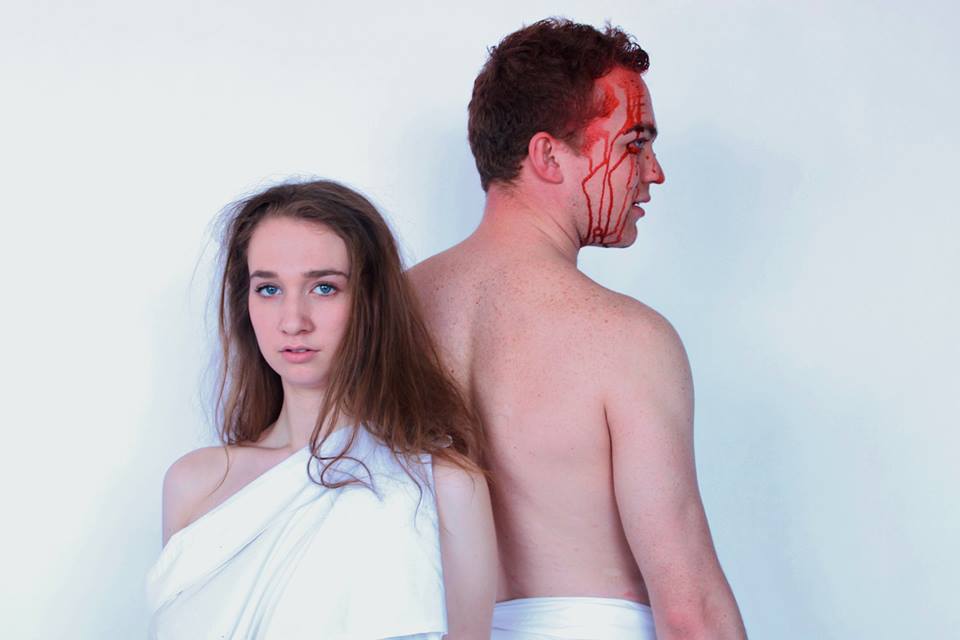
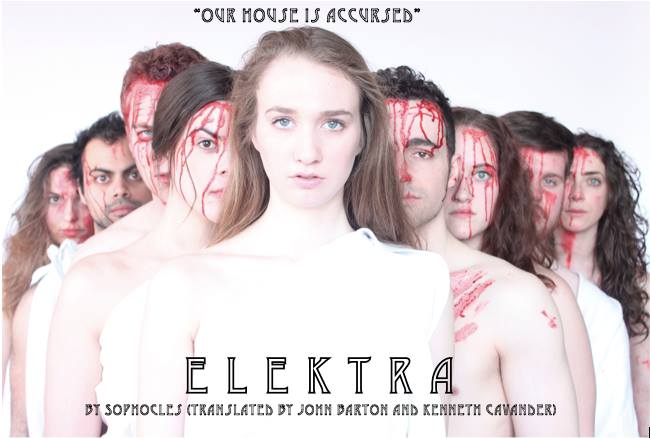
Madryn McCabe had the opportunity to talk to Erik Helle, who is performing in Stichomythia Theatre’s Elektra at the Toronto Fringe Festival 2016, about bringing the show from Windsor to Toronto, timeless classics and working as a collective.
MMC: Why don’t you tell me a little about the show?
EH: When the king of Mycenae, Agamemnon, returned from the Trojan War, he took the Trojan princess Cassandra as a trophy bride. Upon their arrival home, they were both killed in their bed by Agamemnon’s wife, Clytemnestra, and her lover Aegisthus. Because of a prophecy that her son Orestes would one day kill Clytemnestra for her deeds, the daughter of the broken family, Elektra, snuck Orestes away to save him from any further harm she feared Clytemnestra would cause him. The play begins seven years later as Elektra walks the streets mourning her father and cursing her mother. This is now her daily routine as she waits in grief for Orestes to return again one day to avenge Agamemnon’s death.
Our play is being performed at Artscape Youngplace, the first Toronto Fringe show to be hosted there. It will be in an intimate space and staged in the round and accompanied by live music. We have a very simple lay out as the story of Sophocles and particularly this translation of John Barton and Kenneth Cavander is overwhelmingly powerful.
MMC: I see that this is a remount of a previous production that was mounted in Windsor. How has the show changed since its first performance? Do you think there’s a difference between a Windsor audience and a Toronto audience?
EH: We have some new cast members so, of course, their choices and vision are going to change the images and blocking of the play. It’s not a carbon copy of the original and we’ve clarified some things as well as made some thematic changes.
When it comes to the Windsor audience, the easiest community we had to reach out to was at the school. We had performed it as a side project after classes and we had peers, friends, family and a whole pool of people that we could reach that were enthusiastic and supportive. But it can be a little difficult to reach out to the arts community in Windsor for a number of reasons. What is great about Toronto is that the whole city is an incubator for artists and their works. A lot of it comes down to accessibilty. Toronto is a well-connected city with lots of theatres, galleries and concert halls all across it. You are never too far from stumbling into something, it seems. Windsor isn’t connected the same way. You have to seek it out to find what you are looking for. There isn’t as much chance of stumbling into a show. The less regular it is, the less casual theatre-goers there will be. It is getting better though. The city is going through changes and I think that after we left there were more artistic buds getting ready to flourish. The community wants it to grow, so it should be a matter of time.
MMC: Elektra is a traditional ancient Greek play. How do you think modern audiences will respond to it? Have you adapted the show at all for modern theatre-goers?
EH: The play, like most of the classics, is timeless. It’s humans dealing with humans. The message and themes centre around human emotion and trauma. The focus isn’t on political, technological, or social movements. When you watch this play, it’s like a soap opera. A really messed up family and their domestic dispute. That’s what there is to love about a play like this. It is about people at their wits-end and what choices they make because of it. That translates across the history of the human race. The emotions of rage, anxiety, loneliness, or joy of these ancient characters are the same that we people feel today. When it comes to subject matter, there is nothing to adapt about the play. The text is heightened but it would be the same story no matter what.
MMC: You talk strongly of the repercussions of past deeds to a person’s life now. What about that resonates with you? How do you balance the desire for justice against the desire to move on?
EH: I like to think that people think about this a lot – about what in their past is going to come back and bite them, or even come back and help them. What we’ve done in the past can determine so much of our future if that is what you choose to live in. Elektra lives there. She lets the events of her history overwhelm her judgment and that is what creates her present state as well as her future. Other characters have let it go and chose not to let that dictate their lives. They choose rather to make an adjustment in their present to stop a cycle of violence. These other characters, like Chrysothemis or Agisthus, who aren’t even all that alike in character, are connected by this philosophy instead. It is really the majority of the characters that want the violence and cycle of hatred to stop. Some out of selfishness, some for more wholesome reasons. All it can take for things to escalate and continue is an angry and headstrong person like Elektra, locked in tradition or stubbornness or unshakable values. She looks to satiate an immediate blood lust, rather than prevent more heartache. She has no long-term plan.
MMC: This show is being produced as a collective. What was it like rehearsing and exploring the play as an ensemble without a designated director?
EH: It takes a lot of patience and communication and open-mindedness. A process like this is not something the cast has ever done before. It comes down to that rule of improv to say ‘yes, and’ rather than ‘no, stop.’ So there are a lot of visions in the room but so much of the excitement comes from discovering where we are thinking the same things or how we can combine ideas. Or that wonderful moment when the whole group says together “Yes that’s it!” and we just springboard into a new discovery.
Elektra
Presented by Stichomythia Theatre as part of the 2016 Toronto Fringe Festival
Who:
By: Sophocles, translated by John Barton and Kenneth Cavander
Company: Stichomythia Theatre
Company origin: Windsor and Toronto/Ontario
Cast: Alice Lundy, Daniela Piccinin, Erik Helle, Eric Bleyendaal, Shawn DeSouza-Coelho, Alyson Parovel, Elizabeth Kalles, Cara Rodger, Grant Gignac.
Creative team:
Will Jarvis – Original Sound/Music Composition
What: I walk, I dance, I weep. My father’s skull was split with an axe, seven years ago. The House of Atreus now ruled by the selfsame hands that murdered him. O, Apollo, hear me! Let the cruel actions of those that slither through our Kingdom feel the wrath of the Gods. Their bloody retribution must come. Until justice is restored, I will not rest.
Where:
Artscape Youngplace, 180 Shaw St, Toronto
When: June 29th – July 3rd at 9pm July 5th – July 9th at 9pm












 inthegreenroom