Skip to content

Posts tagged ‘Toronto Indie Theatre’

The Sex Ed Curriculum, Plays in Threes & Making a Statement with a Dildo – In Conversation with Rob Kempson, Playwright/Director of SHANNON 10:40

Interview by Brittany Kay

Brittany Kay: Tell me about your title character Shannon and SHANNON 10:40?

Rob Kempson: Shannon, the character, was born out of my work as a teacher and meeting students who don’t feel like they are welcomed in the environment of school. I’ve taught in a lot of settings where they are welcomed and that is truly amazing, like if you look at an arts school, for example, and the amount of students who are queer or questioning or in some of sort in-between place with their sexual identity or gender identity, those schools tend to be leaning towards a more supportive side. What was most interesting to me were kids who are incredibly confident with their sexuality and are able to talk about it openly, and the way that other kids in school respond to that kind of confidence and power. I was not one of those kids. After creating Shannon, I started thinking about myself as a queer teacher and the challenges associated with that in this day and age. I thought putting those two people on stage together might create an interesting dynamic.

BK: What has been your inspiration for writing this show?

RK: I’m producing two plays of mine this year. SHANNON 10:40 is the first one before the holidays and the second one is called Mockingbird, which will be in the Next Stage Theatre Festival in January 2016. They are part of a series that I’m calling The Graduation Plays. I think that I tend to work in threes. I kind of get obsessed with an idea for a little while and hang out with that idea in my brain. I’ve been teaching for a long time and so I’ve obviously always thought about school settings but for SHANNON 10:40 and Mockingbird, it was just their time in my brain to come into being. I was ready for them to exist. Jokingly, 2014 was the year of Grandmas for me. I did a musical that was about a grandma (The Way Back To Thursday) and then I did a piece at Hatch that featured three grandmas (#legacy). I don’t think my grandma phase is over, perhaps, but I’d like to think that now I’m on to my school phase.

Once I get interested in a given environment or topic, I want to explore that from a lot of different places before I’m done with it and sometimes you can’t fit all of that into one play, so it becomes two plays.

BK: Is there a third one in your series?

RK: I think there’s a third play… and I think I know what it’s about. I certainly didn’t imagine I would get into Next Stage this year and also get to produce SHANNON 10:40 this year, so the fact that they are being presented so close together is very exciting. I feel really lucky.

BK: Why the title of the series – The Graduation Plays?

RK: I always thought of them as a series and then a smart publicist friend of mine told me that I needed to name it as a series if it’s going to be one. Of course, initially what came to my mind was the Education Plays and I thought, “well that sounds stupid,” and then I thought that that’s not actually what this is about. It’s about all of us as an education community but also us as a world advancing in some way. Getting to somewhere that we weren’t before. That’s what graduation is in theory and I think I imagine these plays to both showcase characters and situations that challenge what we expect and challenge what we understand to be acceptable.

I think that there are so many examples of students taking back power because they need to act out, they need to say they’re not happy, they need to stand up for themselves… there’s a lot of different reasons. The term ‘graduation’ is kind of about all of that – it’s about moving forward and understanding something new. Both plays have that sort of characteristic to them.

BK: How has teaching, being in a school environment, and around these types of students influenced your writing?

RK: I feel so lucky that I get to work as an artist educator and as an artist because those two streams for me are incredibly important in my life, in my career, and they ultimately inform one another. So things that I’m working on in my artistic practice often end up infiltrating my work as an artist educator and vice versa. Things that happen in my practice as an artist educator always make their way into my writing. There’s this real sort of back and forth between those two parts of my brain.

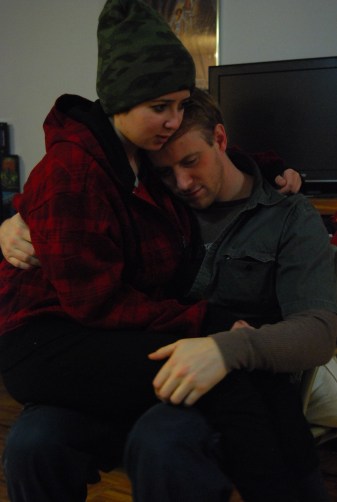
Hallie Seline as Shannon in SHANNON 10:40

Hallie Seline as Shannon in SHANNON 10:40

BK: Why 10:40?

RK: Oh, because that’s the time of Shannon’s guidance appointment. She’s going to a guidance appointment at 10:40. It’s not like 4.48 Psychosis or anything crafty. It’s literally the time of her guidance appointment. The timeline is all about the school day and 10:40 is midway through second period, it’s right before lunch and she’s been called out of class to come to this guidance appointment. There’s a very different kind of day for students because school starts so early in the morning and ends so early in the afternoon.

BK: This play is very timely and appropriate for what some are calling The Education Crisis that is going on.

RK: Yes. It’s not really brain surgery though… Oh, the world changes but we’ve done the exact same thing for a very long time? If we expect to be relevant and expect to connect with our students and we expect to have our education system actually do anything for the community that we live in, it needs to change with the world. The bureaucracy that prevents it from doing so is, in fact, the problem. We need to be able to respond quickly with curriculum development. We need to give teachers enough autonomy to be able to work with the curriculum in an innovative and progressive way, but we also need to be able to support them as they make those choices. The message of Shannon 10:40 is definitely political in scope in the sense that a teacher, Mr. Fisher, is dealing with this desire to be a progressive forward thinking teacher and he’s not receiving the support that he needs to in order to do that effectively. Shannon is a student who’s caught in the cross-fire, not feeling represented in her school, not feeling represented in her classes that she has to take and, therefore, feeling oppressed. She is feeling like she is the victim of oppression in her everyday life as a student and so, of course, she’s going to do something to change that, because she has to.

I think the play is about students figuring out a way to state their case, to share their message, to say what they need to say—and students don’t always do that in the most appropriate way. That’s what it’s about: a student taking back the power and fighting the oppression of that system.

BK: Tell me you’re inviting Kathleen Wynne because this is so timely around what is happening right now in the world of education.

RK: I do have dreams of doing so. I’m definitely inviting some folks who are into education pedagogy and hoping we’ll be able to have a discourse around that.

BK: I think that’s what theatre is about… that, often it needs to reflect what’s happening in our day-to-day.

RK: I agree. I also think that we don’t give students tools to talk about or react to oppression, but we then oppress them. If we’re not teaching them how to react to that in a way that’s appropriate, how can we expect anything but outbursts, outrage and acts of defiance because they need to be heard. They need to say what they feel.

I think the last great bastion to knock down in a school setting is really around sexual and gender diversity and it’s way better than it used to be. It’s not like we aren’t making progress but it’s when in that progress that we need to recognize we’re never done… We still need to work. We still need to continue and develop.

BK: What do you want audiences walking away with from SHANNON 10:40?

RK: Hopefully, a new perspective in their toolkit when they’re thinking about the way that education works in this province. And, also, that they got to see a show with a dildo in it! We haven’t even said that—Shannon brings a dildo to school.

Rapid Fire Question Period:

Favourite movie: Sister Act 2.

Play: Impossible to choose… You Are Here by Daniel MacIvor?

Musical: Elegies.

Food: Cheese.

TV Show: Please Like Me.

Book: Favourites are so hard… I don’t like the commitment… The Interestings by Meg Wolitzer

Best advice you’ve ever gotten or something you live by: This is where I find myself. You have to be happy where you are.

12096604_10153332772663952_6415745338846030385_n

Who: Written and Directed by Rob Kempson
Featuring Qasim Khan and Hallie Seline
Set and Costume Design by Anna Treusch
Lighting Design by Oz Weaver
Sound Design by Daniel Maslany

When: Wed‐Sat at 8pm, Sun at 2pm

Where: Videofag, 187 Augusta Avenue, Toronto

Tickets: $20 or $15 for Artsworkers/Students. Plus a $10 Halloween ticket treat for Saturday October 31st at 8pm.
Available at shannon1040.bpt.me

Connect with us:

Rob Kempson – @rob_kempson #shannon1040

Brittany Kay – @brittanylkay

In the Greenroom – @intheGreenRoom_


*Disclaimer: Please note the editor’s personal involvement in the show has not affected the editing and content of this piece. The views of this interview are that of the interviewer and the subject.

Philip Ridleys “Mercury Fur” Gets Toronto Premiere – A Chat with Director Will King

Interview by Hallie Seline

HS: Could you tell me a bit about the show? 

Will King: Absolutely! Mercury Fur follows two brothers who survive in a lawless city by fulfilling the dark and vivid fantasies of their clients. Language is degrading, memories are disappearing, and as the population becomes increasingly dependant on mind altering butterflies, their desperate need to connect with each other is intensified. It’s provocative and unapologetic, but at its core this is a show about what you would do to protect the person you love.

HS: What inspired you to do this show in Toronto right now? 

WK: I’ve been a fan of Philip Ridley’s work for a long time, and once I realized that there’s never been a Canadian production of this play I knew we needed to bring it to Toronto. It has an incredible cast of characters, and I’m consistently impressed by Ridley’s ability to write three dimensional parts for young actors. I also think Mercury Fur challenges the audience to experience theatre in a new way. It weaves together horror, drama, and comedy into a shot of adrenaline which leaves you wanting more. I’ve never read or experienced anything quite like it, and I feel like the strength of the writing allowed us to bring together a pretty incredible cast and crew.

HS: What has been the most surprising discovery you have made while working on Mercury Fur?

WK: The humour. Mercury Fur can be wickedly funny. We are constantly finding joy in this bleak world they live in and although there’s plenty of heavy subject matter, Ridley has created a solid polarity of comedy to keep things rolling.

Edit-1

HS: What inspires you as artists?

WK: At the moment I’m quite fascinated by Fantastic Realism. Through taking characters which are grounded and believable, and placing them in a heightened, magical, or supernatural environment I find we are able to expand the style and size of our world without compromising the given circumstances or truth of the characters.

For example, in Mercury Fur, every character has been affected by the outbreak of butterflies. Whether they sell them, consume them, reject them, or become hopelessly addicted to the power of their fantasy, the existence of these butterflies creates an immediate bond between the characters. 

Seven Siblings Theatre is also focused on utilizing the Michael Chekhov Acting Technique. So when I see a piece with strong shifts in atmosphere, an even ensemble, and characters that are heightened enough to be in a constant state of play I get excited. Mercury Fur goes hand-in-hand with my style and our company values, and I’m very proud of the people who are helping to make this possible. Their commitment to our psychophysical exploration was thrilling to watch, and the detail and nuance in their performance is the result of their engagement throughout our rehearsal process.

HS: If you could pitch this show to your audience in five to ten words, what would they be?

WK: Judith Thompson meets Quentin Tarantino. A party ensues.

MFUR-11

HS: What song or soundtrack should we listen to before coming to see the show? 

WK: As a small homage to the culture in which the play was written we’ve been digging into the soundscape of East London’s electronic music scene. I would recommend looking into Burial, Four Tet, Phaeleh, and SBTRKT. We’ve also been building a deep and dark sound palette, so Gesaffelstein seems appropriate to me as a pre-show prep. For the exact tone of our play, check out our sound designer’s work in his new self-titled Holloh E.P.

Lastly, I’d recommend that you brush the dust off your Elvis collection, but to find out why you’ll have to come to the show!

http://www.youtube.com/watch?v=QLf-Zw1vraA

http://www.youtube.com/watch?v=76We6yBnIKE

Mercury Fur

Presented by Seven Siblings Theatre Co.
 Edit-2

Director: Will King
Assistant Director: Madryn McCabe
Lighting and Sound Design: Parker Nowlan
Stage Manager: Andreane Christiansen
Fight Choreography: Nathan Bitton
Fight Captain: Annemieke Wade
Set Design: Stephen King

Cast:
Elliot: Cameron Laurie
Darren: Andrew Markowiak
Naz: Adrian Beattie
Lola: Eric Rich
Spinx: Mishka Thébaud
Duchess: Annemieke Wade
Party Piece: Kenneth Collins
Party Guest: D. Gingerich

Where: Unit 102

When: Aug 27th to Sept 6th

Tickets & More Info: http://sevensiblingstheatre.ca/mercury-fur/ 

FB: https://www.facebook.com/sevensiblingstheatreco
Twitter: https://twitter.com/@SevenSiblingsCo 

FWYC Campaignhttps://fwyc.ca/campaigns/mercury-fur 

Artist Profile: James Wallis & Julia Nish-Lapidus – The LaBute Cycle – This Week Only at Unit 102 Theatre – “We are who we are inside… The rest is unimportant.”

Interview by Hallie Seline

I had a chat with one of my favourite couples in Toronto Theatre, James Wallis and Julia Nish-Lapidus, to discuss their most recent project – The LaBute Cycle, going from Shakespeare (known most notably from Shakespeare BASH’d sold-out Toronto Fringe shows and their most recent production of Romeo and Juliet last fall) to LaBute, working professionally as a couple and their favourite places in Toronto. reasons to be pretty runs for one week only (April 8th-13th) with a special PWYC staged reading of Fat Pig on Sunday April 13th.

HS: Tell me a little about yourselves and about the show. 

JNL: We are doing reasons to be pretty, by Neil LaBute and a staged reading of his other play, Fat Pig. Originally we were presenting full productions of both plays in rep, but unfortunately, one of the actors was badly injured earlier this week, and is no longer able to do the show. James Wallis, our director, has stepped in to play his role in reasons to be pretty, but we are not going to be presenting a full production of Fat Pig at this time. We will be doing a staged reading of Fat Pig on Sunday, April 13 at 2pm, with another amazing actor, Jesse Griffiths, stepping into the role of Tom.

JW: Both of these shows examine how we value female beauty. We’ve worked with a lot of the team doing The LaBute Cycle while working with my other company, Shakespeare BASH’d, doing classical work. The LaBute Cycle is a passion project for myself and all those involved.

HS: Why LaBute?

JW: LaBute to me is a fantastic playwright, as he is very honest and focused with his characters’ worldviews. In reasons to be pretty, he tackles a very sensitive issue with the way we value beauty in the modern world. He doesn’t pull any punches and, in my opinion, writes with a great gusto about what he knows and doesn’t try to be politically correct. Also, I love his text; it’s extremely conversational and it’s a complete 180 from what I’m used to with Shakespeare’s work.

JNL: It’s a really interesting and sensitive subject matter to explore. And it’s fascinating to explore it so publicly. The issue of beauty and how we value it is pretty prominent in our world today and I think this play offers many different perspectives, and asks a lot of questions about the subject.

8442768

Original Cast: Milan Malistic (TL), Elisabeth Lagerlöf (TR) Julia Nish-Lapidus (BL), Steve Boleantu (BR)

HS: What have you found interesting about working on something so different together. You normally work on Shakespeare together, this is quite a change. 

JW: It is! It’s been really great to get to explore these new characters, but bring a lot of the basics we use with our Shakespeare work into approaching these roles. I like the role of Kent for sure, he’s a malicious person, a person who is very selfish, but I think that he’s his own person and fights for what he thinks is his, regardless of who he hurts along the way. It’s not pretty but it’s honest. He’s verbose and nasty at times, which isn’t such a stretch for me but it is not where I live most of the time when it comes to acting. I’m excited for the challenge.

JNL: It’s really great to get to work with James on something contemporary for a change, and now I get to work with him as both a director and fellow actor! Being a married couple who works together so often (yes, James is my husband) is really great and it’s interesting to be exploring this sort of subject matter together. For me to be doing a big fight scene with Steve, who plays my boyfriend in the show, and have James be directing it is really cool, because he knows me so well and for material like this that sits in such a natural world, he can really help me bring a lot of myself to it, since he obviously knows me so well.

429146_10151405502180701_196929419_n

Power Couple: Julia Nish-Lapidus & James Wallis

HS:This is being performed in Unit 102 theatre. Tell me about working in the space.

JW: In my opinion, it’s one of the most amazing spaces in the city. It is a complete blank slate that I have seen transformed in so many ways. I really like the enthusiasm of the guys who run the place. They want to see great theatre come out of their space and I admire their tenacity for finding it.

JNL: It’s a really great space. There’s a lot of flexibility to use it however you want and the team of people who run it are awesome! It’s so important to have small, flexible spaces like that in the city.

HS: If you could entice people to come see the show in five to ten words, what would they be?

JW: We are who we are inside. The rest is unimportant.

JNL: Hilarious, heart breaking, and oozing with talent.

HS: What inspires you as artists?

JNL: James, my husband? Is that super cheesy? This is really a passion project for him, and he’s pushed me to take risks artistically that I don’t think I would have without that push from him.

482243_10151567059200701_1277760830_n

JW: The people I am fortunate to be surrounded by. The constant creativity that they exude is without equal. Also, my wife, Julia, whom I am completely enthralled by, her grace under pressure, her faculties with producing a play and her wonderful intelligence when it comes to any work she does.

JW: He just said that because of what I said. He felt like he had to…

HS: Best advice you’ve ever gotten.

JW: It’s just a play.

JNL: Act better.

HS: What are your favourite places in the city?

JW: Victory Café, my home, the Dank and any used book store.

JNL: Home! And Bar + Karaoke (the best karaoke place to drink your face off and sing 90’s pop songs)

reasons to be pretty

by Neil LaBute
The LaBute Cyclelabutecycle_postcard_front

WhereUnit 102 Theatre (376 Dufferin Street)
When: April 8th-13th *Special staged reading of LaBute’s Fat Pig will be presented at 2pm on Sunday April 13th
Tickets: $17 – Available at www.labute-cycle.com and at the door. The staged reading of Fat Pig on April 13th is PWYC at the door

A Few Words with Eric Regimbald on “Blackbird” by Adam Rapp

Interview by: Ryan Quinn

We sat down with Eric Regimbald of Pinchback Productions to discuss their upcoming production of Blackbird by Adam Rapp and his thoughts about the Toronto theatre scene and about the healthy opportunity for growth when taking the plunge with a bold, strong play choice.

RQ: Can you tell me a little bit about Blackbird?

ER: It’s a play by Adam Rapp, a two-hander. It takes place in the dead of winter, at Christmas Eve on Canal Street. It follows two “losers”. He’s a Gulf War vet, she’s an ex-stripper, and he’s trying to wean her off heroin. It’s a really dirty world that has cast them aside. What’s their place in society? But they realize more-so now than ever that they’ve found each other and they need each other to survive. I should mention that when I bring up this play, a lot of people think of the David Harrower play of the same name, which is also a two-hander that’s quite dark.

RQ: What draws you to this play?

ER: Well, I’ve always wanted to do a two-hander. Especially after doing my touring job as a children’s performer, which is fun but not very character-satisfying. I just wanted to sink my teeth into something visceral. Something real and exciting. So, my producing parter and acting partner Alona Metzer and I read a few plays, including One Night Stand by Carol Bolt, which would have been a really fun character to play, but this one is a little further out of my range and a little scarier. I also feel like a lot of people who put up theatre, especially Shakespeare, don’t seem to look into the last time a show was put up. The same shows seem to be done by different people all the time. So, we wanted to do one that hasn’t been done in around ten years, and this fit the bill. We wouldn’t put this up if it was done last year. Even if you might have something different to say with it, I couldn’t bring myself to do it.

RQ: How did this come about?

ER: I met Alona doing class simulations at Ryerson. I heard that she’s a producer and I’m always looking for new people to work with. We started by trying to write something, but I found that that wasn’t what I was really into, so we ended up deciding on doing a published play instead.

RQ: Do you think this show has importance now in Toronto? Do these characters resonate somehow culturally?

ER: The love story is the key thing we’re really trying to flesh out. Anyone can relate to a love story, and I think that’s relevant. I mean, it’s also relevant in that I hope it’s still snowing out in March. People can really feel that isolation, that cold. It would be different if we did this show in the summer, it would resonate a lot differently. It’s such a dark, winter show.

DSC_7021

(L to R) Alona Metzer and Eric Regimbald

RQ: You have these really ugly, grimy characters, and this really beautiful love story. What’s your approach for getting to the heart of the show when the surface is so dirty?

ER: Adam Rapp’s language really juxtaposes all this swearing and talk of heroin with this really clear dialogue that they need each other. There’s a reason you come into the story at this point in the lives of these characters. So, the struggle is clearly there, and the need, and you just tell the love story around that. It’s exactly what you were saying, it’s that they can’t live without each other, and why not. They don’t want to be in their situation. If they were up on stage doing heroin and swearing and loving it, the story would be totally lost. He’s struggling to recover, and she just broke up with a violent, shady dealer, so they’re really trying to salvage a life together. It’s about finding the humanity.

RQ: What are your goals this year as an artist?

ER: I wanted to get a play done early in the year. I put up a play last year in Fringe, but I wanted to get one up early, especially since I’m on the road a lot. It’s that time to do something and not sit around. I’m hoping to work on some other projects later in the year. It feels good to put something up this early in the year, then there’s the hunger for “what’s next”, you know?

RQ: I want to go back on something for a second. Why do you think so many plays are done so often in this city, and do you believe there’s a shortage of original work while young companies tend to do British and American classic work?

ER: A lot of people seem to be afraid to buy rights to shows. They’ll go to Shakespeare right away because it’s free and the problem is that sometimes they don’t have anything to say, or they don’t have the training to bring them to the level that other local companies are doing the work at. What I’m passionate about is contemporary theatre, and a lot of the modern work I see falls toward doing theatre exercises on stage. It doesn’t make sense. I’m disappointed, and don’t get me wrong, I see amazing modern shows that use movement work as well; but a lot of the stuff I see just doesn’t live up to what it could be. It is an accomplishment to put up a show, but that shouldn’t be enough for you. I mean, obviously we’re doing this show partly for ourselves as well, but it can’t be just about that.

RQ: Do you feel that the theatre community is afraid to critique itself?

ER: I think so. I think people are really polite, and we’re not helping each other. I would love to have someone come up to me after this show and tell me why they didn’t like it. It’s better than hearing nothing. We’re trying to be strong in our voice, and we’re prepared for some people to have negative reactions to it.

Blackbird

Presented by Pinchback Productions
When: March 14th to 23rd
Where: Hub14 theatre.
Tickets: Available at the door or at http://blackbird.brownpapertickets.com.

The Memo: A Satire of Bureaucracy

Interview by Madryn McCabe

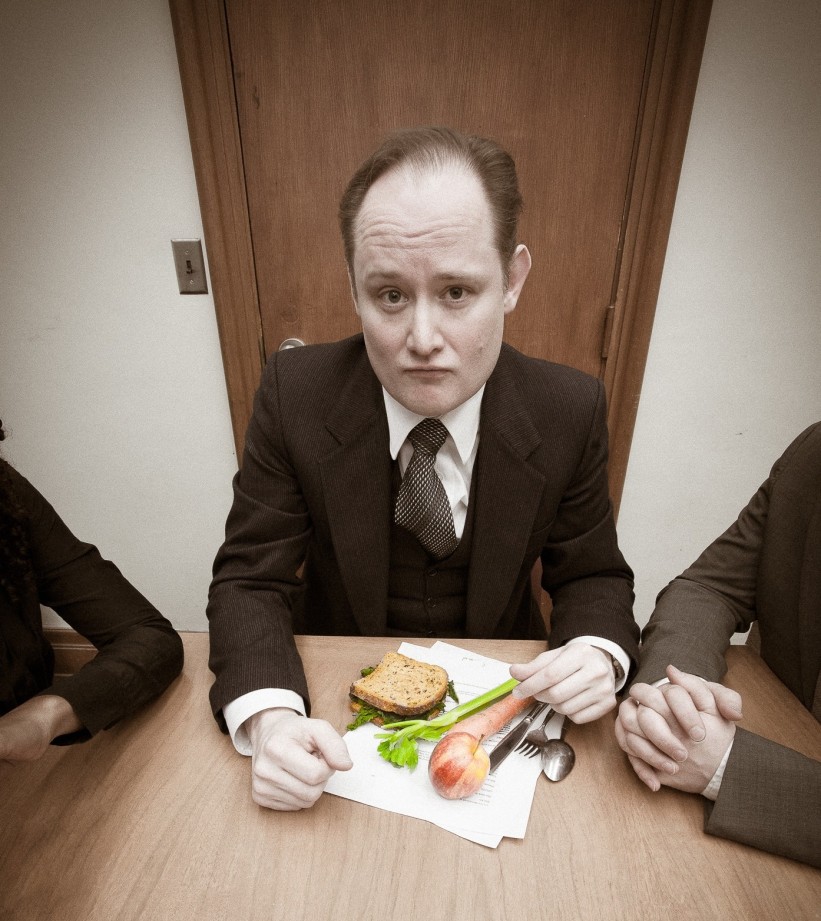
I interviewed Tyler Seguin, director, and Helen Juvonen, producer and actor, of Thought for Food’s “The Memo” to talk about the show and their intriguing Kickstarter campaign.

MM: Why don’t you tell me a little bit about The Memo?

HJ: The Memo is a play by Vaclav Havel and we are presenting the Canadian premiere of a translation by Paul Wilson, who is also Canadian. I call it a satire of bureaucracy. What do you call it?

TS: A workplace comedy.

HJ: A workplace comedy! Plot wise, it’s in this nameless organization, which is probably a government agency of some kind, but we never actually find out what they do or what their function is. The main character, Andrew Gross, receives this memo, written in Ptydepe, which is an artificial language that has been introduced into the organization to streamline office communication and he spends the rest of the show trying to get it translated because he doesn’t understand it.

MM: And that’s the irony of the situation and he can’t read the memo and it’s supposed to streamline communication. 

TS: Exactly! And very few people in the organization know the language, and those who do know it are under mounds of red tape, so that they can’t actually do any translations for anyone.

MM: What was it about this play that made you want to produce it?

HJ: I produced a previous translation in 1999. Then, when CanStage was doing Rock and Roll, Paul Wilson was consulting on it.

TS: Rock and Roll was partially about a Czech rock band called The Plastic People of the Universe. Paul Wilson was the lead singer and guitarist for this rock band for a number of years during the 70s. Because he’s Canadian, he was deported for being seditious. This rock band became sort of a focal movement, and focal point of the dissident movement of the anti-Communist uprising. And that’s how he met Havel.

HJ: So Paul Wilson was a consultant on the production at CanStage, and in his bio, it said that he was currently working on a translation of this play. And went “Gasp! I have to do this play! I have to get my hands on this play!” And Tyler tracked down an email and said that we’d like to do the translation and he put us in touch with Havel’s literary agent in the Czech Republic and we got a copy of the new translation.

MemoStillsEditsII-3 web

MM: Do you know if this play has been produced anywhere? I know you said it was the Canadian premiere.

TS: It’s been done once before that we know of, that Paul knows of, and that was as part of a Havel festival in New York.

MM: That’s an exciting thing, that you are one of the first to produce this play. Do you feel like there’s any responsibility to that?

(They pause.)

TS: Yes.

(They laugh.)

HJ: It’s a little nerve wracking. This is the first time we’ve worked on a published play where we’re actually in contact with the translator. I feel like we owe him something. We owe him a good production at the end of the day.

TS: We’ve been in touch with Paul quite a lot. He’s been very supportive. We’ve talked to him about issues in the play, and ways we want to approach it and things like that, and he’s been great, he’s been really on board. But it does put a bit of pressure on us to do justice.

MM: So you’ve been getting some extra insight from the translator then?

HJ: It’s really interesting because he was friends with Havel. So we feel like we have an inside track.

TS: There was one thing we really had to talk to him about. We were like, “Well, we really want to make this little change…”

HJ: Ha! Little change!

TS: And he said, “Hmm. Well, I think Havel would approve!”

HJ: And that was the stamp of approval we needed. And the other reason that we wanted to do this play was a place we were working for… I don’t think we should say where. (She laughs)

TS: Shall we say a branch of the Ontario government?

HJ: Yes, a branch of the Ontario government. And we were going through some rather grotesque bureaucratic nightmares with them and at that time I told Tyler he should read the previous translation. “You’ll love this, this will totally make sense” and he read it and was like, “This is what’s going on in my life right now!” so when we had the opportunity to work on this new translation, we now have an inside track on what it’s trying to say because we’ve gone through something emotionally similar. There’s an emotional resonance in this play that we actually lived through ourselves. And we wanted to do this play several years ago now. As we were trying to get the script and figure out if we had the money to do it, Havel passed away. He passed away in 2011. And all the rights were put on hold. They froze his estate. So we couldn’t perform the play. And it was about a year ago that the agent called and said “You can do it now!”

MM: That’s ironic that just as you’re getting ready to do this play, you end up with bureaucratic red tape in your way.

HJ: Exactly! It’s thematic at least. And now we’ve got the time and we were able to pay the up front costs.

MM: How long ago was the play first written?

HJ: It was first performed in 1965.

MM: Do you think something that isn’t modern or a new play still has a resonance for an audience today?

HJ: It’s kind of creepy that the play was written about Communist Czechoslovakia and it’s like it could have been written today. Part of that is the translation, because Paul is Canadian. But the language doesn’t feel old, and he uses Canadian idioms as well, so it feels modern.

TS: It feels very “of the now”, but what’s fascinating is that the themes of the play, the characters, and bureaucracy hasn’t changed in at least fifty years, probably longer. So, when I read it, I recognized the characters, I’ve worked with these people, and I’ve had to go through these weird situations. Corporate culture is corporate culture. And apparently it’s always been like that. There are arbitrary rules and people who adapt to strange social norms without really thinking about it. Trying to do anything you can to appear busy without actually doing any work is such a running theme in this show, and is very much a theme of the place where I was working at the time. It definitely says something to a modern audience.

HJ: Any time I explain the show to someone, they go “Oh I get that”. I talk about this new language that’s supposed to make things more efficient, and they go “Oh yeah I get that!” I talk to people that were at their place of business when things moved over into computers, and it sounds like the exact same thing. “This is supposed to make your life more efficient” but it ends up causing more problems.

TS: Even the idea of a new language. Havel was in a lot of ways pointing at the Communist party’s corporation of language into propaganda at the time. But you see it today, you see it in corporate culture all the time. I can’t say the word “innovation” anymore without irony to it.

MM: My favourite one is “connectitude”.

TS: And does that mean anything?

MM: It does not!

TS: Exactly! Corporate speak and jargon.

HJ: We’re also seeing it in our government right now with the Fair Elections Act. Is it really about fair elections? And that twist of language.

TS: Or any time a Conservative minister gets up and says, “I’d like to provide some clarity” and you know they’re going to talk about something else. Words don’t mean what they mean anymore. They just use them as noise to confuse everyone and obfuscate and that’s very much in the play. They literally bring in a whole new language that they say is supposed to be more efficient but actually just confuses everyone and causes total chaos.

MemoStillsEditsII-13 web

MM: Why don’t you tell me about your Kickstarter project? 

HJ: We call it the “Give Us an Hour of Your Time” campaign because we’re asking people to donate the equivalent of one hour of their wages. That actually came about as an idea related to a Pay What You Can Performance. People are always confused about how much to pay for PWYC. “I don’t know how much to give you. Is $10 okay?” And now there are signs that state a recommended donation, and I thought, well what is a fair amount to pay? I suppose an hour of my time. I’m going to see a show for an hour or two, so an hour of my time for an hour of entertainment. And then I started joking that it would be great if a CEO came to the show and gave us an hour of his time, because then he’d pay for the whole show. We thought it was an appropriate theme because it’s set in a workplace, so a great thematic tie-in.

TS: Also Havel was a very political author, and there’s a lot of talk right now about the income gap and wage equality and the whole minimum wage debate that went on and is still going on. And we thought, we’re doing a show about workers that is inherently political at a time when that is a resonant thing, so we might as well make a statement with it, in a way that I think Havel would have liked.

MM: I thought your reward levels on your Kickstarter campaign were interesting.

TS: As part of the “Give Us an Hour of Your Time”, we looked at what an hour of different people’s time is worth using some Stats Canada and other publicly available information.

HJ: We had to do some massaging a little bit because there’s no clear hourly wage for say, a lawyer, but it’s all pretty accurate. We started at $10, which is as close to our minimum wage as Kickstarter would let us get (they don’t like decimal points), and then the next step up is average Canadian, who apparently makes $23/hr and then senator at $65, and the 1% threshold, which is shockingly low. Yes, $92/hr is still impressive…

MemoStillsEditsII-10b web

MM: But to think that the people who run our country are making less than $100/hr. makes you think.

HJ: And maybe that’s just in Canada. We don’t have a super wide disparity of wealth and non-wealth.

TS: I think it’s amazing just how big the swath of the 1% is in Canada. ‘Because you do have people who are making like, 30 billion dollars a year, some really obscene figures like that, but you could be one of the top income earners in Canada with less than $100/hr.

HJ: And we have Prime Minister, who makes $154/hr. All these are averaged on a 40 hour work week and a 52 week year, but I know that people work more or less than that.

TS: There’s average lawyer, $301/hr and average CEO who apparently makes $631/hr and the top CEO is something like $7200/hr.

HJ: An hour! AN HOUR! So if just one of those top earner CEOs were to give us an hour of their time, they would give us our Kickstarter goal twice over.

TS: When we were setting our target, we thought, well what do we need to put the show up? And we decided it was about $3500. And when we saw that the top CEO was $7281, we thought, close enough; we’ll just make it half of that, so 30 minutes of a CEOs time will pay for our goal.

HJ: We’re doing this show as an Equity collective, which means that no one is getting paid up front. People only get paid if we cover our expenses and make a profit. And with all the actors and the people behind the scenes, there are 17 people involved. We haven’t done it yet, but I really want to sit down and find out how many hours work hours have gone into this show, so that people can see how much people have already donated of their time to make the show happen. It’s going to be astronomical because we’re looking at over 100 rehearsal hours, multiple people per rehearsal, and then all the time that’s already been put into it. So it’s not unreasonable to ask for an hour of your time considering everything that goes into it.

TS: People seem to be overwhelmed by all the different things that are going on. There are some great projects and ideas on Kickstarter and Indiegogo and GoFundMe and people don’t know what to donate to or don’t know what an appropriate amount is. So we’ve tried to make it simple and maybe fun. If you make $14/hr, then $14 is an appropriate donation.

HJ: It’s funny to see how literally some people are taking it. Some odd dollar amounts are being given to us, and I love it! I love that somebody actually figured out how much they made and decided to contribute. And someone was like, “Well, I’m not a senator, but I like the title, so I’m going to donate at that level”. People are having fun with it, and that’s great.

TS: This is an exciting opportunity to bring to a Toronto stage an author who is so rarely done and in a fresh new translation by a Canadian, so we’re really enthusiastic about the production and hope that people can donate.

The Memo

Written by Václav Havel, translated by Paul Wilson, presented by Thought for Food Productions

The Memo3
When: April 23rd-May 10th
Where: Unit 102 Theatre
Ticketshttp://www.brownpapertickets.com/event/580252
Websitehttp://thought4food.ca/
Facebook Pagehttps://www.facebook.com/pages/Thought-For-Food/18927149356?ref=hl
Kickstarter Campaign Reference (Unfortunately the Kickstarter Campaign has is past its end date but fortunately they exceeded their goal in a 24 hour challenge! BUT… Of course you can still contribute to Thought for Food Productions by BUYING YOUR TICKETS to The Memo IN ADVANCE!)

https://www.kickstarter.com/projects/1434319692/the-memo-give-us-an-hour-of-your-time-campaign