SSB: How did you conceive of the idea for Chelsea Hotel?
Tracey Power: I was interested in creating a show that was a fusion of music, movement and theatre. The poetic quality of Cohen’s music immediately became the inspiration for this desire. The concept for the world in my mind was always one of imagination, magic, love and surprise.
SSB: How was this new musical created?
TP: I began listening to all of Cohen’s music and images and stories began to form. A poetic order began to grow, a seamless flow of consciousness that in my imagination made perfect sense. I could also hear a sound for the show that incorporated the instruments that were played by the team of 6 artists. There are 17 instruments in the show so creativity has always felt limitless.
SSB: It’s been very popular in theatre recently, to have the actor/singers playing the instruments instead of the more traditional band – actor split. Why did you decide to take this approach?
TP: We began creating this show 5 years ago and at that time it was much less popular, certainly on the west coast. The style of Chelsea Hotel stems from a concert or cabaret so that is where the roots of its approach lie.
SSB: What attracted you to Leonard Cohen’s music?
TP: His lyrics. Even after 5 years, there are still words I hear for the first time. They make you curious, they inspire incredible imagery and you discover pieces of yourself within them.
Who:
Directed and Conceived by Tracey Power
Musical Direction and Arrangements by Steven Charles
Cast: Rachel Aberle, Sean Cronin, Christina Cuglietta, Benjamin Elliot, Jonathan Gould & Tracey Power.
Set Design: Marshall McMahen
Lighting Design: Ted Roberts
Costume Design: Barbara Clayden
Sound Design: Xavier Berbudeau
Dramaturg: James MacDonald
Artistic Producer: Donna Spencer
What: “It’s written on the walls of this hotel, you go to heaven, once you’ve been to hell.” – Leonard Cohen
CHELSEA HOTEL comes to Toronto fresh from a sold-out national tour! Leonard Cohen’s powerful and inspirational music is the heartbeat of this eclectic cabaret of loves won and lost. With extraordinary arrangements, six performers play seventeen instruments in this rollicking tribute to the remarkable writer. Through Cohen’s transcendent songs and lyrical honesty, you will be transported to New York’s infamous hotel – a place full of music and enchantment, desire and passion.
Where: Theatre Passe Muraille Mainspace, 16 Ryerson Ave. Toronto
If you’ve ever seen a Shakespeare BASH’d show, then you’ve seen Julia Nish-Lapidus work her magic. Behind the scenes, Julia has an eye for aesthetics and design. As Artistic Producer of the company she handles everything from ticket sales to social media. As an actor, Julia brings intelligence, wit and energy to her text—whether as the fierce Kate in The Taming of the Shrew or the clever Mistress Page in Merry Wives of Windsor. This February Julia is taking on a new challenge, the role of Ophelia in Hamlet (presented by Shakespeare BASH’d.) “She doesn’t have to be a victim,” Julia says of the doomed Ophelia. “She’s actively choosing what she wants, it’s not a blind obedience. And yet she does want the people around her to be happy. And I think that’s in the text, but I do think it will be a different Ophelia than most people are used to.”
In the title role of Hamlet is BASH’d Artistic Director James Wallis. James and Julia have been married since 2012 and Julia discusses how their shared history translates to a powerful connection onstage. “Hamlet and Ophelia don’t have much time together on stage to create this very intense relationship,” Julia says. “So working with James offers me a way in to that world, not to mention the trust and freedom we have in rehearsal.”
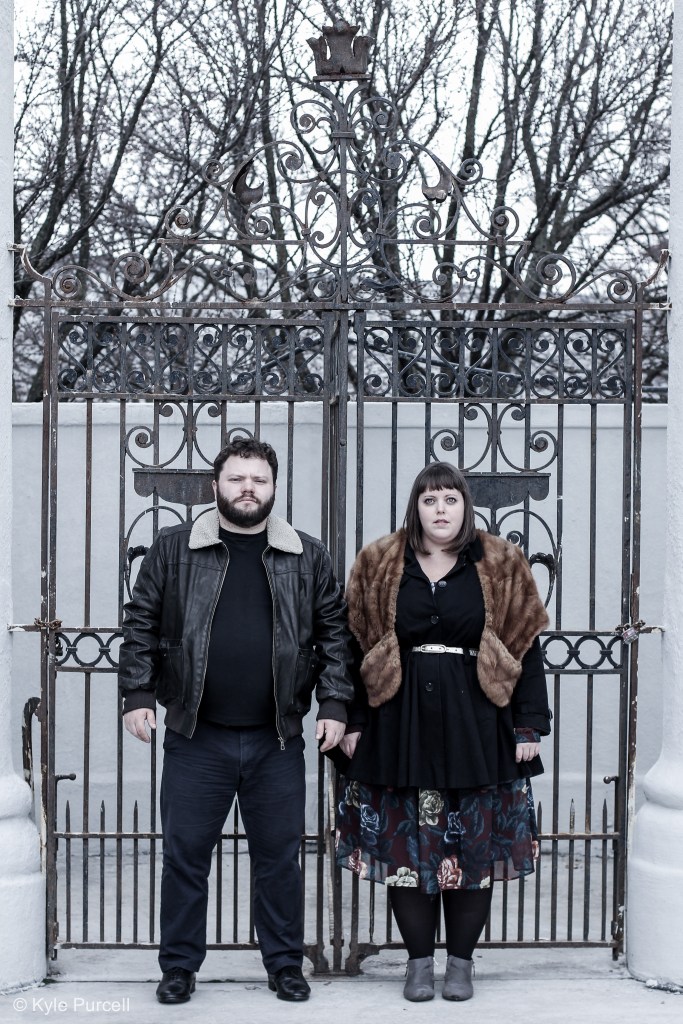
Photo of James Wallis & Julia Nish-Lapidus by Kyle Purcell.
Catherine Rainville is taking the helm as director of this production. Catherine—who has acted in several BASH’d shows and co-directed Merry Wives during their Fringe 2015 run—leads a gender balanced cast that includes a female Laertes (played by Jennifer Dzialoszynski) as well as female Rosencrantz and Guildenstern (played by Jade Douris and Megan Miles.) “Catherine is such an actor’s director. She knows how to get you to solidify what you’re thinking.” Julia says of working with Catherine. “She just lets her actors’ impulses come out naturally, and then she helps shape them.” Julia also mentions how interesting it is to watch Hamlet surrounded by women that he mistrusts and how that new element affects the story.
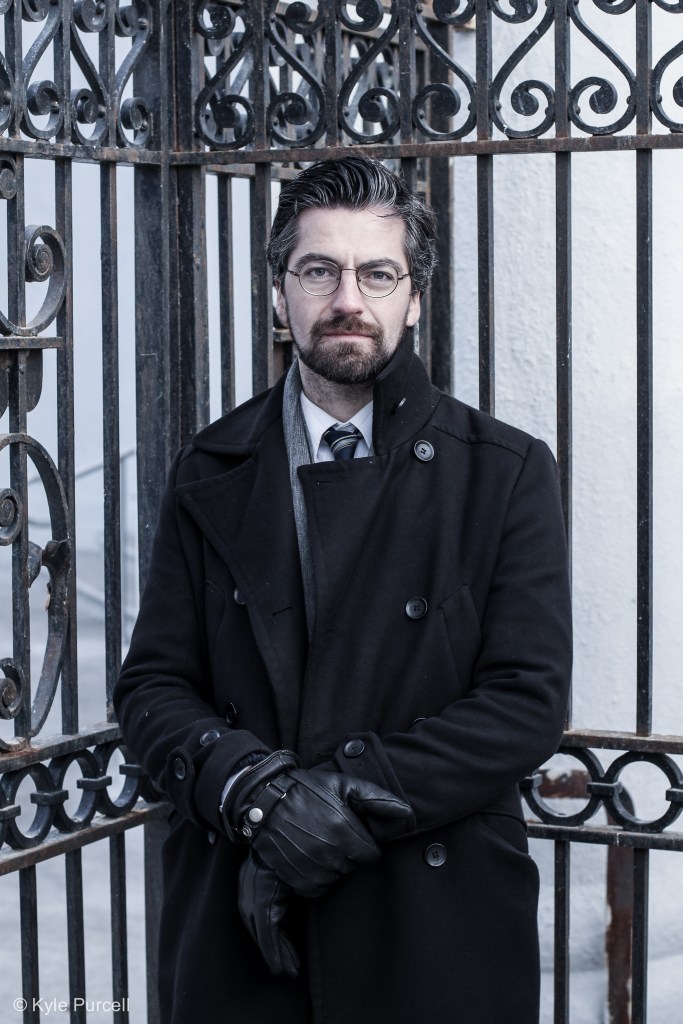
Photo of Jennifer Dzialoszynski by Kyle Purcell
Ophelia’s family dynamic has also been key to Julia’s exploration of Ophelia. Laertes’ (Jennifer Dzialoszynski) apprehension of Hamlet takes on a different tone coming from a sister as opposed to the older brother dynamic that audiences are used to. And Daniel Briere, who plays Polonius, is “such a giving scene partner who knows his text like no one’s business and has really embraced the idea of having two daughters,” says Julia.
Photo of Daniel Briere by Kyle Purcell
Exploring the sister dynamic between Ophelia and Laertes has been a joy for Julia, “I couldn’t ask for better actors to be in a fake family with. And I think Catherine was right on the nose with her casting, especially with Jen. Wait until you see her fight,” Julia says. “The fights for this production, created by Nate Bitton, are incredible, and Jen performing them is amazing. It’s great to see a badass woman at the end of the show taking on the protagonist in a fight. Laertes being a woman brings a whole different quality to the fight at the end because now we’re seeing the rage and heart of a women whose entire family is dead.”
BASH’d shows have a reputation for selling out, so get your tickets early to avoid disappointment (plus when you buy online in advance, you save a dollar!)
Who: Directed by Catherine Rainville Featuring: Daniel Briere, Jade Douris, Jennifer Dzialoszynski, Tim MacLean, Megan Miles, Jesse Nerenberg, Julia Nish-Lapidus, Drew O’Hara, David Ross, Jane Spence, James Wallis Production Team: Dorea Beaudoin, Nathan Bitton, Darcy Haywood Stoop, Chloe Purcell, Kyle Purcell, Simon Rainville
What:
Shakespeare BASH’d caps off their biggest season yet with one of the Bard’s most beloved plays: Hamlet. Artistic Director James Wallis takes the stage in the title role, alongside a company of Shakespearean powerhouses in this energetic, compelling production. Returning to the Monarch Tavern, Hamlet will mark the fourth and final show of the company’s hitherto sold-out season. Don’t miss this new, fresh, and bold staging of a Shakespearean classic.
I had a chance to talk to Tyler Seguin, director of The Trial of Judith K., presented by Thought for Food about humour in dark subject matter, women in theatre and the Canadian canon.
MM:Tell me about the Trial of Judith K.
TS: It’s a modern, Canadian take on Franz Kafka’s The Trial, set in 1980s Vancouver, with a female protagonist. It’s fast, funny, sexy, dark and violent.
MM: What made you want to direct this show? What drew you to it?
TS: The first thing that drew me to The Trial of Judith K. is the way it mixes comedy and darkness. As a person, I’m interested in big ideas and strong political statements, but as an artist I’m not really interested in didactic storytelling. Judith K. deals with some serious issues like legal disenfranchisement, the security state, oppressive cultural norms and the objectification/exploitation of women, but it does so with humour, which makes it all the more powerful. Laughter opens people up and disarms them, allowing the “Important Statement” to slip into their minds unnoticed.
We’re all breathing more freely with a new PM in the House, but we chose this play during peak Harper years. And despite the “sunny ways” of Trudeau, Bill C-51 is still on the books, and every single time I open the paper there’s another example of a Kafkaesque justice system at work in Canada, not to mention the rest of the world.
I’m also looking for opportunities for strong visuals with elements of movement and physical theatre. As far as I’m concerned, theatre isn’t a realistic art form and I am frustrated by plays that pretend to be a verbatim representation of the real world. The Trial of Judith K. revels in its theatricality.
Stephanie Belding. Photo by John Gundy
After The Memo, it was important to us that the next project be a play with a stronger female voice. The Trial of Judith K. is written by a woman, with a female lead and more women than men in the cast. It’s also an older Canadian script, which appealed to us. The Trial of Judith K. was nominated for major prizes including the Governor General’s Award and the Dora for Best New Play, but it hasn’t been revisited professionally since 1989. It feels like we’re a community obsessed with creating new work, but are we really developing a Canadian canon if a script is only performed once?
MM:What do you feel is the role of theatre companies when it comes to representing the Canadian canon, even if that company’s mandate isn’t specifically to develop or showcase Canadian playwrights?
TS: There’s room for all kinds of theatre and nobody should feel beholden to anyone else’s idea of what theatre “should be.” But it seems that companies are either “new work” or “classics” and when they say “classics” it’s British, or American classics. People are now starting to explore the European canon, but very rarely do we see previously-produced Canadian plays. We were so happy to see Factory produce a whole season of previous hits, and Passe Muraille is starting a celebration series this year. But generally TPM and Factory produce seasons of entirely new work. Great! We need to develop new work, but that’s 8-10 plays that will probably only be seen once and then forgotten. And that’s just two local theatres – how many more new plays are being produced across the country? And what does that do to playwrights? If you’re not constantly producing something new, you’re yesterday’s news. And they’re being expected to put in years and years of development for a show that’ll run for possibly 5 weeks. That’s no way to create a history. Part of the problem is with our funding models. The major granting bodies are very interested in supporting the development and presentation of new work and we were actually told that since we were choosing to do an older play that we needed to make a stronger case for why we wanted to produce it.
MM: There are themes in Judith K that are similar to your last production, The Memo. Both discuss the absurdity of bureaucracy, and the down-the-rabbit-hole way of navigating it. Is Judith K a deliberate follow up to The Memo?
TS: Yes and no. Yes, there are a lot of similarities to The Memo – both stories essentially deal with one person’s fight against “The System” – but we weren’t deliberately looking for a thematic follow-up to The Memo. We wanted to find a play that would meet certain parameters: female protagonist, more women than men, Canadian, and ideally something that would let us get back in touch with the Czech community who were so incredibly supportive of The Memo. We read several plays and eventually we started looking at Kafka. There are several stage adaptations of The Trial but when we discovered Sally’s play, not only were we able to check off all the boxes, but we were excited by the material itself.
MM: The Trial of Judith K is based on Franz Kafka’s The Trial, making the protagonist a woman and setting it in the 1980s. What do you think that brings to the story?
TS: There’s an added layer of the patriarchal nature of “The System” and its inherent misogyny. In the world of Judith K. anyone can get caught up in the system, but when a woman is the accused, her body becomes part of the negotiation. The men who offer to help her, want something physical/sexual in return. It’s uncomfortable and unsettling and disturbing.
Stephanie Belding, Scott McCulloch. Photo by John Gundy
MM: I hear the design elements are very important to the show as well. Can you tell me about that?
TS: Since the show takes place in several locations, we needed a set that was flexible enough to create multiple looks using the same few pieces. We are also somewhat limited by being in the TPM Backspace – the stage is tiny. However, it has a lot of height, which we’ve also taken into consideration with our set. We wanted to evoke a sense of claustrophobia – that everything towers over Judith. We were also looking at ways of incorporating the 80s (when the play was written) and the 20s (when the novel was originally published). Expressionism blossomed in the 20s and neo-expressionism popped up in the 80s so there’s actually a lot of similarities – geometric shapes, large shoulders, the use of light & shadow are all elements we’re integrating into the design. Many music videos from the 80s owe a lot to German expressionist films. Once we started looking for the connections, they were incredibly obvious.
As well, our sound designer is playing with songs that straddle both eras while also highlighting the distinctions, such as contrasting the synth-sounds of the 80s with scratchy phonograph recordings from the 20s.
MM:Why do you think The Trial of Judith K was written as a comedy instead of a moral-imbuing drama?
TS: The source material is actually quite comedic. Kafka is funny. He’s taken on this aura of “serious writer” but his work is full of humour. We found this with The Memo as well – it’s something about the Czech psyche, they’re able to take awful, depressing situations and find the humour in them. We spoke to Sally Clark and apparently the original commission for Judith K. was a serious drama about a hostage situation and that it was the original director, Morris Panych, who suggested it should be a comedy.
MM: How do you manage the comedy with such dark and, sometimes disturbing, subject matter?
TS: We’re definitely walking a tightrope with this show. Terrible things happen throughout – assault, torture, murder, and execution are all in the story and we don’t want anyone to think that we’re taking it lightly. People should be disturbed. Our ideal tempo is “Funny – Funny – Funny – Disturbing – Funny – Funny – Funny – Is that funny? – Why did I laugh at that?” Laughing at disturbing material doesn’t mean we’re making fun of it. Humour is a powerful tool and a coping mechanism. If we can laugh at something it ceases to have power over us. So while the show has a sheen that is heightened comedy – the characters are based in Commedia, and the style is almost farcical – we are actually using this stylization to comment on some pretty horrible situations.
MM:Is there anything that you want our readers to know about the show?
TS: It feels like we’ve been talking a lot about the show’s big ideas and issues and while those are important, we want your readers to know that The Trial of Judith K. is just as funny as it is smart. Sally Clark says the overriding principle of staging this play should be “louder! faster!” The show feels a little like a sitcom run amok – the situations are wacky, the characters are outlandish and the jokes pile up on top of each other. The material can also edge into the grotesque, and the nihilism runs deep, but first and foremost it’s a comedy. Until it isn’t.
HS: Tell me a bit about Mockingbird at the Next Stage Theatre Festival.
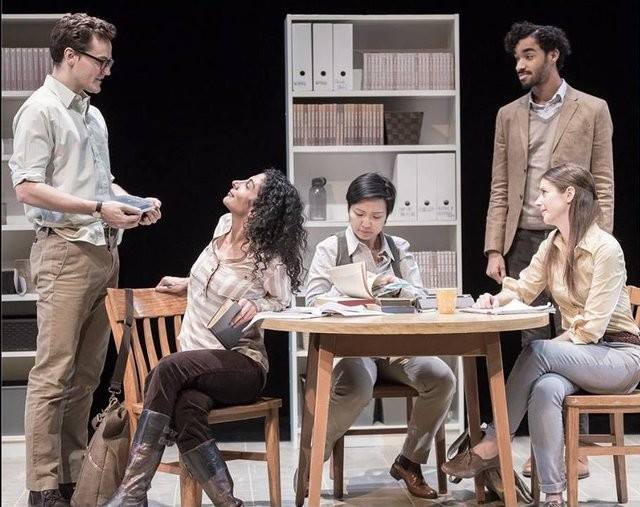
KR: “January is the new July” is the motto of the Next Stage Festival this year and that could not be more true; both for good and environmentally dubious reasons… But to focus on the positive, Mockingbird is a World Premiere of Rob Kempson’s second ‘high school’ play where we’re dropped into the secret and mysterious world of an English teacher’s office at a high school. We meet a varied cast of teachers, all with their particular roles to play in the claustrophobic room they retreat to for some respite from the teenagers they’re teaching. We soon discover that everyone’s favourite colleague, Jon Foster, is having a relationship with a student, and the delicate balance of harmony is quickly disrupted.
HS: Can you speak to me a bit about your character in the show?
KR: Alexandra Lee is a young woman with a very clear sense of right and wrong. She is ambitious and dedicated to her chosen profession in a way which she does not extend to her personal life. Jon Foster, her delightful gay best friend of 10 years, provides her with all the companionship she needs and working at the same school has been a dream come true. An aspiring novelist, Alex is searching for something, which when the show begins, is out of her grasp.
HS: It’s so wonderful to see such a large cast on our Canadian stage. What has been your favourite aspect about working with such a large, diverse cast, which features a rich range of talent in experience, background and age?
KR: Having so many rich personalities in the same room creates a dynamism which is electric. Previous to the first day, I knew a few of the cast members to say hello, but I didn’t really know anyone very well. Starting rehearsals almost felt like that first day in September when you go back to school and meet your new class mates, but the beauty of the theatre is that we then got to play together. I laughed harder in these rehearsals than in any I recently recall and not always at the appropriate time.
HS: Why do you think this story needs to be shared with audiences now?
KR: We live in a very progressive community here in Toronto and in the past few decades I think that the value of ‘rules’ has eroded. Very few professions carry an unbreakable code of conduct; doctors, lawyers, and many would argue teachers. How do those two concepts coexist? How do we marry our progressive society with an unbreakable code? How do we navigate those grey areas of life? That seems to be the crux of where so much of life exists, so we need to ask ourselves those questions.
HS: It’s just the beginning of a brand new year, which always feels like it opens up the potential for new possibilities. What do you hope to see this year in the Toronto/Canadian theatre community?
KR: Before moving to Toronto, I lived in London and New York. What struck me when I moved here was the lack of Canadian stories on our stages, in contrast to the prominence of British or American stories I witnessed in those cities. In Toronto I think that varies year to year, but that is always my hope as I go into a theatre; show me something about the world I live in, and the country if possible. Sorry to be a bother. Thanks 😉
Short Answer Questions:
What are you listen to lately? Alabama Shakes. I’m obsessed.
Where do you look for inspiration? In the theatre, in books, in friends, and in nature. I live near High Park and it never ceases to amaze me.
What is your favourite place in the city? Withrow Park, the AGO, or the Islands. That’s a tough one.
What’s the best advice you’ve ever gotten? “Follow your passion, because you’re lucky to have one.”
Describe Mockingbird in 5 to 10 words: Drawing lines means picking sides.
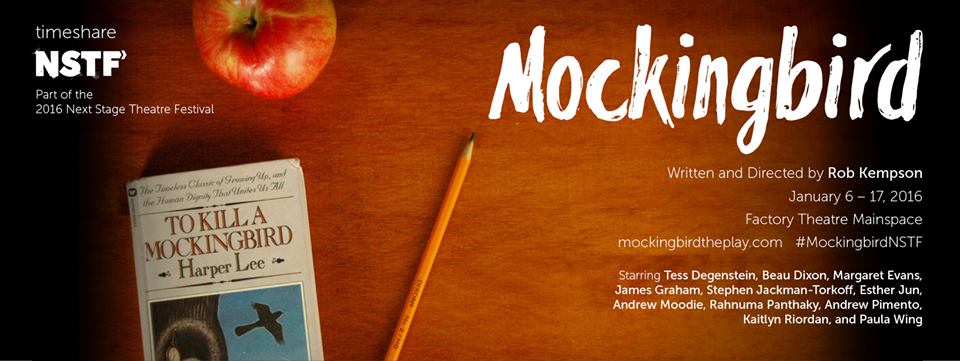
Mockingbird
Presented by timeshare as part of the Next Stage Theatre Festival
Who: Playwright/Director: Rob Kempson
Featuring: Tess Degenstein, Beau Dixon, Margaret Evans, James Graham, Stephen Jackman-Torkoff, Esther Jun, Andrew Moodie, Rahnuma Panthaky, Andrew Pimento, Kaitlyn Riordan, Paula Wing
Producer: Lisa Li
Set/Costume Designer: Brandon Kleiman
Lighting Designer: Michelle Ramsay
Sound Designer: Lyon Smith
What: When we first meet the English department at Finch Park Collegiate, rumours are flying about a teacher-student relationship. Two days later, Mr. Foster has been removed from the school and everyone is trying to make sense of what has happened. An exploration of what happens when innocence meets authority, and the grey area between right and wrong.
In the spring of 2014, Boko Haram kidnapped 276 female students from their school in Chibok, Nigeria. The abduction caught the attention of the world media, celebrities, first lady Michelle Obama and playwright Chloé Hung. The popular hashtag #BringBackOurGirls swept across social media. In October 2014, Hung came across an article marking six months since the kidnapping. To her chagrin, she realized that she had forgotten about the girls whose story had outraged her in April. She wrote an idea on a Post-It, “two sisters kidnapped by Boko Haram” and promised herself she would not let their memory slip away again.
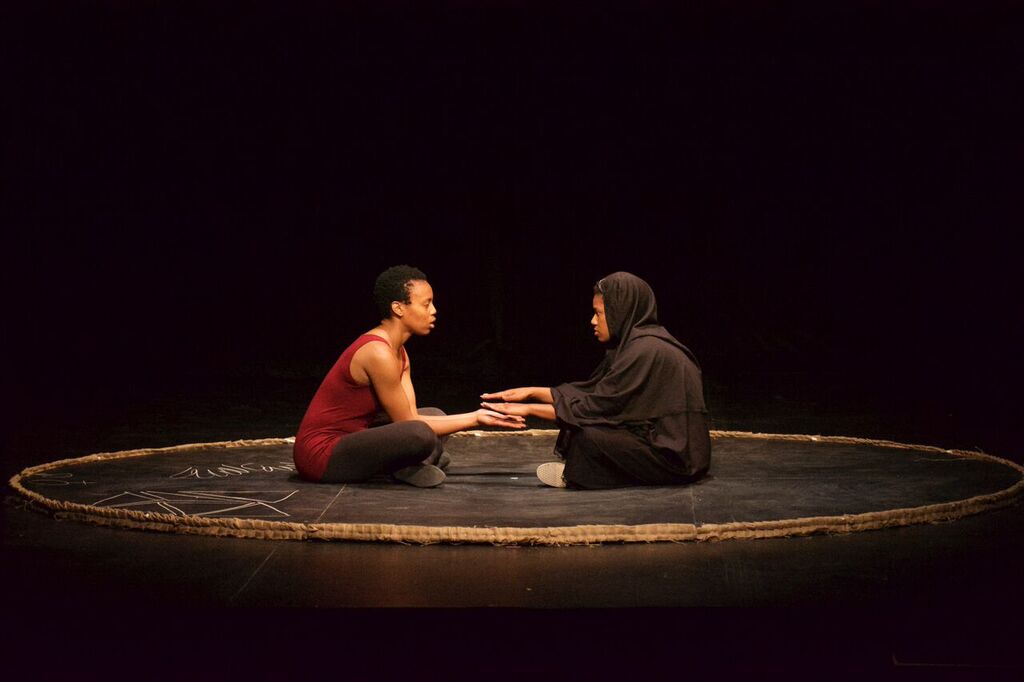
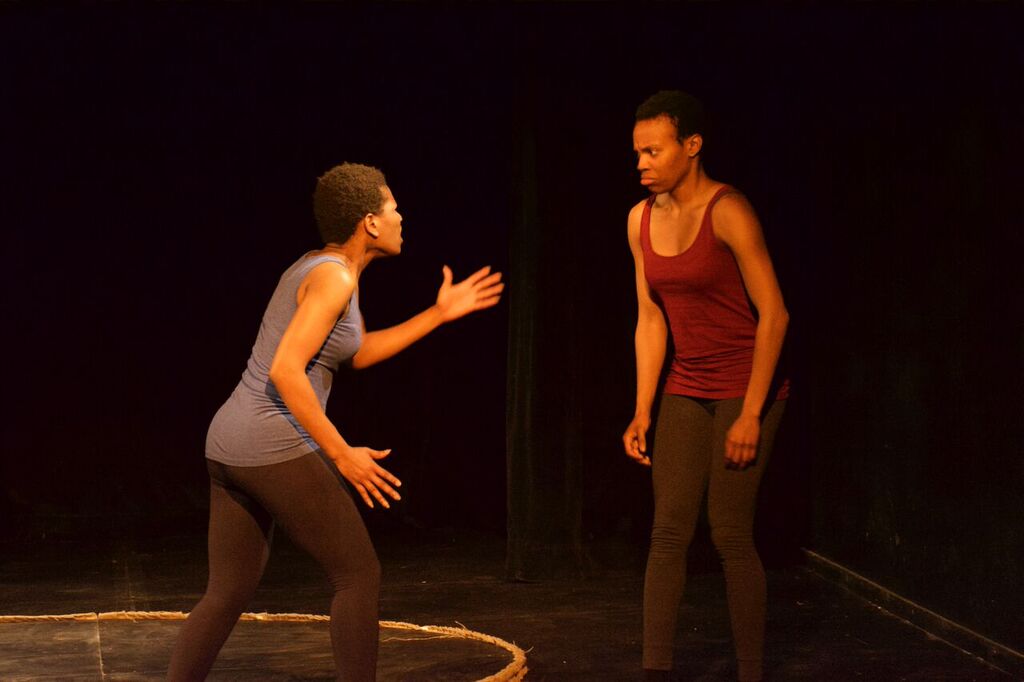
All Our Yesterdays grew out of a two scene assignment that Hung wrote for a class at NYU where she is currently completing her MFA in dramatic writing. In the spring of 2015 she began writing the play in earnest—the story of fictional sisters Ladi and Hasana who have been kidnapped by Boko Haram. Their parents cannot afford for both daughters to attend school, and so the older sister Ladi is sent to school while the younger, Hasana, is kept home. “There was never a draft where Hasana wasn’t on the autism spectrum,” Hung remembers. “In Hasana we see how much she does need school, and how that would give her an amazing opportunity for a life she would never be able to have without education. Hasana has also allowed me to talk candidly about some of the issues in this story.” As part of her research, Hung discovered the lack of support for autistic children outside of urban centres in Nigeria.
Photo Credit: Rick Bartram
When asked about the challenges of this piece, Hung describes the extensive research involved in the writing process. She credits York University professor Pablo Idahosa with providing her with a thorough crash course in Nigerian history and politics. Another key moment was when her step father, Michael Kaufman, who co-founded the White Ribbon Campaign, helped put Hung in contact with Hadiza Aminu in Nigeria. Hadiza Aminu were part of the creators of #BringBackOurGirls and spoke with Hung extensively about the situation in Nigeria, how the parents were coping and how the people in the community rallied and protested. “So it was challenging to distill all of that information into a story that felt relatable,” Hung says, “and the way I wanted to approach that was using a story of two sisters and the injuries that siblings can do to each other.”
In the transition from playwright to director, Hung adapted and learned to adjust pauses or movements that no longer served their purpose. “There were chances to do re-writing on our feet, and I have two amazing actors, Chiamaka Umeh and Amanda Weise, who brought it all to life,” Hung says.
Photo Credit: Rick Bartram
All Our Yesterdays is partnering with Save the Children Canada for this run at Next Stage (during Fringe 2015 they partnered with Because I am a Girl). “It was really important to me that there was an outreach aspect to this show,” Hung emphasizes. “It’s all well and good for me to sit at home with my computer ranting and raving about the world, but what am I actually doing? What can I do from here?”
Short Answers:
Currently Reading: Room, by Emma Donoghue. It’s terrifying, but so good.
Favourite City: Toronto! Bloor/Ossington wasn’t so cool back when I was growing up, but now it’s pretty awesome.
Next Stage Show You Can’t Wait to See: All of them! But I didn’t get to see Rebecca Perry and Rachel Blair’s shows at Fringe this past July so I’m really looking forward to those.
All Our Yesterdays
Photo of Chloé Hung by Tanja Tiziana
Presented by AnOther Theatre as part of the Next Stage Theatre Festival
Who: Playwright/Director: Chloe Hung
Featuring: Chiamaka Umeh, Amanda Weise
Stage Manager/Producer: Elizabeth Wilson
What: Sisters Ladi and Hasana have been kidnapped by Boko Haram. Through memory we journey through their captivity as they wrestle with autism, the need to escape and their past. When one makes a selfish decision, the effects reverberate to their present. 2015 Toronto Fringe Patron’s Pick









 Who:
Who:



 inthegreenroom