Skip to content

Posts tagged ‘Toronto Theatre’

2014 Fringe Interview – Tarrare – Suspicious Moustache Theatre

Interview by Ryan Quinn

RQ: So, I’m here with an assortment of the cast and crew of Tarrare, being mounted by Suspicious Moustache Theatre as part of 2014 Fringe. Director Darcy Stoop is here.

DS: Hello!

RQ: Would you like to introduce the rest of these fantastic people?

DS: Of course! We have playwright Liam Volke, actor John Fray, who plays the man himself, and a set, costume, and props designer, as well as script consultant, Cat Haywood. And myself, directing and producing the whole business.

RQ: So, do you want to tell me a bit about the show? What can people expect when they come see Tarrare?

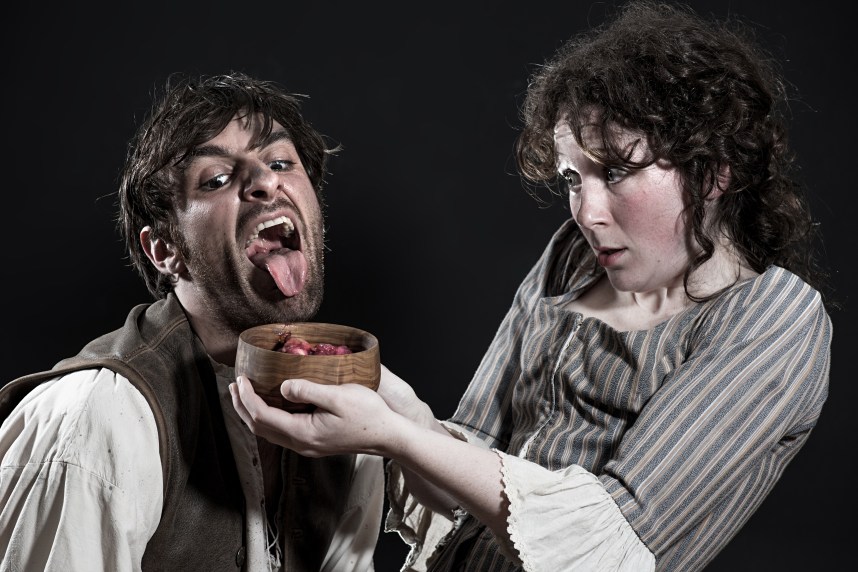
DS: For sure. It’s the story of France’s most notorious glutton. Tarrare was a real guy who lived in the last days of the revolution in France. And he probably had what we call polyphagia in modern terms, an extreme case of hunger. He could and would eat anything he could get his hands on: stones, corks, bones, at a certain point, corpses, live animals as well. His parents couldn’t feed him, so he was kicked out of his house, and he joined a travelling side show as a geek, and he was a spy for a little while. He was led around by this strange affliction that he had, and this is sort of his struggle of who he is versus what he does, and figuring out what his place is in the world. We have some really fun stuff coming onto the stage, we have a shadowbox, there are swords involved, there’s lots of live eating, of course. He was a real guy, but we only know five or six things about his life, so we’ve had to take these sparse facts and really elaborate and create the world he inhabits with all of these other characters he would have met along the way in his journey toward his ultimate end. I don’t want to say too much about that, we’ll leave some mystery behind it.

14277103636_22a94c8cc1_o

Photo Credit: Dahlia Katz, Costumes: Cat Haywood

RQ: Liam, as a playwright, what drew you to this story?

LV: Darcy and Cat had been talking about making a play about this guy’s life for a while now, and we decided to have a go at it. I’m really interested in historical figures, lesser-known ones especially. I love the idea of someone who is, and I know this isn’t the right analogy to draw, but who is possessed by this hunger. It’s almost supernatural that way. Also, I realized in writing the play that there is so much about our language, in the metaphors and similes that we use, that is related to hunger and eating. Like when you see a puppy or a cute baby and you say “Oh, I could eat you up”. These are things we don’t think about, but they’re there in the water we swim in, they’re all around us. So, that’s something I became more aware of in writing the play. The material was so rich, even though we know so little about him. Everything we do know about him is pretty weird and brilliant. He had a short life, but the material is all there, you know?

RQ: He sounds almost mythic.

CH: Yeah, there’s a touch of Candide, definitely, in his lifespan. He always just goes from misadventure to misadventure, and he tumbles though these different cycles. So it’s fun to see together as a story. All of a sudden he decides to be a spy, and we get to take that leap with him.

DS: Yeah, it seems to be a journey of putting a person into strange circumstances and seeing what happens. It’s not exactly what’s happening here, but he’s such a strange figure, such an odd personality and remarkable individual that any situation he did find himself in became that much more fascinating and stageworthy because of the sheer fact of who he is. Even if we had his diary of, you know, “went to the market today, nothing else to report,” the sheer fact of who he is and the really fascinating historical period he lived in is enough to put up a really interesting show. One of the struggles we’ve had is having too much we want to say about this guy. We’ve had to nip and tuck and find the best bits.

RQ: So speaking of stage-worthy, Darcy, you’ve been involved in this production from its inception. It wasn’t text that you were going into blind, but it’s something you were thinking of conceptually and visually before it was put on paper, right?

DS: Yeah, especially between Cat and I. Cat’s my fiancee as well as my creative partner, so we had a lot of discussions about the fact that it’s this guy, and it’s on stage. Those are the two catalyst components. We’d work with Liam when we had a basic outline and we’d come in one scene at a time and say “How can we figure out a way to have him do this?”, or “what’s the connector pin between him being in the sideshow and him being in the army?”. There needs to be a reason for that to happen. So, it all came together like putting together a nice puzzle. We had these strong images, and we had to decide how to sew them together in a kind of Frankenstein-ish mix of bits and pieces. The company’s done original work before, but this was the first time where we had so much that’s just coming from ourselves, that we had to play and mold and shape. So, we didn’t sit down and write the beginning, then write the middle, then write the end. It was very much an episodic, piecemeal affair that fit together very nicely. I’m astonished and so grateful to everyone involved that so many of the images that floated into my head when I was thinking about this are actually on stage, and they look and feel wonderful. I’m excited to share that with people. It’s not often that you get this nice idea in your head of how something would look, then all of a sudden it’s there.

RQ: And as a performer, John, how do you approach work like this that’s more episodic, and it sounds a bit multidisciplinary as well.

JF: Well, it’s been interesting. I found that Tarrare’s voice in his head, or his drive, sort of changes as the play goes on. Certainly, he is narrating from his death, and there’s a distinct point of view he’s narrating from versus the one that he begins the play with when he’s alive. In my mind, he definitely develops in a concrete way as the play goes along, and that’s there in the writing. He matures, but he also gets worn down and beaten down and seems to disintegrate. It’s been a lot of fun, I just have to let myself disintegrate as the play goes on, haha.

RQ: Cat, when you’re designing a show like this, that takes place during the French Revolution, but that’s also a bit vaudevillian, a bit freak show…

CH: There’s definitely a touch of circus to it. It definitely starts that way and becomes a bit more militaristic as he grows up. I think that as Tarrare matures, so does, perhaps, the imagery that comes into his life. The major thing for me was creating the shadowbox as a script convention. I don’t think we could have done some of the eating tricks without it. We wanted to have a bit of mystery in the creepy but also intriguing things he’s doing behind this shadowbox. Making him a silhouette is also a great metaphor for what’s going on during the piece as well. Tarrare himself, the fact that he’s insatiable, and he’s always desiring more, and it hurts him but he can’t stop himself; it’s a great metaphor for what’s happening in the country at the time. The face of the revolution is this kind of downtrodden everyman trying to get some food. I think from the beginning, we knew that this character who’s from the lower rungs of society, who is just trying to eat, there’s a symbol there.

RQ: He has the hunger of an entire people.

CH: Yeah, I’ve often thought that that’s a way of thinking about scale. He is one guy, and it is something that really happened, but artistically, it serves to show what’s going on for an entire society. We’ve always established that as being a part of it.

LV: Something I’ve always found funny, is that he’s this outsider, this freak on the fringes of society and yet during this time period, he becomes the standard. He fits into this mob of hungry people, and the difference is that it’s an actual medical condition.

CH: Well, this is the point where we started to care about the downtrodden, and the dispossessed, and the people who’ve been disregarded. Of course, they are totally forgettable, they’re the peasantry, why would you care about whether they eat or not? And then you get to this revolution, where people finally say: “Maybe we should be eating. Maybe we shouldn’t be starving. Maybe there’s another solution”. And as Tarrare tries on these different hats, it’s almost like the country is trying them on too. France became a threat to neighbouring countries, if they can rise up and overthrow the government, will they inspire people here to do the same? I mean, the class system there is breaking apart.

DS: In theory.

CH: In theory, yes. The success he gets in being a performer, then being a spy, I think is the success that the people in general were striving for.

DS: I make this comparison without a whole lot of weight, but it’s similar to Midnight’s Children which takes the struggle of an entire nation and turns it into a very personal story. That’s the same thing that happens when you take the French Revolution and transpose Tarrare. You have a country personified by this one person whose actions don’t have a whole lot of consequence outside his personal circle, but there’s a synecdoche of what’s happening on a larger scale. There’s two stories we’re telling at the same time, though this remarkable man.

LV: This is all stuff we’re thinking about and hoping to communicate in the play, but it’s not something the audience needs to pick up on to enjoy the story, I think it’s a good story on its own.

CH: Yeah, even if you were to just look at it in terms of what we do know about him, without the historical parallels, and without our embellishments, I think it’s a story people will be really interested to see.

DS: I think one of the most encouraging parts of the process was before we had the script fully written, when we were just showing it to our actor friends and asking them what they thought about certain moments or scenes, and they were excited by the story, it’s a great story. And in terms of gathering resources, that’s worked really well in my favour! It’s a weird show that has the historical/political meaning for those that are looking for it, it has the interpersonal relationships, and it explores the idea of “come see the freak show because he’s different from you”. That’s the hook for something like this, but it’s also something I’ve always been personally interested in, trying to find why exactly we can’t turn away from car crashes and beached whales. They’re captivating. We want to see that side of the human experience.

LV: We need to admit to ourselves that we do like to do that?

DS: Yeah, we’re not above gawking.

RQ: I think that also, for people looking for it, there’s a real contemporary cultural relevance. Maybe now more than ever, there’s a culture of consumption. I was wondering if you could speak to that.

CH: I think we’re a little less ashamed now, as a society, to talk about our appetites and our needs. Humans have always been creatures of need, but now we’re actually vocalizing what we want and what we’re craving. Ambition, for example, is a hunger that’s really celebrated. That’s shown in some of the other characters in this show, Tarrare isn’t the only one who’s really hungry for something. While he has a physical hunger, others have hungers that are a little tougher to immediately diagnose. I think a lot of the characters in his world draw parallels to the types of people you’d see today.

DS: Social climbers, business climbers, people who’ll do anything to increase their status in some way.

CH: And we describe ourselves by what we consume and what we go through every day.

LV: One little tidbit of history that I found really fascinating is that when the French Revolution began, after the French populace stormed the Bastille fortress, people were quick to capitalize from it. They’d sell jewelry made from stones and metal from the Bastille and sell it on the street, sort of to say “Oh yes, I was there”. So even then, people were trying to establish the street cred of being at the French Revolution, of being a part of it.

RQ: So that’s their relationship to history in the making. They’re performing their history as you, as a company, are performing history.

LV: I think that’s what interests me in history, and it may be cliche to say this, but if you want to understand the present, you have to understand the past. That’s the great thing about Tarrare, is that it’s a lesser-known story, but it’s no less enthralling.
14320409253_8413b6205c_o

Photo Credit: Dahlia Katz, Costumes: Cat Haywood

RQ: What’s the conversation you want people to be having after the show? What do you want people to argue about?

CH: I think there will probably be a dissonance in rooting for Tarrare. He transgresses a lot of moral boundaries, but he does it for a very human, understandable reason. An audience is supposed to judge the actions of a protagonist when it gets into a murky area, but I would also like them to be compelled to feel empathetic toward Tarrare at the same time. I think that’s what I’d like people to wonder about, is “Can I imagine a scenario where I’d be him?” Would I behave differently?

DS: What hungers do I have that could drive me to extremes like his, and what right do I have to judge him. How would I judge myself? We do ask identity questions as well, what you’re doing versus who you are. How we’re somewhat ruled by different appetites and desires, and how that plays into your identity or search for that. Tarrare’s opinion of himself changes drastically and repeatedly throughout the show. His condition doesn’t change, it’s all based on his attitudes toward himself. The hunger is always innately there, it’s always a matter of circumstance how it plays out.

JF: I have this image in my head throughout the play of his hunger being a beast. Sometimes he rides the beast and sometimes the beast rides him.

Tarrare

Presented by Suspicious Moustache Theatre as part of the 2014 Toronto Fringe Festival
14113549899_bf49c72d58_o
Where: Theatre Passe Muraille Mainspace, 16 Ryerson Ave, Toronto

When:
Fri. July 4 @ 1:45pm
Sun. July 6 @ 7:00pm
Mon. July 7 @ 4:45pm
Tue. July 8 @ 2:45pm
Thu. July 10 @ 11:30pm
Fri. July 11 @ 9:45pm
Sun. July 13 @ 4:30pm

Tickets:
$10 at the door (cash only) or $12 in advance (Visa or MasterCard, service charge included) beginning June 12 via http://www.fringetoronto.com, by telephone at 416-966-1062 (ext.1), or at the door.

Running time is 60 minutes.

2014 Fringe Interview – Vectors of Their Interest – Surplus-Value Theatre

Interview by Ryan Quinn

RQ: Hello! I’m here talking to Zoë Erwin-Longstaff, director of Vectors of Their Interest. Do you want to tell me a bit about it? What can audiences expect?

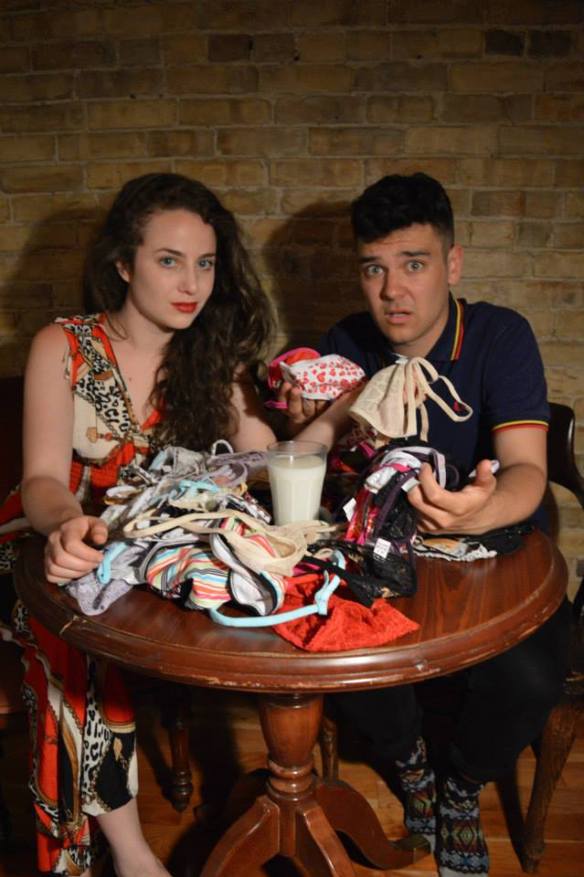
ZEL: Sure! Vectors of Their Interest is a totally site-specific piece in that it was written in the place it’s going to be staged, for the place it’s going to be staged. We’re putting it up in my parents’ house. I moved home about a year ago, and that’s when I found out about the site-specific Fringe. I moved home around when it was happening and I thought “Wow, this is so great,” and it’s kind of a way to sneak into the Fringe if you don’t get pulled in the lottery. I approached my parents about whether they’d be okay with this, and for some reason they said yes, and so co-writer Ryan Healey and I were able to write this play not for any house, but for the house we actually live in. That was really cool. But, we didn’t want to do a typical domestic drama just because we have a house, so it’s about a company of three young women who have freshly graduated, who look at the prospects in this economy and feel down and out. They decide to take things into their own hands and they start a company called Viragon Capital Group, where they sell used panties online. This is all in this Annex house, and in the course of getting this company off the ground, they acquire an unpaid intern named Bowman, and he ends up doing most of the work.


RQ: You mentioned that it’s site-specific, that you wrote it there to be performed there, and there are ways that makes the process easier, but are their distinct challenges to working in a found space?

ZEL: Yeah, there are challenges. It’s very intimate, but to have four people onstage in a space that’s so small became its own challenge. There’s also the fact that we never go home. They come to my house, and then they leave. The separation between work and life is non-existent because I’m always in the space, thinking about it. There are also problems that you would never think of until you’re in the space, like people are playing basketball outside the house really loudly, or freaking out that we’re going to need air conditioning because it’s just too hot. All these things that theatres might tailor and take care of for us, all of a sudden I’m the owner of the venue so I can’t be pissed off at the terrible venue operator, because it’s me. That becomes its own host of problems. But, for the most part, it’s really nice. I’m never late for rehearsal, because they’ll show up and I’m there. And we always get coffee and fruit because it’s in my kitchen! Mostly it’s been a really good experience.

10380885_10152539764558982_5626943882590503268_n


RQ: What kind of conversation do you hope this show provokes?

ZEL: Well, when it comes to site-specific theatre, I hear a lot of people say that you have to justify it, there really has to be a reason why. I think what this play is about, in a lot of ways, is that young people are becoming really innovative in this new economy. The Fringe is a great resource, but in general, I can’t afford to rent out a theatre space. I’m doing something at my house out of economic necessity. Not that you shouldn’t use the space as much as possible, of course, but site-specific might not be just a fun gimmick, it might be all we can afford. Also, when young people walk into a theatre, they have a lot of negative connotations that unfurl with them, so that’s what I want people to take away from this experience, is that you can put on a play outside of a theatre building, and maybe it will grab people in different ways.

Then, from the actual play, I hope young people will be able to connect with the play and have that sympathy and a feeling that’s not quite cathartic or alienated, it’s just a nod to the fact that that’s how things really are right now. Even though this play goes to absurd lengths, the more we do it, it’s not that absurd. It’s a situation that I find myself and a lot of my friends in.

RQ: Both of those tie into the idea of ingenuity and resourcefulness in the face of the motto of our generation, “do more with less”.

ZEL: Exactly. A big thing in this play is “who knew young women could be making money with something that’s right under their nose”, and this idea of doing anything and being ruthless, that that can be okay. It’s also a satire because recently, there were all these articles coming out about “Why aren’t young women embracing the word ‘feminism? Why is ‘feminism’ going out of fashion?”. Then all of a sudden, we have Sheryl Sandberg come in with her Lean In book, and feminism was great again but it was equated with being a corporate climber. With the idea that if we had women at the top of corporations, it would be better for everyone, and better for feminism. But, recently, in the news, Sheryl Sandberg went to Harvard to give a speech and a group of women who were working at hotels around Harvard who weren’t unionized, who were on strike, reached out and asked her to come host a “lean in” circle and talk about women being more resourceful and working to get paid better, and she said she was too busy. So, it’s not about a collective actually trying to make things better for women, it’s about ruthless individualism, which is screwing us all the time. The play is also a commentary on that, on what we can actually do that will make it better for all of us because that’s not it.

RQ: Instead of changing the definition to fit the system that’s already in place.

ZEL: Exactly! Absolutely, yeah.

RQ: You created this production company as well, right?

ZEL: Yes, me and Ryan Healey created Surplus-Value Theatre. He and I went to school together, but it really came together after the student strike in Montreal. So it was that feeling of a collective ethos, and we came together and were so excited to be young and be in the streets, but it dissipated so fast. I guess we feel like we’re still looking for that feeling.

RQ: Where do you want to go with the company from here?

ZEL: We just want to keep putting on plays that speak to the world right now, 2014. We want to do really high-calibre stuff that is a commentary on contemporary life. I see a lot of theatre and wonder who’s programming it, and how it’s relevant to younger people and to our community. How is it commenting on the social-political zeitgeist of the time, and that’s what we’re looking to do. We have a show coming up in Summerworks, and I’m really excited about that. It’s a play I wrote called Half Girl, Half Face, and we toured that around this year, and now it’s coming to Summerworks, which is exciting. Then, after that, we have a few shows we’re working on, so we’ll see. It’s always the challenge of getting it up. That’s why the Fringe is so great, because it’s easier. You can even sneak in if you don’t get pulled in the lottery, haha.

RQ: What do you think is the importance of the festival culture in Toronto? Since we have so many, is there anything that can be improved upon? If not, what does it facilitate?

ZEL: These are my first time actually taking part in the festivals, so I’m sure I’ll have my long list of celebrations and grievances after, but I think that it’s too bad that a lot of people get stuck in the festival model. Some people only produce in the Fringe every year. Not that the Fringe isn’t great, it’s wonderful, and it democratizes it a bit that anyone can get a venue. I’m not reviewing this year, because I’m in it, but usually I get my Fringe pass and see shows, write reviews. What’s great is that you can see something fantastic followed up by something totally terrible, and that’s great. It makes it really fun.

I think in general there has to be spaces that are more accessible, that make it easier for people to put things on. Little venues like Videofag, I’m sure there are others doing that stuff. I was just at New Art Night at Videofag, and that was wonderful. I saw a show there that was just great. For me, I know that when I got out of undergrad, I was suddenly hit with the realization that it’s near-impossible to put anything on without a free space and a free room and gorgeous props. You have to get scrappy about it, you have to band together with other like-minded people. Even then, it’s really hard. We had to have a crowd-sourcing campaign so we could pay our actors. I’m really excited about that, I’ve never paid an actor before. I mean, I’ve always been in the red, so I’ve never been able to, so this is exciting. It’s also not sustainable, we just need to make it easier for artists to live.

Vectors of Their Interest

Presented by Surplus-Value Theatre as part of the 2014 Toronto Fringe Festival


10443362_10152539764473982_2998593986439726188_n

Where: 106 Albany Ave.

When: July 02 at 07:00 PM
July 03 at 07:00 PM
July 04 at 07:00 PM
July 05 at 07:00 PM
July 07 at 07:00 PM
July 08 at 07:00 PM
July 09 at 07:00 PM
July 10 at 07:00 PM
July 11 at 07:00 PM
July 12 at 07:00 PM
July 13 at 07:00 PM

Show length: 85min.

Genre(s): Comedy, Drama

Tickets: https://www.tytixhosted.com/scripts/max/7000/maxshop.exe?STORE=FRIN

2014 Fringe Interview – Here After – Upstart Theatre

by Bailey Green

Meg Moran and I met up in the Fringe cafe where we bonded over our mutual love for the sci fi genre and chatted about her show Here After as part of the Toronto Fringe.

Here After is set 150 years in the future and humanity is in a dire state. We’ve become immortal. The immortality drug is discovered close to our present day in 2014 and, as you can imagine, it didn’t take long for things to rapidly fall apart. “The problem is that even if your body can live forever, your mind just can’t keep up,” says director and writer Meg Moran. Four people are trapped in an underground bunker, having retreated there shortly after civilization began to rip at the seams, where they are forced to keep their minds constantly stimulated. Otherwise, they’ll slip into a “coma-like state” and go blank.

“If everyone is immortal, overpopulation immediately becomes an issue, resource depletion accelerates, pollution increases and then you can’t breathe,” Moran sketches the timeline for the setting of the play. The four people have been trapped in the bunker together for over a hundred years, creating a pseudo-family. Very recently to the beginning of the play one of the character’s lovers goes brain dead. Here After examines issues relevant to society today through a unique lens, “this is a story of what could be the fallout of something that happens two weeks from now. The characters are people of this time dealing with the long term consequences of problems we are currently facing as a society,” Moran says. “We look at responsibility, loss, hope and the struggle to survive. Why do we keep going under extremely difficult circumstances?”


“What we’re looking at in some ways is the shift from the Jetsons future, to the more Hunger Games future,” Moran explains, “As we become more technologically advanced, we’re starting to realize that being constantly connected can have a sinister element to it.” The idea for the play first came to Moran on a plane where she imagined four characters playing games. The play itself is written by Moran and the process has been very collaborative. “I had a clear vision of the events and the world, but we did workshop it. If they need to play games to survive, we had to figure out what that looks like. It has been a growing changing thing for a long time,” says Moran of the process. She speaks very highly of her actors, of their inspiration, sense of play and willingness to give feedback.

Moran says her greatest challenge has been “finding the point where the script is done and the directing starts.” She feels this process has taught her how to better identify that point, and how to hand it off to someone else, in this case the actors. “You have to allow room for the happy accidents,” Moran smiles.

Upstart is a relatively new company founded by Meara Tubman-Broeren and Meg Moran, who met during their undergrad at York University. The company began with their site specific adaptation of Chekhov’s Three Sisters. They’re still exploring what having a company means and what theatre they want to bring to the stage. For Moran, she’s passionate about experimenting with form, movement oriented pieces and re-telling of classic stories. “I will see anything,” she says, “You have to see things you don’t know about or understand. Otherwise you won’t grow as an artist.”

Here After

Photo Credit: Madeline Haney

Photo Credit: Madeline Haney

by Meg Moran, presented by Upstart Theatre as part of the Toronto Fringe Festival

Where: Theatre Passe Muraille Backspace, 16 Ryerson Ave.

Directed by Meg Moran

Featuring Owen Fawcett, Elizabeth Tanner, Chiamaka Ugwu, and Enzo Voci

Produced by Meara Tubman-Broeren

When: 

Thursday July 3rd, 2014 at 7:45 p.m.
Saturday July 5th, 2014 at 3:15 p.m.
Sunday July 6th, 2014 at 4:30 p.m.
Monday July 7th, 2014 at 2:15 p.m.
Wednesday July 9th, 2014 at 10:00 p.m.
Thursday July 10th, 2014 at 4:30 p.m.
Friday July 11th, 2014 at 8:45 p.m.
Sunday July 13th, 2014 at 2:15 p.m.

Tickets: $10 at the door/$12 in advance. Tickets can be purchased online at www.fringetoronto.com, by phone at 416-966-1062, or at the door.

For more information, go to http://hereafterfringe.wordpress.com/

Twitter: @Upstart_Twitter

2014 Fringe Preview – Andy Warhol Presents: Valerie – Fail Better Theatre

by Bailey Green

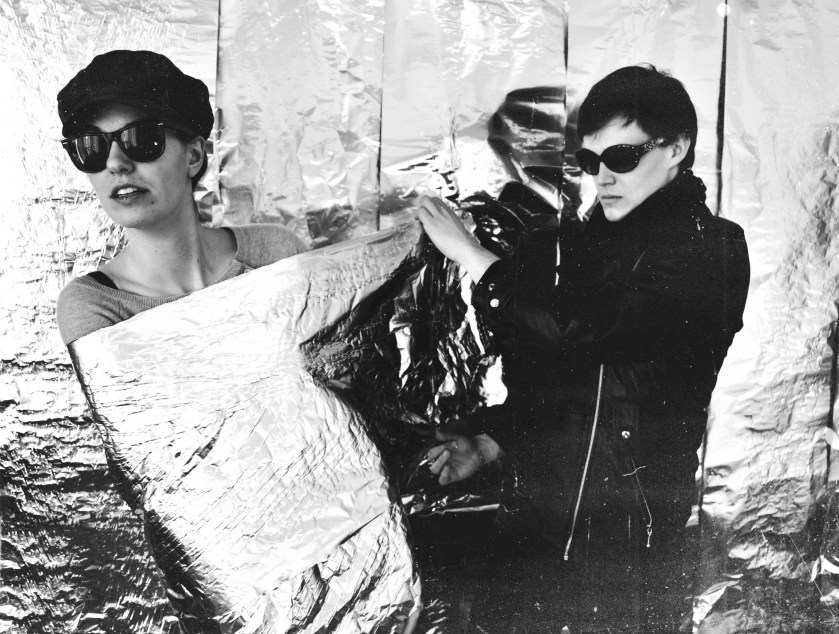
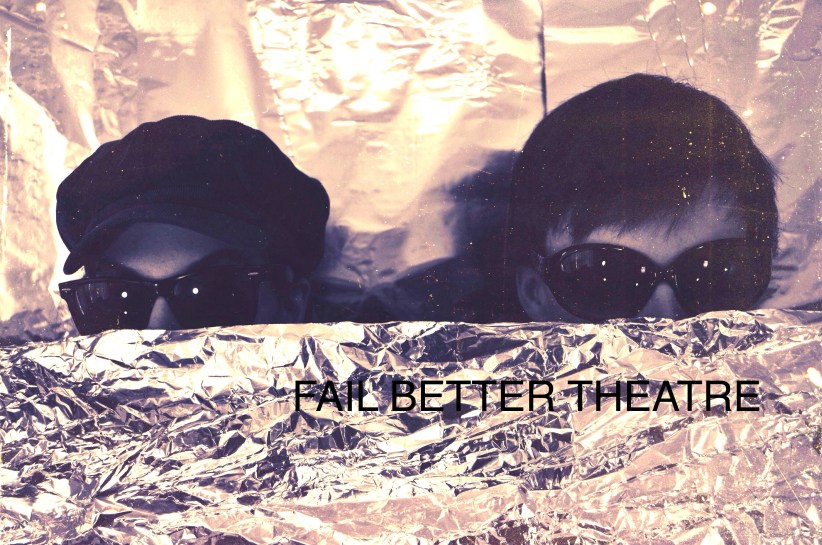
Intelligent, witty, political, sharp, funny and exciting—a few words I would use to describe this show after sitting in on a rehearsal with the cast of Andy Warhol Presents: Valerie by Fail Better Theatre. The name of their company comes from a Samuel Beckett quote that is one of my personal favourites, “Ever tried. Ever failed. No matter. Try Again. Fail again. Fail Better.” Director Matt White and actors (and the company’s co-artistic directors) Ben Hayward and Ali Richardson talked to me about their process.

Ask a person on the street if they know of Andy Warhol, and they probably will. But what about Valerie Solanas? Chances are slim. History forgot the woman who shot Andy Warhol, but Fail Better Theatre is bringing her story to light in a powerful new piece of theatre premiering at the Toronto Fringe Festival. This immersive, site specific piece takes place at the Influx Creative Space, an art studio, where Andy Warhol and his assistant Gerard are holding a party for Val—and you’re invited.

“We didn’t initially know this piece would be about Valerie,” says actor and writer Ben Hayward, “We thought it would be about their relationship or the shooting, but the more we read we realized there’s tons of stuff about Andy Warhol but nothing about Valerie. She’s always just a footnote in Warhol’s biography.” The collaborators chose to focus on Valerie because of her dynamic and active voice. Through the process they discovered Warhol to be a much more passive and less dramatic character who often allows things to happen around him instead of provoking the action. “Rather than giving him an exorbitant amount of text, we make him a presence by omitting text,” director Matt White describes. “But he’s still there, this is his world that everyone is playing in.”

Processed with Rookie

The idea of creating “a better play” comes from the collective process of Hayward, Richardson and White. “There can’t be an ego,” Matt White says and then chuckles, “because if there was Ben would have shot me about ten days ago.” This project has been in the works for eight months and has underwent multiple radical changes. It began with Richardson and Hayward writing together, but eventually progressed to Hayward taking over the bulk of the writing—though Richardson still contributes to the script. “It’s a delicate balance have the playwrights in the room with you,” says White. “From the top you just have to instill a non-fragile environment. At the core, we have to trust that everyone is good. So you’re good, but you can always be better.” Hayward agrees, “it’s actually nice to have it change so much. I go home and work on the script and it’s awesome. Meanwhile Ali goes home and memorizes a thousand lines and then has to forget eight hundred the next day.” The three collaborators jokingly refer any and all major cuts or changes as ‘building a better play.’ “In a different play, this scene or that scene would have been really cool,” Hayward smiles.

Richardson and Hayward got lucky when a new biography about Valerie Solanas came out this past spring. “At Christmas I looked online and the biography came up for pre-order, so I emailed Professor Breanna Fahs at the Arizona State University and asked for an advance copy,” Richardson says. “That wasn’t possible but what she [the professor] did do was verify our sources.” They had found an online PDF copy of Valerie Solanas’ play Up Your Ass, but according all sources only one copy of the play exists in a museum in Pittsburgh. “It’s in the Andy Warhol museum, in a drawer in a vault because no one knows who she [Valerie] is or cares. The ultimate irony is that Andy in fact finally did steal her work, in way,” Ben says. The PDF turned out to be Valerie’s play and became one of the many sources integrated into the text of Andy Warhol Presents. To name a few of their sources: Up Your Ass, the film “I shot Andy Warhol,” Valerie Solanas’ SCUM Manifesto, Valerie’s biography, multiple Andy Warhol books and a four hour PBS documentary about Warhol. Needless to say, they know the history of these two people inside and out.

The SCUM manifesto itself is widely available, and it began as the bulk of Valerie’s text. “We kept tweaking and tweaking the text to be more experientiel and to give it a storytelling quality,” Hayward says of the writing process. The company includes original music in the piece, with lyrics inspired by Valerie’s manifesto and the production added a chorus of five other actors a few weeks ago. “Matt suggested more people would help make the piece more interactive,” Hayward says—which is key for a show that requires a level of audience participation and engagement. “Ben and Ali wanted to include these adapted scenes from [Valerie’s play] Up Your Ass. But we had no one to play them. So we brought in a chorus to help animate the piece,” says White. The scenes were written with Valerie’s politics in mind, but are not actual extractions from Up Your Ass. However much of Warhol’s text in the play is actual quotes and adaptations of quotes, and the same goes for Valerie’s text.

The company is excited for their first production, and look forward to the new challenges that will come with an interactive audience. “If there is a call to action in the play, it is avoiding the temptation to be passive,” Richardson says. “The form of the piece speaks to that. There is no getting away from what’s happening in the room.”

Andy Warhol Presents: Valerie

by Fail Better Theatre presented as part of the 2014 Toronto Fringe Festival

Processed with Rookie

Directed by Matt White

Written and Performed by Ben Hayward and Ali Richardson

With Ray Jacildo, Emily Johnston, April Leung, Nick Potter, Natasha Ramondino & Jon Walls

When: July 3rd – 13th. 8pm nightly + 2pm July 10th

Where: InfluxCreative Space (141 Spadina at Richmond)

Ticketshttp://fringetix.ca/

Artist Profiles: 2014 Fringe Edition: Fabulous Female Fringe Performer/Playwrights – Melanie Hrymak of Licking Knives and Rebecca Perry of Confessions of a Redheaded Coffeeshop Girl

2014 Fringe Artist Profile: Melanie Hrymak of Licking Knives

by Brittany Kay

Melanie Hrymak is no ordinary gal when you get in a room with her.

She exhibits a fierce confidence while radiating the warmest of hearts. That is why it was my pleasure to talk about her latest show, Licking Knives, which premiers at the 2014 Toronto Fringe Festival. 

BK: Can you talk a little about your show? And what were your inspirations behind it?

MH: Licking Knives was inspired by the ideas of identity and self-determination. It’s loosely based on the lives of my Ukrainian family members, and it’s a story about how a young woman travels from a farm in rural Ukraine to Paris over the course of World War II. I am very interested in how we become the people that we become: are we shaped by circumstance? Do we decide our own fate? What happens when you are forced to become someone you never thought you would have to be? Maybe it has something to do with being in my mid-20s and watching friends and colleagues really start to define their lives by going back to school, getting married, having kids, or none of the above.

BK: We’ve known each other for many years and I never knew you were a playwright!? When did this start? Can you talk to me about when and why you became a playwright?

MH: I think I am a playwright by necessity. I used to do a lot of creative writing as a child. During theatre school, where we met, I started to do some writing for various projects and a little bit for fun. I just always seem to have 2 or 3 half-finished plays on my hard-drive, and this year I decided the time had come to take the plunge and put my work out there. Also, I needed an acting job.

Artistically though, I think I became a playwright because I am often so bored by the female roles out there. I have been lucky enough to play a few really awesome male roles, which put the situation into high relief for me. There are some wonderful roles out there for women, but not enough, and certainly not enough for the number of incredibly talented actresses out there.

BK: Describe your process of creating a piece?

MH: I am a percolator. I think about the questions that I want the play to ask (which is something my very first acting teacher taught me to look for), and what the spine of the play is. I think for a long time about the characters. I walk around like them for awhile and see how it changes my view of the world. I muddle obsessively over the arc of the play. I research endlessly, particularly for this play, which is set in a historical reality that most people don’t know too much about. After I have procrastinated in every possible way, I sit down and write the thing in a relatively short period of time.

BK: What have the challenges been being both playwright and actor?

MH: Honestly, I like both roles very much. The hard part has been putting my playwright hat down and saying, okay, this is the script. I remember the first time I read the script with my actor hat on, and all I could think was “why did I do this to myself?!” Then I put on my producer hat and told everybody to get back to work.

BK: What do you want audiences walking away with after seeing your play?

MH: I hope people learn something new about this time and place. I think most people know a lot about World War II from a very Western perspective, and I hope people become interested in learning more about the other side of the war. I hope people start to wonder where women’s voices are in our history, because we don’t get to hear a lot about the female experience. But mostly, I hope people look at their own lives and question whether they are living the life they want or the one they think they have to. I think we are always growing and changing and adapting, and I think it’s really important to ask yourself if you are happy. If you’re not, no one is going to fix it but you.

Licking Knives playwright & performer: Melanie Hrymak

Licking Knives playwright & performer: Melanie Hrymak. Photo Credit: “The Story is Mostly True” by Lauren Vanderbrook of LV Imagery

BK: What are the best aspects of this show, for yourself and for the audience?

MH: I find this show really inspiring. Yes, it deals with very dark subject matter at times, but it is a story of survival and finding your true strength. I have tried to find the humour of the situation as well, because that’s how human beings roll. We have to lift ourselves up, it’s the only way to keep going!

There is also a goat joke that I think is hilarious. I really hope someone laughs.

BK: Now about you! Where did you grow up and when did you move to the city?

MH: I am from Hamilton, Ontario. I moved to Toronto four years ago, after completing my degree at Sheridan College and the University of Toronto in Theatre and Drama.

BK: What are some of your favourite spots in the city? Places to go eat, drink, bike ride?

MH: Oh goodness. So many. I have become a true Torontonian, I am obsessed with brunch. My favourite spots are Emma’s Country Kitchen, Sadie’s, and Rose & Sons. I really love craft beer, so I tend to drink at places like Bar Hop, the Victory Cafe, and Grapefruit Moon. I am one of those people who hang out a lot in parks like St. James Park, High Park, and obviously Bellwoods. And I ride my bike everywhere. I really like biking in my neighbourhood, around St. Clair and Bathurst, but I am just so happy biking anywhere (except on Adelaide – what a deathtrap).

BK: What are you currently obsessed with? Any blogs, pod casts, films or artists? 

MH: I have been so obsessed by the show that everything else has pretty much been on hold. However, I adore Orange is the New Black and House of Cards. Who ever thought some of the best TV would eventually come out of Netflix?! I love binge-listening to This American Life and I have recently realized how much I admire Tilda Swinton in every single possible way (artist, filmmaker, actor, activist, human being).

BK: Who is your role model, and why?

MH: I don’t really have one. Is that terrible? I admire so many people in so many different ways. I think my grandmother was the strongest person I know. I think my dad is the hardest working person I know. I think my mother is the kindest person I know. I think Oscar Wilde was the cleverest person of all time. I wish I could be some kind of hybrid of those people.

BK: What’s your superpower?

MH: I can usually tell when someone is lying. I have learned that people generally don’t like it when you call them on this.

BK: What is some of the best advice ever given to you?

MH: Not to be an actor. No, really. It’s the hardest thing ever, and if you are bull-headed enough to ignore it, you might be bull-headed enough to succeed in the industry.

BK: Any advice for aspiring playwrights or actors?

MH: Make stuff. Go to museums. Read books. Go to art galleries. Put your phone down and talk to people. Travel. Make friends who are not playwrights or actors. Be fearless.

RAPID FIRE QUESTION ROUND:

Favourite Play: The Importance of Being Earnest by Oscar Wilde

Favourite Book: Pride and Prejudice by Jane Austen

Favourite Food: Fresh bread and brie

Favourite TV Show: Firefly

Guilty Pleasure: Butter pecan ice cream

Licking Knives

by Melanie Hrymak, presented by Headstrong Collective as part of the 2014 Toronto Fringe Festival

lickingknives_image2

“Paris Streets” Melanie Hrymak. Photo Credit: Lauren Vanderbrook of LV Imagery

For more information on Melanie Hrymak and Headstrong Collective check out:

Websitewww.melaniehrymak.com | facebook: Melanie Hrymak | twitter: @melaniehrymak

Where?

Theatre Passe Muraille Backspace

When?

Performance Details:

Friday, July 4, 2014 – 10:00pm
Saturday, July 5, 2014 – 6:45pm
Sunday, July 6, 2014 – 9:45pm
Monday, July 7, 2014 – 5:45pm
Wednesday, July 9, 2014 – 1:15pm
Thursday, July 10, 2014 – 1:00pm
Saturday, July 12, 2014 – 2:45pm
Sunday, July 13, 2014 – 5:45pm

Who?

Headstrong Collective
Written by Melanie Hrymak
Starring Melanie Hrymak
Sound design by Tessa Springate
Stage managed by Sarah Niedoba

Tickets: Can be purchased via http://fringetix.ca/ or by calling 416-966-1062

2014 Fringe Artist Profile: Rebecca Perry of Confessions of a Redheaded Coffeeshop Girl

confessions3

by Hallie Seline

HS: Tell us a bit about your show & where it came from

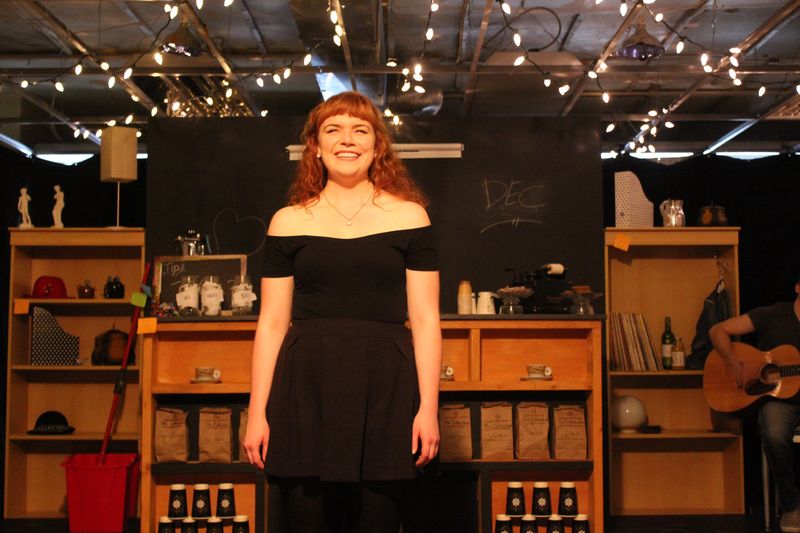
Confessions of a Redheaded Coffeeshop Girl: It’s a story that comes from the real life experiences myself and other twenty-something graduates had while working at various coffee shops in Toronto. I interviewed a myriad of graduates to see what their most hilarious, poignant or upsetting moments were while working behind the counter. And that is what this show is about, it examines the customer/employee relationship in the most hilarious of ways.

So come on down to the Toronto Fringe and meet Joanie Little, an “adorkable” anthropology graduate who decides to make the most out of her barista day job by ‘reporting’ about the humans of her coffee shop as though she were Jane Goodall herself, bushwhacking through the African jungle to observe the chimps. A tour-de-force that makes you laugh one minute and cry the next. Complete with live music, hurricanes, co-worker showdowns and a gorilla for a boss.

HS: Not only are you presenting at the Toronto Fringe, but you are doing a whole Fringe tour. Tell us a bit about where you’ve been, where you’re going and, being a Fringe vet, what’s the benefit to doing a fringe tour.

RP: RCSG has toured to six other fringes throughout Canada and the US: Winnipeg, Edmonton, Victoria, New York City, Stratford & London – this year was particularly exciting because we got a lot of love from CBC and Audience Choice in New York City!

We couldn’t be happier to finally perform it in our hometown! That was one of our initial goals! And what better place to perform it then in the Annex, one of Toronto’s fantastic indie coffee hubs!  We are thrilled to be performing in The Annex Theatre, one of the two theatres at the Randolph Academy of Performing Arts – just behind the infamous fringe tent!

We really hope Toronto Fringe audiences like the show!  It’s something our creative team is proud of. We have dramaturged the show with the wonderful Canadian playwright and author Ron Fromstein and are excited to see where the “updated” version of the show will take us.  So far this summer we are touring to Saskatoon, Victoria, Seattle and New Orleans!  And we have been offered a spot in a solo festival in New York City for summer 2015!

Confessions of a Redheaded Coffeeshop Girl playwright & performer: Rebecca Perry as Joanie Little. Photo Credit: Bryan Zilyuk

Confessions of a Redheaded Coffeeshop Girl playwright & performer: Rebecca Perry as Joanie Little. Photo Credit: Bryan Zilyuk

I’d say the benefits of doing a fringe tour are endless, you develop a Fringe touring family, lifelong friendships are forged and you start to develop a relationship with each city. You get to know the fringe staff, the media, the volunteers and what makes each city and fringe festival so special and original.

HS: What is the biggest thing you’ve learned so far touring your show to various fringe festivals?

RP: Always, always show your tech team some love. Holy cow do they have a crazy job!

HS: If you could give a new fringer or someone who is considering doing a fringe tour one piece of advice, what would it be?

RP: Be as organized as possible aka: plan in advance! The biggest thing is being ready before everyone else is. Get all your posters up and postcards out, be the person to flyer the first day of lines, know where every venue is and be a social butterfly.

HS: Why do you think festivals like the Toronto Fringe, and the Fringe festivals around Canada and the world, are so important? 

RP: I’ve seen some of the most ground breaking, heart-wrenching and fascinating theatre at the Fringe. It’s no wonder some filmmakers and fringe performers are finally making a documentary about it (shout outs to Nancy Kenny, Natalie, Cory and the rest of the “On The Fringe” documentary crew!) I know Fringe gets a bad rap for having “weird” or “inaccessible theatre” but honestly that just sounds like pretentious theatre-goers trying to pigeonhole the fringe into a certain category. For every “bad” show there are 15 amazing ones. I’ve seen so many mediums of theatre excel at Fringe festivals. I think that is the only way certain forms of theatre can exist what with the declining audiences of theatre these days. For some reason the Fringe just gets everyone out!

HS: If you could entice someone in 5-10 words to come see your show, what would they be?

RP: Challenge accepted!  I’ll make a little 10 word equation:

Hilarious (caffeinated) situations + indie music = my love letter to Toronto.

Short & Sweet Questions:

Favourite Coffee place in Toronto: Abbott of Parkdale

Go-to Fringe drink in the tents: CIDER!!!

What inspires you as an artist? When other artists around me are so brave. It inspires me to put my heart on the table like they do.

What’s your favourite thing about the Toronto theatre scene? That the indie scene is just as alive and kicking as the established groups.

What’s your artistic mantra?/Best advice you’ve ever gotten. “You won’t know until you try”

Confessions of a Redheaded Coffeeshop Girl

Written and Performed by Rebecca Perry as part of the 2014 Toronto Fringe Festival

RHCSG_FB_Timeline

Where – The Annex Theatre

When – July 3rd-13th, 2014
Thursday, July 3 – 7:00pm
Saturday, July 5 – 11:00pm
Monday, July 7 – 1:30pm
Wednesday, July 9 – 7:30pm
Friday, July 11 – 5:45pm
Saturday, July 12 – 12:30pm
Sunday, July 13 – 4:00pm

How can people connect with you online

www.redheadedcsg.com

instagram: @redheaded_coffeeshop_girl

twitter: @redheaded_csg

tumblr: http://coffeeshopgirl21.tumblr.com

facebook: Confessions of a Redheaded Coffeeshop Girl

bandcamp: www.redheadedcsg.bandcamp.com