Skip to content

Posts tagged ‘Toronto Theatre’

In Conversation with Graeme McComb of George F. Walker’s Moss Park

Interview by Shaina Silver-Baird

The old record player whirring in the corner, surrounded by artists, students and west enders, Graeme McComb, of George F. Walker’s new play Moss Park at Theatre Passe Muraille/Green Thumb Theatre, and I were barely able to grab a seat when we met for our interview at Saving Gigi. He’s working in Toronto for the first time, hailing from the west coast, but I have a feeling this isn’t the last time we see him.

SSB: So how was opening night?

GMC: It was great. It was actually the premiere of the play, here in Toronto. The energy in the building was really good. Full house.

SSB: How are you finding being in Toronto for the first time? 

GMC: It’s great. The arts are very rich here. It’s really cool to come into a artistic community that feels so alive. In Vancouver it’s a little less so. The funding from the provincial government is not as high as in Ontario so there isn’t the same amount of work going on.

There are just way more theatres here than in Vancouver – more companies functioning. Even The Vancouver Playhouse – a big regional theatre – had to close a couple years ago. It’s really sad. So for me, if I wanted to be a consistently working actor, I’d have to move here.

SSB: How did you get involved with this show in particular? 

GMC: I did a show earlier in the year that Patrick McDonald cast me in called Cranked. It toured around BC, California and Tennessee – we went to Nashville. During the end of the run, he knew he was directing this play and he asked me to audition for it. And I went to the audition, and was lucky enough to get it.

SSB: So you already had a relationship with the director? What was it like working with him?

GMC: Yeah. Really good relationship. He’s a great guy. I wish he could direct me in every play that I’m in. The way that he has fun and makes us feel comfortable… his incite is very unique. And I really feel like I work well with him. We have similar styles in approaching the work. I like to have fun, but I like to get down to work. We kinda speak the same language.

563088_633857276657422_1380744818_n

SSB: Something I find so interesting about Green Thumb, is that they do youth theatre, but it’s not just for youth. It’s stories for everyone about youth. Can you speak to that? 

GMC: The show I did with them before this (Cranked) was for high school students. It had mature themes: it was about crystal meth and drug addiction. We have a Q and A after the show, so the students had the opportunity to ask me any question they wanted to. But sometimes I’d find the teachers asking a lot of questions and being very affected by it as well. The show’s created for the kids, to help them understand that these issues happen, but it’s a message for everybody about addiction and a journey through addiction. Even (Green Thumb‘s) elementary school tours are so well written and so well directed and produced, that they tour to theatres and the teachers get into them as well. I’ve seen a lot of them and watching that as an adult they’re still really moving and effective. But as a little kid… wow… they get totally into it.

SSB: It sounds like it has something to do with not talking down to kids. 

GMC: When I did Cranked, sometimes we’d do a show for 900 or 1,100 kids. And it was a one-man show – it was just me. So I’d be standing behind this backdrop and I could hear them just talking and talking. And I got the feeling that they were thinking: oh it’s just another drug play or just another drug message. But then the lights went down and I’d come on with just a microphone and I’d start beat boxing into the microphone…

SSB: You beat box?! 

GMC: You could just tell they were thinking: “What’s going on?!” And then I’d go into a monologue about old zombie movies and new zombie movies, comparing the two of them. And they’re expressions were like: “What the hell?!” And then I just go into a rap song. And by the first two, three minutes, they were into it.

SSB: So you rap too?

GMC: Well I’m not a rapper… but for the show I was. Green Thumb commissioned a rapper named Kyprios from Vancouver to write the songs specifically for the show. And they hired a DJ named DJ Stylust to make all the beats. So we got to incorporate all these original songs made for the show.

This character Stan, it’s just his personal journey. And the character is 17, it’s not an older person talking to them. It’s this young guy, going through rehab, going through addiction, stealing stuff from his family… And they really connect with it.

1422550_634279983281818_431582019_n

SSB: Your character in Moss Park, which is the show you’re doing right now, is also a young man dealing with some tough issues. Can you tell us what is that play about? 

GMC: George F. Walker who wrote the play, wrote a play in 1994 called Tough! and it’s based on three characters: Jill, Bobby and Tina. Bobby and Tina are together but they come from poverty and they have a rough upbringing. The play starts off with Tina accusing Bobby of cheating on her – he’s just a young guy, he doesn’t really know how to grow up. Then you find out Tina’s pregnant. This play is a sequel to it. It’s set three years later. They’ve had a little girl, Holly: she’s not onstage. It’s just Bobby and Tina this time. Jill’s offstage taking care of Holly. They’re trying to figure they’re life out because you find out that Tina’s pregnant again. She basically says to Bobby: “I have to have an abortion, because you can’t take care of a child and we have no money.” On top of that, my mom and I are getting evicted. It’s life or death the whole time, that’s how high the stakes are. For sixty minutes straight, it’s just Bobby and Tina trying to work through it, and fight for their relationship and their baby.

SSB: Moss Park is at Theatre Passe Muraille, which is not a youth theatre, it’s a general theatre open to the public. So unlike Cranked, which you brought straight into schools, it’s taking the youth story and putting it on for everyone: youth AND adults. Do you think that’s important? How does it compare to your experience with Cranked? 

GMC: Our opening audience, it was an older crowd. And Tina talks a lot about poverty, about coming from poverty. There’s a story about her grandfather and his experience. A lot of people could relate to that. I could see them relating to it. But then there was also all the youth content that a lot of the younger people could relate to as well. So it’s a show for anybody. It’s not a specific message driven piece. It’s a little hour of these two peoples lives and it doesn’t end full circle. They’re just fighting to be together, they’re fighting to have their child, they’re fighting to have a life and trying to figure it out. And they don’t give up. If they did give up there’d be no play.

SSB: I find there are a lot plays about relationship issues and poverty and trying life decisions, but focused on older characters. But in this case we have just two leads on stage.. and they’re both young. And it’s not a TYA show! That’s unusual. I know it gets me very excited, and a lot of people are excited to see it. 

GMC: For sure.

SSB: How was your experience working with the other lead Haley McGee?

1380317_633857113324105_865806414_n

GMC: It’s been amazing. She’s so perfect for the part. I keep telling her, I don’t know how I would do it without her. She’s so generous on stage and an amazing actor. And being from Vancouver, I auditioned with a lot of women who were my friends that I knew already. Then I found out I got the part and Haley had gotten it, and I thought: I don’t even know her, and we have to be in love! But she’s great, she’s wonderful. I couldn’t have asked for a better Tina.

SSB: This character, Bobby, comes from a different background than you. How did you go about getting inside his experiences?

GMC: It was really cool to have George in the rehearsal process the whole time. Him and Patrick have worked together for years so they’re really good at working together. Bobby is really close to George’s heart, both of the characters are, so he had a lot of really good incite about Bobby. A lot of the work was just building it in rehearsal through the text and through Patrick’s direction, and of course seeing myself in him as well. I’m young, he’s younger than me, but not too long ago I was his age. And I really relate to a lot of the stuff he goes through. For example, he wants so badly to figure his life out and to grow up, but he just doesn’t know how to do it. He’s never done it! He has a line, where he just wishes someone would tell him how to grow up: “Tell me how to grow up, tell me how to man up. I just don’t know how to do it!” It’s not like he’s says: “yeah I just really don’t want to.” He’s not passive. He’s fighting for it. He’s trying to figure that out the whole time.

So I love Bobby. He’s funny and he’s sweet. He just sometimes doesn’t say the right thing… but he’s trying to though! He means so well. But he just comes off … wrong.

SSB: So what your saying is Bobby’s situation is very relatable. You can just ask yourself: What would I do if I was in his situation?

GMC: Yeah. Because Haley and I were both creating our characters at the same time and feeding off each other, a lot of Bobby came from my interaction with her. This play is so much about the other person. For her it’s about me and for me it’s about her. So we’re on that level, working together, back and forth, back and forth, listening. It really works so well. And with George’s writing it’s so real. Patrick said he wanted to make it look like there was no direction – like nobody directed it. It’s just two people, working it out for an hour.

SSB: Which we all know about.

GMC: Exactly, we’ve all been through it. Everyone’s been through it.

That’s one of the things I love about the theatre: you can have an entire hour of people, in real time, just working something out. That’s one thing I find interesting about this play, it’s going on in real time. There aren’t time lapses, plot changes or location switches. It’s just two people in a space for an hour.

Some people have a hard time with it. They go to the theatre and want to leave feeling like everything worked out at the end. That might not be the case with this play – you probably won’t feel that way. Cause it’s the hard truth. It’s beautiful in that way – in that it doesn’t end in a: they go walking off in the sunset way. That’s the reality of their situation.

SSB: So Patrick wanted it to seem like there was no direction. Do you think you’ve achieved that? How does that manifest itself?

GMC: It’s a lot to do with the words and the actors. He said that yesterday, after opening. It’s a dance and it’s about a musicality between us. We were talking in rehearsal that we’re like jazz musicians. We know the key we’re supposed to play in and there’re a thousand different notes that we can play in that key. But as long as we’re in the same key, we can change every night. Patrick said: “you can do a thousand choices in that key, and they’re all going to be right. But you have to be in that key.”

It’s freeing as an actor to know you don’t have to stick to the same choices. And if Haley says something a different way than she did yesterday, I’m going to react to it a different way, and then we just go back and forth and back and forth. It’s like we’re playing music in this key. It’s really cool when that happens cause we really start cooking.

And the audience is like another musician. He’s the other guy in the band – the wild card. He still plays with us! And we just kind of go along with him. But he makes us change it up.

1456577_633857219990761_23189066_n

SSB: It’s kind of like being on a rollercoaster. You just jumped on and you can’t get off until it’s over.

GMC: Patrick used another visual metaphor, that it’s like skiing – gate skiing, navigating around specific obstacles down a hill. The start of the play you’re up there at the top of the hill, looking down at all the gates and you’re like: “Ok! Here we go!” And as you’re going down the hill you have to be in the moment from gate to gate to gate. You have to see maybe one or two gates ahead, but you have to be right in the moment. You can’t look too far ahead or you’ll bale. If you check out for a sec, the audience is going to know and the play will suffer. So that’s what’s really cool about George’s writing too, is it’s so in the moment, all the time. Patrick said that in George’s writing the characters say what they’re thinking exactly when they think it.

SSB: What was it like working on a new play by such an iconic Canadian playwright? That’s gotta be crazy in itself!

GMC: Yeah it really was! I know Patrick pretty well and they’re friends so that was helpful. I went to theatre school reading his plays, so when I auditioned for the play I was like: “Oh my god!” I was quite nervous coming to Toronto, to a new place, meeting this iconic writer. But he’s just a regular guy, really insightful. He knows a lot about those characters, knows a lot about theatre and it was great to get to know him and work with him. He was so open and so kind to us. I felt very comfortable to act in front of him. Which was great, because I definitely get performance anxiety.

I go on stage and I feel my senses get so heightened. I’m just in it so deeply. It’s kind of overwhelming but it makes me very focused. So I’ll be very on the ball, because I’m just so in the moment and the adrenaline’s pumping. I’m not thinking about the past or the future, it’s just right now.

SSB: So it ends up helping you.

GMC: It does. Sometimes it’s not very fun.

SSB: Is there anything you’d want people to know coming to see the play?

GMC: That’s a good question. Open your hearts to the characters. And just let it take you on a journey.

SSB: What inspires you as an artist?

GMC: It’s been very inspiring to come here. New work is very inspiring to me. Creating this character has been very inspiring. Telling stories. I’m very passionate about telling stories and being a medium for a message.

Moss Park

by George F. Walker, presented by Green Thumb Theatre/Theatre Passe Muraille

Where: Theatre Passe Muraille, 16 Ryerson

When: November 5th-16th, Tues-Sat 7:30pm, Mat Sat 2pm.

Tickets: $15-$32.50, Matinee PWYC, 416-504-7529, passemuraille.on.ca.

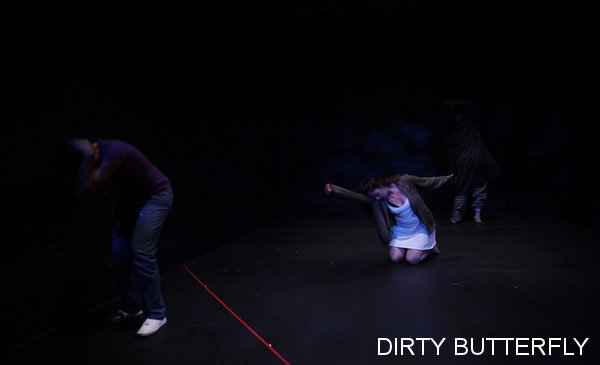
Bound to Create Theatre presents “Dirty Butterfly” as part of Obsidian Theatre’s 2013/14 Presentation Series

by Ryan Quinn

I sat down with director Jack Grinhaus and actor Lauren Brotman, Co-Artistic Directors of Bound To Create Theatre to discuss their upcoming production of Debbie Tucker Green’s Dirty Butterfly, being presented as part of Obsidian Theatre’s 2013-14 Presentation Series. We were also joined by their adorable ten-week-old Ethan, who the staff of the Artegelato cafe, where we were meeting, have been eagerly watching grow since he was born.

Dirty Butterfly is the story of an abused woman in a lower-class housing complex in Britain whose neighbours on either side have very different reactions to the sound of domestic violence coming through their walls. One neighbour actively avoids the entire situation, deluding herself into denying what’s happening, while the other becomes almost obsessed with it and completely drawn in. The show first ran at the 2012 Toronto Fringe, which, to Grinhaus, was a testing ground to see if the material could work as a full run. Of course, going from the Fringe Festival to being a part of a larger season at Obsidian has its own challenges, which have more to do with budget and promotion.

dbrotate

The pair first became interested in this show when they found themselves both working on different projects about domestic violence at the same time. “The statistics are frightening, on the rise, and damning,” they discuss. So, the pair went off in search of shows that deal with that topic, and Dirty Butterfly was so perfect for what they wanted to accomplish and explore, that they say they had no other choice. Bound to Create reached out to the White Ribbon campaign, and other local groups focused on this topic, and is happy to be working with them on this project.

Grinhaus and Brotman are incredibly excited to introduce Debbie Tucker Green’s work to the Canadian stage, as they see the power that British works can have on this side of the ocean: “There is a facility with language that even the lower classes have, that makes British theatre so different. Not only is the language fluid and precise, but Green writes in a cadence that the cast really has to tap into”. Grinhaus describes working on a scene where the character work was spot-on, then having to go back and speed up the pace to make the rhythm of the text work. “Trancelike is actually a really good word for it. The beat draws us into the action and really makes us feel complicit in what’s happening. The result is an audience that either identifies with one of the two neighbours, or falls somewhere in-between, on the spectrum of fear to obsession. What do we do on the other side of the wall?”

db4new

What makes this show leagues away from being a feel-good morality tale, though, is the complexity of the characters involved. “Green has made the main character, right from the top, do and say some things that are really…unlikeable,” Brotman tells me, “The audience probably won’t like this woman.” Also, there are no big acts of physical violence in this show, which separates Green from the fellow playwright to whom her work is most often compared, the late Sarah Kane. Brotman explains, “Jack’s done something smart where the little moments of violence in the play are closer to metaphors, leaving a play that strongly focuses more on the reactions and the repercussions of the violence.”

It’s also the smaller character moments that speak so much about the class culture in Britain and across the world. Grinhaus tells me about a small piece of text from a character who is a cleaner in a cafe, whose only dream is to someday be a barista. “It’s this tiny moment that happens too fast, but it really hits me”.

Luckily, the rehearsal space was one of the best she’s ever been in, Brotman explains. “It was very zen, you know. I was there with my husband, and my son was there in the room with me, it felt like a very safe place.”

When asked if he has any advice for young companies looking to produce important work, Grinhaus immediately replies “David Mamet is no longer relevant”. He explains that, sure, Mamet’s plays are full of angry conflicts, and that’s where young actors tend to be most comfortable at that stage of their lives, but his plays just are not the right kind of shows to be putting up right now.

His more direct advice, though, was that to be in the business, you have to be in the business. “When I was working at a restaurant in New York, I had to drop an audition because I couldn’t risk losing a shift. I never made that mistake again”. Grinhaus recommends working in any area of the theatre you can get into: “I got more acting jobs from being the guy sitting beside the director of another show in a different capacity than I did from auditioning”.

Bound to Create Theatre is also doing a cross-promotion with Paint Box Bistro for Dirty Butterfly. Paint Box is a restaurant and culinary school that teaches young people in Regent Park the skills they need to work in restaurants, or open their own. Their infrastructure supports establishing kitchens and allows use of the space to Regent Park start-ups. Paint Box is offering 10% off pre-show meals with proof of ticket purchase.

Dirty Butterfly

Dirty-Butterfly-web-618x337

by Debbie Tucker Green

Presented by Bound to Create Theatre as part of Obsidian Theatre’s 13/14 Presentation Series

When: October 30th to November 17th

Where: Aki Studio Theatre, 585 Dundas Street East.

Tickets: www.boundtocreate.com, or by calling 1-800-204-0855.

In Conversation with Kira Guloien from the Stratford Festival’s “Tommy”

Interview by Shaina Silver-Baird

At a coffee shop just off the main square in downtown Stratford, around the corner from the Avon theatre where she was prepping to star as Mrs. Walker in a matinee performance of Tommy, I sat down with Kira to discuss fear, trust, inspiration and her first season at Stratford.

Shaina Silver-Baird: What have been some of the challenges in coming to Stratford for the first time. I know you’ve worked with other theatre companies and came out of Ryerson Theatre School, so you’re no stranger to intense experiences. But how is Stratford different or similar to those experiences?

Kira Guloien: It was totally terrifying coming here. When I booked the show I thought it was a joke, or a mistake. So coming here and prepping for the first days of rehearsal, I didn’t really know what to do, what to expect or what to prepare. Firstly, I was ready to go through the same kind of stress and anxiety that I went through in theatre school – I had chronic headache problems and was always on edge. And then, I got to rehearsal and everybody was so welcoming and warm and supportive and positive! Secondly, I didn’t know what it was going to be like to work with Des [McAnuff]. I thought he’d be really scary, demanding and strict. But he was the most relaxed director in the world. He would tell you himself he’s not always that way. But, every minute of this process, he was really calm, cool and collected. And he never, ever made me feel like I had to impress him or do something brilliant on the spot. He had so much trust in the process and in the people he chose. When Des makes a decision about somebody or something, that’s it, his mind is set. So he never gave me the impression he thought he might have chosen the wrong girl. I, on the other hand, was having those thoughts all the time! He would constantly reassure me that I’m here for a reason and that it would all come into place.

Surprisingly the rehearsal process itself, was not a stressful one. Once we got into previews I started having fears and self-doubts. But the support around me all the time – whether it was from fellow actors or coaches – really allowed me to just come to work and do my job and forget all the fear.

SSB: That sounds like an amazing team.

KG: Yup. Just amazing!

1374770595308

Photo courtesy of the Stratford Festival – Tommy

SSB: That’s one thing that has always struck me about Stratford, and correct me if I’m wrong, but it seems like all these amazingly talented, professional people, coming together and all supporting each other. It’s nice to know that’s actually the case and not just my impression from the outside.

KG: It really is the case. The coaches are where the real support lies. I’ll go to a voice tutorial and expect to just do some breathing. But the coach will check in and say “how are you handling this?” They have been here for so long that they understand the different patterns throughout the season. For example, previews are a stressful time. And now that we’re in mid-season, this is the time when everyone always gets sick. They know these patterns like the back of their hand, so they’re on it.

SSB: So, they know what the ebs and flows are. What have those ebs and flows been for you? What were some of the highs and some of the lows?

KG: My first preview was awful. We had to stop during the run. We had never actually gone through the entire show without some kind of technical mishap. I was completely unable to manage my nerves. And it’s a learning curve, I mean I haven’t really done a lot of musicals, so I’m not used to the vocal maintenance. For example, that day I was dealing with some kind of allergy, so I took an anti-histamine. Then I took an Advil because I had a headache. So the meds made me totally dried out, and then the nerves dried me out even more. And I didn’t really have the tools prepared backstage, like … kleenex cause my nose is running, or a bottle of water. You kind of have to experience those things to realise what you need as an artist. I didn’t have something as simple as a little glycerin lozenge if my mouth was literally dry!

So I got onstage for this preview and I’m thinking: “Holy moly, I can’t breathe, my mouth is dry.” Of course it wasn’t as bad as I say it was but… I was devastated afterward. I thought: I’m not going to be able to do opening night. I knew I could do the show: I’d done it so many times in rehearsals. But all of a sudden with the added pressure, I failed to do what I had hoped to do. Second preview I felt like I got back on track. But I still had this feeling that opening was going to be a whole different thing. It’s the most stressful night of your season. And I was sort of mentally preparing myself for the possibility that I could completely flop, which is terrifying. All that being said, I felt like I did gain the tools to overcome the stress and the fear, and I feel like I even had a really successful opening night. For me, as an actor, I feel like I’ve made a huge step since then. As young actors, we simply haven’t had time to just be on stage to this extent.

Guloien_Kira_large

Kira Guloien plays Mrs. Walker in Tommy

SSB: It’s interesting to me to hear you talk about the stress, because one of the things I loved about you onstage yesterday is you had such a sense of ease. You seemed so comfortable. As young actors we haven’t done a run of a show for this length of time. That’s a whole different kind of stamina.

KG: Totally. People say to me: “you must be so bored.” Absolutely not! I still get nervous every show. I still have challenges in the show every day – especially in this type of show, because there are so many things that can go wrong. And they do go wrong.

About a month ago, something was going on with my health, I thought I had allergies but didn’t know. My stage manager asked if I was going to see a doctor, and I decided I was fine. I went out, did half the show and my voice completely cracked out. I had no breath, no support for anything. My voice was cracking, I was in pain. By the end of the first act I knew I couldn’t go back out there.  First of all, there are paying audience members having a terrible experience. Second, I’m going to do damage.

The amazing thing about this place is that there was never any pressure on me to go back out and finish the show. My understudy is amazing! She was ready to go with 10 minutes notice. Immediately they were driving me to the doctor, driving me to the specialist, making sure everything was ok. And then saying: “Take the time you need. You need to run a long distance race here. You can’t just force yourself to do the next week of shows, make yourself worse and then be out for the next month or two months.” So that was amazing. But of course it was so devastating for me. And beyond that, you’re missing out on the best part of your day!

So I missed 3.5 shows. Then Paul Nolan got sick and missed about a week, and Jeremy Kushnier got sick and Jewelle [Blackman] missed a show. So that was a week when the whole company was dropping like flies.

I’m in a very different situation from most of the company by being in only one show. I go to work, have this crazy adrenaline rush, and then I have two days off. There’s no consistency. I kept thinking: “Why am I sick again?!” But it makes sense. You know when you finish a run of a show and you get sick right away? Your body knows those routines. My body doesn’t know what’s happening with all these ups and downs. And of course there’s this self guilt of only being in one show, feeling like I should be healthy, so that doesn’t help.

1370878515647

SSB: So I know that the show I saw was Stephen Patterson’s first show as Captain Walker, and he was amazing. I could not tell that it was his first show at all. You two were great together. How is it playing opposite someone new mid-run?

KG: It’s a treat to be honest, because it is a long run and things do get stale. Yesterday was really unique because Stephen has only had a week of rehearsal, so it felt like anything could happen. As an actor, for me, it was such a lesson in listening and just being there with him. And it was a really cool experience, to have to trust that everything will be ok.

I’ve now had three husbands in the show. And there’s pros and cons to that, but I think that it has been a gift. You learn a lot about yourself and your patterns through that experience. For example, I always looked at Jeremy at a specific moment. And then there’s suddenly someone new there and I didn’t feel like looking at him in that moment. You take those things for granted, especially in a musical like this that is so set in movement. “On the third count of the fifth eight you’re going to walk onstage and then you’re going to…” that’s how this was choreographed. It’s so specific. It’s not a dance, it’s a show. But even as actors we are choreographed so specifically. It’s tough sometimes to find an ability to play in that. So you do get into patterns very easily.

SSB: What was the difference in working on a rock opera versus a ‘straight play’ or even a musical? Was it challenging to juggle all those elements: the entire show being scored; the choreography; the production being so huge that it was basically a character in itself?

KG: For a long time I felt like I was going to get lost in the show. There’s a frickin’ massive television screen behind me! Who’s going to look at me?! I just had to trust that Des knows what he’s doing. And Jeremy Kushnier, who has worked with Des a lot, he said: “If Des knows one thing, he knows about focus and how to make people look at the right place on the stage. Just trust that.”

You definitely have to step up. You need to meet all of these elements around you. It’s not a competition, you’re not trying to steal attention. This is the way Des put it: “You need to allow those elements to lift you.” We need to use that music or the screen behind us or the people around us, to elevate the piece to the realm of a rock opera. You go to a classic opera and it is over the top. It’s heightened. That’s definitely what this show is. And it’s a difficult balance, because my character is still a very pedestrian person. I’m just playing cards and folding laundry.

SSB: It sounds like it takes a certain amount of trust that what you’re doing is enough. That you can have the huge orchestra and three-story projections and just be folding laundry and still be interesting.

KG: Des, our director, and Wayne [Cilento], our choreographer, each had assistants, Tracy [Langran Corea] and Lisa [Portes], who both worked on the original production twenty years ago. They did all of the put-ins, so if the show was on tour and they had to incorporate a new cast member, they’d come in and teach them their track. Des and Wayne are these guys in their 60s and they don’t remember anything from the original. I mean, they remember the entirety of the show, they created it, they get it. But Des doesn’t know that ensemble member number three walks downstage on the fifth count of whichever bar of music. And these women show up with their little notebooks and are immediately like: “Ok, who’s number four? So, you, on this count, you do this.” That is how specifically we learned it. A) We’re not making any decisions ourselves, which in some ways leaves you feeling like: What? These choices don’t come from me?! On a personal level I was like: great! Tell me what to do! I don’t want to have to come up with these decisions right now. There were a few weeks of counting “1, 2, 3, 4, 5, 6 – 2, 2, 3, 4, 5, 6” … to just get the blocking. Eventually you stop counting and you know it. And then all of a sudden you make it your own.

Lisa came back to help put Stephen into Captain Walker’s role the other day. And a couple times I had to say, “No it’s kind of morphed into something else now, we’ve made it our own.” Which Des encouraged. It was always up for our interpretation. But it was a very bizarre way to learn a show. And necessary. Everybody’s track is so specific. Blocking was a nightmare, it took so long: doors shutting at the same time, people freezing at the same time – so specific.

And that’s partly why Des was so relaxed during the process. Not that he wasn’t doing lots of work – he was there everyday offering us his opinion – but it is a remount. It’s a remount that’s been modernized and has this entirely new technical element put on top of it. But he knew what it was. He knew that it worked. If you know something works don’t change it. He was able to just sit back and trust. And he had such a good time, you could just tell he did.

SSB: If there was one person at the festival you haven’t had the chance to work with but would like to, who would that be and why?

KG: There’s so many people like that. I feel like because of the role that I’m playing in this show, there’s no real leading lady that I can look up to. As far as a strong, female role in the show, I guess I’m playing that part. In my show, I definitely look up to Steve Ross, Paul Nolan, Jeremy Kushnier and Jewelle Blackman as far as mentors. But to work in a show with Seana McKenna, Lucy Peacock or Kate Hennig, who are all incredible for their own reasons, would be amazing. I see around them around, but to work with them, observe them… These women that have so much talent and experience.

All-sizes-Tommy-On-the-Stage-Flickr-Photo-Sharing-2013-06-14-13-11-26

SSB: You have to move to Stratford, to work at Stratford. So what has that been like? What’s your favourite part of living here and your least favourite part about it.

KG: It’s definitely an adjustment. It’s my first time living by myself which is awesome, and I really put some time and some money into making my apartment comfortable. It’s something nice to go home to at the end of the day. It’s so easy when you’re doing these sorts of contracts to move in to a dumpy apartment and just live with it for eight months. But it’s a long enough time that you want it to be comfortable, and that for me has made a big difference. As far as small town life, I’ve actually adapted pretty nicely to it. I’m reading more than I have in years and I’m spending more time going for walks. I spend a lot of time on this very patio, reading and drinking coffee. More time just appreciating life’s little pleasures.

SSB: Which is so important, especially coming out of theatre school where you had zero time to do that.

KG: I didn’t have time to do anything for myself! I feel like the luckiest person in the whole world, to have a paycheque doing what I love, and also have time in the day to get up in the morning, come have a coffee and read a book. That’s pretty rare. And it’s easy to take that for granted. It’s a good lesson for when, inevitably, I will be unemployed again, because it happens to the best of us. And, yeah, we need to pay our bills, but even if I’m working at a restaurant, I can still make that time for myself. That’s just an important lesson to learn.

We can be so masochistic. “Oh whoa is me, I don’t have a job, and I have to do this and that…I’m going to force myself to suffer everyday.”

SSB: I don’t think that makes a better actor.

KG: It doesn’t. It was always a balance in theatre school. I would debate: Is it better to have life experience – go out and make friends, and go to the bar and do fun things – is that gonna make me a better actor? Or is it better to go home and read… Shakespeare all night? I honestly would go back and forth between those. You’re always trying to justify what you’re doing, make yourself feel better about your choices. But ultimately life is about balance. It’s definitely a life long journey to find that.

SSB: Mrs. Walker is dealing with a pretty immense challenge. She’s a young woman who has to deal with a son who’s deaf, blind and dumb. What kind of prep did you do in order to get behind that?

KG: I read Pete Townshend’s autobiography. And we had a dramaturge come in and talk to us about the time the play is set in – what was going on when this rock opera album was being written and first performed etc.

And I hesitate to say it because I know very little about autism, but Tommy definitely has a similar experience to someone with autism. However, this is not a play about autism, in any way, shape or form.

I also read a book called “The Boy in The Moon,” written by a man named Ian Brown who is a journalist for the Globe and Mail. His son Walker (funnily enough) has a rare genetic mutation called CFC (cardiofaciocutaneous).

He can’t communicate, he can’t speak. He’s partially deaf, partially blind, all his internal organs are failing, he has skin diseases, doesn’t grow hair – it’s one of the rarest syndromes in the world. Everything is going wrong with this child. He beats himself over the head and they don’t know why because he can’t speak or communicate. This man wrote this book about his experience raising this child. The number of times I would read something and feel like: “Oh, ok. I get it.” There were so many parallels with moments in the play. For example, during the song “I Believe My Own Eyes,” when we’re basically coming to the conclusion that we should institutionalize Tommy and put ourselves first again – they talk about that in the book all the time. The first time that decision ever came up Ian said: “I think we should put Walker in a home.” And his wife says: “I can’t talk about that yet.” We have that moment on stage. Mr. Walker says: “He needs attention and care we can’t provide.” And I pull my hand away. Ian Brown wrote about that. And for me, reading a first hand experience moved me so much.

Especially reading about the guilt his wife felt, as a mother bringing this child into the world. And in the day and age of Tommy, the woman would be totally blamed. There was no research at the time. Realistically a child like that would be institutionalized immediately. So the fact that the Walkers keep their child, that’s practically unheard of. And it was the mother’s job to take care of the kids, that’s why women didn’t work. So if a child had any kind of problem, it was always the mother’s fault. For a mother there’s a huge amount of guilt and confusion.

0

Photo courtesy of the Stratford Festival – Tommy

In Tommy there are these trite lines like “What’s going on in his head?” But they’re really quite heavy when you think about them. What is he thinking? Why is he hitting himself in the head? Is he in pain? Having a real person ask these questions, was really helpful for me to understand the depth of it. It can become very surfacey in this show, (I mean he plays pinball all the time) and I never wanted it to be that.

For me, when people ask ‘What’s the play about?’ it’s about family and love – very simple themes. All this woman wants at the end of the day, is for her son to look her in the eye and see her.

SSB: That was one of the most beautiful moments: when you smash the mirror and he looks at you and you see him seeing you. 

KG: For Mr. and Mrs. Walker it’s very heavy. They’re weird roles to play because the story is not about us, the story is about Tommy. We’re facilitators in a sense for his journey. We don’t even have first names. I feel like I’m an idea of a person so much of the time. So it was up to us to make those people rounded characters and fill those snap shot moments with something full. There is a lot of ambiguity about Mr. and Mrs. Walker.

SSB: Right, because it’s not Mrs. Walker’s story, it’s Mrs. Walker in Tommy’s story. 

KG: The way Pete created it, all these people and things are in Tommy’s mind, interacting with him along his journey. To be honest it’s still very mysterious to me, the whole thing. What Pete was going for when he was writing the album was very out-there, hippy-dippy. It’s not a realistic play.

Which is fed by the fact that he starts to interact with the world through the vibrations of sound. The pinball machine is essentially a guitar – there’s a parallel between the two – Tommy playing pinball and Pete playing the guitar. It’s very symbolic.

But for me, as Mrs. Walker, it’s not about vibrations and pinball at all. For her, when her son gets carried off by these leather louts and plays pinball, it’s a mystery.

maxresdefault

Photo courtesy of the Stratford Festival – Tommy

SSB: At In the Greenroom we’re really interested by what inspires different artists. As an artist, not necessarily for this show, what inspires you? 

KG: The first thing that pops into my head is: music. Period. I know, ‘who doesn’t like music?!’ But out of all of the art forms in the world, that’s what makes me happiest.

This is cheesy, but I’m inspired by nature. I’ve discovered this in the past five years – that I just think life is beautiful. I can look at something, like these flowers beside us, and think: “Where did that come from?! Holy fuck, look how beautiful that is and it came out of the ground. Crazy!” I can just stare at things like that for hours. I mean I can look at a piece of fruit and think: “How is that so beautiful?!” I’m such a nerd.

I just did this workshop with Thomas Morgan Jones on Suzuki and Viewpoints (he’s done a lot of work with Anne Bogart and the City Company). He would have us go up one at a time to a piece of music and have us come up with a gesture. He’d say: “I just want you to measure.” So I’m watching a person standing there doing this motion, swishing his arms back and forth. He’s alone, in this beautiful room… and I was sitting there just crying. For some reason, that moment… Why does that make me feel that way?! Sometimes the simplest things open you up.

Yesterday he told us: “Ok, two people go up. You don’t have to do anything, you say any piece of text you want, you don’t have to talk, just two people go up. Don’t try to be interesting, don’t try to make a story.”

Two people go up and one guy sat down and the other was hunched over a table. And Thomas was like: “We could just look at this for an hour and examine these two people sitting there.” We get so much story from nothing. It’s incredible to realise the simplicity of life. Sometimes you doubt yourself as a person or as an artist. You think “I’m not interesting enough. I’m not doing enough. I’m not putting enough into this show or this project.” It’s amazing to me to just sit back and realise that a person is so interesting in the first place. And then a person leaning over a table is “Whoa!” So much more interesting.

SSB: That’s a huge challenge, especially for young actors. I know for me, believing I’m just interesting as myself, without anything else, is hard.

KG: In our business there’s so much fucking fear and so much self-doubt all the time. Here I am, I’m living my dream right now, and still every day I think: “What am I going to do after this?! I’m never going to work again.” I know everybody feels that. And you think: “I finally made it to Stratford, yay!” No. It’s not the ultimate thing. That’s not really what it’s about. And sometimes you think that IS what it’s about. But I just go to work and put on a play for two hours. It’s the same as putting on a play in your backyard.

SSB: Being an artist, this is getting really philosophical, is like constantly searching for something and people misconstrue it as searching for the next contract…

KG: …Or the pursuit of happiness. We think: “Once I work there, I will be happy – I’ll have met my needs as an actor.”

So, to answer your question, ultimately what inspires me, is simplicity and beauty. Period. The rest is just institutions. When you get to the root of something it’s just really special.

The Stratford Festival presents Tommy

Directed by: Des McAnuff

About the Musical:
Deprived of sight, hearing and speech by the shock of what he has witnessed as a child, young Tommy Walker seems lost to life – until he reveals an uncanny talent for the game of pinball. When his faculties are suddenly restored, Tommy is hailed as a living miracle – but will the fans who turn to him for enlightenment want to hear what he has to say?

Where: Avon Theatre
When: Now until October 19th – Only four more days!
Tickets: http://www.stratfordfestival.ca/OnStage/productions.aspx?id=20233&prodid=47004

Artist Profile: It’s Not Easy Being Green… But It Feels Pretty Great – Michelle Nash and Andrew Di Rosa of The Lower Ossington Theatre’s Shrek The Musical

Interview by: Brittany Kay

An interview for CP24

An interview for CP24

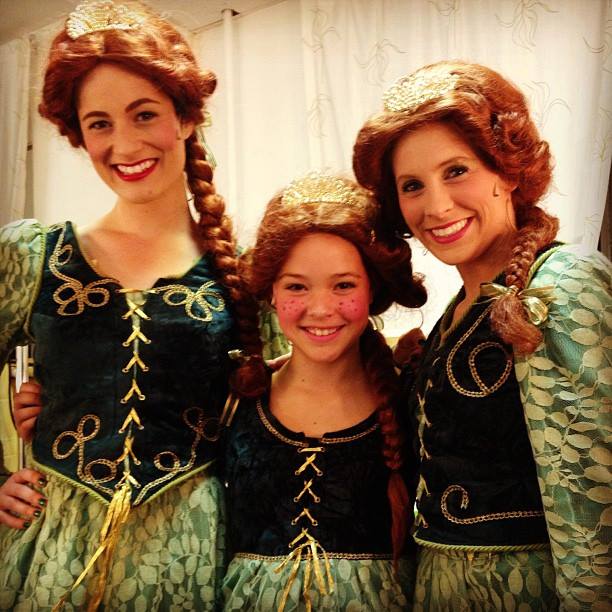
We sat down with Michelle Nash and Andrew Di Rosa to talk about life after theatre school, the impact of theatre for children and their dream roles coming to life in The Lower Ossington Theatre’s current production of Shrek The Musical.

BK: This isn’t the first time the two of you have met?

MN: No. We went to the joint Theatre and Drama Studies program at the University of Toronto Mississauga and Sheridan College but we were in two separate years.

BK: Have you worked together before?

MN: We worked in the University’s Erindale Fringe one act festival in a musical actually. But we’ve come such a long way since then.

ADR: Oh it’s astronomical.

BK: What about life after theatre school? What has happened between graduation until now?

MN: It’s been a year and a half since I’ve graduated. I’ve been doing a lot children’s theatre. This is the first big tech heavy, cool show I’ve gotten to do. It’s been pretty amazing being out of school. You settle into life. I feel like I’ve learned more about acting this past year, because of life experience and the practicality that allows you to apply what you have learned from school to the real world. The more shows that I do, I find, the better I get and the more comfortable I get when things go wrong, which they always do. That’s theatre for you.

ADR: I’ve just graduated. Right out of school I got a feature film from Theatre Ontario, which I did in August. That was a huge step for me because I came out of school trained heavily for theatre. I remember the director had to pull me aside and say “Hey, this is a movie now… take it down a bit.” That was a tough struggle trying to navigate those two mediums but coming back into the theatre world with Shrek was like home territory for me. It’s been such an incredible feeling.

BK: Yes! So then Shrek happened…

ADR: When I found out the LOT was doing Shrek The Musical, it was a done deal. I walked into that room and I was like “I have to get this part and I will do anything for this part!” It’s one of my dream roles.

Photo Credit: Seanna Kennedy

Photo Credit: Seanna Kennedy

BK: And it’s one of your dream roles too, Michelle!

MN: Yeah, it’s funny. We used to talk about Shrek in school, and we were obsessed. It’s just so funny that it actually happened in such a great way.

BK: When I saw the casting I was like “I die…this couldn’t be more perfectly suited to the two of you”. 

ADR: And we swore we would play these parts together. Like a joke. One of those “Michelle, one day it would be cool to be the Shrek to your Fiona.” And then literally a year later I get to fall in love with her every night.

BK: And how is the falling in love? How’s being on stage as friends together?

ADR: It’s amazing. It’s business as usual

MN: It’s easy. We both trained at the same school and know where each of us is coming from. We both just feel it. It’s almost like a scene study every night.

BK: What is the play like? People might expect it to be like the movie. How does it differ? Will their expectations be altered when they see it?

ADR: The character development is so much stronger than in the movie. You are much more invested in the characters. The songs really do that.

MN: The fairy tale characters are so minor in the movie, but in the musical, they’re very relevant. They are completely three dimensional and fleshed out.

ADR: They carry the message of the story. There are so many characters you gloss over in the movie, which is the opposite in the play.

1276846_611052172280504_1125016803_o

BK: Talk to me about your director Seanna Kennedy?

MN: She specializes in children’s theatre, but this show is more than that. This show is really for the kids and she really catered to that. We have such a good team coming together to create the show. With us two, she knew how much we loved the roles and let us explore our ideas. She gave us such creative freedom.

ADR: Because we know the roles so well, we got to play with them. I feel so close to Shrek. I know who he is and what he wants and where he’s going and that’s important to an actor.

MN: The only thing I struggle with secretly is the dancing. I don’t tap…well now I do! I’m so glad Seanna took a chance and gave it to me.  I think she knew that as an actor, I could do justice to the role.

ADR: The show for me is tremendously difficult. There are some tough songs.

MN: He’s got fifteen ballads!

ADR: Literally the second act is like ballad after ballad. Plus I’m doing a Scottish accent. Plus I have a mask on my head.

BK: Yes, oh my gosh the make up! Tell me about the make up process? It looks so intense.

photo 2

MN: We had to get our facemasks done. Mine is a transformation in three minutes with a different wig, fat suit and a prosthetic nose. Andrew’s is a whole other story.

ADR: They pull on a skin tight, foam rubber head that only exposes my eyes, cheeks and mouth. They spray paint my face green. For the first couple of times, I was a little scared. Later on, they drilled holes in the ears for better sound but it wasn’t enough. So I wear a transponder with earphones throughout the whole show and I hear everything! It’s like mini monitor.

MN: And he can’t even take them out during the whole show.

ADR: The sacrifices I’ve made for that head piece are so worth it because of how incredible it looks. I walk out on stage sometimes and people applaud. They’ve done a fantastic job with the costumes and puppetry in this show.

BK: What are the best aspects of this show, for yourself and for the audience?

ADR: The song right before Act One intermission called “Who I’d Be”. It’s the song that made me fall in love with the musical.

MN: “Morning Person” is the song that made me fall in love with Shrek and I’ve used it for many auditions. Getting to do a song you do for auditions on stage is such an interesting experience. It’s such a difference to do it full out with props… it just completely comes to life, making it so satisfying to perform.

BK: And for the audience?

MN: I think, “I got you Beat.”

ADR: That’s the one that really gets the audience. It’s the moment when you feel that everyone is with you.

MN: The song has farting and burping in it and once that happens people understand what the show is. It’s always a guaranteed laugh.

ADR: You can feel the energy in the whole room.

Photo Credit: Seanna Kennedy

Photo Credit: Seanna Kennedy

MN: Also “Freak Flag!” That song is one of my favourites in the show. All the fairy tale characters just come alive.

ADR: It’s also that message that’s prevalent throughout the show – that you can be different. Embrace yourself.

MN: There was one kid opening night that had down syndrome and during that song he just stood up and started dancing! It was an incredible moment for all of us on stage and in the audience.

BK: The kids have to make the show for you. I’m sure they wait for you at the stage door.

ADR: They love the show. They appreciate every aspect of it. There was this one boy who asked for every single character by name at the stage door wanting their autograph.

BK: Kids are so affected by theatre and it’s incredible to see how much of an impression it makes on them.

ADR: It’s what makes it worth doing this show every night.

1381262_10200259436842500_1293610437_n

BK: Being an emerging artist, do you have any advice for your fellow actors?

MN: I think we’re still trying to figure it out ourselves.

ADR: Personally, holding back on getting an outside job right away helped me focus more. It gave me time to go out to every audition. Not having any anchor to a job is what helped me get these roles. I was always ready and willing with anything that came my way.

MN: I have the opposite experience. I have a lot of jobs. I think it’s funny, sometimes I wish I didn’t have all of these jobs, but truth be told, living in Toronto is expensive! You gotta eat. Thankfully, I have jobs that understand what I do  and give me time off when I need to do a show. But it’s hard. My advice is: Be accepting of the fact that for however long it takes you, you’re kind of going to be in the shits for a bit. You are going to be working so many jobs, but you can take things out of every experience. With serving, for example, you learn from all the different types of people that surround you and as an actor I’ve grown from that. Also, I don’t even have an agent yet.

BK: Which is so interesting because you’re always working!

MN: It just hasn’t been my focus right now because I’ve been so busy with shows. I take any opportunity that comes my way. And I’m still alive. I have a roof over my head, which is all I really need. Young actors need to understand that you’re aren’t going to have a lot of money for a while.

ADR: You’re going to have to work hard. Network. Listen to others. Pay attention. And be unknown for a very long time, which is a different feeling coming out of the small community that is theatre school. In this industry, even if you think you’re the greatest…you still have to put in the work.

MN: Even with the LOT, I’ve done five shows with them. This is first time I’ve had a lead. I’ve had to work hard and dedicate myself.

photo 1

Andrew Di Rosa and Michelle Nash as Shrek and Princess Fiona

RAPID FIRE QUESTION ROUND:

Favourite Musical

ADR: Into the Woods
MN: The Last Five Years

Favourite Book

ADR: The Hours
MN: Harry Potter… duh!

Favourite TV Show

ADR: The Sopranos
MN: The Real World Challenge or Top Chef…Love my Reality TV.

Guilty Pleasure

ADR: Subway
MN: Red Bull

Best Advice You’ve Ever Gotten

MN: My drama teacher in high school told me, you’re going to be poor and in debt anyways so you might as well choose where you want to go. I kind of live by that.

ADR: Holger Syme from our university, UTM… He said go out there and see other people’s work. People won’t come see yours if you don’t see theirs. That’s how our community is going to thrive, by supporting each other.

The Lower Ossington Theatre presents Shrek The Musical

main_fit_300

When: On now until October 19th
Where: Randolph Theatre, 736 Bathurst Street
Tickets: http://tickets.ticketwise.ca/event/3769538

Theatre Caravel presents Sea Change – An Event to Gather the Community and Celebrate Work in Development Over the Baked Goods Table

Interview by: Hallie Seline

I sat down with Eric Double and Julia Nish-Lapidus of Theatre Caravel to discuss their upcoming 15th edition of Sea Change: a night of new performance going on this Saturday October 12th. We talked about community in the arts, the draw of baked goods and audience participation and the importance of providing a relaxed venue for artists to present and develop their work and for audiences to witness and interact with the work in development of local artist.

HS: Let’s begin with you telling me a little bit about Sea Change.

ED: Sure! Well Sea Change, a night of new performance is the event that we, Theatre Caravel, run as part of our company initiatives. It’s a quarterly event where we invite artists of all different types, be it visual artist, musicians, poets, playwrights, mask performers, clowns etcetera, we’ve had it all, and we invite them to show fifteen minutes of new work that they are working on in front of a pretty diverse audience, to sort of inspire the artists to continue working on their pieces and giving the audience a chance to see work in development in a very supportive, creativity conducive environment.

JNL: It’s also about the meeting of all of the different artistic mediums. The whole idea behind Sea Change was that we didn’t want to be a theatre company just for theatre people. We love music and visual art and all of these different mediums, so we thought why don’t we invite these amazing people we know who are doing other artistic things to come be part of our theatre company through this event with the hope that connections would be made between the musician and the spoken word artist and so on. We’ve actually had a lot of Sea Change performers meet at the event and hook up to do shows together afterwards, inspired to mix their two mediums. That was one of the ideas behind the event – to say it’s not about the theatre community only, it can be about the artistic community as a whole.

HS: So would you say that was your main inspiration – to create this sort of artistic event in the city which people can feel part of?

ED: Well, yeah! It actually stemmed from this idea that was inspired by Julia’s parents, who had been going to these events called House Concerts. We thought it was a really novel idea that local musicians like the Wainwrights would put on these tiny concerts for maybe maximum fifty people in someone’s house, in a relatively laid-back performance.

JNL: They were my parents’ neighbours who were doing these concerts for maybe thirty-five to fifty people. They would get really great musicians and put on a show in their house. They would do it maybe six times a year and it would completely sell out! It started off with just their friends but then their friends would tell people and so on and by the time my parents moved in next door, they had to buy their whole year’s subscription to these House Concerts in advance because it would sell out like crazy. People just loved being there. They would serve food and it had a super relaxed vibe while providing this amazing musical experience.
So originally Sea Change was supposed to take place in one of our houses… that was the plan! (They both laugh). Then we just realized that we didn’t have houses that could fit all of the performers and more than fifty people at once.

ED: The idea was to incorporate the laid back spirit of these events, because up until that point, I don’t think I had ever been to anything that wasn’t just theatre focused and was really that relaxed, basically. I think we were kind of hungry to explore our inspirations behind our own artistic practice, and hopefully do that for other people too.

Nicole Ratjen as Princess Penelope

Nicole Ratjen as Princess Penelope

JNL: And supplying free food was a big part of it for us. As much as that seems like an afterthought of ‘Oh yeah, there are free baked goods’, for us that was also a big part of creating the community feel at Sea Change of really bringing everyone together on multiple levels. Though we couldn’t do it in a home, our focus was still on making it feel ‘home-y’.

HS: Of course! Well, people connect and come together over food, art, music…

JNL: Exactly! Well I bake, my mom bakes, and this woman who was best friends with my grandmother, who is pretty much like a grandmother figure to me, she bakes too! It’s like family baking for everyone at Sea Change, which I think makes it a little more special. And people always enjoy being able to go over and talk to the little old lady who baked those brownies that they love.

ED: Yeah, I baked once…

HS: Oh? And how did that go?

ED: Really good, actually! It was from a box. It was our birthday cake but still, I baked it. It’s as far as my baking contributions have gone though so far.

HS: So how long have you been doing this event? Was it 2009 when you had your first Sea Change?

ED: We launched in May of 2009 and the one coming up on October 12th will be our fifteenth!

HS: Wow! How have you seen Sea Change develop over these four years?

ED: Well, I mean you get better at running an event after you’ve done it for a couple of years, so that’s kind of nice. We’ve gone from having three-hour meetings about it to planning it over text messages sometimes… (they both laugh). It’s kind of nice that it’s taken on a life of its own. I think how we’ve seen it develop is that, as Julia was mentioning the community aspect of it, we’ve not only seen performers come back to be part of our audience but performers have come back, and we often invite them to come back when they have a different medium they want to work in. One notable example is our friend Shawn (Jurek), who’s going to be performing at this next one. He originally started as this backing musician for one of our other artists who came to perform…

JNL: He did that twice.

ED: Yeah! And then he said, “You know, I also do photography. Can I put up some photos at the next one?” And we were like “Of course!” And now he’s going to be performing his own music! He, like many of us including Julia and myself, are a little more multidisciplinary, as I think you kind of are in the theatre community just naturally. If you’re producing your own work you’re going to be doing more than just acting or producing. Many of these artists do this, as well. We’ve seen more and more artists come back in different ways and collaborate with one another as well. So yeah, I guess it’s really grown into this community of collaborative artists and invested audience members over the past four years.

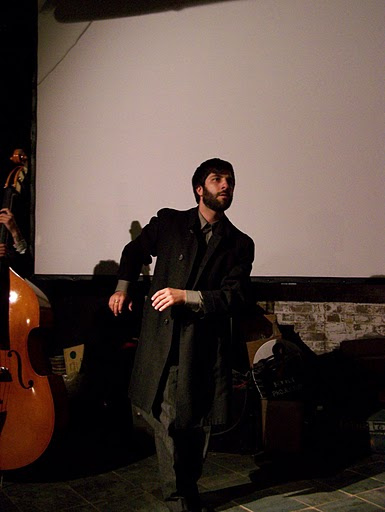
Adam Paolozza performing The Double

Adam Paolozza performing The Double

JNL: We have a lot of regulars who we just know will show up every time who have been there from the beginning and it’s been interesting to see new people come on and in turn become regulars as well. Most of our performers tend to, if they are new to us, after performing once, chances are we’ll see them at another one as at least an audience member. Because of this, our audience has grown even through just having new performers. I mean each performer usually brings their own audience and we’ve seen through this that people come back again and again because it’s just a great experience. It’s just very cool to see that audience base develop in such a contagious way.

Most of our audience are not, actually, theatre people too! They vary in age… really a whole gamut of ages. We get people who are, for the most part, interested in the arts in general. They go to theatre and to concerts and then they find Sea Change and think this is something where they can kind of see it all and feel like they are even a part of it. I’ve had a lot of people who are not in the arts say that this makes them feel like they are a part of the community versus going somewhere else where they are just sitting in the audience and feeling more like a separate spectator. It’s developed that way in which the community is building, not just with performers, but everyone in that room becomes a part of the event.

HS: To what level is Sea Change participatory or is it just by the nature of how it is, the audience feels part of the event?

JNL: We’ll we encourage audience involvement and it also just sort of happened that our performers started getting the audience involved in their work. We have a lot of musicians who do call and response stuff with the audience and people always come to us timidly saying, you know “I was thinking of doing this thing and it would involve having the audience do something with me?” and we’re always like, “Yes!” This is the type of audience that feeds off of that type of thing. They are going to get involved and we love it! We had a performance once of a play reading and she needed people to throw ping pong balls as pellets of ice getting thrown at the actors throughout their scene, and the audience loved it to the point where people would hold on to balls and throw them at performers later on during the night because they thought it would be fun. We’ve had times where a musician needs to re-tune during the set and one time someone started telling a joke and when they still weren’t done tuning one of the audience members stood up and shared one of their jokes and now it’s a thing that sometimes happens throughout the event. It’s an opportunity where the audience gets to participate and talk to the performers and everyone gets to share a little something. It’s great watching aspects like that develop.

Rob Faust of Faustwork Mask Theatre

Rob Faust of Faustwork Mask Theatre

ED: I think that’s also partly because of the venue that we do it in, which is called CineCycle (behind 129 Spadina Ave.). It’s a bike shop that is converted at night into some sort of performance venue, often times for film screenings. If you go there during the day you would never believe it’s actually a venue. It’s a bike shop and there’s just bike stuff everywhere, but then Martin, the guy who runs it carts all of the stuff out and transforms it into a performance space by night. I think when people come into the venue for the first time they are a little taken aback at how personal it feels. It’s not like a traditional venue. It has a lot of character to it, so immediately when you’re sitting there and you’re watching a performance piece going on in an unusual setting, it kind of breaks down a barrier. The audience is kind of on top of the performers in a way that there really is very little fourth wall. This allows those barriers to break down, causing the event to be a little more immersive.

JNL: Going off that, my mom is selling the tickets at the front, so she’s the first one who’s going to greet you as she’s sitting there, proud and excited about the event. It’s very cute. We’re also walking around saying hi to everyone, the performers don’t hide backstage, they have seats in the audience and watch the rest of the show until they get up and do their thing. And there is always a crowd of people hanging around the baked goods table just chatting and meeting new people. The energy is meant to be very warm and welcoming. We’ve put a lot of emphasis on that.

We’ve also kept it at a seven-dollar price point if you book in advance and ten dollars at the door for the past four years, with no intention of making it higher and I think that goes into the idea of community. We’re not trying to make money off of this event. We cover the costs to have the event because having it and providing that space for everyone is the most important part of it all. We don’t want it to be the kind of thing that anyone has to think twice to come to. We hope that seven dollars makes the event accessible enough and the goal is to make the whole thing as easy to be a part of for anyone and everyone.

ED: Yeah, I’ve had lots of friends say that we could make it more expensive, partly as a compliment because they thought that the value was worth it and the product was worth it, which was nice to hear but again, as Julia was saying, it goes into our mandate of how we run Theatre Caravel as a company. It holds the same sort of ideals that we like to run our show with. One: they’re about community, Two: they’re also about new work and taking risks, Three: they’re about kind of expanding your horizons, I guess you could say, in the collaboration with artists, working in a multi-disciplinary format, etcetera. So the seven dollar thing kind of plays into that as well,

JNL: It’s just fun having people come up to me and try to pay for the baked goods and I tell them not to, that it’s all part of it. For seven dollars, it’s all of the performances, the whole evening and all of the food there. Half the time the night ends with me sending someone home with a whole cake or batch of left over cookies.

HS: Putting on an event like this for four years, you clearly have seen some merit in providing this kind of event for the Toronto arts community. Why do you think events like this, where you say the venue feels a little more personal and people feel a part of both the event and its development, are so important to provide for the arts community?

ED: That’s a great question and I mean I’ve seen other events crop up around the same time that we started doing this, like Crapshoot with Theatre Passe Muraille, which I think is pretty notable for providing an event for many artists who are starting their pieces, and I think that these events have this sort of laid-back atmosphere which I think has a lot to do with their success. In terms of why that’s important to the theatre scene, I think it’s partly because in our generation of theatre creators there’s a lot of us, basically, who want to have a voice and there aren’t enough avenues for us to get it out there in, maybe, the traditional sense. These kind of low-key events give an opportunity for artists just to try something out. It’s an opportunity to fail and succeed on their own dime, sort of thing.
I think Sea Change has been successful, partly, because the artists feel comfortable just putting themselves out there. That’s why it’s so endearing, that’s why the audience gets on board so easily, because these artists are doing it for the love of doing it, not because there’s any type of pressure on them to either get a job or to meet a certain expectation. People just want to see the performers do really interesting work and take risks. I think that this format is popular because people, audience members and artists alike, want to feel like they are part of a community that supports them.

Chelsea Manders performs her brand of Music Comedy

Chelsea Manders performs her brand of Music Comedy

JNL: And I think it’s important from the audience perspective too in that it kind of makes the whole arts world more accessible to everyone. It lets everyone be a part of a special little event where new theatrical work is being created and it’s an opportunity to invite anyone and everyone to come and be a part of its creation. Haley McGee (Toronto-based playwright/performer – Oh My Irma) has workshopped sections from a couple of her plays at Sea Change. I’ve had a lot of people say to me, “I saw it at another place and it was so great because I had seen it in earlier stages here at Sea Change before. I remember being a part of it and talking to her about the piece and answering questions she had about it while she was still writing”. I think that kind of accessibility to new local work is important to the audience and their investment in the arts community and it’s important to the artist to be able to show their work at these stages to an audience that they don’t completely personally know. It’s a real integration of audience and performer, I think, which is really crucial to developing continued support and attendance of the arts outside of events like these in the city.

HS: What do you hope for the future of Sea Change?

ED: Well, that’s a great question and one we’ve been talking about a lot now that we’ve done four years of Sea Change successfully. We’ve talked about a few different things… I mean ideally having something like a residence program would be really nice to have – Sea Change, not necessarily on a larger scale, but maybe over a longer term. We’ve been looking into potential grants for artists and maybe even multidisciplinary collaboration between artists, which seems to be happening a lot more these days, to create more of a long-term opportunity and have Sea Change be a place where they can show what they’ve been working on.
I’ve also thought about doing a young company of sorts, starting from the ground up, having them either just be there or workshop some stuff. So yeah, there are a couple ideas on the table right now for the future of Sea Change.

JNL: We’ve talked about wanting to do kind of a larger scale festival sort of event, either running a longer period over an entire day or the course of a whole weekend, bringing in a lot of both past performers and new performers. I feel like that might be an anniversary celebration sometime. Our anniversaries keep sneaking up on us so we keep missing it, but it’d be great to do just a really big Sea ChangeSea Change on steroids! We also want t-shirts! We have buttons and magnets so I feel like t-shirts are the next step up.

Dennis Hayes Reads Poetry

Dennis Hayes Reads Poetry

ED: Yeah, we’ve had over a hundred twenty performers now so there’s a pretty good well to draw from to welcome a lot of people back. We’ve had quite a few returning performers throughout these years and they seem to really love returning. I mean one of our performers is coming back from Zurich, moving back two days before Sea Change, and she already has her tickets! It’d be great to get all of these people back in a room together to sort of celebrate this community, which has sprung up around it, thankfully. I mean we were never sure if it would catch on and people seem to really love it! I think it may have something to do with the baked goods… (laughs). It’s all about the brownies!

HS: It’s always about the brownies. Tell me a bit about what you have planned for your upcoming Sea Change.

ED: Well our Sea Change coming up is jam-packed, as always! We have a playwright named Claire Acott, who has done a Toronto Fringe show in the past and is currently working on a new show, so she’ll be doing a part of that. We also have another Fringe veteran, Laura Anne Harris, who instead of doing a one-person show, she’s going to be trying out a four hander for the first time. Again, one of our greatest joys is watching artists try out new things. We have Shawn Jurek who is our musician. He’ll be doing a lovely acoustic set. Then we also have a new sort of music/theatre piece with Andrew Gaboury, who’s a playwright and has also done stuff with us in the past, and a couple of his fellow artists (Kira Hall and Rob Schuyler) who are making a new music/theatre play. Not a musical, per say, but the mix of music and theatre into a new piece. Then we have one of our, I like to call them, our Sea Change stars, like our greatest hits, an artist coming back named Teodoro Dragonieri and he’ll be showing some of his world-class visual art. I’m not kidding… it is incredible work! It belongs in a museum… or somebody’s house if you want to buy it, you can at Sea Change! So we are really lucky to have his work, and the work of the rest of these artists, which will make for another jam-packed night.

JNL: I was also thinking of looking up new cookie recipes… I’m thinking chocolate but I’m still undecided.

HS: I was going to ask, what’s new on the baking front but I guess they’ll just have to go to find out!

ED: Exactly! Well, thanks so much and we look forward to seeing you all around the baked goods table on Saturday.

Theatre Caravel presents Sea Change: a night of new performance.

What: 15th edition of Sea Change: a night of new performance. Brilliant new performers, and a couple favourite past performers, all trying out some incredible new work you won’t see anywhere else. Come to see new work, stay to chat with the artists, and then stay later to finish off the complimentary baked goods!

Featuring:

Claire Acott – Playwright
Andrew Gaboury, Kira Hall and Rob Schuyler
- New Music Theatre
Laura Anne Harris
- Playwright
Shawn Jurek
- Musician
Teodoro Dragonieri
- Visual Art

When: Saturday October 12th, 2013

Doors – 7:30pm, Show – 8pm

Where: CineCycle (behind 129 Spadina Avenue)

Tickets: Admission is ONLY $7 but seating is limited and spaces fill up quickly, so RESERVE YOUR TICKETS NOW by e-mailing info@theatrecaravel.com. For more info check out the Sea Change page on Theare Caravel’s website: www.theatrecaravel.com