Skip to content

Posts tagged ‘Toronto Theatre’

Inside a “Creepy Fantastical Cloud of Sly Slickity Evil” – A Chat with Julian R. Munds on his new show THE GOOD DOCTOR HOLMES AND HIS CHILDREN OF GOD

Interview by Hallie Seline

Julian R. Munds might be one of my favourite people to have a great conversation with about theatre and life. He speaks his mind, he’ll challenge me and he always makes me laugh. It was such a pleasure to chat with him about this newest play, The Good Doctor Holmes and His Children of God, about working with powerhouse Denise Norman as the challenging title role of Dr. Holmes, and on the importance of carving out a space for yourself to be the artist you want to be. Be sure to catch The Good Doctor Holmes and His Children of God on stage now only until May 21st in the Theatre Passe Muraille Backspace. All performances are Pay What You Can. 

HS: How did you find this piece of history and what made you want to turn it into a play?

Julian R. Munds: I first became aware of the Pitezel case through am episode of Supernatural years ago. You know, that show that for some inexplicable reason is still on the CW. In the episode, the ghost of “America’s First Serial Killer” was haunting some building and the Winchester brothers had to stop the ghost. Anyway, the ghost was apparently the ghost of HH Holmes and I stored it in my brain. A few years later while pouring over old Toronto newspapers, I noticed that HH Holmes figured prominently in a lot of them. And I discovered that he was caught in Toronto. I then went on a search for the location. I am a very hyperactive person and need to keep myself occupied with many different projects lest I become downtrodden or bored. It is then I know I am not working on a challenge.

One of the projects was finding the original location of arrest. It was difficult to find. St. Vincent Lane, the place that Holmes was caught, has both moved and been renamed. There’s a lot of reasons for this. The government of Toronto “The Good,” for instance, feeling that the city’s reputation as a crime mecca covered in mud and runoff from the pork slaughterhouse – which it was in the early 1900s – was not a good one. They decided to do their best to cover up all the crime in the city. One thing they did was to erase St. Vincent Lane from existence. Move it two blocks from it’s original location and try to forget the horror discovered there in 1894. I had to go through tons of old maps to find it. Sat in the reference library and Toronto Archives for eons.

This rabbit hole opened up and I started to gain as many documents as possible connected with the arrest, the subsequent investigation, the personal accounts, and even a picture or two. For instance, I have a full facsimile of the notebook of Frank Geyer (the original investigator) sitting on my desk as we speak.

At the same time as I was doing this, I was also working on a sketch of a new play called “Bob, the Monster.” A play that investigates some ideas I was working on around the value of life, especially the value of a person who has been named guilty of heinous acts, and I discovered that both purposes could be combined. Eight drafts later, a one week workshop, another four drafts and BOOM: The Good Doctor Holmes & His Children of God. A Historical Fantasia, in that it is inspired by true events but I use the themes of the original event to investigate modern problems. Institutional Misogyny, Racism, Quackery, Anti-Intellectualism, and general alienation.

Photo of Denise Norman. Photo Credit: Sam Gaetz

HS: We can’t wait to see Denise Norman take on this challenging role. Can you tell me a bit about working with her and what you’re most excited about to see her bring to the role?

JM: Denise came to me as a fluke. In my undergrad at the University of Toronto, when I was “training” as an actor, and I’ll explain the quotes in a moment- Denise was one of my professors. She was one of the odder ones I must admit. A voice and movement teacher, her class was more about generally just fucking around. But what I remember most is the general relaxation or understanding that there is no finished product in the world. Everything is in a constant state of flux and doubly so in the world of theatre. This is
why theatre still exists. It is the only art form, aside from live music – particularly instrumental music – that can change from performance to performance. It’s why people go. They don’t go to be educated. They don’t go to be entertained. They go to experience. Theatre is about taking an environment, interaction, moment and expanding it into a full experience. Denise Norman is one of the first people that helped me realize this.

Fast forward to this past April. The original actor in the role of Holmes got sick. Dropped out. And Denise Norman applied. By far this role was made for her. There is something anchored and unexpected in the work she does on stage. She has fought hard to continue working on the stage and it is evident by her work there. Every moment she fights. And in a cast populated by fighters, John Chou, Suzanne Miller, and Jack Morton – a literal fighter – I’ve seen it – she stirs the place to create a hurricane. The designers Christine Urquhart, Lin-Mei Lay and Adrien Shepherd-Gawinski provide the lightning to her thunder. Adrien literally provides thunder. Also Virginia Cardinal – the best Stage Manager I know… I value her work so much.

HS: What drew you to become a playwright and what are you most interested in exploring in your work at the moment?

JM: Is that what I am? A playwright? I am not sure that I’m comfortable with that title. It implies that I sit at a pad of paper and pour dialogue onto a page then allow someone else to come along and bring it alive on stage. “There must be a kitchen sink here or a gun here” I’m not that guy. I’ve always thought of myself in much the same way one thinks of Zaphod Beeblebrox of Douglas Adams – “he’s just this guy, you know?” When I graduated from school I found myself launched into a world that did not want me. Tons of people are being cranked out of these institutions of higher learning now being told that they must do something this way to get a good mark. It gets beaten into brains. If you don’t fall inline then boom! You are not a human worth caring about. I came out of school broken – confused on who or what I was – ready to be taken advantage of to work in underpaid precarious work.

I had trouble reconciling myself to it. Then I decided, through the help of some faithful family, my mother, my two sisters, my wonderful nieces, and the old lady cat — who hit me a lot when I was depressed –that I needed to make a change. If the world didn’t want me – then damn it – I’ll make a corner that’s all mine. I began creating theatre that day. I don’t create plays. I tell no stories. I create experiences. Sounds. Feelings. Smells. Ideas. Don’t come to my plays expecting to learn about a subject. Read a book, see a doc, go to a lecture for that. My plays — for lack of a better word – are about being a part of something. I want you to come out of “Holmes” and feel shell shocked. Like you’ve gone through something.

That’s what I like to explore. How can I use all the tools of the theatre and art to leave an impact on the audience. The “Randoms” who walk through the door wondering what the hell did they just walk into? That’s my jam.

Photo of Denise Norman & John Chou. Photo Credit: Sam Gaetz

HS: Why did you decide to make the full run Pay What You Can?

JM: Insane. I know. But also worthy. Modern Canadian Theatre Institutions are like Janus, the two faced god. Out of one mouth moans a complaint on how no one is coming to the theatre, while in the other, is a demand to charge people more money for less satisfying shows. No one is listening to the fact that people don’t see a worth in going to the theatre. It offers them nothing. So theatre is worth nothing. Simple economics. Now, to rekindle a passion for the theatre we have to gamble. We have to start with nothing and build up a model that is more relevant. I decided, with my collective’s endorsement, to go ahead and find out what people thought the experience is worth to them. If they like it, they pay more. If they don’t have the cash, they tell a friend who pays. There is nothing but win. We have to give up old top heavy things to find that spirit again. This is my way of trying to do that. She exists! She’s just broke.

HS: Describe the show in 5-10 words:

JM: Creepy Fantastical Cloud of Sly Slickity Evil – with kickass design.

Rapid Fire Questions:

Favourite place in the city?
Outside of it. I don’t care for the city. I’m only here because this is where the art is. I love the countryside. Huron County. Anna Mae’s in Millbank. Best pie, a coffee, and they have this stuff called broasted chicken. But all right. I’ll play along. Kos patio in Kensington. I sit with the birds and eat pancakes.

Favourite play?
What a nutty question. Impossible for me to answer. I’ll give you my top five. Look Back in Anger by John Osborne, Twelve Angry Men by Reginald Rose, Who’s Afraid of Virginia Woolf by Edward Albee, The Lesson by Eugene Ionesco, One Flea Spare by Naomi Wallace.

If you could go for a beer and a chat with any playwright (alive or dead) who would it be and what beer would you order?
I don’t think I’d like to personally meet any of my favorite playwrights. I like to know them through their work. If I met them I would see them for what they are. Meat sacks with problems. I’d have trouble after that. I wouldn’t mind having an Absinthe with Antonin Artaud though. Imagine the nuttiness. I’d invite David Mamet to a drink, tell him to stop writing, and basically how he’s ruined a generation of male actors by telling them it’s ok for a male to yell obscenities at a woman for two hours and call it art. There is nothing more upsetting and vomit worthy in my mind than David Mamet.

Where do you look for inspiration?
I don’t look for it. I stumble on it. I read around 10 books a week. Listen to countless podcasts. Go for long walks. And talk to people all around my life. You find inspiration in the weirdest place. One of my plays was created after I could not stop a fire alarm from going off. Another, was created because I once saw a woman with a cell phone shut a door in the face of a downtrodden fellow smoking an unlit cigarette.

Best advice you’ve ever gotten or mantra you are currently living by?
“It doesn’t matter if you are the smartest guy in the room. The most good looking guy in the room. Be the last guy in the room.” – Michael Caine

“Life is meaningless but that doesn’t mean you can’t enjoy a good Yorkshire pudding.” – Peter O’Toole

“Nothing is written. All things can be changed..” – Thomas Edward Lawrence

“Quantity not quality” – anon

“If you can lose your backup job, may as well do the thing that makes you fulfilled.” – Jim Carrey

The Good Doctor Holmes and His Children of God

Who:
Playwright: Julian R. Munds
Dr. Henry Howard Holmes – Denise Norman
Benji/Carrie Pitezel – Suzanne Miller
Frank Geyer – John Chou Guard,
The Shadow – Jack Morton

Direction: J.R. Priestley
Scenography: Christine Urquhart
Sound and Composition: Adrian Shepherd-Gawinski
Designers: Lin-Mai Lay, Julie Skene
Stage Management: Virginia Cardinal

What:
In 1894 the bodies of two little girls were discovered in a Toronto basement by an eccentric, mild mannered, private detective. This was the beginning of a nightmare.

Julian R. Munds’ new play puts us in touch with one of the most prolific serial killers in history: Dr. Henry Howard Holmes. Holmes — a doctor, pharmacist, sometimes cannibal — constructed a hotel in Chicago for a singular purpose: to destroy human life. Charged in the deaths of nine individuals, Dr. H. H. Holmes is thought to be connected with more than two hundred disappearances during the Chicago World’s Fair of 1893.

In “The Good Doctor Holmes..”, Munds takes us into the interrogation room, puts HH at the forefront, in all his genius and all his horror, and weaves a labyrinthine fantasia that is sometimes an episode of Columbo and sometimes a tale by H.P. Lovecraft.

“We are asked to look into the eyes of a devil but what is found there is not what we expected. “ – Chris Tester, The Actor’s Podcast

With aid from the Quantico Behavioral Archive, personal journals of Carrie Pitezel, and using a modern perspective, this show drags the forgotten “Pitezel Children Case” from the shadows of the past and makes us question whether Toronto is truly “The Good.”

Where:
Theatre Passe Muraille Backspace
16 Ryerson Ave. Toronto

When:
May 11-21, 2017

Tickets:
By Phone: 416-504-7529
Online: artsboxoffice.ca

Artist Profile: Ali Joy Richardson, Director

Interview by Hallie Seline

We’re all about hard-working #bossbabes being at the helm of the theatre we see, so it was such a joy to catch up with Ali Joy Richardson to discuss her latest directing project, Liars at a Funeral, why her directing mentors have been instrumental in assembling her own director’s utility belt, and the top three pieces of advice she’s living by right now. 

HS: Tell me a bit about your current directing project, Liars at a Funeral, and what caught your interest when deciding to direct it.

Ali Joy Richardson: Liars at a Funeral is set in a funeral home in Northern Ontario where a grandmother has faked her own death in order to get her family back together for Christmas. It’s a farce: 4 doors, 5 actors playing 9 characters, and a family curse of female twins who hate one another…but without the stale sexism that’s so often sprinkled in the genre. Sophia Fabiilli has revived farce with a refreshing dose of 2017 sexuality and three generations of very funny women. Sophia told me the plot of the play over a pint at Tequila Bookworm back in September and I was hooked. I immediately sent her a batch of imagery that resonated with the play for me (Edward Gorey illustrations, Wes Anderson stills, and some weird ‘70s family Christmas photos). I’m very grateful to have been trusted with this play.

Photo Credit: Neil Silcox

HS: What is the biggest thing you’ve learned so far in your experience directing?

AJR: It requires rigorous, detailed homework to be able to properly play jazz in the room.

HS: Do you have a directing mentor? If so, who is it and why do you think it’s important to have a mentor?

AJR: Thank heaven for mentors. I learned the fundamentals from assistant directing for Melee Hutton and Estelle Shook and script coordinating from Andrea Donaldson. Richard Rose has been my primary teacher for the last while (his process has totally re-shaped my practice) and Aaron Willis is my go-to emergency phone call for all things theatre. These directors have given me clarity and confidence in my practice. I’ve gratefully thieved tools from each of them to assemble my own utility belt.

Photo Credit: Neil Silcox

HS: You have a pretty #bosslady production team going on for this show with you (director/dramaturg), Laura Jabalee Johnston (producer) and Sophia Fabiilli (playwright/producer). How has it been working with this team?

AJR: DREAMY. Lots of late night 3-way calls, endless hustle, and masterfully colour-coded email threads. They’ve made me a better artist and collaborator. I’d trust these women with my car, child, or estate (if I had any of those things).

HS: What are you most excited for audiences to experience when they come see the show?

AJR: The rollercoaster – Liars at a Funeral is very funny and bravely truthful.
Also…casket comedy.

HS: Describe the show in 5-10 words.

AJR: Just one: unstoppable.

(For a complete list of the myriad of obstacles we overcame, from the Storefront Theatre closing to our casket hinges busting right before we opened, buy anyone on the team a drink.)

Photo Credit: Neil Silcox

Rapid Fire Question Round:

Favourite place in the city:
The Toronto Reference Library.

Where do you look for inspiration?
Conversations, naps, and the Toronto Reference Library.

What are you reading/watching/listening to right now?
Harry Potter and the Sacred Text (a deeply nerdy podcast by two Harvard theologians) and re-reading Patti Smith’s “Just Kids”.

Best piece of advice you’ve received or current mantra you’re living by:
“What is the next right move?” (Oprah)
“Follow the campground rule – leave the audience better than you found them.” (Neil Silcox)
“Stand up from your desk every hour, Ali.” (my Mom)

Liars at a Funeral

Who:
Playwright – Sophia Fabiilli
Director & Dramaturg – Ali Joy Richardson
Ensemble – Ruby Joy, Rhea Akler, John Healy, Danny Pagett & Terry Tweed
Producers – Laura Jabalee Johnston & Sophia Fabiilli
Stage Management – Lori Anderson
Set & Wardrobe Design – Lindsay Woods
Sound Design – Nicholas Potter

What:
A black comedy about a grandmother who fakes her own death in order to reunite her family in Northern Ontario.

Grandma Mavis stages her own funeral in order to reunite her estranged family… just in time for an ice storm to trap them all in a funeral home over Christmas. Can this eccentric clan of liars navigate the rocky road to reconciliation? Or will the next 24hrs be the final nail in this dysfunctional family’s coffin?

Featuring five actors playing nine characters, Liars at a Funeral is equally hilarious and heartbreaking. It’s also a teensy bit inspired by Hamlet.

Where:
St. Vladimir Theatre
(620 Spadina Ave, south of Harbord

When:
May 5-14 2017

Tickets:
$25
truthnliestheatre.com

A Little Chat with playwright Anusree Roy on “Little Pretty and The Exceptional”

Interview by Brittany Kay

We always leave a chat with Anusree Roy feeling inspired and motivated. It was once again a pleasure to have a little chat with her about her latest play LITTLE PRETTY AND THE EXCEPTIONAL, on now at Factory Theatre. We spoke about her inspiration for the piece, where the name comes from, and how her working relationship and friendship with the late dramaturge Iris Turcott played an instrumental part in her life as a writer.

BK: Tell me a little bit about your show?

Anusree Roy: Please come see it. Then you’ll know what it’s about : )

BK: What inspired you to write this piece? Where did this story come from?

AR: In 2011 when I was finishing up my play Brothel #9, I saw a vision in my minds eye, of a father holding his daughter who was wearing a white outfit. Instinctually I knew it was a play and I knew I had to write it. I started to investigate what it might be about and gradually a plot started to emerge. Slowly character voices came and before I knew it I was writing.

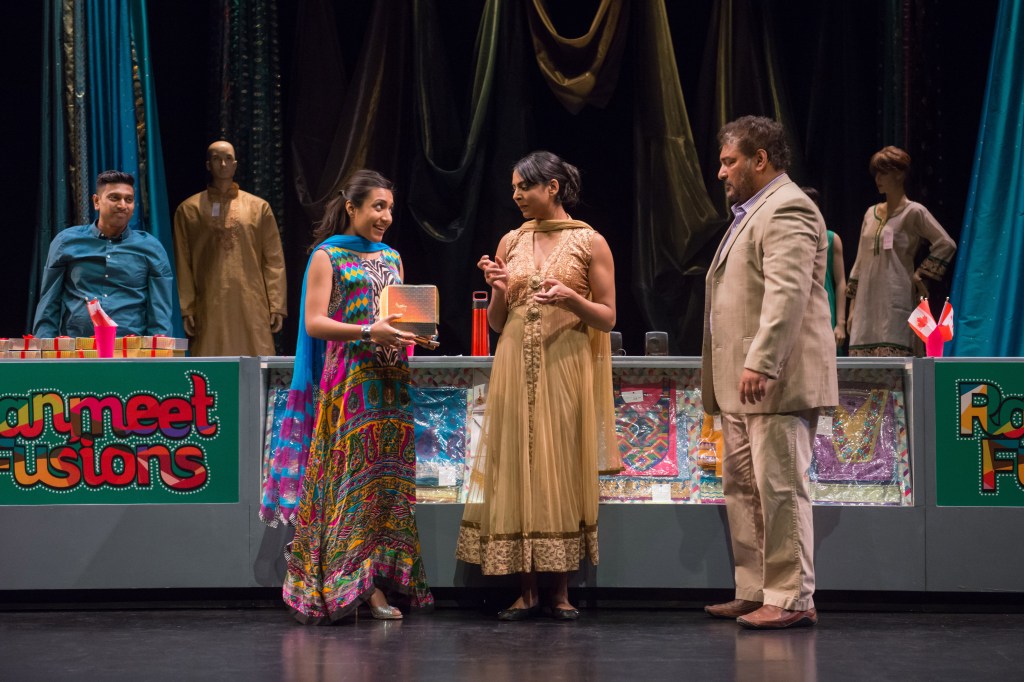
Shelly Antony, Shruti Kothari, Farah Merani, Sugith Varughese in LITTLE PRETTY AND THE EXCEPTIONAL

BK: Why the title Little Pretty and The Exceptional?

AR: The title was given by Iris (Turcott) actually. Since the play is about two sisters and a lot of it is inspired by my sister and my life and our dynamic, Iris suggested the name. My name, when translated to Bengali, means Anu = Little, Sree = Pretty and my sisters name Ananya = The Exceptional. So Iris wanted that to be the name as it was fitting.

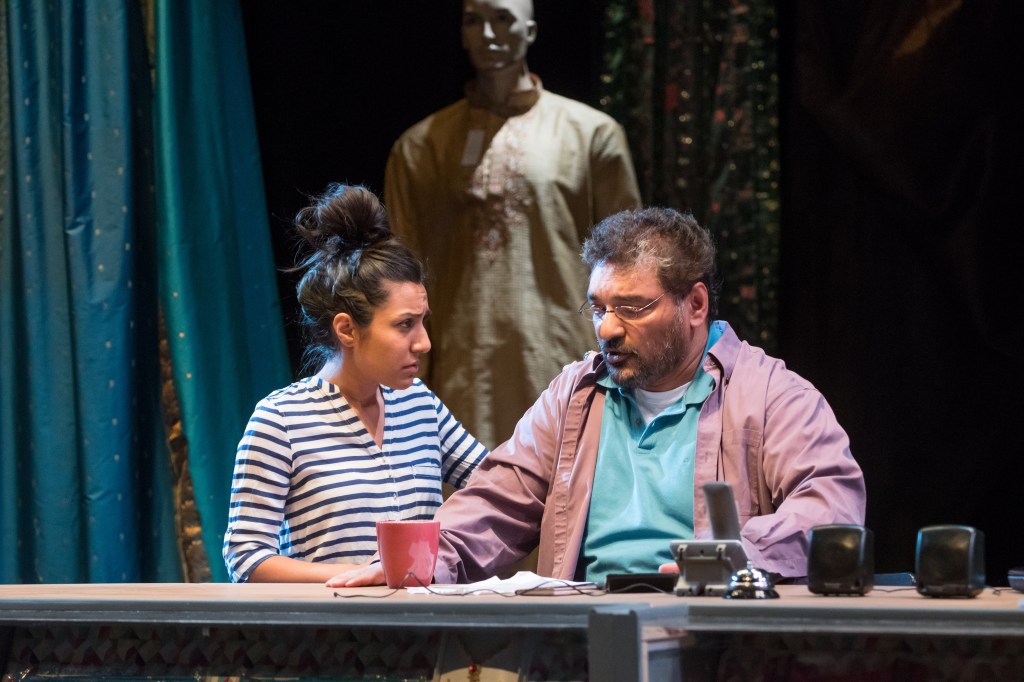
Sugith Varughese and Shruti Kothari in LITTLE PRETTY AND THE EXCEPTIONAL – Joseph Michael Photography

BK: I know the late Iris Turcott played a critical part in the development for this piece. Can you talk about the process, what it was like to work with her, and how she played an instrumental part in your life as a writer? 

AR: It was phenomenal actually. Along with being my dramaturge, she was my best friend. We would do weekly sessions. I would go to her place every Wednesday with scenes and she would sit by her blue coffee table, with a red pen in hand, and edit my words. It was the most terrifying and exciting time! Slowly when a draft emerged we did workshops to test it out and then more rewrites.

BK: You wear so many different hats, from playwright to director, in so many of your shows. What has it been like wearing just one hat (playwright) for this production?

AR: It’s been great actually. I have just been able to focus on the writing. It’s been useful.

Shruti Kothari and Sugith Varughese in LITTLE PRETTY AND THE EXCEPTIONAL – Joseph Michael Photography

BK: Why Factory Theatre for this show?

AR: Because I love them. They treat me well – with respect and kindness and Nina is a brilliant AD along with being a beloved friend of mine. I am in awe of the work she is doing at Factory and how much she has changed the face of that theatre. There is passion in that company.

BK: What do you want audience’s walking away with?

AR: I want them to walk away with compassion and a greater awareness of the world around them. That will make me so happy.

Little Pretty and The Exceptional

Who:
Written by Anusree Roy
Directed by Brendan Healy

What:
Simran is gifted, complex and, haunted. Jasmeet, her younger sister, is the typical hip Toronto teenager. Together with Dilpreet, their delightfully overprotective and traditional father, they are frantically trying to get ready for the opening of their new sari shop on Gerrard Street. To achieve their life-long dreams, the family must come together to find new strength and exorcise the demons of their past. Charming, tragic, and full of life, this is a deeply moving story about the taboo around mental health issues in the South-Asian community, and the power of familial ties in the face of adversity.

Where:
Factory Theatre Mainspace
125 Bathurst Street

When:
On now until April 30th

Tickets:
factorytheatre.ca


“Exploring Home, History & Family in TOUGH JEWS” In Conversation with playwright Michael Ross Albert and actor G. Kyle Shields

Interview by Brittany Kay

I sat down with two delightful men with 3 names – playwright Michael Ross Albert and actor G. Kyle Shields to talk about their current production Tough Jews, running March 31 – April 16th. We spoke about the undeniable parallels in the sociopolitical climates we see today versus 100 years ago, why this story is incredibly important to stage now and how family is at the core of everything.

Brittany Kay: Tell me a little bit about the show.

G. Kyle Shields: This is how I’ve been pitching it to people: it’s a Kensington-specific, period gangster drama that takes place in 1933.

Michael Ross Albert: Well the Second Act takes place in 1933.

Laughter.

GKS: Yeah, yeah. I’m just keeping it concise for people.

MRA: The first act takes place in 1929 on Yom Kippur, which was 10 days before the Stock Market crashed. We follow this family over the course of two moments of crisis.

GKS: In 1933, it’s only a couple of months after Hitler becomes chancellor of Germany.

MRA: And it’s at a moment not dissimilar to the political climate we’re in now, where the mounting anti-immigrants sentiments and Anti-Semitism is very prevalent all across North America, including very specifically Toronto, Ontario. The second act takes place shortly after the riot at Christie Pitts.

GKS: Do you know about the Christie Pitts riot?

BK: I do, I’m Jewish.

GKS: You know, most people don’t know about the riot.

MRA: I guess I realized what a bubble I lived in, in realizing how culturally significant that moment is for Toronto Jewish families. If you’re from here and your grandparents are from here, everyone has a story about the Riot or the time surrounding the Riot. It’s a big part of our Torontonian cultural heritage that’s sort of being forgotten.

GKS: And not really passed down outside of those circles too. I didn’t know about the riot before I read the show.

MRA: It was considered one of the biggest race riots in Canadian history. It’s pretty insane.

Photo by John Gundy

BK: Is Toronto Jewish history your main inspiration for this piece? Where did the inspiration come from to write this story?

MRA: I had originally set out to write a play about the Purple Gang, which was a Detroit family, made up of first generation Jewish immigrants who kind of briefly inserted themselves into the major big time American crime families. For a short period, they were terrible criminals.

GKS: They were reckless. They were absolutely reckless.

MRA: They were responsible for the St. Valentine’s Day Massacre, which was one of the biggest gangland assassinations ever. I became pretty interested and started reading up on the different exploits that they were involved in and I wanted to write about them.

I realized that Detroit itself needed to become another character of the play but I have no personal connection to Detroit nor have I ever been there. I didn’t feel like I had the wherewithal to write about a city that I wasn’t from.

So I started thinking about this period of time that my grandparents would have lived in and the neighborhood that they’re from. I started researching that period and found all of these wonderful parallels to what I had initially been interested in. By shifting my focus it let me speak to the experiences that my family comes from and to make it a story about my city, so I was able to romanticize its past, but also be critical of it at the same time.

Photo by John Gundy

BK: How did you find your way into the hearts and minds of these people?

MRA: It was really about personalizing their experiences and thinking about the psychology of these types of people.

GKS: Who were also marginalized.

MRA: Yeah definitely. Marginalized people who were doing illegal activities…

GKS: They were forced to do illegal activities, because they didn’t have job opportunities like the rest of the population had.

MRA: They were trying to make the most of a bad situation, which comes with a moral compromise. Each of the characters within this story has a different place where they draw the line of that morality. Each of them exists within this familial structure and has a different relationship towards one another.

GKS: They were very actively secluded from the rest of society. Signs legitimately said, “No dogs. No Jews. Gentiles only.”

MRA: Yeah, those were signs that were hung up here. When buying real estate, going to the beach…

GKS: Going to hotels… There was almost an Anti-Discrimination Policy that got proposed to Parliament in, I want to say somewhere in the 1910s, that was very similar to the government’s Anti-Islamophobia law that’s currently being debated. It was intended to denounce Anti-Semitism, but the counter argument was, of course, it would hinder free speech. What ended up happening was that it gave a lot of Torontonians the license to put up those signs.

MRA: That’s where we come from and it exploded in this massive display of violence that went through an entire night with the riot at Christie Pitts.

The neighborhoods were so segregated. The city did not welcome immigrants. We had a Prime Minister that said, “None is too many.”

BK: So how does all of this comment on Toronto now and then? 

MRA: It’s taking a look at Toronto, which has become the most multicultural city in the world, and looking at what needed to happen in order to get here.

GKS: To go from a point where the city was 80% British to what we are now.

MRA: Within a lifetime. Within a couple of generations. The spooky thing and the really unfortunate thing is that we are seeing now, after all of this amazing progress, a resurgence of incredibly similar sentiments against Jews, against Muslims, against the LGBTQ community.

BK: All of this rich history, how does it make its way into the play?

GKS: The events of this history directly affect all of the characters and affect their decisions and how they live their lives and the actions they take in the play. A lot of what the characters are doing, are reacting to the historical events, whether or not they know it or whether or not they think it.

BK: For the people who have spent their whole lives in Toronto and have never heard about the riot at Christie Pitts, is this explained and talked about?

MRA: Absolutely. It’s really just the given circumstances of the play. The play isn’t so much a history lesson as it is a family drama that takes place against the backdrop of these critical events in our city’s history.

Photo by John Gundy

BK: So family is that core of your story? Why is that such an integral part of it?

MRA: When I was doing my research on the Purple Gang, I was going through my old notes and I wrote on the first page in big capital letters, “WHAT WAS THEIR MOTHER LIKE?”

Laughter  

GKS: There’s a certain something that the matriarch of this family goes through that propels all of her choices. Where she comes from is a major motivation and she makes a point to instill that in her children. “Never forget.” She never lets them forget about where they came from.

MRA: It all begins with family. Their business exploits, their major sources of conflict, of escapism, and love come from within this family unit. I really wanted to be able to explore history from a very personal place and to me the logical start was by creating this family.

GKS: It explores this family enterprise. There are secrets that they keep from one another. There are things that they do to protect one another that involve manipulation and deceit.

MRA: They’re living in extreme times and circumstances, but I’m hoping those tactics are still relatable to everyone because families are fucked up.

GKS: Families are fucked up.

BK: Very true. Very relatable.

GKS: Not only that, all they’ve got are each other. They don’t have the option to move somewhere else and restart their lives.

BK: G. Kyle, tell me about your character and how he fits into this dysfunction?

GKS: I play Teddy, who’s the youngest son of four. He has an older sister and two older brothers. The two older brothers run whatever racket they have going on. As the youngest, as it usually goes, Teddy is very much kept out of the loop. As the youngest in real life, I can relate to that.

In the first Act he’s about 19, so he’s pretty young but he’s coming into his own. We see him trying to be the thing that everyone else in the play wants him to be. Everybody makes a demand of Teddy. There’s a traumatic event that happens through the course of the First Act that informs the four years between Act 1 and Act 2. When we see Teddy in Act 2, we can see how they’ve changed him into who he is now. In a sense, we get to see him grow up. We see this really informed shift in his choices and his personal honour system and values and morality.

Photo by John Gundy

BK: Tell me about the pop-up location, the speakeasy, and how it’s going to be an immersive audience experience.

MRA: The Storefront unfortunately lost its permanent home and as soon as we heard the news, we tried to think of it as a blessing in disguise for this particular production. We found this space, Kensington Hall, which is an old punk club.

GKS: It used to be an old booze can and two people have died there.

MRA: Maybe more people have died there.

GKS: May have been murder… Does that sell the show, do you think? That could be a selling feature?

Laughter.

GKS: I mean, it sells it for me.

More laughter.

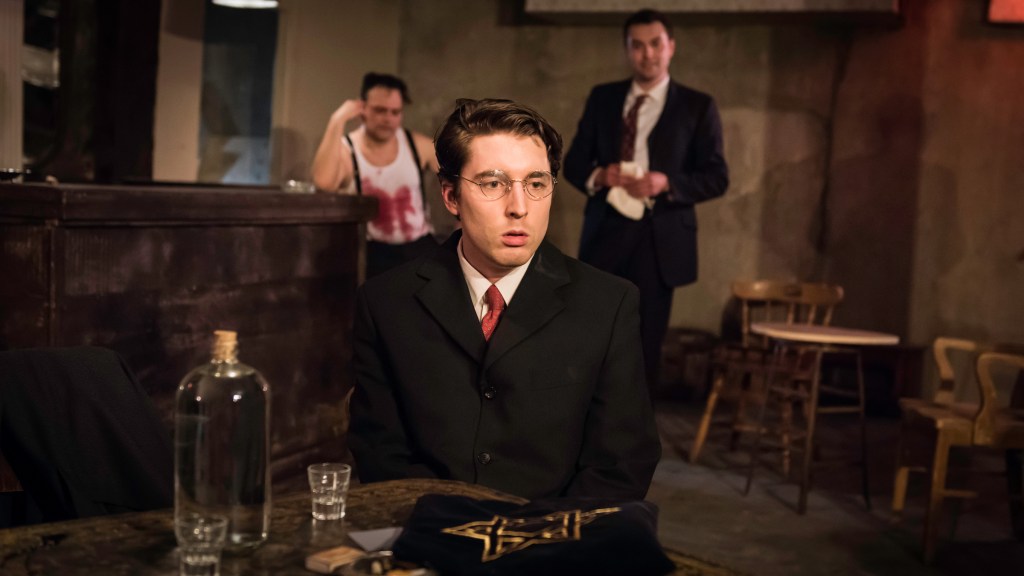
MRA: We’re working with this amazing set designer named Adam Belanger, who has completely transformed the space. We’re creating a time machine essentially. It’s going to be a speakeasy experience, where the audience will enter through the back alley and as soon as you walk through the door it will be as if you have stepped back in time to the 1920s.

GKS: And when you take your seat too, it’s like you will be a fly on the wall.

MRA: The audience is complicit in the action. It’s not an immersive production, but it is site-specific and right in your face.

GKS: It’s gonna be loud. No one will be able to fall asleep in the theatre.

Photo by John Gundy

BK: Why this story right now?

MRA: I mean personally it was my final project of school. I studied playwriting and it was my graduate project. Over the years, it has been developed at different companies all over the place. I had finally come to a place where I thought it was ready for a production. Current events just happen to unfold around it.

BK: Wow. What timing.

MRA: I didn’t write it with any kind of agenda.

GKS: You went into history and took this out and of course it happens to apply right now.

MRA: There are sentiments expressed in the play about the refugee crisis in the 1930s and the unwillingness of governments in Canada and the US to accept refugees. I felt around this time last year that it was important to remind people what that sentiment and the effects of those government policies have on the families. That contributed to thinking about doing the play sooner rather than later, but really, the world turned, it feels like, on a dime, you know? We’re seeing a legitimization of hatred and intolerance, which is very common to the circumstances these people in the play. It’s not specific to Jews, although the play is, but it does carry with it those universal themes of communities that are marginalized, who feel vulnerable in the face of governmental policies that exclude them from the norm.

GKS: …and excludes them from protection from that discrimination.

MRA: I’m so angry at the world right now, that it feels like a very important time for me personally to be staging this play.

GKS: That’s exactly what drew me into this play – that realization of the repetition of history. How I can see the patterns in my world today that are happening in the play as well. Then reading about the riot and the political events surrounding that time just kind of compounded all of that. We’re living in a time of increased intolerance and we need to remember what that does.

MRA: When the second act begins in 1933, we as an audience know there’s a dramatic irony in that we know politically what’s about to happen. This family and Teddy specifically are railing against the circumstances that they’re living in and they think that there’s a way to overcome it. We as the audience know that it’s going to get much darker before any type of light can shine through, before the city and the world can respect and welcome people that aren’t necessarily like themselves. I don’t think it’s so awful to remind contemporary audiences that the spectrum goes to an incredibly dark place.

Photo by John Gundy

BK: What do you want audiences walking away with?

GKS: That might be a Ben question. (Cue Director Benjamin Blais who has happened to walk by our table!)

BK: Yes, Ben, join our interview!

Benjamin Blais: I want people to walk away with a realization and sense of responsibility. One of the aspects of our production that I’ve extended or posed the challenge to the designers and to the actors in their portrayal is the concept of Photo Realism. Audiences are going to walk down this graffitied alleyway and turn the corner and walk into a door and, because of the fine work of Adam Belanger and the entire design team, it’s going to be like walking through a veil of time. They’re going to bare witness to this story of this family in a period of unrest and growth and then they’ll walk right out again into today’s world. But because it’s in Kensington Market, in a place where this speakeasy probably existed, they’ll be forced to recognize that they’re standing in a place where all of this happened. I want them to be able to look around say, “Holy shit, is the drama and the extremes of what I just saw still happening today? Is it happening to me?”

One of the themes that Michael is working with is this concept of the sins of our ancestors being repeated upon ourselves. Our choices, our ethics, our behaviour, our actions… What are the consequences to the people we love and how does that affect the society as a whole? What we become in order to survive… We do it with the best intentions to protect the family but what are the ramifications of that? I just want people when they’re watching it to really feel like flies on the wall. When they’re able to come out and be active in their world again to think: “What am I doing? How do I treat other people? What am I doing to survive?… I’m contemplating life of crime-oh shit don’t say that.”

But seriously, steal a little piece of bread to feed my family. Am I criminal? Are corporations oppressing people much like fascist nations were of the time? What do we have to do on the day-to-day to put food in our bellies? Are we animals? Are we really criminals?

Photo by John Gundy

BK: Nice. So happy you sat down.

GKS: I want people to walk away with the feeling that it really could have happened exactly that way. That it was a reality that it could and can still exist.

MRA: I always want an audience to walk away with a deeper, more developed sense of empathy. I think that in showing these particular characters, warts and all, that the audience should be able to find themselves in each of them. That they can think about the people and the relationships in their own lives that they could understand better. Whether that relates to politics or their community or just their immediate families and loved ones, so long as they can see that even if people are acting terribly, that there’s something relatable in them and universal that we share.

TOUGH JEWS

Who:
Written by Michael Ross Albert
Directed by Benjamin Blais*
Starring: Blue Bigwood-Mallin, Luis Fernandes, Stevie Joffe*, Anne van Leeuwen, G Kyle Shields, Theresa Tova*, Maaor Ziv
Set Designer: Adam Belanger
Costume Designer: Lindsay Dagger
Make Up Artist: Angela McQueen
Fight Director: Simon Fon*

*Appear with permission of the Canadian Actors’ Equity Association. This is a Canadian Actors’ Equity Association production under the Artists’ Collective Policy.

What:
When a murder is committed in Prohibition-era Kensington Market, a family of would-be criminals is suddenly flung into the high-stakes gangland world of American organized crime. Set against the backdrop of the Roaring Twenties, the Great Depression, and the one of the largest riots in Canadian history, this darkly comedic historical drama is the story of an immigrant family’s struggle to rise above their station in a violent, intolerant city.

Where:
KENSINGTON HALL
56K Kensington Ave. (back alley entrance)
Please note: This space is not wheelchair accessible.

When:
March 31st – April 16th

Tickets:
toughjews.brownpapertickets.com


“Embracing Embarrassment, Renouncing Shame & Starring in Your Own Musical” In Conversation with Katherine Cullen & Britta Johnson on STUPIDHEAD! A Musical Comedy

Interview by Hallie Seline

Knowing that Stupidhead! A Musical Comedy was returning to the stage after loving it at the Summerworks Festival, I was excited to sit down with funny ladies Katherine Cullen and Britta Johnson to chat all about it. We appropriately met in the Theatre Passe Muraille greenroom and spoke about how the piece has developed for this first professional production with TPM, Katherine’s inspiration to communicate her experience with dyslexia through her dream of being in a musical, and finding freedom in renouncing shame and owning where you’re at, epic life fails and all.

Hallie Seline: Tell me about the show and how it has developed from workshop to festival to first professional production.

Katherine Cullen: Stupidhead! is a sort of musical/standup comedy style/storytelling show about me growing up with dyslexia. I had this idea a couple of years ago and I started to write, let’s call them proto-songs when I was alone and bored and unemployed. And then videofag gave me the opportunity to do a workshop presentation of it, about three years ago now. So I went to Britta (Johnson), maybe a week before the workshop, (laughing) not even… and asked if she would help me with the song aspect of it – to help me add accompaniment. When we did that first workshop of it, we were exploring different ideas and forms.

When it came time to do the Summerworks Festival version, we really decided to make it more of a musical. The theme around that version was much more like… birthday party, piñata, musical, which is still very different from what it has grown to now.

Britta Johnson: The story of it now is that we’re trying to make Katherine’s dream of being in a musical come true so, you know, it has lighting, full songs and all of that. But I also think in the process of continuing to write and develop the songs, because that’s all I can speak to, we’ve tried to keep the essence of those early ones from the workshop in the fold of its current form. Where it isn’t necessarily about a perfect polished song, it’s about how to honestly step into each one, as herself and what song serves this character.

Photo of Katherine Cullen and Britta Johnson by Michael Cooper.

KC: Yeah, this character, me, has no musical training and doesn’t know anything about singing, or pitch, or what makes a good song, or… anything. Anything I’ve picked up over the last few years has literally been because of working with Britta and forcing myself by saying, “I need to learn to hit that note!” So we put those parameters out there from the beginning and it allows the space to really fuck up and not hit the note, and know that it’s still going to be okay. I feel like I’m allowed to not be this polished musical theatre singer because that’s part of the conceit.

BJ: Yeah! I feel like part of the conceit is to joyfully and whole-heartedly step into doing something that you don’t feel you’re good at. That’s really important in this show.

HS: Which is so wonderful because we so rarely or just don’t do that. So often we feel like we have to wait to be perfect before we show it or do it.

KC: Exactly. I feel like this show has a kid-like mentality of being like “I don’t know? That looks fun! I will do that in front of people,” you know what I mean? It’s trying to get back to that place where you don’t second-guess yourself and you don’t self-edit and there isn’t that sort of judgmental voice being like “Oh, no. No. No. That’s ridiculous. Don’t do that.” It’s more like “That sounds like a great idea! I will try it.” (laughing) You know?

BJ: As someone who gets to watch it over and over again, it really looks like Katherine as a kid playing pretend in her room. The songs go everywhere from a full three-and-a-half-minute-long, emotional, perfectly rhymed song, to what I picture as her as a kid looking in the mirror and playing pretend. There’s room for all of it.

KC: Yeah, it’s like if this show had a spirit animal right now it’s that little girl in that viral video who wobbles into the room for her birthday party. She’s just having a hippity-hoppity day. Because, why not?

I mean, there are darker themes that are in the show that are being probed now in a way that we didn’t really probe when we were at Summerworks. One of the songs expresses how you need darkness to have light and I think I’m exploring a child-like freedom of expression but also those kind of adult things in the world or in our lives that make us feel like we can’t or that beat us down, make us feel like we’re losers or “less than”. I think that there is a real conversation that the show is trying to have between those two and trying to kind of make peace with it.

And part of having a hippity-hoppity day is saying “I don’t need those chains. I don’t need to think of myself as a bad loser. I can just be a person because we’re all just people and we’re all fine here, so why not just have a jazzy time?”

BJ: And that the imperfection isn’t something to overcome and get to the other side of. That’s why hearing you sing these songs is so moving. If it’s just something that you invite into the picture, and own, you can have a hippity-hoppity day with the dark parts and the light parts and the parts where you fail and the parts where you make an ass of yourself and it’s still just as hippity-hoppity! (they laugh)

Photo of Katherine Cullen and Britta Johnson by Michael Cooper.

HS: Amazing. You mentioned from the beginning you were writing songs for this and you have also said that you have never been in a musical. So what was the idea behind making this piece of yours a musical?

KC: One thing that I do really like about musicals is that there’s this element that you get to express something extra or express something that you can’t satisfy just in dialogue. There’s this component to the expression that is sort of special or heightened and that isn’t in the realistic way that we express ourselves on a day-to-day basis. I feel that there is something also about dyslexia that has that. My experience with it and how I experience the world has been so sort of topsey turvey and that has been very difficult for me to explain to people. To me, it just makes sense that then to be able to communicate that experience that I would need to burst into song.

Photo of Katherine Cullen by Michael Cooper.

HS: What is something that you hope the audience takes away or experiences while they are here?

KC: I think this play is so much about, you know, just not feeling alone in the parts of yourself that you feel don’t totally fit in. So I hope it speaks to people from that perspective, that they feel like their humanity is seen, you know? And that it’s cool to laugh at the shit that you do that’s silly as opposed to being ashamed of it.

I think the show is really about renouncing shame, in a lot of ways.

BJ: I just feel that if the audience has half as much fun as I have sitting at the piano, laughing and crying along with Katherine, I think that we will have done our job.

Photo of Katherine Cullen by Michael Cooper.

Rapid Fire Question Round:

Favourite Food:
KC: Probably sushi.
BJ: Burritos, no question.

Favourite Musical:
KC: Jesus Christ Superstar
BJ: West Side Story.

Where do you get inspiration?
KC: Hmm… I think usually when I watch something really funny and it just makes me feel like there’s a lot of possibility in the world, when I see something super funny.

BJ: Probably the people around me. Watching people I love and respect… or don’t, you know (laughs) struggle with the same stuff I do.

KC: Watching people I hate…

BJ: Watching people I hate and delighting in their failure (laughing)

HS: That inspires me!

KC: Don’t edit that…

BJ: That’s the end of the interview. “Britta Johnson, who kind of glommed on to the interview, talks a lot about the people she hates…” (laughing)

The Best Advice You’ve Ever Gotten or That You’re Currently Living By:
KC: My dad always says “Have faith in the future” and I don’t totally know what that means but I kind of like it. Have faith in the future. Why not?

BJ: I don’t know… There’s never going to be a moment where you’re like, “Now I’ve got it”, so don’t wait for that moment. You’re still doing it even if that “moment” doesn’t come.

KC: Yeah, you’re always doing the best with what you’ve got at any given moment.

BJ: Also I think my sister once told me that my hair always looks better than I think it does… which has also really helped me lately… (laughing)

Describe Stupidhead! in 5-10 words… together:
KC: … It’s a… fun,
KC & BJ: hippity-hoppity day
BJ: that embraces the honest struggle of simply…
KC & BJ: beeeing aaa..llliiv?—huuuman!

HS: Brilliant. Thank you!

 STUPIDHEAD! A Musical Comedy

Who:
A Theatre Passe Muraille Production
Written & Performed by Katherine Cullen and Britta Johnson
Original Music by Britta Johnson
Original Lyrics by Britta Johnson and Katherine Cullen
Directed & Dramaturged by Aaron Willis
Additional Dramaturgy by Andy McKim
Set & Costume Design by Anahita Dehbonehie
Lighting Design by Jennifer Lennon
Associate Producer: Colin Doyle

What:
Stupidhead! is a comedy musical about having dyslexia. It’s also about how being a human is really embarrassing… like all of the time. The winner of Best New Performance Text at the 2015 SummerWorks Festival, Stupidhead! returns to Theatre Passe Muraille’s Mainspace with brand new material and brand new songs.

In Stupidhead! performer/playwright Katherine Cullen shares true stories about her dyslexia, the way she interacts with the world, and the way the world interacts with her. Cullen’s script – directed by the Dora nominated Aaron Willis and accompanied by lyricist/musician Britta Johnson’s original songs – makes for a show that is painfully funny, brutally honest, and totally relatable for anyone who feels like they do things a bit different.

Where:
Theatre Passe Muraille Mainspace
16 Ryerson Ave.
Toronto ON.

When:
March 16 – April 2, 2017

Tickets:
passemuraille.ca/stupidhead/

Connect:
w: passemuraille.ca/stupidhead/
t: #StupidheadTO
@KatinkaCullen
@johnsonbritta
fb: StupidheadMusical
TheatrePasseMuraille