Skip to content

Posts tagged ‘toronto’

Naming the Beast, Performance Lecture & Screaming Along at the Punk Show – A Chat with Thomas McKechnie, writer/performer of “4 1/2 (ig)noble truths”

Interview by Hallie Seline

Hallie Seline: Tell me about 4 1/2 (ig)noble truths.

Thomas McKechnie: 4 1/2 (ig)noble truths is a performance lecture on clinical depression. It’s more fun than that sounds. It’s my attempt to take the swirling incoherent masses of feelings, perspective and physical and emotional sensations of depression and give it form. To name it. If you know the true name of a thing it doesn’t make it less significant but it allows you to reach your arms all the way around it. To make it a thing that you can manipulate, contend with. Instead of being this overwhelming weight that lies on top of you in your bed, or chews on your joie de vivre among friends, it becomes like a pet you inherited, you don’t necessarily like it and it doesn’t necessarily like you but so long as you feed it and treat it ok the relationship is mostly peaceful.

Hallie: Where did you get the inspiration to create it?

Thomas: I started working on it the Soulpepper Academy under the direction of Guillermo Verdecchia. He encouraged the writers to write something personal for our first piece and really pushed me to not hide in my words or my ideas.

Hallie: Tell me about the format of the performance.

Thomas: It’s a performance lecture. Which can be sort of imagined as if that one teacher you had in high school who always got really invested in telling you about the War of 1812 or whatever, making gunshot noises and singing Rule Britannia etc, was let off the leash. It’s an attempt to use the lecture format of direct address with the poetry and metaphorical action of a play.

Hallie: Can you speak to what you are currently interested in exploring in your work in the experience of going to the theatre? This question is inspired by the following from your description:
“Because we are walking around polishing silverware or running schools or arresting jaywalkers, and we’re dying all the time and no one is saying anything. We aren’t talking because we don’t have words. Or we have those words but to say them could be worse. If he howls will you howl back? If we howl together will we be healed?”

Thomas: In reference to the quoted passage I’d say: localization and liveness. By localization I mean recognizing how the theatrical ecology has changed in 100 years. When folks did three-night-runs of touring productions of Shakespeare to 1000 people, the event had very little localization. You couldn’t be speaking to those people in that place specifically. You could speak to all people generally and the people would find specificity for themselves. By doing small plays in small theatres for small audiences we have a chance to speak to them specifically, locally, like a congregation at a church.

This is for you if you come. I made it for you. I didn’t make it for the sold-out run in four major Canadian cities on a major tour that is not going to get specifically. I made it for you, here, now.

Which ties into the liveness. I’m so fucking tired of having performances pretend I’m not there, pretend that we’re not doing a thing together.

When I go to a good punk show I feel like I’m included. I’m allowed/encouraged/impelled to scream along, it isn’t just the performers doing their things and me watching it. The band opens a space where I can scream, where the person next to me can scream, where we can all scream. Where we are all there, having more and more fun, together. This is what I want for theatre.

Down with the fourth wall. Speak to me.

Does that mean every show should be a solo show in direct address? No. What it means is that if I wanted a dead, abstracted, though very moving, performance I’d watch a movie.

Why are we doing this live? It’s hard and expensive and an ineffective means of communication. Given that, there should be a really, really good reason to make it live.

Hallie: What music would you recommend your audience listen to before the show?

Thomas: Titus Andronicus – The Monitor. It’s a devastating album that weaves the history of the American Civil War as a metaphor for the lead singer’s turbulent (and sometimes violent) relationship to mental illness. It was one of those bands that saved my life.

Hallie: What inspires you as an artist?

Thomas: I came up in the church and I still have so much of that mythos and ceremony and ritual in my bones, that pursuit of a holy thing.

I’m not one of the faithful anymore but you find that transcendence in all sorts of places, in all sorts of music, in the way light lands on streetcar tracks.


Hallie: If you could have written one album, which one would it be and why?

Thomas: Nana Grizol – Love It, Love It. It’s strange and bright and kind and SO SO SO wise. It’s like a strange man who hitchhiked into your town and he seemed cool and so you invited him to have a beer and instead of hearing his story you find yourself telling him your whole life and he listens carefully and has the exact right words to heal, to inspire, to make you laugh. It’s wonderful.

Hallie: Where is your favourite place in the city?

Thomas: Bathurst and Dundas at dusk.

Hallie: Best advice you’ve ever gotten?

Thomas: Lots of shit my mom says. Not advice per-se but more of leading by example, “We’ll make it work.” “This too shall pass.” “Is this the hill you want to die on?” Things like this.

Hallie: Describe the show in 5-10 words.

Thomas:

Shitty punk kid tries to find the words you need.

4 1/2 (ig)noble truths

13443172_306077686400262_3622910032797924919_o

Who:
Company: zeitpunktheatre
Written and Performed by Thomas McKechnie; Directed by Michael Reinhart; Assistant Directed by Julia Matias; Scenography by Claire Hill; Produced by Kelly Read.

What:
Let’s pretend for a second that we’re OK. What does that feel like? A lot of things are not OK with Thomas but he’s got a ten-pound sledge hammer and is pretty sure that could solve at least one of his problems. This is a show that he wrote. It’s for/from those times when you can’t get out of bed. When you’ve only been eating breakfast cereal for days. When if someone asks you how you are you’ll say great – and then smash your face into their face. Thomas has 4 ½ totally useful pieces of advice for battling depression. He has an hour-long anarchic expression of depression that must be passed through first. Because we are walking around polishing silverware or running schools or arresting jaywalkers, and we’re dying all the time and no one is saying anything. We aren’t talking because we don’t have words. Or we have those words but to say them could be worse. If he howls will you howl back? If we howl together will we be healed?

Curator’s Note
“‘The Buddha laid it out a long time ago:
All life is conditioned by suffering
Suffering has its causes
Put an end to the causes, and
Cultivate the path.’

My favourite young anarchist playwright wrestles with mental suffering and clears his own path, which might be yours as well.”
– Guillermo Verdecchia

Where:
Scotiabank Studio Theatre, Pia Bouman
6 Noble Street
Toronto

When:
Thursday August 4th 5:00 PM – 6:00 PM
Sunday August 7th 7:45 PM – 8:45 PM
Wednesday August 10th 7:00 PM – 8:00 PM
Sunday August 14th 3:00 PM – 4:00 PM

More Show Info:
summerworks.ca/4-12-ignoble-truths/

Tickets:
summerworks.ca

Connect:
twitter – @postbrechtian
#ignobletruths

One-on-One with Sasha Singer-Wilson, co-creator of “Inside” at SummerWorks 2016

Interview by Shaina Silver-Baird

Shaina Silver Baird: How and why did you decide to create a one-on-one site-specific piece? What does this approach offer you that traditional theatre doesn’t?

Sasha Singer-Wilson: I am interested in revitalizing the audience/participant experience and I love creating performance in unlikely places. How can we, as theatre artists, employ an audience in our ephemeral art form? With Netflix so seductively calling from my laptop, this nature of performance offers transformational magic that I am hungry for, both as a maker and as an audience member. If I am hungry for it, I trust that others are too. With Inside, we invite our participants into an experience of close proximity and fly-on-the-wall connection, with the opportunity to witness performers in a private moment. The creation process is really unique – we build our characters and their “scores” out of interviews with our collaborators and then work slowly and organically from the kernels that stand out to us. It’s rewarding and super fun.

Shaina: What role does Cat and the Queen’s music play? Or is that a secret?

Sasha: Cat is an incredible multi-disciplinary performer. To find out how her musical skills are featured, which they are, you’ll have to come and see the show!

Photo of Cat Montgomery by Samantha Madely.

Photo of Cat Montgomery by Samantha Madely.

Shaina: Why create in theatre? Why not some other medium?

Sasha: Theatre is living and breathing. It is right here, right now. This confounds and energizes me. Theatre’s ability to gather people and give the gift of a shared experience is so powerful. Theatre’s subtlety and inherent transcendence bring grace.

Shaina: Why the name The Blood Projects?

Sasha: When Sarah Jurgens and I started creating together in 2009, we were interested in the connective tissue of stories and found our interest lay in work connected to family, to questions about life and death, and the intricacies of the human experience. We dug the idea of “projects” because we both identify as multi-disciplinary artists and wanted to create a home for whatever we made. Mostly, the blood projects makes immersive, intimate performance in unlikely places, but is interested in including film and video, musical experiences and photography.

Shaina: Describe “Inside” in 5 words:

Sasha:

home. heartbreak. birthday party. fly-on-the-wall. meditative.

Inside

13510925_826683224132583_7694727319619811091_n

Who:
Company – the blood projects/Cat and the Queen
Created by Cat Montgomery and Sasha Singer-Wilson with Tabby Johnson, Sarah Jurgens, Krista Mennell, Nadeem Phillip, Adrian Rebucas, Giovanni Spina, Heather Watts, and Jada White. Produced by the blood projects and Cat and the Queen.

What:
Hi. Thank you for being interested in our show. We are Sasha and Cat. We make theatre and music. Join us and our friends on a series of eight site-specific one-on-one encounters in a secret location west-end apartment that ask who we are when we’re alone, at home.

We asked our collaborators a series of questions like “does the public presentation of yourself differ from the self you experience in private?”, “what’s one thing you’ll only do when you’re alone at home?”, and “if someone were to peek in on you, all alone, in your bedroom, what might they learn about who you truly are?” We built our piece around kernels of truth, dipped in fluorescent colours – a celebration of shared humanness in all its strangeness and simplicity and beauty. We hope you’ll join us.

Curator’s Note
“Am I most myself when I’m alone? If so, what does that say about me? Working with the available light of their site, the artists Inside offer us one to one encounters with(in) the privacy of others.” – Guillermo Verdecchia

Where:
Starting Location: Pia Bouman
6 Noble Street
Toronto

When:
Thursday August 4th 7:30 PM – 8:45 PM
Thursday August 4th 9:30 PM – 10:45 PM
Friday August 5th 5:30 PM – 6:45 PM
Friday August 5th 7:30 PM – 8:45 PM
Saturday August 6th 5:30 PM – 6:45 PM
Saturday August 6th 7:30 PM – 8:45 PM
Saturday August 6th 9:30 PM – 10:45 PM
Sunday August 7th 5:30 PM – 6:45 PM
Sunday August 7th 7:30 PM – 8:45 PM
Monday August 8th 7:30 PM – 8:45 PM
Monday August 8th 9:30 PM – 10:45 PM
Wednesday August 10th 7:30 PM – 8:45 PM
Wednesday August 10th 9:30 PM – 10:45 PM
Thursday August 11th 5:30 PM – 6:45 PM
Thursday August 11th 7:30 PM – 8:45 PM
Thursday August 11th 9:30 PM – 10:45 PM
Friday August 12th 5:30 PM – 6:45 PM
Friday August 12th 7:30 PM – 8:45 PM
Friday August 12th 9:30 PM – 10:45 PM
Saturday August 13th 2:30 PM – 3:45 PM
Saturday August 13th 5:30 PM – 6:45 PM
Saturday August 13th 7:30 PM – 8:45 PM

More Show Info:
summerworks.ca

Tickets:
summerworks.ca/inside/

Connect:
web – bloodprojects.com
twitter – @bloodprojects
facebook – bloodprojects
instagram – @bloodprojects


NAKED LADIES: Critiques & Assumptions, Post-Show Conversations, and How It Doesn’t Get Easier – In Conversation with writer/performer Thea Fitz-James

by Bailey Green

Thea Fitz-James came into contact with naked art in university when she read Rebecca Schneider’s The Explicit Body in Performance. She created an explicit body piece and performed it for her class. When Fitz-James told her mother (over the phone, drunkenly, in Halifax, on Valentine’s Day) that she was doing this kind of art. Her mother without missing a beat said that women take their clothes off to forget about their fathers. “That assumption really stuck with me, this daddy issues assumption,” says Fitz-James. “That all women who choose to get naked are somehow doing it for an absent male in the room. So Naked Ladies is a combination of personal and academic.”

“The people who are mean to naked ladies are afraid for them,” Fitz-James says. “In the show, I talk about my mother and her criticisms [of Naked Ladies] which are totally valid and come from love. We’re in a really good place now.”

NakedLadies- 5

Naked Ladies began in December of 2014 as a 30 minute piece, part of a double bill at hub14 with theatre creator Andrew Gaboury who performed his piece totem. When Fitz-James was accepted to the 2015 Edmonton Fringe, she reached out to director Zoë Erwin-Longstaff who was immediately on board with the project. “We spent a lot of time tearing the script apart and writing new stuff, and though it is my writing, the development process was very collaborative,” Fitz-James says.

Naked Ladies has travelled to Edmonton Fringe, Cucalorus Film Festival, Adelaide Fringe and most recently to the Montreal Fringe this past June. When asked about the differences between each experience Fitz-James says, “Edmonton was very raw… there was a fresh-off-the-press kind of energy. In Adelaide I had to work harder to find my audience. It’s not just come see Naked Ladies, it’s come see my feminist solo show where I challenge your concepts about the way we imagine women.”

Naked Ladies 2 (1)

In Montreal, Fitz-James got to bring her piece home. “Naked Ladies is about the systematic abuse of women, it’s about the way we treat naked ladies — either putting them on pedestals and calling them goddesses or throwing them on the ground and calling them whores,” Fitz-James says. “So what was magical about being in Montreal was that was the site of so many of my young female abuses, things that I am now comfortable to call sexual assaults. And Montreal really picked up what I was putting down in a way no other Fringe has.”

NakedLadied-213

After a year of shows, getting naked in front of an audience hasn’t gotten easier, Fitz-James says, it has gotten harder. “There’s assumptions about this show — that it’s sexy, that it’s therapy on stage, that’s it’s some sort of personal healing for me. That somehow it is easy to do this because I am a pretty white female,” Fitz-James says. “I address some of that in the show, that I’m white, and how this show would be an entirely different show if I was a black woman. But I’m not going to tell that show because it isn’t mine to tell. I would absolutely support that show. I would dramaturge it for free.”

Fitz-James emphasizes that though the show is about women it is important for men to bear witness as well, “If you’re worried about being that creepy guy who comes to see my show, don’t be! It’s very accessible.” Naked Ladies can be for anyone who has felt outside of their own body.

Production Image 3

It is the visceral response from audiences that has been the greatest gift for Fitz-James and it is what inspires her to continue performing the piece. “The way the play lives on has been in conversations with women, and men, after the show,” Fitz-James says. “And it isn’t always men, but it is mostly men who want to give me their comments, criticisms, change me, curate me […] I had a man tell me my pubic hair was an easy way out because it hides my labia. My experience is certainly not isolated, I think it is just heightened. I think any woman doing a solo female show experiences men trying to direct them. It’s heightened when you’re naked because all of those questions of representations are already there.”

SummerWorks may be the last bash for Naked Ladies, so you don’t want to miss it!

13769565_10154294971507114_5997982986385647667_n

Who:
Directed by Zoë Erwin-Longstaff; Written and Performed by Thea Fitz-James; Projection and Lighting design by Remington North; Outside Eye by Arlen Aguayo Stewart; Stage Managed by Stephanie Taylor.

What:
A layered history of naked female bodies in performance, NAKED LADIES asks tough questions around the nature of the female body and tries to understand its contested position between stigma and celebration. It brings together personal anecdotes – both traumatic and silly – alongside art history, feminist theory, and performance art, as the performer attempts a queer reckoning the/her own body. Between the naked and the nude, between forgetting fathers and remembering mothers, past sexual stigma and personal secrets, NAKED LADIES asks why women get naked on stage. Why, where, and for whom?

“This is a bold and brilliant one-woman show — filled with more questions than answers” ★★★★★ -Edmonton Journal

“Porn, porn porn porn, men want to f you, or any person they see naked, or did you miss that class in grade ten biology?” – Doreen Savoie, concerned citizen

“Maybe that’s what you are trying to do: reach through shame to seek worthiness? belonging? love? But why can’t you do one show that I can see?” – Thea’s mom

Curator’s Note
“Nekked. Oh yeah.
Bodies. They’ve been around all this time and we still don’t know what to do with them. Why do they still trouble us? Why do they still mean so much, and in so many ways! Smart. Honest. And funny.” – Guillermo Verdecchia

Where:
The Drake Underground
1150 Queen Street West
Toronto

When: 
Thursday August 4th 7:00 PM – 8:00 PM
Friday August 5th 8:30 PM – 9:30 PM
Sunday August 7th 6:15 PM – 7:15 PM
Monday August 8th 8:30 PM – 9:30 PM
Thursday August 11th 5:15 PM – 6:15 PM
Friday August 12th 8:00 PM – 9:00 PM

More Show Info:
summerworks.ca/naked-ladies/

Tickets: 
summerworks.ca

Connect:
web – theafitzjames.com
twitter – @theafitz


PLUCKED: Fear, Chickens and Bluegrass! In Conversation with director Carly Chamberlain

Interview by Shaina Silver-Baird

Shaina Silver-Baird: Based on the description on the SummerWorks webpage, I’m very intrigued, but know very little about what happens in the play itself. Tell me a bit, from your perspective, about the show.

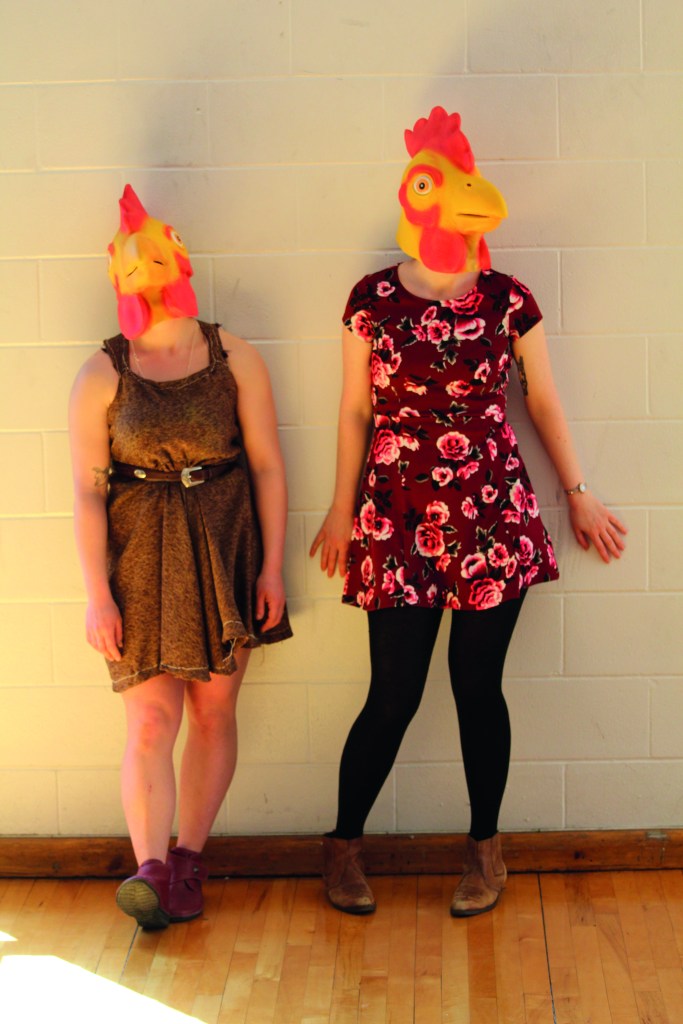
Carly Chamberlain: The description is intentionally ambiguous because it’s actually an impossible play to describe without diminishing it in some way. Basically, it’s an absurd fable centered around a family farm. On this farm, for generations, the women have been turned into chickens by their fear. And in this world, eggs are extremely profitable – think thousands of millions of dollars. The men on the farm are trying to harvest these eggs in order to become millionaires.

The play all takes place on a single day during a period when there have been no chickens on the farm for twenty years. There are two women in the family: a mother and a daughter. The men (a father and a grandfather who has turned into a rooster), have been waiting for over 20 years for Abigail (the mother) to turn into a chicken.

The play starts on the morning that Abigail finally turns into a chicken, and that transformation sets a series of events in motion. For example, the daughter has promised herself that when her mom eventually turns into a chicken, she’s going to run away so that she doesn’t also turn into a chicken. Each scene is loosely an hour of the day as it progresses.

In a nutshell: Plucked is about fear turning women into chickens, and the men of the family making money off of that. It’s big and political, grappling with misogyny and patriarchy, but it’s also quite personal. We watch the cycles of generations in this family, repeating the same mistakes. It begs the question: is it even possible not to become our parents? The fear of that makes us lash out and try to control things we can’t actually control. 

Shaina: What role does the bluegrass music play in the show?

Carly: I wouldn’t classify this show as a musical, because I imagine musicals to be beautifully sung expressions of emotion. And that’s not what this is.

The rooster (otherwise known as the grandfather) is a character in the scenes but also a kind of MC/storyteller. There are often songs underscoring, or interrupting scenes. So the music plays a pretty chaotic role in the storytelling. The rhythm is quite fast, as all the characters are on stage the whole time, often popping out of character to play some kind of instrument. 

Shaina: Is it all original music?

Carly: No, all the songs are bluegrass standards that are quite old. The oldest one is called “Black Eyed Susie” and it’s impossible to know who originated it. These are standards that all the bluegrass greats have played. They’re really infectious.

I haven’t been sleeping very well, because I’ve had choruses playing on loop in my head as I lay in bed. They’re total earworms. 

IMG_6082

Shaina: I understand that you and Rachel have collaborated before?

Carly: We met at the National Theatre School while I was studying as a director and she was studying as a playwright. We were paired together to create a 15 min play – I was directing and dramaturging her piece. That play was so challenging and so exciting. It was also far from realism. For example, the opening stage direction were:

“A giant fist makes its way through a groaning door in agony.”
~ Rachel Ganz

That was the set up! I’m a pretty cerebral person and I like planning and structure. And Rachel works from a really visceral, gutsy, imaginative place. She takes a lot of risks. So I think that’s actually why we work so well together. I find I’m able to bring some structure to her images. She’s a generous writer because she doesn’t tell you exactly how you should stage her work. For example, one of the stage directions in Plucked is:

“Abigail explodes into eggs.”
~ Rachel Ganz (Plucked)

And that means whatever you want it to mean. I’m really excited by her work because it doesn’t feel safe. I never know how it’s going to go. Which is terrifying, but I feel like I have to be scared to do my best work. I can’t go in with a complete plan. It’s interesting working on this play for me, because I feel like so much of my journey developing as a director has been trying to change my relationship to fear. It’s a valuable thing, because when you’re afraid, you know you have something at risk.

IMG_6018

Shaina: Did you start as a director?

Carly: No, I started as an actor. But I was getting to play really good roles and not feeling satisfied. I finally produced and directed a double bill of two short plays at a tiny venue. From my point of view, it was a bit of a mess because I was directing purely based on a mix of impulse and what I had liked about working with other directors, without really having a process. But it was the one time in my life when I felt like “this is what I’m supposed to be doing.” I knew there were still skills I needed to develop, so I applied to NTS and ended up getting in. Now, I’m back! 

Shaina: So this is your welcome back to Toronto project?!

Carly: Yes! No pressure! With directing I find I can’t compartmentalize the way I could with acting because I had my one part. With directing I feel like I’m vulnerable all the time, because even when I’m not in rehearsal, I’m constantly processing it. It’s kind of inevitable that it becomes my everything.

Shaina: What can people expect from Plucked?

Carly: Ultimately, Plucked is not going to be for everyone. It’s dark, it’s really irreverent and the characters are not nice people. There are parts of it that will intentionally make people uncomfortable. My expectation is that it’s not going to be everyone’s cup of tea. But that’s actually exciting to me because I go to so many plays which everyone (seemingly) loves and I don’t. It’s a really alienating experience to go to a “hit” and everyone’s jumping to their feet, and I’m like… “what?!” And I feel like a lot of us secretly experience that.

I’m just not interested in doing realism in theatre. If I want to see good realism I can watch a movie. In theatre, there are so many more exciting, fun and challenging things we can do, than try to replicate real life. My hope is that this play will appeal to the people who are like me – who go see the really conventional work and are not satisfied.

Shaina: Describe “Plucked” in five words.  

Carly:                          Dark

                                                       Chaotic

         Playful                                                                Uncomfortable

                                    (ever-so-slightly) Hopeful

13592637_904501836338521_7560888250738131389_n

Who:
Company: Newborn Theatre
Written by Rachel Ganz; Directed by Carly Chamberlain; Set and Costume Design by Anna Treusch; Stage Managed and Sound Design by Daniel Bennett; Produced by Laura Paduch; Dramaturged by Jonathan Garfinkel; Lighting Design by: Frank Donato; Fight Direction by Nate Bitton; Performed by Faisal Butt, Sochi Fried, Qianna MacGilchrist, Tim Machin, Tyrone Savage, Tim Walker.

What:
Infusing comedy, bluegrass music, and a complete lack of sentimentality, Plucked is set in a world where fear turns women into chickens, eggs are high currency, and vaginas are near-dangerous possessions. Plucked skewers patriarchy without holding punches. It exposes hard truths about fear and family. It’s funny because it’s fake; it’s vulnerable, but it’s okay because it ends with a curtain call, but it’s not okay because it’s familiar. Plucked is, after all, a true story. It’s just full of lies.

With Plucked, playwright Rachel Ganz and director Carly Chamberlain make their return to Toronto after collaborating together in Montreal at the National Theatre School of Canada. Ganz’s writing rejects the convention of the “well-made play”. Through her writing, comedy, music, and magic collide to expose humour, discomfort, and a sliver of hope.

“Rachel Ganz is an appalling, compelling, intelligent and hilarious new voice in theatre. Her play, “Vacuum”, directed for maximum distress and delight by Carly Chamberlain, was an articulate howl.” -Ann-Marie MacDonald

Curator’s Note
“Crafted chaos is one of my favorite things. It’s the feeling of a deep laugh caught in the belly because you don’t want to miss the next moment, which promises to hold as much delight as the previous. All this, plus unapologetically subversive politically-inspired outbursts!” – Tara Beagan

Where:
The Theatre Centre Mainspace
1115 Queen Street West
Toronto

When:
Friday August 5th 5:15 PM – 6:45 PM
Saturday August 6th 1:00 PM – 2:30 PM
Sunday August 7th 9:15 PM – 10:45 PM
Tuesday August 9th 7:45 PM – 9:15 PM
Wednesday August 10th 4:00 PM – 5:30 PM
Friday August 12th 5:00 PM – 6:30 PM
Sunday August 14th 6:00 PM – 7:30 PM

More Show Info:
summerworks.ca/plucked/

Tickets:
summerworks.ca

Connect:
twitter – @NewbornTheatre
facebook – NewbornTheatre
instagram – @NewbornTheatre
hashtag – #PluckedTO


“Get Yourself Home Skyler James” – In Conversation with Director Ali Joy Richardson & Performer Natasha Ramondino

by Bailey Green

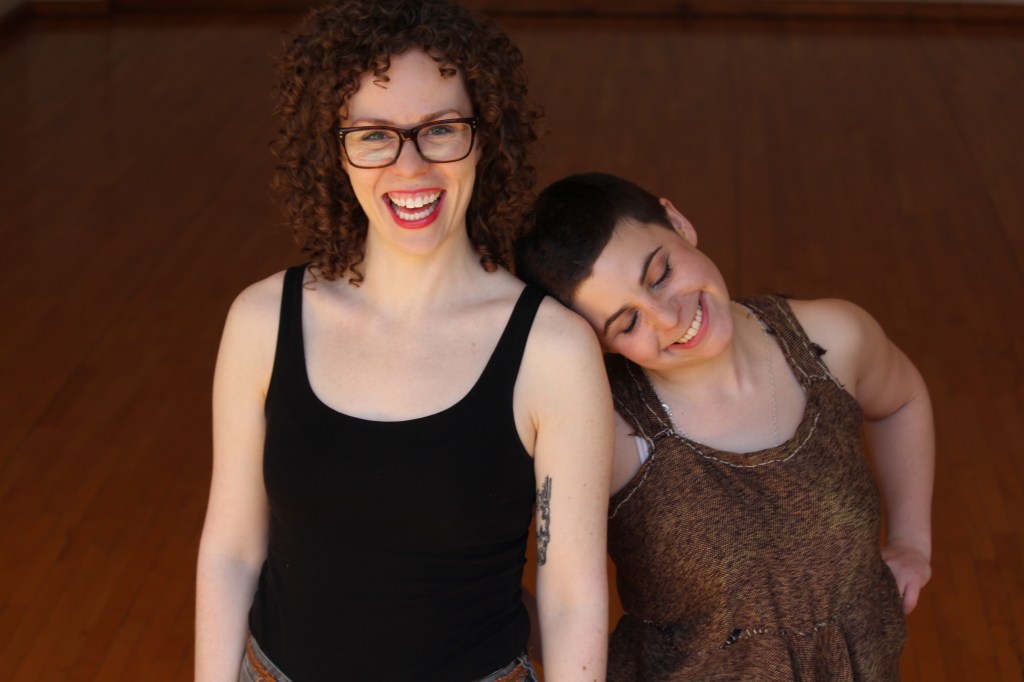
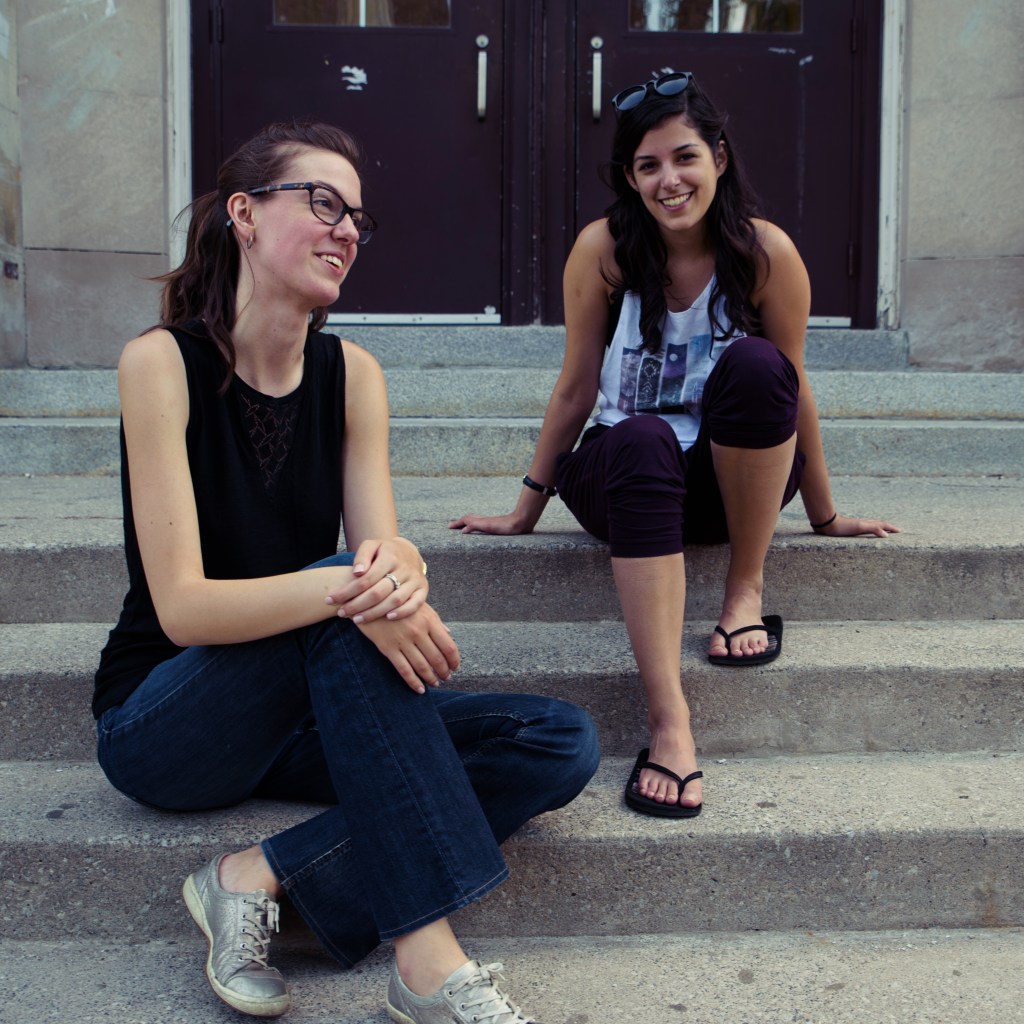
“I trusted the library, like Hermione Granger, and I got to thinking—is there a solo play for a young female voice?” In the Fall of 2015, director Ali Joy Richardson asked herself this question as she searched for a script to submit for the 2016 site-specific Fringe category. Richardson knew she wanted to collaborate with actor and friend Natasha Ramondino. Then, in Jordan Tannahill’s award winning collection of short plays Age of Minority, Richardson discovered Get Yourself Home Skyler James. The play tells the funny, honest, searing account of 19-year-old ex-soldier Skyler James. Though the play diverges slightly from true events, the core story remains largely intact.

The audience finds Skyler in back of the KFC where she works. After police officers show up to talk to Skyler, her girlfriend locks herself in the bathroom. Over the course of 40 minutes, Skyler tells the woman she loves the truth about her past and reveals everything she has fought for and against. As a director, Richardson found one of the challenges of this piece was to keep her direction simple and focused. “It’s a 40 minute show of a young woman talking through a door to another young woman, [and I had to trust] that fight, that act of endurance is compelling, and not succumb to the temptation to embellish with tech or unmotivated blocking. We focused on her actions and the sustained goal of proving herself and justifying her actions.”

FringeFemme Skyler James

Actor Natasha Ramondino was drawn to the character of Skyler instantly. “I was immediately on board,” remembers Ramondino. “Skyler is so funny while she tells what is such a serious, and at times awful, story. When things get really heavy, she’ll thrown in a joke. She describes herself as the most normal girl in the world, and she really is so relatable.”

Ramondino and Richardson bounce ideas back and forth, punctuating each other’s sentences with affirmatives and nods. “There’s a good sense in the room where I know when we can stop and chat about a moment,” Ramondino says. Richardson adds, “It’s so nice to just get to work with an actor I know well. And it feels a bit spoiled to work on a show where there’s no huge cast or complicated transitions or furniture to move. We’re just stripping it down to cracking a performance.” The pair laugh about a moment in rehearsal where they were using verbs to action sections of the text. They had chosen the verb ‘embrace’, and as Ali encouraged Natasha to embrace harder, Natasha’s line got softer and softer. They stopped the rehearsal only to discover that ‘embrace” for Ali meant a hug that sweeps you off your feet but for Natasha it meant to hold someone softly in your arms.

20160624_Skyler_Rehearsal (0033 of 0041)

For both women, this play is incredibly relevant. “For me, one of the most important aspects, is that the burden of proof is always placed on the survivor of abuse or violence,” Richardson says. “The play leads to a point where Skyler discusses a conversation she has with her lawyer and the account is chilling, yet so familiar.” Richardson mentions the Canadian military probe in 2014 which found that an alarming amount of women in service had been sexually assaulted or harassed. “Women are being harassed for just being women, not to mention the [harassment for] being a gay woman,” Ramondino says.

For Ramondino, telling this story is a privilege and an honour. “It shouldn’t be so rare to have a young, queer, female voice on stage, so thank you to Jordan Tannahill. I’m very excited to bring this story to people who may not be part of the theatre community or may not feel comfortable calling themselves an ally. It will be interesting to see their expectations flipped by such a real, raw character.”

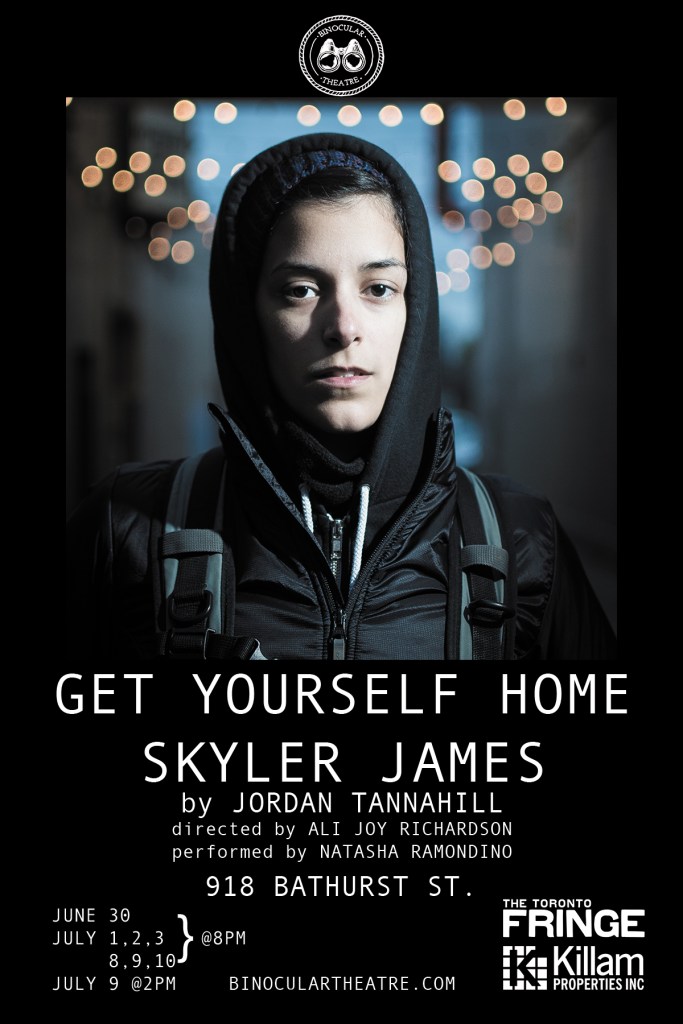
Get Yourself Home Skyler James

Presented by Binocular Theatre as part of the 2016 Toronto Fringe Festival

4 x 6 Skyler Handbill

Who:
Written By: Jordan Tannahill
Company: Binocular Theatre
Company origin: Toronto, Ontario
Director: Ali Joy Richardson
Cast: Natasha Ramondino
Creative team:
Neil Silcox – Production Manager

What:
When Private Skyler James was outed as a lesbian after joining the US Army, she packed a truck, fled her base in Kentucky, and started driving north…
Based on a true story, this gripping play reveals the true damage of prejudice and the strength of a young woman’s spirit in a society that teaches, “don’t ask, don’t tell”.
(2014 Governor General’s Award)

Where:
918 Bathurst Basement, Bathurst Street

When:
July 8th at 8:00 PM
July 9th at 2:00 PM
July 9th at 8:00 PM
July 10th at 8:00 PM

Connect:
binoculartheatre.com
@Binoculart