Skip to content

Posts tagged ‘toronto’

A Chat with Heather Braaten – Director of Next to Normal at the LOT in Support of CAMH

Interview by Ryan Quinn

RQ: So, I’m here with Heather Braaten, who is directing Next To Normal, running from Thursday August 29th to Sunday September 29th at The Lower Ossington Theatre. Would you like to tell me a bit about the show?

HB: Sure, it’s a completely sung-through rock musical that addresses mental health issues and the families struggling with them. It’s a Pulitzer Prize-winning and Tony Award-winning piece. It’s not your typical musical at all. Small cast, very intimate. This is my first time working with the Lower Ossington Theatre, and it’s really interesting, what they’re doing. We’ve got a team of super-talented, professional, upcoming artists that are so fantastic and so ready to explode onto the scene. For me, as a director, I get to see all the amazing work that’s happening in this space at the LOT, and it’s an incredible opportunity for everyone involved. I mean, these huge shows, only a select few will get to do them on a Broadway scale, you don’t often see them happening on an independent level.

RQ: I mean, the logistics of putting up a show like this must be intense.

HB: Exactly! I mean, the rights for the show alone are expensive. I’ve been directing independent theatre for ten to fifteen years now, and I don’t normally get to tackle material like this.

RQ: You mentioned earlier how this was a Pulitzer Prize-winning show that’s won Tony Awards as well. What do you think makes it such a remarkable show?

HB: Well, I think that musicals just don’t approach material like this. Generally, a topic like mental illness isn’t addressed on such a massive scale. I mean, we see films, television shows, and of course books about mental illness, but theatre has a different way of reaching people. The live experience is so different than any other artistic medium. I think one of the reasons this show is so successful is that people are blown away by the honesty of it. This is family life. This is real. I think that’s the main thing about it. It’s very honest and very poignant. It really doesn’t let you off the hook, in terms of material. It doesn’t have a classic Broadway happy ending. It doesn’t resolve everything for everyone. I feel like people took notice because it’s not afraid to tackle this issue, which everyone in some way has been touched by. Before directing this piece, I had never seen it as a production, I had read it and heard it, but I had never seen it in performance. That’s why it’s been amazing to work on, because as it comes together, I start to get hit harder and harder with what it’s trying to do and how honestly it’s doing it. And we’re not going to cut it, we’re going to put the whole thing onstage for a large audience to see and have an experience together. I guess that’s what I’m trying to get at, when people go to see a show, they have a collective experience, and with this piece, that means having a massive dialogue about mental illness all at once.

RQ: So, this show requires a lot of vulnerability. It’s an emotionally, physically, and mentally violent show. How do you approach something like that as a director?

HB: I have done material like this before, but not that often. I relate it to another piece I did about the Dionne quintuplets and their struggle. It’s all about struggle, and understanding the specifics of it. In both cases, of having your family rocked by a bipolar, delusional mother who is trying to live in a separate world. So it’s interesting to approach it for a second time. I think the most important thing is creating a safe place for the actors to work in, and to indulge and experiment with where that lives in their own minds and bodies. They need to be able to experience it, then work back from there. We can’t literally have people breaking down onstage, it has to be a controlled scenario. But it has been really interesting to see these actors experience extreme emotion for what it really is, then pull it back from there to tell the story. I mean, they have a huge vocal task in this piece. You can’t perform this piece without having full control over your instrument, but at the same time, it has to be fully emotionally connected to the material. As a director, how do you make that happen? I’ve learned that early in the process, you allow it to happen in a way where it’s just let go, then you bring it back to the storytelling and the technique. This cast has been amazing to see connect to the material and to each other. It’s one of those pieces that gets more meaningful every time you see or listen to it, and I think that’s why it’s kind of developed a following. Every time you listen to it, it hits you somewhere deeper. There are a lot of layers to it.

RQ: And the LOT is working with the Centre for Addiction and Mental Heath on this piece, correct?

HB: Yes, part of the proceeds are going to CAMH, and they’re helping us get the word out that we’re doing the piece.

RQ: That’s fantastic. Thanks so much for your time, and break a leg on your run!

HB: Thanks!

Next to Normal

At the LOT in support of CAMH

Pulitzer-Prize winning rock musical, with book and lyrics by Brian Yorkey and music by Tom Kitt, explores how one suburban household copes with crisis and mental illness.

Where: Lower Ossington Theatre, 100A Ossington Avenue

When: August 29th – September 29th, 2013

Ticketshttp://tickets.ticketwise.ca/event/3772016

For more information, check out the Lower Ossington Website: http://lowerossingtontheatre.com/

Read out more about the Centre for Addiction and Mental Health (CAMH) on their website: http://www.camh.ca/en/hospital/Pages/home.aspx

Artist Profile: We Chat with Dynamic Duo Donna Marie Baratta & Jessica Carmichael on their Upcoming SummerWorks Show with Present Danger Productions girls! girls! girls!

Interview by: Brittany Kay

I sat down with dynamic duo Donna Marie Baratta and Jessica Carmichael to discuss first time co-directing, life in Toronto and of course their upcoming show girls! girls! girls!

DSC_4661 cyan cropped

BK: Tell me about your show at SummerWorks?

DMB: The play was inspired by the murder of Reena Virk in Victoria in 1997, who was lured by a group of teenagers to a bridge and beaten to death. One girl stood up and said this is enough but two individuals, a girl and a guy went back and ultimately killed her. Both ended up in jail and the girl is still in jail.

JC: It explores themes of isolation, a sense that there is no way out of a small town, friendship, sense of loneliness in family relationships and marginalization. Reoccurrence of these types of stories keep coming up in the news and in society. I can speak to it as a mom as well. My daughter will be a teen one day and there’s no easy solution to these issues.

DMB: It’s not just a message play. It is certainly a play where you hopefully won’t be sedated, but instead explore and ask questions of why there is this banding together amongst the characters? There’s something in this banding together of friends.

BK: How did you find the play?

JC: We met Greg MacArthur at UofAlberta when he was doing his residency there. DM and I were completing our MFA in directing. Greg is wild and wonderful and fun. When DM and I were talking about going on a journey together in terms of creating a company, we were saying what do we want to do? What kind of work? We wanted to explore new Canadian work – that’s something which is very important to us. In reality, people don’t return to Canadian work. A new work will be workshopped and then there’s no life after that.

DMB: Greg hasn’t had a work produced in Toronto in ten years – he grew up in Lindsay ON, went to Ryerson theatre school, has been in Montreal for the last fifteen years and Edmonton for two. After reading his plays we were trying to figure out WHY they haven’t been looked at in this city. So many amazing Canadian plays get lost and forgotten.

JC: We approached him. We were in love with this play. It was about complicated female voices and there’s a lack of that in playwrighting. Even when there are strong female playwrights it’s not often a female voice.

DMB: Both of our energies and passion throughout our MFA were focused on looking at female voices. What is that voice and the complications around that, which are so fascinating.

JC: Greg’s story in and of itself is about that female voice that’s disillusioned. Reena, Amada Todd, Rehtaeh Parsons-they were disillusioned by society, they didn’t have the proper kind of help and that’s something that we’re interested in exploring as female directors. Why is that? Why is female violence on the rise and why is it taboo to talk about?

DSC_4518 white

DMB: The play’s issues are inundated right now in the media. There are so many things in the media right now that just said this is the right play to do now. This is the right play to bring out and have more questions asked.

BK: It is so relevant to the younger generation right now. I feel that there will be so much understanding from young audiences. Our lives are so wrapped up with social media and the lack of privacy and empathy.

DMB: The characters are all true victims in this. You are going to side with the perpetrators. They all are marginalized in their lives. They clearly needed someone in their lives to say I love you. I’m here for you. You realize they don’t have that and they only have each other. They’ve created some kind of bond around their own pain. That’s scary.

JC: They have to ‘other’ that pain around someone else.

DMB: They have to numb their pain in various ways, for example, like blasting music in their ears. They numb themselves from what is going on in society.

JC: In every play you ask questions, you get more questions coming back at you.

BK:  Your advertising is mysterious and doesn’t really give us any clues as to what the play is about. Can you speak to the ambiguity in your promos?

Promo Video 1 for girls! girls! girls!: https://www.facebook.com/photo.php?v=10151793347946031&set=o.133383070204277&type=2&theater

DMB: We wanted to create some interest in the world of these teens and their characters. We wanted the audience to see their lives together as friends before the play and the world they inhabit. We wanted to peak their interest making them ask questions. “What is this play about?” “I don’t know Reena Virk but there seems to be much more to it than that”.

JC: We don’t want people to see a message play. It is a play about an issue, but we didn’t want to promote it in that way. We wanted it to feel more like a character piece in which audience can relate to them. You’re dealing with human beings and fully formed creatures. Youtube is an outlet for these characters to speak, and for a lot of teens in this day and age. We wanted to hook into that. That’s their lives and that’s how they promote themselves.

DMB: We wanted an invitation. The video is good way to invite people into their world. The show can be quite heavy and we wanted to show that these are teens and these are their group of friends. See their playful interaction before you are exposed to the dark aspect of the play. You see that it is also about friendship as well, which is important. We all know how important our friends are, which is a big theme throughout the play, the extent of that friendship.

BK: Did filming these videos help the actors with character development?

JC: Yes, of course. The process is so important, not just the product. It was an exploration that we used with the actors so that they could develop their characters.

DMB: They explored their lives outside the rehearsal space. These videos were created during rehearsals in order to create a deeper character life.

Promo Video 2 for girls! girls! girls! https://www.facebook.com/photo.php?v=10151793351766031&set=o.133383070204277&type=2&theater

BK: Now about you both. Why the name Present Danger Productions?

DMB: One day I woke up, called Jess and said what about Present Danger? Can we use that? I had this image of traffic signs in my head – “caution” and “tread softly”.  We want to be on the edge. We want to be able to push the boundaries in what we can talk about and what we can show and explore.

JC: There’s not a lot of present danger in Canadian theatre. There’s not a lot of risk being taken. We want to be bold in our choices and not be afraid. We want to be present in being dangerous. It’s also a bit cheeky.

BK: So you guys met at the University of Alberta in the MFA program for directing?

JC: It’s funny because we were told on day one that we weren’t going to be friends – “You probably won’t get along, you don’t need to”. It’s intense in that it’s only two people in your year. We didn’t get to interact very often, so it’s very ironic that we in fact did get along so well.

DMB: We feel fortunate to have gone through it together. We have both come from different backgrounds. We see through different lenses.

JC: It’s very complimentary.

DMB: We would talk about our work together, bounce ideas off each other, and now have come together to start a theatre company.

BK: And where are you from originally?

JC: I lived in Toronto 10 years ago. I’m not originally from Edmonton but I grew up in Edmonton. Went to The National Theatre School in Montreal and RADA in London.

DMB: I was born in Thunder Bay, came to Toronto for a while to do a show, went back to Thunder Bay for University and moved back to Toronto in 2005.

BK: Now you’re here in the T.Dot. How do you feel about the theatre community in Toronto?

DMB: People are so friendly and open in the community.

JC: There’s more opportunity. There are so many artists here to collaborate with. The audiences here, especially for SummerWorks, are so much larger and of all different ages and interests. We’re really looking forward to meeting people. That’s the beauty of these festivals in the summer.

BK: Why SummerWorks as the launch for your company?

JC: There are a lot of theatre artists that will come to this, that’s who we wanted to expose our work to. Because it is the beginning for us in Toronto, we wanted to meet other artists and this festival will enable us to do that.

DMB: It opens up so many avenues and opportunities. It’s a place where artists go, where you can have discussions about the work being produced. We really want people to talk to us about the play. Whether they love it or hate it, we really want to hear it! Theatre for us is about talking, discussion and opening up the channels for communication.

JC: And we know it’s not going to be perfect. It’s nice to talk to other artists to hear those opinions, to allow us to grow as artists.

Jessica Carmichael and Donna Marie Baratta, Co-directors of girls! girls! girls!

Jessica Carmichael and Donna Marie Baratta, Co-directors of girls! girls! girls!

BK: Is there a future for Present Danger?

DMB: Yes, of course! We don’t want to rush what our next production will be. We both have projects we love. We need to sit and discuss what direction we want to go, and also what other avenues that can be produced, that wont cost us an arm and a leg!

JC: And after we’ve gone through this experience, we can have discussions about how we can move forward from what we’ve learned. This is the career. There’s no going back. It’s a love affair.

BK: What do you hope for audiences to gain from girls! girls! girls! ?

DMB: We want them to be asking questions. We are really thrilled with our actors. We hope audiences see how hard they’ve worked. We hope that this is a great platform for them and for their career as they’ve been such a true pleasure to work with. Hopefully audiences don’t want to leave their chair because they want more.

JC: I hope they laugh out loud at the show and are equally disturbed by their laughter. I hope they have an opportunity to reflect on the issues that need to be discussed and not overlooked. We want people to keep talking about the play once they’ve left, be challenged by the piece and be affected by it. We want them to think about it days after.

BK: What is the strongest advice you’ve ever gotten as an artist and how has it affected your work?

JC: You don’t need to be so polite in your work. You need to believe in your work. Don’t pussyfoot around the big issues that you want. Don’t be afraid to be passionate or to be a passionate woman at that!

DMB: Be bold. You can ask for what you want. You can really be bold and brave in the choices you make. Ultimately, be true to yourself. Being a director can be isolating as you are on your own. You’re constantly discovering your voice. Sometimes you need someone to say “yes, that’s okay”, that there is a right or wrong way to direct, that there is a system, but ultimately there is no system. Don’t be too polite and challenge yourself. Give yourself permission to do some crazy things.

JC: Pina Bausch once said “You just have to get crazier,” which is beautiful. You have to constantly ask why? Why this story right now? You have to keep going back to the root of that in rehearsal. That’s not often asked these days. When people just randomly choose the same shows across the country…for what purpose? Why are you choosing this show… because it is going to be a big sale? ? Just to ask yourself that question of ‘why this story’ as an artist, makes the work much more personal.
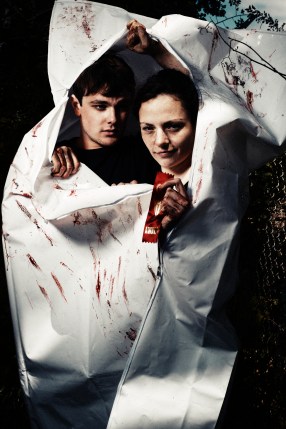
DSC_4784 enhanced contrast

girls! girls! girls!

by Greg MacArthur, presented by Present Danger Productions as part of the SummerWorks 2013 Festival

Where: The Scotiabank Studio Theatre, Pia Bouman, 6 Noble St. (at Queen and Dufferin)

When: August 8th-17th, 2013

Thursday August 8, 7:00 pm
Saturday August 10, 9:30 pm
Monday August 12, 7:00 pm
Tuesday August 13, 2:00 pm
Wednesday August 14, 4:30 pm
Thursday August 15, 2:00 pm
Saturday August 17, 9:30 pm

Tickets:  $15
Book tickets online – http://ticketwise.ca/
By phone: Lower Ossington Box Office at 416-915-6747

Top Ten Fundraising Tips from Shaina Silver-Baird: Former Marketing Associate for Nightwood Theatre

 Shaina Silver-Baird is a Toronto-based actor, singer/songwriter and budding Marketing savant. This past year she had the opportunity to work with Nightwood Theatre as their Marketing Associate, soliciting donations and promoting productions like The Penelopiad and The Lawyer Show.

How does one even begin to ask for money and donations?  If people don’t have the money to give, should you bother connecting with them? Why do/should people give at all? Shaina breaks down the scary myth about “the ask” and shares her Top Ten Fundraising Tips thus far.

1. Ask for what you want

I think the most important lesson I learned while working as Marketing Associate for Nightwood Theatre was that the best way to get what you want is to ASK FOR EXACTLY WHAT YOU WANT! I know – what a novel idea! But it’s a very scary thing to do. Identify exactly what it is you want: the dollar figure; the donation item or the exchange of services, and ask for it. You actually stand a much better chance of getting it when you know specifically what you want. Most importantly, believe that what you’re raising money for is worth it. You are offering an integral artistic service. People want it. People are fascinated by it. Don’t sell yourself short or approach them as if they are doing you a favour. Talk passionately and show them you’re project is worth the investment, and they will believe you.

2. Know your product

Know the show you’re selling inside and out. Know why this project deserves funding over any other project. Ask yourself: What’s important about it? What issues is it addressing? What exactly will the funds go towards? Who is involved? (Do they add credibility?) What are the donation options?

You will need to answer these questions with the utmost confidence and conviction, so know your answers before you pick up the phone or send an email. People want to feel good about their donation. Show them your passion, your conviction and your knowledge and they will have faith that they are investing in something worthwhile.

3. Know your fundraising market

We’ve all been told to consider who our market is when selling tickets to a show, but who are you targeting in your fundraising efforts? Is your audience and your fundraising pool the same market? They may not be.

Therefore, be honest with yourself. Are you looking for money from friends and family, business execs or local businesses? What would entice that specific pool to donate? For example, my fundraising market when organising the silent auction for Nightwood Theatre’s The Lawyer Show 2013 was… you guessed it… lawyers! So I sought out larger ticket items to auction off that they would be interested in and could afford. This included: a wine and cheese tasting, prime Toronto Maple Leafs tickets, a Caribbean resort getaway etc. It was a very successful endeavor because the lawyers (audience and cast members) were excited about the items and the companies donating were excited about the opportunity to publicise to a market of affluent, legal professionals. However, if I was targeting other artists in their 20s, these items would be out of their realistic price range, and companies would be less inclined to donate items with such a high value. I’d try to create multiple opportunities for lots of people to donate smaller amounts such as: soliciting a higher quantity of smaller items they could realistically bid on; do a 50:50 draw; an indiegogo campaign and/or an event with a cover charge.

4. Ask yourself: What makes you different?

With all the companies, artists and organisations out there asking for money, the competition can be daunting. I was lucky to be working for a company that was a registered charity, which was a huge help in pitching to prospective donors. But you can still be successful without that status. Ask yourself: what is different about my project? Who will be genuinely interested in it?

For example, if your play centres around characters of a specific cultural background, sign onto that lovely tool called THE INTERNET and find every organisation, store, restaurant or community centre dedicated to that culture. Draft a donation request letter that’s engaging, professional and honest and send it to all of them. You can ask for money, silent auction donations or the opportunity to buy ad space in your program. Remember, you’re offering them the opportunity to advertise to their target market, assuming your show will draw an audience comprised of that specific cultural group. This can apply to groups with a specific subject of interest as well.

Finally, remember to display postcards in every business or organisation your find that parallels your show’s subject matter. Invite the staff of these businesses and organisations to the first couple shows of your run and hopefully you’ll turn donors into audience members and word-of-mouth promoters.

5. Excel spreadsheets are your best friend

Keep track of every piece of information using excel spreadsheets. Literally. I’m not joking. This includes every single person you’ve contacted; when you contacted them; which channel you used to contact them; who provided you with their contact information; whether they seemed interested and why; what they donated etc. Even if you don’t get a bite from 80% of the people you contact (which you won’t), you’ll build an amazing database for the next time you do a show. And most importantly you’ll stay organised. You’ll know exactly what information you have and what you don’t. This is especially important once you start securing donations, be they cheques or auction items. You don’t want to lose track of those figures. Excel is your partner in crime!

6. Create a database of contacts

This tip follows closely on the heels of # 5! So you’re a new company. You don’t have a lot of contacts or donors. Sweet. Fake it ’til ya make it. All you need is determination and the internet. Highlight who you think will be interested in your company/show, be it businesses or individuals, and collect their contact information. Find emails online or by calling up the company, and make a list serve. And you guessed it: record it in a grand excel document. Then personally address each email when you send out your call for donations. It takes a lot of time but a) people appreciate the personal touch and b) if you’re not willing to put in the few minutes it takes to type their name and kick off with a personal sentence about why you think this donor opportunity is perfect for them… why should they donate?

7. PDF’s are your second best friend

It may seem like a minor detail but send all your official forms and documents as pdf files, not word documents. I like to think most people wouldn’t do this, but word documents allow a second party to change the text of the document when filling it out. PDFs do not.

8. Tap your network

You know more important people than you think and it’s especially easy to get in contact with them using social networking sites. However, I find that doing a mass, impersonal facebook call to action will help you get your mother and your best friend to donate, but not much more. Therefore take the time to message and post to specific people. Many will say no, but the ones who say yes may just do it because they appreciate the personalized effort.

You also know many people with valuable skills. Can you approach them to auction off services or goods? Even better, can you do a trade? For example, what about approaching an emerging photographer to do your show photos in exchange for another service? What about asking your local grocer to donate snacks to your fundraiser instead of donating money? You can offer them an ad in your program in return or the opportunity to display flyers! Be creative!

9. Make sure you have something to offer in return

Businesses are very willing to donate if they think it’ll get them visibility. Therefore, stress the fact that you are getting lots of people in one place, at one time, making your show a prime marketing opportunity! The fact that your show is attracting an audience gives you power and something to offer. Use it to your advantage! It’s a trade: you get money – they get an ad where hundreds of people will see it. You get an item to auction off – they get visibility and the opportunity to get people excited about their product. Again: It’s a trade-off. You’re not begging.

10. Set solid deadlines for yourself… and then be flexible

It’s important to set deadlines for yourself so you know exactly how long you have to raise funds. Always plan for a bit of cushion time after these deadlines, so setting them a week earlier than they actually need to be is a good idea. Everyone is busy and inundated with emails, so getting in touch with people can take a while. Start soliciting months in advance so you can follow up multiple times if people don’t get back to you.

Make sure the due date for receiving donations is clear in your donation requests. Ideally, people will honour that deadline and it’ll force them to get their donations to you in a timely fashion. There will always be people who come through last minute, but a deadline will help you keep the latecomers to a minimum. I was accepting my last auction item for The Lawyer Show the day of the auction, but I would suggest avoiding this if possible – simply for your own sanity.

… 11. Most importantly have fun! And good luck fundraising!

Theatre of the Absurd, Indeed – A Conversation with Bobby Del Rio on “The Trial of Ken Gass”

Interview by Bailey Green

I spoke with Bobby Del Rio about his new play The Trial of Ken Gass currently in the midst of its run at Sterling Studio Theatre. We talked capitalism, casting, Jess Salgueiro and of course, Ken Gass.

BG: Something so unique about this show is that there’s a different actor playing Ken Gass every night – how did you get all of these actors involved?

BDR: Well, I originally tried to get one Ken Gass. I offered it to several actors but I just couldn’t get them to commit to a full run. Peter Keleghan was my first choice, but he was doing a documentary for CBC so he didn’t have the time. Two weeks away from the show I still didn’t have someone so I called Jack Grinhouse cause I think I’m fucked. It was Jack who suggested that maybe I could get different people to do different shows, which wasn’t far from my first idea of having actors do two or three shows each. This idea of different people enabled flexibility. The flexibility to have people other than older white men come play Ken Gass. A lot of great actors like Diane Flacks, Dinesh Sachdev and Huse Madhavji from Saving Hope could get involved. It really opened up the play and the production.

So I asked Peter if he would play Ken Gass on opening night and he said absolutely. After I got Peter I was able to approach almost anyone: Tom McCamus, Rick Mercer, Daniel Brooks… They said they would love to do it but it was a lot of scheduling things that got in the way. But I got amazing people like Art Hindle and Diane Flacks. Once I got Peter, once you get the first domino, everything falls into place.

BG: Since you didn’t really have a rehearsal period, how did Jess Salgueiro (who plays Sarah Bright) cope with creating her character when she would be acting with a new Ken every night?

BDR: Another question not a lot of people have asked. It’s funny, Ken Gass in real life got the head line because he was the name for the news story when it all happened and then the production pretty much focuses on the casting of…Ken Gass. But Jess Salgueiro is the star of the show. We only had three rehearsals of about three hours each and a tech. She did so much work on her own. I played Ken Gass in rehearsal and I would purposely do it differently every time. I was helping her get off book and at the same time not just attacking or trying tactics differently but playing with weird blocking, like things no one would expect for you to do. I’m glad we did that because…well for example Diane Flacks did whatever she wanted to do, in an amazing way! I mean I love her; she is so free with her body. In her cold read she just owned it. So physically free and alive she would run around and dance. It was a turning point for the run too because after that Jess was so free.

Jess Salgueiro plays Sarah Bright in The Trial of Ken Gass

Jess Salgueiro plays Sarah Bright in The Trial of Ken Gass

[In rehearsal] we focused beyond her text and tactics. In order to establish consistency of performance we established what her character truly wants. Beats may change performance to performance but her super-objective didn’t change nor did the secret parts of her character Jess knew about. Secrets pockets of anger and rage that she can draw on. We knew exactly who this character was so this character could encounter any other character.

We did an improv where I went on several blind dates with her. And I was a different guy each time but she was still her character. I think it helped prepare her. Evidently, she didn’t need it. She’s fantastic. I’m the only person who has seen every show and she finds a way to hit the same beats and fight for the same objective with people throwing completely different tactics at her. She finds a way to get there. It’s quite amazing.

BG: Where or when did the inspiration for this play come from? Was it during all the chaos or afterward?

BDR: Before the Factory Theatre controversy I had this title in my head, “The Trial of Ken Gass.” I had a sort of long standing relationship with Factory; I had been developed numerous times at Factory over the year and had readings and units with them. I acted in a play called Tide Line in 2005. So I got to know Ken over the years. Ken is a brilliant artist and true visionary and because of this is a pretty controversial guy. I don’t mean that in a negative way, in Canada sometimes anyone who speaks the truth is called controversial. He’s an interesting dude, quirky, when he walks in the room you know he’s there. So I had wanted to write about Ken Gass for years because of this idea about gleaning his character.

I found out he was fired on Twitter. It was the first time I found out something major in my life on Twitter. I think it was Bridget MacIntosh who first tweeted it. All of a sudden everybody within the theatre community was posting on Facebook and tweeting at each other. Fun piece of trivia, I was the first person to post on Ken’s Facebook wall when he was fired. I don’t think it means anything but still it’s interesting. He’d gotten fired and his wall was completely blank. What do you say, right? At the time we didn’t know yet what had actually happened so I wrote something like “I’m not sure what’s happening but I wish you the best of luck”.

The theatre community did all this investigative reporting, extrapolation and innuendo. It became clearer what happened. Then (I always think I’m busy but maybe I’m not) I read three hundred pages of blogs, newspaper articles, the comments on the articles, Facebook pages, literally read every single thing, every name on the petition and what they wrote. It became very hostile. There were decisions made. Flame wars, series of mini dramas that exploded across Facebook. It got so crazy. No one would give me a straight answer.

BG: Is this what made you choose to write an absurdist play?

BDR: Theatre of the Absurd would be the perfect way to identify with the way it all happened – this amazing cesspool of drama. So when I found out I was a finalist in a playwriting competition at Sterling Studio Theatre I asked for Ken’s permission. I’ll never forget what he said, “Theatre of absurd, indeed.” I’d never written absurdism. I wrote a play that became a film called The Market (like Glengarry Glen Ross meets Reservoir Dogs which I had never written about before) about four bond traitors. So I used the content to mirror the form. Genre expressed the ideals of the story and the same thing happened with The Trial of Ken Gass. And the truth of it is there was no resolution. It was the ultimate anti climax. So why did we all experience this as a community if there was not going to be a resolution? Part of writing this play is the quest for that.

BG: You say The Trial of Ken Gass is the plight of every artist. How have you experienced this?

BDR: Partly the frustration in dealing with all levels of bureaucracy and institutions my entire life. Before Erindale I was an economics student. I noticed that I hadn’t attended calculus for months but I was ten minutes early for rehearsal.  I was a Sarah Bright, the institutionalized capitalist but then I became an artist. I realized all my friends, my whole world, was capitalism. All artists can relate to this, like having a conversation with a bank manager about how much money you make year to year. This play and Ken Gass channel the difficulty to persist and subsist in the capitalist hierarchy.

Every day as an artist is a challenge in this society that is so consumerist and fact-based.

You know, I went into this thinking that it could be the biggest failure of my career. I mean, it’s weird! A different Gass every night? I had people tip me off (in the theatre community) that there were people very angry with me for writing this play “so soon”. So I knew I may be offending some people by doing this but I’m going to do it anyway! And why not? I’ve met some great people.

So take risks.

The Trial of Ken Gass

Written & Directed by Bobby Del Rio

When: July 23rd, 2013 – Aug 3rd, 2013
Where: Sterling Studio Theatre, 163 Sterling Road
Tickets: $10 & PWYC Sundays
More information is available at www.sterlingstudiotheatre.com

Peter Keleghan (Made in Canada, The Newsroom, 18 to Life) played Ken Gass opening night.

Every night, a new actor plays Ken Gass including: Diane Flacks, Art Hindle, Pat Thornton, Julian DeZotti, Kyle McDonald, David Macniven, Dave Sparrow, Greg Dunham and DineshSachdev. Jess Salgueiro plays SARAH BRIGHT every night!

A Few Words with Mitchell Cushman – The 2013 Paprika Festival

Ryan Quinn: So, I’m here with Mitchell Cushman! The 2013 Paprika Festival is well underway. We’ve been hearing some exciting things about the new work being presented and expansive programming this year. Would you like to tell me a bit about the festival as a whole and what your role as Director of Artistic Programs means for the process?

Mitchell Cushman: Sure. The Paprika Festival is currently in its twelfth year of operations. I was actually in the second year as a participant, when the festival was a much smaller thing. Back then, there were just three programs going on, there was no mentorship, no auxiliary. Most of the aspects that make Paprika what it is now have come along in the past four or five years under the artistic production of Rob Kempson. He’s in his fourth and final year with the festival. He’s really expanded Paprika, so as opposed to it being a festival that happens once a year, there’s also eight months of programming leading up to it. There are now seven productions, which function at a distance from the festival. We select them all but then they rehearse on their own. It’s also a juried festival. We collect applications from high school and university students for shows, pick the ones we’re most excited about, and then offer mentor support, pairing each group with a professional artist who works with them over the year. Finally we give them a great place to present their pieces, the Tarragon extra space.

Aside from that, we also offer two weekly programs; the Creators’ Unit and the Resident Company. Those are both groups that people apply to as individuals, we then create ensembles through those applications, then we pair them up with professional mentors as directors and facilitators.

We have a playwright-in-residence program, whose individual plays will culminate in readings during the festival. We’re also offering mini-mentorships, which is kind of a junior version of that. We also have an Olde Spice program for people over 21. Our cutoff age for Paprika is usually 21, but this is more of an alumni program for people who’ve worked with us previously, and now we’re supporting their later work.

There’s also one more program that’s new this year called the Advisory Board, that’s a steering committee of people between the ages of 14 and 25 who are interested in producing.  They’ve been involved with the production of the festival. They’re running our studio cabaret late night series, so every night after the festival, there is some fantastic late-night programming courtesy of the advisory board.

R: So the festival seems to really help young artists trying to break into any aspect of production.

M: Absolutely. I think that’s the exciting way the festival has expanded, by really offering mentorship opportunities to people in every area, as you say. I think the festival really stands out because all of our productions are application-based and juried, so as much as it is a training program, we truly believe in the excellence we’re putting forward on stage as well. We look at it as “What’s the highest quality work we can present?”.

R: How does the experience change, then, when working with young people as opposed to working with people who’ve been in the theatre a longer time?

M: I think you get surprised more often. I mean, the fact that they’re fresh and new, and yet we’re blown away by the work they do. Especially this year, I think it’s the strongest year for Paprika. Everyone is coming from these places…I really feel like there are some strong new voices at work. There’s a fantastic piece being presented called This Play is Like, and on the surface it’s a play about a peanut allergy, but it’s really about how people can be allergic to their environments. It has a whole narrative shadow puppet show that compliments the main story. It’s one of the things that really blew me away when we were looking at all of the works this year.

R: As you mentioned before, the festival is expanding and adding new programs every year, gaining notoriety. Ideally, in ten years, what would the festival look like?

M: There are things that we’re doing in a small way now, that if we had the resources, we’d love to do in a bigger way for the future. Last year we hosted a school, where some of the productions went to schools and actually played for them, which was a perfect fit because they were playing to their peers. We’d love to do that in a bigger way and go to more schools. We’d also love to increase our outreach. Most of our participants hear about us through their schools but there are more and more who don’t. We’ve also talked about the idea of reaching out to other cities. For the first time this year, we have a group from out of the city, from Ottawa, who have been commuting in from there, if you can believe that! So, we love the idea of Paprika festivals in other places in Ontario, or even further, that we could partner with.

R: That sounds amazing. Well, thanks so much for your time and break a leg with this last week of Paprika!

M: Thanks!

The 12 Annual Paprika Festival runs March 27th – April 6th at the Tarragon Theatre Extra Space.
For complete show descriptions & a detailed calendar of their productions and events check out the Paprika Festival website: paprikafestival.com 
For tickets go to the Tarragon Theatre website. Shows have been selling out so catch them while you can!